Ukraine’s MANPADS-Unmanned Ground Vehicle

Following on from our recent examination of RPG-UGVs a new armed unmanned ground vehicle variant has appeared – the MANPADS-UGV. MANPADS or Man-Portable Air Defence Systems have been a key weapon during the war in Ukraine. They enable troops to engage drones and UAVs of various sizes as well as helicopters.
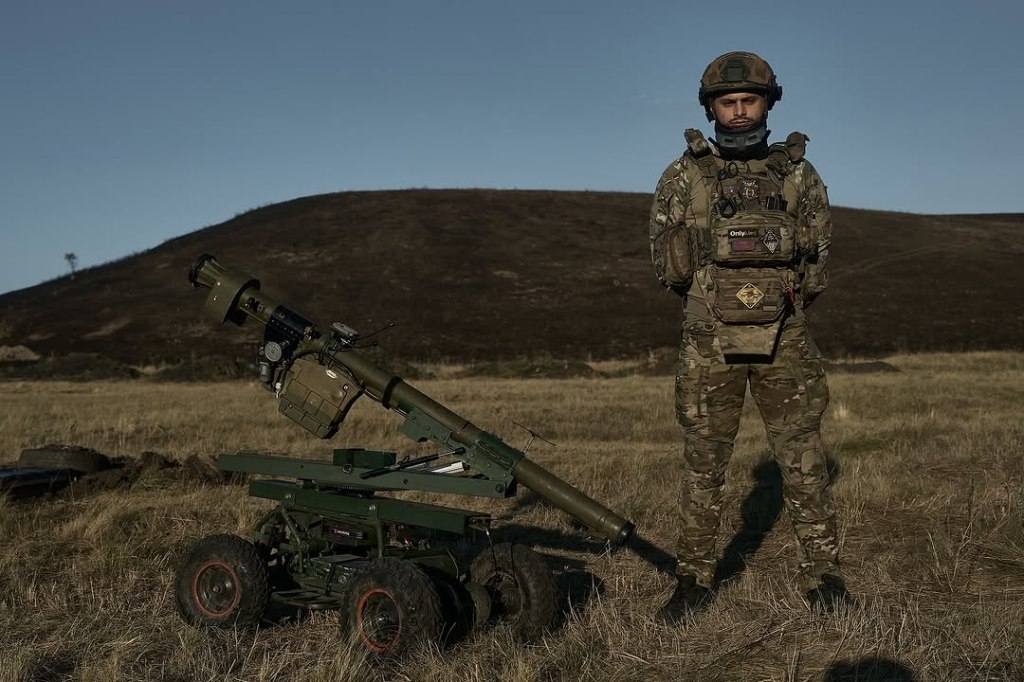
(LIBKOS/28th Mechanized Brigade)

On 4 August, photographers Libkos, shared a video showcasing an Igla-1 MANPADS mounted on a four-wheeled UGV operated by Ukraine’s 28th Mechanized Brigade. In an Instagram post, Libkos explained the idea behind the MANPADS-UGV:

“If before they were quite easy to shoot down with MANPADS, now Russian UAVs control every movement of our infantrymen and often do not even allow them to leave the trench. That is why the guys from @28ombr created this robotic platform. It independently guides and hits any large air target. The guys have already tested it in action and it already has one enemy helicopter on its account. So we are collecting 10 more such platforms. This is an effective and innovative weapon that is independently manufactured by the military from 28 Ombr.”

The available imagery, shared by Libkos and the brigade, shows the UGV being test-fired. The Igla is mounted on an angled mount, which seems to have a degree of elevation and traverse. There appears to be a motor and servo system attached to the front of the weapon to act on its trigger. Behind this is what may be a camera and transmitter/receiver. In part of the promo video a pair of operators are seen in a nearby trench, one wearing a headset for the UGV’s camera feed.

Ukrainian media outlet Defender reports that the MANPADS-UGV has been named “Alycha”.
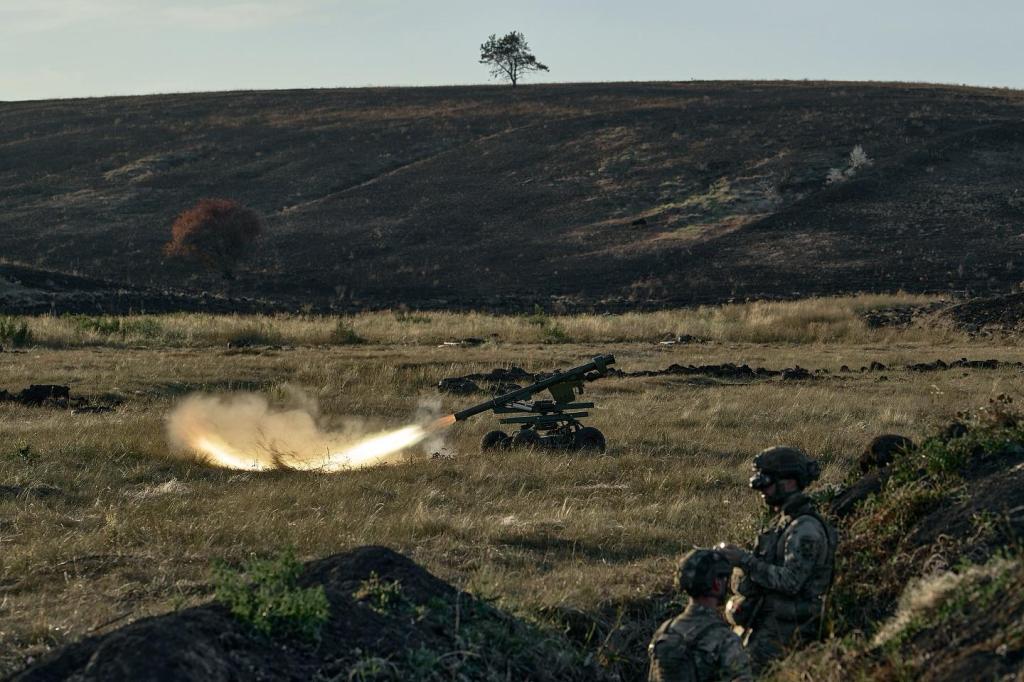
(LIBKOS/28th Mechanized Brigade)

It’s difficult to tell how the system would be used in practice or how effective it would be. MANPADS such as Igla-1 use infrared homing and require the operator to track the target before launching. The operator has to visually detect the target, activate the power supply unit, aim at the target via the fore and rear sights and pull the trigger. While the operator doesn’t have to track the target once the missile is fired they must track it immediately prior to launch. How capable the UGV is of doing this is currently unclear. For the best image clarity and response time for identifying and tracking a target it would make sense for the UGV to utilise a fibre-optic control cable but there is no evidence of this in the available imagery.

It is unclear if the system can be equipped with different types of MANPADS. In theory the UGV could be mounted with Igla, Strela, Piorun or even Stinger, as such one variable to consider is the system’s engagement range. The Igla-1’s operational engagement range is 6km (3.5 miles) with an 11,000 feet engagement ceiling. Given Ukraine’s focus on defensive strong-points the gap between positions able to engage aerial threats with a MANPADS may be relatively wide. If small Ukrainian units are defending strong-points along a stretch of front they may have a limited embedded anti-air capability. A MANPADS team would have to expose itself to reach various points along the unit’s sector of the front so having a UGV which can be rapidly deployed makes sense.
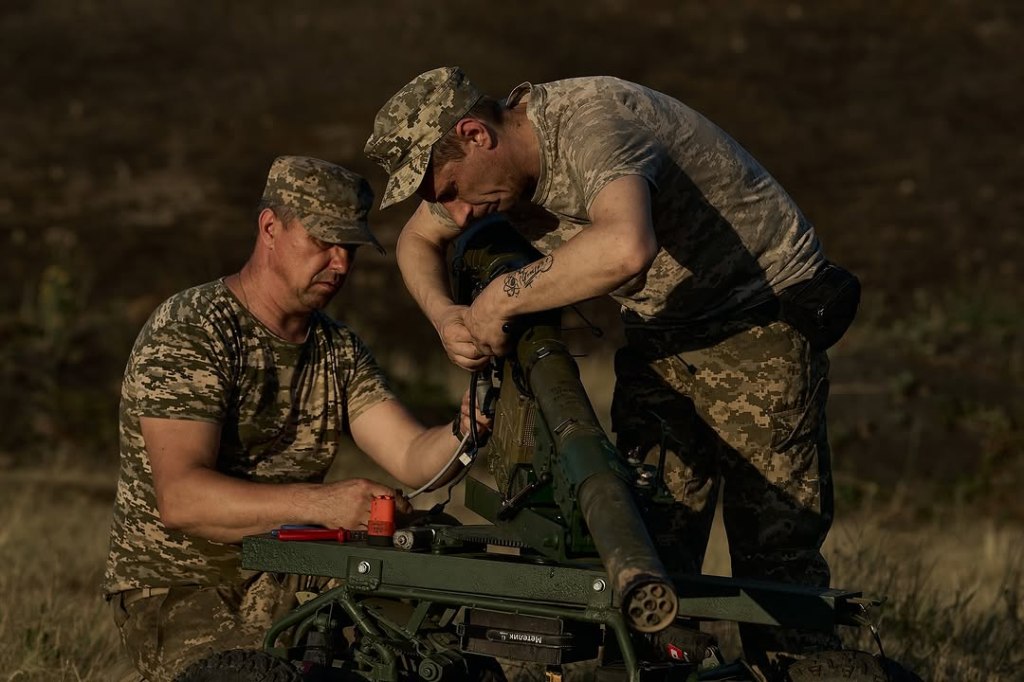
(LIBKOS/28th Mechanized Brigade)

Nevertheless the concept is an interesting one. the 28th Mechanised Brigade claims that the system has already been used operationally and the UGV has successfully engaged an enemy helicopter. Verifiable proof of this kill has not yet been provided. There are no doubt useful applications for the system, such as patrolling an area, as a quick reaction asset and in removing the need for troops to leave cover to engage aerial threats.

Check out our other articles on UGV developments.


Support Us: If you enjoyed this video and article please consider supporting our work here. We have some great perks available for Patreon Supporters – including early access to custom stickers and early access to videos! You can also find us on the History of Weapons & War app. Thank you for your support!

Rare M60 Appearances in Ukraine

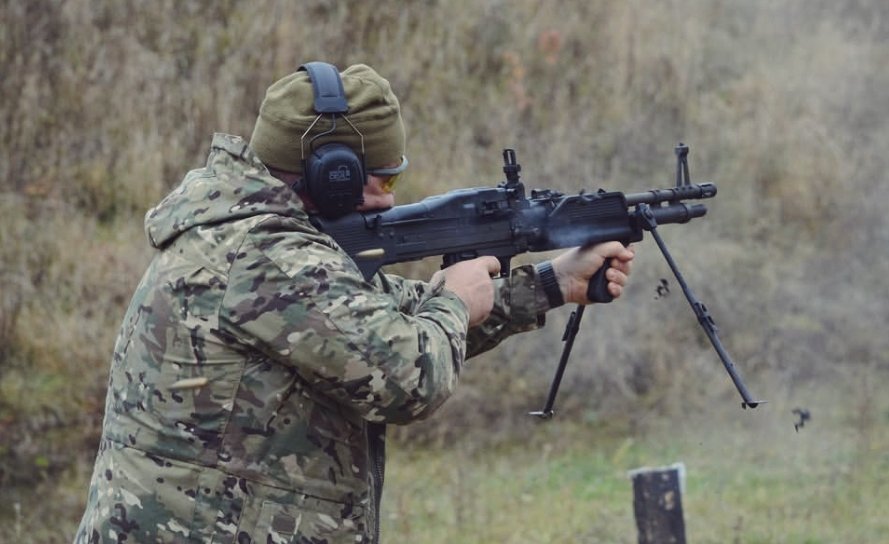
There are a lot of different types of general purpose machine guns in use in Ukraine and one of the most surprising to appear so far is the M60. The first appearance of an M60 in Ukraine came in September 2024, when the 23rd Mechanised Brigade shared an album of training photos which included an individual firing an M60D.

A month later the same brigade shared another photograph of the M60D. The M60D is usually mounted on helicopters as a door gun and as such it has been adapted with no stock or traditional rear sight, instead it has a pair of rear spade grips and a large ring sight. It’s unclear how many M60Ds are in Ukraine or where the guns originated from as a number of potential donor countries operate M60Ds as door guns. It may be the case that a donor nation provided the gun aboard a donated helicopter, we have previously seen French AANF-1 GPMGs appear in Ukraine – likely supplied with VAB APCs. Alternatively, the gun(s) may simply have been provided by a donor for whom it was surplus to requirements and ready for disposal.

Another sighting of an M60D came in May 2025, when the 65th Mechanized Brigade shared a series of photographs of a machine gun team training with one of the guns. Sadly, no markings are visible to confirm if this might be the same gun as previously seen with the 23rd Mechanised Brigade.

The M60D is not the easiest variant to utilise in a ground role with the absence of a stock to shoulder the weapon making it somewhat difficult to aim and keep on target while firing. It does have a folding carry handle but it also had an exposed trigger linkage which is far from ideal for ground use. The best use for this variant would probably be as a pintle-mounted an anti-air gun.

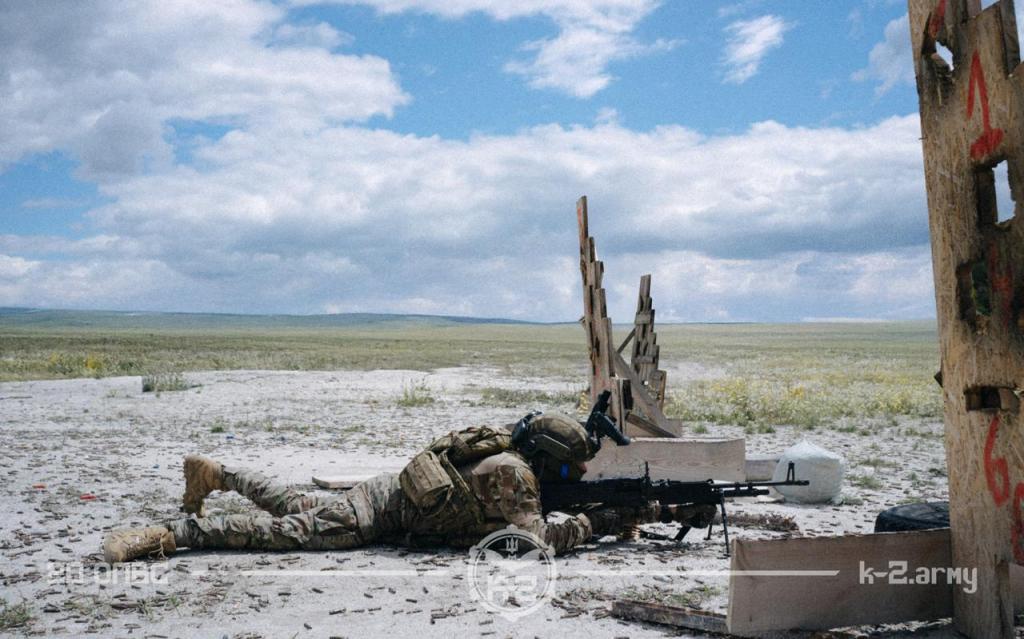
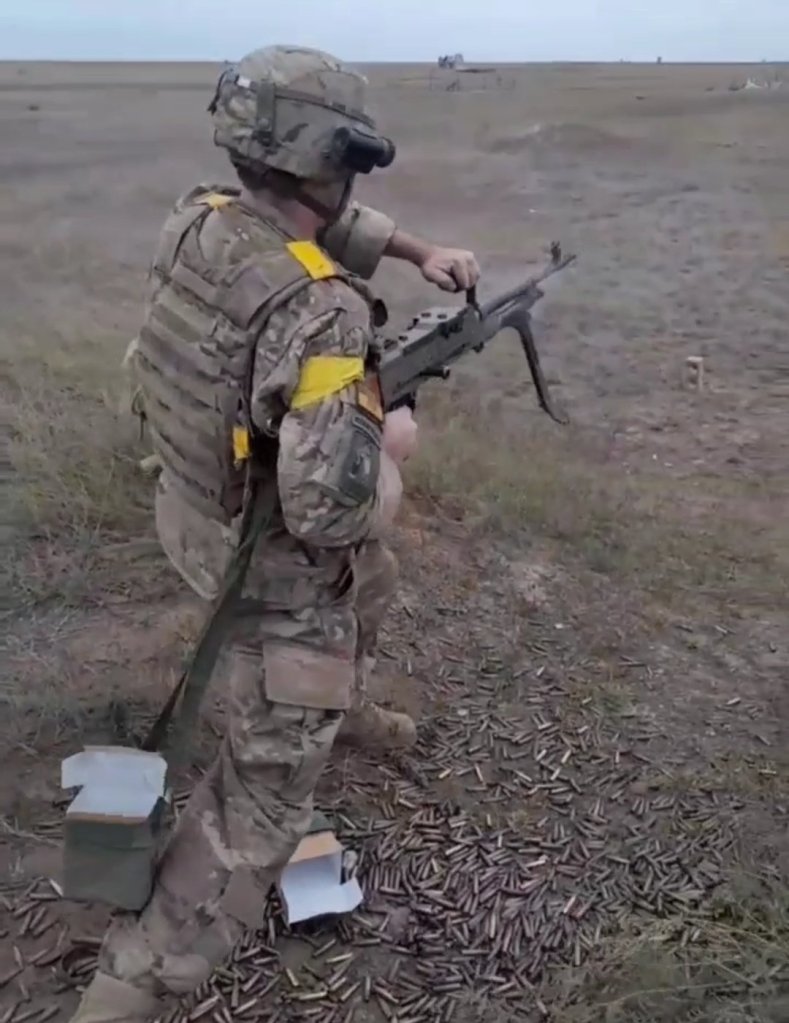
Most recently a new variant of the M60 was seen in a photo posted, on 18 July, by the 20th Separate Regiment of Unmanned Systems “K-2”. The gun appears to be either an M60E3 or an M60E4, with what appears to be a 22 inch barrel, the first ground role variant to be seen in-country. As with the M60Ds it is unclear where this M60 may have originated from, there are only a small number of nations which operate the weapons which may have donated it. Elements of the Czech Republic’s special operations forces operate E4s in small numbers but its unclear if this is the source of the gun seen in the recent photo.

It remains unclear just how many of the various variants of M60 are on the ground in Ukraine and where they came from but it is one of the weapons that I’ll continue to track, if you spot any let me know!

Update 12/10/25:

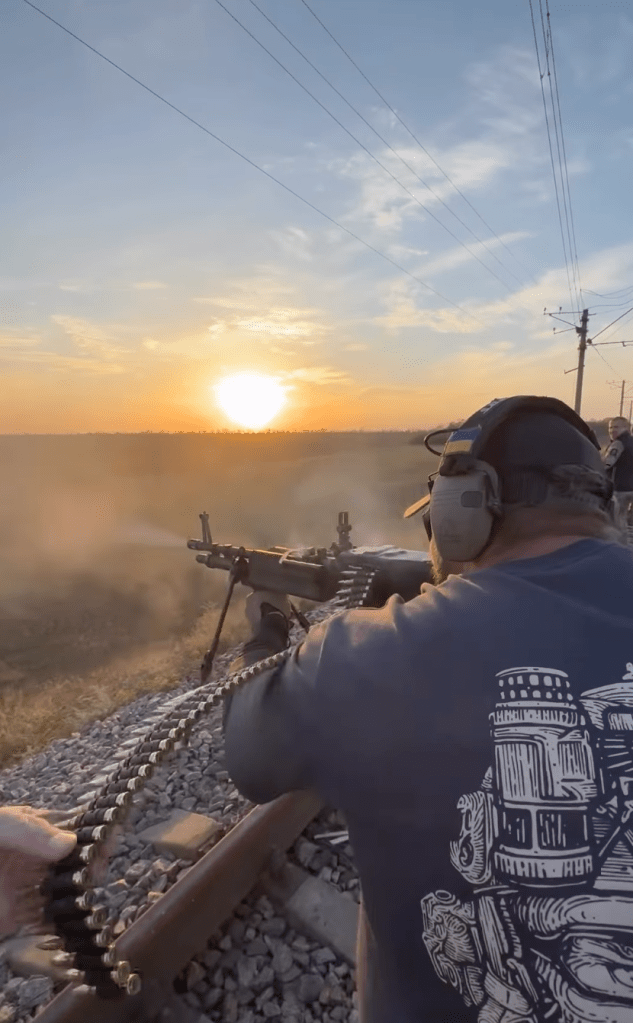
Serhii Filimonov, a member of the 1st Assault Regiment (Da Vinci Wolves), has shared several photos that appear to include an M60E4.

There is also a short video of him firing the weapon. Below is a still from the video.

Update – 17/11/25:

On 14 November, Raven Group, affiliated with the Ukrainian Directorate of Intelligence, shared a serious of range photos featuring an M60E4 (in what appears to be the Mk43 Mod 0 configuration). [H/t to Praise the Steph].


Support Us: If you enjoyed this video and article please consider supporting our work here. We have some great perks available for Patreon Supporters – including early access to custom stickers and early access to videos!  Thank you for your support!

Sweden’s KSP-58 Machine Guns In Ukraine

Since the Russian invasion of Ukraine in February we’ve seen a number of FN MAG variants appear in use with Ukrainian forces. By far the most common appears to be the US M240 series. However, in recent months we’ve also seen a number of Swedish KSP-58s appear in imagery from the field.

Sweden has long supported the Ukrainian war effort providing a shipment of 5,000 Pansarskott m/86 anti-armour weapons (perhaps better known as the AT4) back in late February. The transfer of an additional batch of 5,000 m/86s was announced on 2 June. Most recently on 30 June it was reported that Sweden would provide a fresh batch of light anti-armour weapons and also machine guns as part of a transfer worth $49 million. When delivery of this aid was made is unconfirmed but the KSP-58s are reported to have been in theatre possibly as early as July – August.

While the type of machine gun was not confirmed, since the beginning of September we’ve seen imagery of a number of KSP-58 GPMGs appear in theatre. Easily identified by their wooden stocks, grey-green-coloured receiver finish and enclosed front sight. Sweden was one of the earliest adopters of the FN MAG and the Kulspruta 58 or KSP-58 entered service with the Swedish armed forces in the late 1950s and was originally chambered in the 6.5×55mm Swedish round. The KSP-58B was introduced following the adoption of 7.62x51mm. The guns were made under license from FN at the Carl Gustav Stads rifle factory in Eskilstuna.

A KSP-58B in use with Ukrainian troops c. September 2022 (via social media)

These have been seen in the hands of International Legion units and also regular Ukrainian Army units centred around Mykolaiv and Kherson. All the the examples of the weapon sighted appear to be KSP-58Bs, none of the guns seen have the Picatinny rails seen in the KSP-58F. 

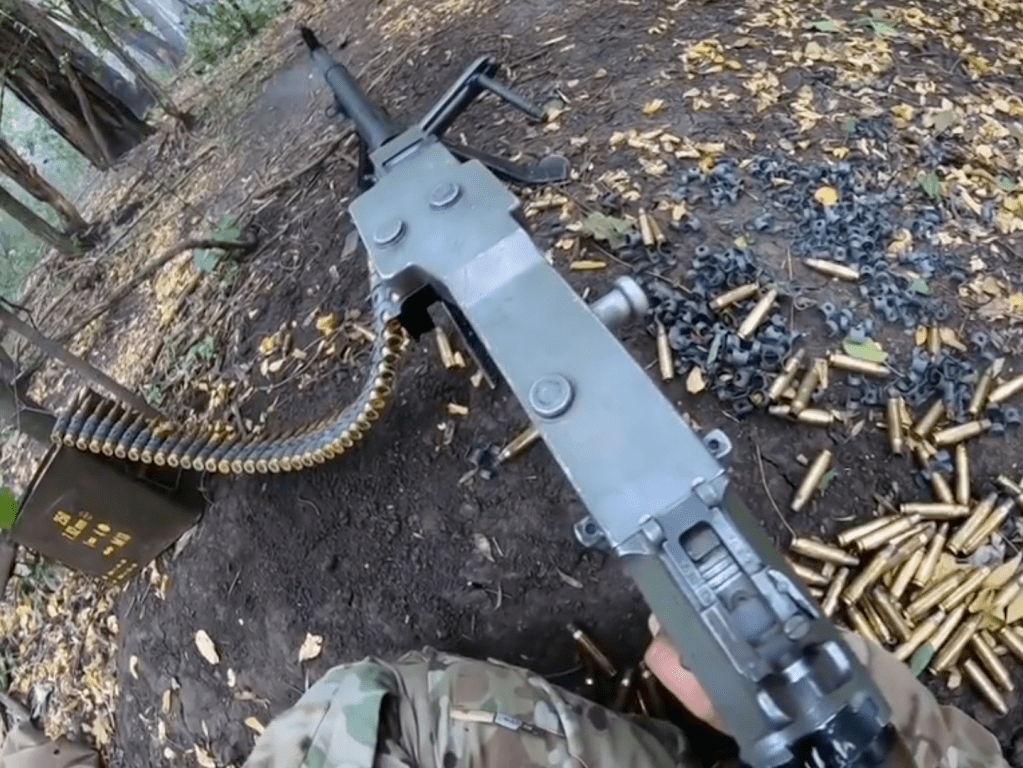
Speaking to Kaiser [frontline_view_kaiser] a German volunteer with the Ukrainian Army, he said his unit encountered a “a brand-new, never used KSP with original factory delivered Box and all accessories untouched”. His colleague Yuri [nucking_futs_yuri] has shared some videos filmed in late-August, during a training session he ran on FN MAG variants for various Ukrainian units. Yuri said their were about 20 guns on the range during the training session, with the majority being KSP-58s. Yuri shared a video in mid-September firing a through a KSP-58B, from the hip, filmed after the training session had been completed. 

Yuri with a KSP-58B c. September 2022 (nucking_futs_yuri)

While we can’t confirm that the KSP-58s came directly from Sweden it seems likely. Another potential origin for the weapons may be the Baltic States (Estonia, Latvia and Lithuania). Sweden gifted an unconfirmed number of KSP-58s to the Baltic States in the 1990s. Today, the guns remain in service with the Latvian Army and National Guard, the Estonian Army and Estonian Defence League and the Lithuanian Army and National Defence Volunteer Force. Both Estonia and Lithuania began searching for a replacement for the KSP-58 in mid-2021. Given the Baltic states’ support for Ukraine the guns may potentially have originated from there, rather than Sweden itself. We have already seen the Baltic States have transferred former Swedish equipment including the PV-1110 recoilless anti-tank gun which were given to the Baltic states in the early 1990s.

It remains to be seen if we’ll see more of the KSP-58s in the field but in future articles/videos we’ll look at other FN MAG variants are in use in Ukraine.

Update 16/1/24: A maritime element of Ukraine’s Border Guards shared photos of them familiarising with what appears to be a KSP-58.

Update – 5/6/24:

Update – 15/10/24: A video of a KSP-58 in action somewhere in Ukraine, date unknown, recently shared online.


If you enjoyed this video and article please consider supporting our work here. We have some great perks available for Patreon Supporters – including custom stickers and early access to videos! Thank you for your support!


Bibliography:

Thank you to Kaiser and Yuri for their input – definitely check them out on their social media!

Kulspruta 58, Forsvarsmakten, (source)

KSP-58, Soldf.com, (source)

Sweden to boost military aid to Ukraine, Politico, 29 Aug. 2022, (source)

Sweden to send military aid to Ukraine, Reuters, 27 Feb. 2022, (source)

Sweden assists Ukraine with the Robot 17, SVt.se, 2 June 2022, (source)

Sweden to send more anti-tank weapons and machine guns to Ukraine, Reuters, 30 June 2022, (source)

Estonia to acquire new weapons for EDF, Defense League, ERR, 18 Nov. 2022, (source)

Lithuania buys machine guns for EUR 34 million, Defence 24, 20 Aug. 2022, (source)