HK MG5s in Ukraine

A dozen different types of light and general purpose machine guns are in use in Ukraine, one of the newest is the Heckler & Koch MG5.

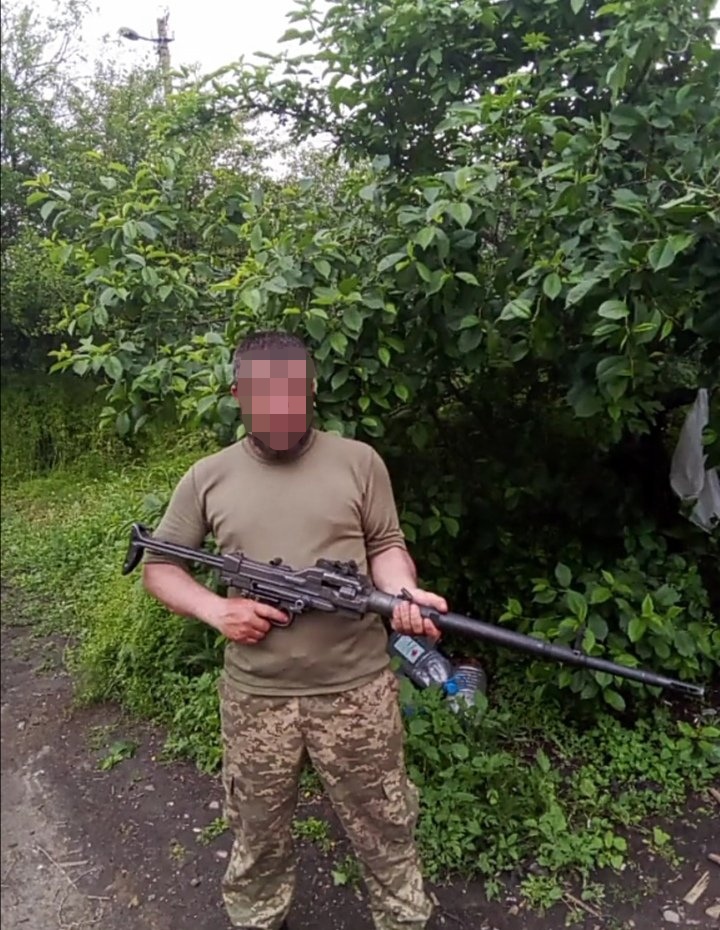
In May 2023, the German government announced a package of aid which would include 100 HK MG5 7.62x51mm general purpose machine guns. In September, evidence of their arrival in theatre began to surface with Ukrainian combatants sharing imagery of the brand new weapons.

The transfer of MG5s by the German government is interesting as the Bundeswehr themselves have only recently begun to receive the guns. The MG5 officially entered German service in 2015 but procurement has only recently ramped up with around 10,000 currently estimated to be in inventory. The MG5 is a gas-operated 7.62x51mm general purpose machine gun with a variable rate of fire and is intended to replace the MG3. It fires from an open bolt and it’s action is locked by a rotating bolt head. The guns themselves are listed on the German government’s aid-tracking page as “being deliveries from industry stocks financed by German funds for security capacity building.” This indicates that the transfer was probably not made direct from Bundeswehr stores.
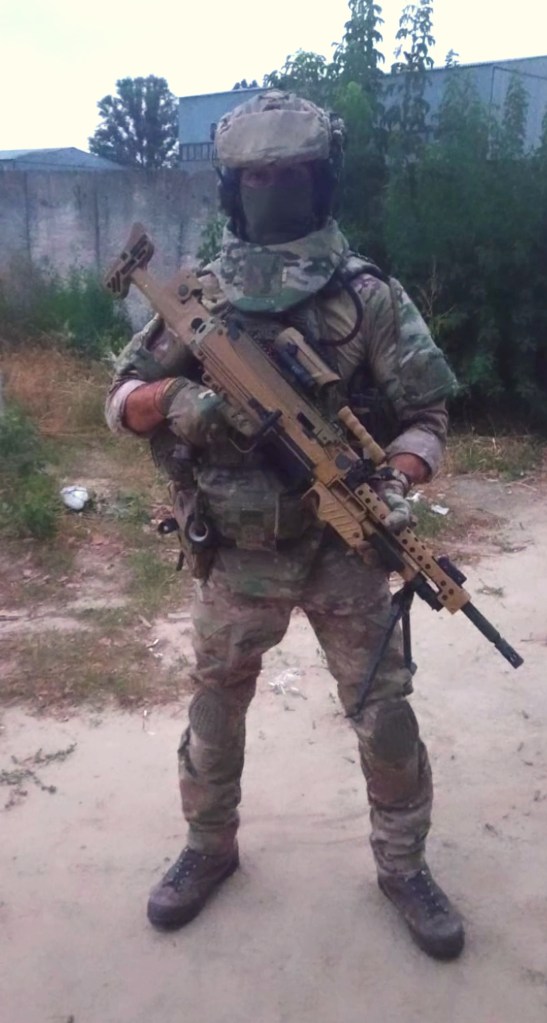
Jurado posted the first photo of an MG5 in Ukraine (via Social Media)

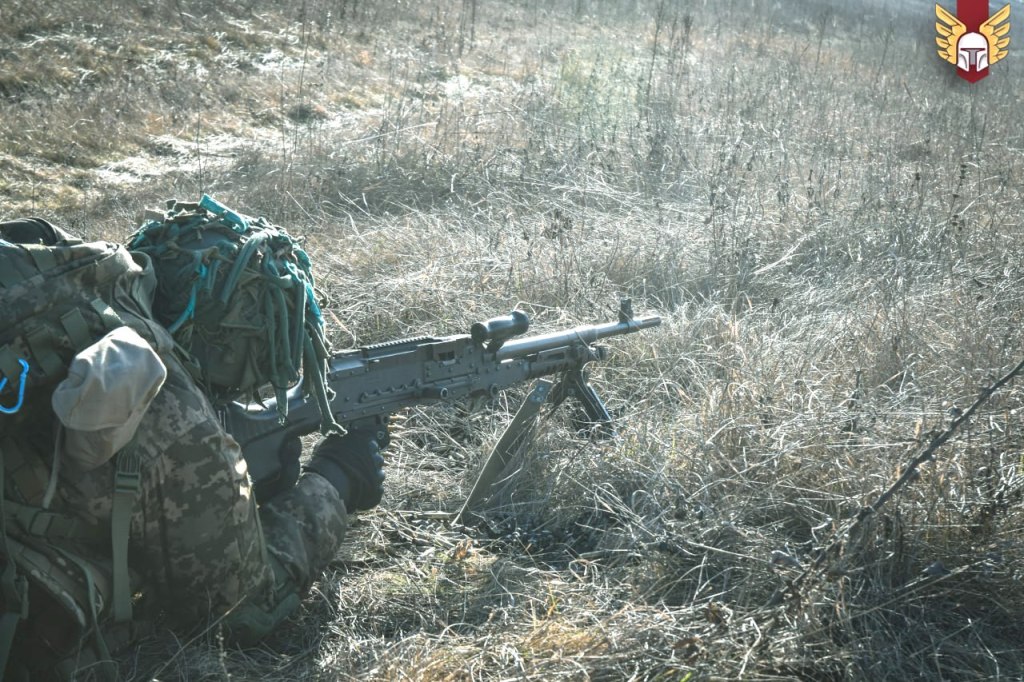
On 20 September, Jurado – a Spanish member of the International Legion, shared the first photograph of an MG5 in Ukraine. Several days later on 22 September, omega_team_gur shared another photograph of the MG5 at the range. According to Jurado his unit received three of the guns.

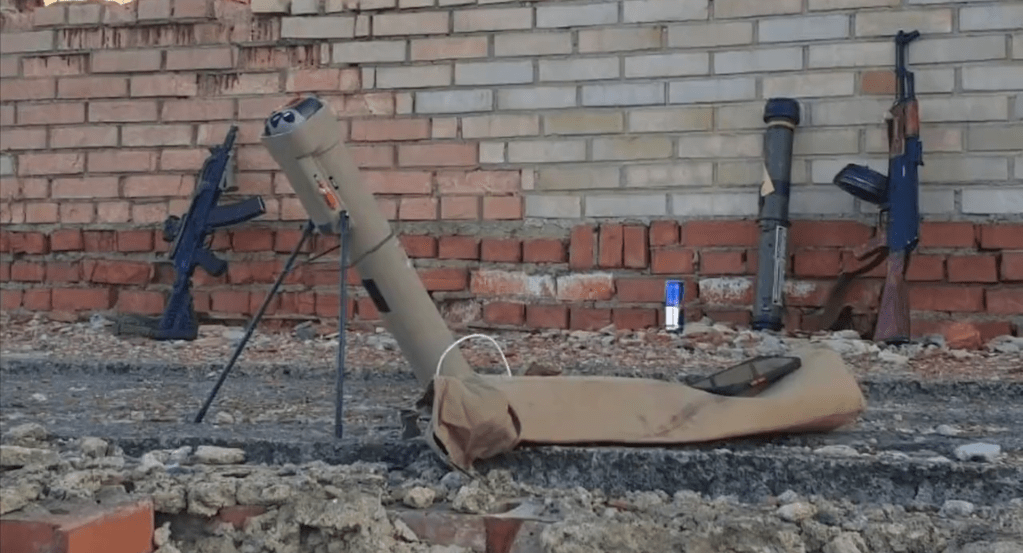
A week later Greek International Legion members shared the first video of one of the guns mounted on a Lafette tripod. Through discussions with some of the combatants whose units have received the MG5s not all the guns came with tripods. A member of a Ukrainian Military Intelligence Directorate, the GUR, team told us that the guns came in bags with accessories including an optic, bipod, cleaning kit, manual and spare barrel.
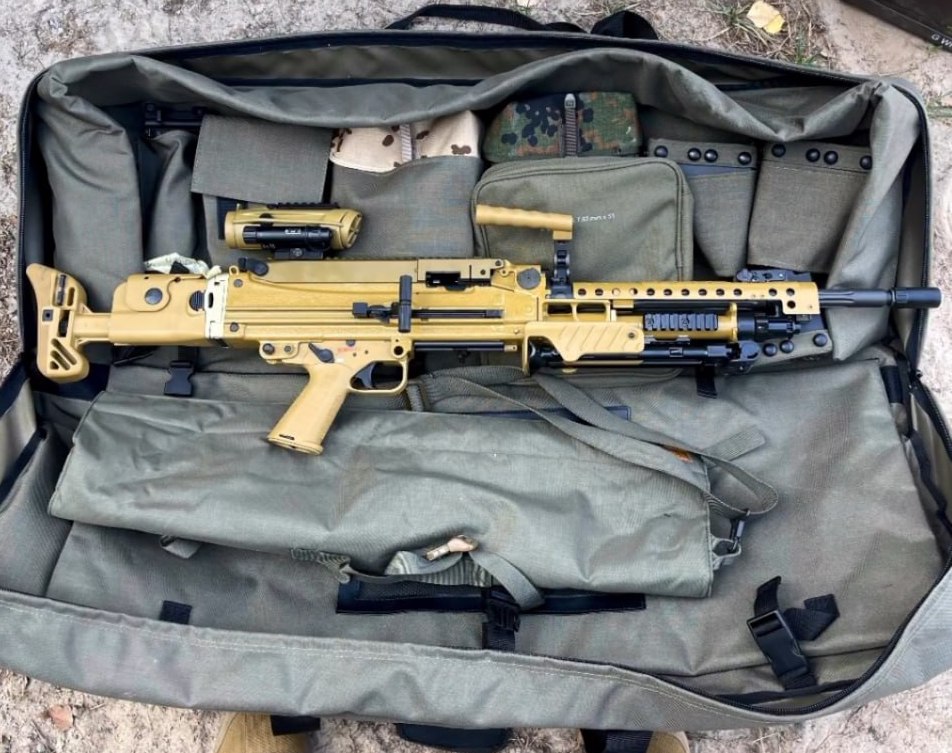
An MG5 in its transport bag (via Social Media)

A member of the GUR, callsign Shock, shared a photo with an MG5 on 28 September, and several more the next day. Shock told TAB that his unit had received two of the MG5s and that while they’re cool pieces of kit the are heavy “13+ kg without ammunition” [HK lists the MG5A2’s weight as 11.5kg or 25lbs]. Shock’s team appears to be one of the few GUR teams not made up of international volunteers to receive the guns. He also shared a photograph of two MG5s sat in their transport bags.

On the 30th September Omega Team shared another group photograph featuring an MG5 and several days later on 2 October, a member of the GUR’s Shaman battalion, shared a photograph of himself holding a new MG5. Another member of the Shaman battalion also shared a photograph of an MG5 in its transit case/bag. It can seen fitted with a Hensoldt 4x30i optic and a cleaning kit and a number of belt pouches can be seen in the case. Knights, another GUR team, shared a photograph featuring an MG5 on 6 October. This was followed on the 10 October by a unit photograph with an MG5 seen at the back of the group. During the same week, another SOF group made up of international volunteers, Black Maple, also shared a photograph featuring an MG5.
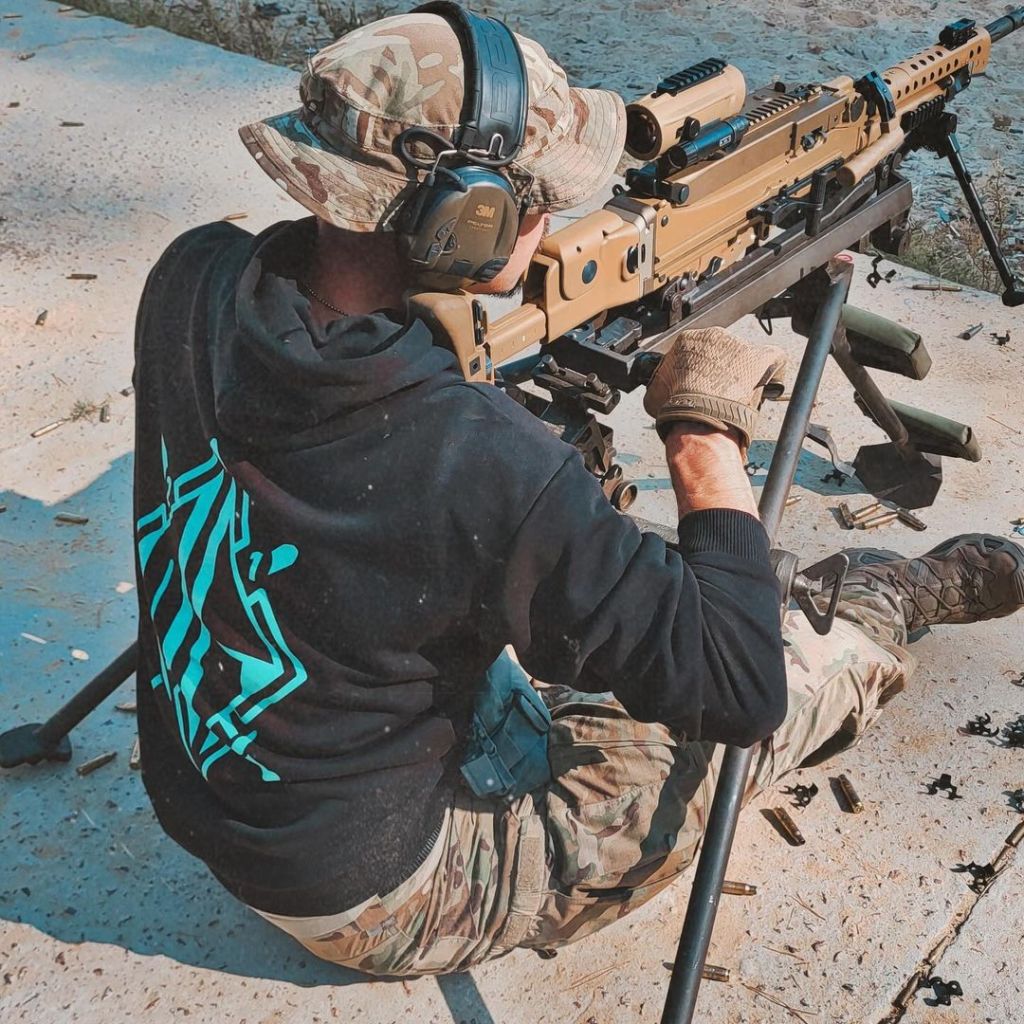
An MG5 mounted in a Lafette tripod at the range (via Social Media)

Another team, Operation 21 Group, posted a photograph on 16 October of an MG5 mounted on a Lafette tripod at the range. The gun is again paired with the Hensoldt optic. On around the 17 October, a member of the Kraken Regiment, also part of the GUR, posted a photograph holding one of the MG5s. Several days later the first glimpse of an MG5 being used in combat was shared by a GUR team, the MG5 can be heard firing and is just visible though the foliage.

On the 22 October the GUR’s Stugna Battalion also shared a promotional video featuring one of the MG5s. On 24 October imagery from a number of photographers showed members of the International Legion’s new Siberian Battalion training. Amongst an interesting array of small arms the battalion’s trainees also appeared to have a single MG5.

The team at GRaft, a Ukrainian company which fabricates ammunition boxes for machine guns, shared some video of testing of one of their boxes with an MG5 in late October. At the beginning of November Tactical Group Athena, another GUR team, shared a team photograph featuring not one but two MG5s.

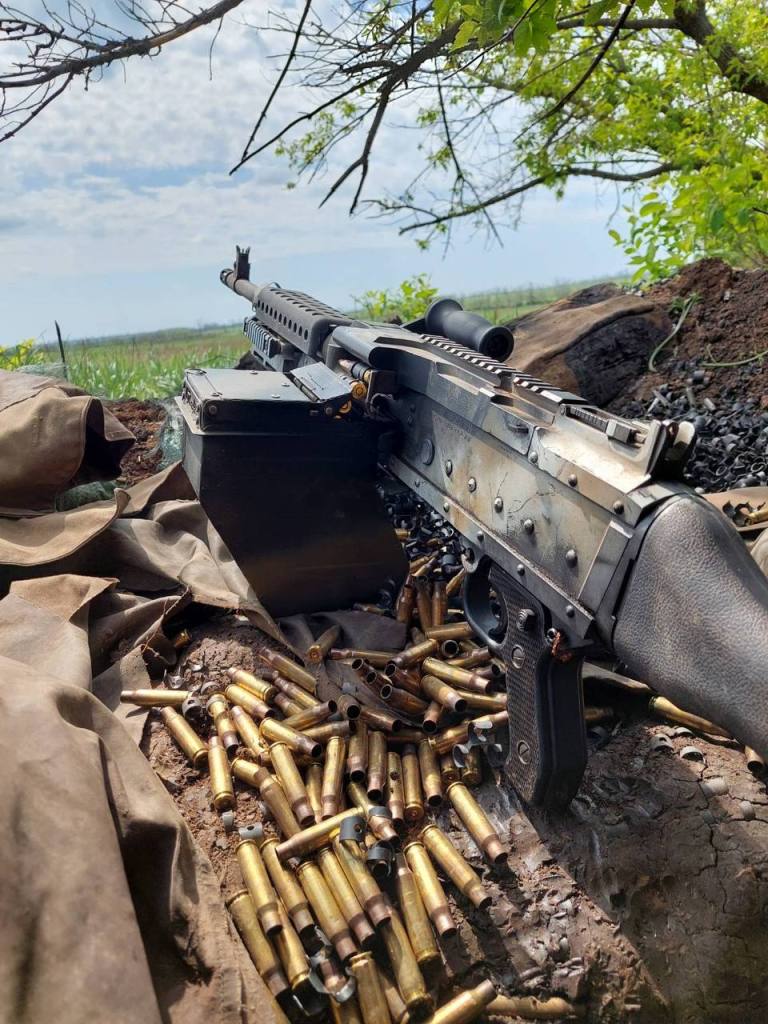
Later in November, the Knights shared a series of photographs and clips featuring the MG5. The first was posted on 4 November, showing the gun in a fighting position. This was followed on the 13 November, by a short video of an MG5 firing from its bipod in a frontline position in the trenches feeding from a British 7.62x51mm ammunition box. I spoke to one of the members of Knights about the MG5 and they described it as ‘a fantastic weapon’ and while “a bit on the heavy side [it’s] still a good weapon system and we love to use it!”
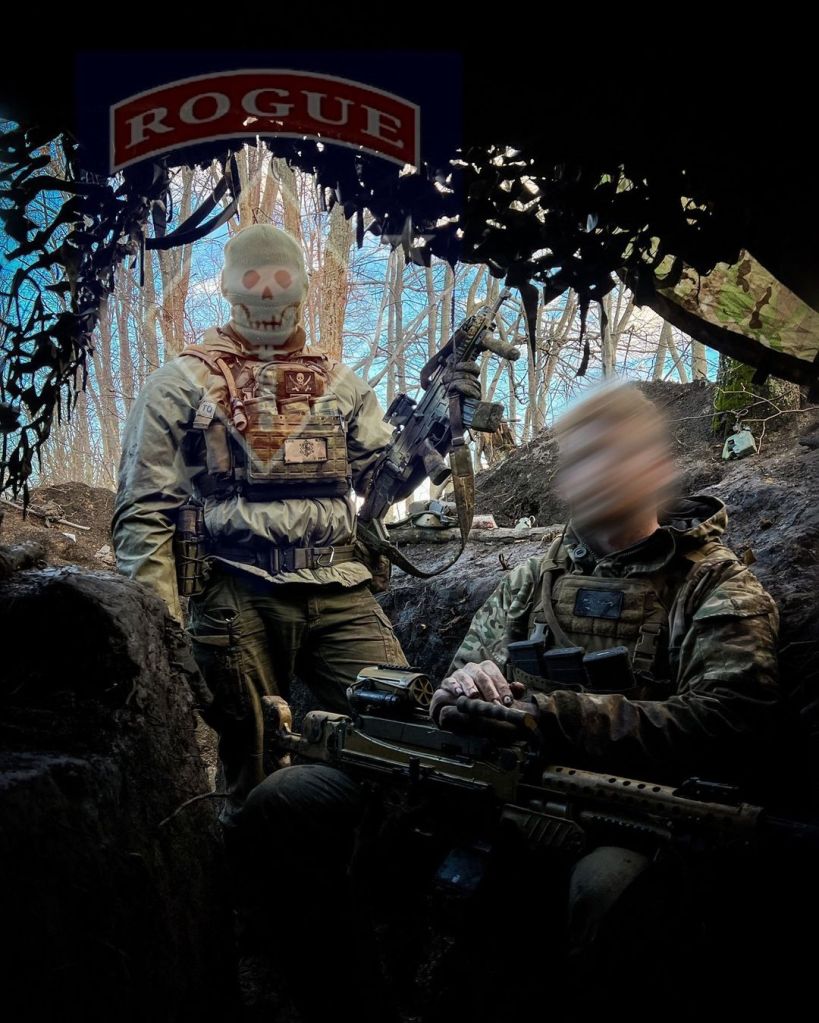
A member of Rogue Team holds an MG5 in a frontline trench (via Social Media)

Omega team shared another group photo featuring an MG5 on 12 November. Later that week Rogue Team posted a photograph of two combatants in a frontline trench, one is seated holding an MG5. A week later the GUR shared a video on their YouTube channel about their amphibious operations in Crimea, on 16 November, with an MG5 briefly appearing in part of the sequence. Towards the end of November a video from the Knights team thanking people for kit donations also featured an MG5. On the 14 November, an element of the Kraken Regiment, Special Assault Company, shared a promotional video featuring a drive by with an MG5 being fired out the window of a vehicle at a range. On the 19 November Rogue Team shared a team photograph, with one combatant holding an MG5, a day later a member of the team shared a short clip from the range showing the MG5 in action with the caption ‘I love MG5’. Finally, on the 26 November another MG5 was seen in a photograph of members of Kraken.

All of the guns appear to have HK’s RAL 8000 (FDE-ish) finish and are of the MG5 A2 configuration with the shorter 460mm (18in) barrel. The guns also appear to have been provided with Hensoldt 4x30i ‘intermediate range targeting optics’. From the imagery which has surfaced so far we can see that the MG5s have predominantly been issued to special operations forces including teams from the GUR and possibly the SSO. Despite the small number of guns officially confirmed to have been transferred they have been widely photographed in theatre and when asked by TAB comments from combatants using them have largely been positive. It is unknown what quantity of spares were provided with the guns or if more may be provided by Germany in the future.

Thank you to friends at Cloooud and at StreakingDelilah for their help gathering imagery for this video.

Update – 2/12/23:
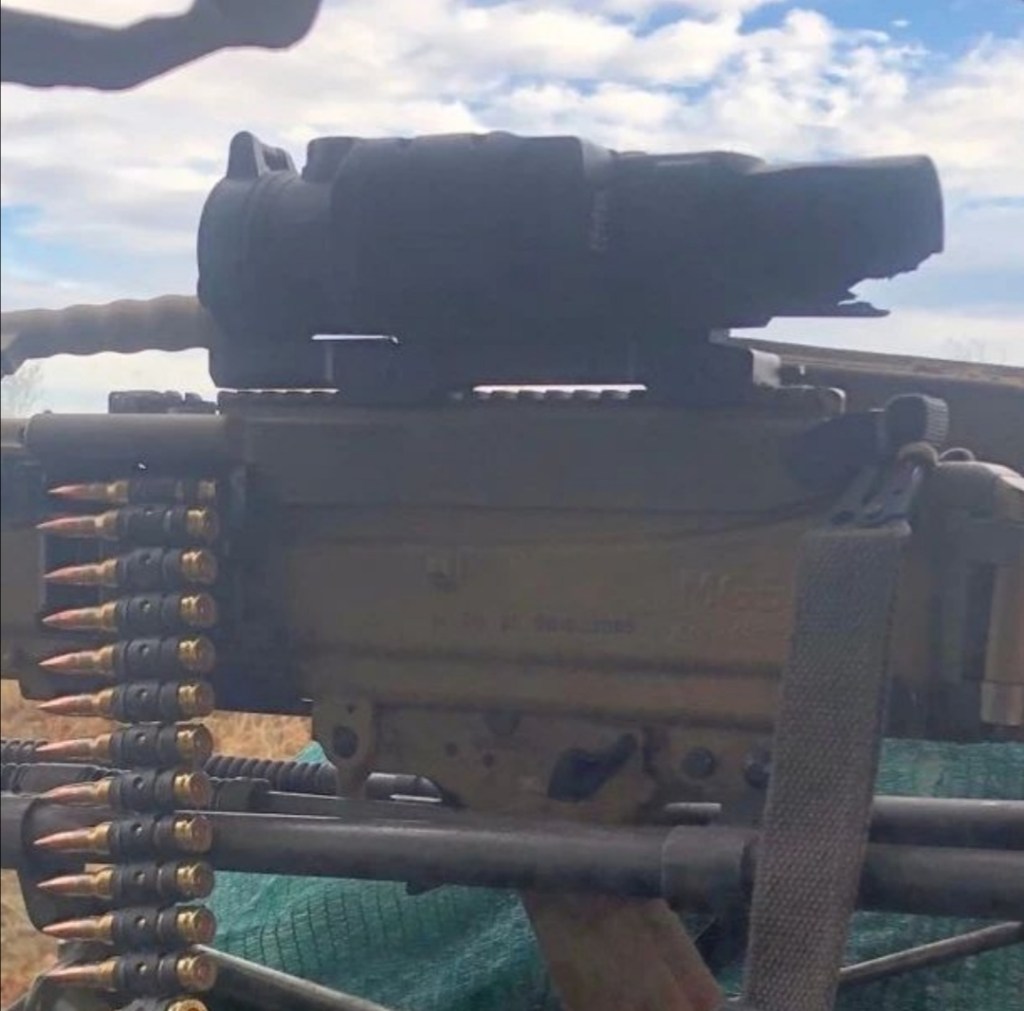
Ukrainian combatant, Valgear, shared a photo of an MG5 in a Lafette tripod fitted with a thermal optic. Both the gun and optic have apparently been damaged by shrapnel.

Update – 03/12/23:

Machine gun training (Bundeswehr/KSK)

The Bundeswehr issued a statement on training Ukrainians SOF members and shared a photograph of Ukrainians training on MG3 and MG5 machine guns. Unlike the guns seen in Ukraine the MG5s have 550mm (22in) barrels.

Update – 9/12/23:

Another GUR team, Stugna, have shared photos of an HK MG5 in recent weeks.

Update – 13/12/23: The recently formed Sibir Battalion were photographed again training with an MG5.

Update – 11/1/24: GoPro footage of an MG5 in action, reportedly from the GUR’s Rogue Team.

Update – 18/2/24: A platoon of the Sibir Battalion photographed with an MG5.

Update – 16/04/24: HK MG5 with optic.

Update – 7/6/24: Rogue, a GUR direct action team, shared some video of their machine gun team in action near Kupyansk in November 2023. It gives a great look at the MG5 in action and also features a brief glimpse of the gun’s spare barrel and it’s reload drills.


Support Us: If you enjoyed this video and article please consider supporting our work here. We have some great perks available for Patreon Supporters – including early access to custom stickers and early access to videos! Thank you for your support!


Bibliography:

Military Support for Ukraine, Bundesregierung, (source)

HK MG5, Heckler & Koch, (source)

MG5 – Bundeswehr Receives Additional Machine Guns, S&T, (source)

For more on Germany’s aid to Ukraine check out deaidua.org
BAS-80: Russia’s Switchblade Loitering Munition
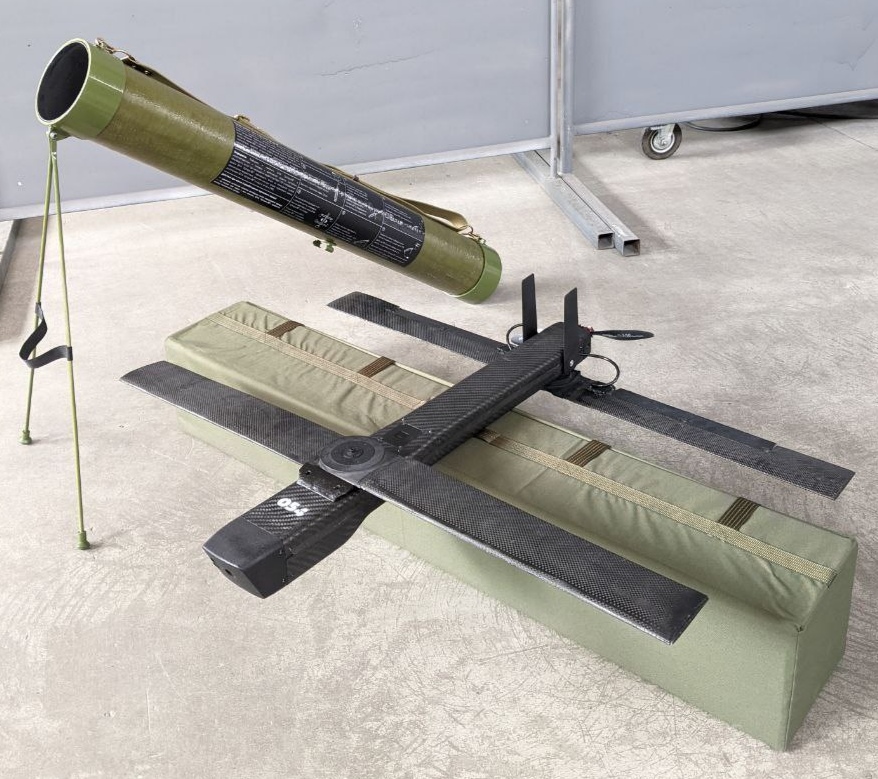
Reports from Russian media outlets announced on 18 September, that Android Technics/Technology, a Russian technology company, had developed an analogue of AeroVironment’s Switchblade 300 loitering munition. Imagery and footage of the BAS-80 was shared by Russian state news outlet RIA.

Android Technology’s Managing Director, Evgeny Dudorov, told RIA that they had provided a ‘couple’ of the loitering munitions to a volunteer unit, the Tsar’s Wolves, which reportedly provides military-technical assistance to Separatist units. Dudorov hopes that the unit will “find the best ways” to use the new kamikaze drone. Back in April, the development of the BAS-80 was first reported when Android Technology stated that the munitions would be mounted on the Marker armed unmanned ground vehicle.

BAS-80 (via RIA)

Russia has had considerable success in the field with its larger, heavier Lancet loitering munitions developed by ZALA Aero Group which is a part of Kalashnikov Concern. The most advanced variants of Lancet boast a 11lb/5kg payload. The Ukrainian’s, however, have demonstrated an edge when utilising smaller FPV kamikaze drones. These FPV drones appear to be favoured over the Switchblade 300.

The BAS-80 bares more than a passing resemblance to the US-manufactured Switchblade which the US has provided to Ukraine in moderate numbers since March 2022. Utilising the same folding wing configuration and man-portable tube-launch system.

Dudorov stated that the BAS-80 is made from carbon fiber, weighs in at 3.7lb/1.7kg and has a maximum flight speed of up to 80mph/130kph. He also claimed that it can travel up to 18.6 miles/30km and carries a 1.1lb/500g payload – which may suggest that its intended for anti-personnel and anti-materiel use, like the Switchblade. This would made the BAS-80 0.6lb/300g lighter than the Switchblade 300 and have 12.5 miles/20km more range. Photographs of the munition show that it uses a pusher propeller configuration and has three forward-facing optical lens for guidance.

A Switchblade 300 in the field in Ukraine, 2022 (via social media)

It remains unclear if the Russian munition was developed using technology found in captured Switchblade 300s. Other analogues of the Switchblade have been developed by both China and Iran. China unveiled the FH-901 loitering munition in September 2022 and Iran introduced the Meraj-521 in October 2022. Both systems appear to be externally different in size and shape to that of the BAS-80, with the Chinese munition larger (more analogous with the Switchblade 600) and the Iranian drones launching from a rectangular box. The BAS-80 launches from a cylindrical tube more akin to the Switchblade.

The BAS-80’s guidance systems, software and internals remain unknown and from Russian reports it is still some way from mass production with development to be finalised following trials in the field.

This article was adapted from one originally published at OvertDefense.com


Support Us: If you enjoyed this video and article please consider supporting our work here. We have some great perks available for Patreon Supporters – including early access to custom stickers and early access to videos! Thank you for your support!


Bibliography:

BAS-80, RIA, (source)

China unveils its version of Switchblade suicide drone, Global Times, (source)

US Switchblade Drone ‘Knock Off’ Meraj-521 Unveiled By Iran, Eurasian Times, (source)

OTO Melara Mod 56 In Ukraine

We’ve examined a number of artillery systems in use in Ukraine, including the venerable M101 howitzers and the MT-100s mounted on MT-LBs, one of the smallest and most interesting howitzers in use is the OTO Melara Mod 56.

The Mod 56 is a small 105mm pack howitzer. It weighs in at 1.29 metric tons and it can be towed by light vehicles. It has a split trail gun carriage and a hydro-pneumatic recuperator assembly. Developed by Italy’s OTO Melara the gun entered service in the mid-1950s and has seen service with countries around the world including Italy, the UK, Australia, Spain, Pakistan and the Philippines.

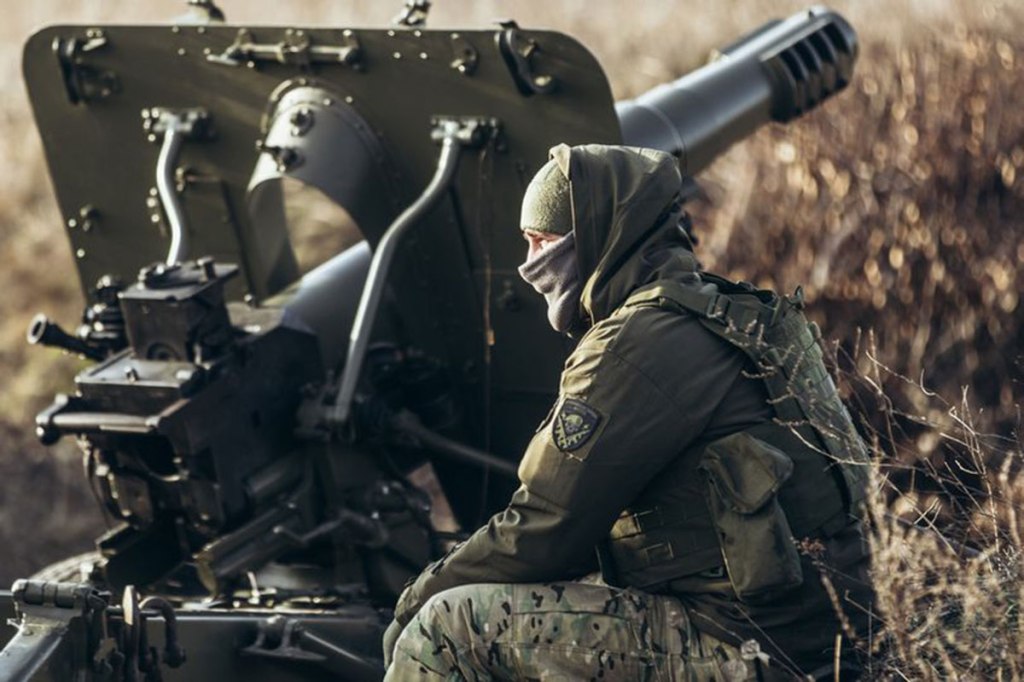
An OTO Melara Mod 56 (Ukraine National Guard)

Much like the heavier M101 howitzers, transferred to Ukraine by Lithuania, the Mod 56 can use any M1 105mm ammunition. With its short 1.47 metre-long barrel, the Mod 56 has a maximum effective range of around 10,000 metres (10km/6 miles). While this puts it at a severe disadvantage compared to the larger 155mm howitzers used by Ukraine and the 152mm guns used by Russia the small Mod 56 has the advantage of being lightweight and can be deployed forward under cover. The most useful role it could likely fulfil is as an infantry support gun.

In November 2022, Spain’s Defence Minister Margarita Robles confirmed that Spain would send a battery of six light howitzers and also provide training for Ukrainian gun crews. Subsequently, a brief clip of Ukrainian gunners training on the Mod 56 was shared in late November.

A Mod 56 in action (via social media)

The guns were seen in Ukraine for the first time in early January, with a short clip of one of the guns firing being shared on 11 January. It appears the gunner is wearing a National Guard patch but its unclear which unit the gun belongs to. On 12 January, the 1st Mechanized Battalion of Ukraine’s 3rd Assault Brigade posted an info-graphic giving some basic detail on the Mod 56.

On 20 February, a brief clip of a Mod 56 was shared, the footage was believed to have been taken in the vicinity of Bakhmut. However, photographs taken by an AP photographer, Libkos, of the same gun showed that the gun was actually in action in Avdiivka, Donetsk. The series of photographs also showed that the gun was being operated by a National Guard unit and the crew was using drone footage to select their targets. One photograph was also shared by President Zelensky on 5 March. Interestingly, the gun is seen without its shield.

Another video of one of the guns in action was shared on 16 April. It was several months before more imagery of the Mod 56s in use appeared but on 1 June, the Ukrainian National Guard shared a photograph of one of the guns and several days later, on 3 June, a short video of a gun in action was shared.

A Mod 56 in action (via social media)

Most recently on 19 July, a Ukrainian National Guard unit shared a brief clip of a Mod 56 firing. It also nicely illustrates the gun’s breech mechanism.

From the available imagery, it appears that the guns are operated by Ukraine’s National Guard, though which artillery unit is unclear. While it has been confirmed that Spain has provided at least 6 Mod 56 howitzers, it remains unknown if any other countries, such as Italy, have provided the small guns.

Update 29/12/23:

An undated sighting of a Mod 56 in operation in Ukraine. Notably half of the gun shield appears to be missing.

Update – 17/04/24: A clip posted on 7 April, date of recording unconfirmed, showing a Mod 56 in action. The howitzer’s gunshield has been removed.

Update – 29/5/24:

Update – 23/07/24:


Support Us: If you enjoyed this video and article please consider supporting our work here. We have some great perks available for Patreon Supporters – including early access to custom stickers and early access to videos! Thank you for your support!


Making Belt Boxes For Ukraine’s Machine Guns

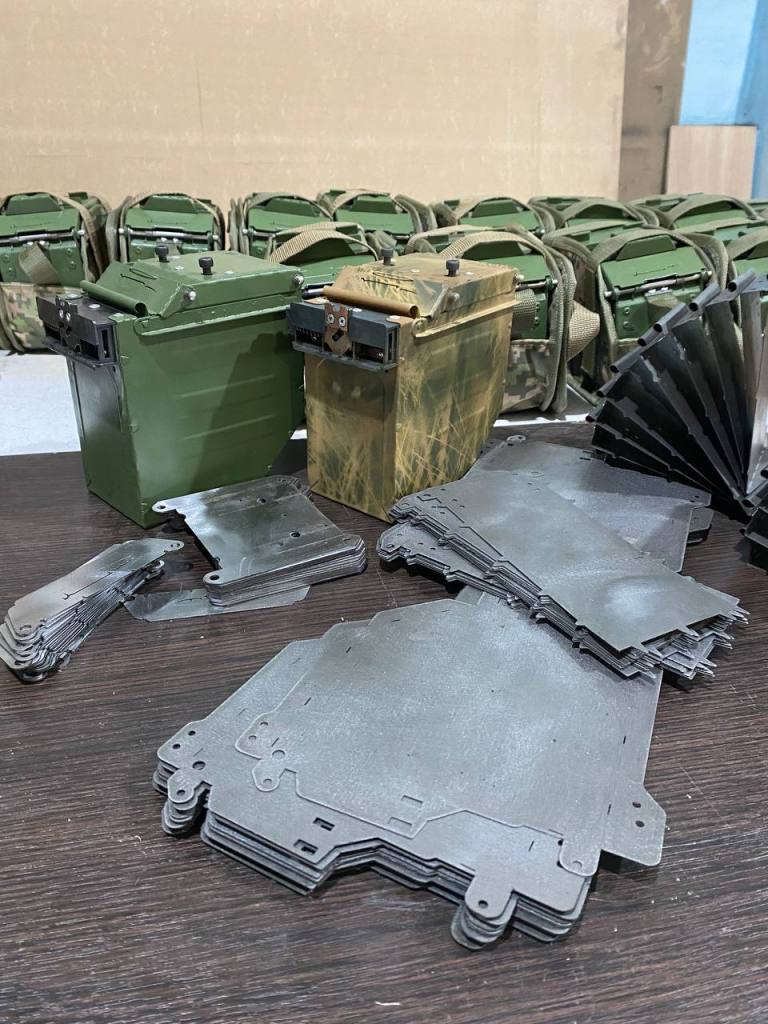
Earlier this month Popular Mechanics published an article I wrote about GRaft, a Ukrainian company which has manufactured belt boxes for almost every type of machine gun being used by the Ukrainian armed forces.

While belt boxes might not seem like the most exciting pieces of military equipment, they’re no less vital than the guns they’re paired with; the boxes are essential for storing and carrying ready-to-use belts of linked ammunition, and they allow machine gunners to move around unencumbered by hanging belts that can become tangled.

M240 GPMG with GRaft 100-round belt box (GRaft)

GRaft initially designed and manufactured furniture including benches and tables but with the full-scale Russian invasion in February 2022, they have since turned their attention and skills to belt boxes. With machine guns being transferred to Ukraine by a plethora of different countries this has led to a wide variety of machine guns entering service with the Ukrainian armed forces. In many cases the machine guns transferred to Ukraine are often without enough belt boxes.

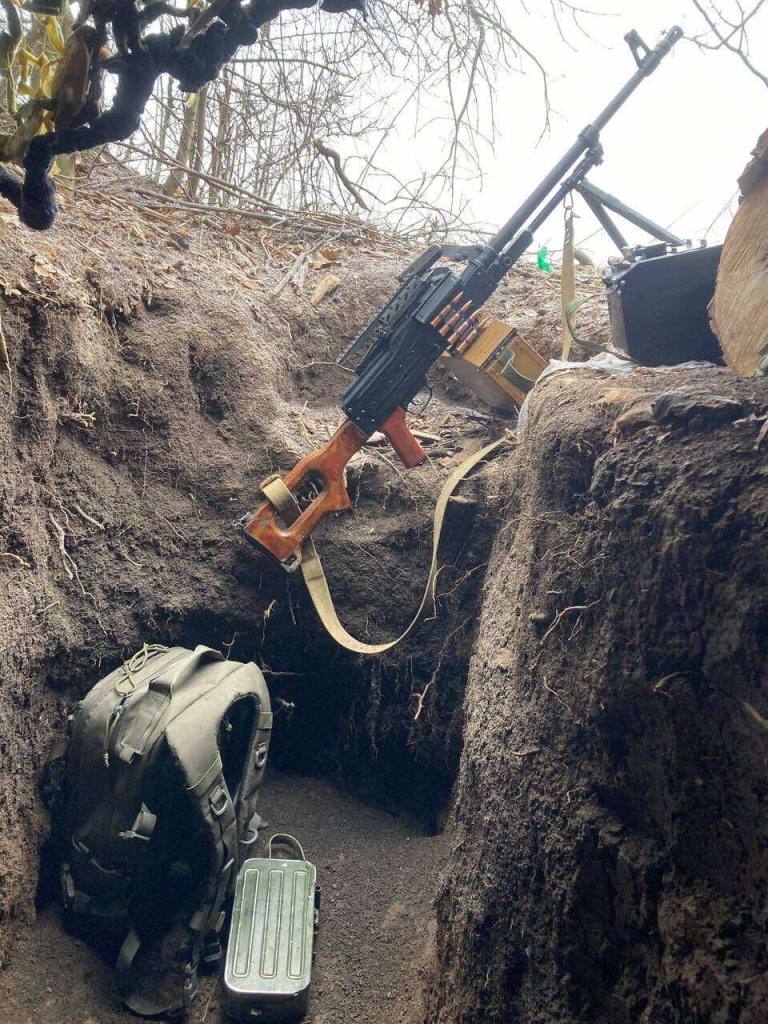
I spoke to one of GRaft’s engineers who explained that their impetus to begin designing and manufacturing belt boxes came from friends’ experience with old boxes for PK-pattern machine guns. He explained that the old aluminium PK boxes had seen decades of service and there was a general shortage of them.

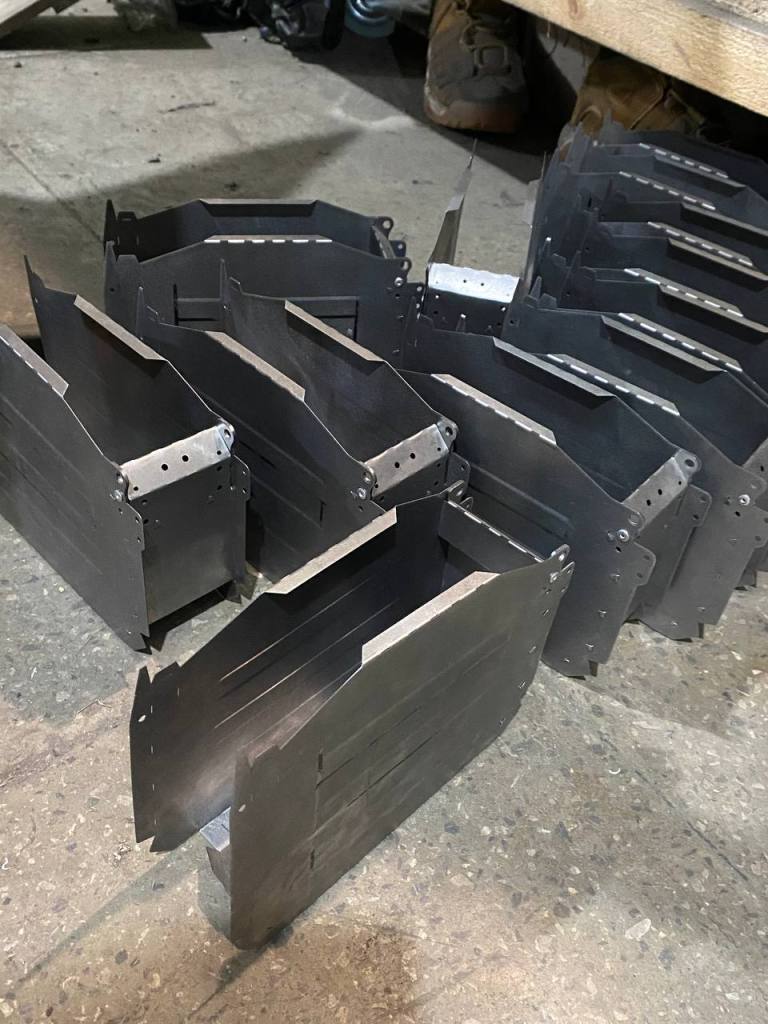
GRaft belt boxes at various stages of fabrication (GRaft)

GRaft began work on their PK box in April 2022 and within a month had a design ready for manufacture. GRaft refined its designs based on direct user feedback and soon began working on belt boxes for other weapons ranging from 14.5mm KPVs to 5.56x45mm and 7.62x51mm FN Minimis.

GRaft kindly shared some videos from their workshop showing how the belt boxes are fabricated. They use laser cutting to cut sheet metal into blanks which are then shaped and riveted and spot welded into their final form. They work with a small paint shop that then powder coat the boxes.

PK GPMG with GRaft belt box (GRaft)

The company also developed 75 and 100-round boxes for the FN MAG/M240, the 100 round box was designed with an angled wall so the mass of the belt sits closer to the weapon’s center of balance, improving the weapon’s handling. Similarly they have also begun producing boxes for 7.62x51mm MG42-pattern machine guns. Their goal, the engineer told me, is “satisfied machine gunners” but really they’d like to get back to producing furniture.

Check out my full article on GRaft’s work over at Popular Mechanics.


Support Us: If you enjoyed this video and article please consider supporting our work here. We have some great perks available for Patreon Supporters – including early access to custom stickers and early access to videos! Thank you for your support!


The Fanta Bomb & Improvised Munitions in Ukraine

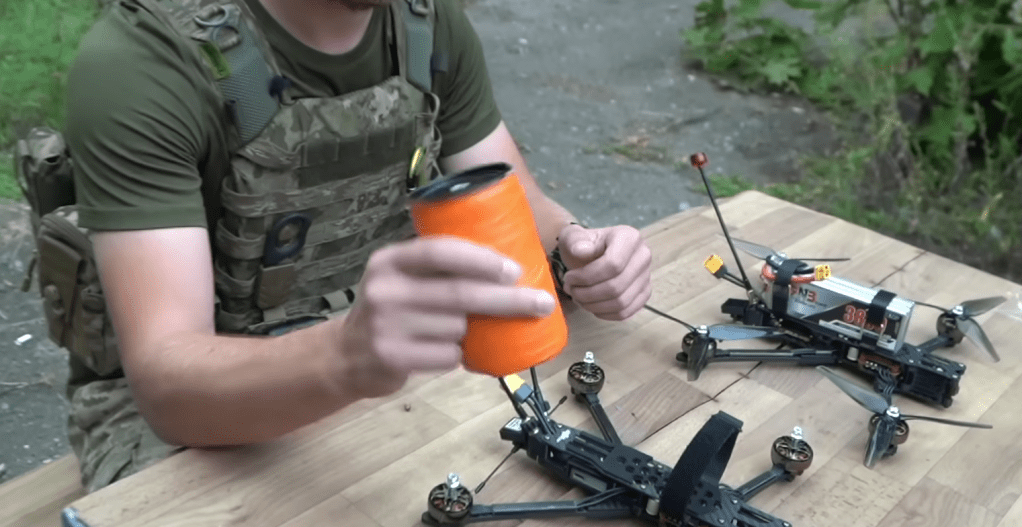
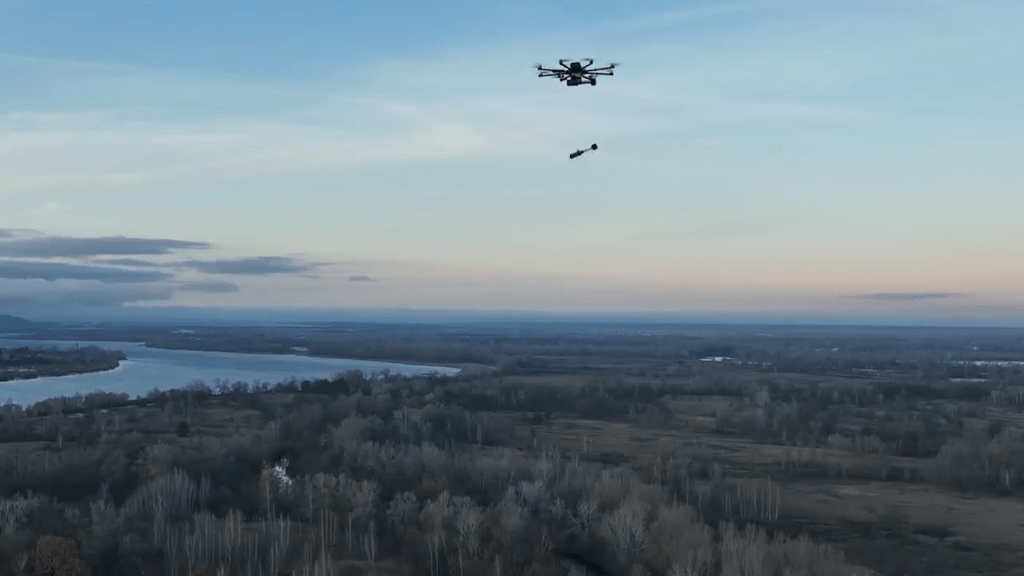
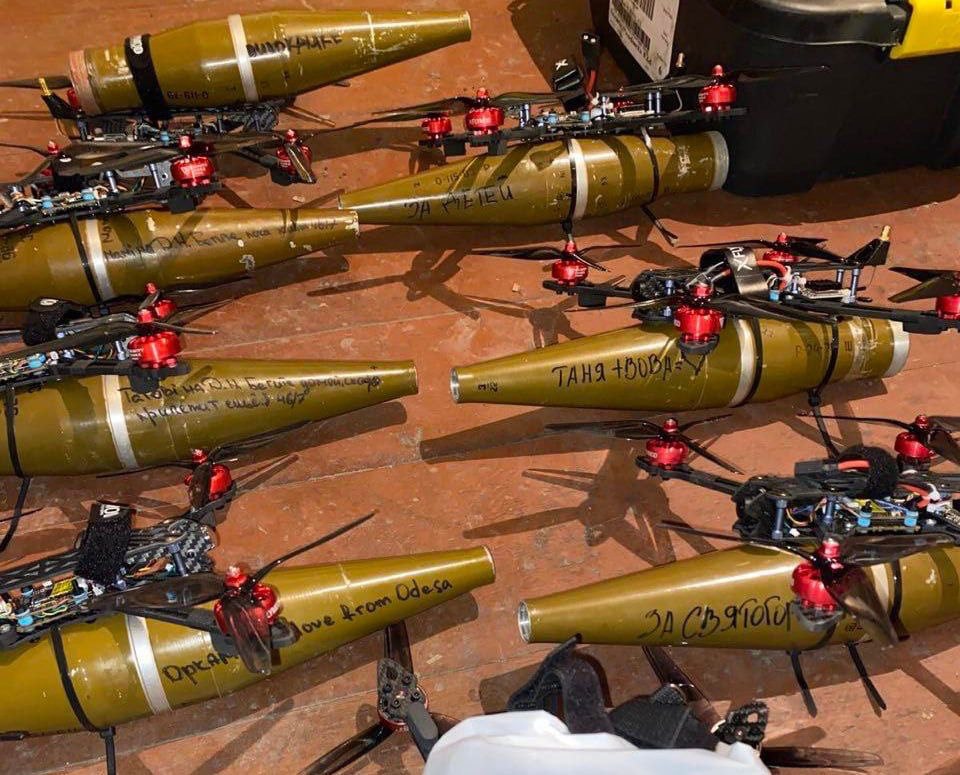
All sorts of munitions have been dropped from drones ranging from hand grenades to Molotov balloons to mortar rounds and even blocks of explosive. In this article/video, we’ll look at a couple of interesting examples of improvised munitions.

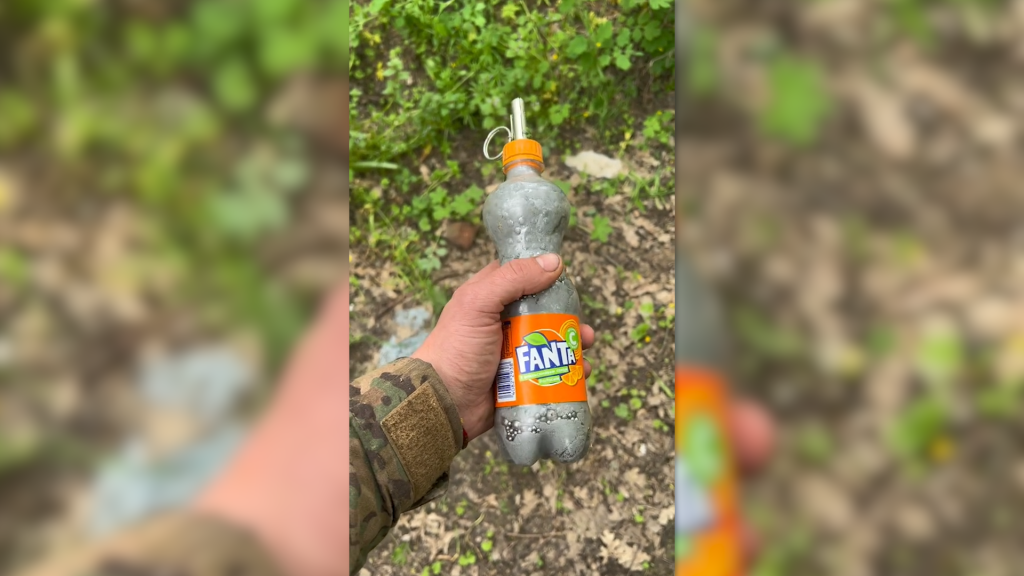
In early May an interesting short video was shared by a Ukrainian combatant showing a Fanta soft drink bottle filled with explosives and what appear to be ball bearings of different sizes. It’s hard to tell what sort of explosive has been used but the bottle is topped with a UZRGM grenade fuze.

The Fanta Bomb (via social media)

Ordnance Lab made an interesting video a couple of weeks ago testing an approximate version of the Fanta bomb and found it to be fairly effective in terms of blast and fragmentation. Though their version looked to contain more ball bearings and they noted it weighed around 3kg.

The only other similar munition to surface was seen in a photograph that showed a box of Polish Kropla Beskidu water bottles which also appear to be filled with explosive materials and fuzed with standard UZRGM fuzes. 

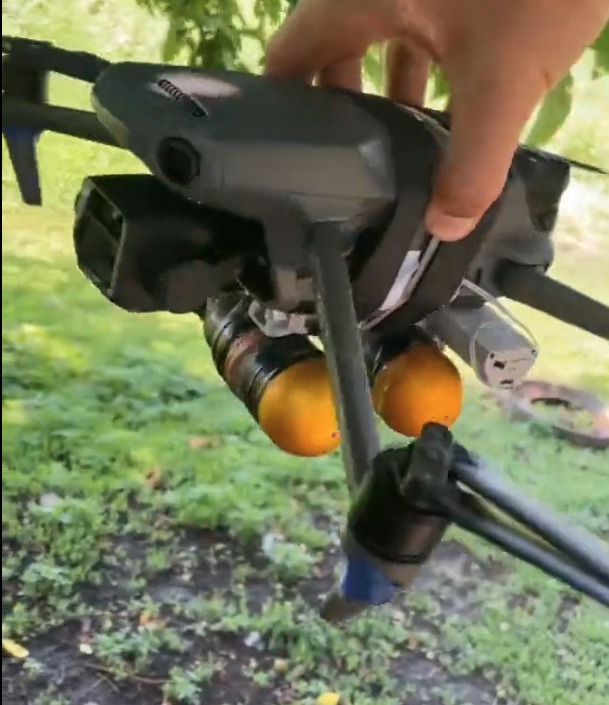
Improvised can-based warhead for FPV drone (via social media)

It’s unclear whether the grenades are designed for ground use or perhaps for dropping from drones. If the fill of the grenade is purely explosive then it would have a significant blast effect but minimal fragmentation – likely why the Fanta bottle example has been augmented with ball bearings. 

There is also evidence of the simple use of directly using TNT blocks with UZRGM fuzes, with the Georgian Legion evidently dropping them from drones. 

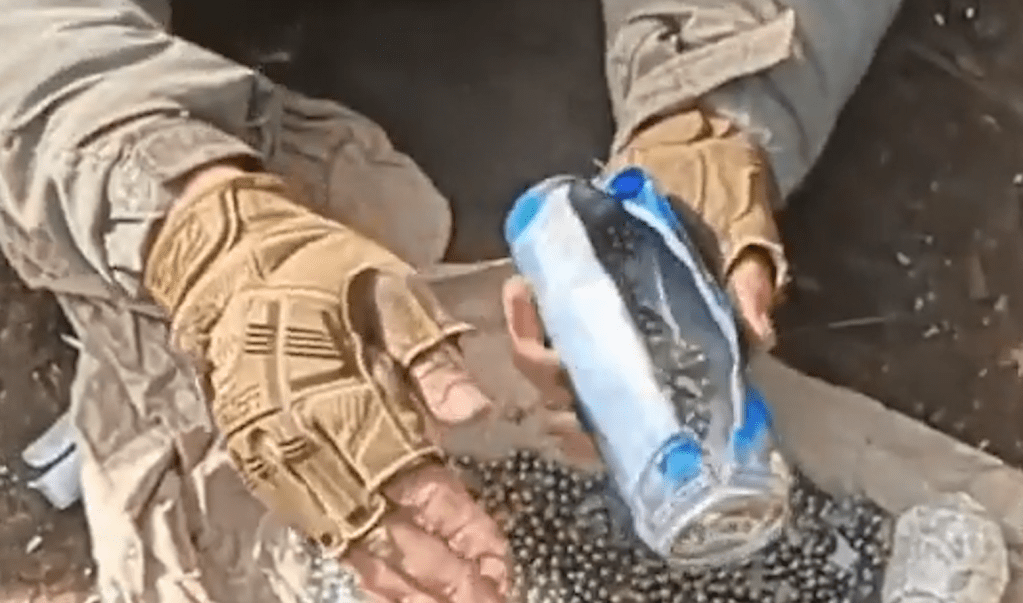
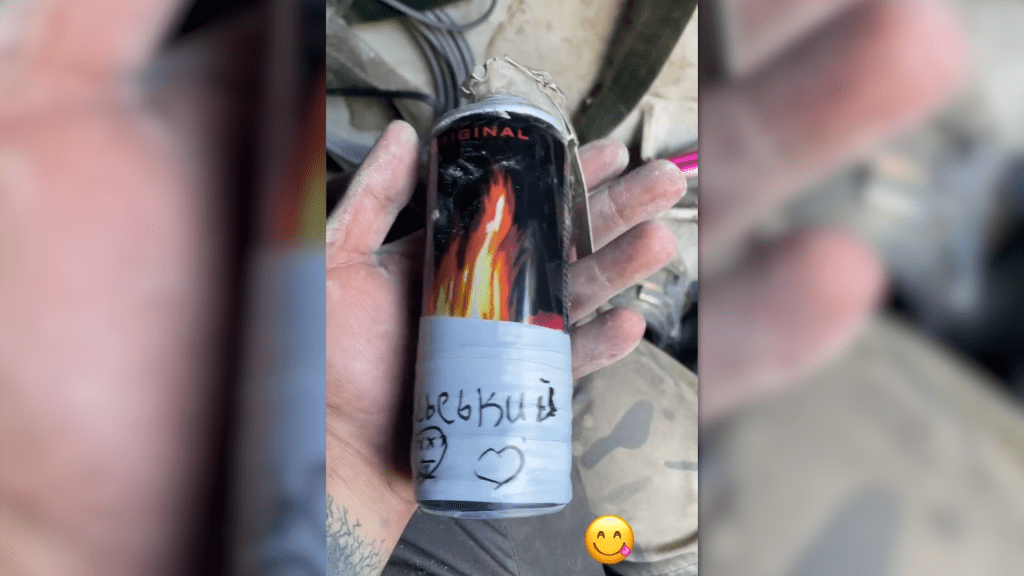
Old drinks cans have also been used to make improvised explosive devices. In early May a video showing a ‘Non Stop’ energy drink can being split open and filled with plastic explosives and ball bearings was shared. The can was then attached to a First Person View (FPV) drone and used against personnel in a Russian trench. 

In June several short clips were shared featuring drinks cans with grenade fuzes. Two with UZRGM fuzes and one can with what appears to be a DVM fuze. The can could be augmenting a Bulgarian fragmentation grenade such as an AR-ROG or GHD/RGD series.    

Improvised can-based grenade (via social media)

In July, Ryan O’Leary, a US volunteer in Ukraine, shared a photograph of 5 craft-made grenades constructed from plastic drinks bottles slipped into the base of Red Bull and Non Stop energy drink cans. O’Leary suggests that there is approximately 1-2 kg of RDX explosive inside. They are again topped with UZRGM fuzes and secured with tape.

Improvised grenades made from bottles and drinks cans (via social media)

So why are these munitions being made? Often when I cover improvised munitions people ask are the Ukrainians not receiving billions in aid? The answer to this is – they are. However, aid doesn’t always include all the types of munition you might want. Similarly, the combatants improvising these munitions may not receive the types of munitions they need –  wartime logistics can be challenging. Additionally, the combatants producing these munitions may be looking for bombs with improved blast and fragmentation over what is available.

Update – 25/07/23:

Update – 27/09/23: A BBC Newsnight report featured a drone company attached to the 24th Brigade. A can-based improvised exposive device, designed to be dropped from a drone was featured.

Update 15/5/24: On 3 May a Ukrainian telegram channel shared a clip of a drone dropped munition attack on Russian infantry. The munition appears to be enclosed in a Pepsi can. The unit involved is claimed to be a drone unit of the National Guard’s 4th Rapid Reaction Brigade.

Update – 15/7/24:

In addition to bottles and cans packed with explosives, both sides have utilised bottles filled with incendiary mixtures. These have seen being dropped from drones on positions and vehicles.

Update – 28/5/25:

A member of the 6th Special Purpose Battalion of the 12th Special Purpose Brigade “Azov” used an DIY bottle bomb, as an enhanded blast grenade to demolish the front of a single story building during fighting near Toretsk.


Support Us: If you enjoyed this video and article please consider supporting our work here. We have some great perks available for Patreon Supporters – including early access to custom stickers and early access to videos! Thank you for your support!


Bibliography:

UZRG-M Fuze, CAT-UXO, (source)

DVM Fuze, CAT-UXO, (source)

Understanding Drone Warfare in Ukraine

Drone warfare is a complex and nuanced topic with drones used for information gathering, observation and direct attacks. The war in Ukraine has seen an explosion in drone use ranging from small commercial DJI Mavics to military grade drones like the Bayraktar TB-2. In this video I’m joined by author and journalist David Hambling who has been tracking and writing about drone use in Ukraine since the Russian invasion in February 2022.

We discuss the expanding role drones have played in the conflict, how they are deployed and the impact they have. We touch on countermeasures used by both sides, the psychological effect the drones can have and what the future holds for drone use.

Check out David’s book on drones, ‘Swarm Troopers‘.


Support Us: If you enjoyed this video and article please consider supporting our work here. We have some great perks available for Patreon Supporters – including early access to custom stickers and early access to videos! Thank you for your support!


French Machine Guns In Ukraine

Since February 2022, France has provided Ukraine with a wide range of weapon systems and military equipment including self-propelled artillery, armoured personnel carriers, anti-tank guided missiles, hand grenades and air defence systems. In this article/video we’ll look at the rarely seen machine guns which France has provided.

In the summer of 2022 France announced the transfer of armoured personnel carriers and AMX-10 RC armoured fighting vehicles. The APCs appear to have largely consisted of Véhicule de l’Avant Blindé (VAB)s, a wheeled 4×4 which entered French service in the late 1970s and is set to be replaced by the VBMR Griffon. The VABs are largely operated by the 46th Separate Airmobile Brigade and the 47th Mechanised Brigade and have been seen in action since July 2022.

A French FN MAG mounted on a VAB (46 OAeMBr)

The majority of the VABs in Ukrainian service appear to be equipped with 12.7x99mm Browning M2 heavy machine guns, however, some have been seen equipped with 7.62x51mm general purpose machine guns. Most intriguingly, in late May 2023 a photograph of a Ukrainian soldier holding an AANF1 emerged. An earlier video, shared in July 2022, of a VAB in the field may have been mounted with an AANF1 but due to low resolution it is difficult to be definitive. The later May 2023 photograph, however, confirms that France has supplied an unknown quantity of GPMGs. It is likely that the AANF1 was provided along with a VAB, notably the weapon is without its bipod. At the time of writing there have been no further sightings of AANF1s.

Ukrainian combatant with an AANF1 (via social media)

The AANF1 is the 7.62×51mm variant of AA-52, a lever-delayed blowback operated belt-fed machine gun introduced in the 1950s. Since the 2010s, the AANF1 has slowly been superseded by the FN MAG. French FN MAGs have been seen in use with members of the 46th Separate Airmobile Brigade. They have been seen both mounted and dismounted from the VABs. While a significant number of MAG-patterned guns have been provided to Ukraine by numerous countries including the US (M240), Sweden (Ksp 58) and the UK (L7A2) the French MAG 58s are identifiable by the their railed top cover and a handguard attached to the gas tube which provides additional rail space.

A dismounted French FN MAG (46 OAeMBr)

In early November 2022, a video showed the best part of a mechanised battalion equipped with VABs, which are armed with a mix of M2 heavy machine guns and GPMGs. Later in November the 46th Separate Airmobile Brigade shared photos of troops training including several photos of French MAG 58s mounted on VABs. In late January 2023, the Brigade shared a photo of the guns being used in the dismounted role while conducting urban warfare training. Several days later another photo was shared of a dismounted French MAG at a range. Another training photograph of a MAG mounted on a VAB was shared in March 2023.

The French MAGs haven’t been seen in use with any other Ukrainian units so far. But with significant numbers of French armoured vehicles its possible we’ll see further MAGs and AANF1s in the future.

Update 21/10/23:

Update – 10/3/24: The French government has released an updated document listing the equipment and some of the quantities provided to Ukraine. The document states that 210 ‘Mitrailleuse 7.62mm’ (the pattern of gun is not stated) and 710 ‘Mitrailleuse 12.7mm’ (likely M2 Brownings) have been provided between 1 March, 2022 and 1 May, 2024.


Support Us: If you enjoyed this video and article please consider supporting our work here. We have some great perks available for Patreon Supporters – including early access to custom stickers and early access to videos! Thank you for your support!


Sources:

Model 1958 general support machine gun – MAG 58, French Ministry of Defence, (source)

NATO automatic weapon model F1 caliber 7.62 mm (AANF1), French Ministry of Defence, (source)

Joint declaration of France and Ukraine, Élysée, (source)

Arms For Ukraine: French Weapons Deliveries To Kyiv, Oryx, (source)

Thank you to Recon UAV on twitter for flagging the French MAGs and to Ukraine Weapons Warfare for bringing the AAFN1 to my attention. Special thanks to Dragonists Society for insights.

Heckler & Koch HK416s in Ukraine

We’ve examined a number of 5.56x45mm rifles in use with Ukrainian forces, notably the Colt Canada C7 and C8 and the M16A4 with many others to be covered in future articles/videos. In this article/video we’re going to examine HK416 use by Ukrainian personnel.

HK416s are far from a common weapon in Ukraine but recently there has been an increase in the frequency with which they have been seen. Since the beginning of 2023, there have been various configurations seen in the field with most being earlier variants of the HK416, likely with either 14.5 inch or 10.4 inch barrels paired with quad rail forends. There also seems to have been a small number of MR223, the civilian-market semi-automatic only version of the rifle, appear in imagery from the conflict.

One of the first HK416-pattern rifles seen in imagery from the conflict was shared in mid-May 2022 by a female Ukrainian combatant. An MR223 with a 16.5 inch barrel is seen leaning against a wall in the background of a photograph. What is believed to be the same rifle has been seen in another photograph mounted with a bipod and fitted with a long, over-barrel suppressor.

In January 2023, a photograph of a pair of SBU members wearing Saint Javelin shirts also featured an MR223A1. Another interesting photograph that appeared in January, features Ukrainian SOF members, one has an accessorised HK416 A5, identified by its adjustable gas block and less flat magazine well angle, with a Surfire SOCOM 556 [Correction: B&T Rotex] suppressor, a Sig Sauer Romeo4T or potentially a Holding 515 and a Stiener DBAL A3N laser module.

A Ukrainian combatant fires a HK GLM-pattern UBGL attached to an HK416 (via social media)

In March, a member of a Ukrainian special operations unit shared a photograph of himself with an HK416 with an 10.4 inch barrel and what appears to be an Aimpoint Comp. The same individual shared another photograph with the same rifle in early May, this time the carbine was fitted with what appears to be a Vortex Crossfire.

A note on nomenclature: the majority of the HK416s seen in Ukraine appear to be HK416 A2s, potentially of Dutch origin. Some sources describe these rifles using the ‘DxxRS’ designations such as D10RS for a 10.4 inch barrel carbines and D14.5RS for a 14.5 inch barrel rifles. This designation, however, doesn’t represent the various iterative changes in the rifles.

Another photograph believed to have been taken in early Spring features another unpainted HK416 A2 with a 10.4 inch barrel, note the folded front sight on the gas block which, fitted with an EOTech 5-series H WS. Another interesting photo, shared by a Japanese volunteer with the International Legion also features an HK416 fitted with a weapon light, a vertical foregrip and a Holosun HS510c reflex sight.

In April, a Taiwanese volunteer with the International Legion, shared several photos of his HK416 A2 with a 14.5 inch barrel fitted with an Aimpoint CompM5. In one photograph it has been paired with a GLM, 40mm underbarrel grenade launcher.

A Dutch HK416 A2 with a Swedish Aimpoint Comp M5 used by a member of the International Legion (via social media)

In response to questions he said he preferred the rifle to the FN SCAR-L as it is more durable but also noted that the HK416 was much heavier than the M4A1 he also used in Ukraine. He also shared a photograph of the rifle equipped with a EOTech 5 series holographic weapon sight. In one of the photographs he shared the rifle has an armoury ID tag on the left side of the magazine housing. This tag is similar to those used by the Dutch military, as seen on the C7A1 rifles which have been provided to Ukraine in large numbers. On many of the images of the rifles there are no clear markings to definitively indicate their country of origin. So the armoury ID tags with QR codes are potential indicators of Dutch origin.

On the 15 April the GUR shared an image with the International Legion, the GUR and the 10th Special Detachment to publicise a TV news piece about the Shaman Battalion. The context and date when photograph was taken remains unclear but the combatant featured in the image appears to have an HK416 with a 14.5 inch barrel. This photo may be a stock image and not one of Ukrainian origin.

In late April photographs of members of the 92nd Mechanised Brigade featured several combatants holding HK416 A2 w ith 14.5 inch barrels. The rifles are seen equipped with EOTech holographic weapons sights. Another photo, also believed to have been taken by a member of 92 OMBR, shows an HK416 A2, with a 14.5 inch barrel, a camouflage paint job, a Knights Armament Company-style vertical foregrip and an EOTech sight and EOTech G33 magnifier.

A suppressed HK416 A2, with 14.5 inch barrel, used by Elite Global Response (via social media)

In early May, Elite Global Response, a group which describes itself as a ‘private security company’, operating in Ukraine shared a number of posts on their Instagram page featuring several HK416 A2s. The rifles are seen fitted with a variety of suppressors (including Ukrainian Tihon suppressors) and optics including an TA11 ACOG and a Holosun AEMS. When asked about the rifles Elite Global Response said they’re “a lot lighter than previous weapons we’ve run [AK-74s and MSBS GROTs], less stoppages and easy to maintain.”

In mid May another photograph of an HK416 A2 was shared online equipped with a small optic. A member of a Ukrainian special operations unit shared a photograph on 18 May, showing a group of combatants, two of which have what appear to be HK416s, one unpainted and another painted with an ACOG mounted, both appear to have 10.4 inch barrels.

In late May photos of another 10.4 inch HK416 A2 were shared by a member of the 1st Assault Battalion of the 3rd Assault Brigade. The combatant’s rifle has a Surefire or possibly a Dead Air muzzle device and is mounted with a Leupold LCO optic and a magnifier. In one photograph the carbine is seen loaded with a 60-round D-60 drum magazine. Earlier footage shared in early May on TikTok suggests he’s been using the rifle since early 2023 and originally received it unpainted. When asked what he thought of the rifle he described it as “the best assault rifle there could be”. A short clip of the same combatant also shows him firing an HK GLM-pattern 40mm underbarrel grenade launcher. This older video also shows the rifle with a different muzzle device.

A Ukrainian combatant with an HK416 with a 10.3 inch barrel, Leupold LCO and D-60 drum magazine (via social media)

On the 5 June, a short clip of members of the Polish Volunteer Corps was shared showing a member of the unit clearing Russian positions with an HK416-pattern rifle – when the video was filmed is unclear. While the resolution is low the camouflage painted rifle appears to have a magnified optic, possibly an Aimpoint Comp and a CQB red dot sight. A few days later a body camera video of combatants from the International Legion showed another HK416-pattern rifle clearly with an armoury tag. While undated the video is said to have been filmed during fighting near Bakhmut. Most recently, on 12 June, another member of Ukraine’s special operations forces was seen with an HK416 A2 outfitted with an EOTech optic and magnifier.

While a number of countries that use the HK416 have provided military aid to Ukraine it seems that a significant proportion of the rifles seen in theatre originate from the Netherlands, with the rifles configurations, HK416 A2s with ambidextrous selectors and the presence of armoury QR tags, matching those used by the Dutch military. The Dutch Ministrie Van Defensie initially procured HK416s for their special forces in 2010 and have since procured further HK416 A5s. Regardless of origin how many of the Heckler & Koch rifles have been transferred to Ukraine is currently unclear.

HK417

Ukrainian marksman with an HK417 (via social media)

There have also been a smaller number of 7.62x51mm chambered HK417s seen in use with various Ukrainian units. These rifles are believed to also have been transferred by the Dutch military with the configuration of the rifles matching those used by the Dutch. With few so far seen in theatre research is still ongoing. These will be the topic of a future video/article when more information is available.


Update – 19/6/23: Footage of a 10.3in HK416 A2 in use near Bakhmut, date unknown.


Support Us: If you enjoyed this video and article please consider supporting our work here. We have some great perks available for Patreon Supporters – including early access to custom stickers and early access to videos! Thank you for your support!


Bibliography:

Thank you to the guys at Streaking Delilah for sharing images they sourced and providing technical detail. Check out their instagram page here. Thanks also to Jonathan Ferguson for additional technical information.

HK416, Heckler & Koch, (source)

HK GLM, Heckler & Koch, (source)

HK416A5-geweer en HK417-precisiegeweer, Ministrie Van Defensie, (source)

Infantry Small Arms of the 21st Century, L. Neville, (2019)

40MM Grenade Mortar

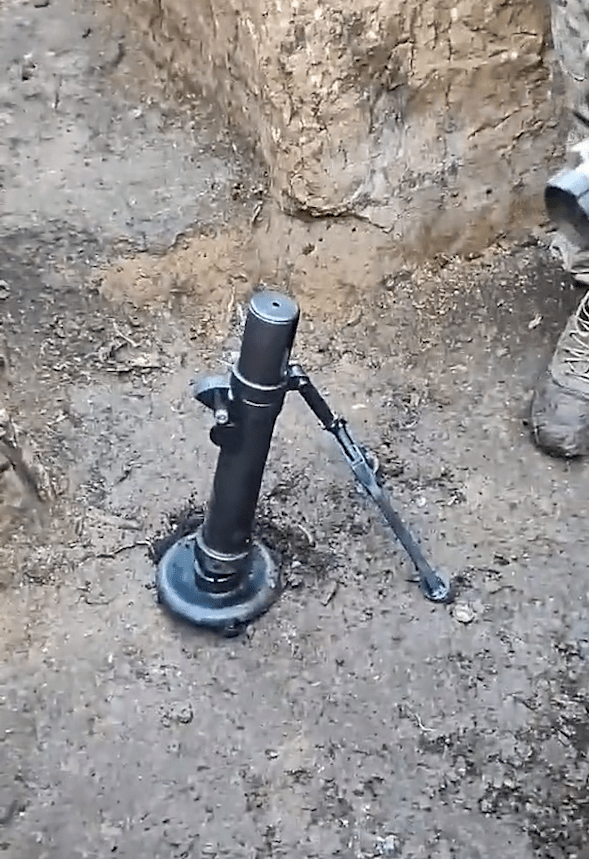
Since April, a Ukrainian unit has shared a number of short videos showing a small mortar capable of firing 40mm grenades.

From their patches and TikTok username, 16batzsu, the men’s unit appears to be the 16th Separate Rifle Battalion. They appear to be part of the battalion’s embedded mortar battery and are seen operating other larger mortars and automatic grenade launchers in numerous videos.

A close up of the small mortar (via 16batzsu)

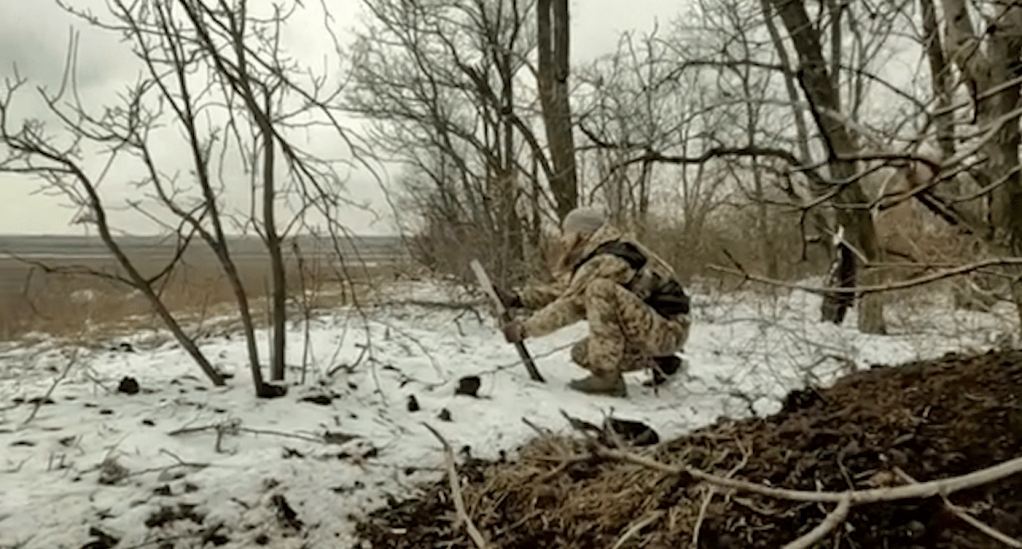
On the 11 February, 16batzsu shared a video showing a small mortar with a stainless steel insert seen dropped into a small hand-held mortar. The same video was shared on their YouTube account under the title ‘New Toy’. While the resolution of the video is low it clearly uses the same barrel sleeve principal seen in later videos. In replies to comments 16batzsu explain that the small mortar has a range of 2km and is 30mm in calibre. This suggests that the weapon may launch 30×29mm VOG grenades normally fired by AGS automatic grenade launchers. Unlike the later 40mm mortars it does not appear to have a bipod. No further videos featuring the 30mm mortar have been shared.

A still from a video showing a 30mm handheld mortar (via 16batzsu)

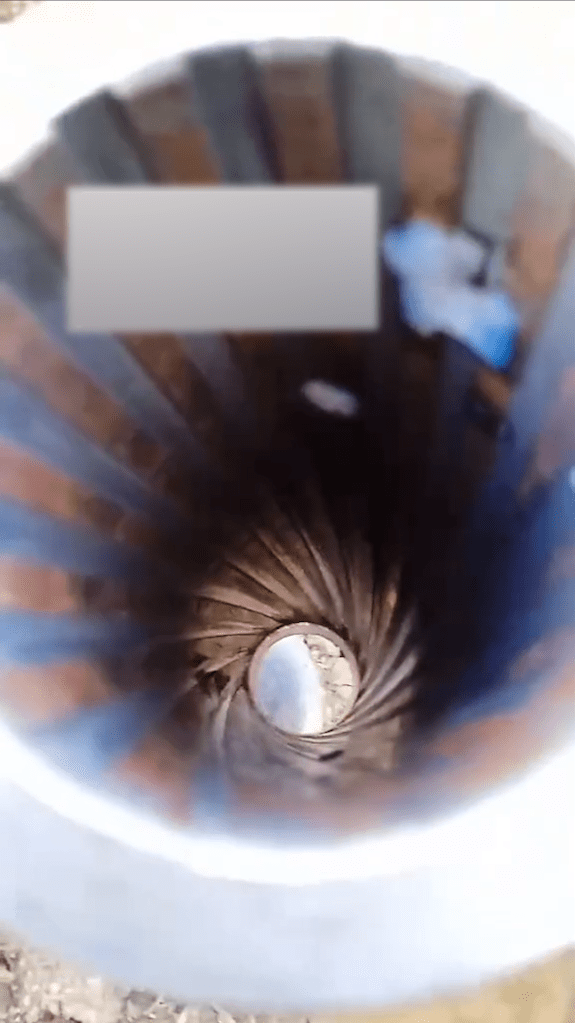
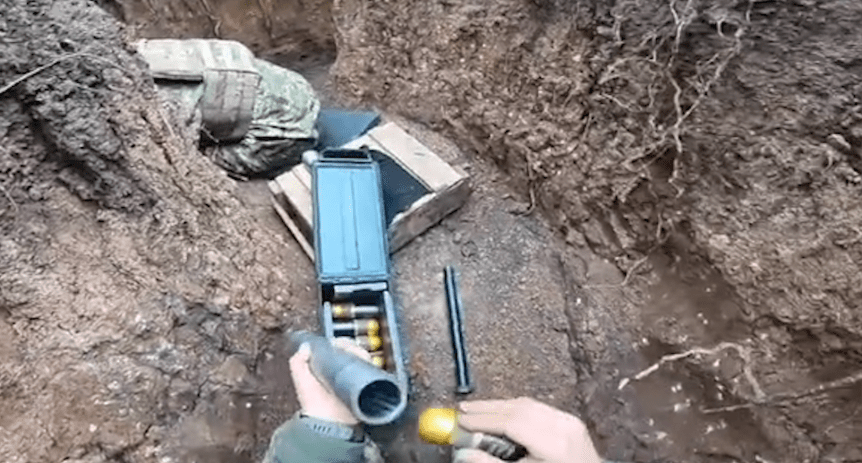
The first video providing a close up look at the 40mm mortar was shared on the 26 April, with the small mortar in a pit next to an 82mm mortar. The mortar uses 40mm high velocity grenades which are slid into the base of a rifled steel barrel sleeve. The rifling is needed to both maximise the grenade’s range but also impart spin which arms grenade. The loaded sleeve is then dropped into the mortar tube, the grenade’s primer presumably strikes the mortar’ firing pin and the grenade is ignited firing it out of the mortar. The sleeve remains in the tube.

A closeup of the inside of the barrel sleeve, note the rifling (via 16batzsu)

In terms of size the small mortar looks similar to the Ukrainian 60mm KBA-118, however, the base plate, bipod and tube differ. Despite similarities I haven’t been able to find an exact match to a mass-produced mortar. The weapon appears to be well made and the examples seen in the videos appear to be near identical suggesting they may be a locally developed and produced weapon.

In a pair of videos posted on 3 May, we get a closer look at the weapon and a member of the unit explains the principal behind how it works. The tube has a pair of parallel cuts which allow the steel barrel sleeve to be removed. The video shows a pair of the small mortars and also shows the rifling inside the sleeve. The sleeve appears to have approximately 16 rifling grooves and on its exterior are three rings cut into the top end of the sleeves outer surface to aid removing it from the mortar tube.

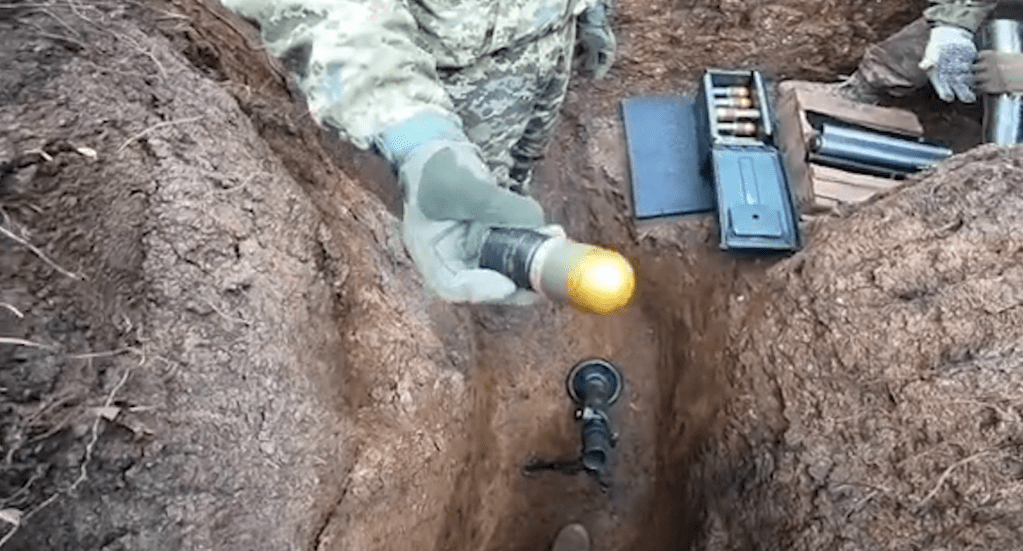
A 40mm high velocity round about to be loaded into a rifled barrel sleeve (via 16batzsu)

Finally, in a video posted on 9 May, we can clearly see the mortar fired a number of times. The operators can also be seen loading the 40mm grenades into the rifled barrel sleeves. One man loads the three tubes while another fires the mortar. The spent grenade cases are removed with the aid of a metal ramrod. The 40mm grenades which appear in the video are high velocity high-explosive dual-purpose (HEDP) grenades of the type used with Mk19 automatic grenade launchers. The reason the sleeve is rifling is to arm the grenade’s fuze when the round is fired. These include grenades like the US M383, M384, M430 and M677 as well as German DM111 and DM 112.

A still of a 40mm grenade being loaded into a barrel sleeve (via 16batzsu)

So what is the small mortar for? Why not just use the unit’s Mk19 automatic grenade launcher? My initial theory was that the barrel sleeve might provide an increase in range over the Mk19 though the 2,000 metre range mentioned in one of the videos suggests the mortar has a range on parr with the Mk19. Another theory is that the unit’s Mk19 may be inoperable and they still have a supply of 40mm grenades to use. The grenades are also perhaps more readily available and cost-effective than small mortar rounds. It could also potentially have the effect of mimicking drone-dropped 40mm munitions, keeping enemy combatants on the look out for drones. As a harassment weapon the small mortar seems to have potential, allowing its operator to fire from cover while being relatively lightweight allowing it to shift firing positions quickly. The accuracy of the weapon is difficult to gauge but with the aid of an observation drone rounds could be walked into the vicinity of a target. The mortar is a very interesting piece of innovative engineering.

Thank you to Ukraine Weapons Warfare for bringing the original footage of the mortar to my attention.

Update – 06/06/23: Some additional footage from another member of the 16th Separate Rifle Battalion showing the 40mm grenade mortar in action.

Update – 22/10/23 – Some new footage showcasing the mortar. One of the Ukrainian combatants appears to have a National Guard 4th Rapid Reaction Rubizh Brigade, 3rd Battalion Svoboda patch. The video gives us a good close look at the tub, tangent sight, barrel sleeve and the bipod and base plate which appear to have slightly different designs.

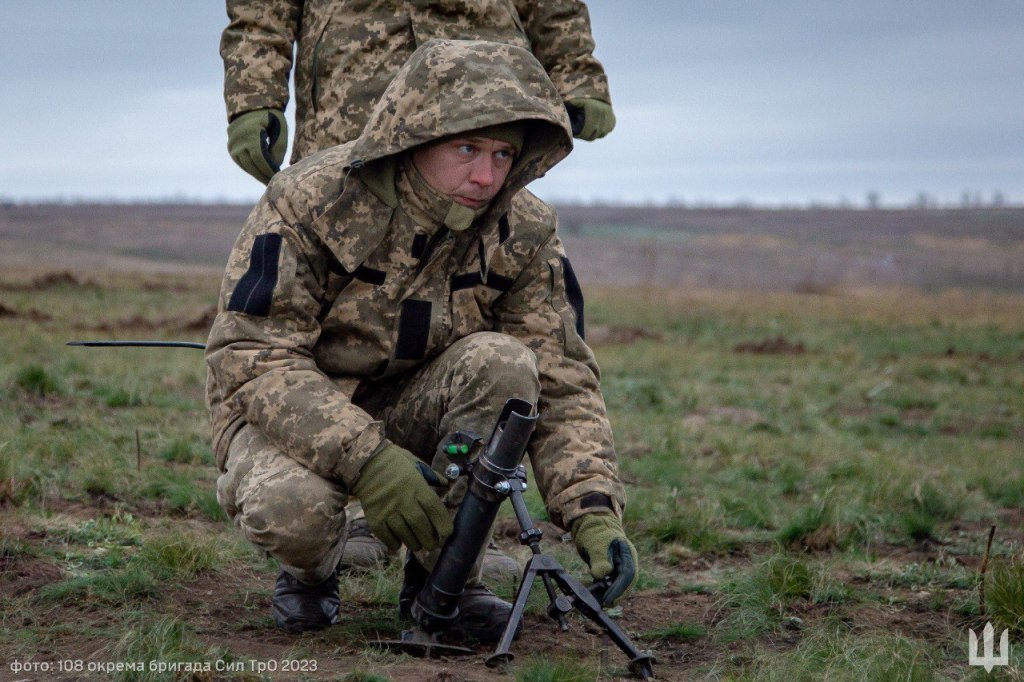
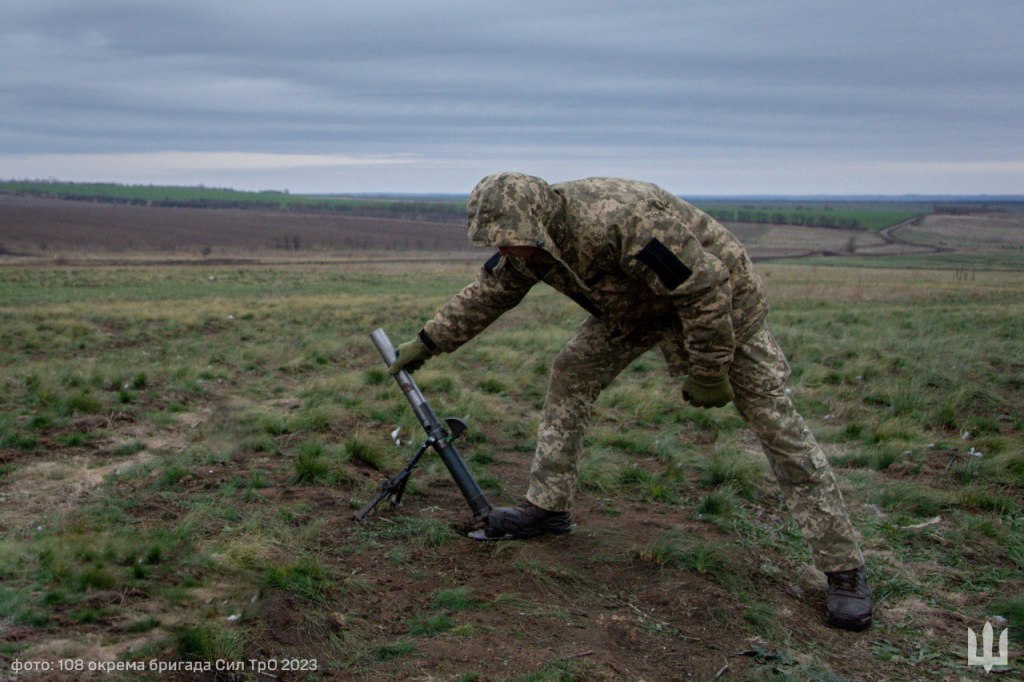
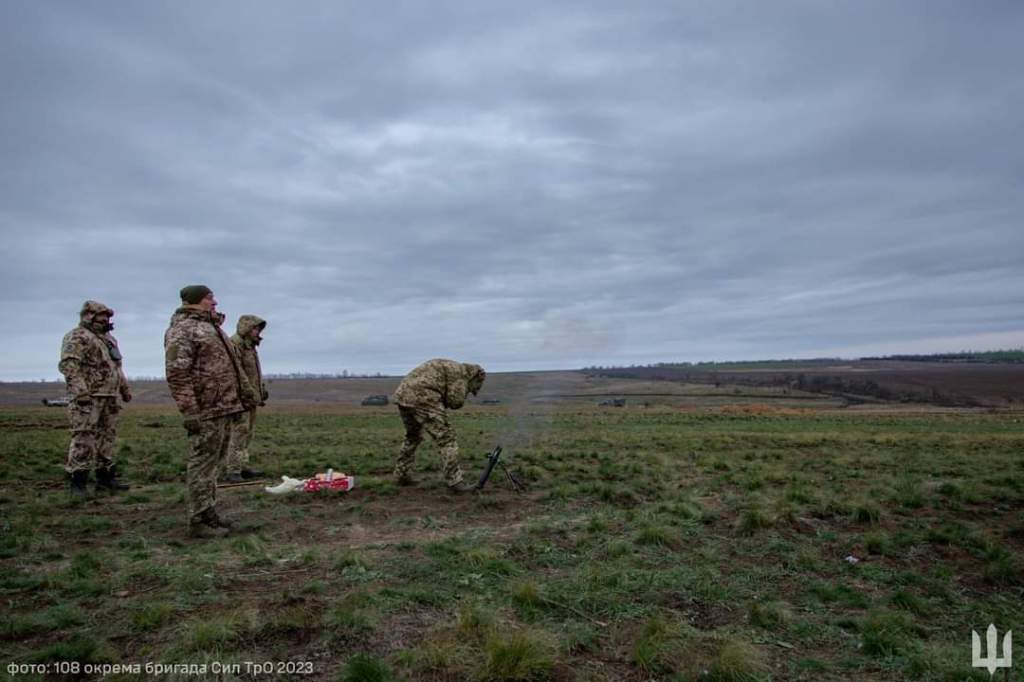
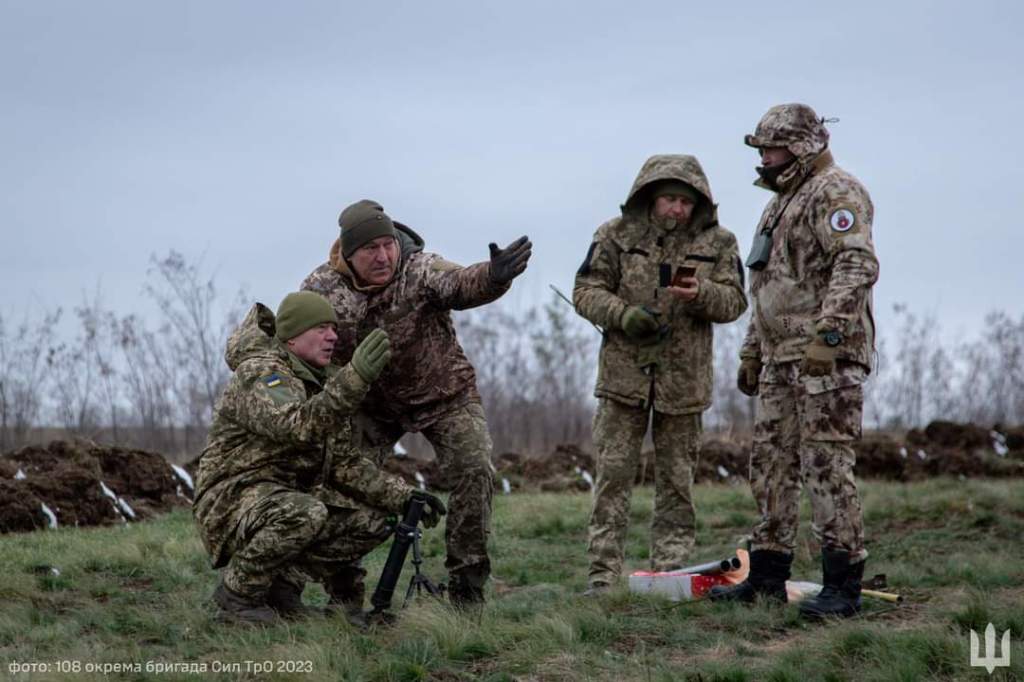
Update – 28/11/23: Another sighting of the 40mm grenade mortar. This time in official photos shared by the 108th Territorial Defense Brigade on 25 November. The post suggests the mortar can also fire 30mm VOG rounds.

Update – 17/8/24: A new sighting of the 40mm grenade mortar showing some of the loading and firing steps.


Support Us: If you enjoyed this video and article please consider supporting our work here. We have some great perks available for Patreon Supporters – including early access to custom stickers and early access to videos! Thank you for your support!


What Weapons Did Wagner Capture in the Soledar Mines?

At the beginning of May 2023, Russian media shared a flurry of videos from salt mines near Soledar. The videos showcased a captured weapons storage depot said to be inside part of the mine complex which was recently captured by Russian private military contractor unit Wagner. Most interesting was the lack of modern weaponry displayed, indicating Ukraine may have removed the more useful equipment stored there. The mine is located in the vicinity of the settlements of Paraskoviivka and Soledar, north of Bakhmut.

A Lend-Lease M1A1 Thompson removed from its shipping crate (via social media)

The mines contain a former Soviet arms storage facility, initially said to have been established in the late 1950s, which was taken over by Ukraine when the USSR collapsed. There is also a small arms and light weapons repair facility established by the Ukrainian Army. The facility was temporarily seized by Separatists forces in April 2014, with one Separatist militia member then telling Sky News that: “There are rifles, machine guns, heavy weapons and millions and millions of rounds of ammunition. We are here to stop the forces of the west and anyone else for that matter from getting their hands on them.” Later fighting saw the region secured by Ukrainian forces and the mine back under Ukrainian control.

With the heavy fighting in the region and Bakhmut becoming a focus of Russia’s offensive efforts in the second half of 2022 and the first half of 2023, the mines have again become a focal point. Russia reported that the area the mines were located was captured in mid-February but it wasn’t until early May that the weapons depot was secured and featured in a flurry of videos.

A crate of damaged AK-74s at the captured Ukrainian repair facility (via A. Simonov)

Using the videos shared by Russian media outlets and individuals lets take a look at what has reportedly been captured. From the imagery it is immediately clear that the depot appears to have been stripped of the most useful and modern materiel which was stored there. Videos from the mine focus on the scale of the depot and the plethora of vintage weapons which are said to be stored there.

The first video posted by Alexander Simonov, an RIA contributor, on his personal page on 30 April, begins with the reporter descending in an elevator explaining that the depot is 150 metres below ground. He describes the scale of the facility as ‘impressive’ spanning 5km with 28 galleries and a repair facility. He also explains that Ukraine’s retreating armed forces removed the most modern equipment and unsuccessfully attempted to mine the depot’s entrance. Simonov says that the depot primarily holding small arms ammunition. Simonov speaks to an individual who shows him parts of the depot and explains how it was set up in the 1960. The individual describes the galleries as almost 400 metres long – with torches failing to illuminate the whole gallery. Simonov is told theres 292,000 boxes containing small arms.

Prigozhin opens a crate of three PM1910 Maxims (Wagner)

Simonov is then shown a repair facility where badly damaged weapons have been abandoned by the Ukrainians when they retreated from the depot. The weapons appear to have been sent to the depot where their damage would be assessed to see if it was possible to repair them. The weapons seen include: AK-74 and AKS-74s, two damaged Barrett M107A1 rifle, DP-27s and SPG-9 recoilless guns.

In one shot there are hundreds of stocks for SKS carbines [misidentified in the video as Mosin-Nagant stocks] seen and in a clip from Simonov’s RIA report shelves filled with AK-74 furniture are seen. In another clip posted a on 1 May, Simonov also examines a DShK heavy machine gun which the Ukrainians have adapted with a muzzlebrake, bipod and stock. Next to it is a PK general purpose machine gun.

One of the weapons depot’s 28 galleries with thousands of boxes stacked (via A. Simonov)

The RIA report published on 30 April, appears to have been filmed at the same time and shows boxes of AK magazines, manuals and walls hung with Soviet-era small arms disassembly posters as well as the shelves of AK furniture seen in the first video. Another shot shows an AK-74 still in a vice and a disassembled a AGS grenade machine gun in a crate.

An Izvestia report published on 2 May shows more of the weapons stored in the depot with the footage showing a crate of Second World War Lend-Lease M1 Thompson submachine guns. Also seen are DPM light machine guns and damaged weapons including an RPG-7 and AK-74s. The video also shows the 4.5 tons of explosive stacked to blow the entrance to the galleries.

Prigozhin lifts the original packing paper to show an M1928A1 Thompson (Wagner)

Also published on the 2 May was the first video showing Yevgeny Prigozhin, owner of the Wagner group, visiting the mine. In the video Prigozhin shows off some more Lend-Lease Thompsons submachine guns, this time M1928A1s, “new in oil packing’ he says. He also mentions that there are thousands of PPSh and PPS submachine guns and Maxims, showing a crate containing three PM1910 Maxim guns. In the video he says: “Do we really need this? Should we leave it here to rot further? I wrote to everyone I could. No one is interested.” Suggesting that he would exchange them for shells to support Wagner operations. Despite Prigozhin mentioning PPSh and PPS submachine guns we’ve been unable to find any imagery of the weapons in the mines.

Since 2 May, there has been no further imagery from the mines. It remains to be seen if any of the weapons stored in the mine are utilised by Russia and what exactly is held there with some sources suggesting tens of thousands of weapons dating from the first and second World Wars and later. With many of the weapons obsolescent the most useful of those shown in the videos will likely be the old Soviet machine guns (the DPs and Maxims) and the small arms ammunition. The old Soviet submachine guns and Thompsons will be of less practical value. It’s telling that the officially released videos showed little modern equipment.


Support Us: If you enjoyed this video and article please consider supporting our work here. We have some great perks available for Patreon Supporters – including early access to custom stickers and early access to videos! Thank you for your support!


Bibliography:

Protesters in Ukraine guard biggest weapons cache in eastern Europe, Guardian, (source)
Ukraine: Militia Controls A Million Weapons, Sky News, (source)
Pro-Russia Activists Set Up Checkpoints in Ukraine’s Far East, VOA, (source)
Retreating Ukrainian troops tried to destroy salt mines in Soledar, TASS, (source)
Ukrainian light weapons captured in Soledar exceed one million, PL, (source)