Gulf War Homemade SA80 / L85A1 Front Grip

There is a rich history of attaching home-made, ad-hoc forward grips to weapons within the British military. In the 1940s troops fashioned home-made forward grips for Sten machine carbines while in the 1960s at least one member of the SAS operating in Borneo during the Indonesian Confrontation attached a carved wooden foregrip to his M16. In the 1980s the operators with the SAS’ counter-terrorism teams attached L1A1 SLR pistols grips to their MP5s.

British troops in Northern Ireland with L1A1s fitted with makeshift front grips made using a spare pistol grip attached with a jubilee clip

The intermittent tradition appears to have continued into the early 1990s with one member of the Staffordshire Regiment seen to have mounted a pistol grip to the forend of his L85A1. The soldier and his adapted rifle appeared in a number of photographs and some footage taken during a field exercises in Saudi Arabia.
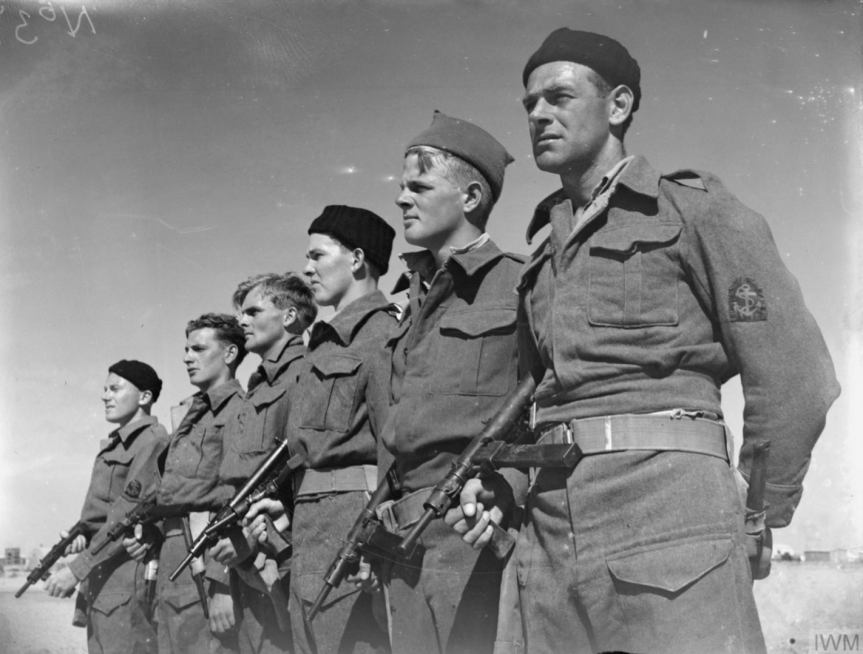
Commandos on parade with STEN MkIIs equipped with ad-hoc front grip, at Kabrit in June 1943 (IWM A17755)

The battalion deployed to Saudi Arabia as part of 7th Armoured Brigade in October 1990, as part of Operation Granby. During the phase of operations in the Gulf which the US designated Operation Desert Shield allied forces prepared to liberate Kuwait and took part in a number of field exercises.

On 10 November, 1990 Sgt. Dave Miles, a British Army photographer filmed up-close footage of C Company, 1st Battalion during a live fire exercise. During one brief section of the footage the L85A1 with foregrip can be seen firing. On 6 January 1991, C Company took part in another live fire exercise which again saw them filmed and the same rifle features in several brief sections. It also appears in photographs taken by AP photographers Patrick Baz and Sadayuki Mikami, an unnamed British Army photographer and US Army photographer PFC John F. Freund.
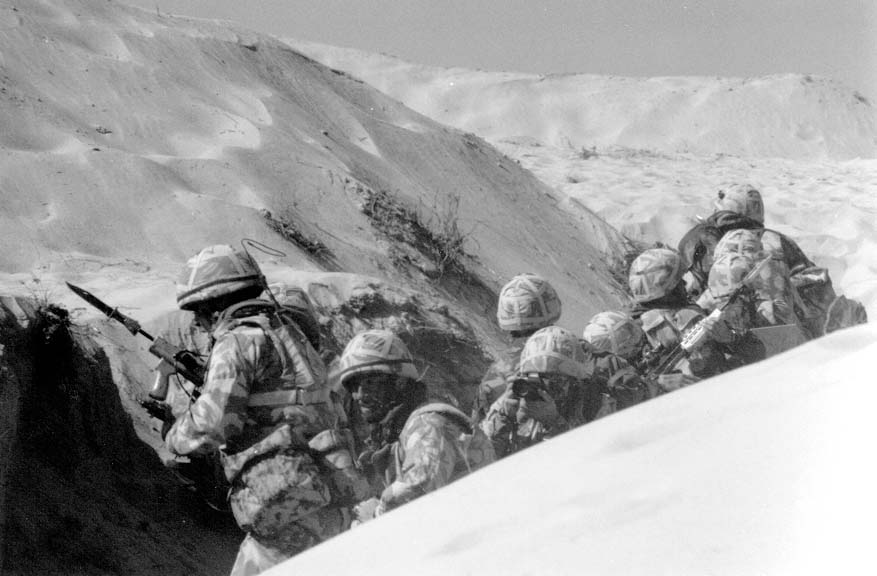
Company C, 1st Battalion, The Staffordshire Regiment, during a live fire training exercise assaulting a mock village and trench complex, 6 January 1991. (XVIII Airborne Corps History Office photograph by PFC John F. Freund)

Unlike some of the earlier examples of wooden ad-hoc foregrips this one appears to be fashioned from a spare SA80 pistol grip attached to the rifle’s plastic forend by a bolt. While mods like this one weren’t that uncommon they are rarely so well documented in photographs and videos. It’s also interesting to see just how common painting weapons was.
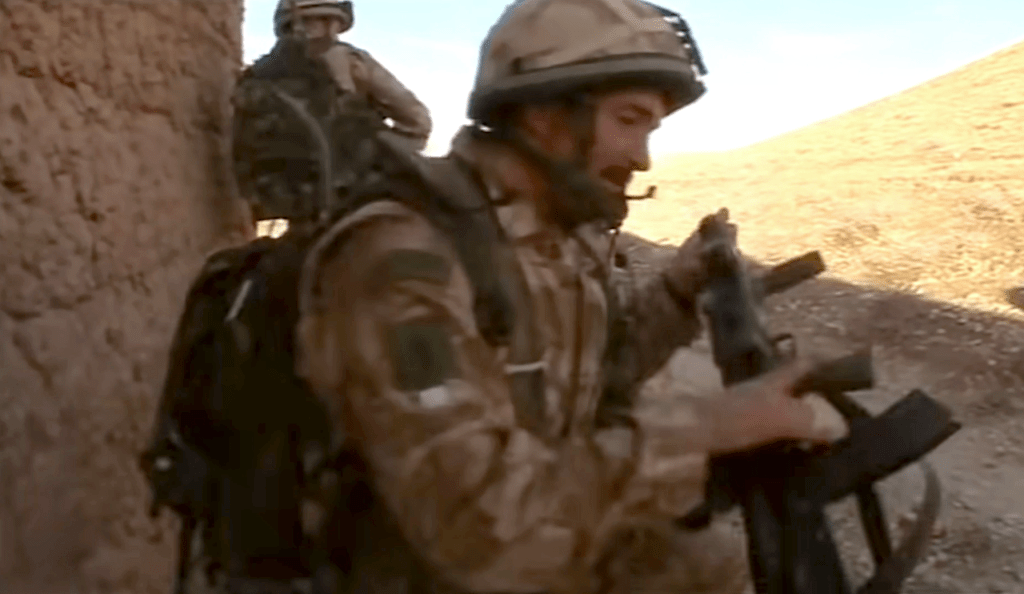
Royal Marines Commandos in Afghanistan c.2006. An LSW rear grip fitted as an ad-hoc foregrip (Commando: On the Front Line)

Similar modifications were made using the rear grip from the L86A1 Light Support Weapon. These were again bolted through the vents in the underside of the rifle’s plastic handguard. One of these modifications was seen a number of times in the hand of a member of the Royal Marines Commandos during the 2007 documentary Commando: On the Front Line.

Generally the addition of foregrips make for handier, more pointable weapons. Arguably, the soldier from C company was ahead of his time as later, following the L85A2 refits and the Afghanistan urgent operational requirements, Grip Pod vertical front grips were paired with the rifles.


If you enjoyed this video and article please consider supporting our work here. We have some great perks available for Patreon Supporters. You can also support us via one-time donations here. Thank you for your support!

Gulf War: Operation Granby Iraqi Weapons Recognition Guide

In this video we’ll be launching a brand new series where we’ll look at period small arms and light weapons manuals and other ephemera like infantry tactics handbooks and recognition guides.

This month marks the 30th anniversary of what the British Army called Operation Granby, better known as Desert Storm or the Gulf War.  So I thought taking a look at a Recognition Guide to Iraqi Ground Forces issued during Granby would be a good place to start!

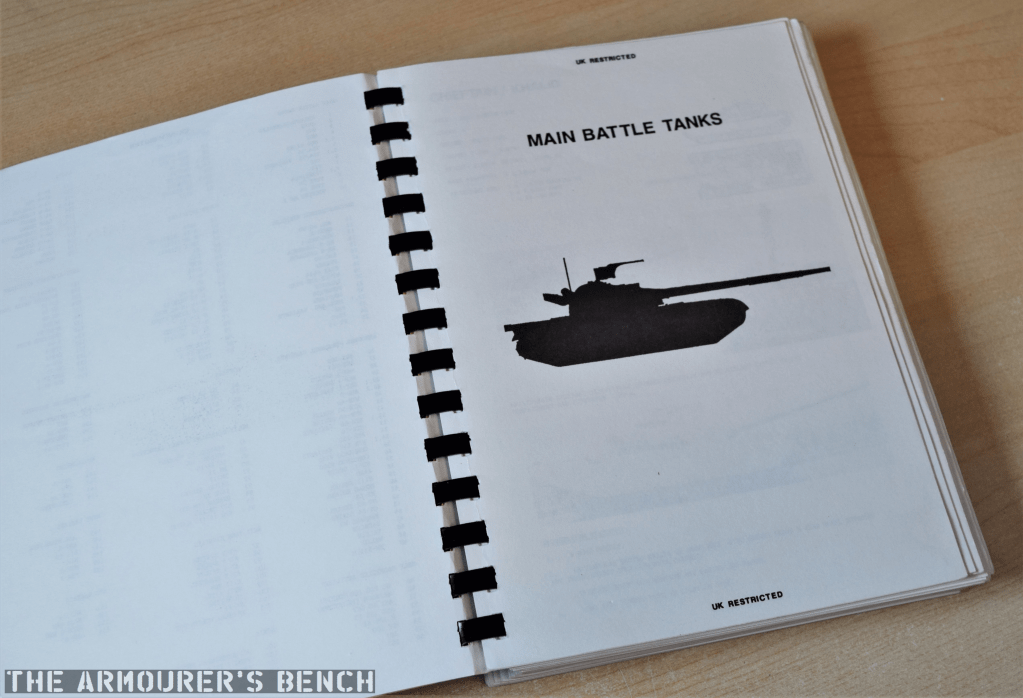
Chapter page for Main Battle Tanks (Matthew Moss)

Britain deployed more than 53,000 personnel during the operation, which began in August 1990, just after the invasion of Kuwait, with the arrival of 2 squadrons of Tornados in theatre. The first ground forces, elements from 7 Armoured Brigade began arriving in October. With no ready reaction force a division strength force was cobbled together from units deployed in Germany and the UK. Huge logistical constraints were overcome to provide a full armoured division, consisting of two brigades, for the liberation of Kuwait.

The guide’s entry for the AMX 155 F3 (Matthew Moss)

During the ground phase of the operation (Operation Desert Sabre), which began on 24th February 1991, British armoured and mechanised forces, part of VII Corps, provided the left-hook of the allied assault. The division’s two armoured brigades leapfrogging one another quickly taking successive objectives and sweeping west through occupied Kuwait, towards the Gulf Sea, neutralising Iraqi positions with relative ease. During less than 100 hours of ground combat British forces travelled 180 miles and destroyed approximately 300 Iraqi vehicles while allied forces as a whole captured an estimated 80,000 Iraqi troops. A total of 47 British troops were killed during Granby. A ceasefire was declared on 28 February with Iraqi forces collapsed and Kuwait liberated.

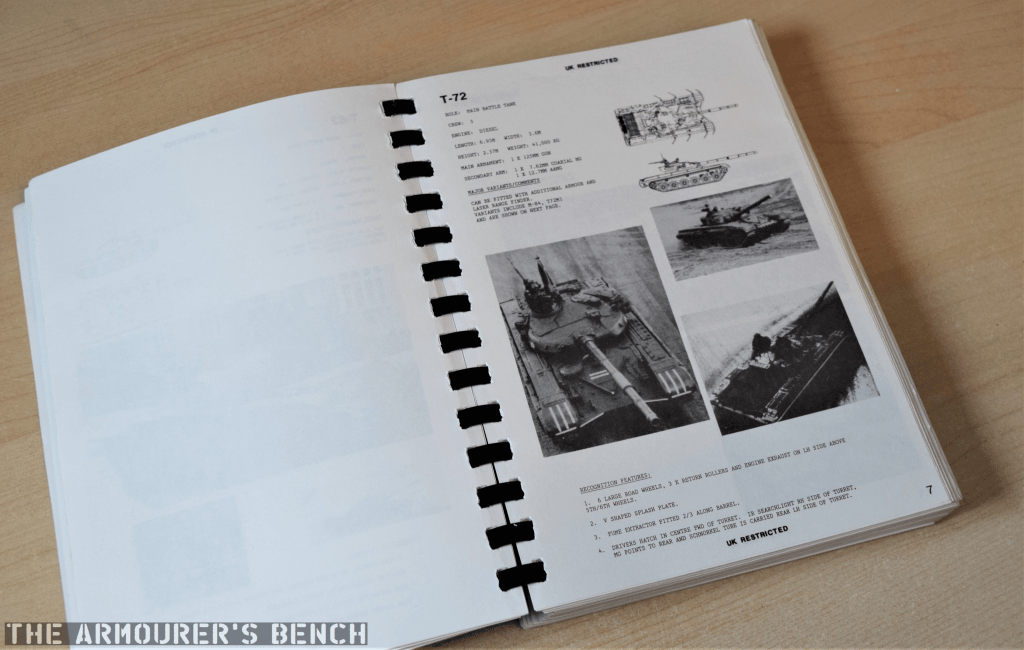
The guide’s entry for the T72 tank (Matthew Moss)

The guide was compiled by the Recognition Materials Cell at the Joint Air Reconnaissance Intelligence Centre (or JARIC). Formed in 1953, from the Central Interpretation Unit and based at RAF Brampton from 1957 to 2013, JARIC was the UK’s strategic imagery intelligence provider – providing analysis of aerial and later satellite photography or enemy assets.

With war with Iraq looking imminent and substantial British forces deployed from the UK and Germany, JARIC were tasked with putting together a recognition guide covering Iraqi and Kuwaiti ground assets captured by Iraq during the invasion of Kuwait.

The infamous SCUD (Matthew Moss)

This included everything from main battle tanks, reconnaissance vehicles and armoured personnel carriers to self-propelled artillery, mortars, artillery and multi-barrelled rocket launchers. It also included anti-tank missiles, surface to air missile systems and anti-aircraft assets as well as engineering equipment. All of which might be encountered during upcoming operations to liberate Kuwait. Let’s take a look.

The guide sadly doesn’t have a scale of issue list so it’s difficult to know how many were printed or  which units received them. But the first page does give us some indication of the material’s sources – noting they are from unclassified and restricted sources – giving the book a restricted classification overall.


If you enjoyed these videos and this article please consider supporting our work here. We have some great perks available for Patreon Supporters. You can also support us via one-time donations here. Thank you for your support!


Bibliography

The Gulf War 1991, A. Finlan (2003)

Hot War, Cold War, C. McInnes, (1996)

‘Joint Air Reconnaissance Intelligence Centre (JARIC)’, National Collection of Aerial Photograph, (source)

‘Unit History: Joint Air Reconnaisance Intelligence Centre’, Forces War Records, (source)

Fighting On Film: Bravo Two Zero (1999) & The One That Got Away (1996)

Join us as we take a special look at not one but two films – both looking at the ill-fated SAS mission – Bravo Two Zero. Gulf War films are rare and with the 30th Anniversary of the war upon us we thought it was a good time to take a look at ‘The One That Got Away’ (1996) and ‘Bravo Two Zero’ (1999).

The episode is also available on all other podcast platforms, you can find them here.

Here’s some stills from the film:

Be sure to follow us on Twitter @FightingOnFilm