In recent weeks Russia has begun deploying North Korean-manufactured 107mm multiple rocket launch systems. These small rocket launchers are the latest of the North Korean weapon systems to enter Russian service.
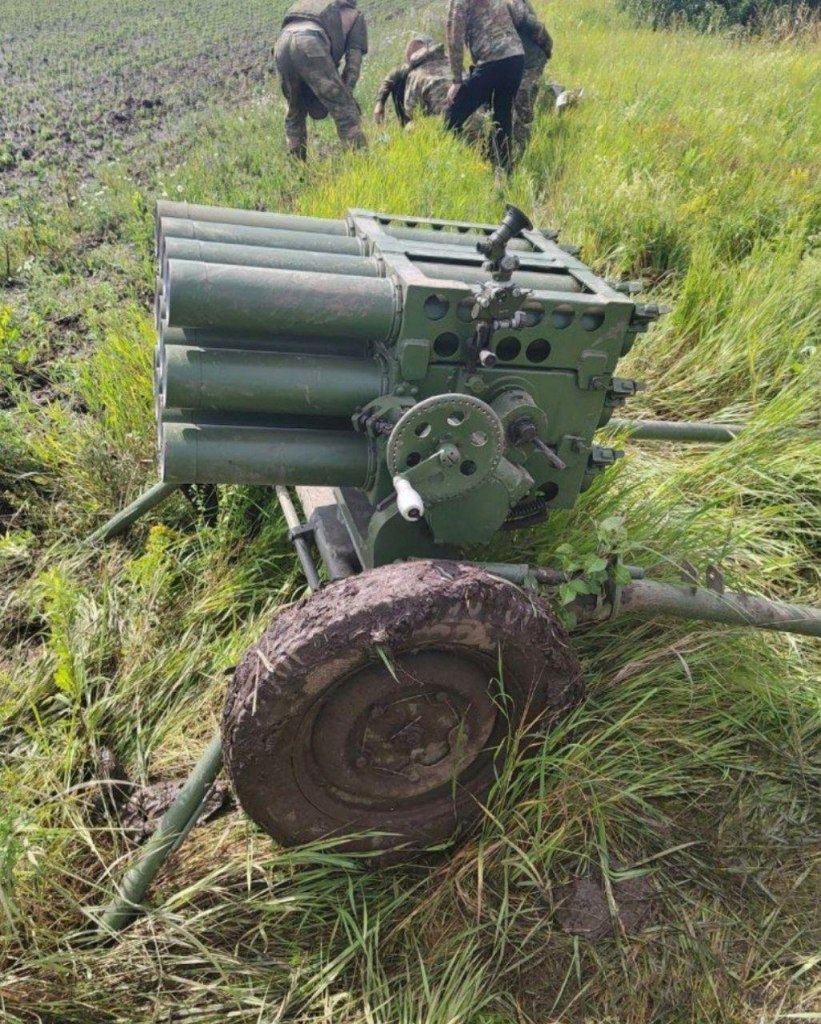
The Type 75 is a copy of China’s Type 63 multiple rocket launcher, is a small towed, 12-tube system which an fire a variety of 107mm ammunition. The system was first sighted in Ukraine in early June, though its likely been in use since Spring 2025.
A Type 75 in Russian service (via social media)
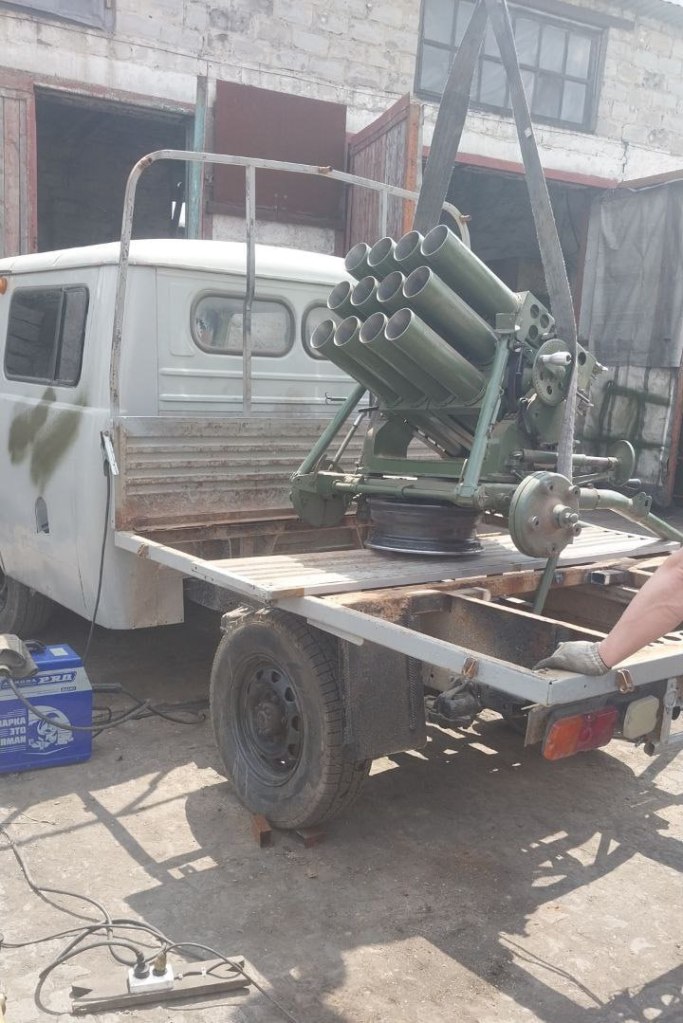
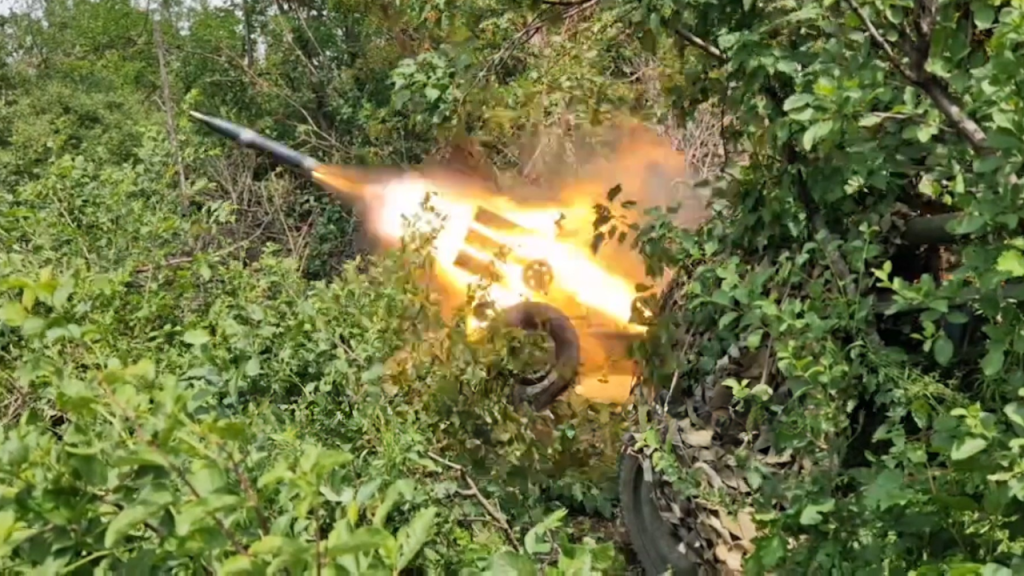
The first footage reportedly shows a crew training with the Type 75 while the second shows the Type 75 being fired from concealment within a tree line. Several days later on 15 June, photographs of a Type 75 being mounted on the bed of a UAZ utility van were posted.
Russian Channel One correspondent Dmitry Kulko shared footage of a Type 75 in action on the 25 June. In his post Kulko notes that the weapon system has a range of 8.5km and is being used with high explosive fragmentation rockets.
Russian mechanics mounting a Type 75 on a UAZ truck (via social media)
On 27 June, a close up photograph of the system was shared on telegram. A week later on 5 July, a Russian Type 75 team shared video of them deploying and operating the system in the field. The video shows the heavily camouflaged MLRS being towed by an unmanned ground vehicle and then being loaded and fired. Deployment with a UGV is sensible as the system unloaded weighs over 600kg and would otherwise require a larger, more noticeable vehicle to move it. The video concludes with some ISR drone footage which is implied to be the impacts on target.
A Type 75 in Russian service firing from a tree line, July 2025 (via social media)
On 12 July, Ukraine’s 1st Separate Presidential Brigade shared footage claiming the first destruction of a Type 75 by drone-dropped ordnance. The videos caption notes that the system was spotted and engaged in the Kup’yansk region.
The Type 75 is just one of the latest in a series of weapon systems North Korea have provided to Russia, other aid includes ammunition for various artillery systems and more complex rocket artillery systems like the M1991 240mm MLRS.
Update – 18/7/25:
Ukraine’s 429th Separate Regiment of Unmanned Systems shared footage of a strike on a North Korean-supplied Type 75 multiple launch rocket system.
Ukraine's 429th Separate Regiment of Unmanned Systems shared footage of a strike on a North Korean-supplied Type 75 multiple launch rocket system.
Ukraine’s family of unmanned surface vessels (USVs) continues to grow as the Security Service of Ukraine (SBU) have developed a Grad rocket-armed Sea Baby drone. The one-way or kamikaze USVs deployed by Ukraine in the Black Sea have been instrumental in engaging the Russian Navy, however, more recently new variants have emerged as Russia has begun to adapt and successfully engage the Sea Babies which in turn has seen the Ukrainians seek to adapt.
The first video of the rocket-armed USV in action recently emerged and the SBU has released some photographs which appear to show the drone in testing. On 22 May, an anonymous SBU source toldThe Kyiv Independent that the new drones have been used in combat “against Russian positions on the Kinburn spit,” a stretch of often fought over land on the coast near Mykolaiv. “This technological solution is already showing powerful results,” with the source adding “Our Sea Baby is not just a drone, but a multifunctional platform that is constantly being improved.” So far it seems the rocket-armed USV has been used against shore targets rather than to engage the Russian Black Sea Fleet, firing on a moving target from an unstable platform may be much more of a challenge. It remains to be seen if this USV variant has been put to use engaging vessels at sea. The Grad Sea Baby gives the SBU the useful ability to strike shore targets anywhere along the Russian-occupied Black Sea coast. From available imagery, at least three of the rocket-armed variants have been built.
Ukrainian Sea Baby surface drone in the Black Sea launches a volley of missiles towards Russian positions. pic.twitter.com/CQFaLKB9B6
— WarTranslated (Dmitri) (@wartranslated) May 22, 2024
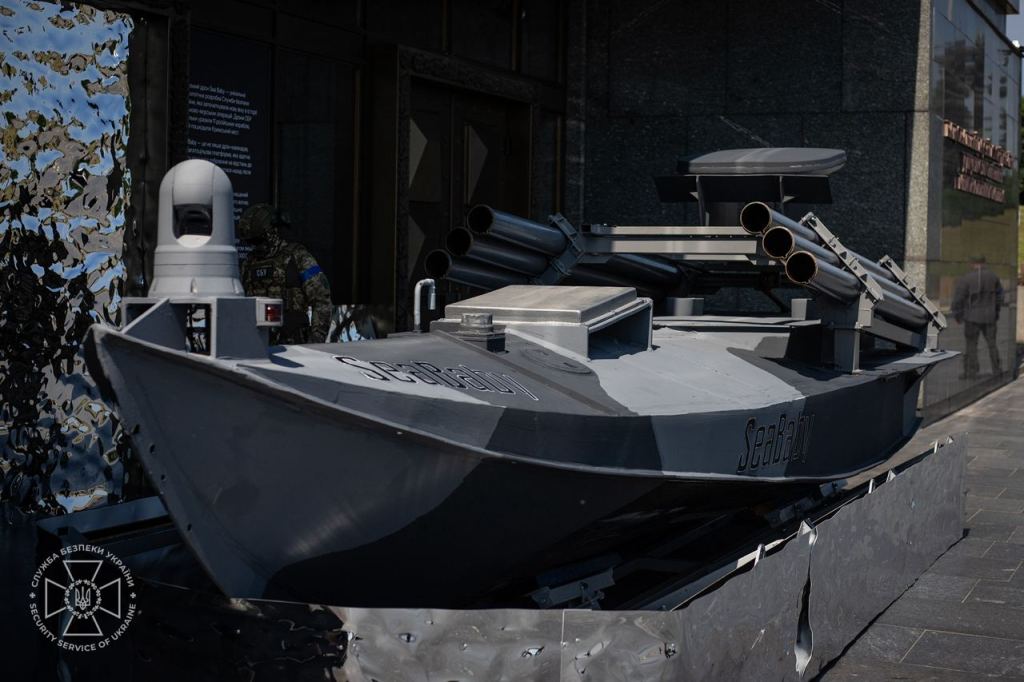
The drones have been equipped with six 122mm Grad rocket launch tubes. The BM-21 multiple rocket launch system is used by both Ukraine and Russia. It’s size, ubiquity and relative cheapness makes it an obvious choice for mounting on the six meter long Sea Baby. The latest versions of the Sea Baby are reportedly able to carry 400 kg warheads over 500 miles at speeds of up to 48 knots.
The Grad rockets have a range of anywhere between 20 and 50 km depending on the type of rocket used. It’s unclear if a sea-based launch impacts the rocket’s range or accuracy but depending on sea conditions dispersion of the munitions is almost certainly affected. While accuracy may be impacted the rockets still give the Sea Baby a useful stand off capability, allowing the USVs to engage targets at a distance rather than having to make it physically all the way to the target to detonate its payload. How the rockets are aimed or the launcher is zeroed isn’t yet clear. The tubes do not appear to be adjustable for elevation as photos appear to show them fixed in place at a slight angle. Available photos show the launcher being tested ashore at a range, perhaps the tubes are bore sighted.
Sea Baby drones equipped with "Grad" rocket launchers. Now, these drones have become even deadlier for the russian fleet.
This isn’t the first time rockets have been fired from a Ukrainian USV, back in January 2024, footage of a USV firing smaller rockets at a Russian patrol vessel emerged. The rockets are believed to be RPV-16 or RPO-A thermobaric rockets. Some of this footage, along with other older video, was included in a short clip which showed off the rocket-armed Sea Babies. While this footage may not show a Grad launch Vasyl Malyuk, head of the SBU, has said during a press event with UNITED24, that “For the first time, the SBU used the “Sea baby” drone, equipped with the “Grad” rocket salvo fire systems, in December 2023,” adding that this represented a “new milestone in the history of sea battles.” Newsweekreported that the Sea Babies fitted with Grad launchers were paid for using United24 donations, with each USV estimated to be worth $221,000.
Another short video of the Grad rocket-equipped Sea Baby USV, likely filmed yesterday during a United24 event.
— Matthew Moss | Historical Firearms (@historicfirearm) May 24, 2024
Most recently we also saw another curious Ukrainian USV emerge, equipped with an improvised air-defense system with two repurposed AA-11 ARCHER (R-73) air to air missiles. The air defense USV emerged as Russian helicopters began to effectively engage the Ukrainian USVs. Given the rapid evolution of Ukraine’s USVs it would not be surprising to eventually see one equipped with an anti-ship missile, such as a small RBS-17.
Sea Baby equipped with six Grad tubes (via SBU)
The small cross section and speed of the Sea Baby drones allow them to infiltrate and approach Russian Black Sea vessels both at sea and in port. However, Russia has developed rudimentary tactics for successfully engaging them either with helicopters or with small arms and other defensive fire from vessels. A stand off capability, be it a USV equipped with unguided Grad rockets or an anti-ship missile, adds another dimension the Russians will have to adapt to. The Grad-armed Sea Baby is the latest indicator that Ukraine’s USV fleet is continuing to diversify to meet new threats and operational requirements.
An earlier version of this article first appeared at OvertDefense.com.
Support Us: If you enjoyed this video and article please consider supporting our work here. We have some great perks available for Patreon Supporters – including early access to custom stickers and early access to videos! Thank you for your support!

 The Armourers Bench