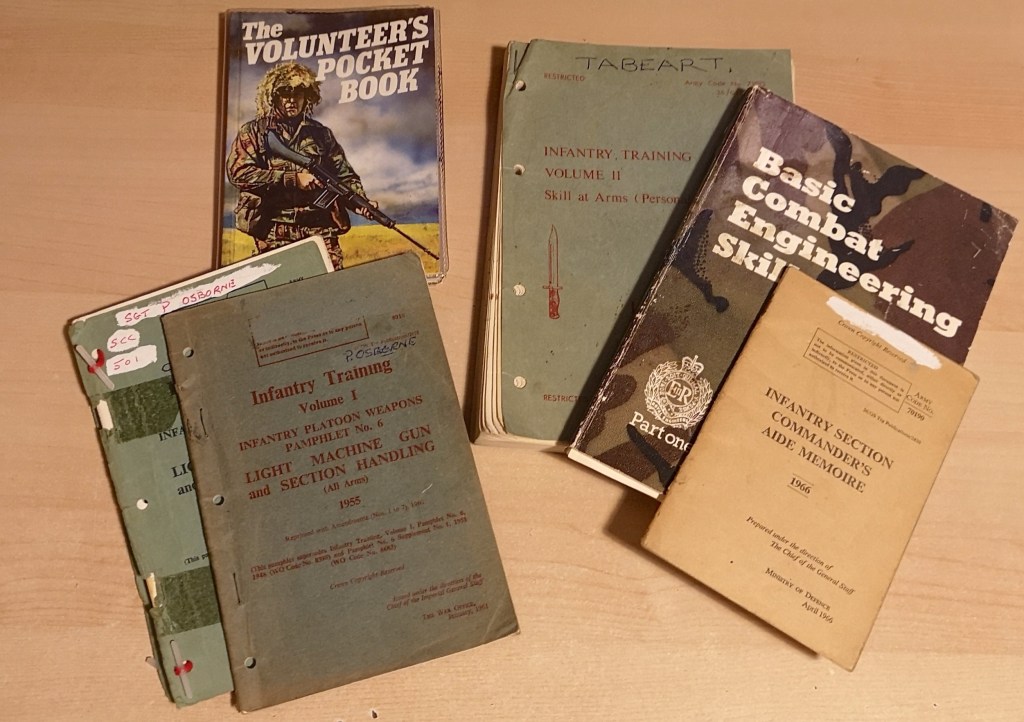
I was recently contacted by Nigel a viewer who very generously offered some items from his late father’s collection. They’re now part of the ever-growing TAB Reference Collection, I’m honoured to look after them and share them with you in some future videos.
The items include infantry training manuals for the Bren, SLR and a section commander’s aide Memoire.
Nigel’s dad, Peter, was an avid collector of military items having served three years with The Buffs (Royal East Kent Regiment) before joining the Royal Marines. After 12 years with the Royal Marines he later volunteered with the Royal Marine Cadets.
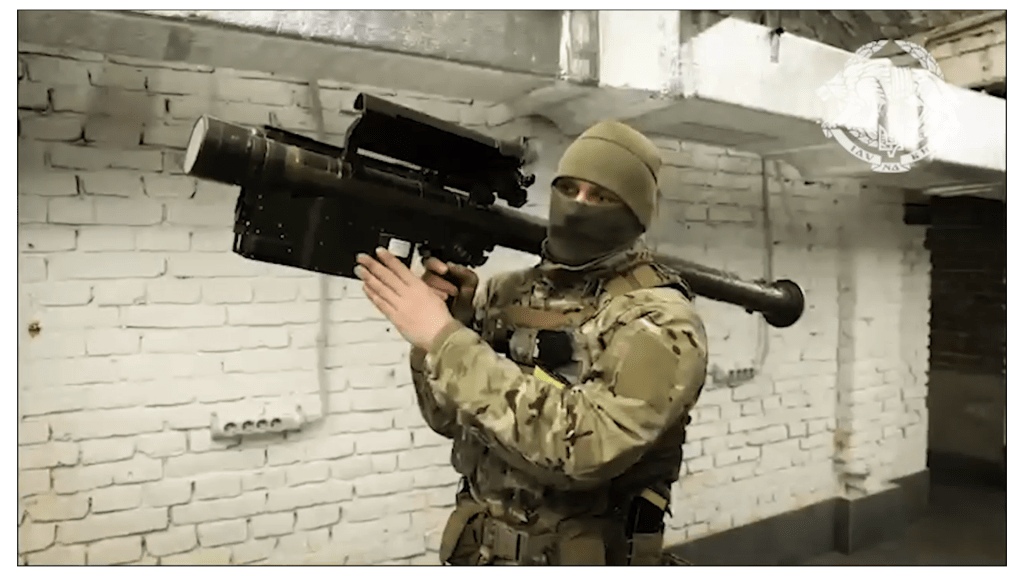
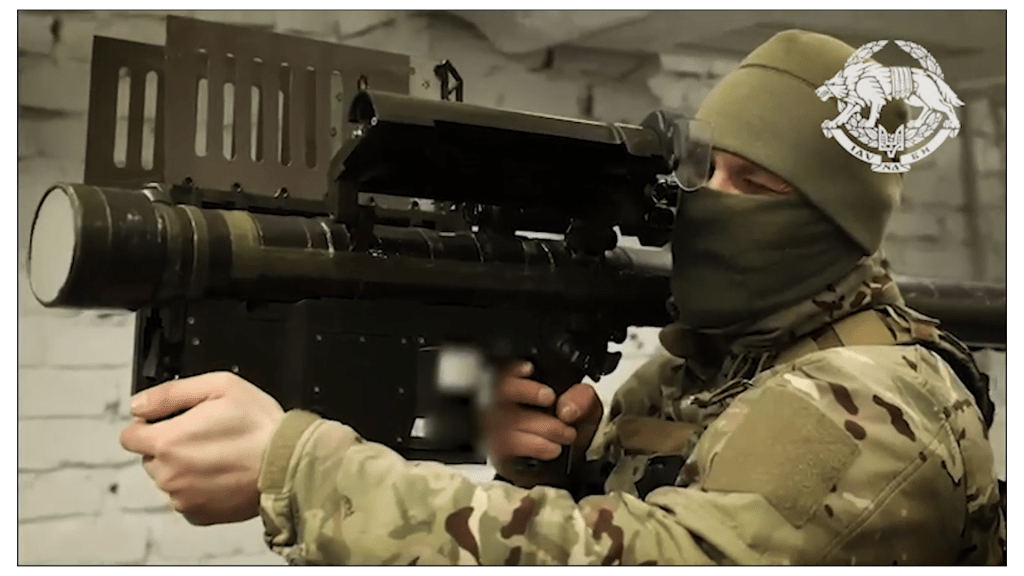
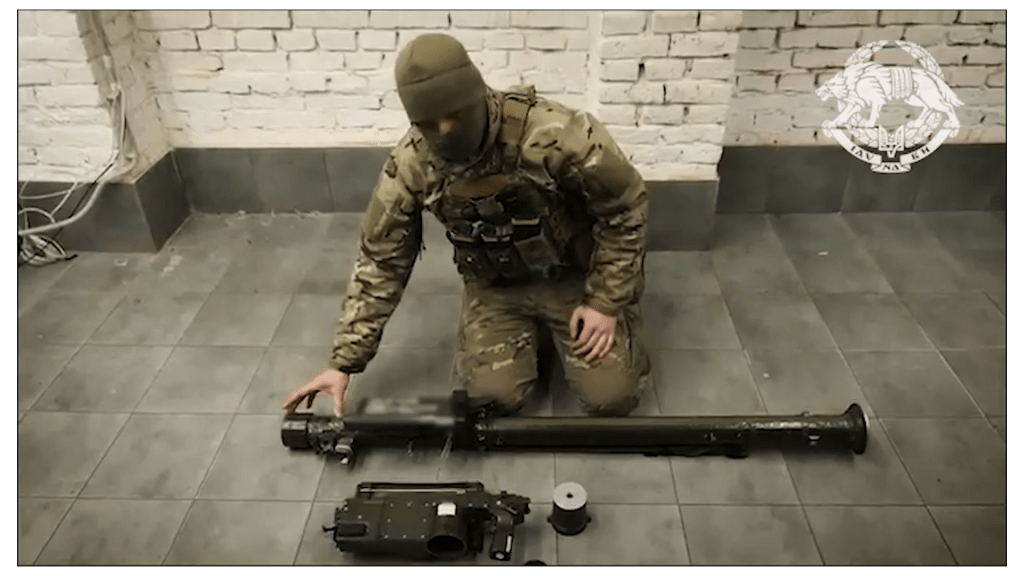
In recent days, with the news that a shipment of M141 SMAW-D anti-structure weapons have arrived in Ukraine as part of the US military aid shipments, a number of media articles and videos have been made on the subject which seem to confuse the SMAW-D with the AT-4 and even the M72. So, I thought it would be useful to take a look at the SMAW-D in a little detail.
M141 (SMAW-D) (US Army Manual)
So What is the SMAW-D?
Its official designation is ‘Rocket and Launcher, 83mm HEDP Bunker Defeat Munition (BDM), M141 (SMAW-D)’ SMAW-D stands for Shoulder-Launched Multi-Purpose Assault Weapon-Disposable. This isn’t to be confused with the Mk 153 Shoulder-Launched Multipurpose Assault Weapon used by the US Marine Corps. Those the SMAW-D did evolve from the SMAW.
The initial Mk 153 SMAW evolved from the Israeli IMI B-300. During the early-1980s McDonnell Douglas further developed the system and it entered service with the US Marine Corps as the Mk 153 in 1984. The SMAW-D shares the same warhead as the Mk 153 SMAW. The SMAW-D was originally developed by McDonnell Douglas and the design was acquired by Talley Defense Systems, whom were subsequently acquired by Norwegian company Nammo.
M141 (SMAW-D) (US Army Manual)
The Mk 153 has a reusable forward launch tube and firing mechanism which has a spotting rifle and can be mounted with an optic. The warhead element of the SMAW is attached at the rear of the launcher. The US Army was initially interested in the Mk153 but preferred a lighter, single use weapon.
A Marine fires a Mk 153 SMAW (USMC/Cpl. Drew Tech)
In the early 1990s the US Army began the search for a disposable Shoulder-launched Multipurpose Assault Weapon. McDonnell Douglas offered a lighter, disposable version of the Mk 153, taking the Mk 153’s High Explosive, Dual Purpose warhead and pairing it with shorter burn rocket. In 1996 the US Army selected the SMAW-D, beating a Swedish design, the FFV AT8, and the Hunting Engineering LAW80. The SMAW-D entered service in 1999.
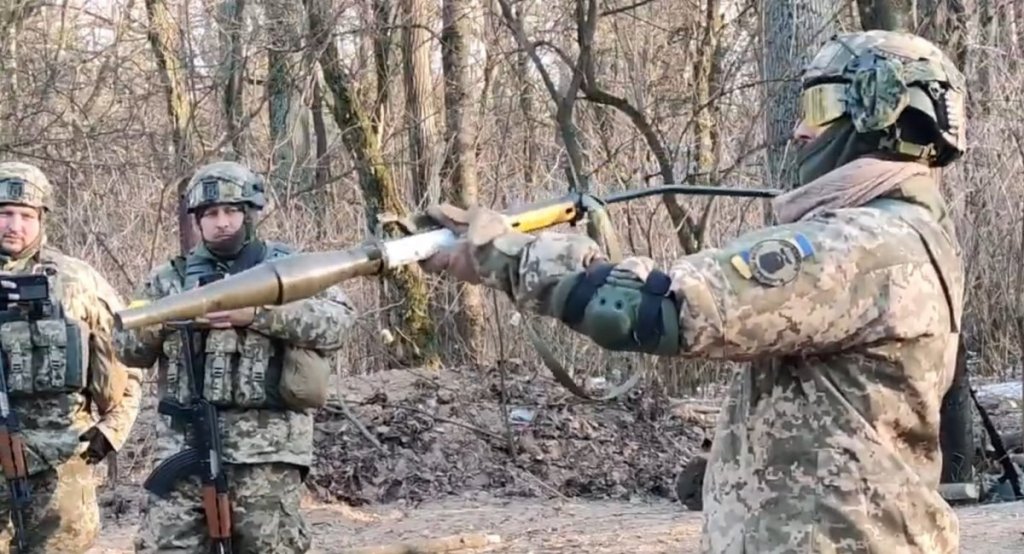
US Army advisor demonstrates how to deploy the M141 (Ukraine MoD)
The SMAW-D is similar to the 66mm M72 in that it telescopes with the launch tube extended before firing. When collapsed it measures just under 32 inches in length but extending the inner tube gives the weapon an overall length of 55 inches. The launch tube and rocket weigh 15.7 lbs.
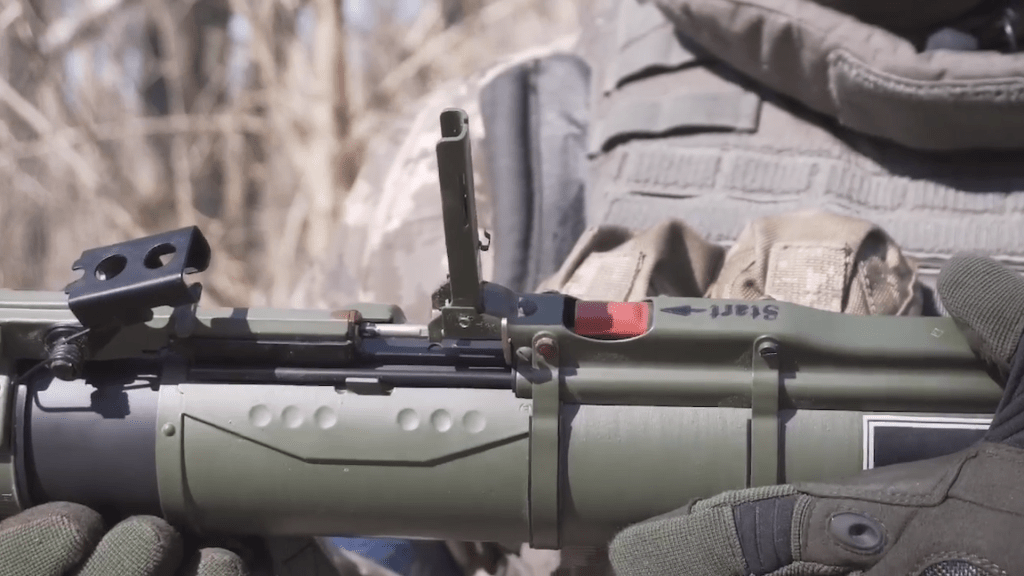
The tube has the firing mechanism mounted on the side under a plastic cover which when opened arms the rocket ready to fire. The weapon has front and rear iron sights for aiming. The SMAW-D can also be fitted with an AN/PVS-4 nightsight and various infrared aiming lasers for night fighting.
Ukrainian soldiers fire M141 BDMs (Ukrainian MoD)
To fire the M141 the operator removes the locking pin from the front of the launch tube, depresses the tube release button and extends the inner tube rearward. The operator then raises the weapon onto the right shoulder, slides the front sight cover forward and then the same for the rear sight. Then opening the firing mechanism cover pivoting it forward, flush with the tube, this arms the weapon. The operator should then check the backlist area and fire when ready by depressing the safety button and then the red trigger button. The rocket is ignited by an electrical impulse sent by the firing mechanism. Once ignited the rocket burns out before it leaves the muzzle, this protects the operator.
M141 (SMAW-D) (US Army Manual)
The M141 can engage targets out to 500 metres but is most effective out to 300. Its 83mm unguided, fin-stabilised round has an integral high-explosive, dual-mode warhead with 2.38 lbs of explosive. Detonation is instantaneous when impacting on a hard target, such as a brick or concrete wall, or an armored vehicle. Impact with a softer target, such as a sandbagged bunker, results in a fuze time delay that permits the rocket to penetrate into the target before warhead detonation. It can penetrate up to 200mm (8 inches) of concrete, 300mm (12 inches) of brick and 2m (6 feet 6.74 inches) of earth or sandbags. It can also perforate up to 20mm (0.8 inches) of rolled homogenous steel giving the SMAW-D the ability to take on soft and light armoured vehicles. For training at the range a 21mm sub calibre training system can be used. While the usefulness of the M141 might be questioned, as it isn’t an anti-tank weapon and could be considered more of an offensive rather than defensive weapon it would no doubt prove very useful during urban fighting, which Ukraine anticipates in the event of an invasion.
The SMAW-D saw service with the US Army during the War in Afghanistan and during the Iraq War. Some 6,000 units were initially procured, with an unknown number procured since. It remains an active part of Nammo’s product line.
Airmen and civilians from the 436th Aerial Port Squadron palletize ammunition, weapons and other equipment bound for Ukraine during a foreign military sales mission at Dover Air Force Base, Delaware, Jan. 21, 2022. (U.S. Air Force photo by Mauricio Campino)
It is estimated that perhaps 100 M141 BDMs have been shipped to Ukraine so far as part of military aid, alongside small arms and ammunition, Javelin Anti-Tank Guided Missiles and NLAW anti-tank weapons from the UK. From the US Department of Defense’s packaging configuration table for the SMAW-D we know that each metal container holds one round and that 25 containers can be placed on a pallet. This appears to match up to the photos of the weapons being prepared for shipment. The Ukrainian Ministry of Defence and media have shared photographs of Ukrainian personnel training with M141s under the supervision of US troops. The training took place over two days at the 184th Training Center and the International Center for Peacekeeping and Security of the National Ground Forces Academy. These personnel will likely be tasked with then training other Ukrainian units on how to use the weapon.
M141/SMAW-D Specifications:
Length (extended/ready to fire): 1,371mm (54.8inches) Length (closed/carry): 792mm (31.8inches) Weight (ready to fire): 7.12 kilograms (15.7 pounds) Rocket muzzle velocity: 217 meters per second (712 feet per second) Rocket diameter:83mm (3.26 inches) Minimum arming range: 15 meters Maximum effective range: 300 meters Maximum range: 500 meters
If you enjoyed this video and article please consider supporting our work here. We have some great perks available for Patreon Supporters – including custom stickers and early access to videos! Thank you for your support!
Bibliography:
FM 3-23.25 Shoulder-Launched Munitions, 2006, US Army
This week we take a look at the Dick Powell-directed naval thriller The Enemy Below. Starring Robert Mitchum as the commander of a destroyer hunting Curt Jürgens’ U-Boat during a cat and mouse battle. Tension ramps as the captain pit their wits against one another. Based on a novel by based on the 1956 novel by Denys Rayner, a Royal Navy veteran of the Battle of the Atlantic, The Enemy Below is an engaging classic of the naval war film genre with some strong performances from its leading men and Oscar winning special effects.
I recently came across an interesting segment in a January 1945 US Army Combat Bulletin newsreel. It showed men of B Company of the 238th Combat Engineers setting up improvised anti-tank mines in Belgium. The mines were fashioned from Bazooka rockets!
A still from Combat Bulletin #39 showing an engineer from the 238th Combat Engineer Battalion setting up an improvised off route rocket mine on a fence post (US Army)
This is a relatively little-known application for the Bazooka’s rockets but a really interesting field expediency. The footage shows engineers cutting the cardboard tubes the Bazooka’s rockets were carried in, down and attaching them to a fence post. Essentially setting up an off-route mine or IED. The engineers run a wire back to cover for remote detonation with some batteries.
Diagram showing how the rocket could be buried (1944 US Army field manual)
While these seems quite ad hoc it was a secondary use for the Rocket Launcher’s ammunition which was laid down in the Bazooka’s 1944 basic field manual. It doesn’t appear in the 1943 technical manual for the M1A1 launcher at all but the 1944 manual explains that
“In addition to its use as a projectile when fired from the launcher, the rocket may be prepared for firing electrically and used as an improvised anti-tank mine.”
Diagram showing the transport packing and transit cannister tube for the M6 Rocket, the tube could be used as a makeshift launch tube (US Army)
This improvised method of use was also demonstrated in a training film for the Rocket Launcher, a Bazooka team are seen digging a pit in a road and burying a rocket in its makeshift launcher just as laid down in the manual. The training film explains it best…
A still from the 1943 US Army training film for the Bazooka, demonstrating the setting up of an improvised rocket mine (US Army)
The 238th Combat Engineer battalion fought in the Battle of the Bulge and received a commendation from Major General Matthew B. Ridgeway, commander of XVIII Corps, for helping to establish a line of defence against the German offensive. The commendation read:
“The work of the 238th Engineer Combat Battalion in the construction of the initial barrier in the vicinity of Manhay was outstanding and materially assisted the Corps in holding off the attack of the enemy in that area.”
Illustration from a 238th Combat Engineer Battalion Association book showing knocked out German tanks around Grandmenil (238th Combat Engineer Battalion Association)
Whether this technique of improvising a mine from the rockets was used during the battle is unclear but I found the footage of the engineers demonstrating the set up fascinating. Its always interesting to see suggestions from manuals and training films put into action in the field so I was excited to come across this footage.
If you enjoyed this video and article please consider supporting our work here. We have some great perks available for Patreon Supporters – including custom stickers and early access to videos! Thank you for your support!
Bibliography:
238th Combat Engineer Battalion Association (source)
The Ardennes: Battle of the Bulge, H.C. Cole, 1965, (source)
Footage:
The Anti-Tank Rocket M6” 1943 US Army Training Film; M1 & M1A1 Bazookas, War Department
Recently there have been a number of defence media articles about Russia’s new ‘silent’ mortar. It’s often described as cutting edge technology but in reality it’s based on technology over 100 years old.
The Russian 2B25 82mm mortar is in fact a spigot mortar. What is a spigot mortar? Unlike a conventional mortar which uses gravity acting on the bomb dropped into the tube striking the anvil or striker at the base of the tube detonating the propellant cartridge in the bomb and launching the mortar bomb. A spigot mortar alters this principle, instead using a spigot or metal rod onto which a bomb with a hollow tail is placed. The bomb’s tail then becomes the element which contains the pressure from the detonated propellant charge rather than the tube as in a conventional mortar. The 2B25’s bomb has a plug at at the base of the propellant cartridge which when fired is pushed down the bomb’s tail tube by the expanding propellant gases – essentially acting as a piston. The plug is prevented from leaving the tube by a constriction at the tube’s end. This captures the gases and reduces the report of the mortar.
The 2B25 82mm Mortar (CRI Burevestnik/Russian Army)
Perhaps the most famous spigot mortars are the Blacker Bombard and PIAT (Projector, Infantry, Anti-Tank) of world war two. I wrote a book about the PIAT a couple of years ago so the 2B25 really interests me as a niche application of the same technology!
Spigot mortars have a number of benefits and drawbacks which set them apart from conventional mortars, including a shorter range and slower rate of fire than conventional mortars, but the advantages primarily seized upon is their reduced sound signature and lighter weight. The ignition of the propellant cartridge against the spigot, inside the bomb’s tail tube removes visible flash and is much quieter than a conventional mortar which. The 2B25 optimises this by enclosing the bomb inside a light weight tube to further reduce the visual and audio signatures of the weapon firing even further.
Why is this important and why are ‘silent’ mortars useful? With a reduced signature on the battlefield the chances of effective counter-battery fire are reduced enabling the mortar fire to be more effective and sustained. The developers claim that the 2B25 is about as loud as AK fitted with a PBS-1 suppressor, about 135db, substantially quieter than a standard mortar.
The patent for the 2B25’s bomb, filed in August 2011 and published in February 2013, states:
“proposed shell comprises main part and tail. Tail case accommodates propellant charge and combination piston with initiator. Shell is composed of detachable sealed screw assembly of tail and main part. Tail is furnished with fin. Tail charge chamber accommodates multi-section propellant to be implemented in various versions.”
Patent diagram of the 2B25’s self-contained piston bomb (Russian Patent #2494337)
The 2B25 first began to appear in western media back in 2018 but the design dates back to at least the early 2010s. Developed by the central research institute Burevestnik, it is manned by a two man team and can be transported in a backpack. Officially released data for the mortar suggests it has a maximum range of 1,200 metres with a rate of fire of perhaps 15 rounds per minute. It is reportedly equipped with a standard MPM-44M optical mortar sight.
The mortar appears to be of a fixed spigot design with a firing pin running inside the spigot. This means that unlike the PIAT the 2B25’s spigot does not move. Once the bomb is slid into the mortar tube, down onto the spigot, the operator pulls a handle at the base of the weapon downwards to cock the weapon and then pushing it up to fire it.
The 2B25 82mm Mortar (CRI Burevestnik)
The mortar’s baseplate is said to be made of an aluminium alloy with the whole weapon weighing 13kg or 28.6lbs. The mortar’s 3VO35 bomb itself weights 3.3kg and has a 1.9kg warhead.
Both Russian and western media reports have stated that the weapon has been delivered to the Russian armed forces with some suggesting it was in use by “special-purpose units”, possibly Spetsnaz
The 2B25 certainly isn’t the only modern spigot mortar in service, others include the Fly-K from Rheinmetall. Personally, I find it fascinating that spigot-based weapons still have a place on the battlefield, albeit a niche one.
If you enjoyed this video and article please consider supporting our work here. We have some great perks available for Patreon Supporters – including custom stickers and early access to videos! Thank you for your support!
The British Army’s first dedicated anti-tank weapon was a rifle grenade. The No.44 Rifle Grenade was developed towards the end of the First World War to take on the emerging threat of German tanks.
A British officer firing a No.3 Mk2 Rifle Grenade (IWM)
The No.44 could be fired from a Short Magazine Lee-Enfield MkIII rifle, the British had developed a plethora of rod and cup discharger based rifle grenades but the No.44 was the first specifically designed with tanks in mind.
By 1918 the German Army had responded to the threat of British and French tanks by developing their own, the A7V, albeit in small numbers, and by fielding captured allied tanks.
The A7V was a leviathan at over 3.3m tall and more than 30 tons. It would be crewed by at least 18 men. It was decided that the infantryman needed an effective means of taking on tanks.
A German A7V (US National Archive)
Sources suggest that the grenades were developed by the by the Royal Engineers Experimental Station with input from the Tank Corps. The No.44 was largely based on the earlier No.24 rifle grenade. The British Army had been using rifle grenades with rods since February 1915 with the No.2 rifle grenade.
No.44 Anti-Tank Grenade (IWM)
A myriad of grenade designs were developed during the war with dozens of designs entering service between 1915 and 1918. Eventually the British Army moved away from using rodded rifle grenades, because of the implications of barrel wear from the friction of the rods, and focused on discharger cup based designs. The No.44’s spiritual descendent, the No.68, introduced in 1940, would follow this trend and be fired from the same discharger cup used by to fire No.36 grenades fitted with a gas check.
The No.44 grenade itself is made up of a pair of pressed tin plate pieces which make up the top and bottom of the bomb with a rolled sheet of tin making up the central body. The parts were soldered together with a filling plug also soldered into the top of the grenade. The grenade itself contained either Amatol 80/20 or Amatol 83/17 explosive, sources suggest about 11.5 ounces. While externally it may resemble later shaped charges, it was not, the explosive filled the space around the central detonator assembly.
Sectional diagram No.44 Anti-Tank Grenade
The ignition system was essentially a .297/230 cartridge case and a detonator. On firing a release socket moved to allow the retaining bolts to release the striker (or needle pellet) it had been retaining. The striker was then simply held back from the detonator by a spring. When the grenade struck its target inertia cause the striker to over come and compress the spring, allowing the striker to ignite the detonator and set off the grenade’s main filling. Given mass of the bomb and the type of detonator used the No.44 was probably intended for use at very short ranges.
Soldiers firing rod rifle grenades (IWM)
To use the grenade the firer would remove the wire fastening around the grenade to free the canvas vane. This would also allow access to the safety pin. The top plug could be undone and the detonator inserted. The rod was then slid down the muzzle of the user’s rifle. The safety pin could then be removed. A blank cartridge would be loaded into the rifle and when the trigger was pulled the was grenade launched by the gases from the cartridge pushing the rod out of the barrel. The No.44’s flight would be stabilised by the canvas skirt or vane.
There’s no mention of the grenades in the British Army’s Small Arms Committee Minutes so its development must have been documented elsewhere. It does, however, appear in the List of Changes and is known to have been issued from April 1918 onwards but further primary research is needed to find out more about its development, designers and testing.
No.44 Anti-Tank Grenade (Matthew Moss)
The No.44 remained in service into the inter-war period but does not appear in any of the post-war Small Arms Training manuals. Several were published during this period, the first in 1924 and a second in 1931 – the No.44 appears in neither of them. The final pre-war Small Arms Training pamphlet on grenades, published in 1937, is confined to just the No.36 grenade. According to Ian Skennerton’s book on British grenades there were no No.44s remaining in stores by April 1931 and it was declared obsolete.
Sources disagree on the number of No.44s manufactured with some suggesting just under 100,000 while others suggest between 125,000 and 150,000. According to Skennerton 9,800 were issued between April and November 1918. A very small amount when compared to the hundreds of thousands of other, more widely used grenades held in stores at the end of the war.
The German A7Vs were first deployed in March 1918, but only saw their first action the following month. With only 20 A7Vs built and the design proving relatively impractical the Allies had little to fear from German tank attacks. Sadly, there are no readily available records of the No.44’s use or its effectiveness.
British solider firing a cup discharger rifle grenade (IWM)
The A7V’s armour consisted of 5 to 30mm of steel plate depending on location on the tank. This steel plate was not hardened which may have increased the No.44’s effectiveness against it. It may be that the No.44 would have had to have been fired at close range and strike a vulnerable point on the attacking vehicle to have the most effect.
While not the only anti-tank grenade to be developed during the period, the French also developed several rifle grenades, and not as famous as the German T-Gewehr, it does represent Britain’s first dedicated infantry anti-tank weapon.
If you enjoyed this video and article please consider supporting our work here. We have some great perks available for Patreon Supporters – including custom stickers and early access to videos! Thank you for your support!
Bibliography:
An Introduction To British Grenades, I.D. Skennerton, (1988)
British Grenade Rifle No. 44 Anti-Tank, AmmunitionPages, (source)
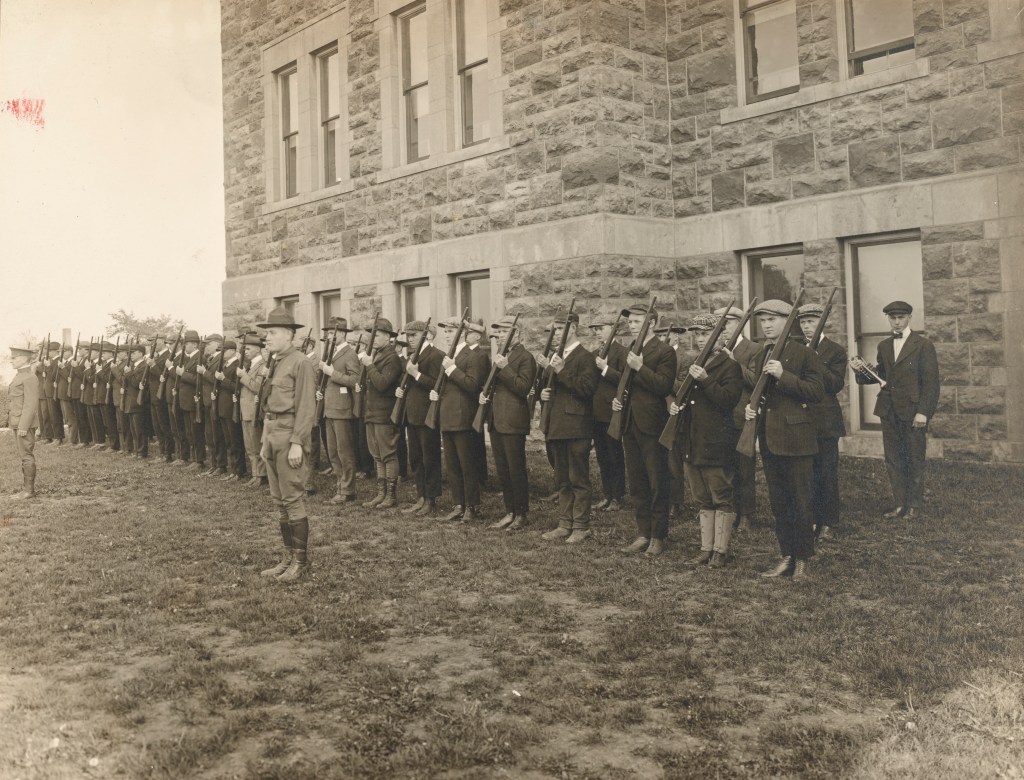
Grenade, Rifle No 44 A.T. (Anti Tank), Imperial War Museum, (source)
Grenade, Rifle, No 44 Anti-Tank (Sectioned), Imperial War Museum, (source)
British No.24 Mk.II Rod Grenade, Inert-Ord.net, (source)
NLAW is the British Army’s name for the Saab Bofor’s developed MBT LAW, in the early 2000s the British Army was looking for a more capable replacement of its LAW80. The Saab offering, Next Generation Light Anti-tank Weapon, won the contract in 2002 beating out several competitors including the SRAW-based Kestrel from Lockheed Martin/BAe.
British soldier firing NLAW (British Army)
The UK has just announced the transfer of light anti tank weapons to Ukraine in light of the continuing tensions with Russia. As such the UK is the latest nation to announce that they will be providing weapons to Ukraine. They follow US shipments of Javelin Missiles in December 2021, year and we’ve already seen these in the hands of Ukrainian troops. Most recently it has been confirmed that Lithuania plans to supply anti-tank systems to Ukraine too. The UK’s defence minister Ben Wallace stated that: “We have taken the decision to supply Ukraine with light, anti-armour, defensive weapon system”, while this does not specifically name NLAW, this describes the role which NLAW fulfils.
So what is NLAW?
NLAW is a disposable, shoulder-fired, single shot system which weighs about 12.5kg or 27.5lbs. It uses a predicted line of sight guidance system which calculates where the target will be when the missile reaches it. Like Javelin it is capable of targeting a tank’s weakest point, its top side.
NLAW (Saab)
The NLAW has two firing modes: Direct Attack, with the missile flying directly to point of aim, useful for engaging static targets. While the second, Overfly Top Attack, uses the Predicted Line of Sight (PLOS) system. The guidance algorithm optimises the trajectory of the warhead on an elevated flight path over the target with the onboard proximity fuze then detonating and firing an explosively formed penetrator down onto the target.
In British service the NLAW was selected to replace the LAW-80, a 94mm unguided anti-tank rocket, British Army analysis found that in order to provide adequate close range defence against armoured vehicles “significant numbers of NLAW will be required in order to ensure there is sufficient coverage of the battlefield.” This meant the system had to be capable and affordable. Since its delivery and introduction into service in 2009, the NLAW has been the secondary anti-tank weapon of the British Army’s specialised anti-tank platoons’, with the Javelin being their primary. The NLAW is also available for issue as the primary infantry light anti-tank weapon. The British Army describes it as “non-expert, short-range, anti-tank missile that rapidly knocks out any main battle tank in just one shot by striking it from above.” While not cheap, at around £20,000 per unit, NLAW costs significantly less than the longer-ranged, more complex Javelin [estimated at around £70,000 per unit]. It is currently in service with Finland, Sweden, Luxembourg, Indonesia and Saudi Arabia. It has seen action during Saudi Arabia’s interventions in Yemen.
A rifleman of 1 Gurkhas fires an NLAW (Corporal Stephen Harvey / UK MoD)
The weapon can engage close range targets at as close as 20m and uses a soft launch system that enables it to be fired from enclosed spaces. It can take on static target at 600 to 800m and moving ones at 400m. Technically, NLAW is not an anti-tank guided missile as the missile is not guided by an onboard system once it has been fired. Instead it used a Predicted Line of Sight (PLOS) system which enables it to be used like a fire and forget ATGM.
The weapon’s operator activates the PLOS system and the user tracks the target for 3 to 6 seconds in the NLAW’s Trijicon Compact ACOG 2.5×20 sight before firing, the guidance system calculates the predicted flight path to the target to ensure a hit.
The number of NLAW being dispatched by the UK has not been confirmed although several flights of RAF C-17s were made overnight on 17th January, 2022. Footage released by the Ukrainian Ministry of Defence showing the arrival of the NLAWs enables us to estimate that each flight could have carried somewhere between 180 and 216 NLAWs.
A still from a Ukrainian MoD video showing the arrival of the NLAWs (source)
It isn’t clear just how many NLAW systems the UK has stockpiled but it is likely that as missile systems have a limited shelf-life that the older systems may have been transferred first. The terms of the agreement to transfer the NLAWs hasn’t been made public but it was confirmed small teams of British troops had accompanied the weapons to provide initial training to Ukrainian forces on how to use them. This is in line with Operation ORBITAL, the UK’s training mission to Ukraine which was established in 2015, following the illegal annexation of Crimea. Wallace was keen to stress that “this support is for short-range, and clearly defensive weapons capabilities; they are not strategic weapons and pose no threat to Russia. They are to use in self-defence and the UK personnel providing the early-stage training will return to the United Kingdom after completing it.”
As of the time of writing more than 10 flights have been observed carrying military equipment from the UK. It is estimated that some 2,000 NLAW have been transfered. This was tacitly confirmed by remarks made by Wallace to the press.
A Ukraine MoD photo showing a training session on NLAW being delivered by members of the OP Orbital training team. (Ukraine MoD)
The UK has been working with Ukraine not just through Op ORBITAL but also more broadly with a number of agreements being signed in 2021 to support Ukraine’s naval capability. While the usefulness of the NLAWs are confined to close range engagements the move is clearly a symbolic signal to Russia.
If you enjoyed this video and article please consider supporting our work here. We have some great perks available for Patreon Supporters – including custom stickers and early access to videos! Thank you for your support!
Bibliography:
Next Generation Light Anti-Tank Weapon (NLAW), ThinkDefence, (source)
Britain Delivered Military Weapons to Ukraine, UkraineMoD, (source)
UK Delivers Light Anti-Tank Defensive Weapon Systems To Ukraine, OvertDefense, (source)
One Shot – One Armored Target. Javelin ATGM, UkraineMoD, (source)
Statement by the Defence Secretary in the House of Commons, 17 January 2022, UK MoD, (source)
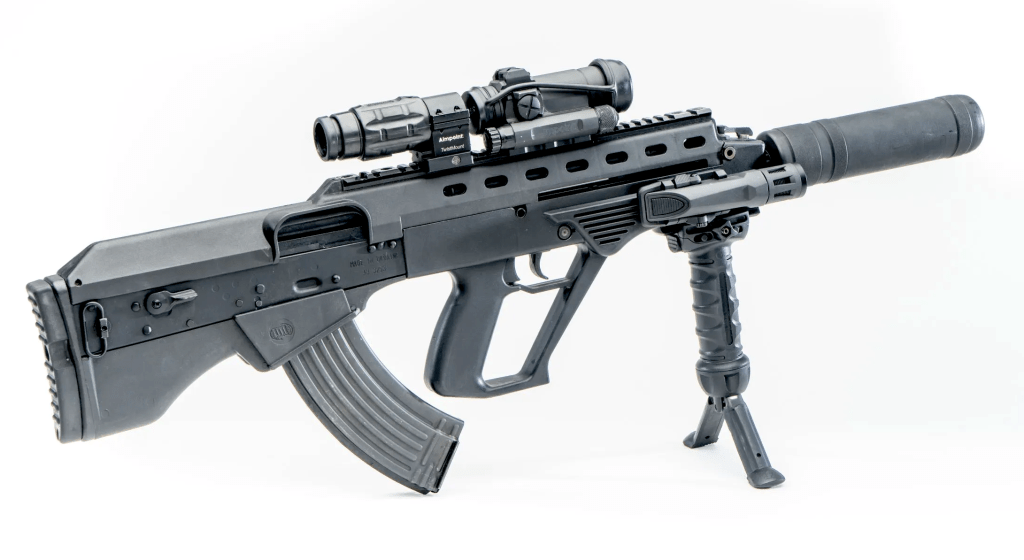
The VHS-2 bullpup rifle manufactured by Croatia’s HS Produkt became one of the most frequently seen rifles during the Iraqi counter-offensives against ISIS during 2015-17. The rifle regularly appeared in news reports and social media posts and became somewhat synonymous with the fighting for Fallujah and Mosul.
A screen capture of combat footage from Iraq c.2016-7 featuring a member of the Emergency Response Division with a VHS-2
Check out the full article accompanying this video at Silah Report.
If you enjoyed this video and article please consider supporting our work here. We have some great perks available for Patreon Supporters – including custom stickers and early access to videos! Thank you for your support!
Set the mainsail and sharpen your cutlasses, this week we’re taking on a technicolour swashbuckler set during the Napoleonic Wars. Starring Gregory Peck and Virginia Mayo, Raoul Walsh’s 1951 adaptation of some of C.S. Forester’s classic seafaring novels is stirring stuff! Join us as we unpack this early adaptation of three of Forester’s renowned Horatio Hornblower books.
This week’s film was selected by the Fighting On Film Supporting Cast, each month we offer a selection of choices for our Patreon supporters to choose from, if you’d like to support the show and help us pick films find out more here.
During the Cold War NATO was understandably interested in capable anti-armour weapons. In this video/article we will examine the Off-Route Mine which features in footage from several British Army training films. They show a team of Royal Engineers setting up an L14A1 off-route mine ready to ambush attacking Soviet tanks.
Unlike a conventional mine which detonated vertically when a vehicle drove over it, the Off-Route Mine would be tripped by a breakwire set across a vehicles likely path. When the wire was tripped or broken the mine’s charge would be electrically detonated and the blast would project horizontally.
An Off-Route Mine in position (IWM)
What the British termed the L14A1 was developed in the early 1970s by France’s state arsenals. In French service it was known as the ‘Mine Anti char à action horizontale Modèle F1′ (or MI AC AH F1). It was manufactured throughout the 1970s and 80s by GIAT Industries.
The mine was essentially an electrically fired shape charge, it used the Misznay-Schardin effect rather than the Monroe effect. The former relies on a shallower, concave shape charge, which has a copper cone that is super heated by the explosion and fired out towards the target. This gave it the ability to project its cone further and removed the need for it to detonate in contact with the target vehicle.
An illustration of how the Off-Route Mine works from a British Army manual
The mine had an effective range of between 70 to 80 metres and according to the 1977 French manual the projectile created by the detonation could travel up to 6km. In terms of the mine’s effectiveness the same manual states that 40m was the optimal range but no closer than 2m.
The manual also notes that “the slightest obstacle in the trajectory of the projectile (such as earth or shrubs) considerably reduces performance.” The diagram below from a 1977 French Army manual shows the effect of the mine on 70mm of armour at 40m, with 0-degrees of angle.
Effect diagram from 1977 French Army manual
When detonated the mine could throw fragments in a radius of 100m and could throw armour shards from a successful strike up to 200m from the target. The British mines came in the L27A1 kit which included a pair of the L14A1 off-route mines as well as instructions, the break wires, a night sighting tool, and an adjustable stand for mounting.
The mine’s electorally-powered detonator was powered by D cell batteries, which Sappers complained had to be frequently changed. The mine itself weighed 12kg and was packed with just over 6kg of Hexolite explosive. There was also a training version, the L28A1, which fired a paint-filled sponge to mark the side of the vehicle and confirm a hit.
A Sapper setting up an Off-Route Mine (IWM)
The Miacah F1 was removed from French service in 2001. An improved version, the F2, was manufactured in 1996 and used by the French until the mines were withdrawn in 2004 due to corrosion. While some mines may have remained in stores, as some have been seen as late as 2016, they contravened the 1997 Ottawa Treaty on anti-personnel mines because the break wire could in theory be tripped by a human rather than a vehicle.
It was replaced in British service by the ARGES off-round Anti-Tank Mine which fired a modified 94mm rocket with a tandem HEAT warhead. In 1997 it was reported that 4870 Off-Route mines were held by British Army stores, in line with the Ottawa Treaty this had been reduced to 0 by 1999.
If you enjoyed this video and article please consider supporting our work here. We have some great perks available for Patreon Supporters – including custom stickers and early access to videos! Thank you for your support!
Bibliography:
Landmine Monitor Report, 2004, Landmine & Cluster Munition Monitor, (source) Landmine Monitor Report, 2000, Landmine & Cluster Munition Monitor, (source) CNEMA Report, 2000 (source) British Army User Handbook, Mine Anti-Tank Kit L27A1 (Off Route Mine), 1980 French Army MIACAH F1 Manual, 1977
Footage:
Fighting In Woods, British Army training film, 1982, (held by the IWM, DRA 1472) Fighting In Villages, British Army training film, 1979, (held by the IWM, DRA 1401)