Who Let the Dogs Out: Robot Dogs in Ukraine

Since the February 2022 invasion the war in Ukraine has been characterised by the use of drones and remote systems. While we’ve seen aerial drone use expand and evolve extremely rapidly and naval drones have proven themselves very effective, ground based drone use has been much slower to evolve with unmanned ground vehicles (UGVs) seeing some limited use delivering explosive charges, mines and taking on logistical roles.
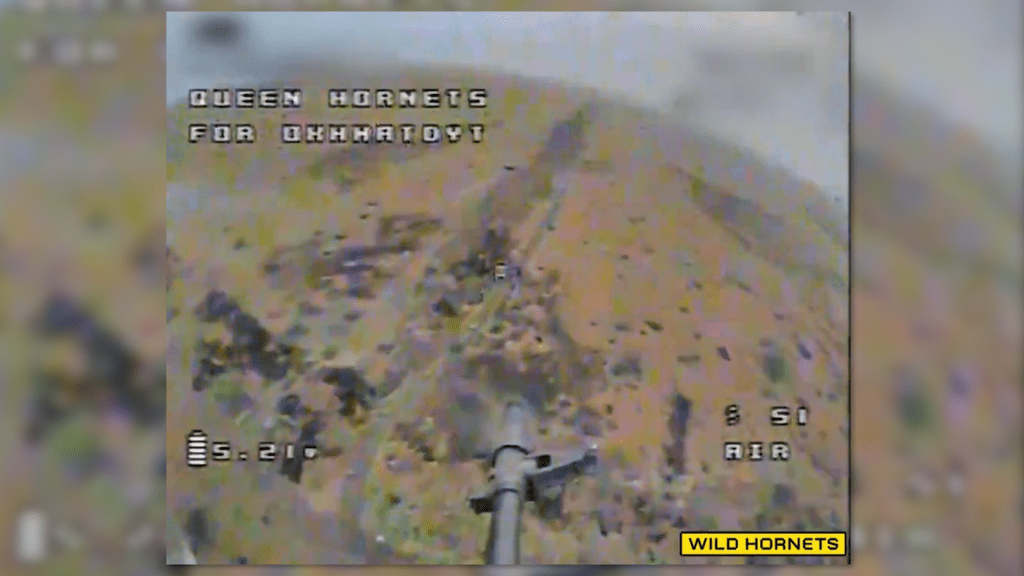
One unmanned ground system which I didn’t expect to see is the use of ‘robot dogs’ (робот-собака). These quadrupedal, remotely operated systems were seen for the first time earlier this month, most notably with Ukraine’s 28th Mechanised Brigade.

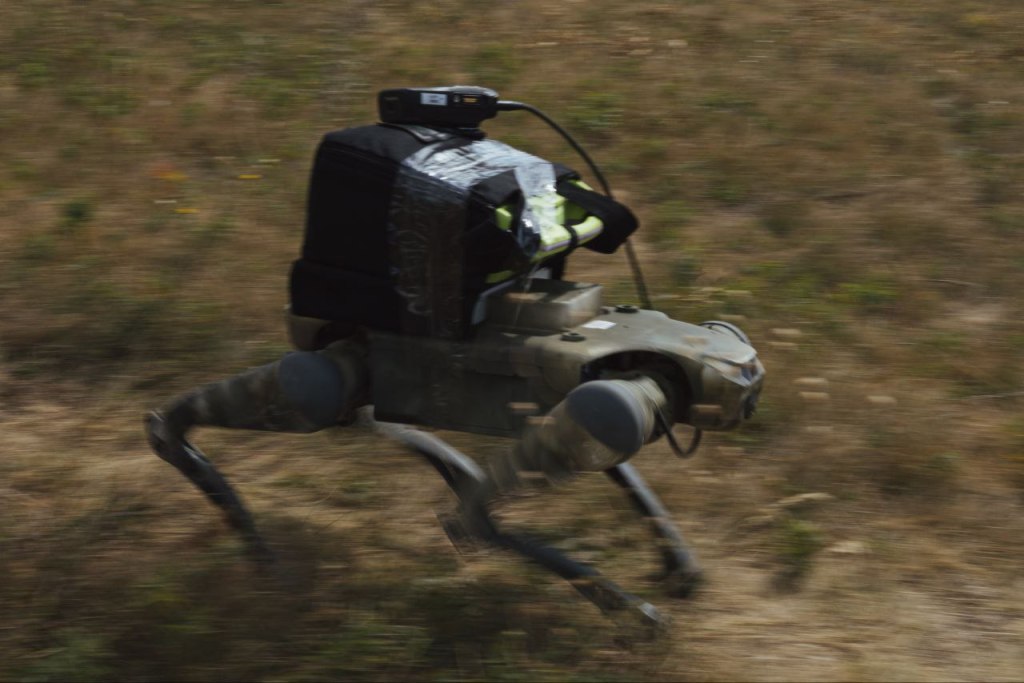
A Unitree Go-2 robot dog being tested in Ukraine (via social media)

The first footage of the robot dogs in Ukraine was shared by members of Kurt & Company (a unit with the 28th Mechanised Brigade) on 2 August, it shows one of the dogs being demonstrated in a field navigating though fields and woodland, through brush and righting itself when it got stuck trying to climb over a fallen branch.

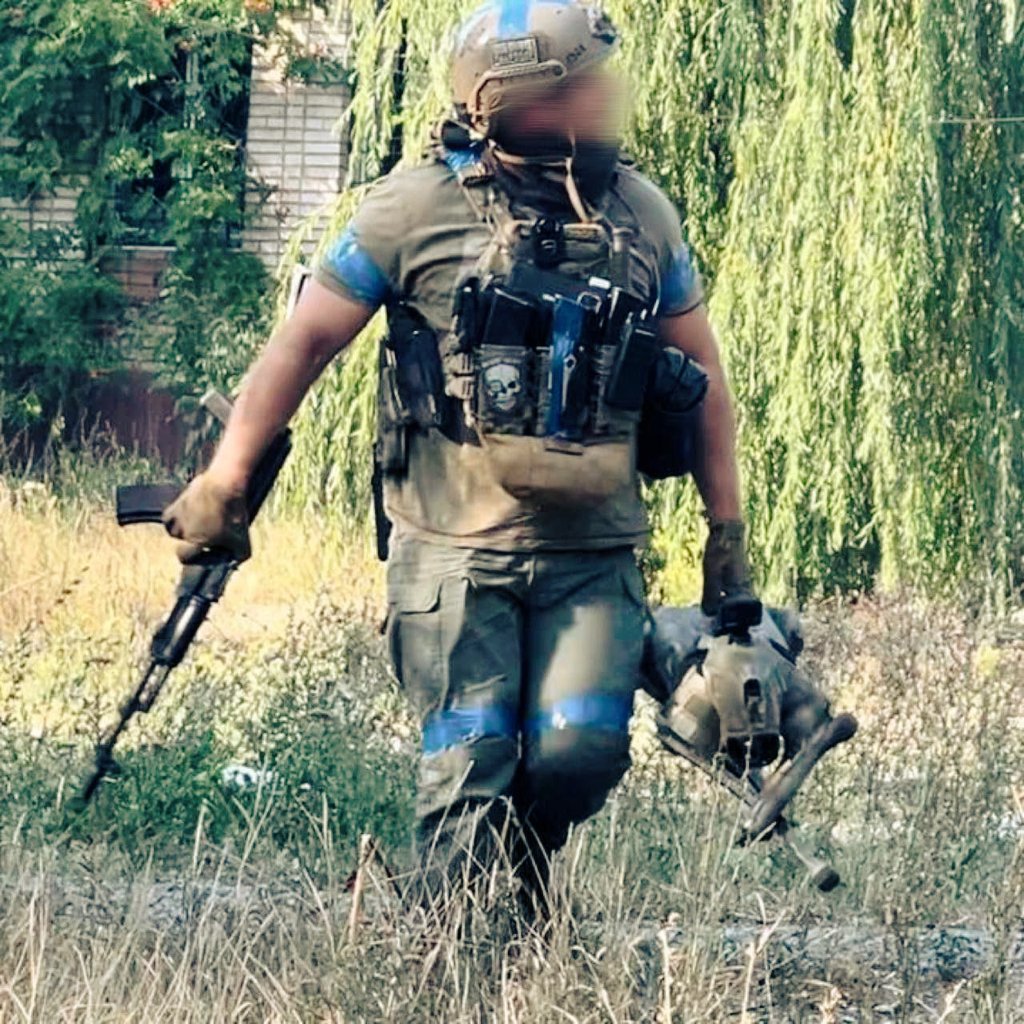
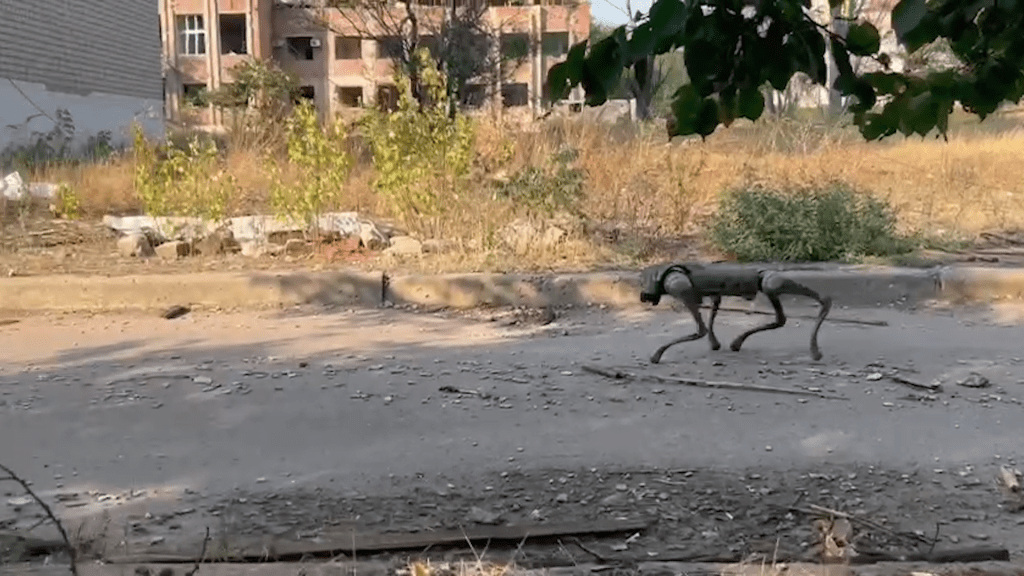
Another video appeared on 5 August, with the robot dog seen moving along a bombed out residential street and being carried by its operator, a member of Kurt & Company. The footage does not show the dog operating inside any buildings. The post claims the footage was filmed in Toretske, Donetsk.

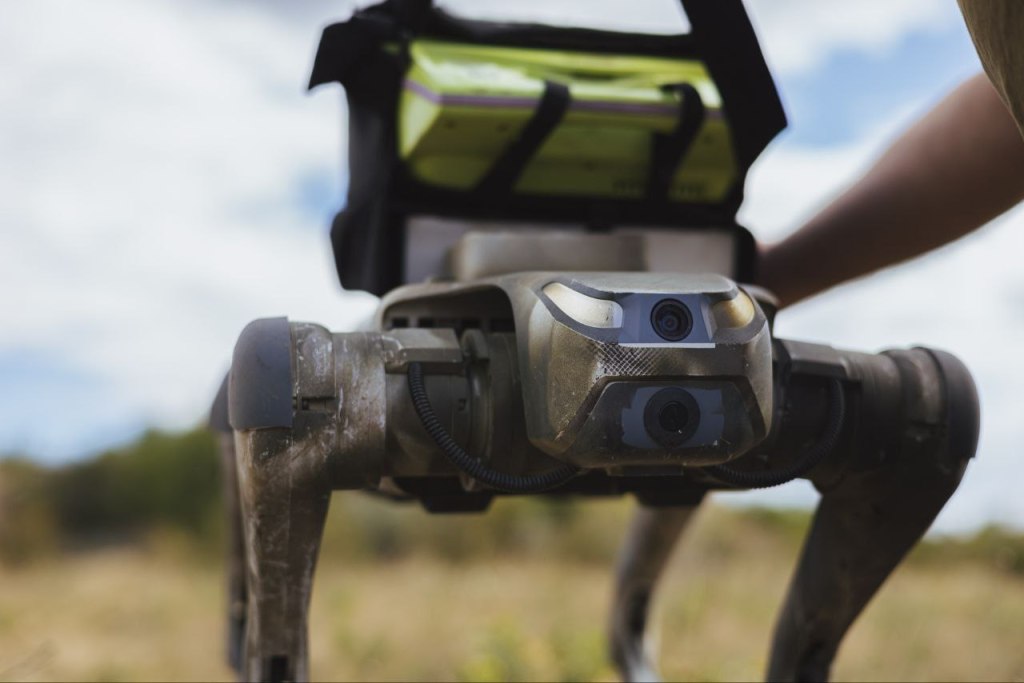
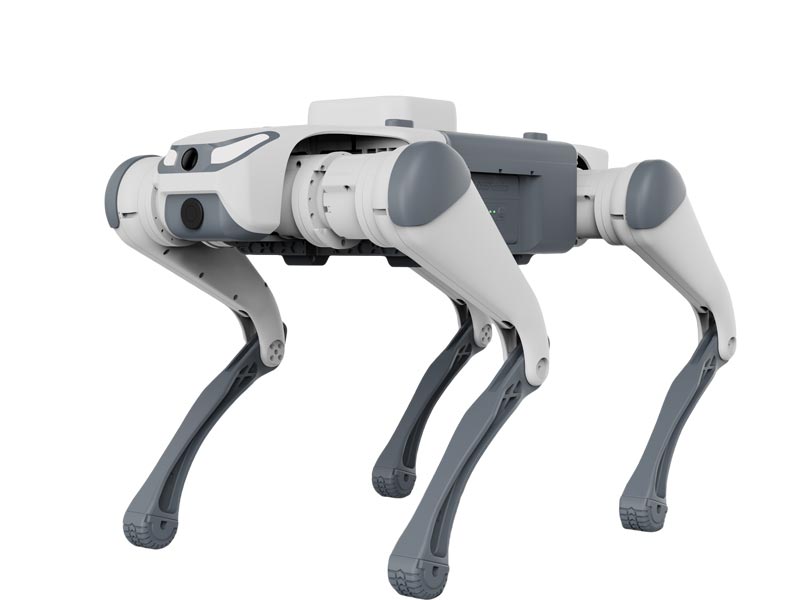
On the 8 August, France24, published an article based on a demonstration of one of the robot dogs during which the model of dog was referred to as “BAD 1” and a second model “BAD 2” was referenced but described as more advanced and “could not be shown for security reasons”. The article also noted that if one of the dogs ever fell “into Russian hands… an emergency switch allows the operator to erase all its data.” AFP shared a short video from the demonstration which noted that the drones were provided by BRIT Alliance, a UK-based security company which specialises in deploying drone systems. Interestingly, some articles describe the robot dogs as ‘British built’, however, they actually appear to be Chinese Unitree Go-2 robot dogs. The Unitree name can be seen below the dog’s camera sensor in the AFP video, as well as a Kurt & Company sticker on its right side.

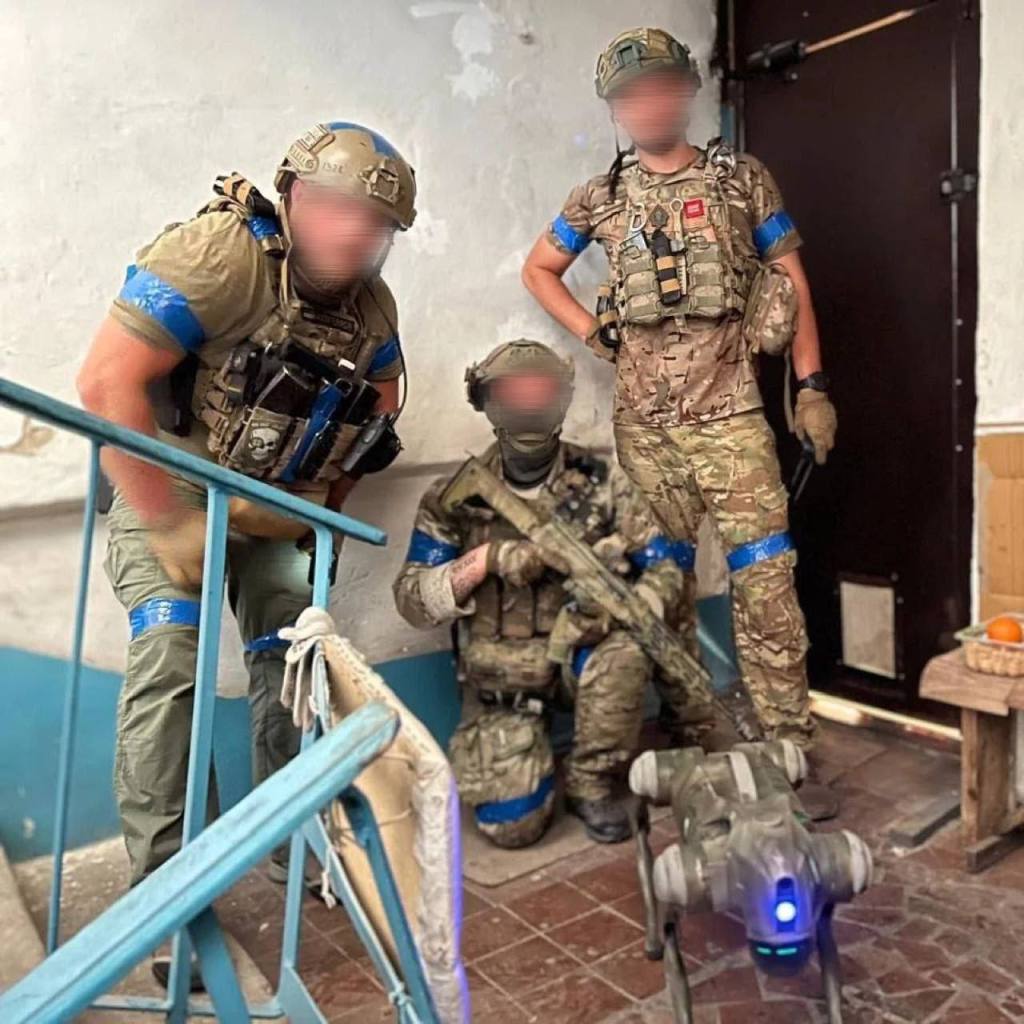
Ukrainian troops of the 28th Mechanised Brigade with a Go-2 robot dog (via social media)

The Unitree Go-2 has a number of interesting features including the ability to map areas using LIDAR scanning, an AI mode that helps it navigate complex terrain and a live camera feed. Unitree’s site lists them as available from $1,850 for a Go-2 air and $3,050 for a Go-2 Pro. The Go-2 Pro model weighs around 15kg, has an 8kg payload, a battery life of up to 2 hours and a top speed of just under 8mph. Intriguingly back in 2022, Russia displayed the M-81, a robot dog armed with an RPG-26, at the Army 2022 defence exposition. The M-81 was actually based on Unitree’s Go-1 robot dog.

A further video was shared on 12 August, the drone is seen camouflaged with what may be a Ukrainian digicam shirt. In the same video the word ‘B.A.D.2.’ can be seen stenciled on the body of the dog.

On the 14 August, Kurt & Company shared a series of photos of a robot dog and operator with the caption [machine translated] “Better to buy robots than lose soldiers”. In several of the photos the dog has a backpack and radio strapped and taped to its back. On examination of the images this dog appears to be of a different design and resembles the DeepRobotics Lite3 Venture model, DeepRobotics are another Chinese manufacturer. This model weighs in at 12.2kg and has a 2 hour endurance.

The same day the brigade’s official telegram page shared another video of the robot dog being demonstrated with the caption [machine translated]:

“Asymmetric responses are effective against the enemy’s numerical superiority in manpower, and they are possible thanks to technologies and innovative approaches in the conduct of hostilities.
As an example – this robot dog at the service of “Kurt&Company”.
He has many talents and a wide potential for use on the battlefield. Just as drones once changed warfare, so our four-legged robotic friends will influence the course of hostilities.”

The short video included clips of the dog on the move, doing backflips, and walking along a bombed out residential street.

Also on the 14 August, Ukrainian Army social media channels also shared the same photographs previously shared with a caption quoting the commander of Kurt & Company as saying: “Such a dog should be in every unit”.

It’s unclear how many of the robot dogs might be in use in Ukraine, or if they’ve been used on operations yet. A BILD article published on 14 August, claimed that as many as 30 have been deployed but there’s no further evidence to support this. A Новини ФАКТ article stated they had been used operationally in Toretsk but this remains unconfirmed.

While the quadrupedal design of the robot dogs means they are, in theory at least, more capable of climbing stairs than tracked or wheeled UGVs their utility remains to be seen. They have less capability to carry payloads and its unclear if they’ll be used in a one-way role with explosive payloads – though given every other unmanned system in Ukraine has, it is probably a just matter of time. Unlike some of the simpler tracked and wheeled UGVs the Go-2 robot dogs are probably more expensive, harder to maintain and have a larger profile making them more vulnerable to enemy fire. It has been noted that they will also likely be utilised in reconnaissance of enemy trenches ahead of assault teams but again evidence of this has not yet surfaced.

A Unitree Go-2 robot dog being tested in Ukraine (via social media)

It seems that the role the dogs would be best used for is reconnaissance in urban areas where aerial drones can’t easily navigate inside structures, removing the need to send troops to recce buildings to locate the enemy. It seems that this is the role that the Ukrainians have in mind for the dogs. While China, the US and a range of other militaries have tested robot dogs, including the mounting of small arms and even light anti-armour weapons, if they are utilised in combat in Ukraine this will represent a battlefield first for this type of system.

Update – 20/8/24: An another video of one of the Chinese Robot Dogs, a Unitree Go-2, in Ukraine posted on 19 August.

Update – 8/9/24: Some additional video featuring both models of robot dog previously identified.

Update – 15/1/25:

RoboCopDog.A robot dog with what appears to be a thermal camera with the Rapid Operational Response Unit (KORD) of the Ukrainian National Police.More on these robot dogs in #Ukraine here: armourersbench.com/2024/08/16/w…

Matthew Moss – Armourer's Bench (@matthewmoss.bsky.social) 2025-01-15T12:27:16.637Z

Support Us: If you enjoyed this video and article please consider supporting our work here. We have some great perks available for Patreon Supporters – including early access to custom stickers and early access to videos! You can also find us on the History of Weapons & War app. Thank you for your support!


Walk Around: M3 Stuart Tank

A couple of weeks ago at the excellent We Have Ways Festival I spotted one of my favourite tanks, an M3 Stuart. The Stuart’s wartime service is pretty fascinating, seeing extensive use across every major theatre. It entered service in 1941 and nearly 23,000 were manufactured by 1944.

The Stuart is a light tank and the M3A1 variant, seen here, was equipped with a .30 calibre Browning bow gun, an M6 37mm gun and another co-axial Browning M1919 .30 calibre machine gun. Powered by a Continental W-670 radial engine it could travel at speeds up to 35 mph (on the road) and 18 mph (off-road) and weighed in at 15.2 metric tons (16.7 US/short tons). Its hull is riveted while the turret is welded, in terms of armour protection the M3 has rolled face-hardened steel armour 1 inch (22mm) thick on its sides and rear and 1.5 to 1.75 inch (38-44mm) on its front glacis.

Right-Front quarter: M3 Stuart (Matthew Moss)

By 1942 it was largely fulfilling a cavalry scout/armoured reconnaissance and infantry support role. Unable to go toe-to-toe with heavier German tanks it continued in the aforementioned recce and support roles but found a niche in the Far East and Pacific theatres. It was also provided to the Soviet Union as Lend-Lease aid. This meant that the Stuart equipped armoured units in allied armies including: the US, UK, the USSR, Commonwealth nations including Australia, Canada, New Zealand and India. They were also used by Free Polish and Chinese forces and the Free French Army.

A look at the Stuart’s Continental W-670 radial engine (Matthew Moss)

The tank at the Festival was badged up with the battle axe insignia of the 1st Australian Armoured Brigade Group which was operational from August 1943, after the 1st Australian Armoured Division was disbanded. I believe its part of the Tanks-Alot collection and they have some video of the tank on the move, but I didn’t have a chance to speak to the owners – they do have an interesting YouTube channel.

Front: M3 Stuart (Matthew Moss)

Just a short article/video looking a pretty cool light tank that’s often forgotten alongside the M4 Sherman and M3 Lee. It’s not everyday you get to have a close up look at a cool tank on a beautiful day.

Special thanks to my friend Adam Blackmore-Heal for some additional footage of the Stuart on the move, check out his channel here, he is a phenomenal videographer.


Support Us: If you enjoyed this video and article please consider supporting our work here. We have some great perks available for Patreon Supporters – including early access to custom stickers and early access to videos! You can also find us on the History of Weapons & War app. Thank you for your support!


Bibliography:

M3 & M5 Stuart Light Tank 1940-45, S. Zaloga (1999)

Light Tank M3 Stuart, Tank Encyclopedia (source)

Ukrainian Marines Deploy RBS-17/Hellfire Shore Defence Missiles

The RBS-17 has been in Ukrainian service for quite some time with Sweden announcing in June 2022, that they would provide the missiles. The RBS-17 was a development of the AGM-114 Hellfire, entering service in the the early 1990s. It is a man-portable missile which weighs 48kg in addition to the launcher, firing system and laser targeting module. It is typically operated in the field by a five man team – two operating the laser targeting system and three on the weapon itself.

Check out our earlier video on the RBS-17 in Ukraine here

We first saw the RBS-17 in use in the field in a video posted in October 2022, by a page called ‘Bigcats’, the lo-res clip shows the launch of a pair of missiles. In December 2023, the Swedish government published an article and video about Ukraine’s use of the RBS-17 and the training the Swedish armed forces provided on the system. Most recently in May 2024, a clip of an Armenian volunteer unit, NEMESIS, showed a team operating an RBS-17. The video shows NEMESIS team members carrying a missile to the launcher, this gives an indication of just how ‘man portable’ they are. They load the missile and then take cover in the nearby tree-line. We can then see one man manning the control unit and the missile is launched.

It is worth noting that Norway has also provided it’s Hellfire Shore Defense System, which is externally very similar in appearance to the RBS-17. Some of the missiles in use are likely Norwegian HSDS.

Since then we have had a series of excellent clips which are amongst the most detailed so far. The clips were posted to various TikTok accounts and show a team, which appears to be attached to one of the Ukrainian Marine brigades, operating the missile system.

My colleague Weapons_Illustrated shared a series of videos he found on a Ukrainian serviceman’s Tiktok channel which were posted in summer 2024 but have since largely been removed. One simply shows a launch of a missile filmed relatively close to the launcher. Another pans along a missile body showing a message scrawled on the casing and also the missile’s lot number ‘98001’. While slightly blurred one Bofors sticker appears to read ‘Norwegian Hellfire Shore Defense Missile ‘ The video concludes showing a night launch across a body of water before cutting to a thermal camera showing an impact downrange. Another video shows the missile control system before cutting to showing a missile launch and then a clip of a strike on a large building which has its roof blown off. A video posted by the same channel on 20 July included a new launch video showing a missile being fired before cutting to a screen showing the destruction of a building near a large body of water. The landscape visible may suggest the footage was filmed along the Dnieper River, possibly near Krynky.

With further research I came across another affiliated account which had a number of videos showing the launch of RBS-17s dating back to January 2023. The first video posted on 3 January shows a launch of an RBS-17 with a picture-in-picture video of the operator at the launch control terminal. On the 5 March another video was posted from the same position, when the videos were actually filmed is difficult to confirm, this time the video also concluded with a clip of the impact of the missile on a target, a large building, downrange. On 13 May, a short video of the RBS-17s control terminal lit up was shared. A video posted by the account on 23 October, includes a slowed down clip of a launch and a clip showing a missile hit a target building.

The most recent video, posted on 11 December, features the launch of an RBS-17 filmed with multiple camera angles. One shows the video from the launch control station with a picture-in-picture view of the operator at the controls as well as a show showing the missile leaving the launcher, which has been positioned on a road. The video concludes with some overwatch drone feed footage of an impact on a building.

Update – 15/08/24:

One of the accounts which previously shared launch videos also recently shared a new video of a missile being launched from the edge of a field. Given earlier videos posted by the same individual showed HSDS markings this missile may also be a Norwegian HSDS.

Update – 8/9/24: New footage, shared in mid-August by Ukrainian marines operating a RBS-17/Hellfire SDS, geolocated to the Kherson region.

Special thanks to my colleague Weapons Illustrated who found the initial recent videos of the RBS-17 in action. Check out his project tracking various weapon systems seen in Ukraine here.


Support Us: If you enjoyed this video and article please consider supporting our work here. We have some great perks available for Patreon Supporters – including early access to custom stickers and early access to videos! You can also find us on the History of Weapons & War app. Thank you for your support!

Ukraine’s Rare RG-1 Grenade Launcher

Way back in October 2022 video of the extremely rare Ukrainian RG-1 circulated online thanks to Yuri, an American member of the Ukrainian armed forces (known as Nucking_Futs_Yuri, best known as for his combat footage of him manning an M2 Browning and firing numerous AT-4s from a HMMWV). Yuri and his colleague Kaiser, a German volunteer, very kindly shared their videos of the RG-1 filmed when they had the chance to fire the weapon during some range time. As far as I can tell those videos remain one of the few occasions that the weapons have been seen during the ongoing fighting following Russia’s invasion. Since October 2022, I’ve been holding off on making a video about the RG-1 in the hopes more imagery might appear – there have only been two more sightings.

Yuri with an RG-1 at the range, October 2022 (via Yuri)

The RG-1 “Piston” (РГ-1 “Поршень”) was developed as a cost effective force multiplier, to provide the firepower of an AGS-17 in a man portable package. Information on the weapon is scarce and I’ve had to dig through a number archived Ukrainian news articles and other sources to pull together some of the story of the RG-1.

A 2014 article from UkraineIndustrial.info suggests the project to develop the RG-1 was launched in 1999 and continued until 2007.  It was reportedly developed by the Yuzhny Machine-Building Plant. A.M. Makarov with the design team including Alekseev Yury Sergeevich, Serbin Vladimir Viktorovich, Zagreba Alexander Ivanovich, and Mezhuev Nikolay Nikolaevich

RG-1 grenade launcher with red dot sight mounted on quadrant sight bar (Yuzhmash)

The RG-1 is a self-loading grenade launcher which fires 30×29mm VOG-17-pattern grenades. Some sources refer to specially made, lighter grenades made for the RG-1. Numerous sources also refer to a training round and a round designed for use against light armoured vehicles. The ammunition was reportedly developed by the Pavlograd Mechanical Plant, which is run by Yuzhmash. The RG-1’s relatively long barrel allows it to engage targets at ranges out to around 800m. The weapon does not appear to have a gas piston and it’s barrel is fixed suggesting it isn’t recoil operated. It may be gas blowback operated, though it’s unclear if it has any sort of bolt delaying system in place. The weapon has a large main spring soaking up the recoil as well as a large top-ported muzzle brake.   

The weapon’s weight is reportedly around 12kg (26.45lbs) loaded and 10.8kg unloaded. It has a 30cm (11.8in) barrel, has an integral bipod and feeds from a five round box magazine. The box magazine rocks forward to lock into the receiver, with the paddle magazine release located forward of the magazine (the reverse of the standard AK position). To load the weapon the bolt has to be pulled to the rear, but with no bolt hold open device it has to be held to the rear manually. There is a quadrant sight on the left side of the weapon’s receiver with a Picatinny rail for mounting optics. The buttstock has a rubber pad and from the available imagery there appears to be two designs of stock. 

Uprom.info reported in 2018, that as of Spring 2017, the RG-1 was not in full-scale production but prototypes had been undergoing field trials with the 79th Airmobile Brigade during fighting in Donbas, as early as 2016.

30×29mm VOG-17-pattern grenades in RG-1 magazine (via Yuri)

Speaking to Yuri in 2022, he noted that his unit didn’t bother using the RG-1 as they had plenty of 40mm grenade launchers in inventory, including then-newly arrived M320s. Yuri explained that “the RG-1 was a stop-gap weapon to give the average man the capability to fire VOGs without having to get an AGS into position.” The low velocity 40mm grenade launchers are smaller, lighter, easier to carry and, according to Yuri, have better range an accuracy than the RG-1.  

A second sighting of an RG-1 came in mid August 2023, when another video of the weapon being fired on a range was shared. The most recent sighting came in October 2023 when a curious photograph of General Kyrylo Budanov, chief of Ukraine’s Main Directorate of Intelligence, was published showing an RG-1 in the corner of his office. 

Gen. Budanov poses with Joker paining next to an RG-1 (via social media)

The RG-1 is an extremely interesting weapon. Designed to fulfil a tactical niche between the common GP-25 single-shot under-barrel grenade launcher and the heavy AGS-17 automatic grenade launcher. Essentially the RG-1 was intended to be light enough for the operator to manoeuvre and act as an integral support element within the squad. However, in the current phase of the war the proliferation of low velocity 40mm grenades has largely rendered the RG-1 unnecessary. If you’ve seen other imagery of RG-1s in use please do let me know.

Specifications for the RG-1 [assorted sources]:

Calibre – 30×29mm
Rate of fire – 30 RPM
Effective firing range – 800 meters
Weight (unloaded) – 10.8kg
Length – 905mm
Barrel length – 300mm
Initial grenade speed – 185m/s

Update – 20/11/24: Tysk shared a photo of a 3rd Assault Brigade member posing wth an RG-1, date unknown.


Support Us: If you enjoyed this video and article please consider supporting our work here. We have some great perks available for Patreon Supporters – including early access to custom stickers and early access to videos! You can also find us on the History of Weapons & War app. Thank you for your support!

3D Printed Evolution of Drone Munitions

Since Russia’s invasion of Ukraine in February 2022 the use of drones for reconnaissance and tactical missions has evolved so rapidly it has come to characterise the war. The tactic of dropping hand grenades from commercial drones has evolved into the use of larger drones and larger munitions and the use of first person view (or FPV) one-way, kamikaze drones.

L-R: V3 XL ‘Big Mac’, V2, V1 & small VOG-sized casing (via Joe MacDonald)

Joe MacDonald, a British volunteer currently fighting in Ukraine, has kindly shared a short video showing some of the newest munitions that have been in use with his drone team for some time. Joe has led the development of a series of munitions of varying sizes. These range from small 450g bombs up to 3.5kgs which are dropped from a range of drones, small Mavic-type drones up to the ‘Baba Yaga’ heavy bomber drones.

This short video from Joe just goes to illustrate the importance of 3D printing in the development and manufacture of drone dropped munitions. The 3D printed casings are loaded with explosives and shrapnel which can then be fuzed ready for deployment in the field. The 3D printed designs have only grown more sophisticated, evolving originally from printed trail sections and nose cones.

3D printed drone munition casings with tail assemblies (via Joe MacDonald)

Importantly, the use of 3D printing allows for the casings and tails to be standardised and consistent. The 3.5kg V3 takes up to 24 hours to print, they could be printed faster but Joe explained that this sacrifices rigidity and robustness and he prefers the munitions his unit uses to be soldier-proof and capable of standing up to handling. Joe also noted that packing the casings with plastic explosive takes force which the cases have to be able to stand up to. While there are plenty of other case and tail designs in use the designs Joe led the refinement and development have been used by numerous Ukrainian brigades.

Special thanks to Joe for sharing the video and taking the time to explain how drone munitions are assembled, I highly recommend checking out Joe’s channel, Big Mac’s Battle Blogs, he regularly shares some really interesting insights.


Support Us: If you enjoyed this video and article please consider supporting our work here. We have some great perks available for Patreon Supporters – including early access to custom stickers and early access to videos! You can also find us on the History of Weapons & War app. Thank you for your support!

Anti-Tank Mines Used As Satchel Charges

In recent weeks there have been a spate videos showing Russian troops using TM-62 anti-tank mines as improvised satchel charges. We’ve already seen TM-62s used as drone dropped munitions and as demolition charges. The videos shared most recently show the dramatic effect that the TM-62s can have on structures. But they aren’t the first videos of the mines being used in this way to emerge from the conflict.

Back in April 2023, overwatch drone footage was shared which showed a Ukrainian soldier using a satchel charge, which appears to be a TM-62, to destroy a Russian fighting position. The charge detonates about 10 seconds after it’s tossed into the position. Almost a year later in early March 2024, another piece of drone footage showed troops from the 2nd mechanised battalion of the 30th mechanised brigade destroying what appears to be the entrance to a cellar near Syn’kivka, in Kharkiv Oblast, with a TM-62 satchel charge.

A Russian soldier posts a TM-62 through a window (via social media)

Several days later another video showed a member of the 81st Airmobile Brigade using a TM-62 to destroy Russian dugouts near Bilohorivka. In the video a Ukrainian serviceman can be seen lighting a length of safety fuze which appears to be taped to the body of the mine. He then throws the mine into a hole in the roof of a dugout and takes cover – approximately 20 seconds later it detonates. Several grenades are thrown into the dugout and another mine is brought up, we can see the mine is being carried by its attachable webbing carrying handle. The safety fuze on the mine is lit and thrown into a covered section of trench and detonated approximately 22 seconds later.

On 12 April, the 109th Territorial Defense Brigade shared video of urban operations in which Ukrainian troops, with covering fire from HMMWVs, used satchel charges to destroy several buildings. The drone footage of the operation isn’t clear enough to make out if the satchel charges used are TM-62 based but the charges clearly have a significant blast effect.

Depending on the variant TM-62s mine are packed with 7.5kg (17lbs) of explosive and is normally centrally fuzed by a mechanical MVCh-62 pressure fuze. It is a High-Explosive Blast (HE-Blast) mine typically with a TNT filling. While extremely potent they aren’t designed to be thrown, weighing 9.5–10kg (20-22lbs). 

A Ukrainian soldier lights a safety fuze to ignite a TM-62 (via social media)

While in some videos its clear that some sort of cord fuze was used to initiate the mine in some of the more recent footage it appears that grenade fuzes may have been used. This gives the user very little time to escape the blast radius.

On 2 July, a Russian telegram channel shared the first of several videos of Russian troops using TM-62s to clear positions. The location of the video isn’t stated but it shows Russian soldiers tossing a pair of what appear to be a TM-62Ps (which have a red-orange Bakelite case). Two days later another drone video showed [better quality version] a Russian soldier run up to a building and throw a TM-62 through a ground floor window, he runs clear but the mine detonates just three seconds later. It’s unclear from the video when he initiated the fuze, likely before approaching the building. The charge effectively collapses the corner of the two storey structure’s outer wall.

A TM-62 satchel charge destroys the corner of a building (via social media)

Russia telegram channel WarGonzo shared another video on 5 July, reportedly filmed in Niu-York, Ukraine, showing a member of the 9th Separate Guards Motor Rifle Brigade using a TM-62 to destroy a building which was said to have been occupied by Ukrainian troops. The Russian soldier can be seen pulling a pin on what may be a grenade fuze just before throwing the mine through a window. The mine detonates just three seconds later completely destroying the small building.

Another spectacular video was shared on around 7 July, showing two Russian soldiers deploying a pair of TM-62s against a large building, the location of which isn’t stated. They are seen approaching the building, pulling fuze pins and tossing the mines in. As they turn and run the mines detonate just three seconds later demolishing the building.

While in most of these videos the men deploying the mines appear to get clear they do beg the age old question of whether some of the soldiers deploying the mines are inevitably ‘hoist by their own petards’ – the etymology of that phrase being a reference the the dangerous business of 16th century sappers being killed or injured while deploying Petards, a historic equivalent to a modern demolition or satchel charge.

16th century engineer deploying a petard (via Library of Congress)

It’s clear from the available imagery that both Russia and Ukraine have utilised TM-62s as ad-hoc satchel or demolition charges since at least early 2023 (and likely earlier). It’s unclear how widespread of a practice the use of the mines is but it is clearly highly effective and while it puts the user deploying the mine at significant risk it appears an effective way of clearing enemy positions if the charge can be delivered successfully.

Update – 30/09/24: Footage of what may be an assault demolition, of an apartment block in Toretsk, using TM-62s.

Update – 21/10/24: A member of Ukraine’s Russian Volunteer Corps employs a TM-62 satchel charge during fighting in Vovchansk.

Update – 5/12/24:

Omega Team, an SOF unit with Ukraine’s National Guard, employ multiple TM-62s during a hit and run raid on a Russian strong point in an apartment block.

Update – 12/12/24:

An recent video of Ukrainian combatants using multiple TM-62 (or similar) anti-armour mines (минированию) as satchel charges in Toretsk was shared. The video shows half a dozen charges comprised of a pair of mines taped together with a delay fuze. These charges are thrown into the ground floor of a damaged building.


Support Us: If you enjoyed this video and article please consider supporting our work here. We have some great perks available for Patreon Supporters – including early access to custom stickers and early access to videos! You can also find us on the History of Weapons & War app. Thank you for your support!

Ukraine Captures First Turtle Tank

Since my last article/video on Russia’s ‘turtle tanks’ the adapted vehicles have continued to be used on several fronts but on Monday, 17 June Ukrainian forces captured their first turtle tank intact.

Known by numerous names by both sides including ‘Blyatmobiles’ (Блятьмобиль) and ‘assault garages’ (штурмовые гаражи), ‘Tsar Mangals’ (Царь мангал) or simply ‘sheds’ (сарай) the tanks are characterised by them being equipped with large counter-FPV shells made from readily available sheet metal (and other non-standard materials) and are sometimes equipped with electronic warfare jammers to provide additional protection against drones and sometimes with mine clearing devices such a mine rollers or ploughs. They appear to have been developed to provide improvised breaching vehicles capable of penetrating Ukrainian minefields, withstand drone attacks and in some cases deliver troops to an objective.

Front of the Turtle Tank captured in the field (via ArmyInform)

From posts on Ukrainian social media the tank was reportedly captured by troops from the 22nd Separate Mechanised Brigade but the vehicle was first encountered near Klishchiivka by soldiers of the 244th battalion of the 112th Territorial Defense Brigade that had been seconded to the 5th Assault Brigade.

The turtle tank allegedly became lost in the Klishchiivka area and saw an M113 APC belonging to the 2nd Battalion of the 5th Assault Brigade and began following it. When the M113 crew spotted the enemy tank it attempted to hide. The tank, however, continued to follow and on reaching the M113 a member of the turtle tank’s crew said to be the driver got out to ask for directions. He was captured by medics of the 244th Battalion. From the footage available it appears that the following morning troops of the 22nd Separate Mechanised Brigade approached the tank and captured an undisclosed number of Russian troops who were travelling in the rear of the turtle tank’s counter-FPV shell. Despite numerous sources and accounts the timeline of the tank’s capture remains somewhat unclear.

The immobilised Turtle Tank captured in the field (via 22nd Separate Mechanised Brigade)

Subsequently released footage from a 22nd Mechanised Brigade drone appears to show the Turtle Tank being damaged by a drone dropped munition before it was captured. The post with the video claimed that the turtle tank’s crew became disorientated after the drone attack and mistakenly drove towards Ukrainian lines. Lt. Colonel Serhiy Misyura, of ArmyInform, also noted that the vehicle was struck by an FPV. Lt.Col. Misyura claims that the drone dropped munition detonated next to one of the tank’s road wheels and immobilised it. After it was captured Ukrainian troops were able to get the tank moving again and drive it to the rear.

Drone footage then shows the capture of the tank’s crew and the vehicle moving off towards the Ukrainian rear. Teoyaomiquu shared a short clip filmed by a member of the 93rd Mechanized Brigade which showed the captured tank passing by, the 22nd Mechanised Brigade’s flag can be seen flying from the top of the tank. In a photograph of the tank and some of the men who captured it the same flag can be seen. Another piece of footage showing the tank close up also appeared online on the 18th June. The video shows the front, rear and left side of the tank’s counter-FPV shell.

Right side of the captured Turtle Tank (via ArmyInform)

On the 19th June, the 112th Territorial Defense Brigade shared a short video showing the confused captured tank driver sat in the rear of an M113. On the 20th June, ArmyInform, the Ukrainian Armed Forces’ news outlet published a video on their YouTube channel giving us an up close look at the captured tank in detail during which Lt. Colonel Misyura describes it as a ‘marvel of modern Russian engineering’.

The Ukrainian Army were quick to capitalise on the propaganda value of finally capturing one of the Tsar Mangal (Tsar’s Barbaque) / assault sheds in tact, at the time of publication the video has over 650,000 views on YouTube alone.

Examining The Turtle

Since late April we have seen many variations on the ‘turtle tank’ theme, this example is certainly one of the least refined. Firstly, the tank does not appear to have been equipped with mine clearing kit as some of the other tanks have. However, it has been outfitted with what appear to be some sort of EW jammer to counter drones. Additionally, we can clearly see several UDSh smoke generators, held in a pair of brackets on either side of the shell. These have sometimes been misidentified as standard TM-62 anti-tank mines but the UDSh is a smoke generator which mimics the mine’s shape for training purposes. In this case they have been repurposed to enable the tank to create a mobile smoke screen. According to CAT-UXO the UDSh can be initiated electronically or manually and once ignited discharges smoke for 8-10 minutes. In the ArmyInform video it is also noted that the Kontakt ERA blocks seen on the tank’s glacis are empty.

Ukrainian troops pose in fron of the captured Turtle Tank (via social media)

The tank itself is a T-62M and according to Ukrainian sources the turret is fixed in place and the tank carried no ammunition for its main gun, making it largely defenceless in isolation from supporting elements. The counter-FPV shell is crudely assembled made up of a mish-mash of materials including metal sheeting which ranges from rusted bare metal to various worn paint colours, wire fencing and metal caging. There also appears to be rubber matting attached front and rear to help keep dust down. The top of the shell over the tank’s engine deck appears incomplete and may have been damaged. In the ArmyInform video which shows the area in-detail it is clear that the counter-FPV shell’s support struts were welded directly to the top of the hull and a number of large and small shrapnel holes in the shell are visible.

Top of the captured Turtle Tank (via ArmyInform)

It appears that between when the vehicle was captured and when the ArmyInform video was filmed the Ukrainian have removed the assemblies, which may have been EW jammers, on the front of the tank. Its unclear how long the adapted tank has been in service but their is evidence of past repairs and there are numerous spray painted slogans on its panels including ‘god is with us’, ‘Hero-Z’ and ‘154 RUS’ (a possible joke reference to Russian vehicle registration plates). If this is the case it might hint at the origins of the Russian crew. ‘154’ is a registration code for the Novosibirsk Oblast which is the home of the 41st Combined Arms Army. In one clip of the tank it also has what appears to be a stolen ‘1941’ sign (possibly from a Great Patriotic War memorial) attached to the rear of its shell.

Check out our previous article/videos on the turtle tanks here.


Support Us: If you enjoyed this video and article please consider supporting our work here. We have some great perks available for Patreon Supporters – including early access to custom stickers and early access to videos! Thank you for your support!

TAB Reference Collection: M203 and Swedish K Manuals

A quick look at a couple of recent additions to the TAB Reference Collection: a 1979 dated Colt M203 grenade launcher manual and a 1959 dated Irish Defence Force manual for the Carl Gustaf m/45 submachine gun!

The small Colt M203 manual covers everything you need to know about how to operate and maintain your 40mm grenade launcher. The booklet measures just 5 inches by 3.5 inches.

I’ve recently aimed to expand the TAB Reference Collection into Irish Defence Force material, this 1959 manual for the m/45 Carl Gustaf submachine gun joins an Irish manual for the FN FAL I acquired last year.

More videos on items from the TAB Reference Collection here


Support Us: If you enjoyed this video and article please consider supporting our work here. We have some great perks available for Patreon Supporters – including early access to custom stickers and early access to videos! Thank you for your support!

Call For Questions: 100,000 Subscriber Q&A!

Super thrilled to have passed the 100,000 subscriber mark over on YouTube!

The channel has been around since 2017 and has taken me to some incredible places and given me the chance to examine some amazing weapons everything from Ferguson rifles to the HK G11! Very grateful to everyone who has watched my videos over the years. Starting off on shaky ground stumbling over pieces to camera to disassembling and examining one of a kind John Browning prototypes and everything in between!

You may have found me through my videos on the war in Ukraine. While never something I thought I’d be covering in real-time I hope they’ll provide a useful resource in years to come. I can only hope it’s a series of videos that ends soon. I really appreciate everyone who has watched my work, commented and shared the videos. Massive thank you to past & present supporters on Patreon they have hoped me justify spending so much time on making videos!

Thank you also to friends and colleagues who have helped with research and been supportive over the years. Working on historical and contemporary firearms content has led me to becoming friends with some incredible historians, researchers and video creators which have really enriched my life. So, all in all, reaching 100,000 subscribers may seem insignificant compared to some of the huge YouTube channels out there but when you’re a fairly quiet British fella who likes firearms and history it’s wonderful to be able to share the passion with so many others each week. Thank you.

I thought I’d celebrate by doing a question and answer / ask me anything. So ask me anything! Firearms history, my background, favourite colour, questions about my videos on Ukraine, and I’ll try to answer as many as I can in a video or live stream! Leave questions in the video’s comments or email them here.

Hands On: The UK’s L403A1 / Knights Armament KS-1

In September 2023, the United Kingdom has announced the selection of the Knight’s Armament Company KS-1 as the new individual weapon for the Ranger battalions and the Royal Marines Commandos. Back in January, while attending SHOT Show 2024, I was able to get a first hands on look at the new rifle which has been designated the L403A1. The requirement for the new rifle was released back in August 2021, as part of Project Hunter, and called for the “procurement and support of an Armalite Rifle (AR) platform Alternative Individual Weapon (AIW) System.”

Alternative Individual Weapon (AIW) System comprises the weapon and a ‘Signature Reduction System’ [suppressor] and an ‘Optic System’. The AIW replaces the SA80/L85 series of rifles and Colt Canada L119s in service with the Rangers and elements of the Royal Marines Commandos. After two years of competition the UK MoD announced that Knight’s KS-1 has been selected as the L403A1, beating off reported competition from Heckler & Koch’s HK416A5, SIG Sauer’s SPEAR-LT, Daniel Defense’s M4 and Glock’s new GR-115F.

The rifles will be procured via UK-based company Edgar Brothers and the £90 million ($110 million) contract will see up to 10,000 new rifles delivered over the next decade. An initial £15 million order for 1,620 AIW systems was placed with the first rifles delivered before the end of 2023. 

Anatomy of the L403A1 (Edgar Brothers)

The system is built around the Knight’s Armament Company KS-1 (SR-16) and includes the Knight’s QDC/MCQ-PRT suppressor, a magnified 1-10 LPVO optic from Vortex and an Aimpoint ACRO P-2 red dot, however, the rifle we examined had a Leupold DeltaPoint Pro mounted in its place. The rifle I had the chance to examine was in the configuration of L403A1 but did not have any markings unique to the British rifles which will likely have an ‘L number’ marking on the magazine well. On its left-side the rifle has ‘5.56mm KS-1’ on its upper receiver and bellow it on the lower receiver’s magazine well ‘STONER RIFLE [KAC’s roll mark] and [the weapon’s serial number]’. On the right side the magazine well is marked ‘SR-16 5.56mm, KNIGHT’s ARMAMENT CO. TITUSVILLE, FL, USA’. The weapon has the Knight’s URX-6 ML OK handguard.

The KS-1 is the latest iteration of the SR-16 series, it has a 13.7in (35cm) barrel, which if you look closely you can see is dimple cut to reduce weight. The rifle unloaded weighs in at 6.88lbs (3.1kg) and its overall length is 32.2in (82cm) with the stock collapsed and 34.2in (87cm) extended. The QDC/MCQ-PRT weighs an additional 13.9oz and adds just over 2 inches to the weapon’s length. The rifle uses a direct gas impingement system (or more correctly described as Stoner’s internal piston system). The rifle examined at SHOT Show was fitted with a Magpul SL-K Carbine Stock rather than the Magpul CTR which will equip the AIW. Similarly, it was equipped with Knight’s own Folding Micro Rear Sight rather than the Magpul MBUS Pro folding iron sights which the L403’s will be issued with.

The UK MoD required the rifle to have a removable trigger guard for cold weather use as the RM Commandos in particular regularly operate in cold weather environments, so Knight’s also designed a reinforced trigger guard, with a spring detent, that is more robust.

In terms of ergonomics and handling you can’t learn too much from handling an unloaded rifle for about 5 minutes but it felt fairly well balanced and had standard AR-15 type controls – including ambidextrous magazine and bolt releases. It had some heft to it (even unloaded) weighing approximately 4.3kg or 9.5lbs (after doing some maths adding up the stated weights for all of the AIW’s components: optics, suppressor, weapon). Which while heavier than a stock M4A1 it is lighter than an L85A2 and A3.

Special thanks to Knight’s Armament Company for allowing me to take a look at the rifle.

Check out our earlier article/videos looking at the AIW L403 here


Support Us: If you enjoyed this video and article please consider supporting our work here. We have some great perks available for Patreon Supporters – including early access to custom stickers and early access to videos! Thank you for your support!