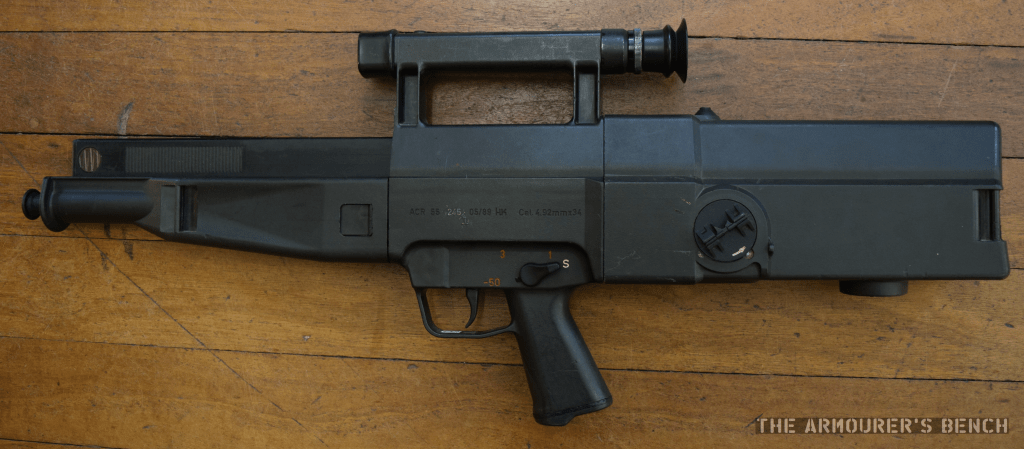
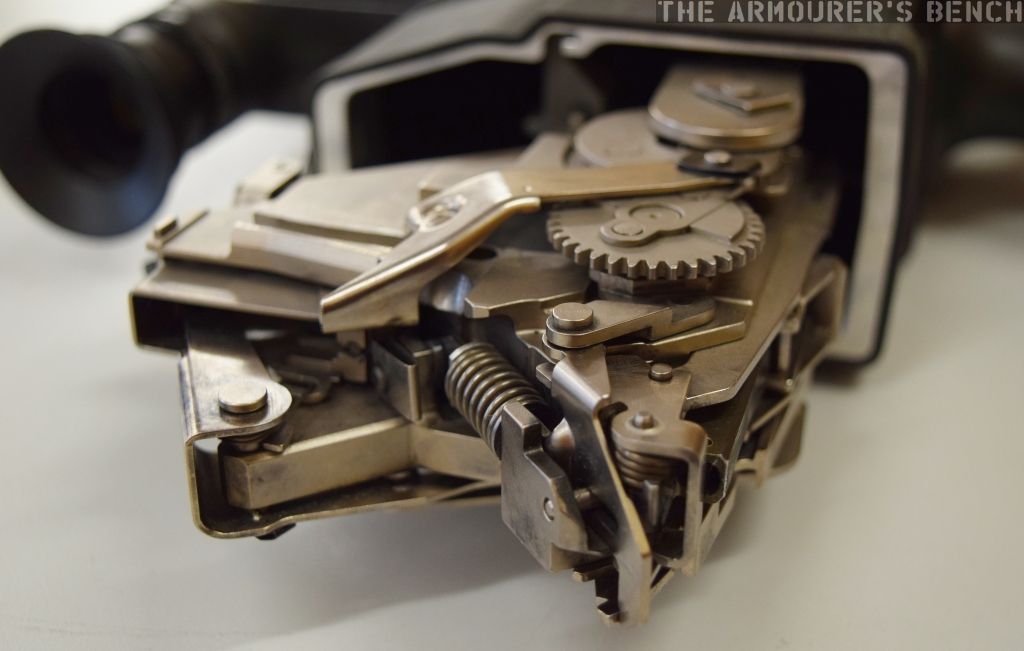
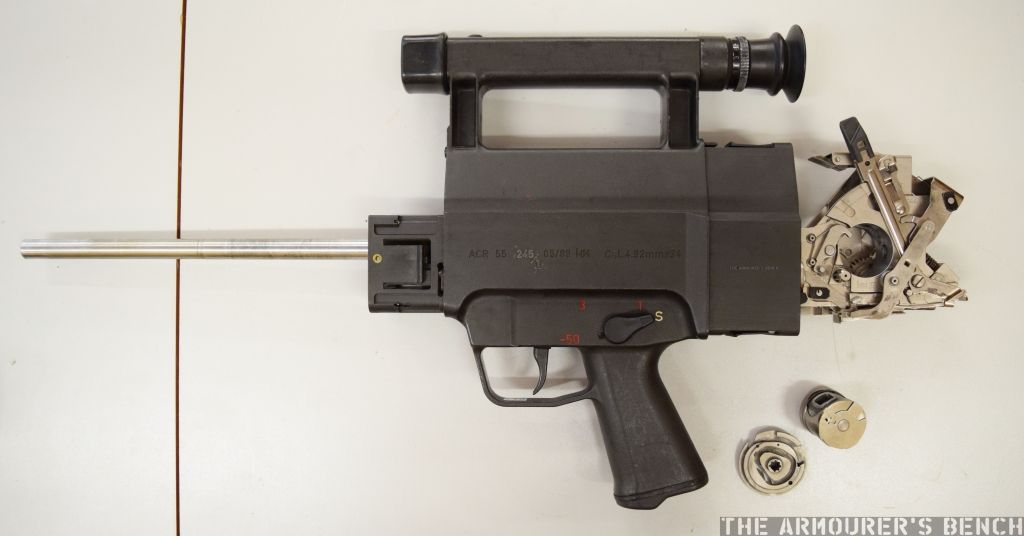
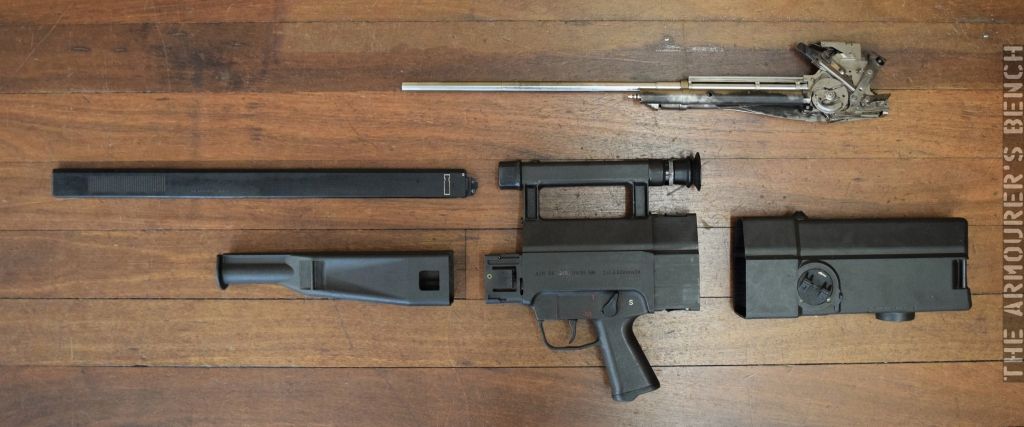
In this special video I had the privilege of field stripping a Heckler & Koch G11. We strip the rifle down into its major assemblies and then explain how the ‘space magic’ works!
I explain how the recoil management system, which compensated for the recoil of firing a 3-round burst at ~2,000rpm, worked and how rifle’s ingenious rotating breech operated. This video demonstrates just how complex and ambitious the HK G11 was!
For more information and more photographs of the G11 disassembled check out the original article – here.
This is a remaster of an earlier video with a new fun intro and the full 1990 Aberdeen Proving Ground video filmed by HK, it is the best available look at the G11 in action. I’ve been meaning to remaster this video and make some additions for a while. Hope you enjoy it.
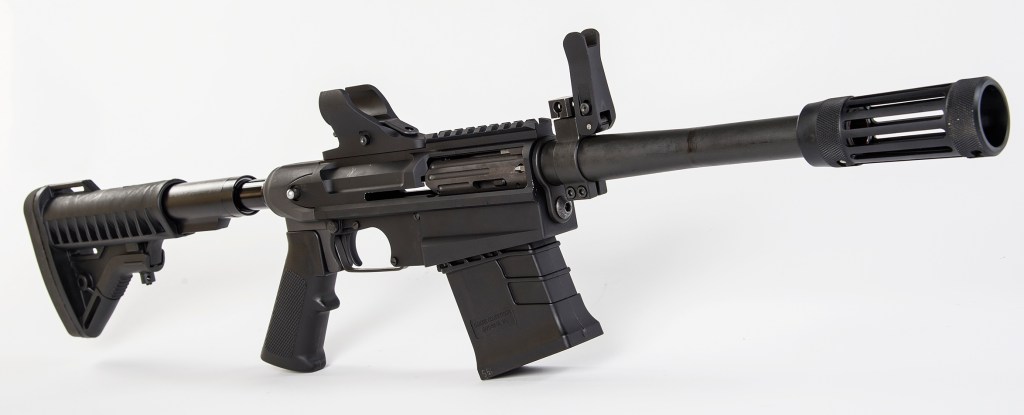
This week another image of a very rarely seen shotgun in Ukraine appeared, an M26 Modular Accessory Shotgun System. These are magazine-fed, bolt-action shotguns which can be mounted on rifles.
The M26 is essentially the US military’s bolt-action Masterkey at home. Developed in the early 2000s by C-More Systems it was selected by the US Army in 2008 and began fielding in 2011 seeing operational service in Iraq and Afghanistan. It is still in service today.
M26 Modular Accessory Shotgun System in its standalone configuration (US DoD)
The shotgun has a 3 inch chamber and uses a straight-pull bolt-action. It’s box magazine-fed with 3 or 5 round capacities available. It can also be used as a standalone once a stock and pistol grip assembly is attached, it has folding back-up iron sights but uses the rifle’s sights when mounted. The MASS’ safety and bolt-handle are reversible to allow ambidextrous operation. The M26 was designed to be employed as a breaching shotgun for shooting hinges and locks, the barrel is tipped with a breaching stand-off adapter muzzle-device. In its rifle-mounted configuration the M26 weighs around 3lbs (1.4kg) and has an overall length of 16.5 inches (42cm). It has an improved cylinder bore profile (sometimes referred to as a 1/4 choke), meaning it has an integral choke with a slight constriction that allows the shot to spread quickly after leaving the muzzle, the practical range for this type of choke is around 15-30 yards.
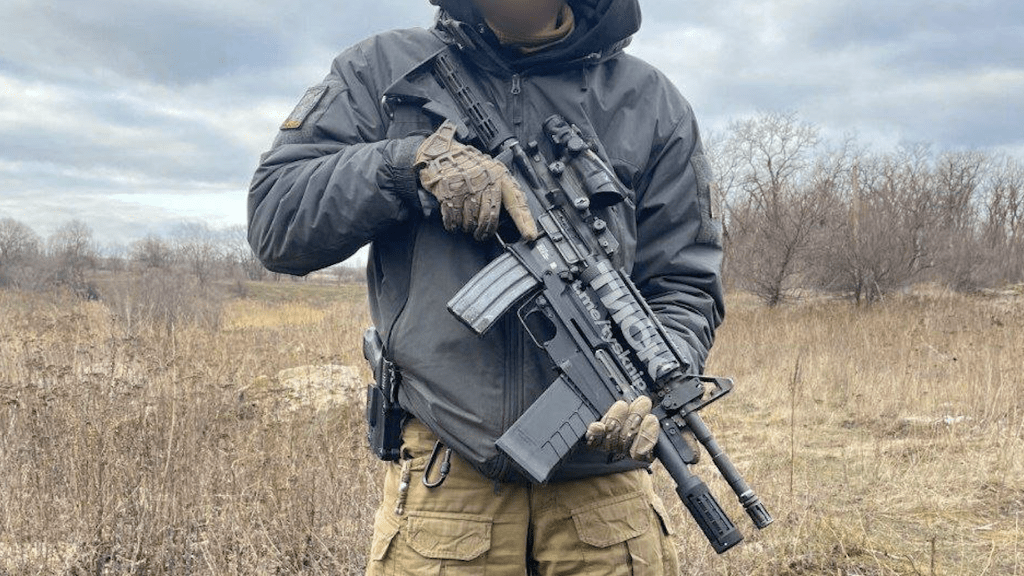
The most recent sighting of one of the shotguns came on 19 December. Ukrainian outlet Tyskshared a photograph of a Ukrainian operator armed with an M4A1 carbine topped with an ACOG and equipped with a M26 MASS In Ukraine. The M26 in the photograph appears to be loaded with a five-round magazine.
Sightings of the M26 in Ukraine are extremely rare, with the only other example appearing in a ХЛОПЦІ З ЛІСУ (Boys from the Forrest) video which showcased weapons used by the UA Reg is the 1st Special Operations Detachment of the 8th Regiment, SSO (UA SOF). The M26 seen in that video was in the standalone configuration with pistol grip and stock attached. Sadly, the shotgun itself wasn’t discussed in the video.
M4A1 mounted with an M26 (via Tysk)
While Russia has not officially fielded anything similar we have seen efforts to adapt GP-25 under-barrel grenade launchers with shotgun adaptors and there has been at least one sighting, back in May, of an improvised slam-fire tube-shotgun mounted under-barrel on an AK-12. The shotguns even appeared on the Russia 1 state TV channel.
Since the latest photograph appeared there has been significant speculation as to whether it might be being used to defend against First-Person View (FPV) drones. This may be unlikely given the weapon’s short 7.75 (197mm) barrel, this length would limit its effectiveness in engaging more distant drones but might be useful in engaging approaching FPV drones- as a last ditch defence. This is something we’ve seen Russian combatants improvising weapons to deal with. The speed with which FPV drones close on their targets, however, would make multiple shots from the M26 unlikely due to its manual action. This would reduce the chances of successfully engaging an on-coming drone.
Standalone M26 (via ХЛОПЦІ З ЛІСУ)
While any shotgun is better than no shotgun the units that the M26 has been seen with definitely have access to shotguns better suited to engaging drones. Where the M26 is more likely to be useful in Ukraine, is in its original role – as a breaching shotgun. Ukrainian units regularly find themselves operating in urban areas where quick access into rooms is key. Provided they have breaching rounds then the M26 might be most useful in this role.
Update – 4/1/24: Tysk have shared some redacted footage of the M26 at the range along with the operator’s thoughts (machine translated):
“Experience shows the rifle’s effective range does not exceed 30 meters, and that already requires above average level of training. Adding so much weight to the rifle increases the weight of the barrel too. I would argue one has to be quite a tough guy to stay in a ready position for long. Especially considering people nowadays cannot do the same even with an AK. In my humble opinion, this weapon system has its niche and can even be useful as an independent piece but becomes too impractical when coupled with an M4.”
Our friend with his M26 MASS rifle during exercises. His opinion on M26 is below:
Experience shows the rifle's effective range does not exceed 30 meters, and that already requires above average level of training. Adding so much weight to the rifle increases the weight of the… pic.twitter.com/r1YxVNHbED
On Friday, it was confirmed that the CZ Bren 2 will be assembled in Ukraine. This marks the first partnership since Russia’s Invasion in February 2022, that will see foreign small arms assembled in Ukraine. The Bren 2 is a 5.56x45mm select-fire gas-operated rifle which was first introduced as the CZ 805 BREN in 2011. While CZ Bren 805s have appeared in Ukraine the BREN 2 is much more common and favoured by troops on the ground.
We’ll take an in-depth look at their use in a future article/video but a considerable number of Ukrainian units ranging from special forces units to regular army have been seen equipped with the Czech rifles. Visually confirmed variants in Ukrainian service include the initial 5.56x45mm BREN 805 and later BREN 2 in various barrel lengths and configuration including the 8 inch barrel carbine with both side folding and telescoping stocks and the much more common rifles with side folding stocks and 11 and 14 inch barrels. There have also been a limited number of sightings of 7.62x39mm 8 inch barrel carbines and a number of 7.62x51mm BREN 2 BRs.
The first indications that production of the BREN 2 might be established in Ukraine came on 29 September 2023. During the first ever Ukrainian International Defence Industries Forum Deputy Minister of Defense Daniel Blažkovec stated that “the transfer of production of the Bren 2 “Sich” assault rifle” was a major, ‘flagship’ project.
Ukrainian Special Operations with CZ BREN 2s (via social media)
Sich (Січ) in Ukrainian refers to a historic form of fortified administrative and military camp used by Cossacks during the 16th century and later became associated with the Euromaidan in 2013. Since the name was used in September 2023, it has not appeared again.
In an announcement posted on 13 December, Ukraine’s state-owned defence corporation Ukroboronprom stated that the Ukrainian Defense Industry had begun licensed assembly of BREN 2s and that the agreement with CZ covers local assembly of rifles and will later include “full production of NATO-standard assault rifles in Ukraine”, the agreement was signed on 16 July 2024. Oleg Hulyak, Director General of Ukroboronprom, stated:
“Partnership with Czech colleagues will help to improve the provision of the needs of the Defense Forces of Ukraine in reliable and modern small arms produced in our country. In addition, another step has been taken towards the integration of our defense-industrial complex into the industrial chains of NATO countries,”
I reached out to Colt CZ Group for comment, Jan Zajíc, CEO of Česká zbrojovka, said in a statement:
“We are happy that together with our Ukroboronprom partners, we have successfully completed the assembly phase of the CZ BREN 2 assault rifle on the Ukrainian soil. Following the training of Ukroboronprom personnel at Česká zbrojovka, Ukraine is now able to deliver to its Armed Forces the CZ BREN 2 rifles assembled in Ukraine according to Česká zbrojovka‘s strict quality standards. We are ready to continue our cooperation in the future, all the way to full technology transfer.“
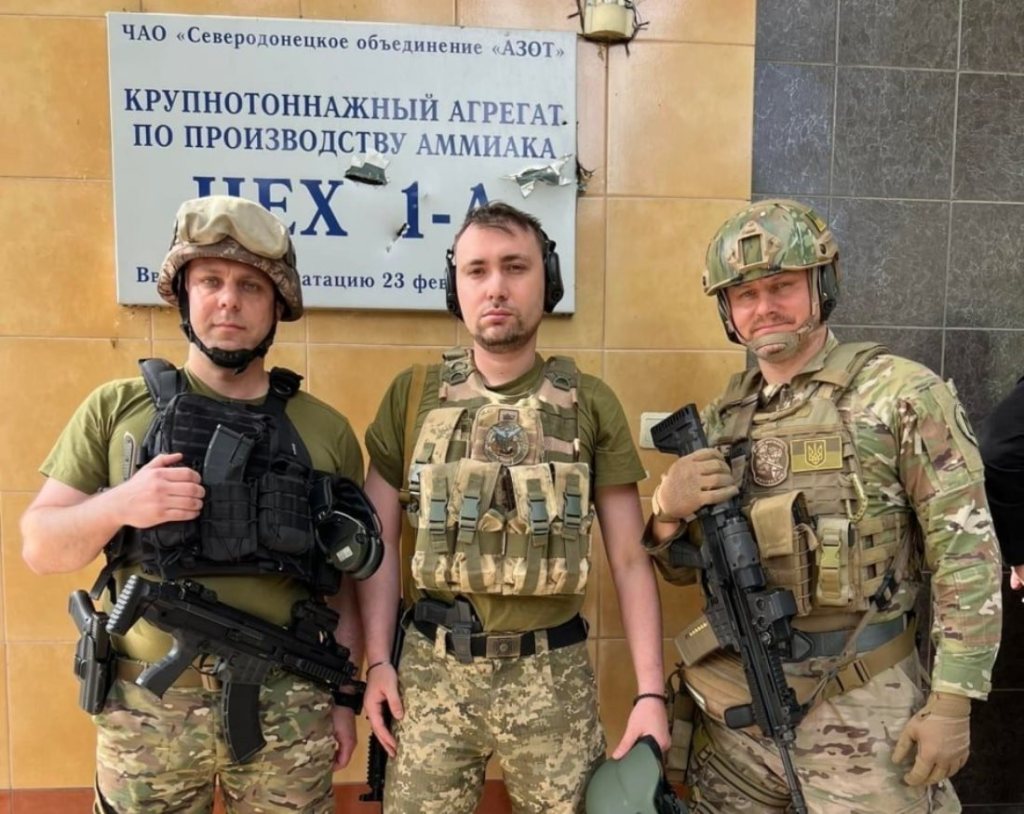
Ukrainian GUR chief, Kyrylo Budanov, and associates during a June 2022 visit to Sievierodonetsk. One individual has a 5.56x45mm CZ BREN 2 and the other a rare 7.62x39mm BREN 2 with an 8in barrel and telescoping stock (via social media)
Currently the only other country which has a similar arrangement with CZ is Hungary which has established Colt CZ Hungary to enable Hungary’s HM Arzenal to assemble/manufacture BREN 2s for the Hungarian armed forces. This isn’t the first time Ukraine has worked with external firearms manufacturers with an earlier partnership seeing Ukrainian small arms manufacturer Fort assemble Israeli IWI weapons under license in the 2000s. See our earlier look at the Ukrainian Fort Tavor bullpup rifles here.
The future significance of CZ’s establishment of an assembly line in Ukraine remains to be seen but as Ukraine seeks to further integrate with its Western allies and take up NATO standards the ability to produce a NATO calibre rifle, which is already in widespread Ukrainian service, will be extremely useful. From the statements released it appears that assembly of the rifles may be the first step towards localised production, it will be interesting to track CZ and Ukroboronprom’s partnership.
We have previously examined a couple of Russian efforts to develop small arms-based anti-drone weapons including the single-shot shotgun insert for GP-25 under-barrel grenade launchers and in the future we’ll examine the efforts to develop an anti-drone shotgun muzzle device which is now in production at several Russian companies. All of these efforts have one thing in common – they are seeking to turn the individual soldier’s rifle into a weapon capable of countering the enormous drone threat they are facing.
In this article/video we’ll examine perhaps the simplest attempt at creating counter-drone ammunition I’ve come across so far. While a number of Russian companies have developed specialist shotgun ammunition for increasing the probability of shooting down drones with 12 gauge shotguns there has been no official or commercial efforts to develop an anti-drone 5.45x39mm rifle round. The efforts examined here all appear to be localised with the concept disseminated via social media.
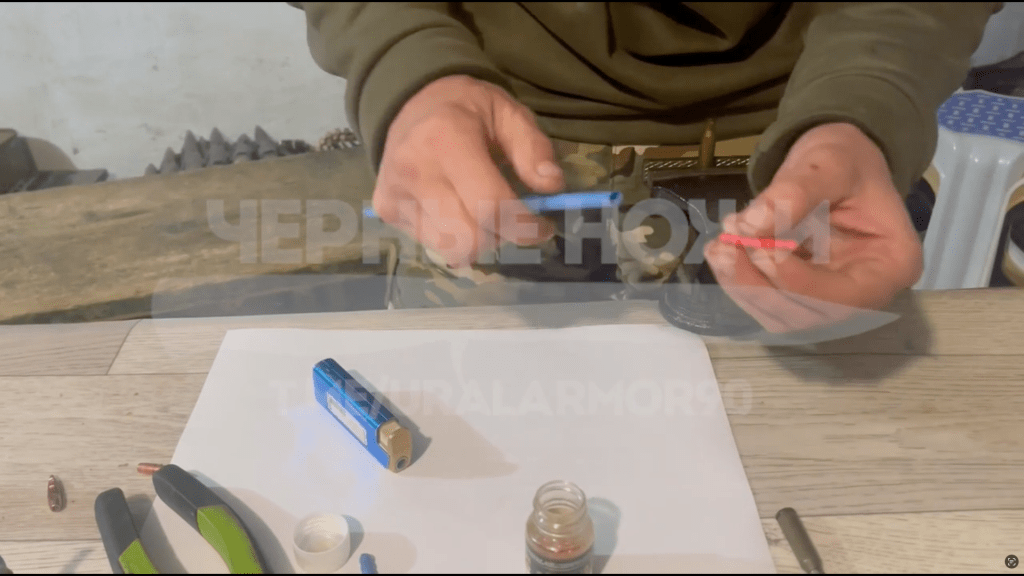
In early July, a video showing a Russian combatant making home-made buckshot cartridges for their AK-74 pattern rifles was shared. The quoted caption read: “To combat annoying drones, our soldiers are remaking AK cartridges by inserting buckshot charges in them in a dielectric heat shrink.” In the video the Russian combatant demonstrates filling a length of electrical wire insulation sleeving with ball bearings, pushing them in with what appears to be a tent peg. He then uses a candle to heat shrink the sleeve around the ball bearings and then takes a 5.45x39mm cartridge, with the projectile pre-extracted, and places the ball bearings into the cartridge case, down on top of the propellant. He then heat shrinks the exposed ball bearings and hand crimps the case neck around them.
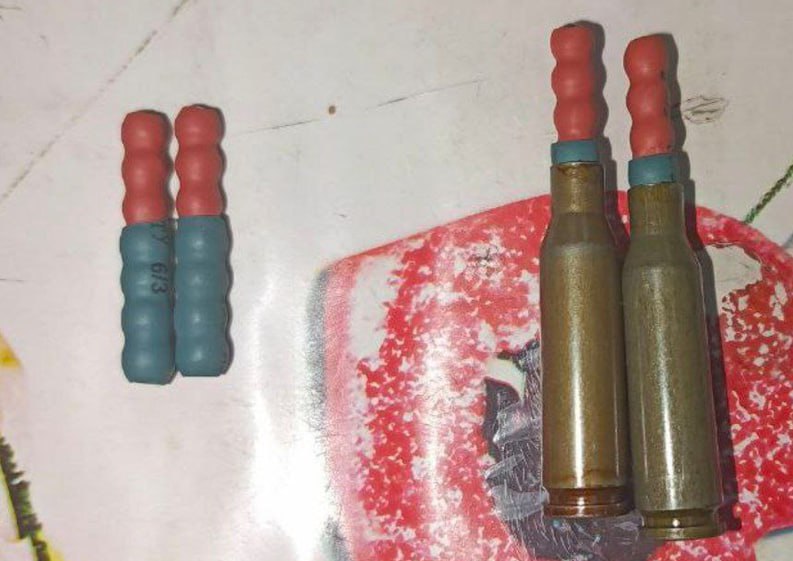
Since the July video I didn’t come across any imagery showing the buckshot until November, when interest in the concept seems to have increased with a flurry of posts on Russian telegram channels discussing the manufacture of the rounds and their pros and cons. The first of the second wave of posts came on 12 November, with a telegram channel sharing a photograph of two buckshot 5.45x39mm cartridges alongside two sleeves of seven ball bearings. The post makes some interesting observations; suggesting alternating the loading the magazine with the buckshot and tracer rounds. The post also mentions that the 4.5mm diameter of the shot is smaller than the diameter of the barrel and that this will likely impact ‘accuracy’ – though I suspect this is just one of numerous factors which will impact on effectiveness of the rounds. The post also notes that the plastic sleeving is likely to gum up the barrel’s rifling which will in turn impact the accuracy of the rifle and could lead to catastrophic fouling. The post concludes by suggesting while the idea is flawed if you don’t have a shotgun available the improvised buckshot is better than nothing.
Two days later on the 14 November, a video showing the assembly of a buckshot round identical to those seen in the previous photograph was shared. A Russian combatant fills a cable sleeve with seven Crossman 4.5mm (.177) ball bearings, he heat shrinks it with a lighter and then puts the shot into another slightly wider piece of sleeve which he also heat shrinks. Then he hand seats the shot in a standard 7N6 cartridge case and uses a pair of pliers to crimp the case neck.
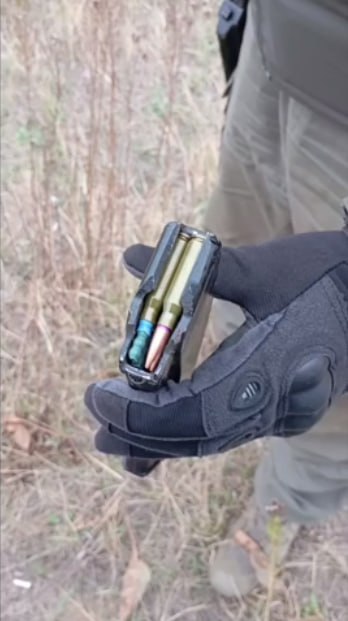
On 16 November, the first video claiming to show the buckshot in action was posted. The clip begins with a drone feed video showing a lone Russian combatant in a trench system before cutting to helmet camera footage showing the combatant firing up at a passing FPV drone, he appears to successfully clip one of the drone’s rotors. The footage may have been filmed at a training range. Alongside the video they posted a photograph of a magazine loaded with the buckshot. The post’s caption again recommends alternately loading the magazine, this time with a sequence of ball ammunition and buckshot, claiming that “this sequence allows you to fight air targets as effectively as possible”.
On the 18 November, the same channel shared a short post explaining how the buckshot cartridges are assembled and what is needed. The post shows the same photograph that was shared on 12 November. This post suggests using the buckshot with a mix of tracer when firing from vehicles and standard ball ammunition when on foot.
Another Russian channel uploaded a pair of videos on the 29 November, one showing the assembly of a buckshot cartridge and a demonstration video. The first video shows several individuals in a workshop assembling the buckshot cartridges. Several individuals are working on different states of assembly with one feeding the shot into the plastic sleeving, another using a heat gun to shrink form the sleeving, another pulling projectiles from 5.45x39mm cartridges and another cutting the sleeve of shot to length, about six ball bearings, before seating it in a cartridge. This process shows production at a more significant scale.
The second video shows a demonstration of the rounds being fired from an AK-74. In the video the combatant recommends not using the rifles standard muzzle-brake to in feat of the shot striking it. The combatant then empties a magazine of buckshot, though its difficult to make out if the entire magazine is buckshot or if there is a mix. The video then shows the target downrange, a sheet of metal, perforated with a significant dispersal pattern.
A post on another Russian telegram channel shared on 3 December, included the earlier videos along with a couple of photographs of a pair of jungle-taped magazines alternately loaded with the buckshot and a mix of ball and what appears to be black-tip armour piercing 7N22. Interestingly, the post suggests that the alternated non-buckshot rounds ‘clean’ the bore of any residue from the plastic sleeving.
The most recent sighting of the buckshot, at the time of writing, were published on 5 December. They include a range video which demonstrates the buckshot, with the caption claiming that from 14 rounds fired there were “41 punctures in the target”, the target appears to be about 25 feet (8 metres) away. It is worth noting that the rifle’s muzzle-brake has been removed. In the replies to the post a photo of some buckshot rounds was shared showing them alongside a length of sleeving filled with shot and a bottle of Crosman ball bearings.
The final video shared on 5 December again shows the typical production of the home-made buckshot rounds. This time lead shotgun pellets are used rather than ball bearings. The caption of the video notes that it is essential to clean the rifle after using the buckshot ammunition. It also notes that the main strength of the home-made ammunition is that its simple and instantly on hand if a soldier carries a magazine loaded with it, then he can quickly load and engage a drone.
The development of the home-made 5.45x39mm buckshot is certainly intriguing and at short ranges, from the available imagery, appears to have some merit. It enable an combatant armed with an AK-74 to theoretically engage a drone with a potentially slightly improved hit probability – though they may have to operate with their muzzle-brake permanently removed. Drones remain one of the key battlefield threats for combatants in Ukraine but it is unlikely this ad hoc solution is effective against drones at ranges of more than 20 yards. The dispersion of the five to seven shot is extremely unpredictable given it is being fired from a rifled barrel and there is not choke.
Many Russian posts discuss the potential for damage to the rifle and while this is certainly possible, especially when using the steel BBs rather than lead shot, the user however, is unlikely to be firing hundreds of rounds of the buckshot – especially given how time consuming production appears to be. Fouling from the plastic cable sleeves used may also have detrimental effects and cause barrel obstructions. It’s also unclear how reliably the round will feed given the varied projectile length and lack of rigidity when feeding. Additionally, once in field conditions significant temperature changes could impact the integrity of the plastic sleeves. Never the less the idea is ingenious but it illustrates how urgently defences against FPVs and other drones are needed by troops in the field.
Update – 22/12/24: A clip of a Ukrainian testing a version of the ammunition with 6 ball bearings. He feels the concept has enough merit for it to be of some use. (Source)
A Ukrainian soldier tests the use of 5.45 cartridges with an AK-47 using modified cartridges that have the bullet replaced with a heat-shrink tube containing 6 buckshot. Similar to the Russian 4-shot cartridges, the shot easily pierced a plywood target. https://t.co/EacJQoCtjypic.twitter.com/HnjShmapg5
— Matthew Moss | The Armourer's Bench (@historicfirearm) December 25, 2024
Update – 9/1/25: Another clip of Ukrainian’s testing the ‘AK buckshot’ concept.
Ukrainian testing against FPVs of 5.45 rifle cartridges reloaded with 5 buckshot. A propeller on the second FPV was hit but it failed to bring down the drone, showing the toughness of fiber carbon props. https://t.co/P4Vnu0b4f0pic.twitter.com/aIEb9ococQ
In this article/video we’ll examine an an interesting and very simple 3D printed anti-personnel mine developed by the Ukrainians. The mines are similar in purpose and size to the Russian PFM-1, the so-called ‘Butterfly’ mines. However, their shape and form factor is similar to that of the larger PMN-4, but they are significantly simpler.
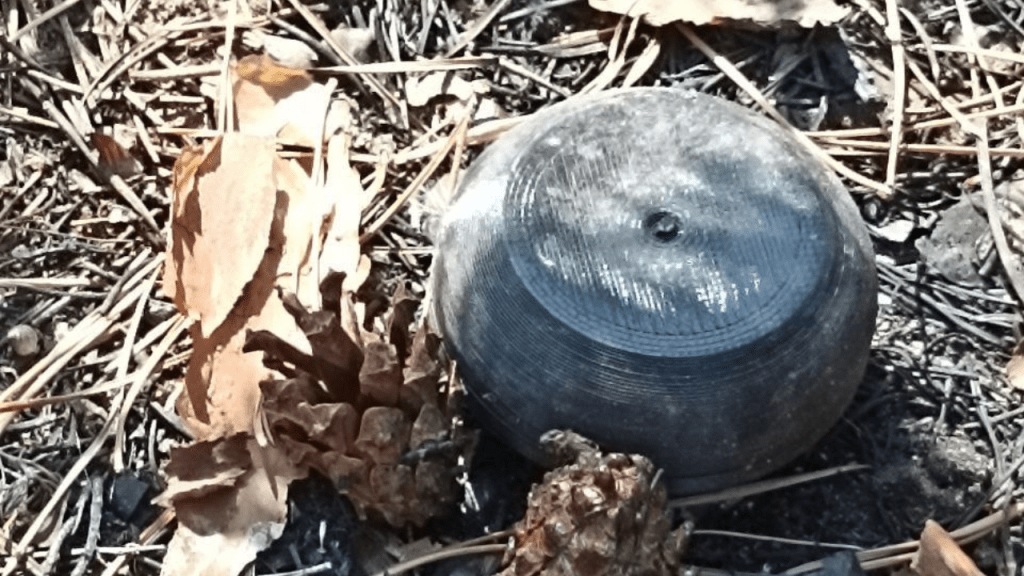
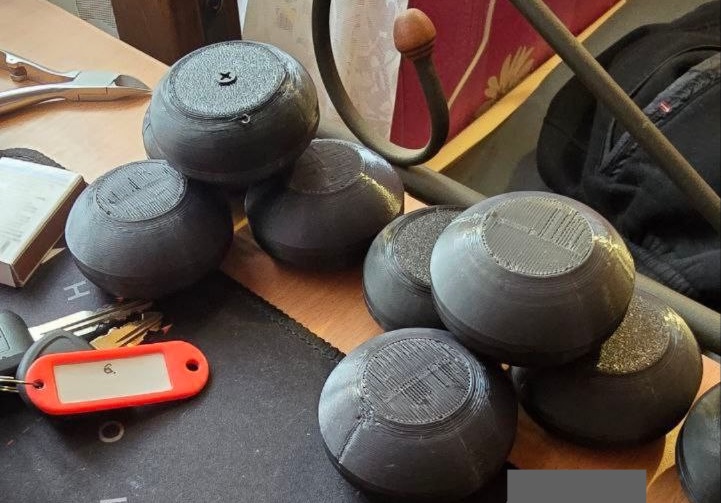
3D printed mine found in the field (via social media)
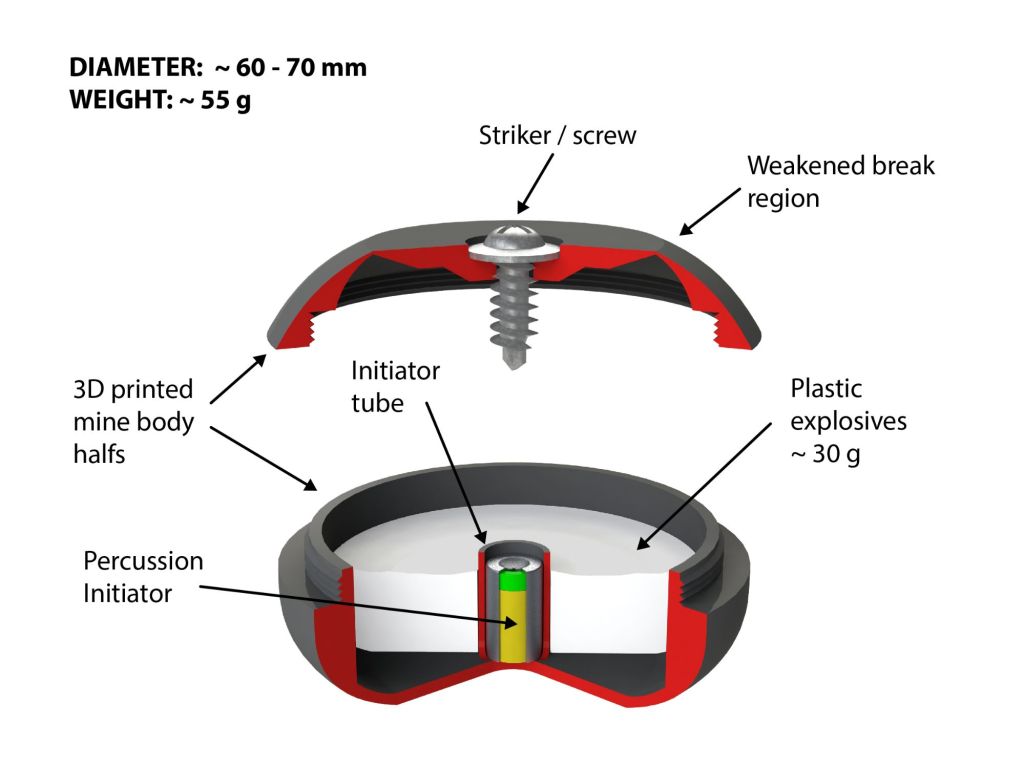
The 3D printed mine’s explosive filling is said to be around 30g, with an overall weight of 55g. The mine is made up of a two-part outer shell printed in PLA, or another similar plastic. The two pieces screw together and a layer of plastic explosive is in the bottom half of the shell along with a percussion initiator of some sort. The top half of the mine has a small metal Philips-head screw protruding down through the top, this acts as a striker for the initiator. There is a tube protruding up from the lower half of the mine, printed as part of the body, which likely guides the screw and holds the initiator.
The mine appears to work along the principle of when stepped on the outer shell breaks and compacts allowing the screw to strike the initiator, detonating the mine.
The design is extremely simple and cost effective to produce, requiring only the simplest 3D printer, a screw and an initiator and explosive.
The first sighting of the mines I’ve been able to find was in a telegram post by a Russian sapper. In the post, on 6 October, he shared several photos of the mines found in the field and warned that Ukrainian drones are dropping them in the Kursk and Belgorod regions. Another photo of one of the mines was shared by another Russian combatant on 8 October.
A Russian telegram channel, enginner25, shared post showing multiple images of the mines and a video showing the internals.
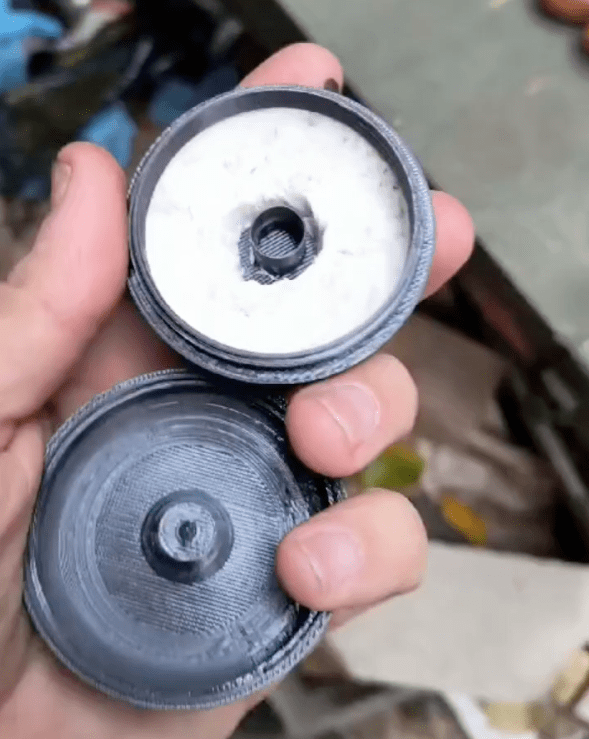
3D printed mine opened to show explosive filling (via social media)
In another photo we can see that the mines are apparently dropped from plastic tubes suspended below drones. The photo only shows the top of the tube but it’s clear that a number of tubes are carrying a significant number of mines. The release mechanism for the lids of the carrier tubes appears to use something like 3mm Visco fuze, commonly used with fireworks, or igniter cord. Once initiated the fuze/cord burns away and releases the mines with the drone scattering them as it flies over an area.
The design of the mine is extremely simple but appears to be potentially quite effective, relying on the brittleness of the 3D printed shell to work. The mines seem to have been engineered to be quickly produced at scale rather than to make them undetectable to Russian sappers. However, if a non-metallic striker replaced the screw the mines would be even more difficult to detect.
Assorted 3D printed mines (via social media)
While not the first 3D printed explosive device to emerge from the fighting in Ukraine, this mine is certainly one of the smallest and simplest. How widespread their deployment is, is still unclear but they seem they would be a useful part of Ukraine’s drone-deployed mine interdiction efforts behind Russian lines.
Thank you to Roy for drawing my attention to these mines.
Update 22/12/24: A new Russian video showing the internals of the mine and giving a better look at the percussion initiator (source).
Update 5/7/25: A Ukrainian video showing the testing of a 3D printed mine.
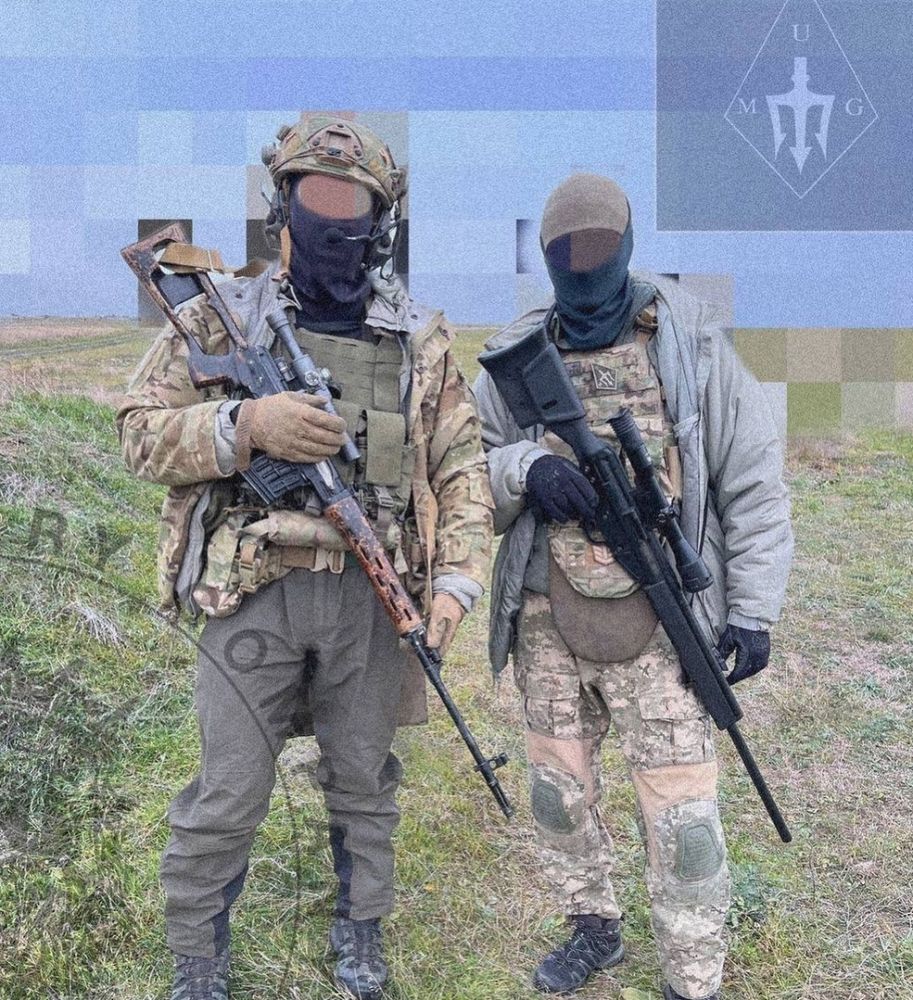
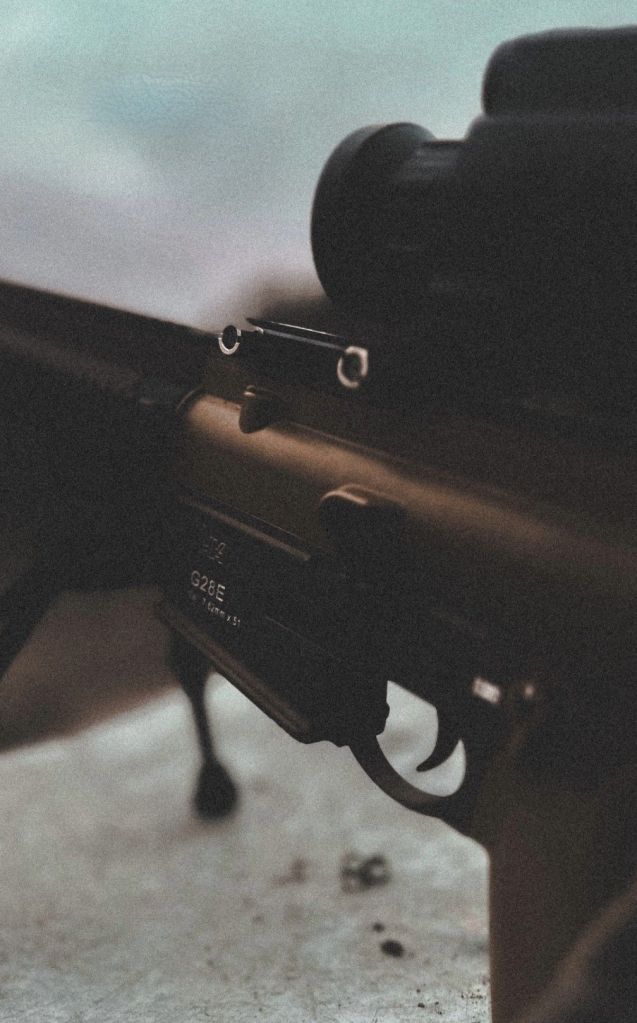
This week has seen photographs of two intriguing 7.62x51mm Heckler & Koch rifles appear, they feature what appears to be an iconic, and extremely rare, PSG1 and an HK G28E. The first photograph was shared by pmc_ua and universal_mobility_group on Instagram on 14 November. In the photograph a pair of two Ukrainian marksmen pose with an SVD and a PSG1, no further images of the rifle have been shared.
What appears to be a PGS1 at a Ukrainian range session (via social media)
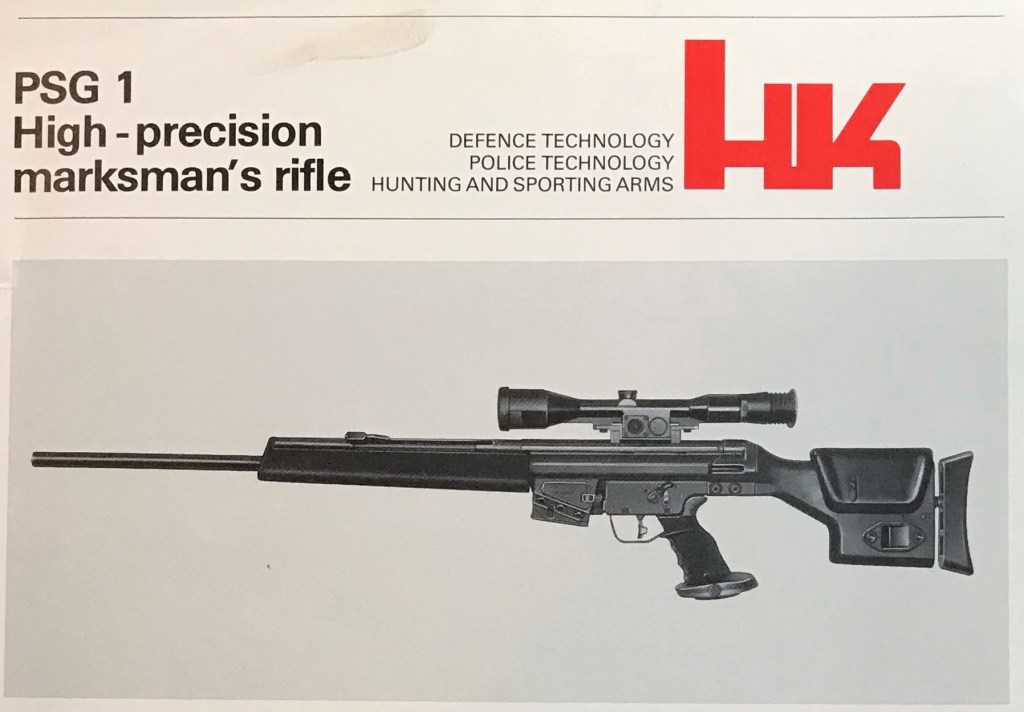
The PSG1 was introduced by HK in the early 1970s as a semi-automatic precision rifle. It is unclear where the PSG1 was acquired from but this is the first time I’ve seen one of the rifles appear in Ukraine. The PSG1 is based on the G3, and as such uses a roller-delayed blowback operating system. Its accuracy is reputed to be better than 1 MOA, the rifle appears to have an original Hensoldt ZF 6×42 PSG1 scope.
Illustration from an H&K catalogue page for the PSG1
PMC_ua, who shared the photograph, confirmed that the rifle is “used where there is an opportunity, fighting and training” but gave no further details. The PSG1 may have been acquired via civilian channels or may have been transferred to Ukraine as aid by one of the many countries who acquired the PSG1 in small numbers over the years. While the PSG1 is of Cold War vintage, the rifle continued to be offered into the 2010s by HK and it is still a very accurate, capable rifle.
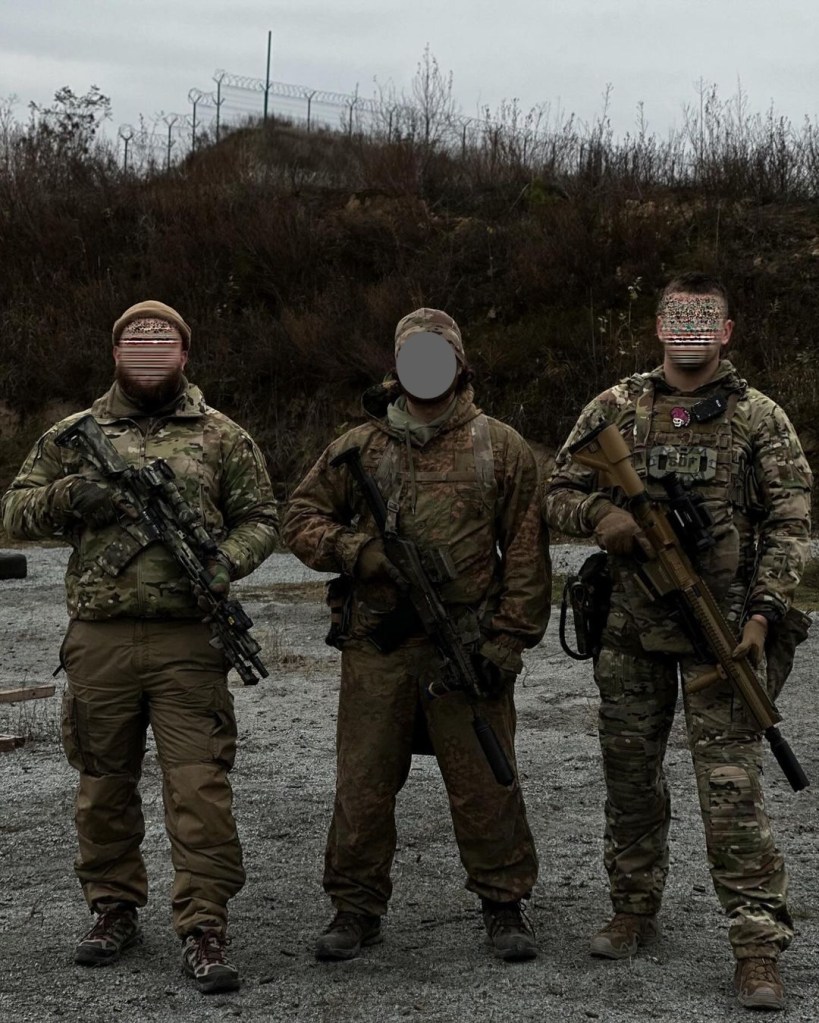
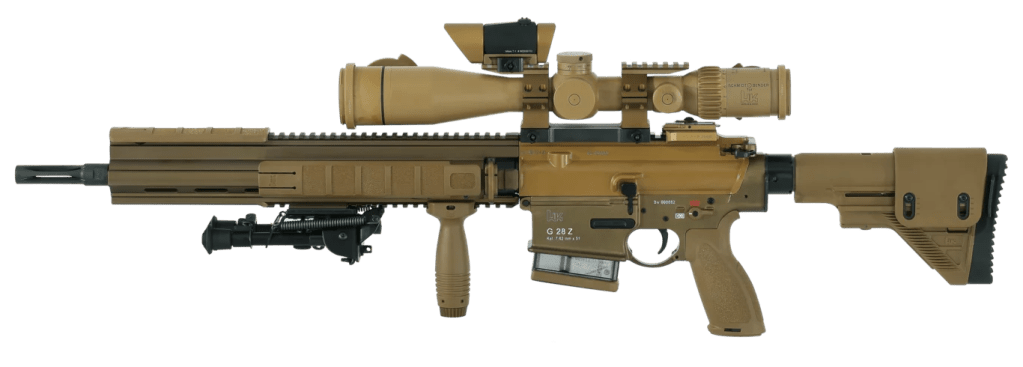
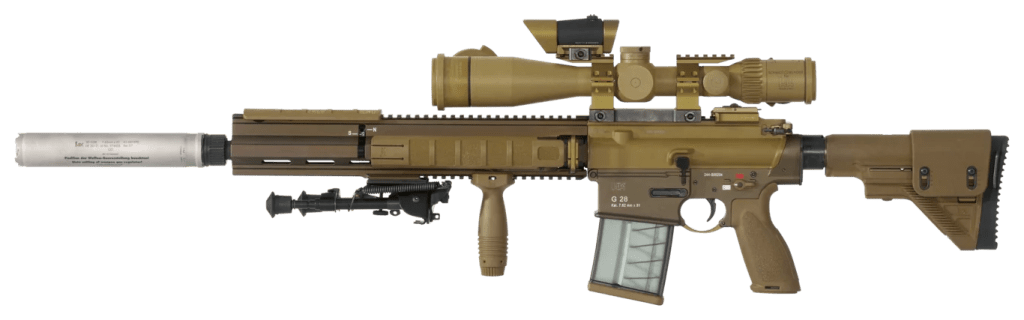
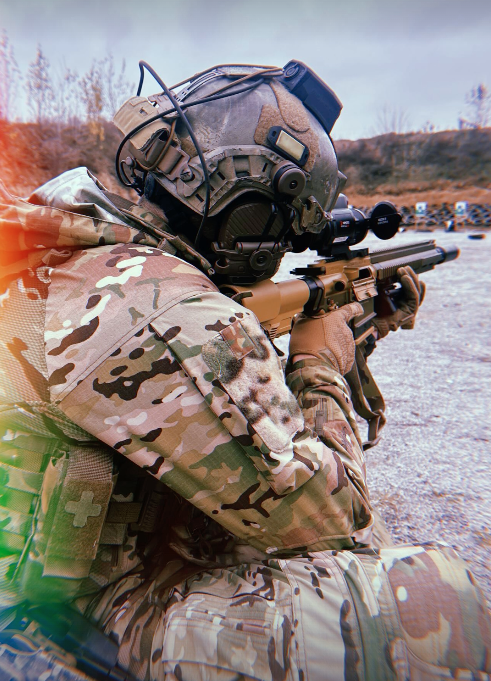
The second image was shared on Instagram, on the 17 November, and features what at first glance appeared to be an HK G28 but may also be the civilian-available HK G28Z. The rifle is held by a member of the 3rd Separate Assault Brigade and is equipped with a thermal weapon sight.
A probable HK MR308 A3-28 at a Ukrainian range (via social media)
The rifle has free-floated 16.5 inch barrel, a bi-pod and a vertical front grip mounted on its forend. It is loaded with a 10-round magazine and is fitted with what appears to be an Ase Utra DUAL762-S-BL suppressor. A small number of the RAL 8000-coloured MR308 A3-28s have recently appeared on the civilian market in Ukraine, with one private listing one of the rifles for 29,5000 UAH or $7,145.
HK G28Z (Heckler & Koch)HK G28 (Heckler & Koch)
An additional photograph showing the rifle being fired was shared in an Instagram story by one of the individuals in the first photograph. This photograph gives us a better look at the receiver of the rifle and shows that the upper is painted/coated rather than treated. This indicates that the rifle is either a G28 or the civilian G28Z variant. [Thank you to CaliFlori for pointing out this detail].
It’s not uncommon to see civilian, semi-automatic, firearms used by Ukrainian personnel. This is more common in terms of precision platforms but various semi-automatic 5.56x45mm platforms are also regularly seen, including HK MR223s and patrol variants of the MR308.
A second photograph of the MR308 A3-28 at the range (via social media)
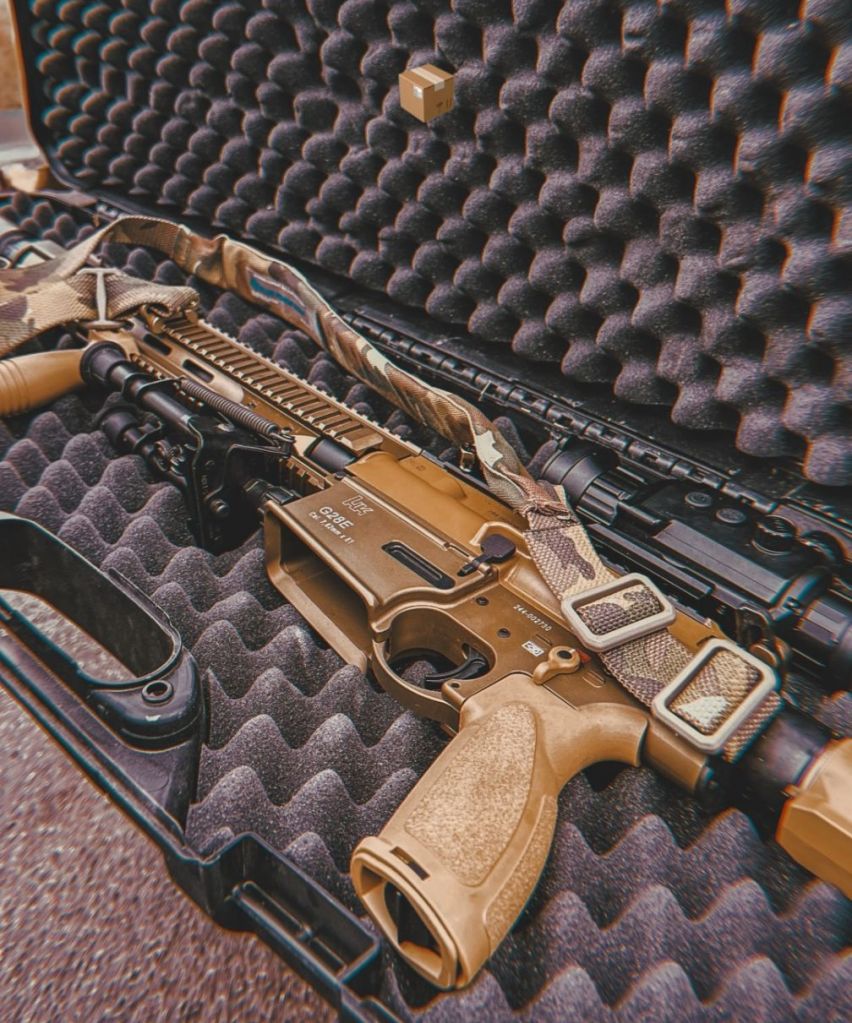
Two subsequent photographs shared by one of the individuals in the initial photograph clearly show the rifle’s lower receiver markings, confirming that the rifle is an HK G28E, not a commercial G28Z. The ‘E’ suffix indicates ‘export’.
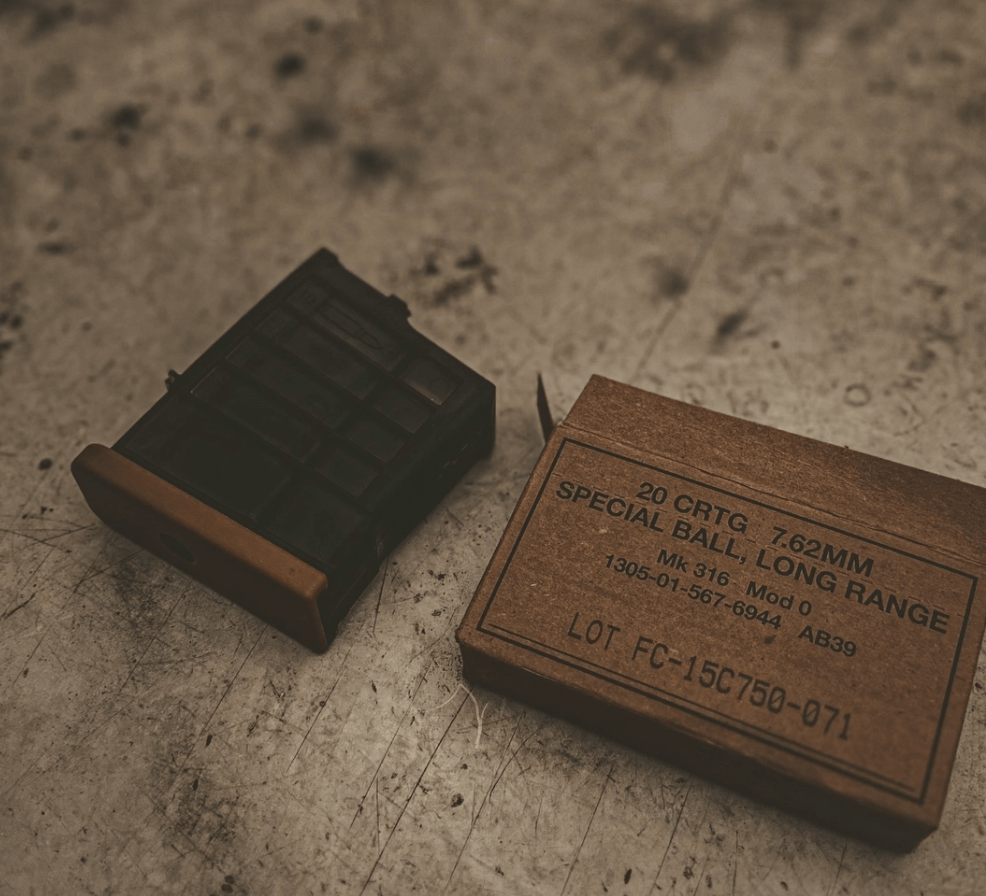
The same Ukrainian combatant, who appears to be a member of the GUR, also shared a photograph of ammunition he is using with the rifle. US-manufactured Mk316 Mod 0 is a match-grade cartridge which uses a 175gr projectile. While the ammunition was likely provided by the US, the origins of the rifle are unconfirmed.
It is intriguing to see two generations of Heckler & Koch’s semi-automatic precision rifles appear in Ukraine within days of each other.
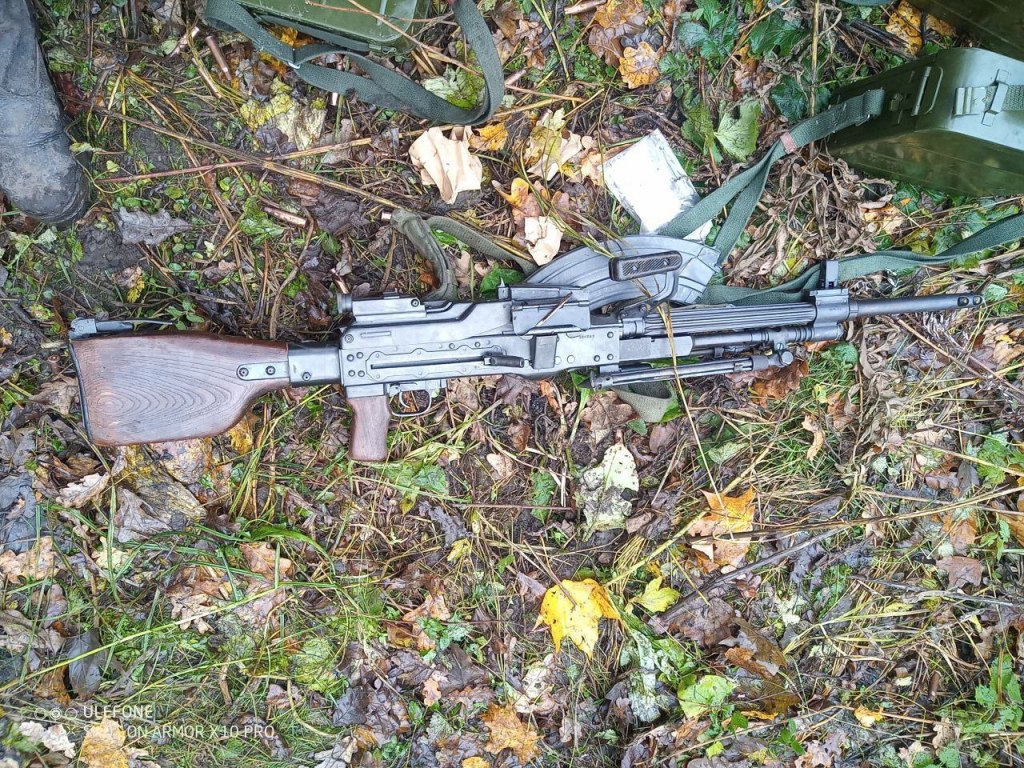
On 7 November, photographs began circulating on Russian telegram channels of North Korean Type 73 general purpose machine guns said to be in Russia. The appearance of the photographs led to suggestions the weapons are now in Russia service. This claim is somewhat supported by the appearance of Russian E.M.R. camouflage in the top right corner of one of the photographs.
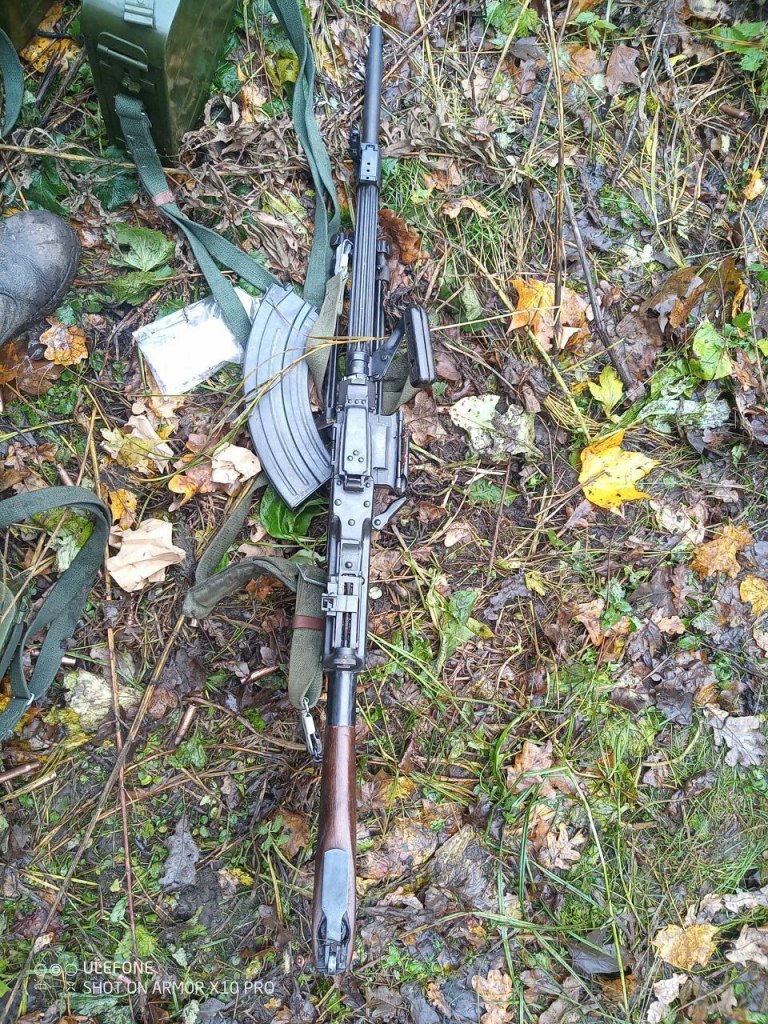
A North Korean Type 73 complete with magazine (via Russian social media)
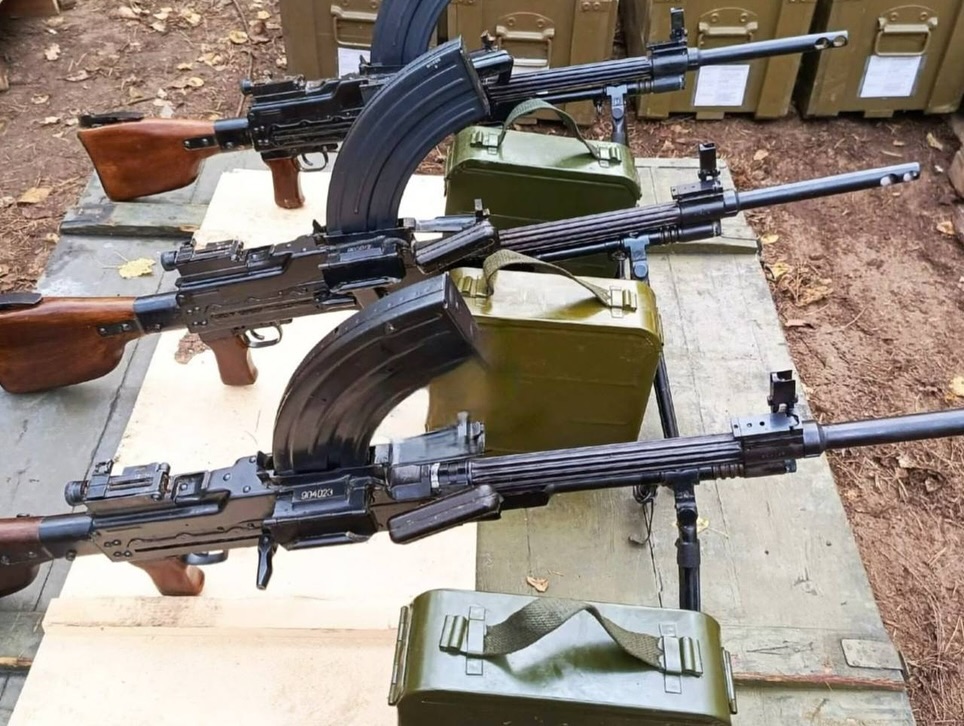
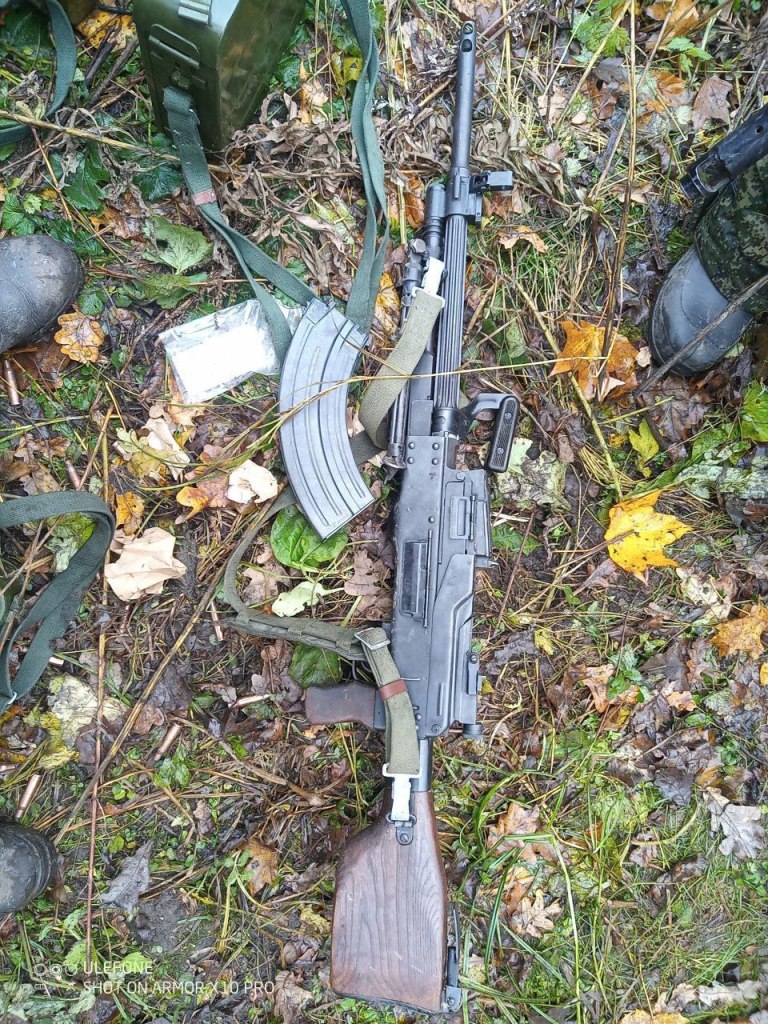
The Type 73 is a fairly rare weapon though it has surfaced in conflicts areas such as Yemen, Iraq, Syria and Lebanon over the years. Thought to have entered service in the early 1970s, it is a somewhat unusual machine gun, it is gas-operated, using a long-stroke gas system, it fires from an open-bolt and is chambered in the long serving 7.62x54mmR cartridge. It is derived from the PK-pattern machine gun and as such feeds from standard Russian metal non-disintegrating belts but also is able to feed from proprietary box-magazines (which look a little like over-sized AK magazines). The magazine is dual stack, single feed which is designed to allow the Type 73’s bolt to pull cartridges out of its rear. Check out Forgotten Weapons’ video on the weapon for a better look at the action. The dual-feed design appears to have been influenced by the Czech vz.52/57. The Type 73 has a longitudinal fluted barrel with its front portion, ahead of the gas block, machined as a spigot to enable it to fire rifle grenades, it comes with a removable barrel shroud which acts as a muzzle device. Also visible in the photographs are the segments of cleaning rod which sit in channels in the weapons’ bipod.
Three North Korean Type 73s complete with magazines and belt boxes (via Russian social media)
The dates and locations of when the photographs were taken is unclear and various Russian telegram channels are claiming a range of explanations varying from – the weapons were brought along with the North Korean troops who have reportedly arrived in Russia in recent weeks, to – they were provided to Russia as part of the military aid being provided by the DPRK. However, the photographs may also have been taken during a past exercise involving Russian and North Korean troops. The environmental conditions in the photographs do, however, correlate with the photographs being taken recently.
The photographs of the Type 73 emerged as a series of, as yet unverified, videos and photographs of North Korean troops in Russia have surfaced in recent days. Intriguingly, it was reported that the Ukrainian GUR had claimed that North Korean troops in Russia would be equipped with Russian small arms and light weapons including: AK-12s, RPK and PKM pattern machine guns, and RPG-7 shoulder-launched anti-tank rocket launchers.
Top view of a Type 73 (via Russian social media)
The available imagery shows three Type 73s together in one photograph and then three detail photographs of another weapon on its own. The visible serial numbers on the guns include ‘904023’, ‘905012’ and a partially visible serial number which appears to read ’904032′ is seen in another photograph. Which places these three weapons relatively close to each other in the serial number range. Intriguingly, the typical star and model number aren’t visible in the above photograph.
If these images are verified and we see more evidence of their use it is extremely intriguing to see these weapons appear in Russia. It raises questions as to why Russia needs North Korean GPMGs – is Russia suffering from a shortage? The presence of some RPD light machine guns appearing in imagery of Russian forces training may also support this.
Left-side view of a Type 73 (via Russian social media)
The origins of the guns is also unclear, while the obvious source would be North Korea themselves, if so it is interesting that they would choose to supply Type 73s rather than their own straight copy of the PKM, the Type 82. If these guns are to be used for training purposes, or indeed in the field, then it would make more logistical and operational sense to acquire Type 82s so troops have commonality and familiarity with Russian PK-pattern machine guns. An another alternative potential origin for the guns is Russia’s other ally -Iran. Iran is reported to have acquired large numbers of Type 73s during the Iran-Iraq War (1980-88) and has since provided them to their proxies and allies. It may be that Iran has provided a shipment of these machine guns as part of their aid to Russia.
It remains to be seen if the Type 73 will enter service with Russian troops or indeed if we will see evidence of any other North Korean small arms.
Update 22/12/24: A short video appeared Russian telegrams of a Russian combatant examining a North Korean Type 73.
Update – 15/1/25:
A North Korean Type 73 GPMG mounted on a Russian motorbike & sidecar. No North Korean's in view. Interesting.More on the Type 73 in #Ukraine here: armourersbench.com/2024/11/17/i…#UkraineRussiaWar #SALW
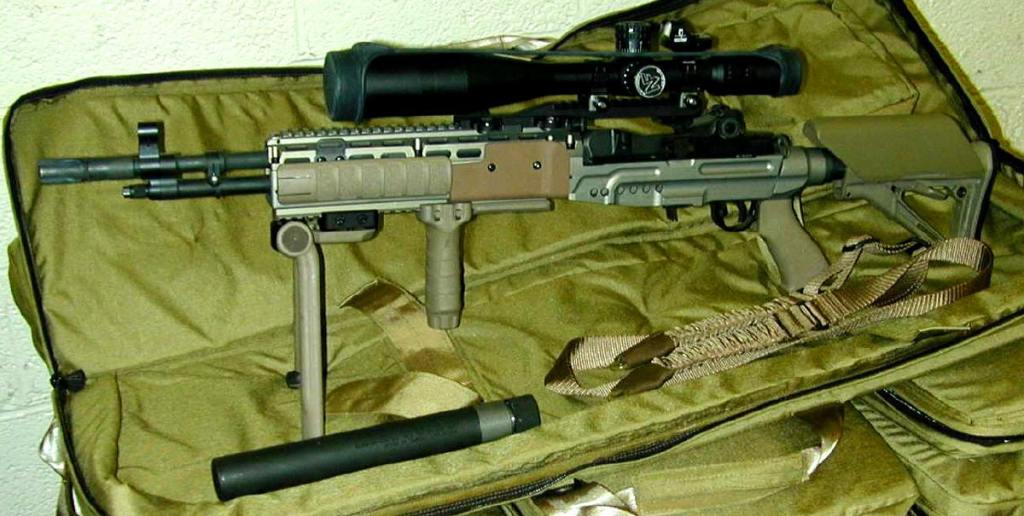
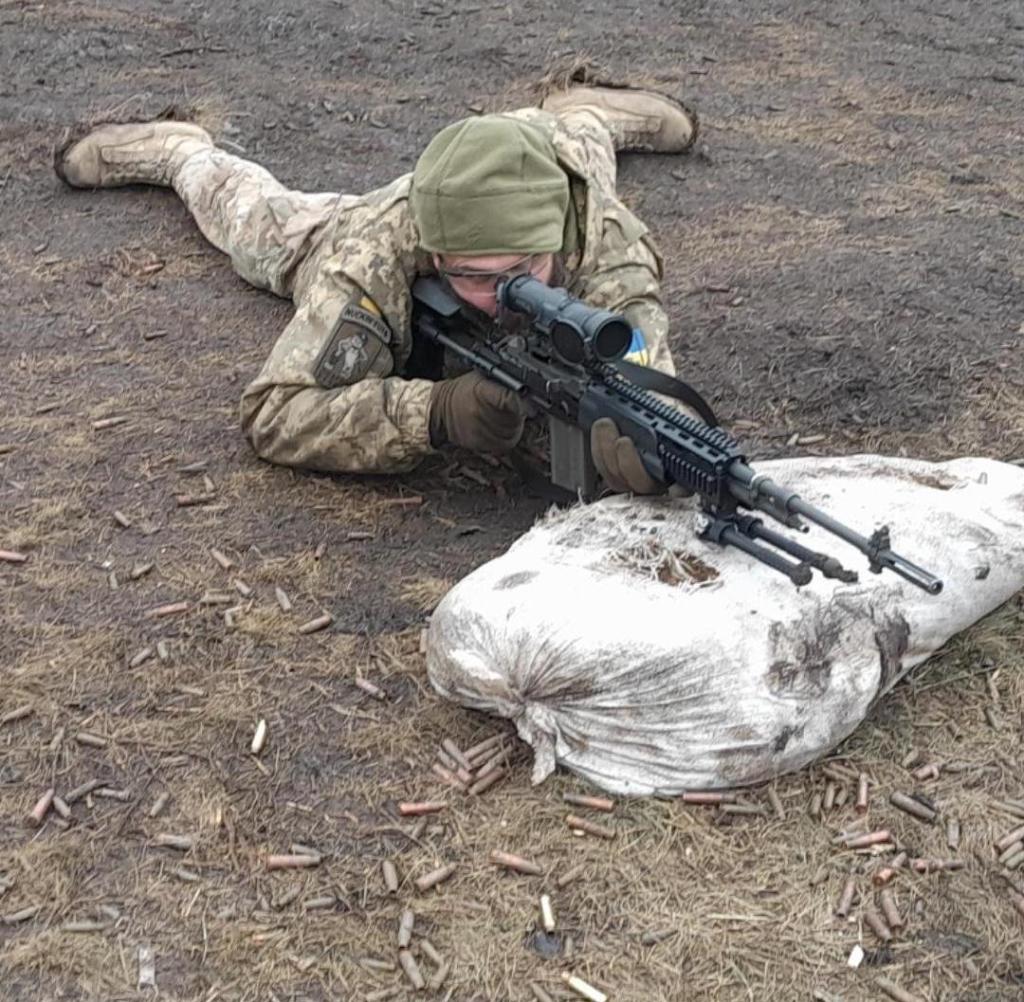
In an earlier video/article we examined the M14s which appeared in Ukraine back in March 2022, since then there have been a number of intriguing sightings of what, at a glance, appear to be Mk14 Enhanced Battle Rifles or M39 Enhanced Marksman Rifles. The EBR and EMR emerged during the Global War on Terror in the early 2000s as an improved variant of the 7.62x51mm M14.
The project to develop a more compact, improved M14 reportedly evolved from a request from US Navy SEALs in 2000 for a rifle for Arctic warfare. This eventually developed into what became the Mk14 EBR with development led by Naval Special Warfare Centre Crane and input from commercial specialists and manufacturers including Smith Enterprise, Inc. and Sage International. The result was a rifle with a 18 inch barrel and new flash hider, with changes to the operating rod guide, a new stock chassis and a raft of accessories. A number of different variants were built including the Mk14 Mod 0, Mod 1 and Mod 2, the M14 EBR-RI and the USMC’s M39 EMR. In total between 2003 and 2011 just over 9,000 of these upgraded variants were assembled.
Given the significant number assembled and the fact they have been replaced by rifles such as the M110 Semi Automatic Sniper System (which has already been seen in Ukraine) and the M110A1 CSASS it would not be unsurprising to see Mk14 EBR variants turn up in Ukraine.
Over the past two years I’ve been tracking sightings of what appear to be Mk14 EBR variants but on closer examination some of them are not what they initially seemed to be, several were in fact kit builds using the standard configuration M14s which reached Ukraine in early 2022. Some, however, do appear to be surplus Mk14s.
Yuri’s Mk14 EBR clone at the range (Nucking_Futs_Yuri)
First, let’s examine some of the kit builds seen in theatre. The first appears to have been assembled by Nucking_Futs_Yuri, an American volunteer who enlisted in the Ukrainian Army in early 2022. Yuri explained to me that in late 2022, following combat experience where he wasn’t satisfied with how well 5.56x45mm suppressed a Russian position he decided to assemble an EBR clone using a donated chassis. Yuri noted that parts for the rifle began to arrive in December 2022 and by January the rifle had been assembled. Yuri was seen with the rifle in numerous photographs and in several configurations. It had a standard 22 inch barrel, a Sage International M14ALCS chassis and a M14DCSB (Detachable Cantilevered Sight Base). He mounted a 1.5-6x Elcan SpectreDR optic on the rifle, opting for more of a battle rifle-style set up. The rifle was damaged in February 2023 by a Kornet ATGM blast which bent both the barrel and the chassis.
Yuri’s damaged Mk14 EBR clone (Nucking_Futs_Yuri)
In early May 2023, another rifle which resembled an M14 EBR-RI, with a 22in barrel and a black Sage International M14ALCS chassis, appeared in use with a member an International Legion team. This individual and his rifle was seen again in May 2024 appearing in a number of interviews with Ukrainian media. His callsign was revealed to be ‘Solo’ and he was described as a marksman and a squad leader with a unit of the International Legion’s 3rd Special Purpose Battalion. In the interview he explained that the rifle has originally been a wooden stocked M14 converted with a SAGE chassis sent to him by a friend in the US. Interestingly, between May 2023 and May 2024, it appears the rifle’s set up has evolved with new FDE rail covers added and a short tan Kydex handguard replacing the initial black longer handguard. These parts were likely acquired in Ukraine.
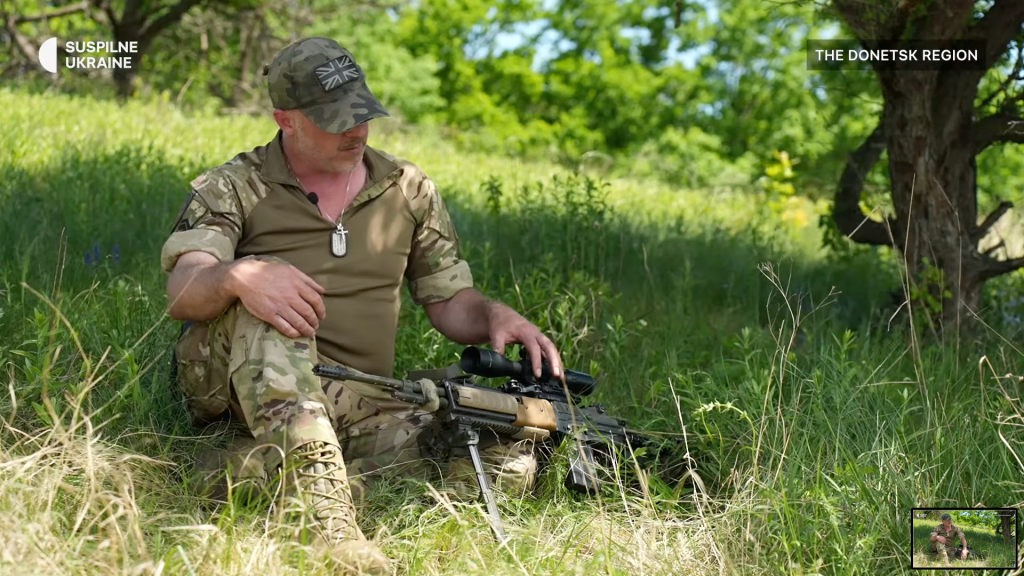
‘Solo’ with his Mk14 clone built off a standard M14 (Суспільне Донбас)
Most intriguingly, in November 2023, the first Mk14 Mod 1 appeared. Mod 1s are characterised by their shorter 18in barrels, a Sage M14ALCS/CV-BS with Magpul CTR FDE stock (with a cheek riser) mounted on a buffer tube extension rather than the earlier collapsing stock. The rifles also have LaRue LT-608 extended Picatinny risers and short tan handguards. The rifle is equipped with a Schmidt & Bender PMII 5-25×56 scope.
A Mk14 Mod 1 EBR with Schmidt & Bender PMII, Nov. 2023 (via social media)
The Mk14 Mod 1 was assembled at NSWC Crane in 2006, around 500 were assembled. The shorter barrel and the general configuration of parts and accessories suggest that this may be a surplus rifle transferred by the US.
A recent sighting of a Mk14 Mod 1 EBR (via Tysk)
Most recently, on 18 October, Ukrainian telegram channel Tyskshared a series of photos of a Ukrainian combatant at the range with another Mk14 Mod 1. This rifle’s parts and accessories closely match those assembled by Crane for the Mod 1, including: an 18in barrel with a SureFire FH762KM14 muzzle device, a TangoDown BG-16 FDE pistol grip, a Sage M14ALCS/CV-BS with a Magpul CTR FDE stock (this time without the cheek riser), a TangoDown BGV-MK46 FDE vertical foregrip, and a TangoDown ACB-4 FDE bipod. The rifle is also equipped with a NightForce NXS 2.5-10x24mm optic and a DOCTER MS01 3.5 MOA red dot sight which were selected to be paired with the Mod 1. [It has been noted that the Mod 1s may also be clones due to some small differences in the chassis profile and accessories used – for instance the model of VFG, scope rings, cheek riser, and the machining on the chassis. If this is the case someone has gone to an improbable amount of trouble to ‘clone’ a Mod 1, a considerable level of effort to expend in a war zone. Thanks to tanodized for input.]
From the very limited imagery available of Mk14 EBR-pattern rifles in Ukraine it appears that numerous clone builds have been assembled in-country and that the only EBRs which can be identified as potential US transfers are the two Mk14 Mod 1 variants seen so far.
A squad designated marksman with an Mk14 EBR-RI (the most common EBR variant), 5th Battalion, 20th Infantry Spin Boldak, Afghanistan, 2012 (US Army)
If the US was to transfer a significant number of Mk14-pattern rifles I would expect them to be the Mk14 EBR-RI, the most common variant, some 6,000 of which were assembled by Rock Island Armory – TACOM [Tank-automotive and Armaments Command]. It is unsurprising clone rifles have been assembled by combatants in Ukraine as Sage International and a number of other US manufacturers offer EBR-pattern chassis which do offer some improvements over the traditional M14 configuration.
A couple of months ago we took a look at Kalashnikov Concern’s new belt-fed machine gun, the RPL-20. That video was made in collaboration with firearms researcher Deni Almaskhanov, of Just Guns. Deni has also kindly shared some video of Kalashnikov’s new GP-46 grenade launcher.
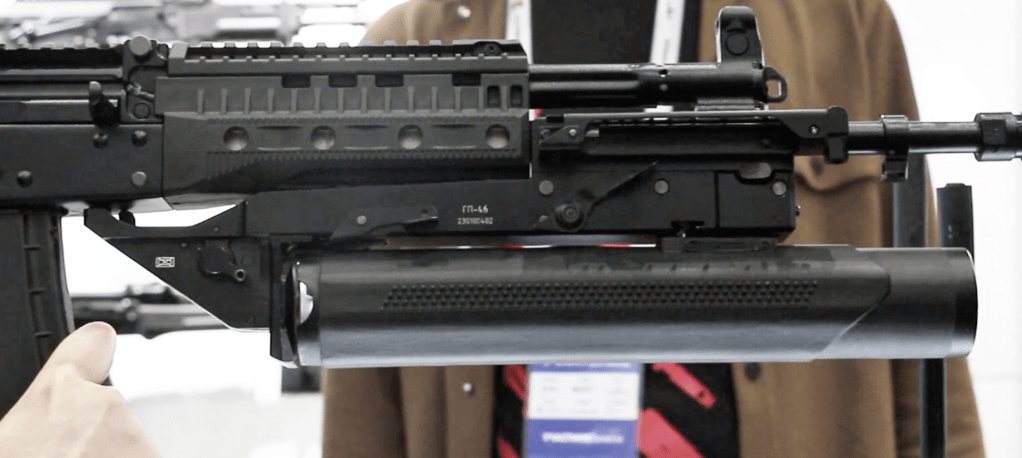
The GP-46 was unveiled by Kalasknikov Concern at the ‘Army-2024’ exposition in August. Unlike other Russian underbarrel grenade launchers the GP-46 is chambered in the Western 40x46mm, the low velocity grenades used in launchers like the M203, and M320. Despite its first public appearance in 2024, the visible serial number indicates that the launcher on display was actually made in 2023. It was reportedly developed in 2023-24 by a design team led by Kalashnikov’s chief small arms designer Sergei Vladimirovich Urzhumtsev.
The GP-46 features ambidextrous controls with mechanical safety selectors, locking mechanism catches and triggers found on both sides of the launcher. The launcher can be mounted on all previous AK-pattern rifles which are able to mount UBGLs.
It’s currently unclear what range of 40x46mm grenades are available for the GP-46 but Kalashnikov’s promotional video on the launcher featured a grenade tipped with what appears to be a VGM fuze used on VOG-pattern grenades.
GP-46 UBGL (Deni Almaskhanov)
Interestingly, Deni noted that the unconventional trigger placement is not entirely new for Kalashnikov. In 2018, Kalashnikov patented another grenade launcher, seemingly one designed around VOG-pattern grenades. That UBGL’s the trigger mechanism was located on the outer cover of the barrel itself. Deni explains that “the latch was to be pressed, unlocking the movement of the cover, the cover was to be pulled backwards. Such design was implemented in order to allow for a double-action trigger action while not requiring lots of strength from the trigger finger”. Deni believes that the GP-46 seems to be following the same philosophy while avoiding overtly complicated design elements.
The GP-46 is aimed using iron sights located on the right side of the launcher. The rear sight allows for shooting at ranges starting at 50 meters, out to 400 meters. The sights also feature a built-in mechanical rangefinder, calibrated for 170 cm (5’7) tall target. Interestingly, the 5.56×45mm AK-19 Type 3 that was used to showcase the grenade launcher at ARMY-2024, also featured what seems to be a new ACOG-style prismatic scope by Dedal-NV, one of Russia’s premium optics manufacturers. Deni notes that the scope featured both rifle and grenade launcher reticles.
GP-46 UBGL sights (Kalashnikov Concern)
It is unlikely the Russian armed forces will be moving away from their in-service 40mm grenade launchers any time soon and it is worth noting that both the GP-46 and the AK-19 it was mounted on are primarily export models. One potential interesting international customer may be India, which has already contracted with Kalashnikov previously. India recently adopted the AK-203, with plans to produce the rifles under license in India.
GP-46 in stand alone chassis (Kalashnikov Concern)
Intriguingly, what sets this this grenade launcher apart from the majority of previous Russian UBGLs is the special module that allows it to be used as a stand-alone launcher. The GP-46 mounts onto a stock chassis which consists of a full-size AK-12 Type 1 pistol grip and an adjustable AK-12 Type 3 buttstock. Given the large number of stand alone stock systems for launchers like the GP-25 which have emerged as a result of the war in Ukraine this development isn’t surprising.
Special thanks to Deni for sharing this footage and information with me so I can bring you guys this video. Please do check out Deni’s pages – Telegram, Instagram, Youtube.
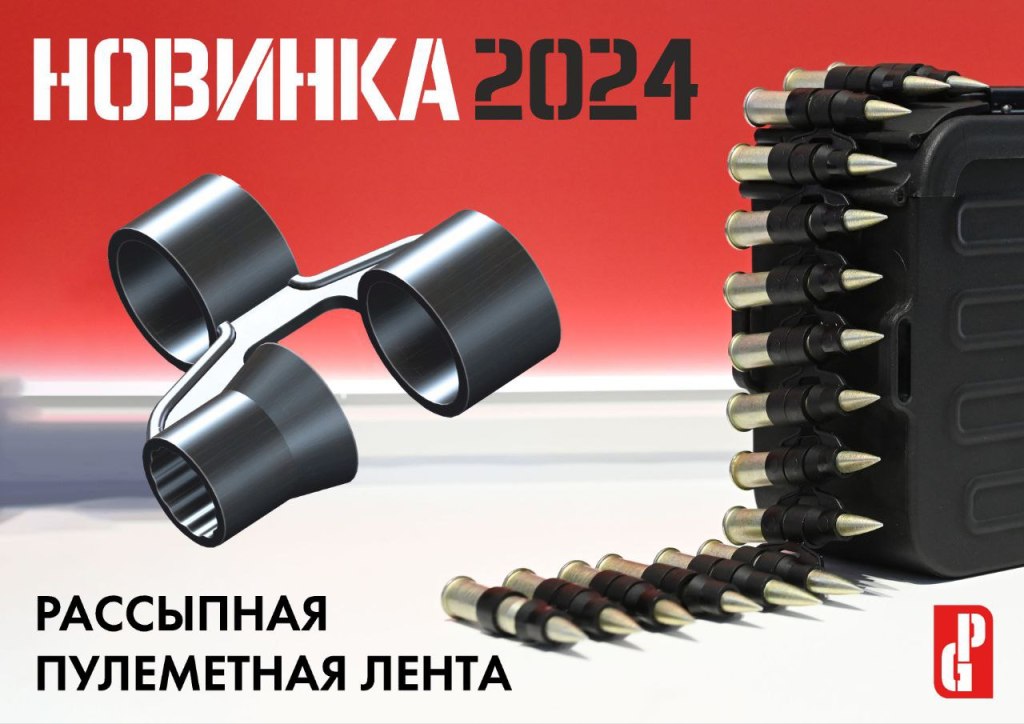
In previous videos we’ve looked at Ukrainian efforts to manufacture polymer belts for PK-pattern general purpose machine guns. These were developed by Ukrainian company RAROG who has been selling them since the summer of 2022. Now PUFGUN, a Russian company has also developed a polymer PK belt.
Traditionally, the 7.62x54mmR belts used by the PK series of guns have been made from metal and are non-disintegrating, meaning they remain linked together after they’ve been used, while NATO machine guns tend to use disintegrating belts that fall apart once the rounds held in them have been fired.
On 3 September, PUFGUN announced the introduction of the new disintegrating belts, explaining some of their features:
“The tape is made of high-strength polymer – a light and durable material. 3 times lighter than metal analogues. The total weight of the package for 100 links is 220g Due to the physical properties of the polymer, the loading of the PUFGUN loose belt is carried out faster than that of a metal belt. Maintains functionality in temperature conditions from -40C to +70C. Not subject to corrosion, does not require special conditions for long-term storage.”
Packs of 100 links are being sold for 548 Rubles or $5.75 on PUFGUN’s website.
PUFGUN shared a pair of photos, on 10 September, comparing the weight of a loaded traditional metal belt with one of their non-disintegrating belts, with the metal belt weighing 2.8kgs while the polymer belt weighed in at 2.37kgs. In the caption they claim that the photos were taken by Russian special forces unit Grom. OSN “Thunder”, who they state has been testing the belts since late August. The post claims Grom’s first impression was ‘quite good’. The post on PUFGUN’s telegram has since been deleted.
On 14 September a video showcasing the belts was posted by Mikha Mikhalych, a Russian gun content-creator, reviewing the belts. In the video two types of belt are featured; the disintegrating belt and a non-disintegrating one. The video also features a polymer belt box developed by PUFGUN, which is said to weigh around 150g. Combining the box with the polymer belts appears to be a meaningful push towards reducing the weight of the PK’s ammunition carriage system.
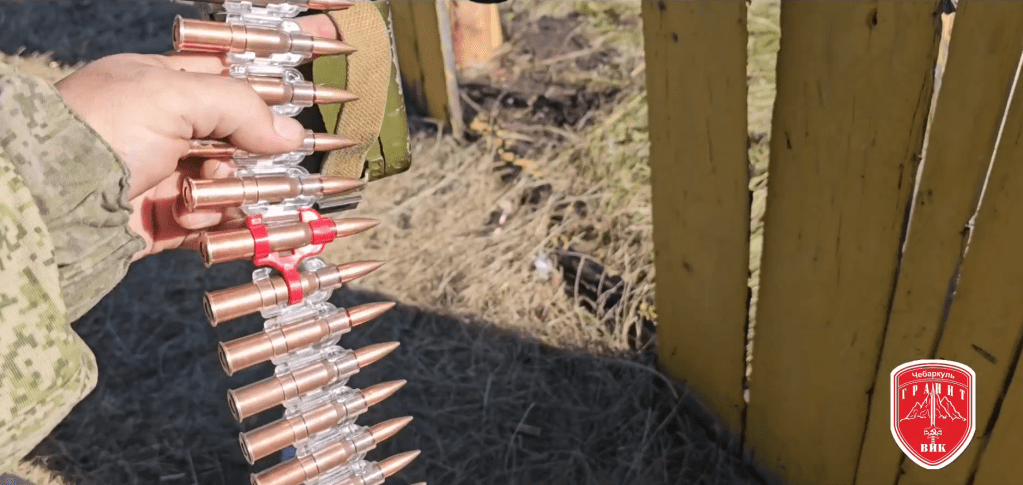
On 26 September, PUFGUN announced the non-disintegrating polymer belts on their social media. These belts share the same technical specifications as the disintegrating belts but notable are made from a clear plastic rather than a black plastic. While these have previously appeared in the earlier video they are not, at the time of publication, available for purchase on the company’s site. It appears that the links will be sold in packs of 100, with a starter tab and four disintegrating connector links which allows 25-round belts to be linked together.
On 9 October, PUFGUN shared a short clip showing their non-disintegrating belt being loaded by an Rakov belt-filling machine. This video was made in collaboration with ‘Granit’, a Russian living history group which appears to have links to the Russian military. Granit also shared their own longer video showing the belts being used in a variety of old and new Russian machine guns ranging from a vintage SG-43 to the latest PK variant the 6P41M.
Much like the Ukrainian KS-122 polymer belts from RAROG, the PUFGUN belts do significantly reduce the weight on the gun itself and more broadly for transporting ready ammunition. PUFGUN have sought to address the need for both disintegrating belts, useful for troops on the move that don’t want to be encumbered by trailing empty belts, while the non-disintegrating belts are more easily reloaded and better suited to use in vehicles or static positions. It’s interesting to see both sides commercially developing polymer belts to address a perceived need shared by both sides.









 The Armourers Bench