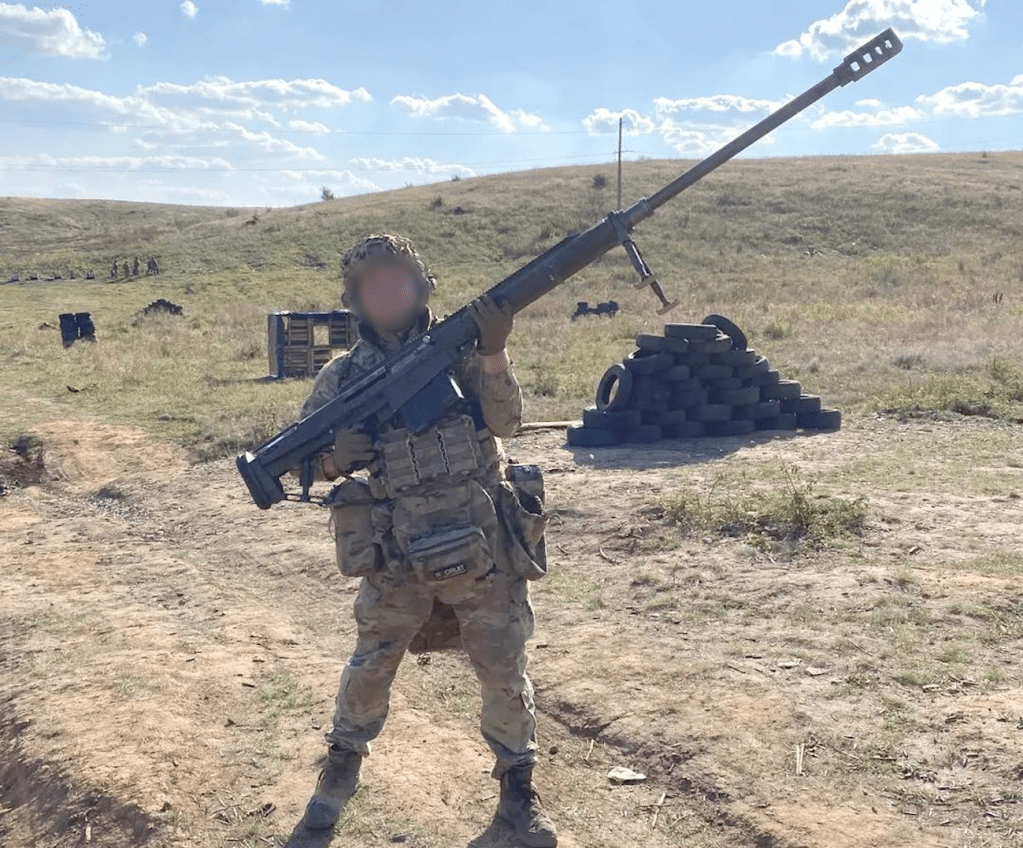
Has Italy Sent Beretta AR70/90s To Ukraine?

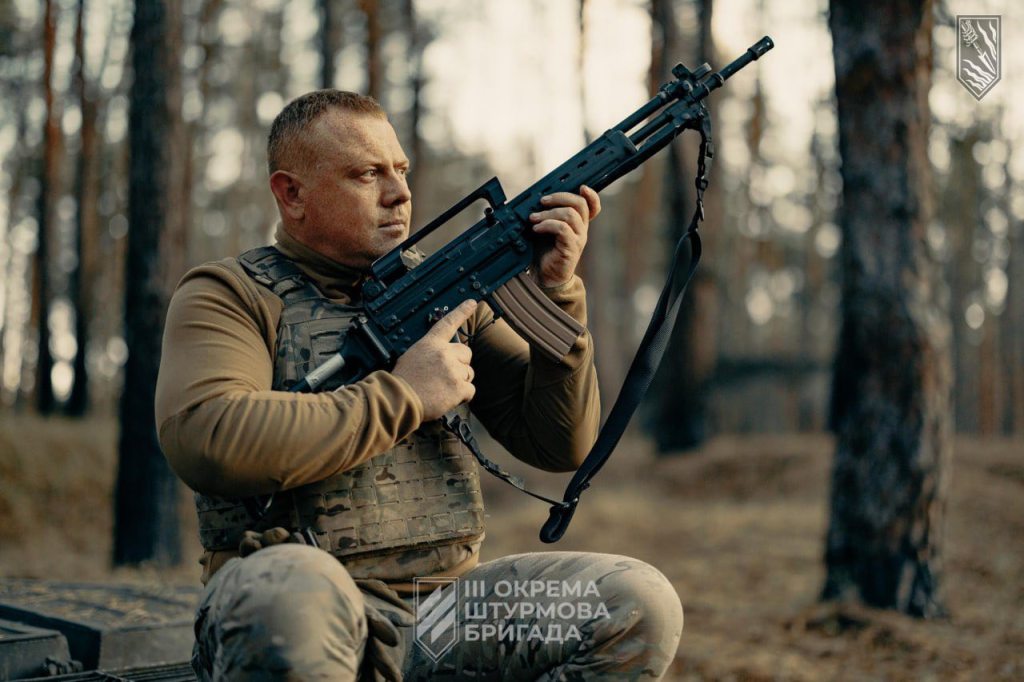
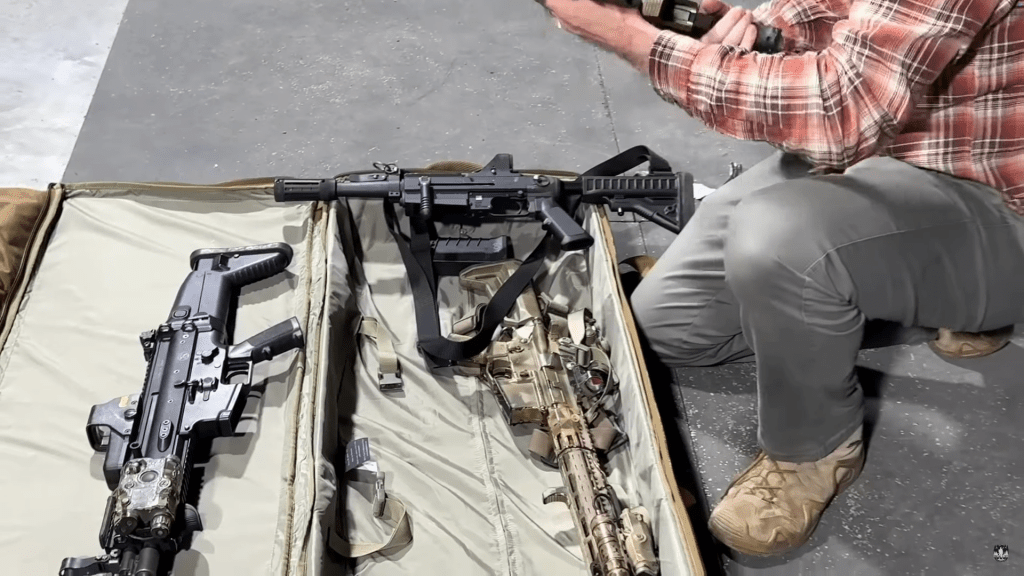
From imagery shared by Ukrainian armed forces personnel over recent months it appears that Italy has provided an unconfirmed number of Beretta SC70/90 5.56x45mm rifles.

The SC70/90 is part of the AR70/90 family of rifles; the SC model is distinct for its side-folding stock. The weapons are gas-operated and use a rotating bolt and a long-stroke gas piston system. They are select-fire and capable of semi-automatic, burst and fully-automatic fire. They are typically equipped with a bipod and carry handle and weigh in at 4.05kg or 8.9lbs.
The AR70 entered service in the early 1970s. The AR70/90 series improved on the AR70 and has been in service with the Italian armed forces since the 1990s, it is currently being replaced by the Beretta ARX-160. We’ve already seen evidence of the presence of other European rifles of a similar vintage such as the Spanish CETME-L, check out our video/article on those here.

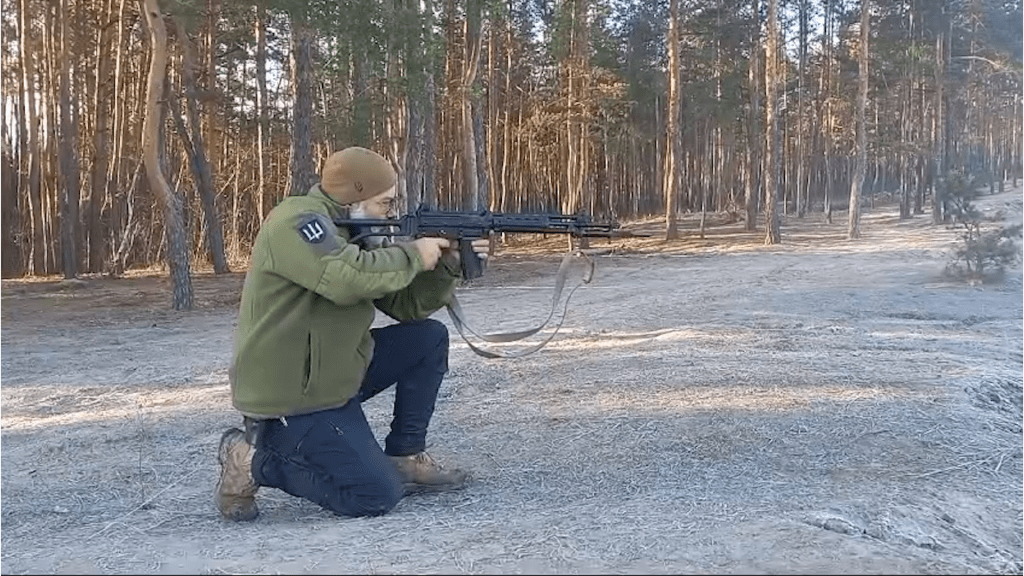
The first sighting of an SC70/90 came on 10 January, when Іван Савельєв, a veteran associated with several units including the 3rd Assault Brigade ‘Azov’, possibly as head of the brigade’s small arms workshop, shared a video of himself firing the rifle in bursts from prone with its bipod deployed.

On 13 January, Савельєв, a fabricator, mechanic and gunsmith who founded R&D company Armorum Solutions, shared several videos of himself firing an SC70/90 at the range. In the first, he has a bayonet fixed and the bipod still mounted but the carrying handle has been removed from the top of the receiver.
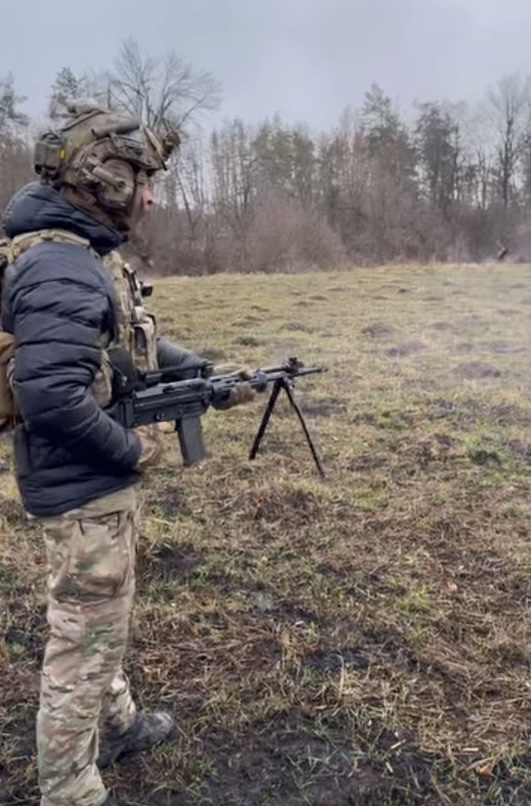
A member of the 3rd Assault Brigade shared a short video, via Instagram stories, on 24 January 2025, firing a Beretta SC70/90 from the hip. When asked what he thought of it, he described it as an ‘old unit’. There is no evidence he has used the weapon on operations, and it may have been brought out to the range as a curiosity.

On 16 February, Савельєв shared another video of himself firing the rifle, this time the carry handle has been removed and an ELCAN Spectre, likely supplied by the Netherlands, has been mounted on the SC70/90’s upper receiver.

Speaking to an international volunteer with one of Ukraine’s brigades who has recently been issued an SC70/90 for training, he noted: “It has too much parts. You cannot strip it without pliers or a bullet. Aiming is also way harder than with an AK. It’s also heavier than an AK… Overall, its not a bad gun, I just don’t like it. The sights are not good, not easy to read like an AK. The foldable buttstock is a big plus.” He explained that he decided to remove the bipod and carry handle saying the bipod is ‘useless’ and the carry handle obscures the sight. He also added that while his unit has been issued them during current training some soldiers do use them on operations. On 19 March he shared a video of how to field strip the SC70/90 on his YouTube channel.
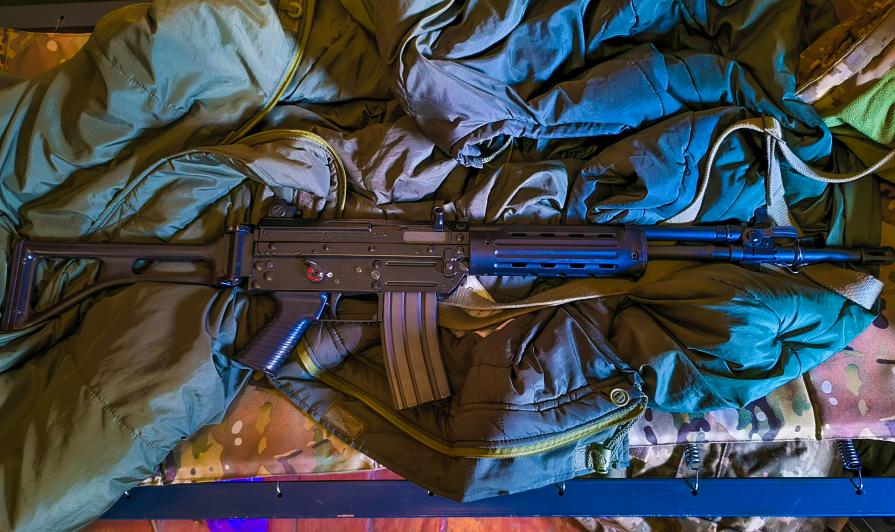
Most recently, on 8 April, a member of the 3rd Assault Brigade shared a photograph of himself posing with a SC70/90 complete with carry handle and bipod.

While the number of sightings of SC70/90s in Ukraine has so far been small, they are undoubtedly in country and in use. There haven’t yet been any sightings of fixed stock AR70/90s. From a survey of the limited imagery available, it appears that they are in service with the 3rd Assault Brigade and possibly other units. It seems that while they’re in inventory with Ukrainian units they may be most regularly issued to personnel during training, this is unsurprising, as the supply spare parts available for the rifles may be limited and there are other better-suited rifles available for operations. The SC70/90s presence in Ukraine serves to illustrate once again just how many different small arms are now in Ukrainian service.

Thanks to Recon UAV and Weapons_Illustrated for help sourcing imagery for this video.

Update – 1/5/25:

Update – 14/7/25:

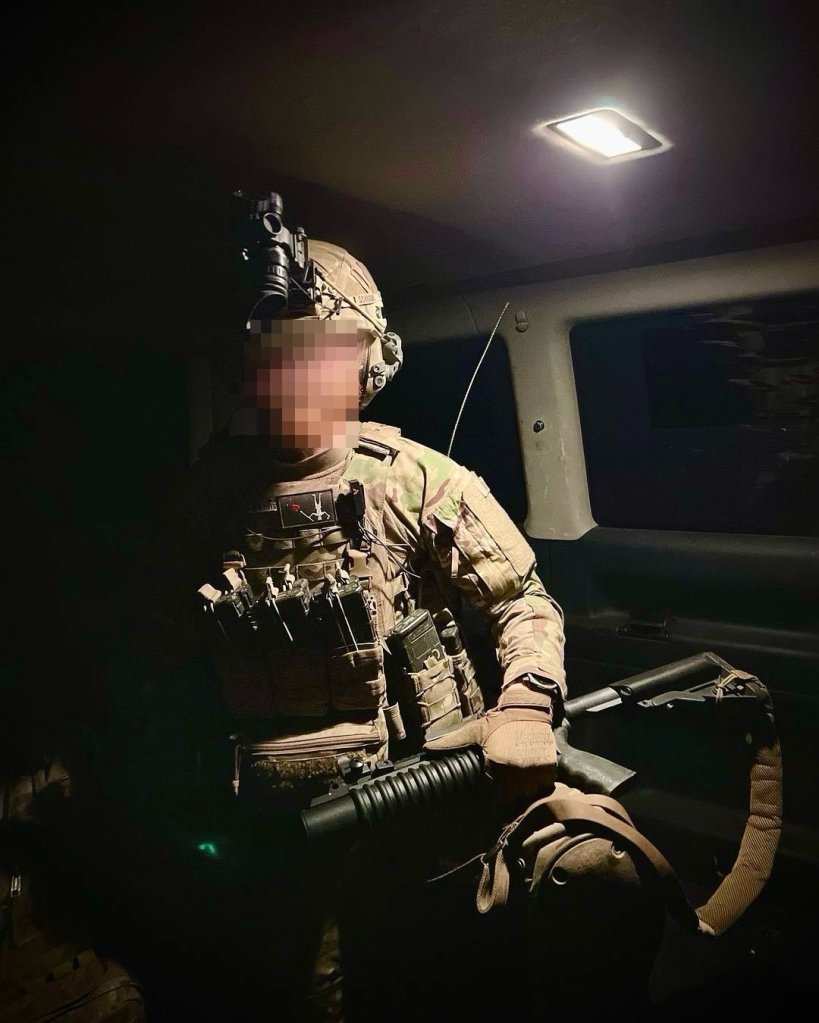
Members of the 33rd Separate Assault Regiment’s ATGM company were photographed during training. One combatant was photographed holding a Beretta SC70/90.
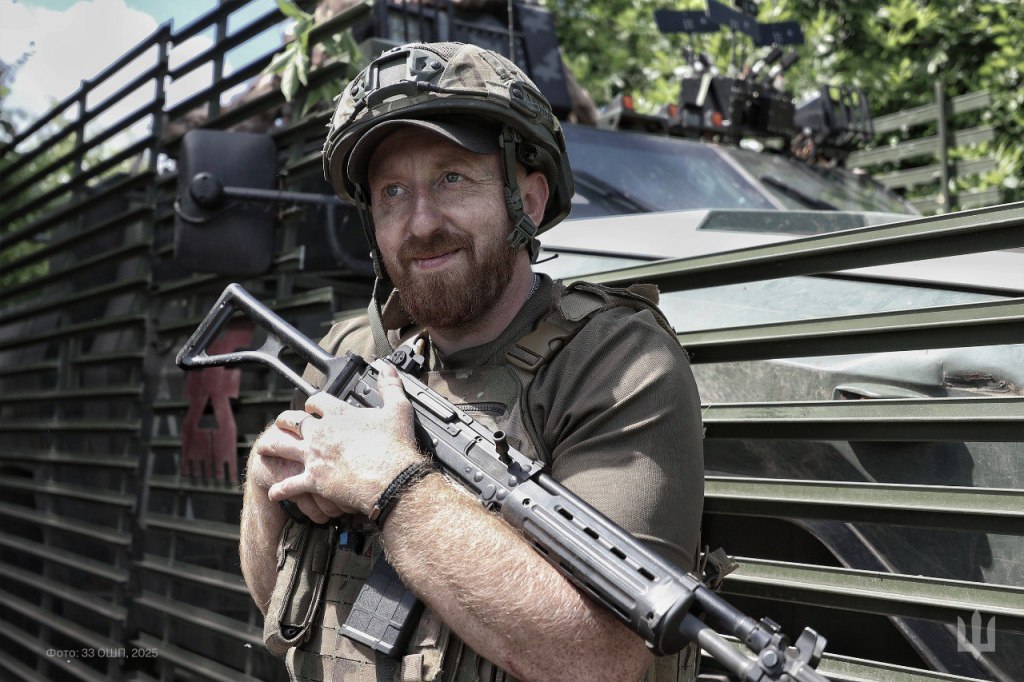
Update – 30/7/25:

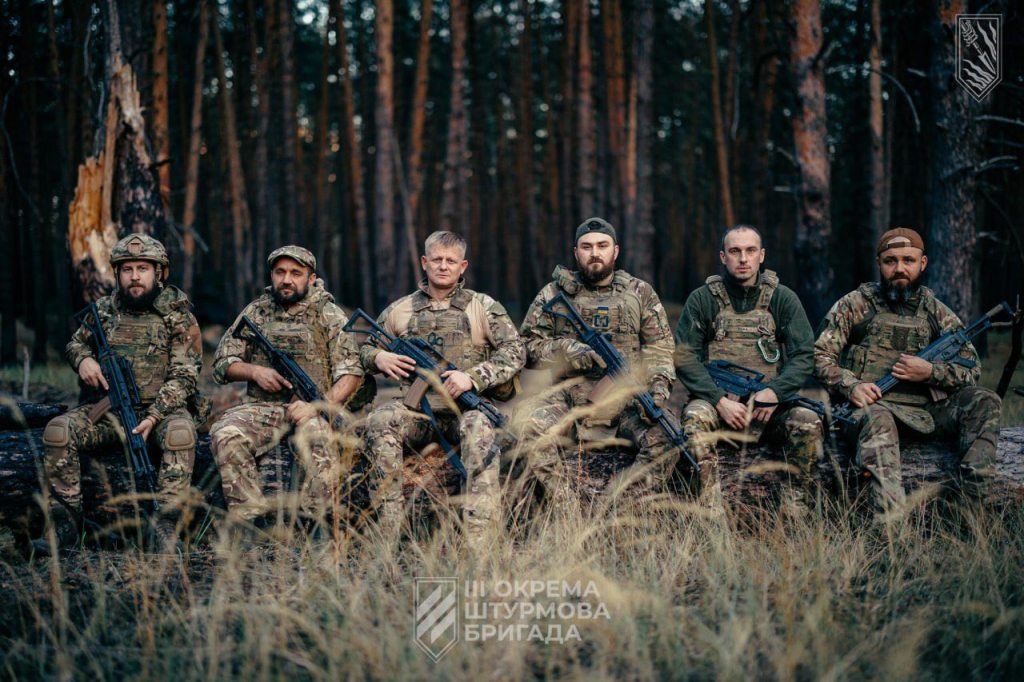
Personnel from the 2nd Artillery Battalion of the 3rd Assault Brigade were seen armed with SC70/90s during a social media video. (H/T Jeff).
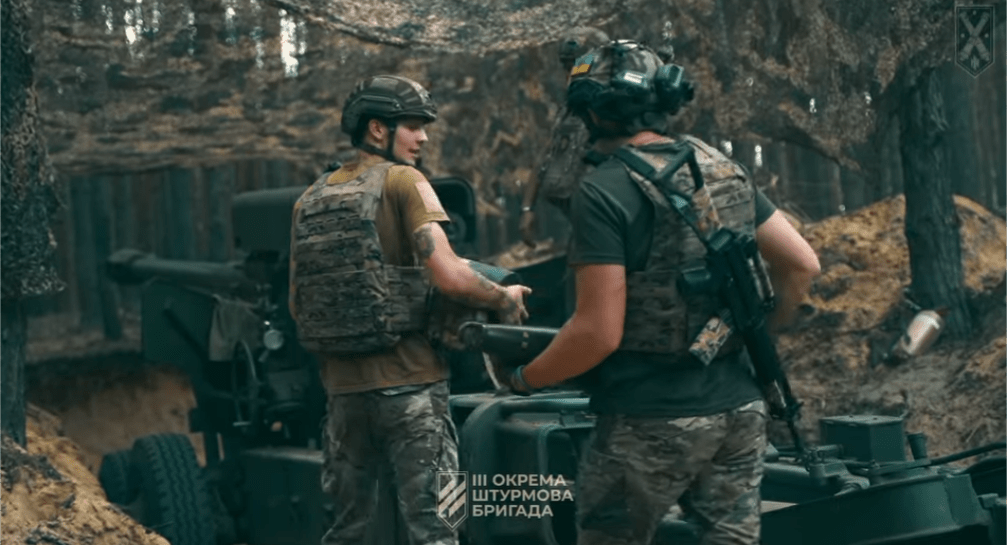
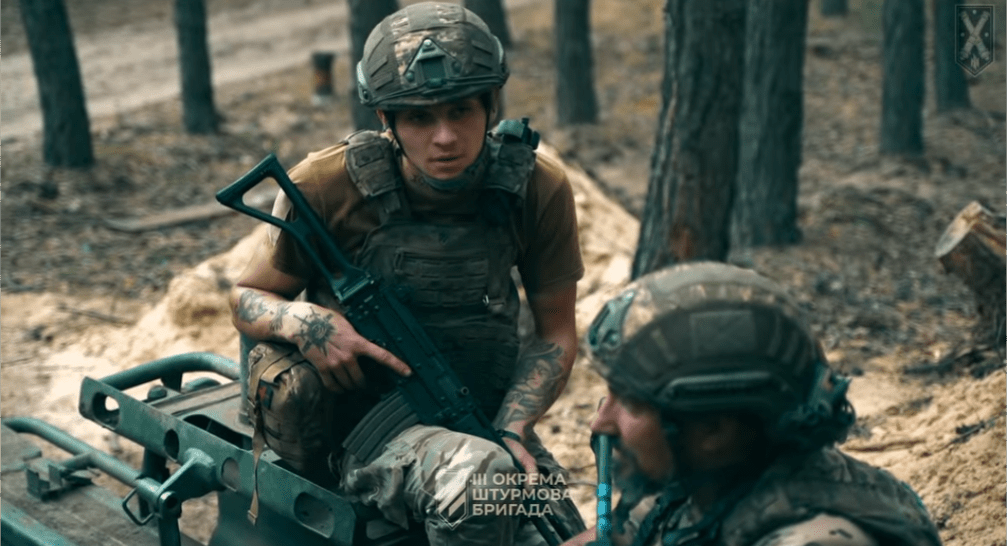
Update – 4/8/25:

A group photo of the 3AB gunners seen in the earlier video. All four combatants have SC70/90s.
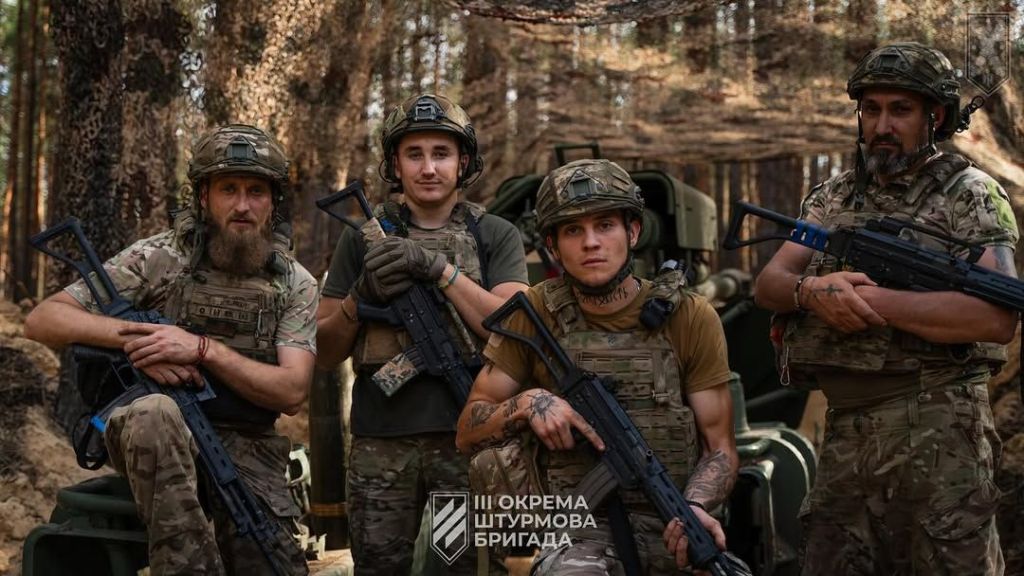
Update – 20/10/25:

The 3rd Army Corps posted a series of photos of troops with AR70/90s on 12 October. The troops appear to be gunners opperating one of the 3rd Assault Brigade’s self-propelled howitzers.
Support Us: If you enjoyed this video and article please consider supporting our work here. We have some great perks available for Patreon Supporters – including early access to custom stickers and early access to videos! Thank you for your support!
M26 MASS In Ukraine

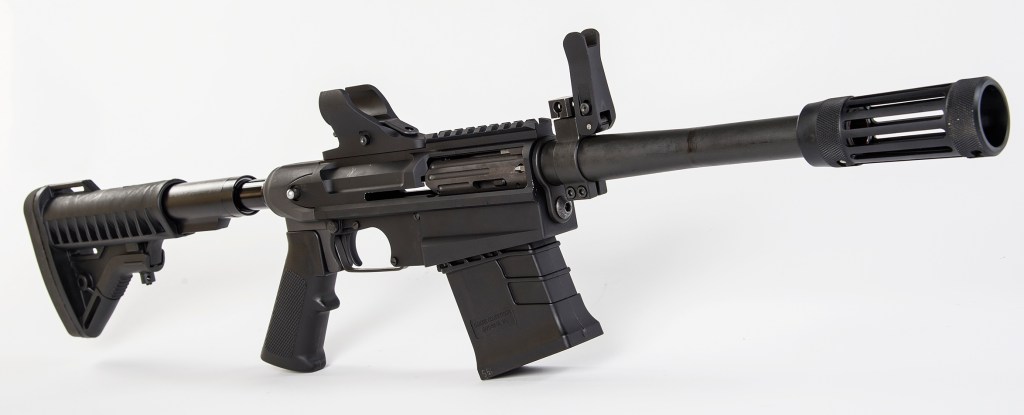
This week another image of a very rarely seen shotgun in Ukraine appeared, an M26 Modular Accessory Shotgun System. These are magazine-fed, bolt-action shotguns which can be mounted on rifles.

The M26 is essentially the US military’s bolt-action Masterkey at home. Developed in the early 2000s by C-More Systems it was selected by the US Army in 2008 and began fielding in 2011 seeing operational service in Iraq and Afghanistan. It is still in service today.

M26 Modular Accessory Shotgun System in its standalone configuration (US DoD)

The shotgun has a 3 inch chamber and uses a straight-pull bolt-action. It’s box magazine-fed with 3 or 5 round capacities available. It can also be used as a standalone once a stock and pistol grip assembly is attached, it has folding back-up iron sights but uses the rifle’s sights when mounted. The MASS’ safety and bolt-handle are reversible to allow ambidextrous operation. The M26 was designed to be employed as a breaching shotgun for shooting hinges and locks, the barrel is tipped with a breaching stand-off adapter muzzle-device. In its rifle-mounted configuration the M26 weighs around 3lbs (1.4kg) and has an overall length of 16.5 inches (42cm). It has an improved cylinder bore profile (sometimes referred to as a 1/4 choke), meaning it has an integral choke with a slight constriction that allows the shot to spread quickly after leaving the muzzle, the practical range for this type of choke is around 15-30 yards.

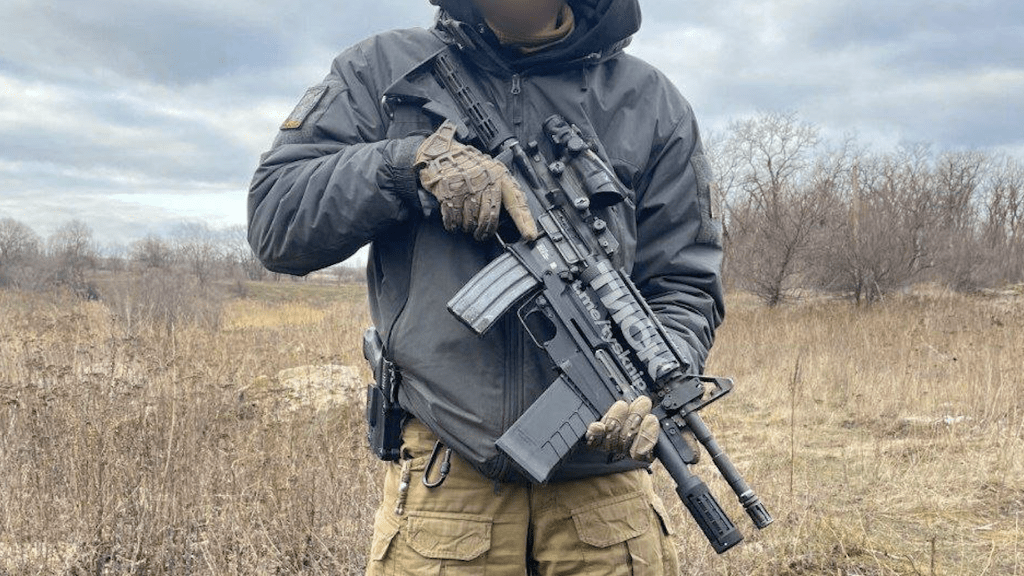
The most recent sighting of one of the shotguns came on 19 December. Ukrainian outlet Tysk shared a photograph of a Ukrainian operator armed with an M4A1 carbine topped with an ACOG and equipped with a M26 MASS In Ukraine. The M26 in the photograph appears to be loaded with a five-round magazine.

Sightings of the M26 in Ukraine are extremely rare, with the only other example appearing in a ХЛОПЦІ З ЛІСУ (Boys from the Forrest) video which showcased weapons used by the UA Reg is the 1st Special Operations Detachment of the 8th Regiment, SSO (UA SOF). The M26 seen in that video was in the standalone configuration with pistol grip and stock attached. Sadly, the shotgun itself wasn’t discussed in the video.

M4A1 mounted with an M26 (via Tysk)

While Russia has not officially fielded anything similar we have seen efforts to adapt GP-25 under-barrel grenade launchers with shotgun adaptors and there has been at least one sighting, back in May, of an improvised slam-fire tube-shotgun mounted under-barrel on an AK-12. The shotguns even appeared on the Russia 1 state TV channel.

Since the latest photograph appeared there has been significant speculation as to whether it might be being used to defend against First-Person View (FPV) drones. This may be unlikely given the weapon’s short 7.75 (197mm) barrel, this length would limit its effectiveness in engaging more distant drones but might be useful in engaging approaching FPV drones- as a last ditch defence. This is something we’ve seen Russian combatants improvising weapons to deal with. The speed with which FPV drones close on their targets, however, would make multiple shots from the M26 unlikely due to its manual action. This would reduce the chances of successfully engaging an on-coming drone.

Standalone M26 (via ХЛОПЦІ З ЛІСУ)

While any shotgun is better than no shotgun the units that the M26 has been seen with definitely have access to shotguns better suited to engaging drones. Where the M26 is more likely to be useful in Ukraine, is in its original role – as a breaching shotgun. Ukrainian units regularly find themselves operating in urban areas where quick access into rooms is key. Provided they have breaching rounds then the M26 might be most useful in this role.

M26 MASS Specs (from C-More Systems):

  • Caliber: 12 gauge
  • Chamber: 2-3/4″ or 3″
  • Operation: Straight-Pull Bolt-Action 
  • Capacity: 3 or 5 Round Detachable Magazine
  • Weight: 3 lbs (1.36 kg)
  • Barrel Length: 7-3/4 in (19.7 cm)
  • Overall Length: 16.5 in (41.9 cm)
  • Cylinder Bore: Improved Cylinder

Update – 4/1/24: Tysk have shared some redacted footage of the M26 at the range along with the operator’s thoughts (machine translated):

Experience shows the rifle’s effective range does not exceed 30 meters, and that already requires above average level of training.
Adding so much weight to the rifle increases the weight of the barrel too. I would argue one has to be quite a tough guy to stay in a ready position for long. Especially considering people nowadays cannot do the same even with an AK.
In my humble opinion, this weapon system has its niche and can even be useful as an independent piece but becomes too impractical when coupled with an M4.”

Update – 3/2/25: Mjolnir Group shared a photograph featuring an M26 in the standalone configuration.

Update – 2/3/25:

A recently shared video of a Ukrainian serviceman training with a US M26 MASS shotgun in the standalone configuration.


Support Us: If you enjoyed this video and article please consider supporting our work here. We have some great perks available for Patreon Supporters – including early access to custom stickers and early access to videos! You can also find us on the History of Weapons & War app. Thank you for your support!

Ukrainian Marines Deploy RBS-17/Hellfire Shore Defence Missiles

The RBS-17 has been in Ukrainian service for quite some time with Sweden announcing in June 2022, that they would provide the missiles. The RBS-17 was a development of the AGM-114 Hellfire, entering service in the the early 1990s. It is a man-portable missile which weighs 48kg in addition to the launcher, firing system and laser targeting module. It is typically operated in the field by a five man team – two operating the laser targeting system and three on the weapon itself.

Check out our earlier video on the RBS-17 in Ukraine here

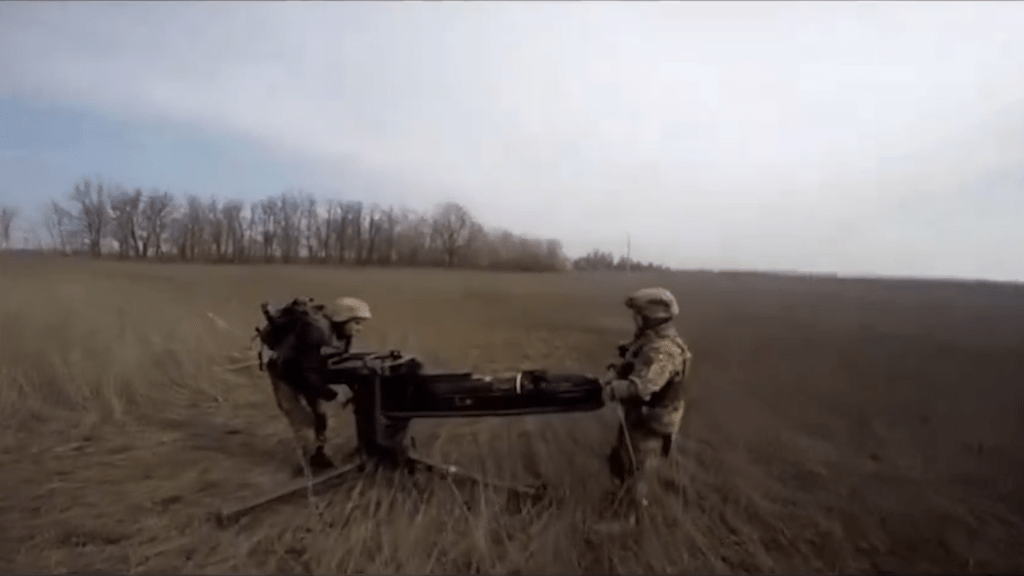
We first saw the RBS-17 in use in the field in a video posted in October 2022, by a page called ‘Bigcats’, the lo-res clip shows the launch of a pair of missiles. In December 2023, the Swedish government published an article and video about Ukraine’s use of the RBS-17 and the training the Swedish armed forces provided on the system. Most recently in May 2024, a clip of an Armenian volunteer unit, NEMESIS, showed a team operating an RBS-17. The video shows NEMESIS team members carrying a missile to the launcher, this gives an indication of just how ‘man portable’ they are. They load the missile and then take cover in the nearby tree-line. We can then see one man manning the control unit and the missile is launched.

It is worth noting that Norway has also provided it’s Hellfire Shore Defense System, which is externally very similar in appearance to the RBS-17. Some of the missiles in use are likely Norwegian HSDS.

Since then we have had a series of excellent clips which are amongst the most detailed so far. The clips were posted to various TikTok accounts and show a team, which appears to be attached to one of the Ukrainian Marine brigades, operating the missile system.

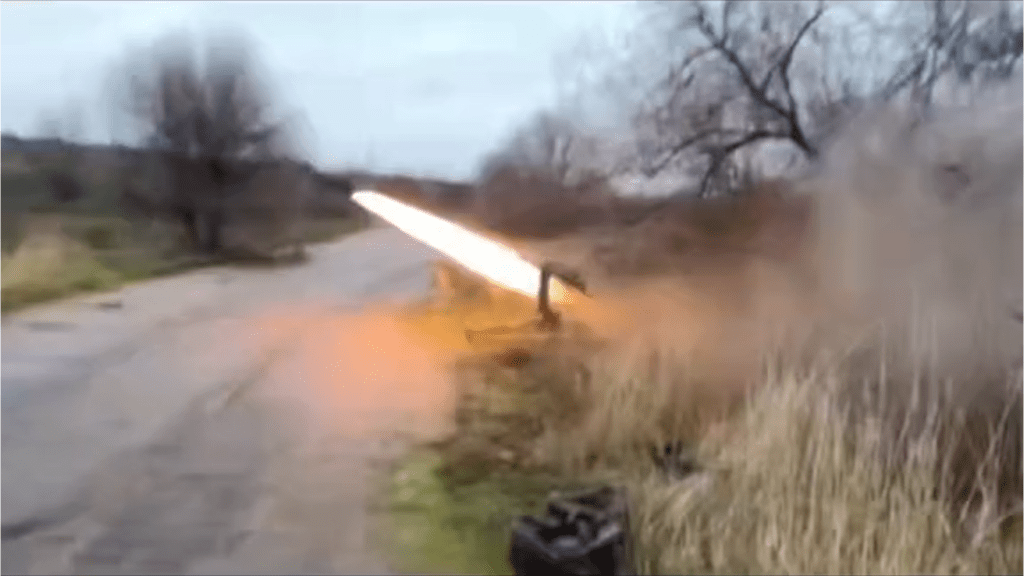
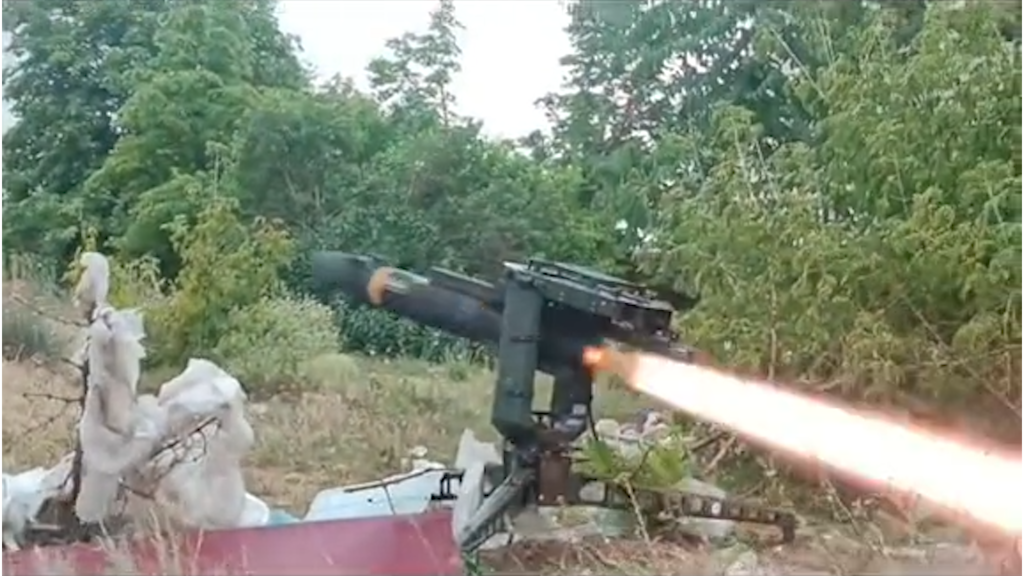
My colleague Weapons_Illustrated shared a series of videos he found on a Ukrainian serviceman’s Tiktok channel which were posted in summer 2024 but have since largely been removed. One simply shows a launch of a missile filmed relatively close to the launcher. Another pans along a missile body showing a message scrawled on the casing and also the missile’s lot number ‘98001’. While slightly blurred one Bofors sticker appears to read ‘Norwegian Hellfire Shore Defense Missile ‘ The video concludes showing a night launch across a body of water before cutting to a thermal camera showing an impact downrange. Another video shows the missile control system before cutting to showing a missile launch and then a clip of a strike on a large building which has its roof blown off. A video posted by the same channel on 20 July included a new launch video showing a missile being fired before cutting to a screen showing the destruction of a building near a large body of water. The landscape visible may suggest the footage was filmed along the Dnieper River, possibly near Krynky.

With further research I came across another affiliated account which had a number of videos showing the launch of RBS-17s dating back to January 2023. The first video posted on 3 January shows a launch of an RBS-17 with a picture-in-picture video of the operator at the launch control terminal. On the 5 March another video was posted from the same position, when the videos were actually filmed is difficult to confirm, this time the video also concluded with a clip of the impact of the missile on a target, a large building, downrange. On 13 May, a short video of the RBS-17s control terminal lit up was shared. A video posted by the account on 23 October, includes a slowed down clip of a launch and a clip showing a missile hit a target building.

The most recent video, posted on 11 December, features the launch of an RBS-17 filmed with multiple camera angles. One shows the video from the launch control station with a picture-in-picture view of the operator at the controls as well as a show showing the missile leaving the launcher, which has been positioned on a road. The video concludes with some overwatch drone feed footage of an impact on a building.

Update – 15/08/24:

One of the accounts which previously shared launch videos also recently shared a new video of a missile being launched from the edge of a field. Given earlier videos posted by the same individual showed HSDS markings this missile may also be a Norwegian HSDS.

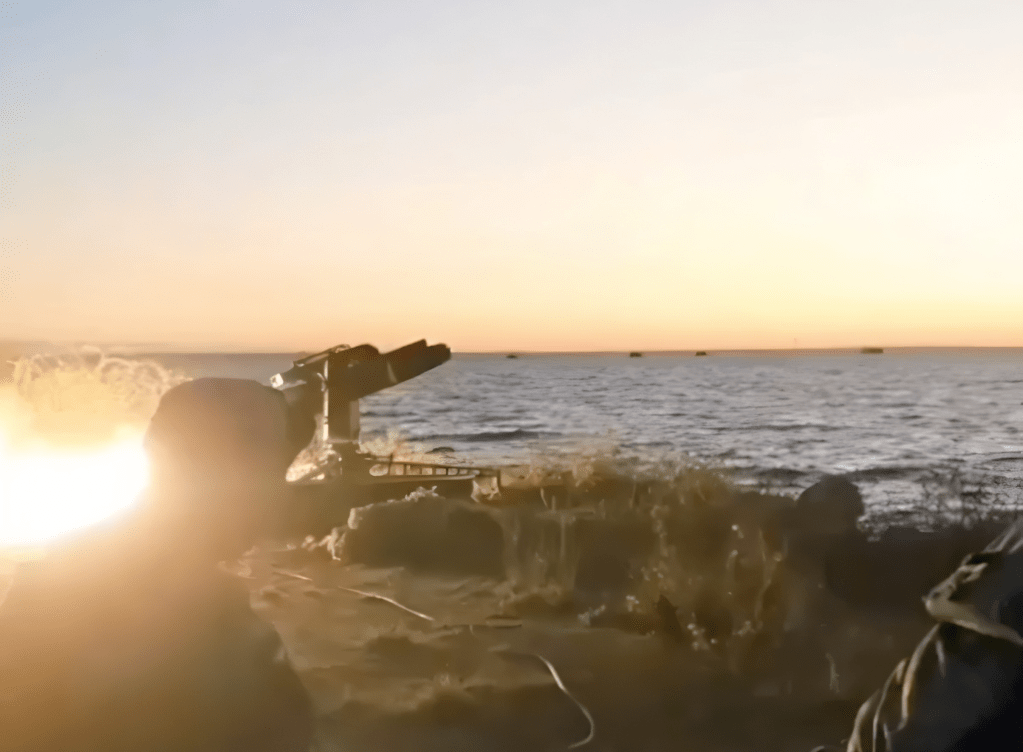
Update – 8/9/24: New footage, shared in mid-August by Ukrainian marines operating a RBS-17/Hellfire SDS, geolocated to the Kherson region.

Special thanks to my colleague Weapons Illustrated who found the initial recent videos of the RBS-17 in action. Check out his project tracking various weapon systems seen in Ukraine here.


Support Us: If you enjoyed this video and article please consider supporting our work here. We have some great perks available for Patreon Supporters – including early access to custom stickers and early access to videos! You can also find us on the History of Weapons & War app. Thank you for your support!

LMT Standalone M203s In Ukraine

In this series looking at weapons used in Ukraine we’ve looked at a number of different grenade launchers including GP-25s adapted for standalone use, FN FN40GLs, discharger cups for hand grenades and perhaps the rarest grenade launcher seen in Ukraine so far; the standalone Colt M203. Another interesting and fairly rarely seen grenade launcher that began to appear in Ukraine last winter is LMT’s standalone 40mm M203.

LMT offers a series of M203-derived launchers and two standalone stock attachment methods. The Iowa-based company introduced its 40mm grenade launchers in 2003. The launchers seen in Ukraine appear to be the rail mounted version with a 9 inch long barrel.

An LMT M203 in the field (via Rogue Team)

The first sighting of an LMT M203 in Ukraine came in November 2023, when Georgian volunteer O.d.i.n.s.o.n., part of the GUR/HUR (Ukraine’s Main Directorate of Intelligence)’s Omega Team, posted a photo of one side by side with a standalone GP25. The launchers likely arrived in country a little earlier, speaking to TAB at the time he noted that “the aiming module is a little weird. It has like an M4 forward sight and GL [grenade launcher] distance adjustable rear sight but it’s on top of the weapon. So it doesn’t force you to arc the barrel Like a GP25 does.”

The next appearance of one of the launchers came in late February 2024, when Scorpion Protection Group, another SOF group, shared a photo of a combatant training with one. A third GUR unit, Rogue Team, have also posted images featuring an LMT M203. The first image was shared by a team member on 17 March. This was followed by an image shared on the team’s Instagram page on the 5 April.

LMT M203 rail mounted version with 9in barrel – right side (LMT)

On the 14 April, a photo posted by one of the Kraken Regiment’s (also under the GUR) teams also appears to include a standalone LMT M203. Most recently on 16 April, a Spanish member of Omega Team, shared a photo of an LMT M203 with its action open with a round ready to load. On the same day TAB spoke again to Omega Team member O.d.d.i.n.s.o.n. at length about the launchers.

O.d.i.n.s.o.n. explained that the unit switched from rotary 40mm grenade launchers to standalone GP25s and LMT M203 as they are lighter and less bulky than the rotary launchers. He reiterated the difference in the LMT sight from quadrant sights found on other launchers and noted that “instead of a switch or a selector it has a little hook that you pull back and it prevents your finger from going on the trigger.” This is a carry over from the original M203 on which LMT’s launcher is based.

When comparing the GP25 and M203 O.d.i.n.s.o.n. noted that the M203 is light, effective and has a ‘really nice stock’ but he dislikes that the M203’s action has to be opened to reload, unlike the GP25 which when fired “leaves nothing inside the tube and is faster on the reload.” When asked if he’d seen many other units using LMT launchers he explained that “most [International Legion] Special Task Units [affiliated with the GUR] have a couple.”

An LMT M203 with its action open (Courtesy of Delta Knights)

We also spoke with Delta Knights, another GUR Specal Task Unit made up of international volunteers, who confirmed they also use LMT M203s and said that they ‘really love it’ but one thing they do wish they had more of is 40mm smoke grenades, adding that the launcher is most often employed with High Explosive (HE) grenades. Delta Knights were kind enough to provide some photos and videos of the M203 in operation at the range.

While the imagery and information available confirms combat use of the LMT M203s in Ukraine it doesn’t give us a solid picture of just how many are in-theatre and other units who may be using them. As always the imagery shared online represents a fraction of what is going on and can only be considered a limited sample. In terms of the origins of the launchers one potential source for the LMT M203s is Estonia which adopted the LMT MARS-L as the R-20 in 2020. Some of the Estonian R-20s have been seen with LMT M203s and given Estonia’s considerable past support for Ukraine it is possible that they may have provided a number of the launchers.

Special thanks to O.D.I.N.S.O.N and Delta Knights for their time and insights and to the guys at Cloooud for additional assistance.

Update – 1/5/24: A recently shared International Legion recruitment social media post included an LMT M203.

Update – 25/7/24:

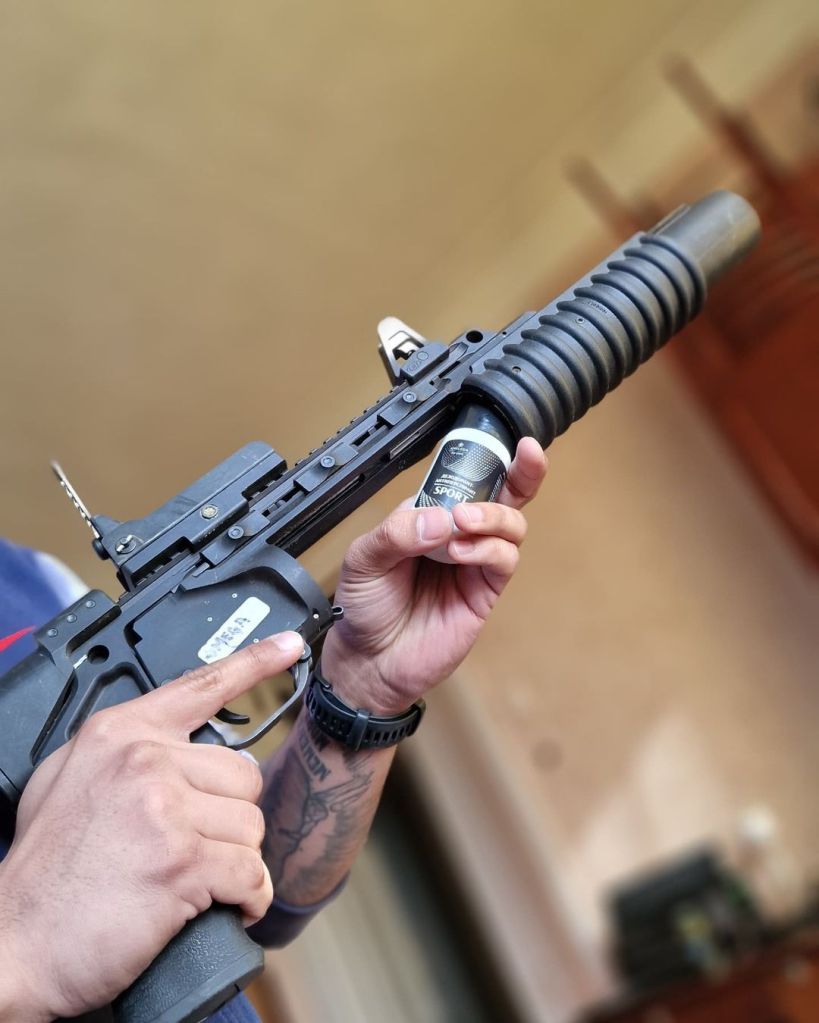
Update – 10/9/24: The ‘Expeditionaries’ Instagram page, seemingly affiliated with an international volunteer team shared a photo of an LMT M203 being jokingly loaded with a deodorant roll-on rather than a 40mm grenade.

Update – 10/01/25: Two additional archival sightings of LMT M203s. The first on the left dates from September 2024. The second, from DC Tactical was shared on 29 October 2024.


Support Us: If you enjoyed this video and article please consider supporting our work here. We have some great perks available for Patreon Supporters – including early access to custom stickers and early access to videos! Thank you for your support!

Bibliography:

9″ Standalone Rail Mounted M203, LMT, (source)

The LMT M203-2003 Grenade Launcher, Small Arms Defense Journal, (source)

Lmt M203 Grenade Launcher Stand Alone Frame, LMT, (source)

Swedish RBS-17 Missiles in Ukraine

In June 2022 Sweden announced it would provide Robot-17 (RBS-17) coastal defence missiles to Ukraine. These missiles are used by Sweden’s Amphibious Corps to interdict the movement of enemy vessels along Sweden’s coast.

RBS-17 is a Bofors Defense (now Saab Bofors Dyanmics) led development of the AGM-114 Hellfire. Work on the Swedish coastal defence missile began in the 1980s. It is man-portable with the missile weighing 48kg in addition to the launcher, firing system and laser targeting module. It is typically operated in the field by five man teams, with two operating the laser targeting system and three on the weapon itself.

RBS-17 launch October 2023 (via social media)

On launch the missile climbs to several hundred metres and seeks the laser-marked target. The system has a maximum range of around 8km and carries a 9kg high explosive warhead. While designed to engage vessels the RBS-17 can also be used against ground targets.

On 2 June 2022, the Swedish government announced the transfer of an undisclosed number of RBS-17s. They are believed to have been seen in theatre for the first time in a video published on 20 October, although it appears it may have been filmed earlier. The video was shared by a group called ‘Bigcats’, the lo-res clip shows the launch of a pair of missiles. ‘Bigcats’ haven’t shared any further imagery of the missiles since.

In September 2022 the Norwegian government also announced plans to provide Ukraine with their Hellfire-derived Norwegian Shore Defence Missile System. The transfer of 160 missiles and associated equipment was announced in response to a Ukrainian request. In late March 2023 photographs of several pieces of wreckage from one of the missiles was posted on Telegram. It was hypothesised that they were found in the area of ​​the Kinburn Spit and had been fired across the water by an element of the 73rd Naval Center of Ukraine’s Special Operations Forces.

An RBS-17 launch, c.September 2022 (via social media)

It was over 8 months before another video of a the weapons in action was shared. In mid-August 2023 a brief clip was published showing a Hellfire-patterned missile (which may be an RBS-17) being fired and apparently detonating downrange. Several months later at the end of October perhaps the best piece of footage of one of the missiles being launched was shared. In the video we can see the missile being launched and as the camera pans the laser targeting module can also be seen.

In August 2023, Army Inform, the news agency of Ministry of Defense of Ukraine, published an article outlining how the RBS-17 is used noting that it is most frequently used against Russian defensive positions, dugouts or lightly armoured vehicles. The article included a photograph of a display showing the RBS-17 set up. In the background a Ukrainian combatant can be seen sat on a missile case, he’s wearing the patch of the Zaporizhzhia-based 27th River Fleet Division (27 ODnRK).

An RBS-17 launch in Ukraine Nov/Dec 2023 (via Swedish MoD)

On the 18 December, the Swedish government published an article about Ukraine’s use of the RBS-17 and the training the Swedish armed forces provided on the system. The article explains that Ukrainian personnel were secretly trained on the system. The training appears to have been carried out during Summer 2022 and took place in time to coincide with the delivery of the RBS-17s. Swedish personnel have also continued to be on call for answering the technical and operational queries of the Ukrainian teams using the system.

The Swedish article also included a short video of one of the missile systems in operation in Ukraine. The team appears to be in cover behind a wall. The GoPro footage shows the missile near by and the control unit as well as transport cases near by. A Polish MSBS Grot rifle can also be seen leaning on the wall next to the operator.

Update – 22/05/24:


Support Us: If you enjoyed this video and article please consider supporting our work here. We have some great perks available for Patreon Supporters – including early access to custom stickers and early access to videos! Thank you for your support!

Ukraine’s Giant Rifle – the Snipex Monomakh

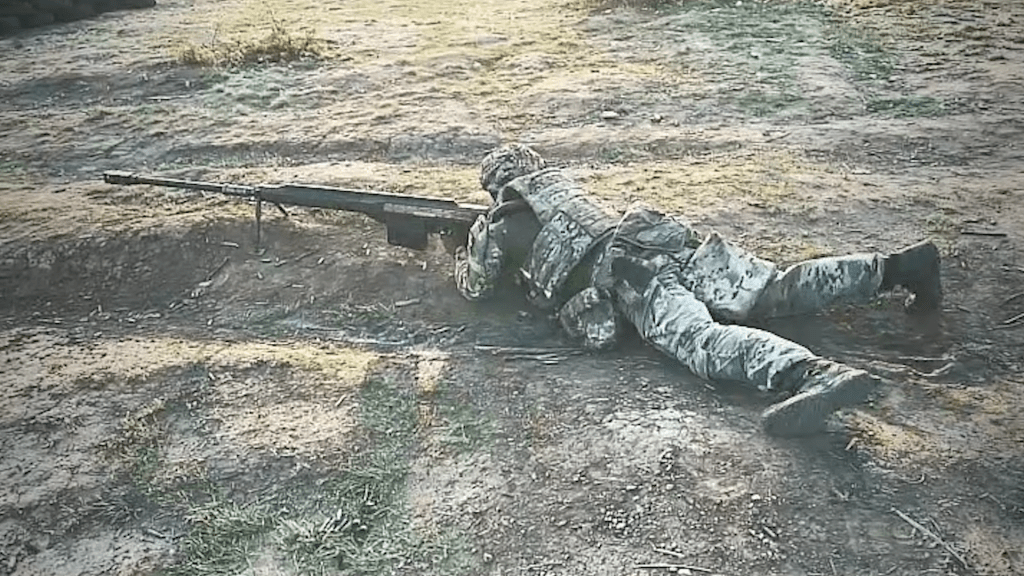
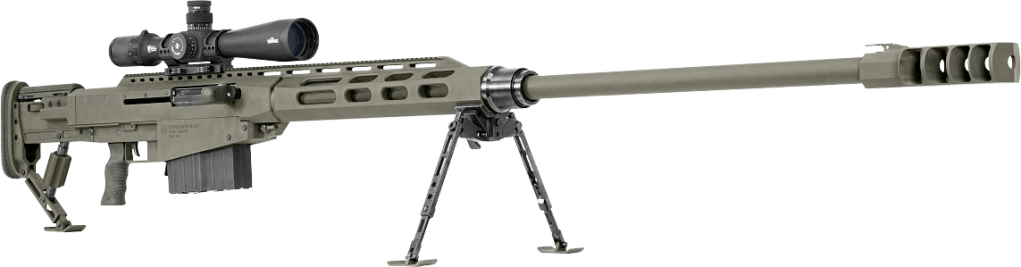
There are a significant number of different large calibre anti-materiel rifles in use in Ukraine. One of the largest is the Monomakh, a 14.5×114mm semi-automatic, box magazine-fed anti-materiel rifle from the Ukrainian company Snipex. Snipex is a subsidiary of the XADO Chemical Group.

Snipex are well known for their series of precision anti-materiel rifles which includes the M100, T-Rex and Alligator. The Monomakh, introduced in 2021, is the company’s first semi-automatic rifle. It is recoil operated and feeds from a 5-round box magazine. It has a barrel 1,200mm [47.2in] long and an overall length of 2,050mm [6.7 feet], Snipex list its weight without a magazine as 25kg [55lbs]. The rifle has a listed muzzle velocity of 950 to 980 m/s and an effective range of just under 2,000 metres [1.2 miles]. The weapon is fired from a bipod with a monopod supporting the butt of the rifle. It’s key feature is its reciprocating barrel which helps soak up the recoil from the 14.5mm cartridge.

A scopeless Monomakh at the range (via social media)

The Monomakh appears in imagery from Ukraine fairly infrequently, the earliest sighting of one of the rifles I could find was a photograph posted by a GUR member in late April 2022. Subsequently a number of videos of the weapon being fired at ranges by Ukrainian combatants was published in the Summer of 2022. The first posted on 7 August, shows a magazine being loaded into the rifle and the weapon chambering a round. Later that month a short video of a Monomakh firing at a range was published.

Snipex Monomakh (Snipex)

The earliest photograph of one of the guns I could find in 2023 was shared by a Ukrainian combatant in mid-July. Several months later, in September 2023, another Ukrainian combatant shared a photograph of himself holding up a Monomakh at a range. The same combatant also shared a short clip of himself firing the rifle, again at the range. In the clip he appears to be firing the rifle without sights or an optic. He is also seen helping the bolt into battery after each shot, the bushing which guides the barrel as it recoils into the receiver appears to have come loose. The rifles are typically paired with substantial optics, Snipex offer two of their own 6–24×56 scopes, the Jove 50 and the Galaxy G50. In late October, a female sniper with the 3rd Shock Brigade, posted several photographs and a video of herself firing a Monomakh from a position inside a building.

A Ukrainian combatant holds up a Monomakh (via social media)

The large size and hefty weight of the Monomakh limits it applications somewhat but the 14.5mm round is useful against light armoured vehicles, buildings and field fortifications – the main limitation is getting it in, and out, of position to engage targets. There are videos of it taking two men to move the similarly heavy T-Rex and Alligator rifles. From the limited sample of imagery of the Monomakh in theatre it is difficult to gauge how widespread its use actually is. The simpler to manufacture bolt action Snipex rifles are seen more frequently.

My thanks to Cloooud and AbraxasSpa for help sourcing some of the imagery used in this article/video.


Support Us: If you enjoyed this video and article please consider supporting our work here. We have some great perks available for Patreon Supporters – including early access to custom stickers and early access to videos! Thank you for your support!