Ukraine Begins Assembly of CZ BREN 2s

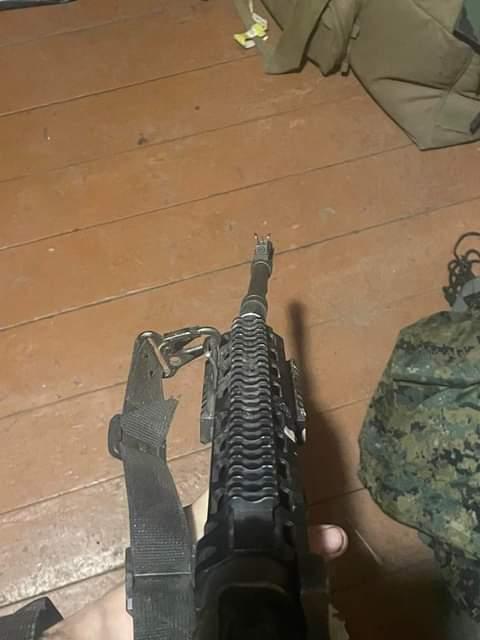
On Friday, it was confirmed that the CZ Bren 2 will be assembled in Ukraine. This marks the first partnership since Russia’s Invasion in February 2022, that will see foreign small arms assembled in Ukraine. The Bren 2 is a 5.56x45mm select-fire gas-operated rifle which was first introduced as the CZ 805 BREN in 2011. While CZ Bren 805s have appeared in Ukraine the BREN 2 is much more common and favoured by troops on the ground.

We’ll take an in-depth look at their use in a future article/video but a considerable number of Ukrainian units ranging from special forces units to regular army have been seen equipped with the Czech rifles. Visually confirmed variants in Ukrainian service include the initial 5.56x45mm BREN 805 and later BREN 2 in various barrel lengths and configuration including the 8 inch barrel carbine with both side folding and telescoping stocks and the much more common rifles with side folding stocks and 11 and 14 inch barrels. There have also been a limited number of sightings of 7.62x39mm 8 inch barrel carbines and a number of 7.62x51mm BREN 2 BRs.

The first indications that production of the BREN 2 might be established in Ukraine came on 29 September 2023. During the first ever Ukrainian International Defence Industries Forum Deputy Minister of Defense Daniel Blažkovec stated that “the transfer of production of the Bren 2 “Sich” assault rifle” was a major, ‘flagship’ project.
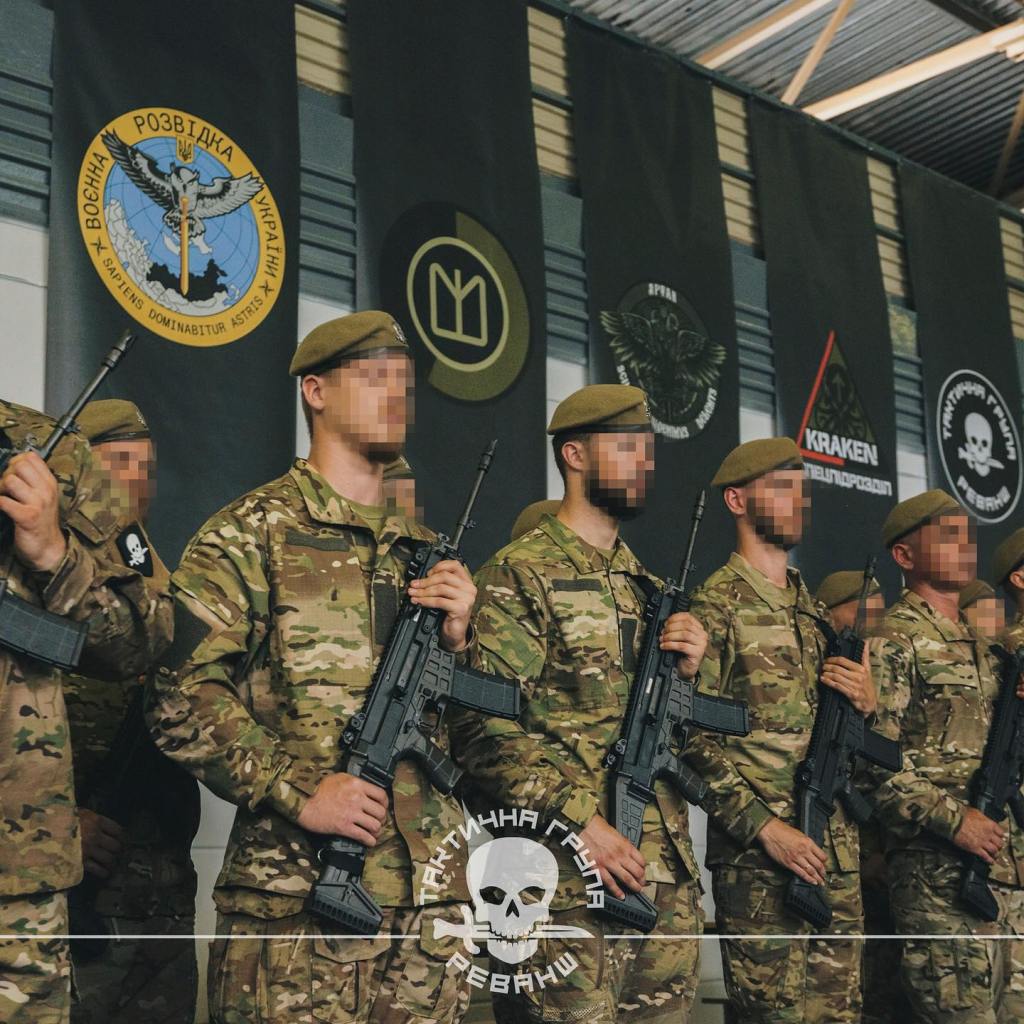
Ukrainian Special Operations with CZ BREN 2s (via social media)

Sich (Січ) in Ukrainian refers to a historic form of fortified administrative and military camp used by Cossacks during the 16th century and later became associated with the Euromaidan in 2013. Since the name was used in September 2023, it has not appeared again.

In an announcement posted on 13 December, Ukraine’s state-owned defence corporation Ukroboronprom stated that the Ukrainian Defense Industry had begun licensed assembly of BREN 2s and that the agreement with CZ covers local assembly of rifles and will later include “full production of NATO-standard assault rifles in Ukraine”, the agreement was signed on 16 July 2024. Oleg Hulyak, Director General of Ukroboronprom, stated:

“Partnership with Czech colleagues will help to improve the provision of the needs of the Defense Forces of Ukraine in reliable and modern small arms produced in our country. In addition, another step has been taken towards the integration of our defense-industrial complex into the industrial chains of NATO countries,”

I reached out to Colt CZ Group for comment, Jan Zajíc, CEO of Česká zbrojovka, said in a statement:

“We are happy that together with our Ukroboronprom partners, we have successfully completed the assembly phase of the CZ BREN 2 assault rifle on the Ukrainian soil. Following the training of Ukroboronprom personnel at Česká zbrojovka, Ukraine is now able to deliver to its Armed Forces the CZ BREN 2 rifles assembled in Ukraine according to Česká zbrojovka‘s strict quality standards. We are ready to continue our cooperation in the future, all the way to full technology transfer.“
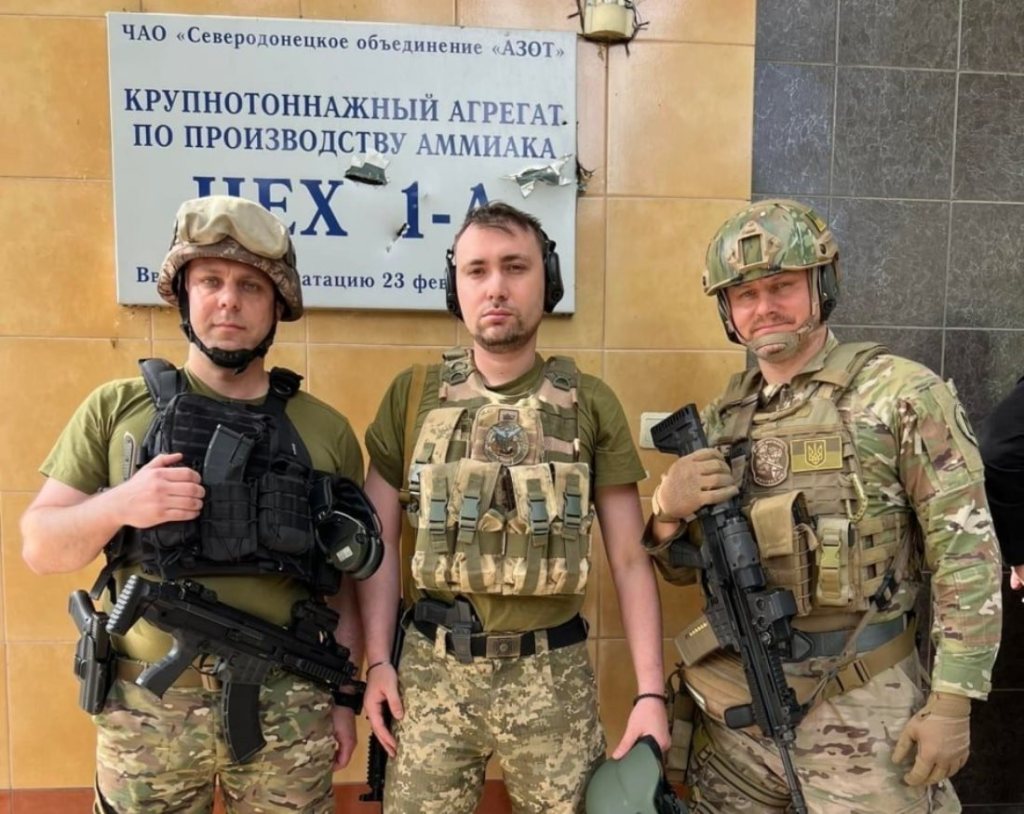
Ukrainian GUR chief, Kyrylo Budanov, and associates during a June 2022 visit to Sievierodonetsk. One individual has a 5.56x45mm CZ BREN 2 and the other a rare 7.62x39mm BREN 2 with an 8in barrel and telescoping stock (via social media)

Currently the only other country which has a similar arrangement with CZ is Hungary which has established Colt CZ Hungary to enable Hungary’s HM Arzenal to assemble/manufacture BREN 2s for the Hungarian armed forces. This isn’t the first time Ukraine has worked with external firearms manufacturers with an earlier partnership seeing Ukrainian small arms manufacturer Fort assemble Israeli IWI weapons under license in the 2000s. See our earlier look at the Ukrainian Fort Tavor bullpup rifles here.

The future significance of CZ’s establishment of an assembly line in Ukraine remains to be seen but as Ukraine seeks to further integrate with its Western allies and take up NATO standards the ability to produce a NATO calibre rifle, which is already in widespread Ukrainian service, will be extremely useful. From the statements released it appears that assembly of the rifles may be the first step towards localised production, it will be interesting to track CZ and Ukroboronprom’s partnership.


Support Us: If you enjoyed this video and article please consider supporting our work here. We have some great perks available for Patreon Supporters – including early access to custom stickers and early access to videos! You can also find us on the History of Weapons & War app. Thank you for your support!
Mk14 EBRs in Ukraine

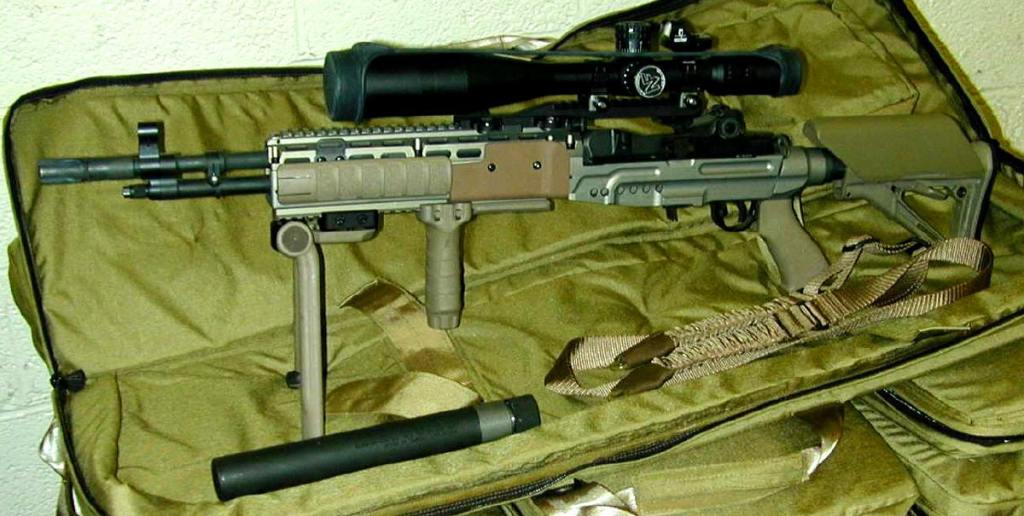
In an earlier video/article we examined the M14s which appeared in Ukraine back in March 2022, since then there have been a number of intriguing sightings of what, at a glance, appear to be Mk14 Enhanced Battle Rifles or M39 Enhanced Marksman Rifles. The EBR and EMR emerged during the Global War on Terror in the early 2000s as an improved variant of the 7.62x51mm M14.

The project to develop a more compact, improved M14 reportedly evolved from a request from US Navy SEALs in 2000 for a rifle for Arctic warfare. This eventually developed into what became the Mk14 EBR with development led by Naval Special Warfare Centre Crane and input from commercial specialists and manufacturers including Smith Enterprise, Inc. and Sage International. The result was a rifle with a 18 inch barrel and new flash hider, with changes to the operating rod guide, a new stock chassis and a raft of accessories. A number of different variants were built including the Mk14 Mod 0, Mod 1 and Mod 2, the M14 EBR-RI and the USMC’s M39 EMR. In total between 2003 and 2011 just over 9,000 of these upgraded variants were assembled.  

An NSCW Crane Mk14 Mod 1 EBR, c.2006 (source)

Given the significant number assembled and the fact they have been replaced by rifles such as the M110 Semi Automatic Sniper System (which has already been seen in Ukraine) and the M110A1 CSASS it would not be unsurprising to see Mk14 EBR variants turn up in Ukraine.

Over the past two years I’ve been tracking sightings of what appear to be Mk14 EBR variants but on closer examination some of them are not what they initially seemed to be, several were in fact kit builds using the standard configuration M14s which reached Ukraine in early 2022. Some, however, do appear to be surplus Mk14s.

Yuri’s Mk14 EBR clone at the range (Nucking_Futs_Yuri)

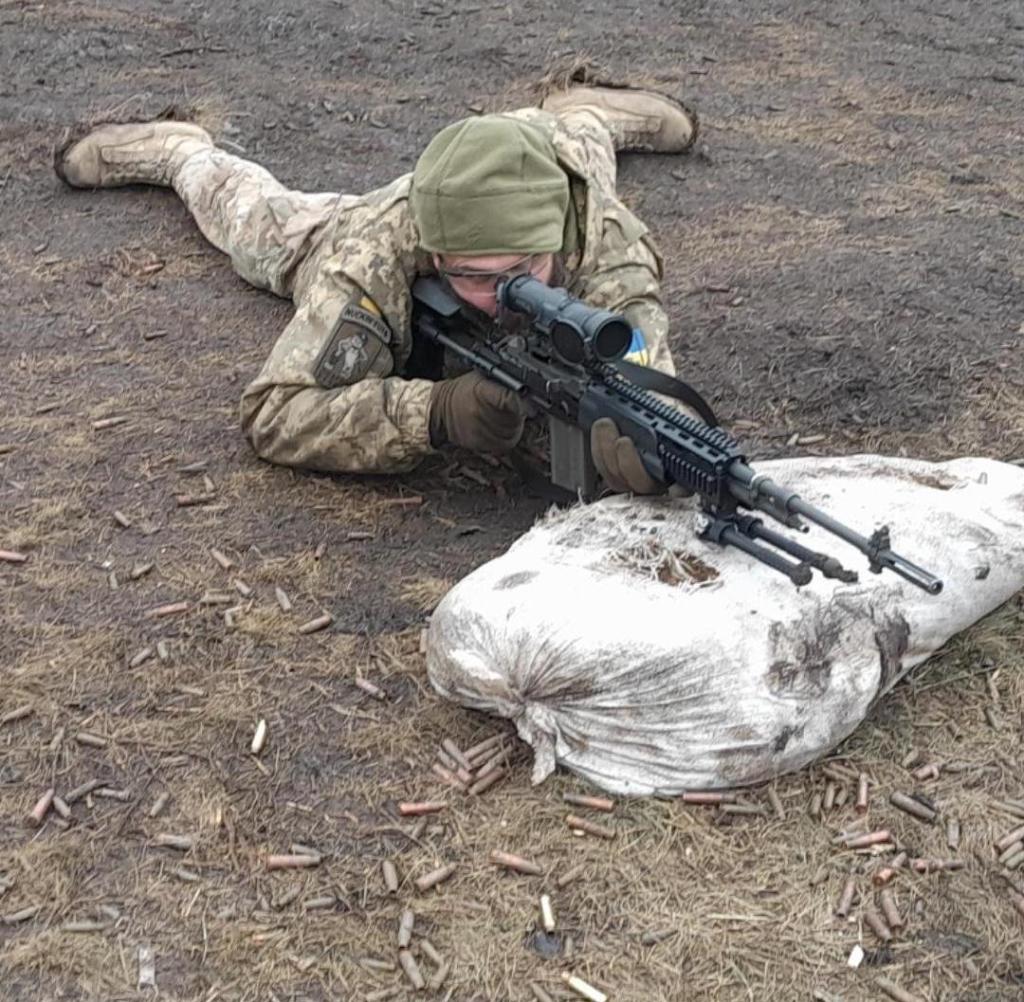
First, let’s examine some of the kit builds seen in theatre. The first appears to have been assembled by Nucking_Futs_Yuri, an American volunteer who enlisted in the Ukrainian Army in early 2022. Yuri explained to me that in late 2022, following combat experience where he wasn’t satisfied with how well 5.56x45mm suppressed a Russian position he decided to assemble an EBR clone using a donated chassis. Yuri noted that parts for the rifle began to arrive in December 2022 and by January the rifle had been assembled. Yuri was seen with the rifle in numerous photographs and in several configurations. It had a standard 22 inch barrel, a Sage International M14ALCS chassis and a M14DCSB (Detachable Cantilevered Sight Base). He mounted a 1.5-6x Elcan SpectreDR optic on the rifle, opting for more of a battle rifle-style set up. The rifle was damaged in February 2023 by a Kornet ATGM blast which bent both the barrel and the chassis.

Yuri’s damaged Mk14 EBR clone (Nucking_Futs_Yuri)

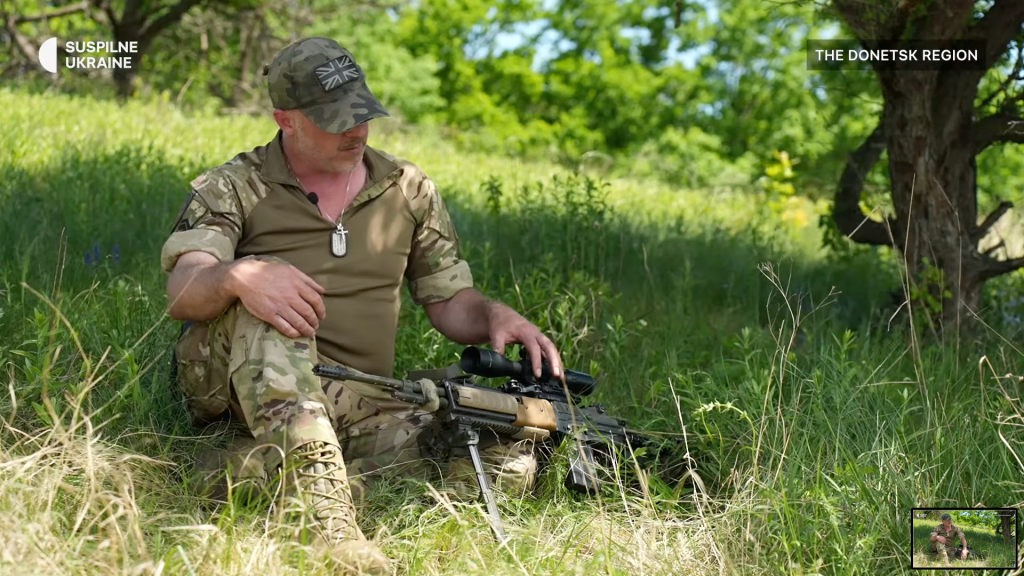
In early May 2023, another rifle which resembled an M14 EBR-RI, with a 22in barrel and a black Sage International M14ALCS chassis, appeared in use with a member an International Legion team. This individual and his rifle was seen again in May 2024 appearing in a number of interviews with Ukrainian media. His callsign was revealed to be ‘Solo’ and he was described as a marksman and a squad leader with a unit of the International Legion’s 3rd Special Purpose Battalion. In the interview he explained that the rifle has originally been a wooden stocked M14 converted with a SAGE chassis sent to him by a friend in the US. Interestingly, between May 2023 and May 2024, it appears the rifle’s set up has evolved with new FDE rail covers added and a short tan Kydex handguard replacing the initial black longer handguard. These parts were likely acquired in Ukraine.

‘Solo’ with his Mk14 clone built off a standard M14 (Суспільне Донбас)

Most intriguingly, in November 2023, the first Mk14 Mod 1 appeared. Mod 1s are characterised by their shorter 18in barrels, a Sage M14ALCS/CV-BS with Magpul CTR FDE stock (with a cheek riser) mounted on a buffer tube extension rather than the earlier collapsing stock. The rifles also have LaRue LT-608 extended Picatinny risers and short tan handguards. The rifle is equipped with a Schmidt & Bender PMII 5-25×56 scope.

A Mk14 Mod 1 EBR with Schmidt & Bender PMII, Nov. 2023 (via social media)

The Mk14 Mod 1 was assembled at NSWC Crane in 2006, around 500 were assembled. The shorter barrel and the general configuration of parts and accessories suggest that this may be a surplus rifle transferred by the US.

A recent sighting of a Mk14 Mod 1 EBR (via Tysk)

Most recently, on 18 October, Ukrainian telegram channel Tysk shared a series of photos of a Ukrainian combatant at the range with another Mk14 Mod 1. This rifle’s parts and accessories closely match those assembled by Crane for the Mod 1, including: an 18in barrel with a SureFire FH762KM14 muzzle device, a TangoDown BG-16 FDE pistol grip, a Sage M14ALCS/CV-BS with a Magpul CTR FDE stock (this time without the cheek riser), a TangoDown BGV-MK46 FDE vertical foregrip, and a TangoDown ACB-4 FDE bipod. The rifle is also equipped with a NightForce NXS 2.5-10x24mm optic and a DOCTER MS01 3.5 MOA red dot sight which were selected to be paired with the Mod 1. [It has been noted that the Mod 1s may also be clones due to some small differences in the chassis profile and accessories used – for instance the model of VFG, scope rings, cheek riser, and the machining on the chassis. If this is the case someone has gone to an improbable amount of trouble to ‘clone’ a Mod 1, a considerable level of effort to expend in a war zone. Thanks to tanodized for input.]

From the very limited imagery available of Mk14 EBR-pattern rifles in Ukraine it appears that numerous clone builds have been assembled in-country and that the only EBRs which can be identified as potential US transfers are the two Mk14 Mod 1 variants seen so far.

A squad designated marksman with an Mk14 EBR-RI (the most common EBR variant), 5th Battalion, 20th Infantry Spin Boldak, Afghanistan, 2012 (US Army)

If the US was to transfer a significant number of Mk14-pattern rifles I would expect them to be the Mk14 EBR-RI, the most common variant, some 6,000 of which were assembled by Rock Island Armory – TACOM [Tank-automotive and Armaments Command]. It is unsurprising clone rifles have been assembled by combatants in Ukraine as Sage International and a number of other US manufacturers offer EBR-pattern chassis which do offer some improvements over the traditional M14 configuration.


Support Us: If you enjoyed this video and article please consider supporting our work here. We have some great perks available for Patreon Supporters – including early access to custom stickers and early access to videos! You can also find us on the History of Weapons & War app. Thank you for your support!

Bibliography:

M14 to MK 14 Evolution of a Battle Rifle, D. Armstrong, via DTIC, (source)

The M14 EBR – a Continuing Evolution D. Armstrong, via DTIC, (source)

The History and Development of the M14 EBR (source)

MRSATURN7085’s ‘M14EBR’ data sheet (source)

Sage International, EBR (source)

Thank you to colleagues who consulted on this video and to Yuri.