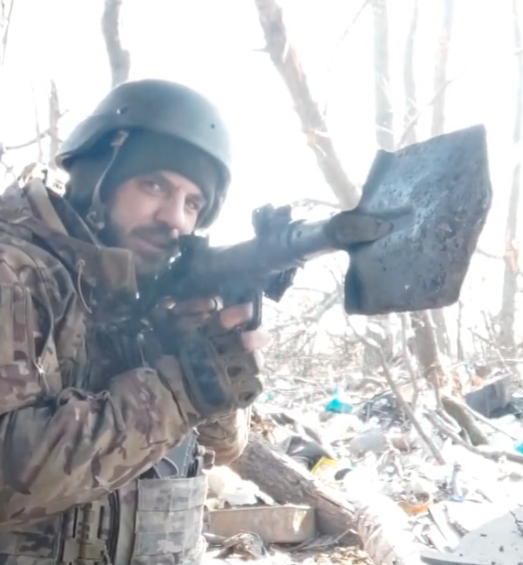
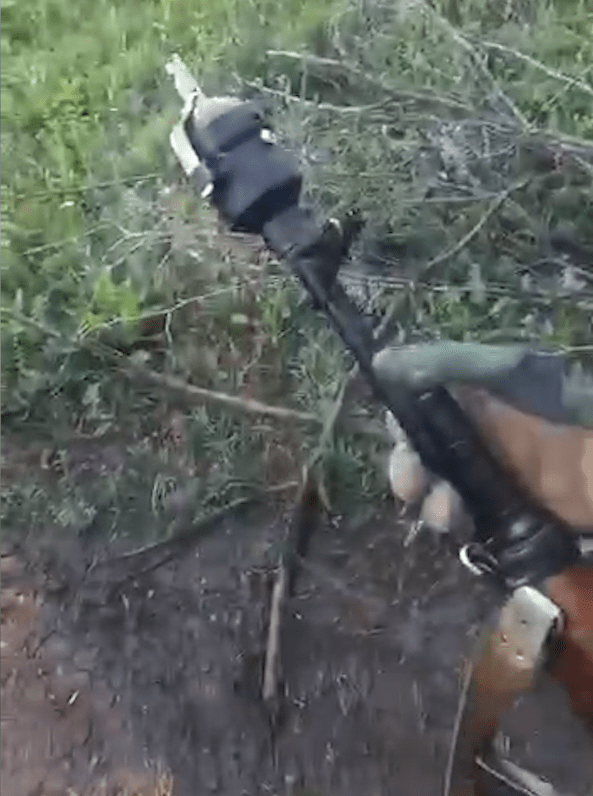
On 17 October, a Ukrainian combatant shared a short video on his TikTok channel demonstrating a new piece of ordnance – the RPG Shovel. Earlier the same combatant had joked by sliding an entrenching shovel into the barrel of the RPG-7. Several other combatants have been seen to do this during the ongoing war in Ukraine but this combatant decided to make the joke a reality.
Ukrainian combatant with shovel slid into RPG-7 (date, location unknown)
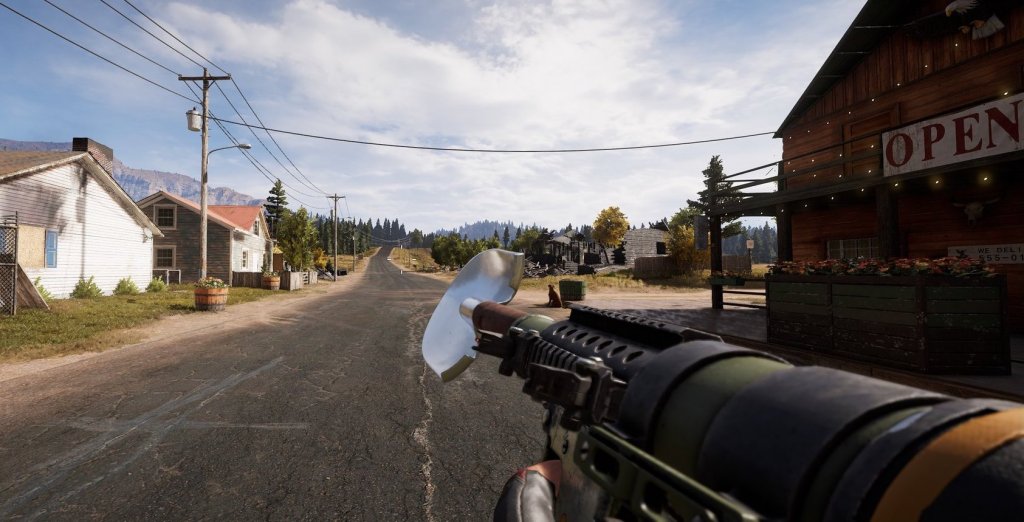
Culturally, the RPG Shovel isn’t a new thing having been seen in photograph of soldiers from other countries messing around over the years and even appearing in the 2018 video game Far Cry 5. Before that, in 2016, it was added as a mod for the game Insurgency using an old photograph of Russian troops as reference. Whether this influenced the Ukrainian combatant to create his RPG-Shovel is unknown.
Far Cry 5’s RPG-Shovel
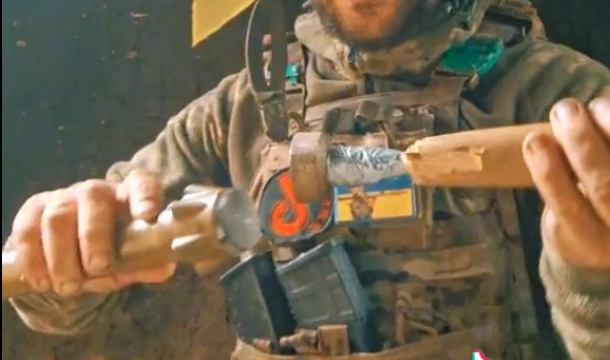
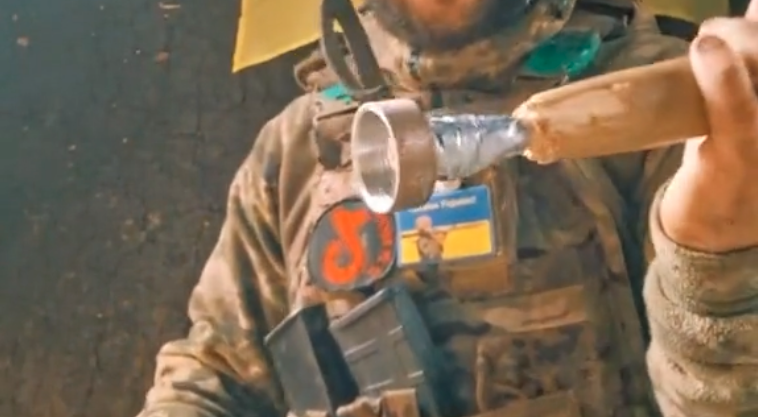
In the Ukrainian combatant’s video he shows how an adapter has been attached to the wooden handle of the shovel and to a threaded cap which allows the shovel to be screwed onto a PG-7S motor. The shovel itself appears to be an MPL-50 pattern shovel. The combatant then fits a booster onto the motor and takes the RPG-Shovel outside to be fired. It can also be seen that they have written a suitably derogatory message to the Russians on the shovel’s handle.
Homemade adapter& launch
The Ukrainian combatant then launches the RPG-Shovel at a high-angle. Its unclear what sort of range was achieved with the shovel’s aerodynamics being terrible. Sadly, the camera operator’s reasonable caution means that the actual launch is partially obscured but just enough is visible. It’s probably not the first time a shovel has been launched from an RPG, but it is probably the best in terms of close-ups and detail. Regardless, its seems to be a great example of bored soldiers finding amusing, ‘productive’ ways of occupying their time.
Support Us: If you enjoyed this video and article please consider supporting our work here. We have some great perks available for Patreon Supporters – including early access to custom stickers and early access to videos! Thank you for your support!
In June we looked at MT-LB adaptations which have been pressed into service by both sides. Check out that video/article here. In recent weeks there have been more sightings of some of these adapted vehicles.
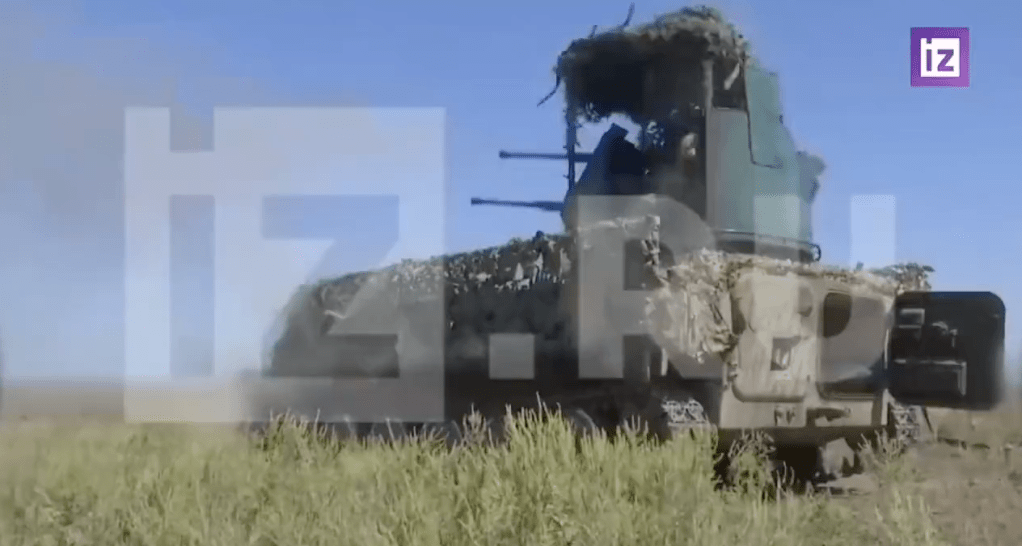
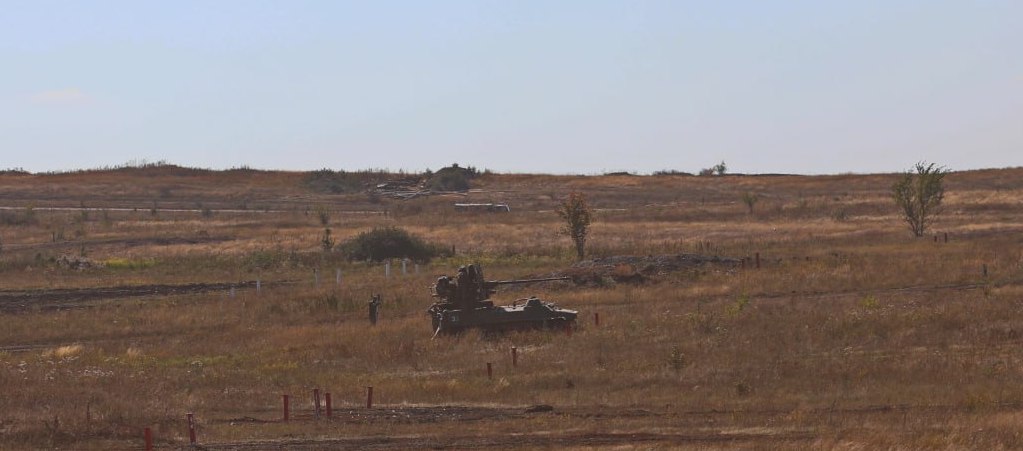
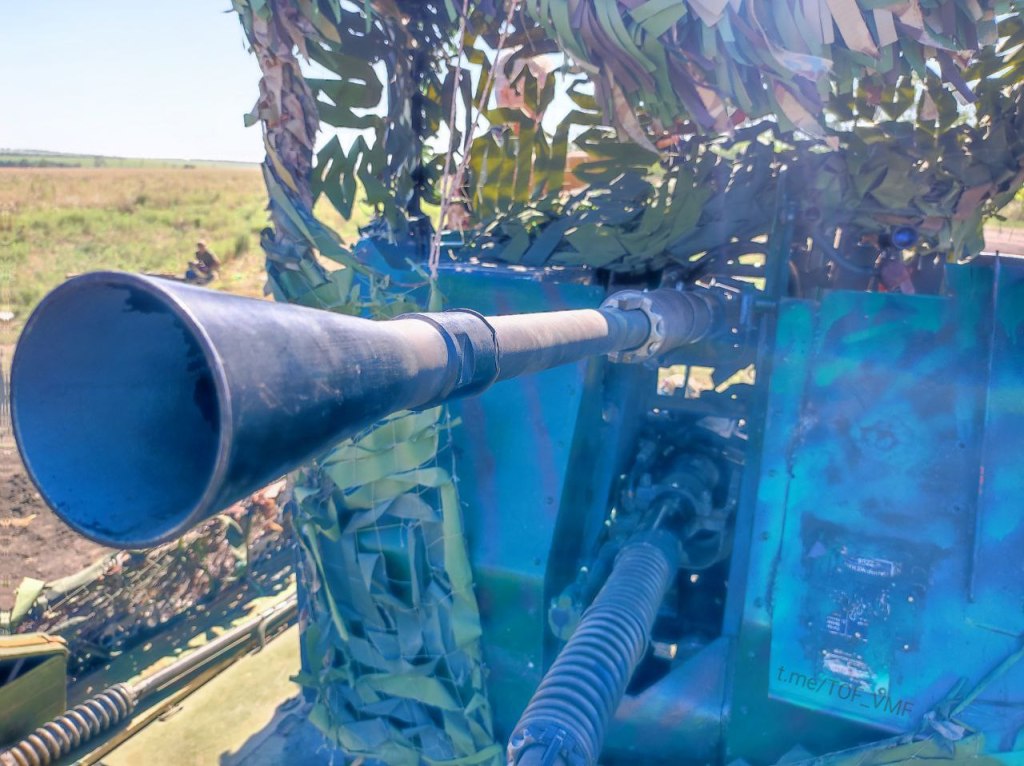
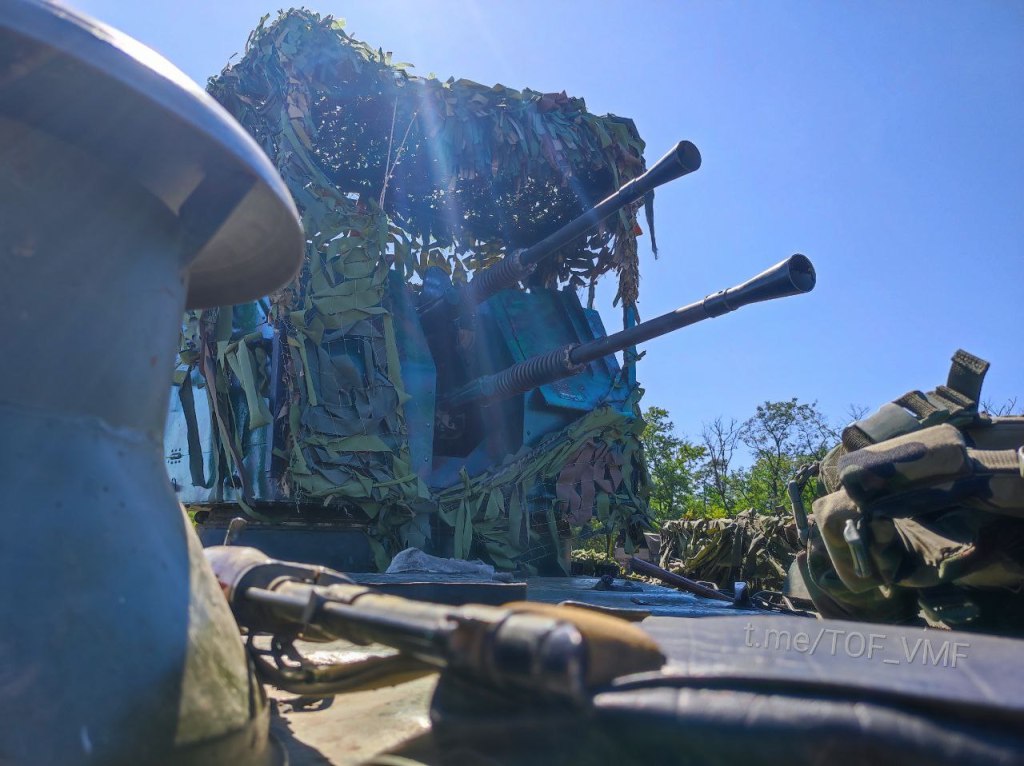
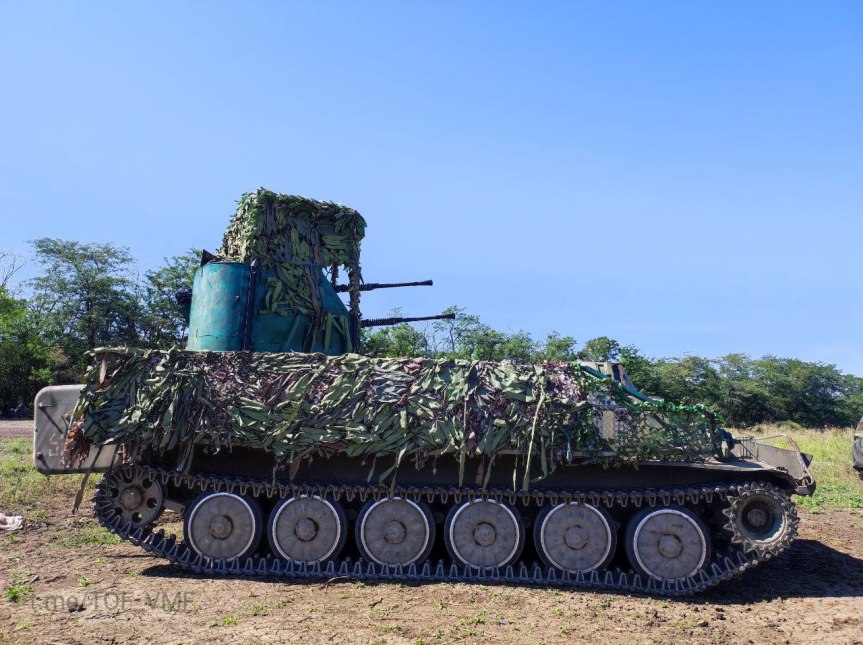
On 3 September, the first video of one of Russia’s MT-LBs fitted with a 2M-3 twin 25mm naval gun turret was shared online. The turret appears to be extremely unstable, shaking violently, its hard to imagine this weapon system being useful for anything beyond suppression.
A Russian MT-LB mounted with a 2M-3 turret (via IZ)
A week later on 10 September a short clip of another Russian MT-LB with a 2M-3 turret was published by Russian news outlet Izvestia. Again the turret seen firing appears to be very unstable with not only the vehicle rocking on its suspension but also the turret bouncing in its mount.
Intriguingly both of these MT-LBs appear to have the 2M-3 turrets mounted much lower than the vehicles seen earlier. The MT-LBs seen earlier appear to have the turrets mounted higher in tower-like structures.
An S-60 MT-LB during an exercise in Russia (via social media)
Another adaptation not covered in our earlier video/article is the mounting of 57mm S-60 anti-aircraft guns on MT-LBs. These have been seen somewhat regularly and most recently shared via Russian telegram channels shared video of S-60-armed MT-LB training with a newly mobilised, but unnamed, unit in Russia’s central military district. These vehicles typically provide direct fire support against ground targets.
An MT-LBu fitted with a 14.5mm KPVT in a RWS (via 42nd Separate Mechanised Brigade)
In terms of Ukrainian adaptations there have been further sightings of one of the vehicles we looked at last time, an MT-LBu variant which has been upgraded with additional armour and a remote weapon station mounting a 14.5mm KPVT heavy machine gun. These are believed to be in service with the 42nd Separate Mechanised Brigade and some sources have described them using the designation BMP-1LB.
A brief clip from a mid-June report published by Новинарня which shows one of the 42 OMBr's upgraded MT-LBu, with a KPVT RWS, abandoned near Kreminnaya.
— Matthew Moss | Historical Firearms (@historicfirearm) October 31, 2023
A video showing several of the adapted MT-LBus was shared on 7 September, showing four of the vehicles. On 13 September the 42nd Separate Mechanised Brigade shared a series of photographs featuring the vehicles. There hasn’t yet been any video of these vehicle’s remote weapon stations being fired so it is unclear if they have been stabilised better than their Russian counterparts.
MT-LB with a BM-7 Parus turret (via social media)
One adaptation which was not mentioned in our earlier video/article was the combining of an MT-LB with a BM-7 ‘Parus’ weapon module. The BM-7 normally comprises a 30mm ZTM-1 auto cannon, a coaxial PKT machine gun, a 30mm automatic grenade launcher and several anti-tank guided missiles. These are typically paired with the BTR-4. MT-LBs mounted with the BM-7 don’t appear to have the ATGMs fitted. These MT-LBs were first seen in July, with a video of two of the vehicles on the move shared on 21 July. Another video showing one of the vehicles firing has also been shared.
Russian marines of the 155th Guards Brigade operate an MT-LB with a 2M-3M twin mount.
Support Us: If you enjoyed this video and article please consider supporting our work here. We have some great perks available for Patreon Supporters – including early access to custom stickers and early access to videos! Thank you for your support!
On 5 October, a combatant in Ukraine shared photograph of himself with a French FR F2 sniper rifle. The 7.62x51mm rifles have only been sighted in theatre once before in March 2022, when a single F2 was seen. The origins of that rifle are unclear as no further rifles were subsequently seen. The rifle may have been acquired as surplus or another potential origin for the rifle is as aid from either Estonia or Lithuania who previously issued the rifle.
Most recently, on 5 October, Ukrainian outlet Tysk shared three photographs, provided by one of their subscribers, featuring another FR F2. The photographs featured a rifle and a SAGEM Sword Sniper 3-in-1 optic (a telescopic sight, thermal weapon sight, and laser rangefinder) which is part of the FELIN System. The presence of the SAGEM Sword optics may suggest that France have provided a batch of the rifles and accompanying optics.
The rifle appears to be mounted with a SCROME J8 scope which the rifle is typically paired with in French service. The FR F2 is being replaced in French service by the FN SCAR-H PR which may mean that France can pass on its surplus F2s to Ukraine.
It remains to be seen if further examples of the FR F2s will be seen. If a substantial number have been transferred by France then further examples will likely be sighted in the future.
France has also transferred a considerable number of armoured vehicles and a unknown quantity of general purpose machine guns including AANF1s and FN MAGs. Most recently, on 13 September, a FAMAS with the Valorisé upgrade, which adds rails, was seen in a range video posted by a Ukrainian combatant. There has been no further sightings of FAMAS in theatre to date. Individual sightings can’t be considered representative of wider use or considerable transfers of weapons until further examples are seen in theatre.
Some very intriguing footage from #Ukraine featuring a French FAMAS with Valorisé upgrade (Picatinny rails added & position/style of the bipod altered). First such sighting of a FAMAS. France does have stocks to spare now the HK416F is entering service.#SALW#UkraineRussiaWar️pic.twitter.com/8ORtJNRO4W
— Matthew Moss | Historical Firearms (@historicfirearm) September 13, 2023
Update – 1/12/23: The French Assemblee Nationale has published a document which outlines the equipment, but not quantities, provided to Ukraine by France. It confirms the provision of both FAMAS, various calibres of machine gun and precision rifles.
Update – 14/12/23:
Interesting to see a French FAMAS F1 Valorise in #Ukraine, with 54 ORB. We've seen some evidence of FAMAS in Ukraine previously and the French govt also recently confirmed an undisclosed number had been transferred.#UkraineWar#SALWpic.twitter.com/3Pb7a7JjMR
— Matthew Moss | Historical Firearms (@historicfirearm) December 14, 2023
Update – 10/3/24: The French government has released an updated document listing the equipment and some of the quantities provided to Ukraine. The document states that 30 ‘Fusil de precision’ (precision rifles) have been provided between 1 March, 2022 and 1 May, 2024.
Support Us: If you enjoyed this video and article please consider supporting our work here. We have some great perks available for Patreon Supporters – including early access to custom stickers and early access to videos! Thank you for your support!
This week on the History of Weapons & War app, there is a special focus on the war in Ukraine. The app is spotlighting content from various creators who have examined the war. Naturally, with TAB’s current regular focus on Ukraine there is lots of content from us. This includes some videos that aren’t yet released on the TAB YouTube channel – including a look at some surprising French weapons which have appeared!
Head over and check out the History of Weapons & War site/app. Until Sunday, you can get 25% off your first month’s subscription using the code ‘UKRAINE’.
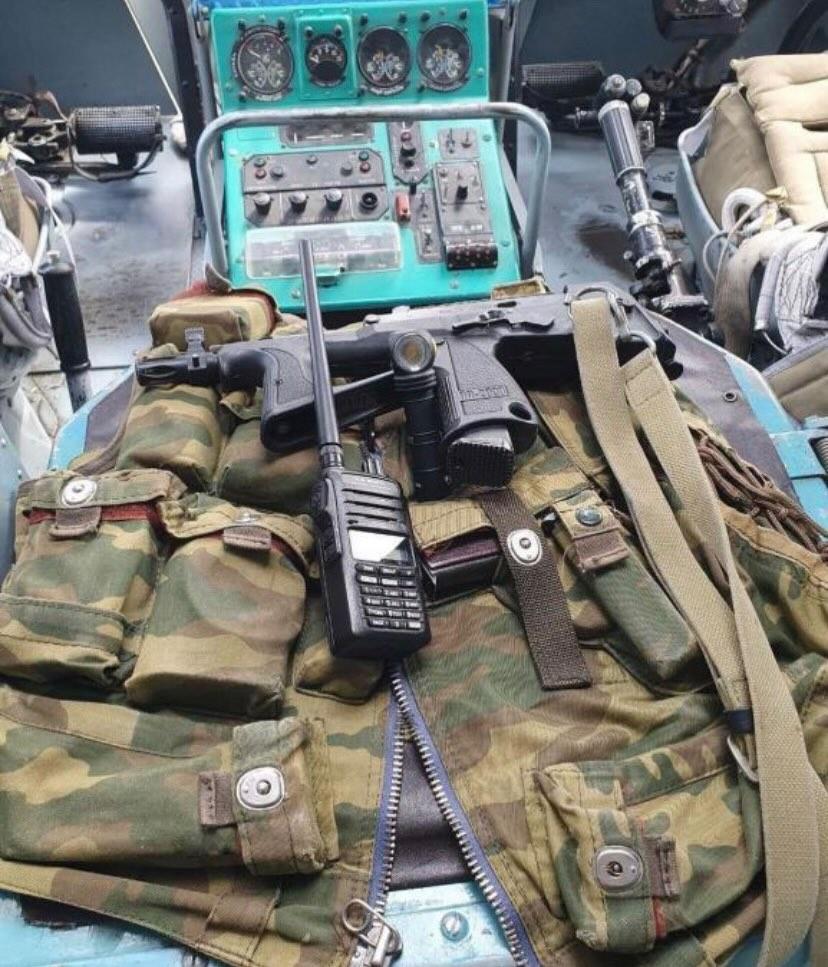
On 29 September delegations from the defence departments of member states of the Russian-led Commonwealth of Independent States were shown around the JSC Instrument Design Bureau in Tula. During the tour Russia’s defence minister Sergei Shoigu demonstrated a PP-2000 submachine gun. Also present was Deputy Commander-in-Chief of the Aerospace Forces Yuri Grekhov who explained that the PP-2000 is now part of the emergency kit stored under Russian aircrew seats.
Grekhov’s statement confirms what has been anticipated for a while. Back in June, TASSreported that during the International Naval Show (IMMS-2023) Rostec/High-Precision Complexes (the parent company which offers the PP-2000) had confirmed that the weapon was “currently undergoing trials in the Aerospace Forces (VKS) of the Russian Federation.” This was confirmed by a post on Rostec’s website on 19 June.
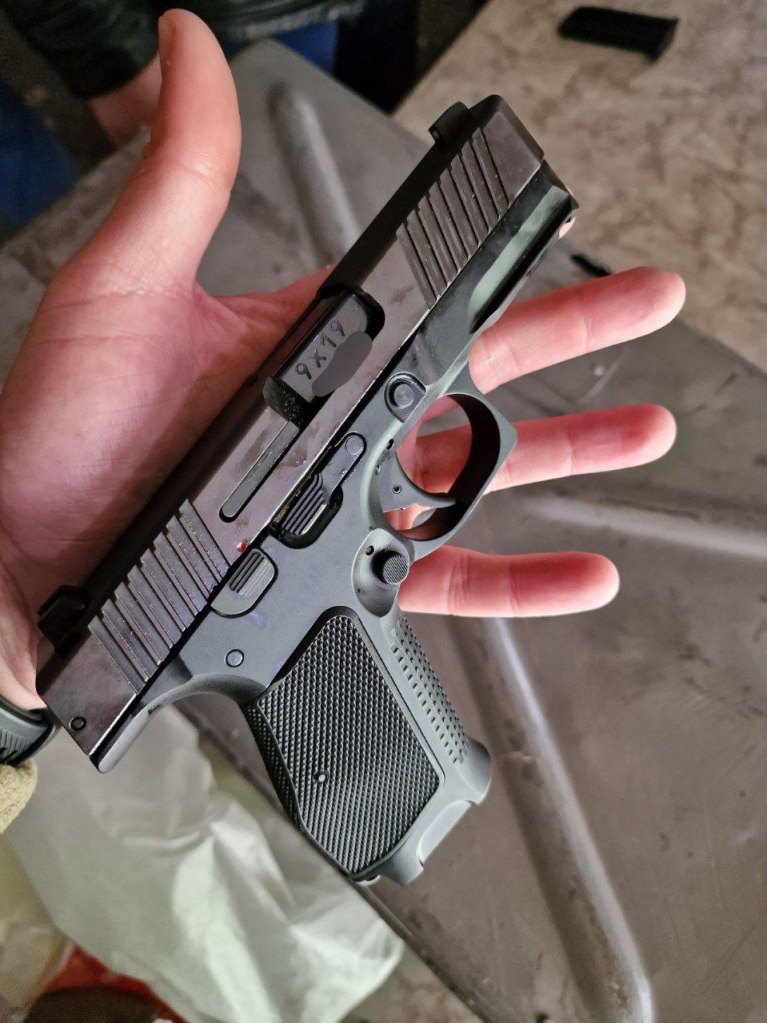
A PP-2000 and a new PLK pistol at the range for testing (via FighterBomber)
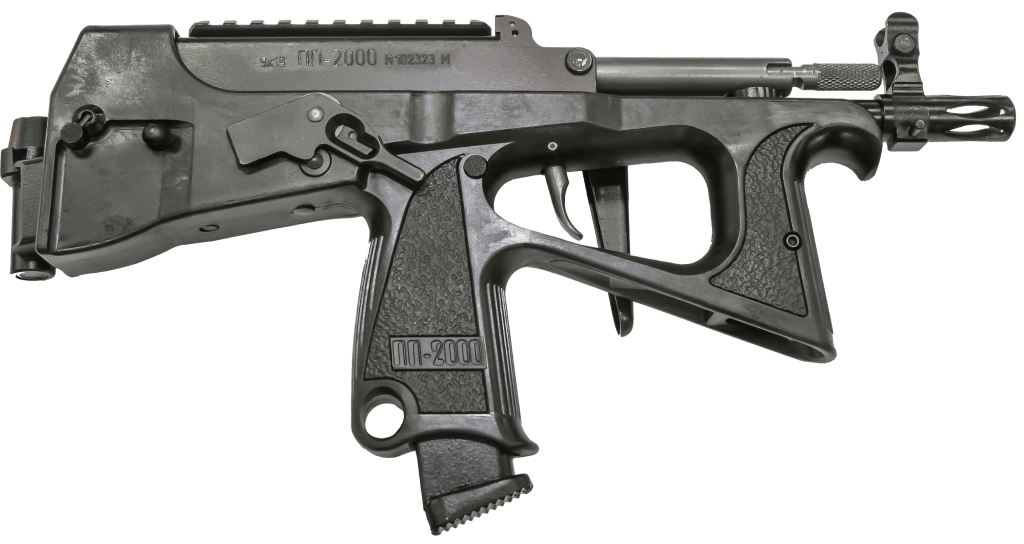
The PP-2000 is a compact submachine gun, designed at the Instrument Design Bureau in Tula in the 1990s. The weapon is a conventional blowback which feeds from 20 or extended 44 round magazines which are loaded into the pistol grip. It is chambered in 9x19mm and can fire Russia’s standard 9mm ammunition or the armour piercing 7N21 and 7N31 rounds. It has a reciprocating charging handle which runs parallel over the barrel. It is characterised by its front grip which connects to the pistol grip to act as a large trigger guard. It can be fitted with a suppressor and has a side folding stock and a small length of rail on the top of the receiver for mounting optics. Other accessories such as lights or lasers can be attached to the base of the front grip. According to Rosoboronexport the weapon weighs 1.4kg (or just over 3lbs) unloaded and with the stock folded is 35cm (13.7in) in length.
Typically, aircrew have carried Makarov or Stechkin pistols but better equipping Russian pilots has long been a consideration with not all aircraft able to fit larger weapons such as rifle or carbines. This has reportedly been driven by experiences in Syria and more recently in Ukraine. During the battle of Hostomel airport in March 2022, a damaged KA-52 attack helicopter was forced to make an emergency landing. It’s crew were able to dismount and take up positions and await retrieval. They were armed with AK-74Ms, however, the confines of other Russian aircraft do not allow rifles to be carried.
PP-2000 (Rosoboronexport)
In a December 2019 interview with Lt.Gen. Nikolai Gostev, commander of the 4th Air and Air Defence Forces Army, Interfax asked if PP-2000s will be fielded. Gostev replied [machine translated]: “Currently, several promising samples of portable emergency supplies for flight personnel are being tested, which also include promising samples of small arms. The tests are carried out by specialists from the Gromov Flight Research Institute, and after their completion it will be decided which portable emergency supplies will be put into service.”
In May 2021, it was reported that Shoigu had directed the process for a compact personal defence weapon to be added to aircrew’s survival kits to be expedited. At the same time the PPK-20, from Kalashnikov Concern was also suggested as an option. Russian news reports noted that personal defence weapons would be added to the emergency kits aboard Su-27, Su-30SM, Su-35, Su-57, MiG-29 and MiG-35 as well as Su-24 and Su-34s.
Russian pilot demonstrating a PP-2000 during a Zvezda news report (Zvezda)
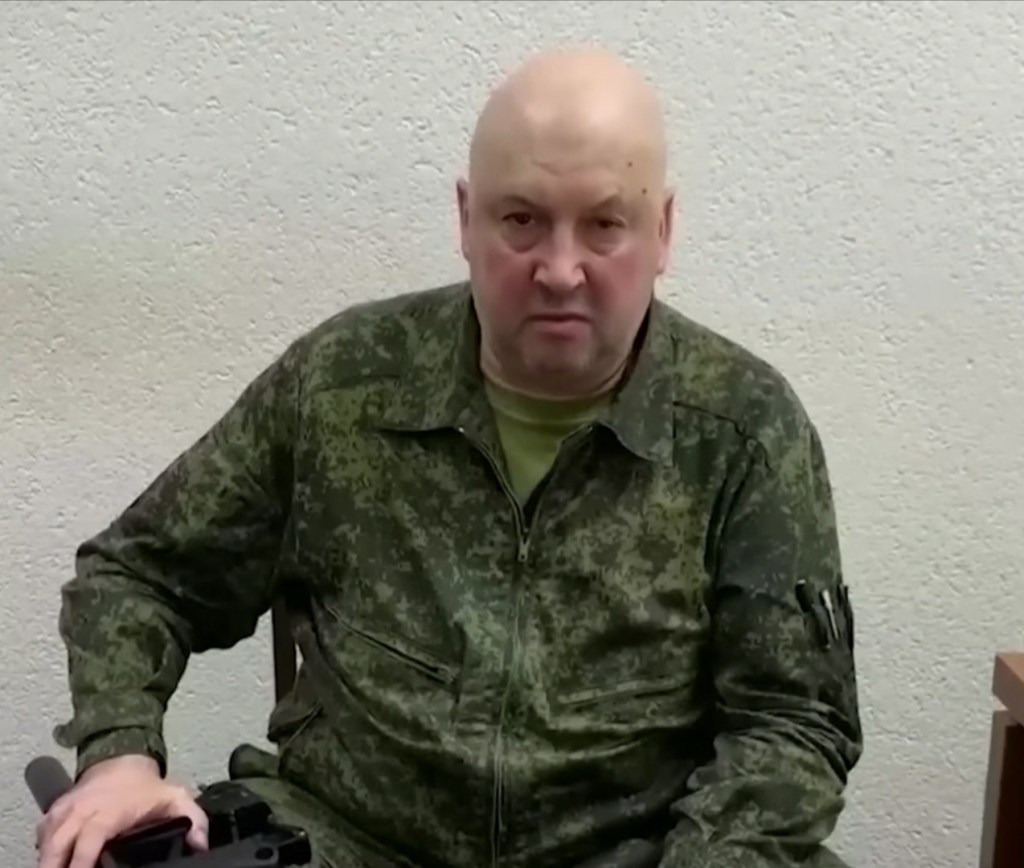
On 23 June 2023, during the failed Wagner advance on Moscow, General Sergey Surovikin, then Commander-in-Chief of the Russian Aerospace Forces, appeared in a video calling on Wagner to stand down. In his hand could be seen a PP-2000 outfitted with an optic, light and suppressor.
Surovikin with PP-2000 (Russian MoD)
In September 2022, the Fighterbomber telegram channel shared a post lobbying for the AM-17 rather than the PP-2000, rightly arguing a pistol calibre submachine gun is next to useless against combatants wearing body armour. Another major Russian telegram channel, Повёрнутые на Z войне, welcomed the wider issue of the PP-2000 in a post from late December 2022, sharing a photo of a PP-2000. The post also suggested that until then only Guards Aviation units had been issued them.
In January 2023, Fighterbomber began to report on the apparent testing of the PP-2000 and the PLK pistol, claiming that despite the order for three months testing positive reports from those involved had already been ordered.
A PP-2000 belonging to crew of a in an MI-8amtsh cargo helicopter, December 2022 (via @nrxnb)
In April 2023, Fighterbomberposted a review of the new PP-2000 and PLK. The post described the PLK as “a great gun. Powerful, comfortable and precise.” Praise for the PP-2000 was less forthcoming with the post noting: “PP-2000 is still jamming every now and then… still need 44-round magazines and a 7N31 cartridge for the PP.”
A new PLK pistol (via FighterBomber)
On 2 October, following Shoigu and Grekhov’s comments at Tula, Zvezdapublished a short report from a survival training centre. During the clip an Su-30SM pilot explains that “particular attention was paid to tactical shooting, survival in extreme conditions and tactical medicine.” The video shows pilots training in escape and evasion skills and sees them deploy their new PP-2000s. The video concludes with the two air crew firing both the PP-2000 and the PLK at the range.
The PLK pistols, from Kalashnikov Concern, are the latest iteration of the Lebedev pistol introduced in 2015 as the PL-14. The PLK was reportedly adopted by Russia’s Ministry of Internal Affairs in October 2021 but sightings with Russian pilots are the first sightings of regular Russian military use. If more of the PLKs appear in use they’ll be a topic for a future article/video.
Support Us: If you enjoyed this video and article please consider supporting our work here. We have some great perks available for Patreon Supporters – including early access to custom stickers and early access to videos! Thank you for your support!
Drone warfare in Ukraine is one of the war’s most rapidly evolving elements with considerable innovation and improvisation. In recent weeks several videos have been shared showing large drones dropping TM-62 anti-tank mines.
The first video shared on 3 September showed how a mine could be carried and released by a large six-rotor drone. The TM-62M is seen loaded into a cradle tray which is then remotely triggered causing the floor plate to hinge and release the mine. The video also shows how the TM-62 is fuzed with a UZRG-pattern hand grenade fuze, pushed directly into the mine’s explosive through a hole cut in the side of its casing.
The TM-62M is a high-explosive blast landmine designed to immobilise or destroy vehicles. The mine is packed with 7.5kg (17lbs) of explosive and is normally centrally fuzed by a pressure fuze. The TM-62M is a significant payload for a bomber drone and when dropped they have significant blast effect.
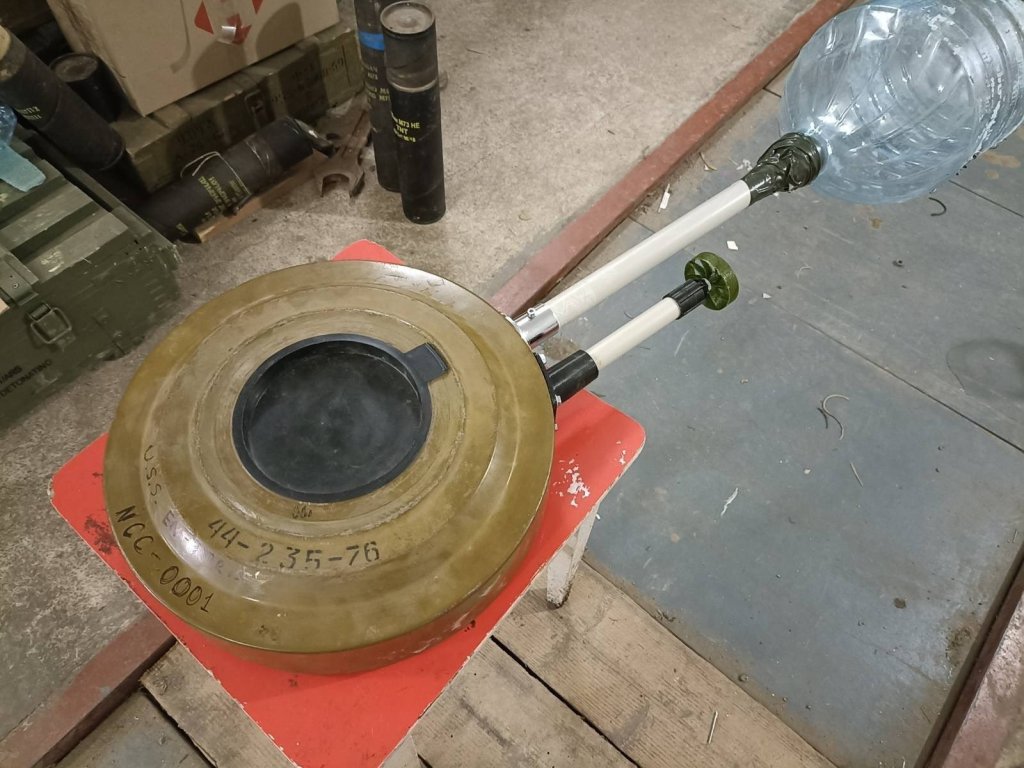
A subsequent video, shared on 6 September, shows a series of clips filmed by the bomber drone’s camera showing the TM-62 being dropped on numerous targets. The mines in this video have been significantly adapted with a stabilising tail added. The tail appears to be made up of a length of PVC pipe and a large water battle with its base cut off. The tail appears to be quite effective especially given the mine’s considerable weight and poor aerodynamics. It is also notable that the fuzing system appears to be different in the second video. Rather than a hand grenade fuze it appears that a larger fuze has been used, positioned next to the stabilising tail.
With the tail and its cut down water bottle its unlikely the release system for this munition is the same as that seen in the first video. A system which would allow for a smooth release and not snag the tail assembly would be needed. In several of the clips in the second video a strap swings past the drone’s camera perhaps suggesting there is a sling system in use.
A subsequent photograph shared on social media shows one of the mines in much better resolution. The tail is indeed made from PVC piping and a water bottle and the fuze appears to be vane-armed. The makers also have a sense of humour likening the odd-looking munition to the ‘USS Enterprise’ from Star Trek, they’ve written ‘USS Enterprise NCC-0001’ on the forward section of the mine.
At the same time as the photograph a number of additional videos showing the TM-62 based bombs being dropped were shared. These videos were originally shared towards the end of August and show a series of successful munition drops.
We are seeing a trend towards more sophisticated and more capable drone bombers which can carry either greater numbers of smaller bombs or larger singular bombs like the TM-62 munition.
Update – 1/10/23
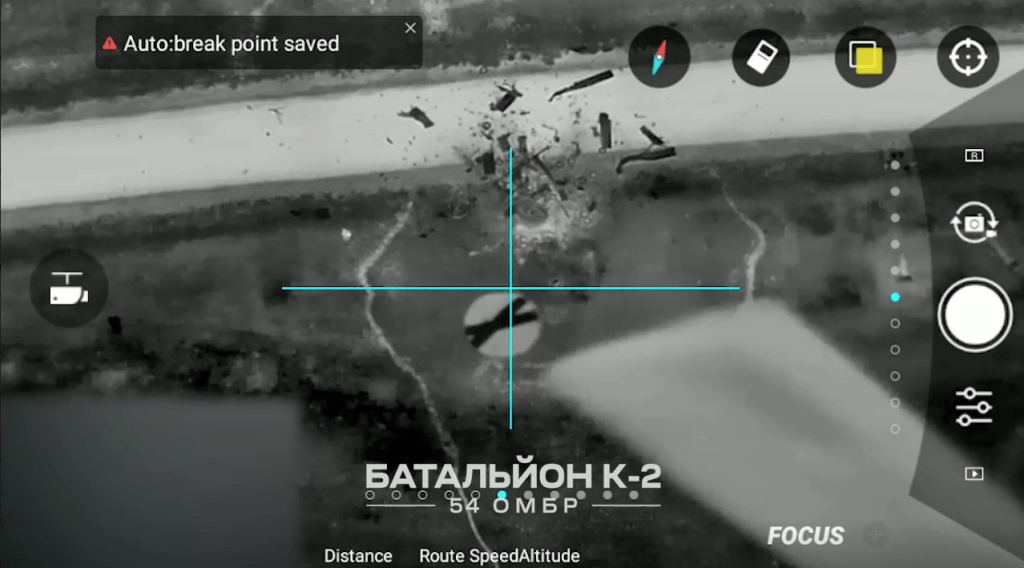
Just today the K-2 drone team with the 54th Brigade has shared footage of one of their drones dropping TM-62s mines on a Russian storage position. These mines don't appear to have a tail assembly and are more simply fuzed like those seen in initial videos. pic.twitter.com/W7plTbDIKQ
— Matthew Moss | Historical Firearms (@historicfirearm) October 1, 2023
The K-2 drone team with the 54th Brigade has shared footage of one of their drones dropping TM-62s mines on a Russian checkpoint and storage position. The drone appears to drop several unadapted TM-62s, though the lag time between landing and detonation would indicate they are not equipped with an impact fuze but perhaps a grenade fuze as seen in the initial videos featuring TM-62s. The resolution of the thermal cameras does not make it possible to identify the method of fuzing.
Note the falling TM-62 (with tape) and the swinging drop tray (K-2)
The release system appears to consist of a tray which holds the mine which is suspended by straps which are released to drop the munition. The tray can be seen swinging beneath the drone after one of the drops. The munitions appear to have tape around them, the reason for this is unclear, perhaps protecting the fuze system.
Update – 5/1/24: A video compilation showing numerous drops of TM-62s was shared on 5 January 2024. It begins with a demonstration of a light weight drop tray being released. The tray appears to be made from a metal grill (perhaps from an oven or an animal cage). The compilation shows mines being dropped without tail assemblies like those seen in earlier videos. Their are also visible puffs of gases/smoke from the mine’s fuze being triggered as it descends.
— Matthew Moss | Historical Firearms (@historicfirearm) January 11, 2024
Update -17/1/24: Further footage of TM-62 pattern mines being dropped from drones. Note a tail stabiliser is not used.
Ukraine's feared mammoth drone Baba Yaga, capable of carrying and precisely dropping four TM-62 mines, each with a 7.5kg (17 lbs) explosive charge. pic.twitter.com/twkZnYnKQR
Support Us: If you enjoyed this video and article please consider supporting our work here. We have some great perks available for Patreon Supporters – including early access to custom stickers and early access to videos! Thank you for your support!
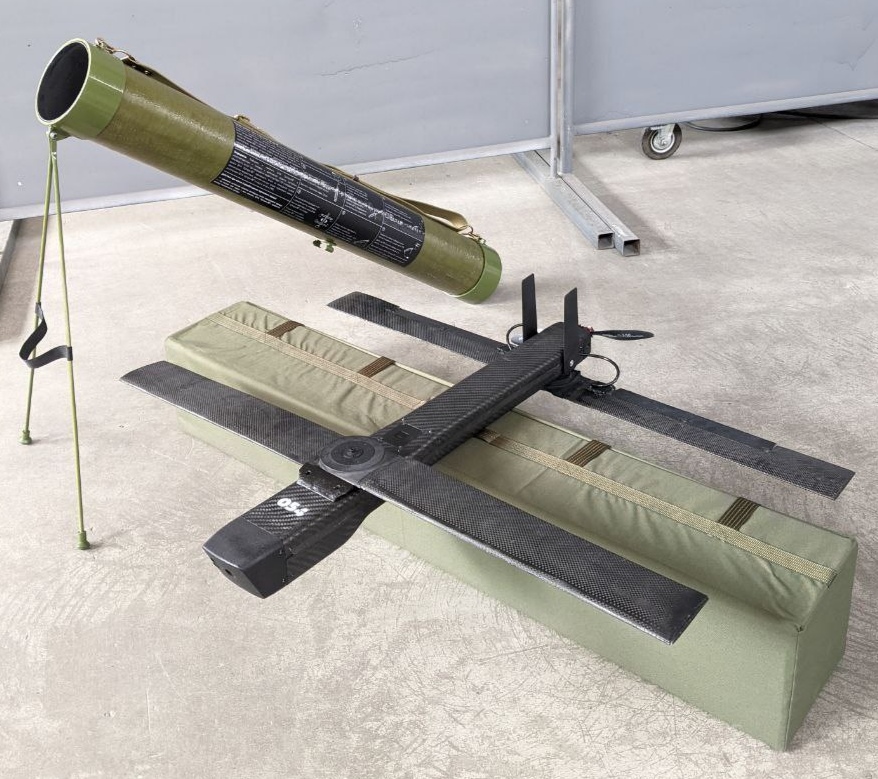
Reports from Russian media outlets announced on 18 September, that Android Technics/Technology, a Russian technology company, had developed an analogue of AeroVironment’s Switchblade 300 loitering munition. Imagery and footage of the BAS-80 was shared by Russian state news outlet RIA.
Android Technology’s Managing Director, Evgeny Dudorov, told RIA that they had provided a ‘couple’ of the loitering munitions to a volunteer unit, the Tsar’s Wolves, which reportedly provides military-technical assistance to Separatist units. Dudorov hopes that the unit will “find the best ways” to use the new kamikaze drone. Back in April, the development of the BAS-80 was first reported when Android Technology stated that the munitions would be mounted on the Marker armed unmanned ground vehicle.
BAS-80 (via RIA)
Russia has had considerable success in the field with its larger, heavier Lancet loitering munitions developed by ZALA Aero Group which is a part of Kalashnikov Concern. The most advanced variants of Lancet boast a 11lb/5kg payload. The Ukrainian’s, however, have demonstrated an edge when utilising smaller FPV kamikaze drones. These FPV drones appear to be favoured over the Switchblade 300.
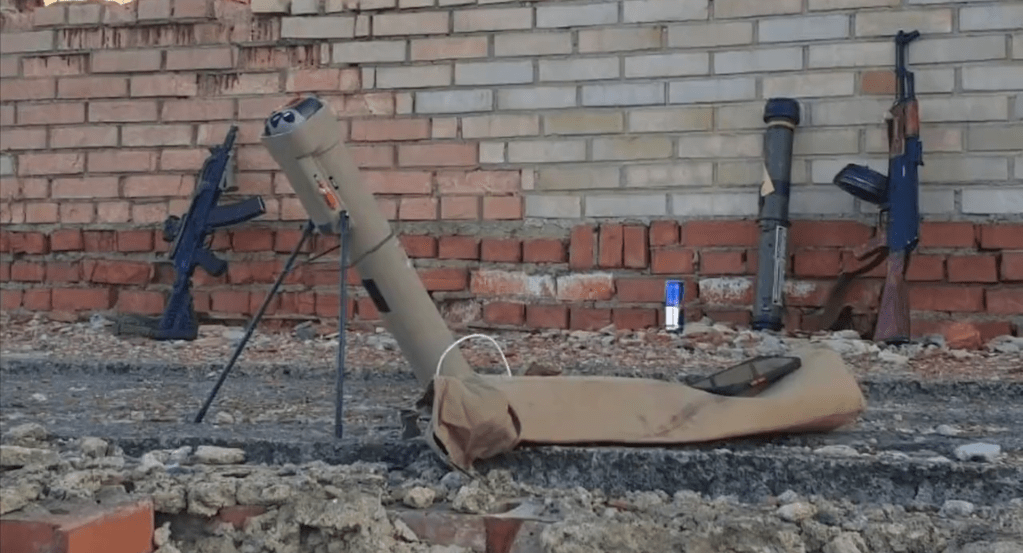
The BAS-80 bares more than a passing resemblance to the US-manufactured Switchblade which the US has provided to Ukraine in moderate numbers since March 2022. Utilising the same folding wing configuration and man-portable tube-launch system.
Russian news sites this morning are awash with stories about this new Switchblade-clone developed by НПО "Андроидная техника" which is reportedly undergoing limited testing currently.
— Historical Firearms | Matthew Moss (@historicfirearm) September 18, 2023
Dudorov stated that the BAS-80 is made from carbon fiber, weighs in at 3.7lb/1.7kg and has a maximum flight speed of up to 80mph/130kph. He also claimed that it can travel up to 18.6 miles/30km and carries a 1.1lb/500g payload – which may suggest that its intended for anti-personnel and anti-materiel use, like the Switchblade. This would made the BAS-80 0.6lb/300g lighter than the Switchblade 300 and have 12.5 miles/20km more range. Photographs of the munition show that it uses a pusher propeller configuration and has three forward-facing optical lens for guidance.
A Switchblade 300 in the field in Ukraine, 2022 (via social media)
It remains unclear if the Russian munition was developed using technology found in captured Switchblade 300s. Other analogues of the Switchblade have been developed by both China and Iran. China unveiled the FH-901 loitering munition in September 2022 and Iran introduced the Meraj-521 in October 2022. Both systems appear to be externally different in size and shape to that of the BAS-80, with the Chinese munition larger (more analogous with the Switchblade 600) and the Iranian drones launching from a rectangular box. The BAS-80 launches from a cylindrical tube more akin to the Switchblade.
The BAS-80’s guidance systems, software and internals remain unknown and from Russian reports it is still some way from mass production with development to be finalised following trials in the field.
Support Us: If you enjoyed this video and article please consider supporting our work here. We have some great perks available for Patreon Supporters – including early access to custom stickers and early access to videos! Thank you for your support!
By far best known for providing Ukraine with Bayraktar TB2 UAVs, Turkey has provided a plethora of weapons and munitions ranging from artillery shells to APCs.
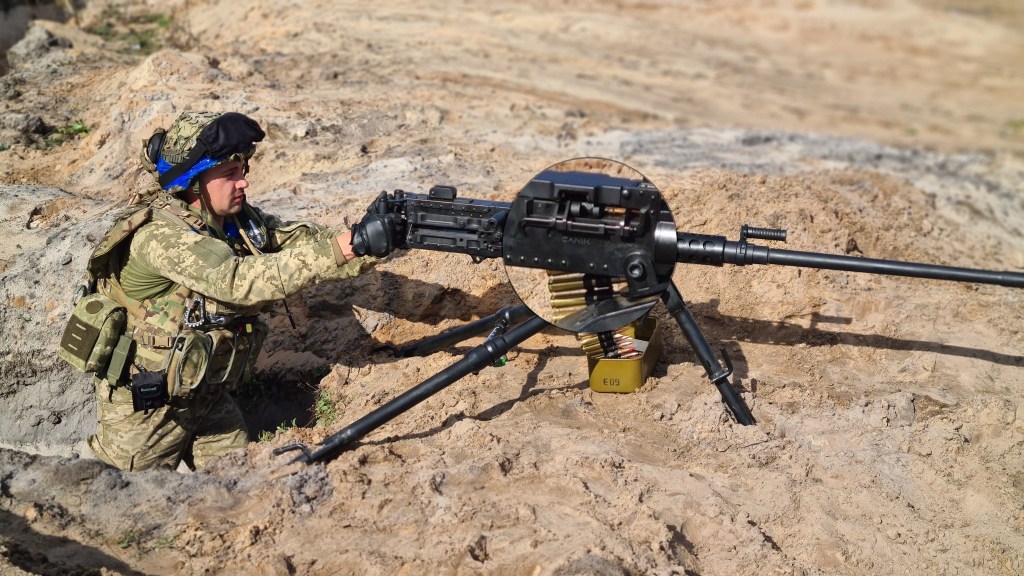
The Turkish arms industry has also provided heavy machine guns with Canik’s M2 QCB being seen on a number of occasions in recent months. The M2 Browning is fast becoming ubiquitous in Ukraine, provided in large numbers by a number of nations, the heavy machine guns equip large numbers of armoured vehicles and have also been seen in use in the ground role fairly regularly.
Canik introduced the M2 QCB in August 2022, unveiling an M2 and M3-pattern version of the weapon – the M2F. Back in April, Ukraine received a shipment of dual mounted M2F guns which were seen mounted on Nisan pickup trucks. These guns were seen in a photograph of President Zelensky inspecting new equipment for Ukraine’s border guard service. It’s unknown how many M2Fs have been delivered but they were reportedly procured to combat small drones.
#Russia / #Ukraine 🇷🇺🇺🇦: Combatants of the #Ukrainian Forces released new photos of recently obtained machine guns.
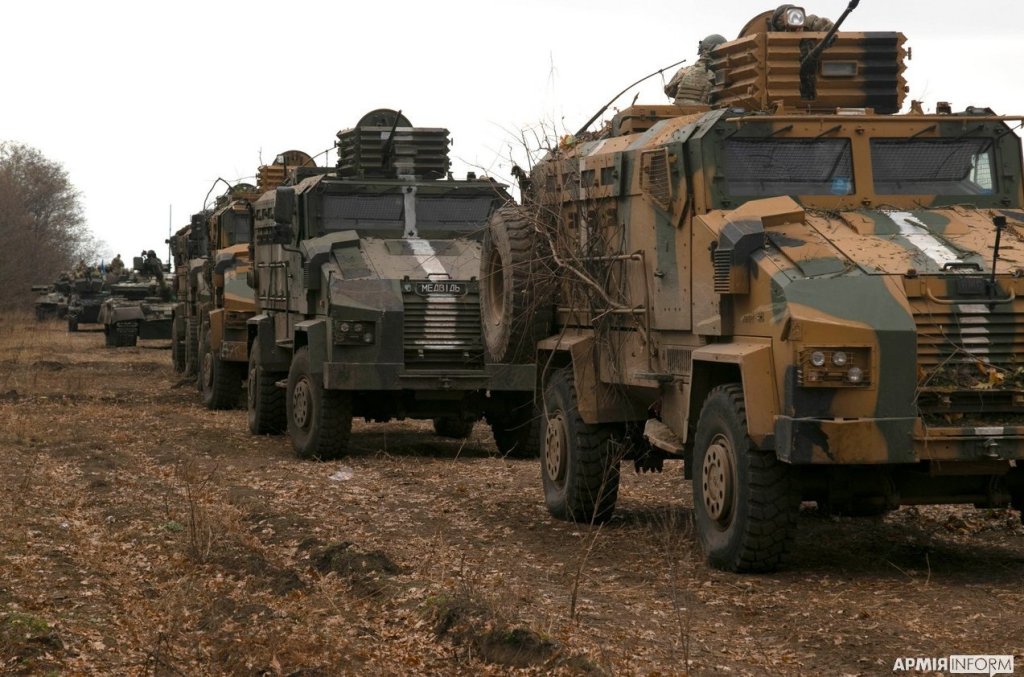
Turkish-made M2s are also likely mounted on the significant number of armoured personnel carriers which Turkey has provided to Ukraine including the 4×4 BMC Kirpi. The Kirpi can be mounted with either a GPMG or an M2, they are often seen in theatre with M2s mounted. Over 200 Kirpis have been ordered and batches have been delivered since August 2022.
BMC Kirpi’s in Ukraine, not the mounted M2s (via АрміяInform)
On 28 July, weapons researcher War_Noirshared photographs of a suspected M2 QCB showing the gun in a carry case and setup at the range.
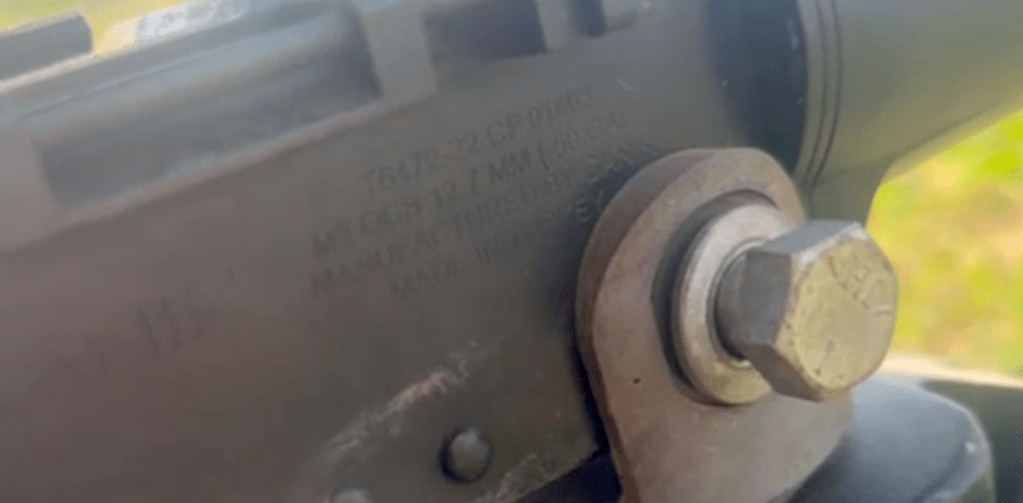
Most recently on 3 August, Wagner PMC shared a video of a captured Turkish-made M2 on their Telegram. The video clearly shows Canik receiver markings.
A close up of the markings on the M2 held by Wagner (via social media)
Being largely identical externally to other M2-pattern heavy machine guns its difficult to ID the Turkish-made guns from much of the imagery shared from Ukraine. It is currently difficult to gauge how many are in theatre.
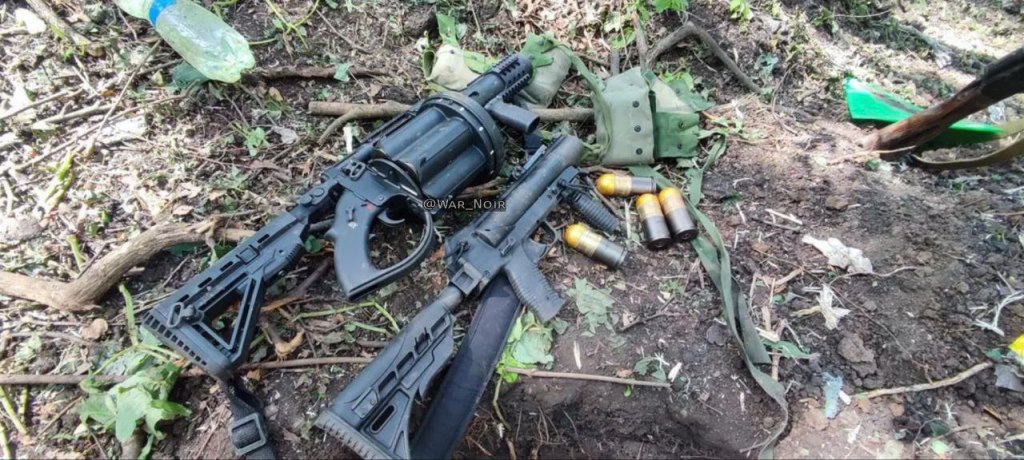
RDS40
An RDS40 and a FORT-600 (via War_Noir)
At the same time another fairly uncommon Turkish-made weapon has been confirmed to be in use in Ukraine with at least one RDS40 rotary 40mm grenade launcher seen with Ukrainian forces. Manufactured by Repkon Defence the RDS40 has a very recognisable pistol grip assembly with a guard which encloses the whole hand. It is unknown how many RSD40s are in Ukraine with no further sightings made at the time of writing.
Updates:
13/09/23 – Another sighting of a Repkon RDS40.
#Russia / #Ukraine 🇷🇺🇺🇦: A new photo of #Ukrainian combatants with interesting weapons on the frontline.
The fighters carry Repkon Defence's RDS40-MGL grenade launcher (supplied by #Turkey 🇹🇷), AK-12 assault rifle (captured from #Russian Forces) and customized AKM rifle.… pic.twitter.com/BYcYHtc7Zx
— Matthew Moss | Historical Firearms (@historicfirearm) September 14, 2023
20/09/23 – Imagery of Ukrainian troops with a Canik-manufactured M2 heavy machine gun was shared anonymously on the /k/ chatboard on 15 September. The original poster states that his brigade’s M113 APCs were to be armed with the guns but reliability issues with 80% of the guns developed. The post complains of issues with the Turkish-made guns but its unclear if these problems are due to the guns manufacture or their set up in theatre. The post also included a short video of an M2 firing. It is unknown which Ukrainian Army brigade was provided the guns.
A short clip of the M2 being fired. Shared 15 September, unit unknown.
— Matthew Moss | Historical Firearms (@historicfirearm) September 20, 2023
2/10/23 – Middle East Eyereports that their sources claim Ukraine has signed a series of contracts with Turkish defence company Canik for various weapon systems and that as many as 600 Canik-manufactured M2 heavy machine guns have been delivered to Ukraine.
18/10/23 – This photo featuring a soldier of the 115th Separate Brigade of the TDF appears to confirm that the blacker finish is somewhat typical of Canik-produced guns. This photo give us a look at markings.
20/10/23 – Another potential sighting on Turkish-manufactured M2-pattern heavy machine guns. The undated photographs, shared on Ukrainian Armed Forces social media, featured troops of the 22 Separate Mechanised Bridge.
Men of the 22 Separate Mechanized Brigade training on M2 Browning heavy machine guns. Which appear to be either brand new or recently refurbished. Sadly no markings are visible but the finish of the gun may indicate its of Turkish manufacture. #Ukraine#UkraineRussiaWar#SALWpic.twitter.com/CGYwTg1fKt
— Matthew Moss | Historical Firearms (@historicfirearm) October 20, 2023
8/2/24 – Another example of a Canik M2 in Ukraine.
#Ukraine: Very interesting photo – 🇺🇦 #Ukrainian technical with installed 🇹🇷 #Turkish made and supplied .50 BMG (12.7x99mm) Canik M2 QCB heavy machine guns.
Support Us: If you enjoyed this video and article please consider supporting our work here. We have some great perks available for Patreon Supporters – including early access to custom stickers and early access to videos! Thank you for your support!
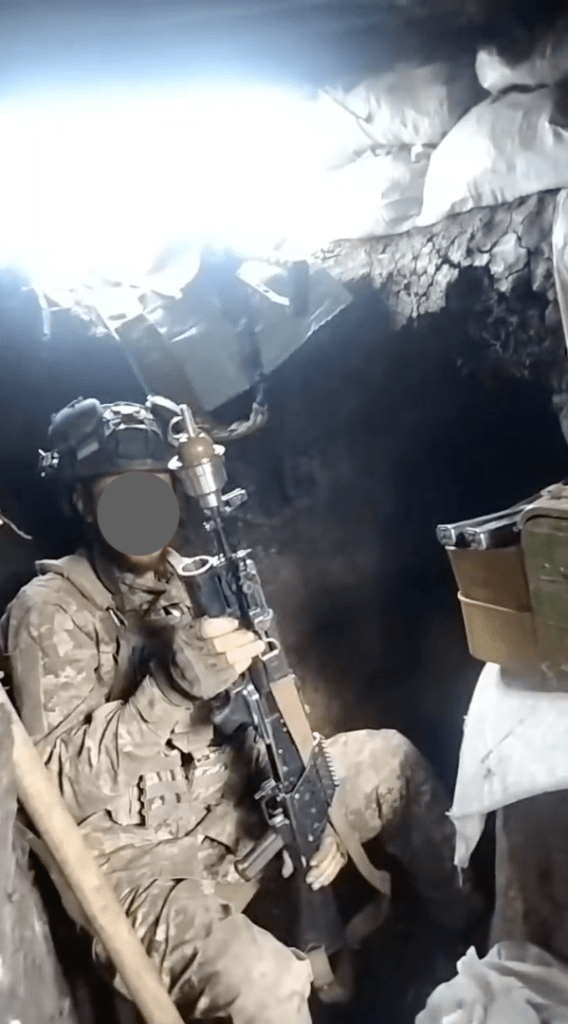
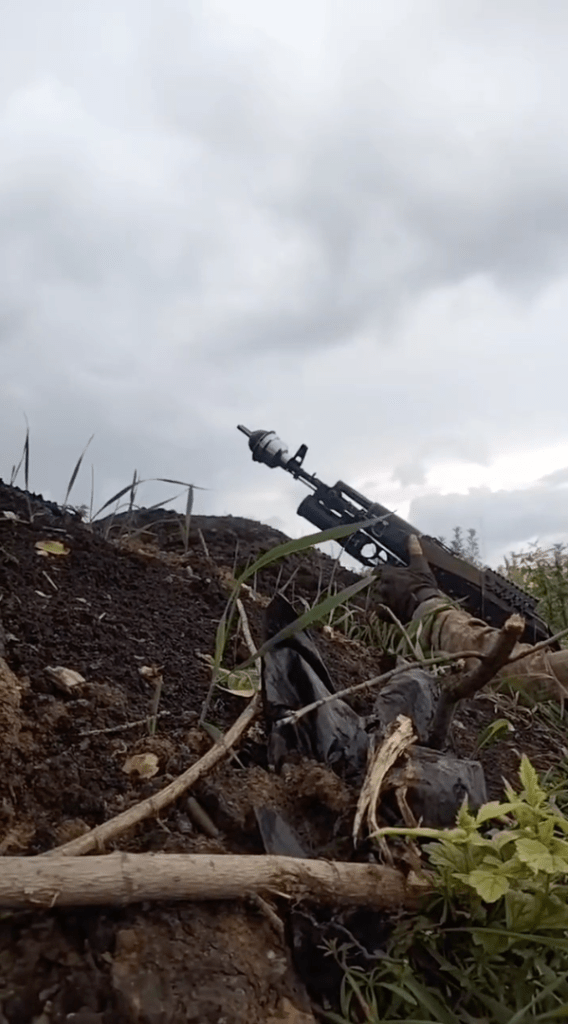
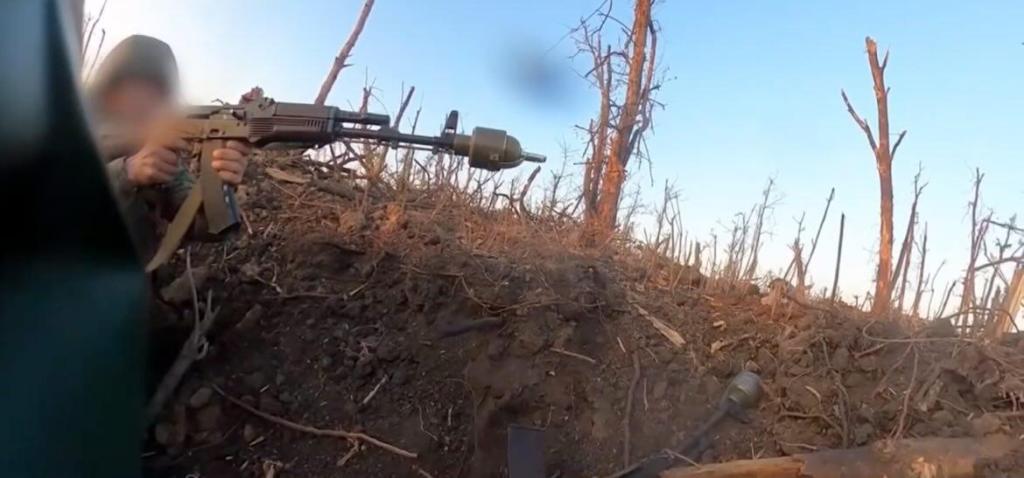
One of the intriguing, if rarely seen, weapons seen in Ukraine are rifle grenade launchers that are able to launch standard RDG-5 hand grenades. Historically, this is an idea that has been around for a long time. Emerging during the First World War and continuing to be used during the Second World War, a detachable metal cup could be fitted to the muzzle of a rifle which would hold the grenade and allow expanding gases from the firing of a blank round to throw the grenade downrange. In British military parlance, they were described as cup dischargers and could be used to launch No.36 Mills Bombs. British Army also issued the No.68 anti-tank grenade which could be fired from a cup discharger. During more recent conflicts after the collapse of the USSR and later in the middle east, designs capable of being fitted to AK-pattern rifles have been used.
During my research I’ve come across just a handful of videos of these cup dischargers in use in Ukraine, there may be more, and they are essentially demonstrations of the device rather than evidence of combat use. The first was shared by Ukraine’s Office of Strategic Communications on 14 November 2022. The caption notes that the discharger has a range of around 150m
An AK-74 mounted with a cup discharger firing an RDG-5 (via social media)
The second video surfaced around 30 March 2023. The body of the cup is in the white, unpainted. Both of the videos show small cups made of machined metal which threaded directly onto the rifle’s barrel (once the standard muzzle device has been detached). They have differing external dimensions and profiles but they both feature a metal band into which the grenade’s safety lever can be slid. This holds the arm in place and prevents the grenade’s UZRGM fuze from arming before it’s fired and airborne. It appears that the cups are locally manufactured perhaps by different workshops and manufacturers.
The grenades appear to have a press-fit gas seal in the cup. The grenades are launched using blank cartridges, rather than ball ammunition. The blank creates enough pressure in the barrel, behind the base of the grenade, to launch it out of the cup.
Combatant prepares to fire an RDG-5 grenade from a cup discharger (via social media)
A video shared in 2021, long before the Russian invasion in February 2022, shows a very similar design and suggests that the idea has been around for a while in the region.
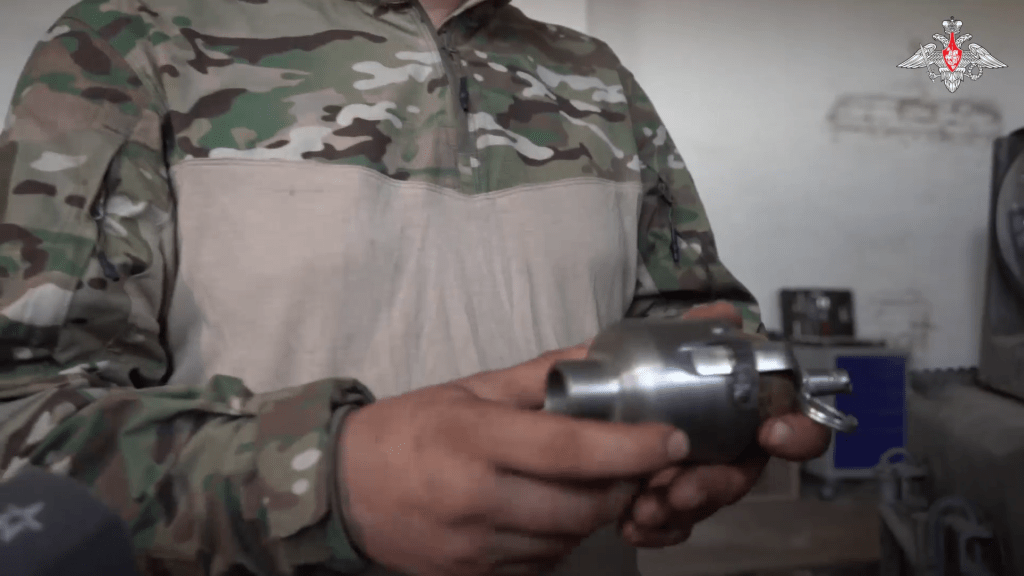
Most recently, on 11 August, the Russian Ministry of Defence shared a short video featuring a Russian Army engineers who are manufacturing 82mm Mortar round conversions for launching from RPG-7s and also cup dischargers for AK-74 pattern rifles. The design is identical to those seen previously. The engineer explains they are made on a lathe and the grenades are launched by a blank cartridge. In the clip we can clearly see that again there is a metal band which the grenade’s safety lever is slid.
A still from a Russian Ministry of Defence video sowing a recently manufactured cup discharger (Russian Ministry of Defence)
Gauging the angle at which to aim the rifle for the grenade to reach its target appears to be largely intuitive. In both videos, the grenade detonates in the air. Theoretically, the user should be able to deliver grenades both onto targets and above them in air bursts.
While the cup discharger would certainly be useful in a trench or urban fighting situation, allowing supplies of grenades to be used up one reason the cup dischargers are rarely seen is that under-barrel grenade launchers are in ample supply. These likely offer greater range, accuracy, and flexibility.
Update 2/7/23: A short video showing a Ukrainian combatant preparing a grenade for launch from a discharger cup was shared on telegram.
Update 4/9/23: Russia’s Channel One news shared a report featuring a cup dischargers in use on the frontline.
Some clips from a recent Russian Channel One news report showing a grenade cup discharger being used in action at the front.
— Matthew Moss | The Armourer's Bench (@historicfirearm) September 4, 2023
Video reportedly features a Russian Spetsnaz unit from the Southern military district and was filmed on 31 August in the Artemovsky/Bakhmut region. A pair of cup dischargers can be seen.
A pair of cup dischargers seen in the clip
Update – 30/10/23: A short video showing a failed launch of an RDG-5 grenade.
A good close up look at a Ukrainian example of one of the grenade cup dischargers. The clip illustrates how potentially dangerous they can be if the grenade doesn't launch properly.
— Matthew Moss | The Armourer's Bench (@historicfirearm) April 23, 2024
Update 6/9/24: New imagery features personnel of the Russian 40th Brigade demonstrating a cup discharger designed to launch RGD-5 grenades from AK-pattern rifles using blank cartridges. This example was reportedly manufactured in Kazan, interestingly it appears to have a spring clip on the side of the cup to provide additional retention on the grenade.
Personnel of the Russian 40th Brigade demonstrating a cup discharger designed to launch RGD-5 grenades from AK-pattern rifles using blank cartridges. This example was reportedly manufactured in Kazan.
— Matthew Moss | The Armourer's Bench (@historicfirearm) September 6, 2024
Support Us: If you enjoyed this video and article please consider supporting our work here. We have some great perks available for Patreon Supporters – including early access to custom stickers and early access to videos! Thank you for your support!
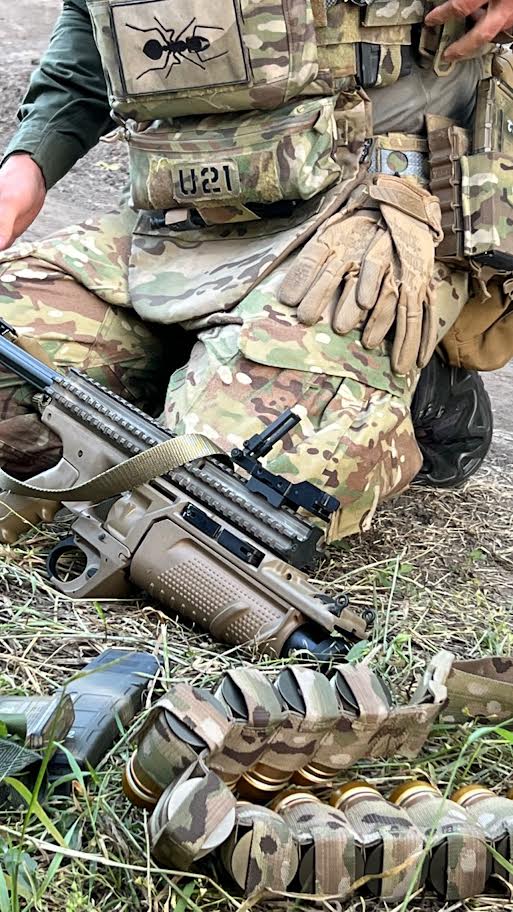
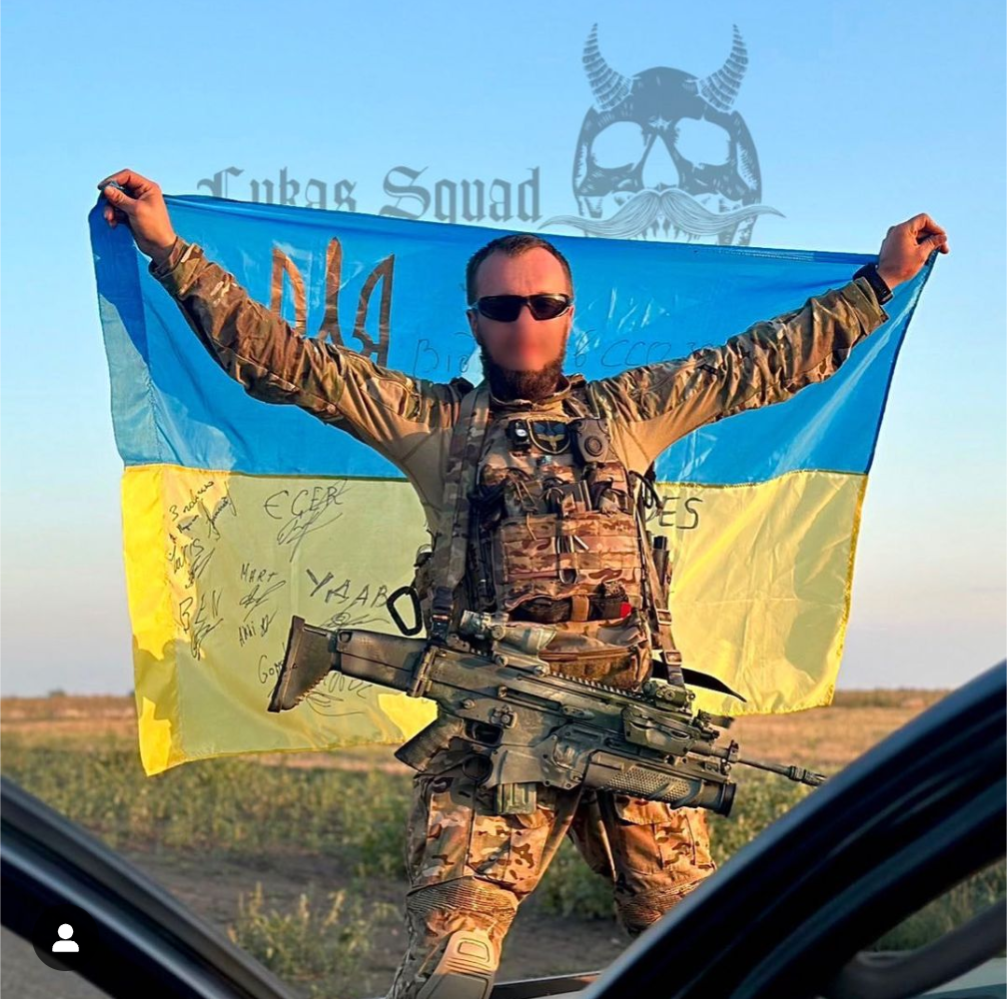
In recent weeks a yet another type of 40mm grenade launcher has begun to be seen in imagery from the conflict in Ukraine – standalone FN FN40GL grenade launchers. In early June, as Ukraine’s counter-offensive got underway, Ukrainian special operations units began to be seen equipped with FN40GLs in both the standalone (FN40GL-S) and under-barrel grenade launcher configurations.
The FN40GLs which have begun to seen in Ukraine appear to be original Mk1 versions with a slightly different pistol grip assembly profile with a large gap between the grip assembly and the actual barrel assembly. Alongside these launchers in the standalone configuration a number of FN40GLs in the under-barrel configuration have been seen mounted on rifles.
The Mk1 launcher was introduced by FN in the mid-2000s, the stand alone unit mounts the launcher on a frame with rail space and a collapsing stock. When in the under-barrel configuration a different trigger assembly is used which wraps around the rifle’s magazine housing. The FN40GL-S weighs in at 2.9kg while in the under-barrel configuration it weighs between 1.3-1.4kg. The launcher is fully ambidextrous with the barrel able to cant either left or right to facilitate loading.
An FN40GL-S with 40mm rounds (via social media)
It’s unclear which country has provided the grenade launchers as a number of countries adopted them, with many special forces units pairing them with FN’s SCAR series of rifles. It is also unclear how many of the launchers are in theatre though from conversations with combatants they are still relatively rare with M320s, M203s, Fort-600s and GP-25s being among the more common single-shot 40mm low velocity launchers. Given the increasing number of them sighted since July it seems the FN40GLs are proliferating through Ukraine’s various special operations units.
The first sighting of an FN40GL came on around 7 June, when a member of AZOV’s SOF unit shared a photograph of an FN40GL-S and a bandolier of 40mm rounds.
On the 8 June a photograph of a member of Ukraine’s SSO was shared online featuring a SCAR-L mounted with an FN40GL. The photograph is also notable for the presence of a SCAR MK20 (article/video on these coming).
On the 12 June, another Ukrainian combatant shared a photograph of an M4A1, an FN40GL and a Glock pistol.
Another standalone FN40GL-S seen by the side of a Ukrainian combatant during the early phases of the counter-offensive (via social media)
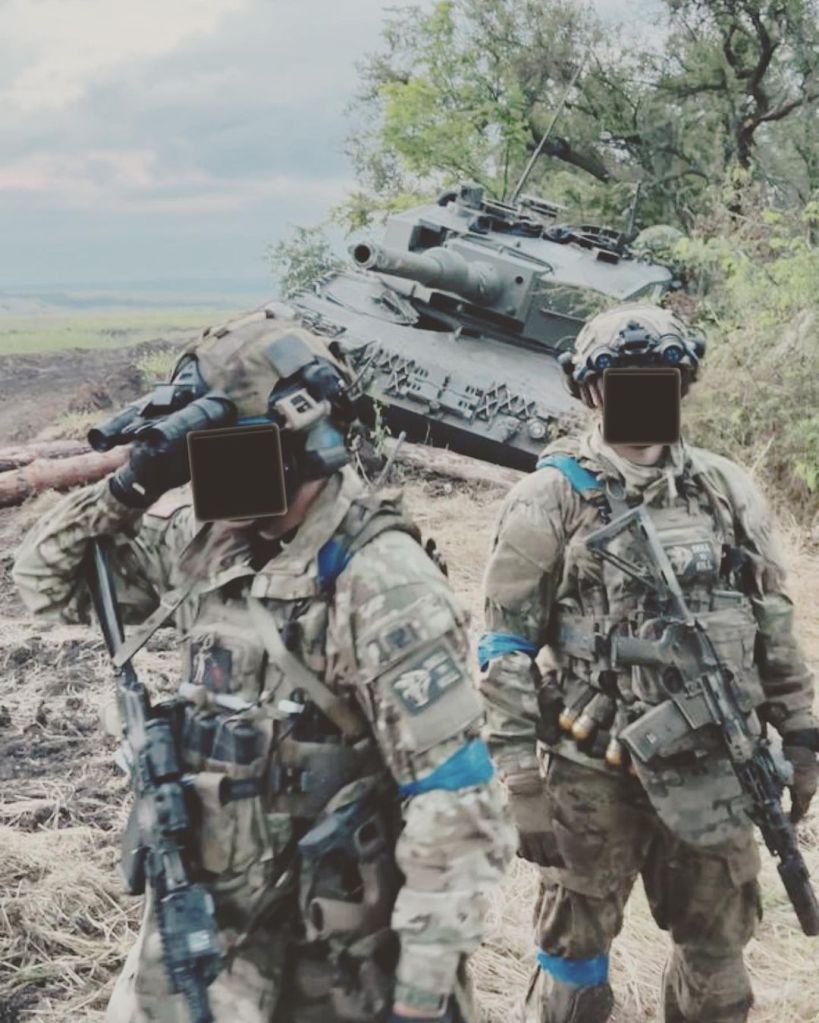
During the early phase of the counter-offensive a Ukrainian SOF team shared a photograph in front of an abandoned Leopard 2 on 15 June, strapped to the plate carrier of one of the operators can be seen an FN40GL-S.
Another photograph taken near the same Leopard 2 surfaced a week later showing another member of Ukrainian SOF with an FN40GL-2.
On the 24 June, a Ukrainian combatant posted a video on TikTok demonstrating the action of a FN40GL-s and how its barrel can pivot left and rifle.
In early July, a member of the AZOV brigade’s SOF teams shared a photograph of an FN40GL-S handing from a sling and retained in place by a cord.
On the 10 July, the second photograph of an FN40GL in the underbarrel configuration was shared showing the launcher mounted on a Springfield Armory SAINT AR-15 pattern rifle
On the 17 July, the same combatant affiliated with AZOV SOF shared a video of the FN40GL-S being fired and reloaded several times during a firefight across a road.
A week or so later, on 29 July, a member of the SSO shared a photograph of a SCAR fitted with a FN40GL.
In early August an Estonian volunteer shared a photo of a black SCAR-L fitted with an FN40GL. He shared his thoughts on the FN launcher and grenade launchers in general. He noted that there’s “not a lot of them around, only special units using these types of weapons… 40mm must be in each squad, they’re very effective.” He went on to explain that he prefers standalone launchers such as the M320.
Ukrainian combatant with an FN40GL in the underbarrel configuration (via social media)
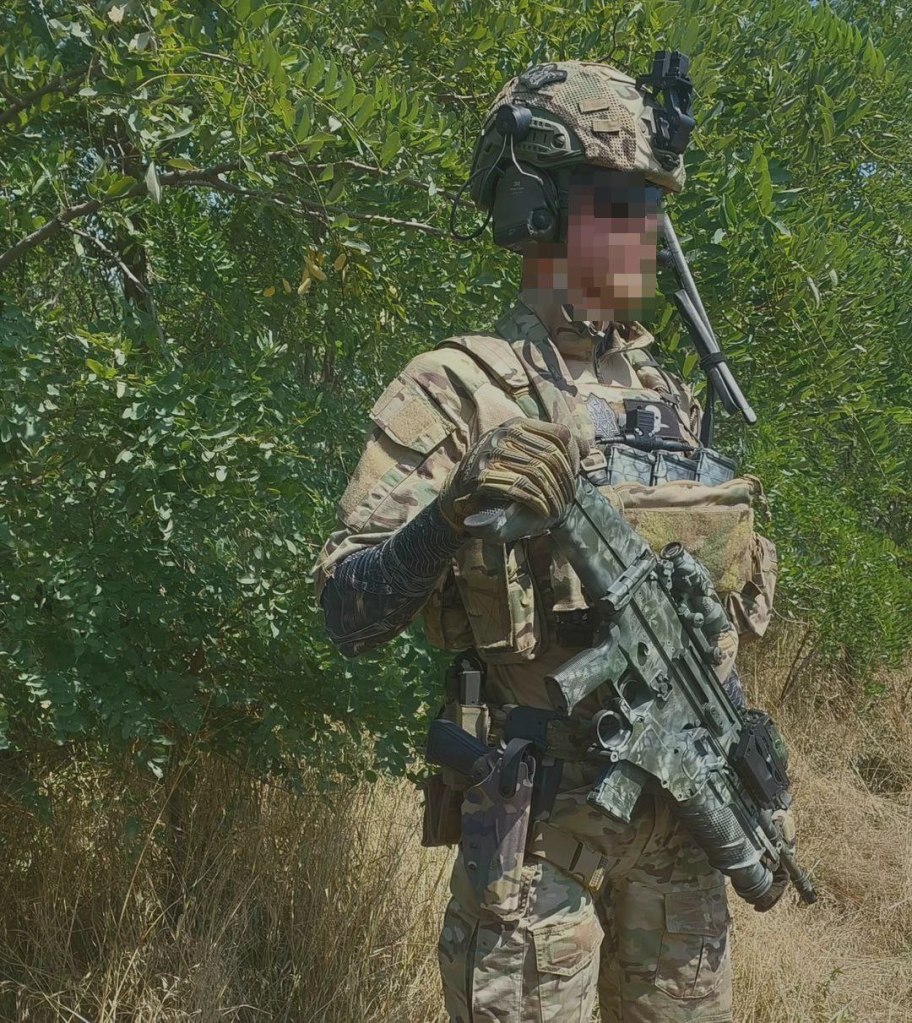
Most recently another phoptograh of a Ukrainian combatant with a SCAR-L fitted with a FN40GL was shared on Telegram. Both the rifle and launcher have been given a camouflage paint job.
The grenade launchers currently appear to be largely in use with a handful of Ukrainian special operations units which have also seen a recent proliferation of SCAR pattern rifles.
Very special thanks to every who helped collect and collate imagery for this video including, especially my friends at ShriekingDelilah on IG, as well as AbraxasSpa, UkraineWeaponsWarfare and Sergio for their help.
Update – 29/12/23: Another sighting of an FN40 GL, a reportedly Swedish volunteer wearing a Company Group Team shirt.
— Matthew Moss | Historical Firearms (@historicfirearm) February 29, 2024
Update – 6/9/24: Recently shared photo of a member of a GUR team with an FN SCAR-L equipped with an FN40GL.
Update – 10/1/25:
A Ukrainian SSO member with an FN FN40GL in the standalone configuration along with the ubiquitous Daniel Defense rifle.More on the FN40GL here: armourersbench.com/2023/08/13/f…#UkraineRussiaWar #Ukraine️ #SALW
Support Us: If you enjoyed this video and article please consider supporting our work here. We have some great perks available for Patreon Supporters – including early access to custom stickers and early access to videos! Thank you for your support!









 The Armourers Bench