Periscope Rifles in Ukraine

With the war in Ukraine’s current trench-bound stalemate often resembling the First World War it isn’t too surprising to see an early 20th century innovation making a comeback. Several variations on the concept of a periscope rifle have been seen in Ukraine since the summer of 2023.

A still from Heroes of Gallipoli (1915) showing a periscope rifle (via IWM)

The concept actually pre-dates the First World War, with sights like William Youlten’s Hyposcope dating to 1900, but really emerged during the war with many nations developing similar periscope-based systems that allowed service rifles to be mounted in frames and fired over the parapet removing the need for soldiers to expose themselves when sniping.

The first design featured in an article by Jeff Farrell in June 2023, Farrell interviewed a Czech veteran of the International Legion, Marian Simunek, who was wounded and has since developed a periscope which a rifle can be mounted in. In a pair of videos Simunek demonstrated fitting the rifle into the periscope mount and how it would be fired. Simunek manages to mount an AK-74 in the periscope mount within 30 seconds. The stock folds down from the body of the periscope and is secured with the pistol grip and trigger assembly being lined up, the stock of the rifle is secured by two straps and then the trigger cable is attached to the rifle’s trigger.

A second periscope design emerged in late January 2024, when a short video showing a tall tripod-mounted periscope was shared. The video shows the testing of a prototype gun mount which can be raised up to above parapet height and allows the gun to be aimed using the periscope the gun is show being tested in both semi-automatic and fully automatic. The trigger is attached to a command cable which runs down to a front grip with an exposed trigger in front of it. The tall monopod isn’t the most stable platform but the user demonstrating it supports the assembly using the integrated stock and pistol grip assembly and holds the stand with his off hand. While the ability to quickly raise and lower the rifle mounted on the stand is useful, especially for reloading, but it may lack stability in the field.
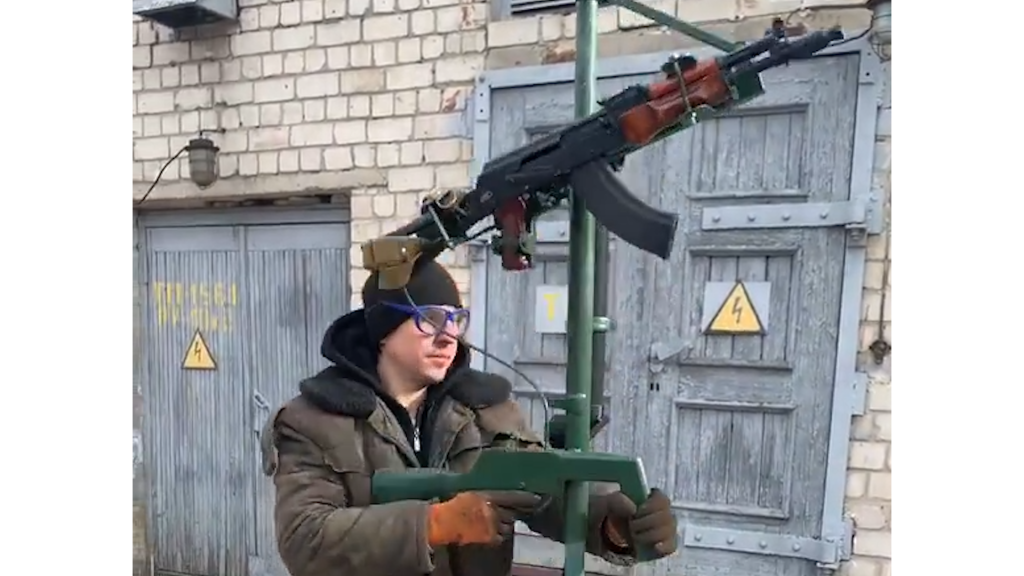
The third variation on the periscope rifle concept was shared on 18 March, with a short 22 second clip showing an AK-pattern rifle with its stock removed, mounted on a well fabricated pole with a periscope, an off hand support grip, a stock shaped like an AKS-74 folding stock and a pistol grip and trigger assembly which uses what appears to be a brake cable. In another video of the mount in the same position an individual demonstrates the articulation of the mount (albeit without a weapon installed). The mount has a wide tripod base and appears to be well made. The gun is set up in an urban environment behind a wall, likely for demonstration proposes. The this periscope rifle may be a more developed version of the previous design but I’ve been unable to find the original source for the video.

Interestingly, another video of as similar periscope rifle set up was shared, the design is clearly the same as that seen in the previous video. The shape of the stock has changed and the position and design of the stabilising forward hand grip differs.

While trench periscopes have been in use since the early weeks of the war, a more modern approach is the use of digital camera aimed remote weapons. These include the Shablya (sabre) remote weapon station developed by Roboneer, which has been in development since 2015 and has been tested with numerous different types of machine guns including PKs and M2 Brownings. Another similar system is the Tarantul, developed by engineers of the 118th Territorial Defence Brigade. This is a concept that Russian forces have also been experimenting with with a number of systems seen in test videos.

The available imagery of periscope rifle systems originating from the war in Ukraine is relatively small so its difficult to gauge their utility fully, I’ve yet to see any evidence of their front line use. They are a specialist piece of kit which depending on the design is suited to some environments more than others. If you’ve seen other examples of periscope rifle systems or evidence of their use in combat please do let me know!


Support Us: If you enjoyed this video and article please consider supporting our work here. We have some great perks available for Patreon Supporters – including early access to custom stickers and early access to videos! Thank you for your support!

WW1 2-Inch Trench Mortar

The British Army entered the First World War with very few mortars, and certainly none at the battalion level. As the stalemate of trench warfare set in and the effectiveness of enemy mortars became clear it was decided that trench mortars of various sizes would be needed.

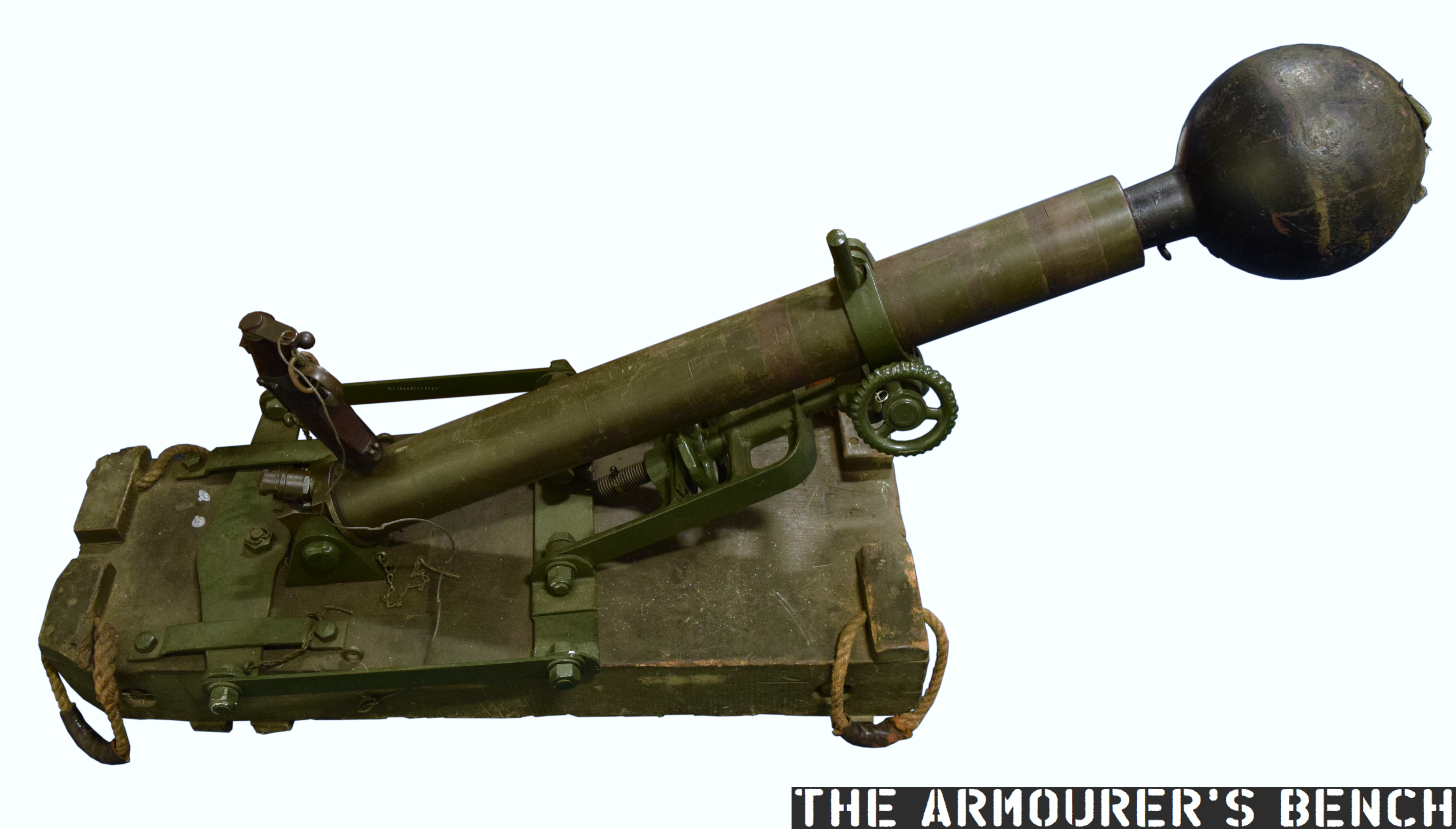
Nicknamed ‘plum pudding’ or ‘toffee apple’ mortars after their projectile’s characteristic shape, the 2 inch Medium Mortar or 2 inch Trench Howitzer, was one of Britain’s first effective light trench mortars to be introduced.

tilt_h13_2_inch_mortar
Right-side view of the 2in Trench Mortar (Matthew Moss)

Trench mortars were the army’s most forward artillery, right up on the front line. These short range weapons were able to throw large, high explosive projectiles, short distances across No Man’s Land at the enemy trench system opposite. The 2 inch mortar was considered accurate out to 350 yards with a maximum effective range out to just under 600 yards.

Introduced in 1915, the 2 inch mortar was originally crewed by men taken from the battalion it was stationed with, along with some specialists from the Royal Artillery. However, with the introduction of the 3 inch Stokes mortar which was operated by the infantry themselves the 2 inch mortars became the sole responsibility of the Royal Field Artillery.

Mesopatamia 4
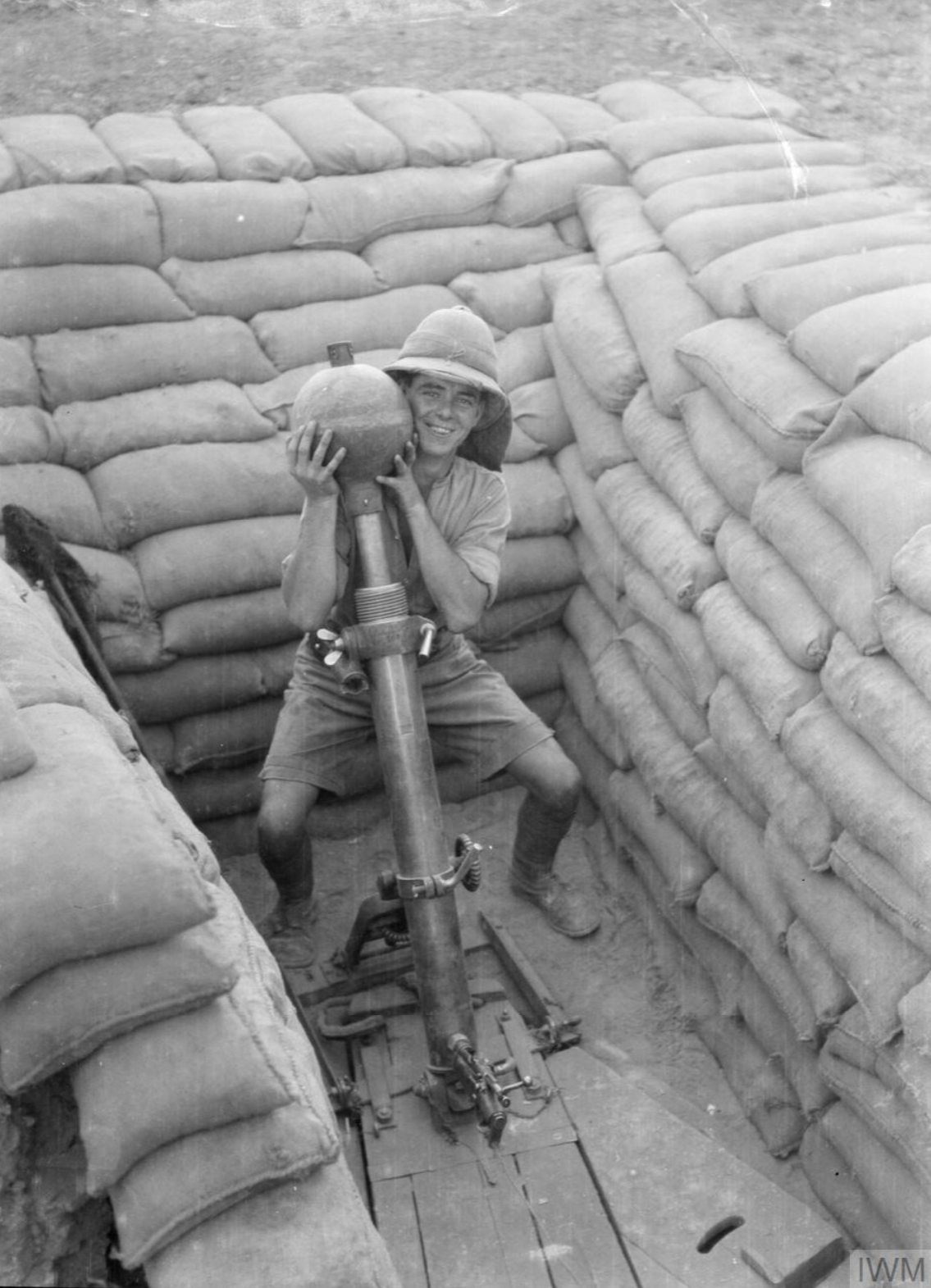
A young gunner loads a 2in spigot mortar bomb into his mortar (Imperial War Museum)

Mortar positions were often in secondary trenches just behind the infantry’s frontline. This was to help protect the infantry from potential counter-battery fire. The trench mortars were often deployed to sectors to provide counter battery fire against German minenwerfers or in the run up to an offensive or local action. A British Army report on artillery use, drawn up in February 1917, noted that “Owing to their liability to be destroyed by hostile artillery fire it may often be advisable to defer opening fire with these mortars till the last day of bombardment.” The mortars were also tasked with keeping gaps made in the wire clear and with supporting any feint attacks made by infantry during gaps in the bombardment running up to a larger offensive.

Llewelyn Wyn Griffith, a captain with the 15th Royal Welch Fusiliers and later a novelist, recalled in his war memoir:

“At night a trench mortar officer set his guns in a derelict trench about twenty yards behind the line and carried up his ammunition, heavy globes of iron with a little cylindrical projection like a broken handle. In the morning I moved the men from the bays between the trench mortars and their target, to lighten the risk of loss from retaliatory fire.”

Sometimes the width of No Man’s Land required saps to be cut extending out from the frontline so the mortar rounds didn’t fall short. The 50 lb lollipop-like projectile had a maximum effective range of 570 yards (depending on the size of cordite charge used), and could create a crater 5 feet deep and 14 feet wide. The ideal mortar position was a 6 feet wide by 9 feet deep sandbagged pit with the weapon’s heavy wooden bed at the bottom and room for the crew to load the mortar.

Mesopatamia 1
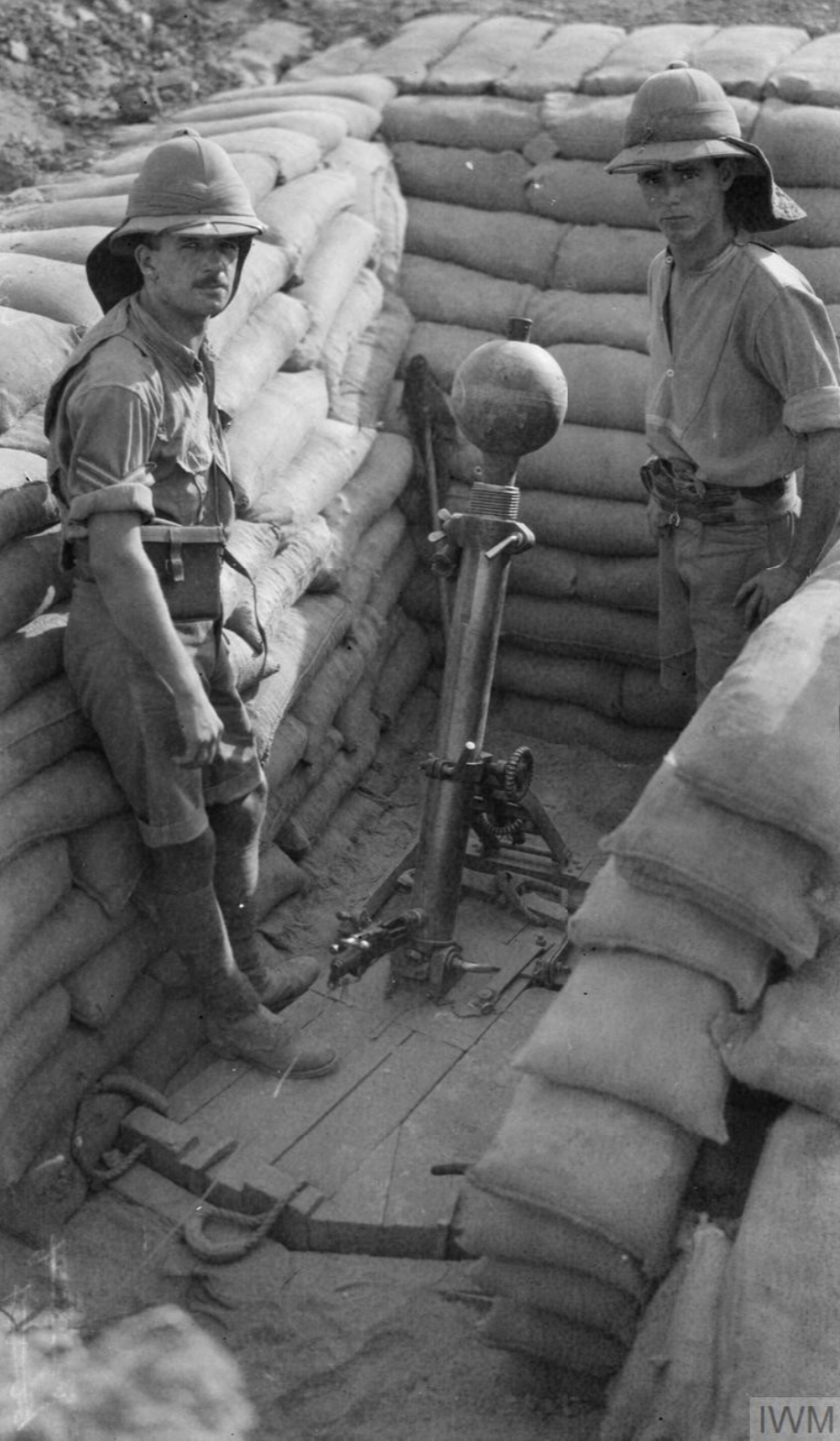
A British 2in Mortar position in Mesopotamia, note the ignitor’s breech is open (Imperial War Museum)

Crews could manage to fire approximately once every two minutes. Much slower than the lighter 3 inch Stokes Mortar and but faster than the heavy 9.45 inch Heavy Mortar. The mortar comprising of just its tube, bed, stand and ignition system weighed 320 lbs (145kg), not including the accompanying tools and the Temple silencer system which could be fitted (which weighed 47 lbs or 21 kg alone).

Typically manned by a 5 man mortar crew comprising of an NCO, gunners, and ammunition bearers. To operate the 2 inch mortar a cordite charge was first placed down the tube, the projectile’s shaft was then inserted on top of the charge, the projectile’s fuse was set and checked and a new blank cartridge chambered in the ignition system. The crew then got clear of the weapon and pulled the lanyard to fire the mortar. To reload the crew ran a clearing stick down the tube and then repeated the loading process.

DSC_0790.jpg
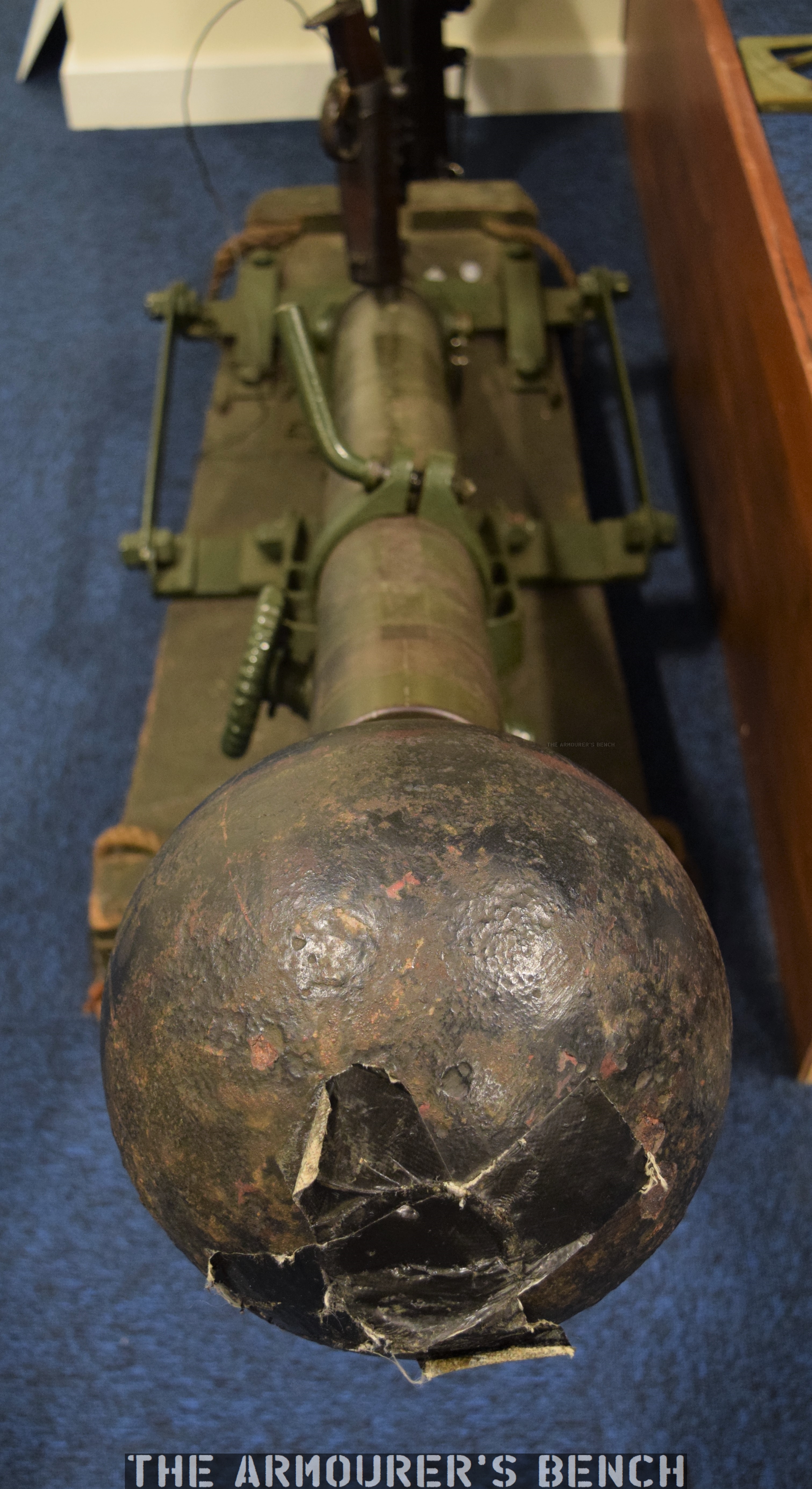
The business end, a view down the length of the mortar (Matthew Moss)

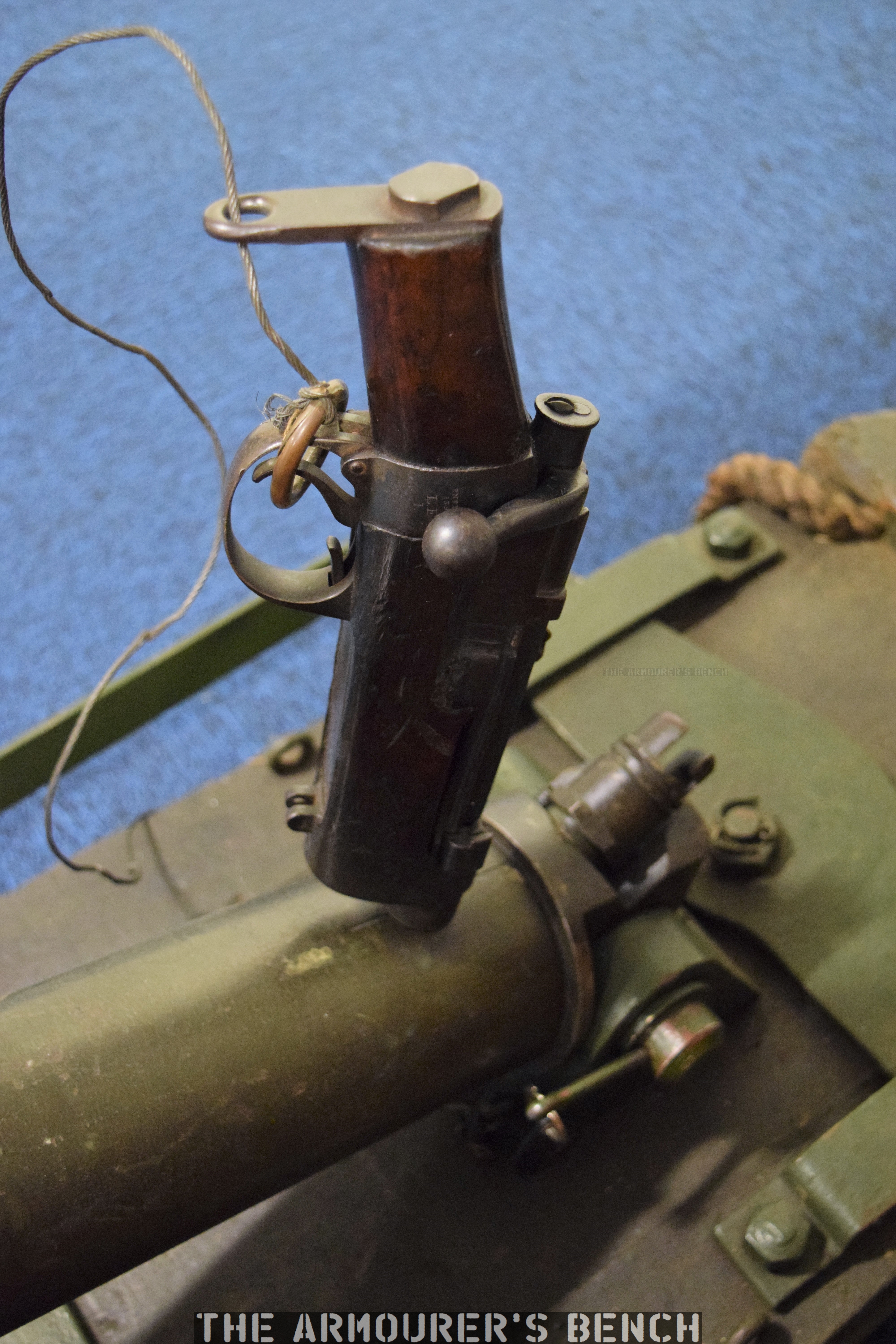
Interestingly, the 2 inch Medium Mortar, like the larger 9.45 inch Heavy Mortar used a cut-down rifle, which screwed into the ‘breech’ end of the mortar tube. This particular mortar has an 1894-dated cut down Lee-Enfield MkI as its ignition system, the cutdown rifle has a wooden insert in its magazine well but it still has its rear volley sight attached. This reusable system replaced the T-tube Friction ignitor, which was in high demand by Britain’s bigger guns. The Lee-Enfield-based system enabled the cordite propellant charges to be ignited by a blank .303 round instead. The rifle’s trigger was pulled with a lanyard from nearby cover. These cutdown ignitor rifle are sometimes confused for Obrez-style Lee-Enfields.

DSC_0787
A close up look at the 2in Mortar’s SMLE ignitor (Matthew Moss)

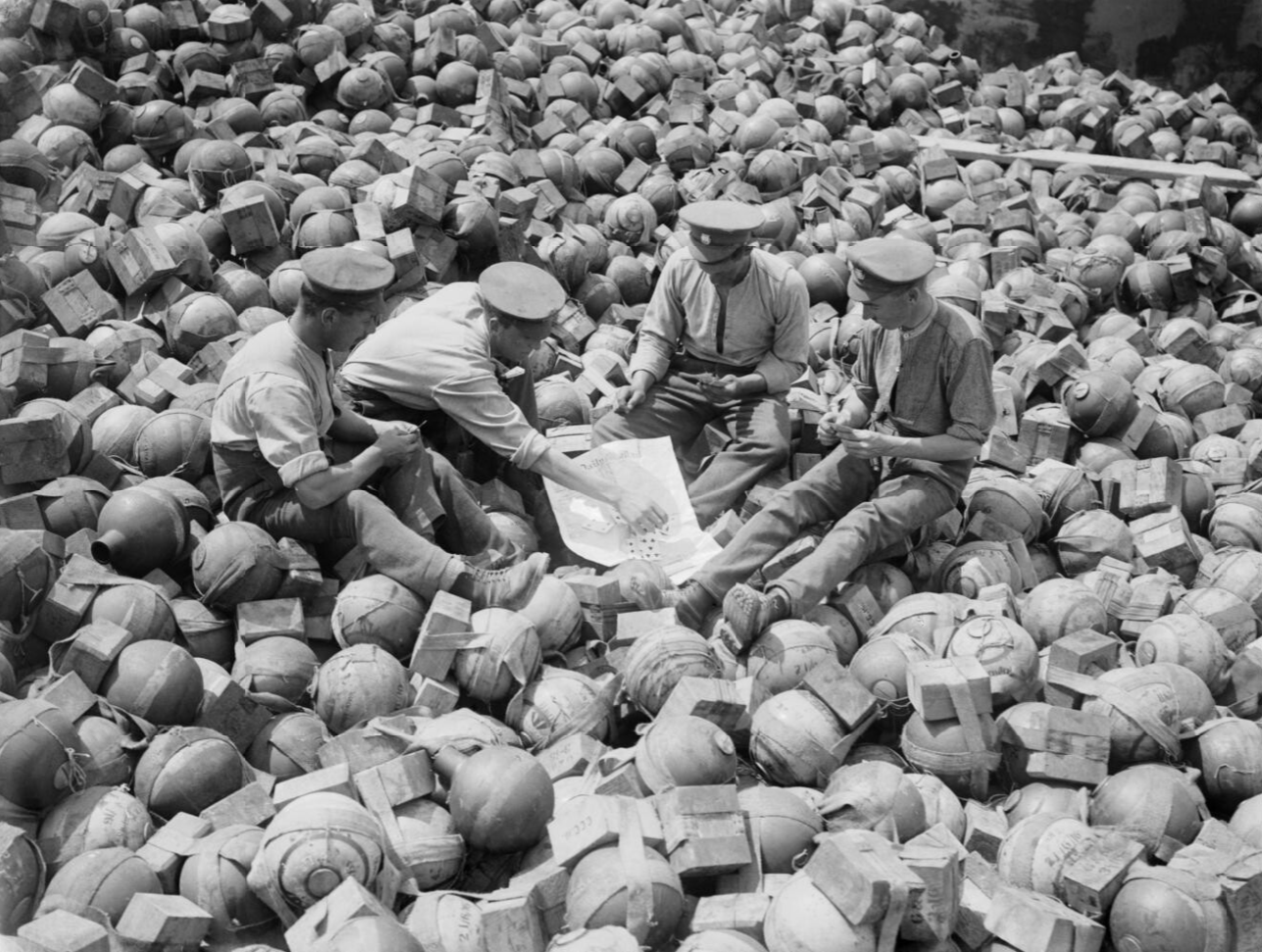
The weight of the cordite charge used dictated the range while a variety of different fuses were used with the projectiles, these screwed into the nose of the bomb. The sphere was about 9.3 inches in diameter with a 2 inch thread for the fuse at its head and a cup for the 22 inch long, 2 inch thick solid cast iron stick or spigot at its base. The sphere was filled with high explosive (Amatol or Ammonal). The high explosive bombs were painted white with a green or pink stripe around their middle.

They were often deployed in batteries of four with three Royal Field Artillery medium mortar batteries attached to each division. The mortars were predominantly tasked with cutting enemy barbed wire and destroying enemy trenches and forward positions, such a machine gun nests.

Royal Army Ordnance Corps playing cards 1916
Men of the Royal Army Ordnance Corps playing cards on a dump of trench mortar ammunition during Battle of the Somme (Imperial War Museum)

Captain Griffith described a battery of 2 inch mortars opening fire on enemy lines:

“A pop, and then a black ball went soaring up, spinning round as it went through the air slowly; more pops and more queer birds against the sky. A stutter of terrific detonations seems to shake the air and the ground, sandbags and bits of timber sailed up slowly and then fell in a calm deliberate way. In the silence that followed the explosions, an angry voice called out in English across No Man’s Land, ‘YOU BLOODY WELSH MURDERERS.’

The 2 inch medium mortar entered service in spring 1915 and remained in use into 1917 with British and Empire troops. It was used on the Western Front and in Mesopotamia. Over 800 were ordered initially with 675,000 bombs, many of the mortars were made in railway and agricultural machinery workshops, allowing larger factories to focus on more complex weapons. The 2 inch mortar was superseded by the larger bore Newton 6 inch mortar later in the war. Some of the remaining 2 inch projectiles were re-purposed as makeshift anti-tank mines, buried in no man’s land in anticipation of possible German tank attacks.

If you enjoyed the video and this article please consider supporting our work here.


Specifications:

Barrel Length: 3 feet (90cm)
Overall Weight: ~340lbs (154kg)
Projectile Types: High explosive & smoke
Projectile Weight: 51lbs (23kg)
Effective Range: 100-570 yards (90-520m)


Bibliography:

Primary Sources:

Field Artillery Notes No.7, US Army War College, (1917) (source)

‘Artillery in Offensive Operations’ GHQ Artillery Notes No. 4 January/February 1917 (source)

‘History of the Ministry of Munitions’, Volume XI, Part I Trench Warfare Supplies (1922)

Up to Mametz, L.W. Griffith,  (1931)

Newsreels:

The Battle of the Somme, 1916, Imperial War Museum (source)

With the Forces in Mesopotamia, 1917, Imperial War Museum (source)

Secondary Sources:

British Artillery 1914-1919. Field Army Artillery, D. Clarke, (2004)

Tommy, R. Holmes, (2004)