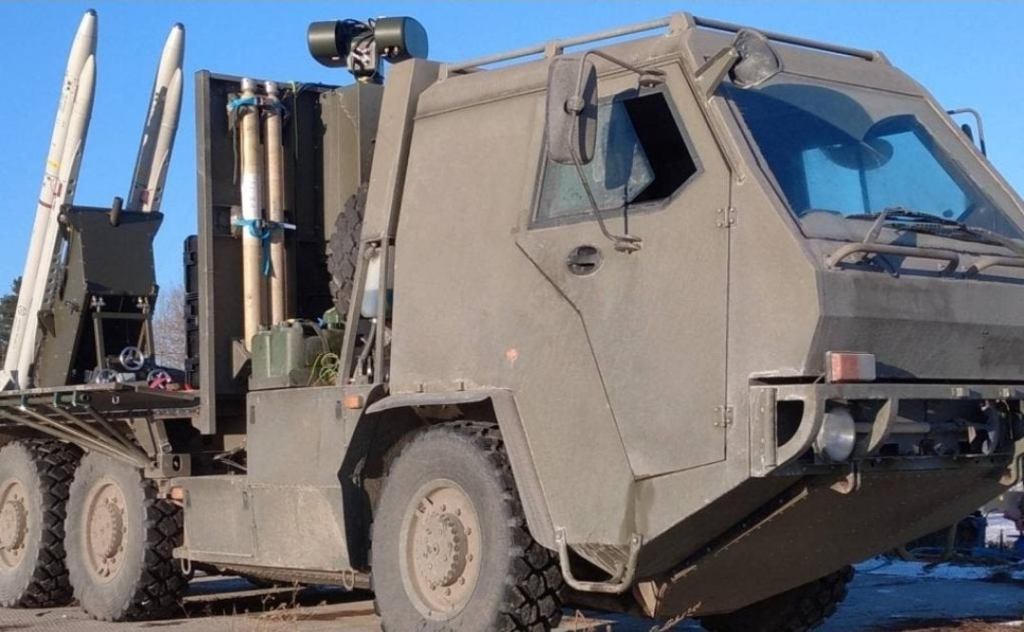
Earlier this week a short video featuring an ASRAAM-Supacat ‘Franken-SAM’ surfaced online. Early on 8 February, Ukrainian Telegram channels began sharing a video pulled from TikTok, which is likely the first daylight footage of one of the UK-developed and supplied ad-hoc air defence systems.
The system can be seen parked by the side of a road and was filmed (original source now private) from a passing vehicle. The date and location the video was filmed is unknown. The launcher appears to have two AIM-132 Advanced Short-Range Air-to-Air Missiles (ASRAAM) loaded with the launcher ramp raised in the ready position. It is difficult to make out but the cab has seemingly been fitted with a protective screen to guard against drone attack. Also visible is what appears to be a sensor turret mounted behind the cab, this is possibly an electro-optical/infrared sensor used for targeting.
Still from recently posted footage of an ASRAAM Franken-SAM in Ukraine, 8 Feb. 2024 (via social media)
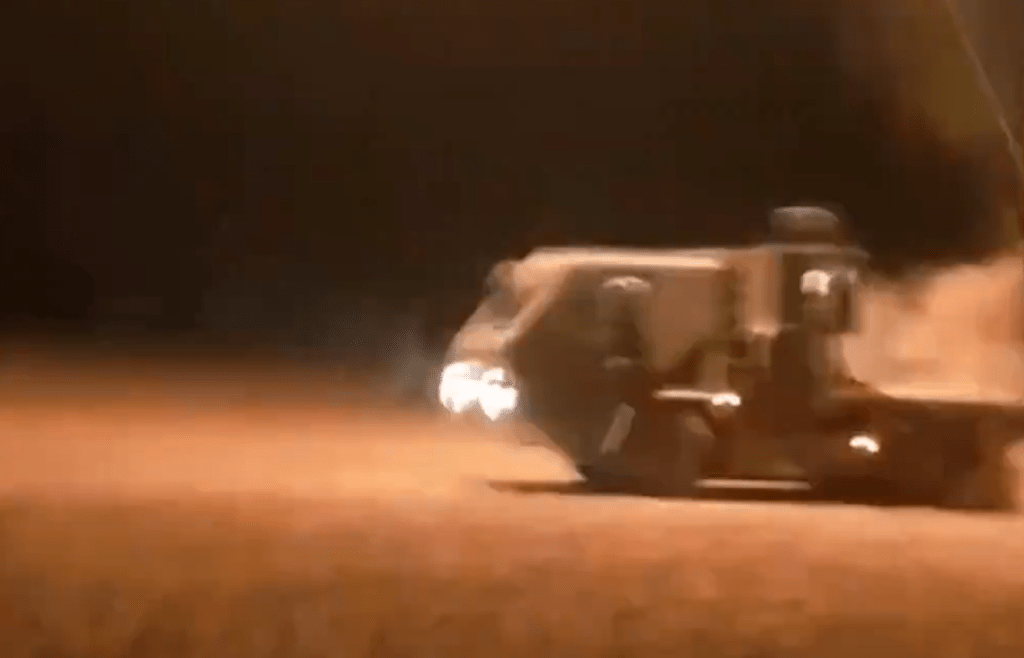
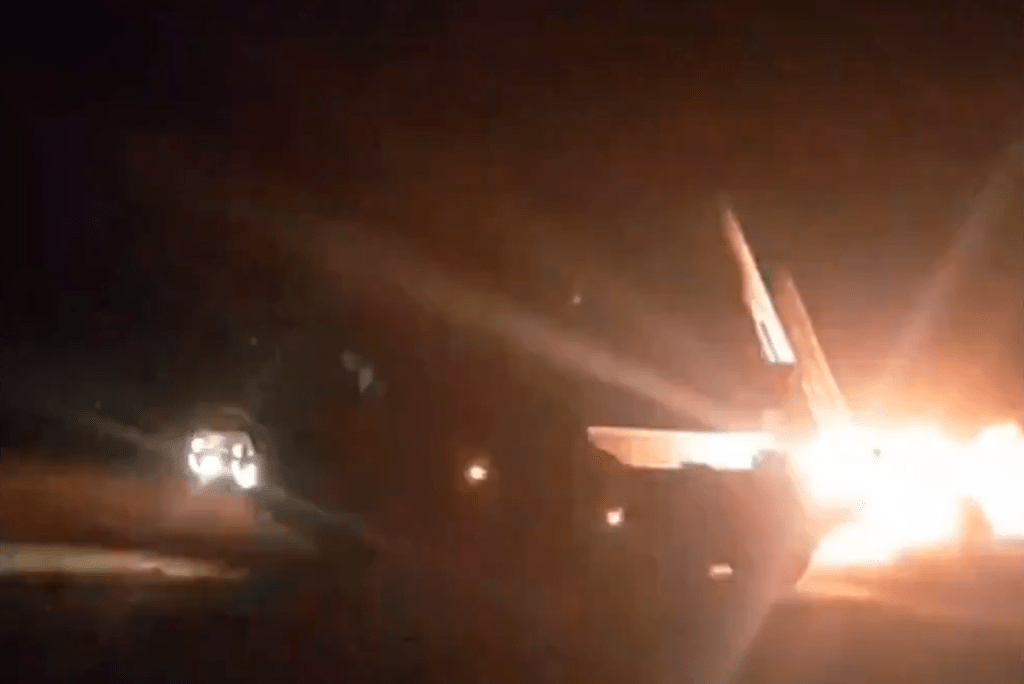
The UK-developed system is one of several so-called Franken-SAMs produced by Ukraine’s allies. They are part of an effort to affordably and quickly bolster Ukraine’s air defences. In October 2023 a pair of videos shared by the Ukrainian air force gave a glimpse of the system in action. The both filmed at night shows a launch but the vehicle is not visible. The second, shared on 12 October, by Ukraine’s Air Command – South shows the successful engagement of a Russian long range loitering munition. As the darkness is lit up by the missile launch, the Supacat 6×6 High Mobility Transporter is briefly visible.
The AIM-132 missiles and the vehicles launching them were provided by the UK in the summer of 2023. ASRAAM uses infrared homing and can lock onto its target after launch. It has an air-launched range of more than 25km but this is likely shorter when used in a ground launched role. The system may be used in conjunction with radar systems which feeds target data to the missile. A key feature of the ASRAAM is its ability to lock-on after launch, theoretically allowing it to be vectored onto a target in the air before it begins IR homing.
A photo dating from August 2023 of a Supacat High Mobility Vehicle mounted with a pair of MBDA UK ASRAAMs (Ukrainian Ministry of Defence)
The system, however, isn’t ideal with limited ready-to-fire capacity on the launcher ramp, with just two rails, and no protection for the missiles themselves, from either the elements or from potential fragmentation or impact damage if attacked. The ad-hoc air defence system first saw action in Ukraine in August 2023, and represents an ingenious improvisation utilising a highly capable missile in an air defence role it was never envisaged in. In December 2023 UK Ministry of Defence summarised their development:
“In summer 2022, a joint MoD-MBDA team developed air defence systems to fire ASRAAM from the ground for the first time. Within four months of initiating the surface launched ASRAAM project, these air defence systems were developed, manufactured, trialled and Ukrainian crews trained on their usage, on UK soil, before being transferred into Ukrainian hands.”
It is unclear how many of the systems have been assembled but in late 2023, it was reported that the UK had supplied “a handful” of the missile-equipped Supacat trucks. They were believed to be in use in near the front and in the Kyiv region, defending key infrastructure, against Shahed-136/Geran-2 long-range loitering munition attacks.
In December 2023, the UK Ministry of Defence announced that a further 200 ASRAAMs would be provided to Ukraine and that the systems in-country had achieved a “successful hit rate reported as high as 90% against some Russian air targets.”
Support Us: If you enjoyed this video and article please consider supporting our work here. We have some great perks available for Patreon Supporters – including early access to custom stickers and early access to videos! Thank you for your support!
While doing some archival digging I found some interested newsreel footage of early Cold War British missiles. The footage features the Malkara anti-tank missile and the Thunderbird surface-to-air missile.
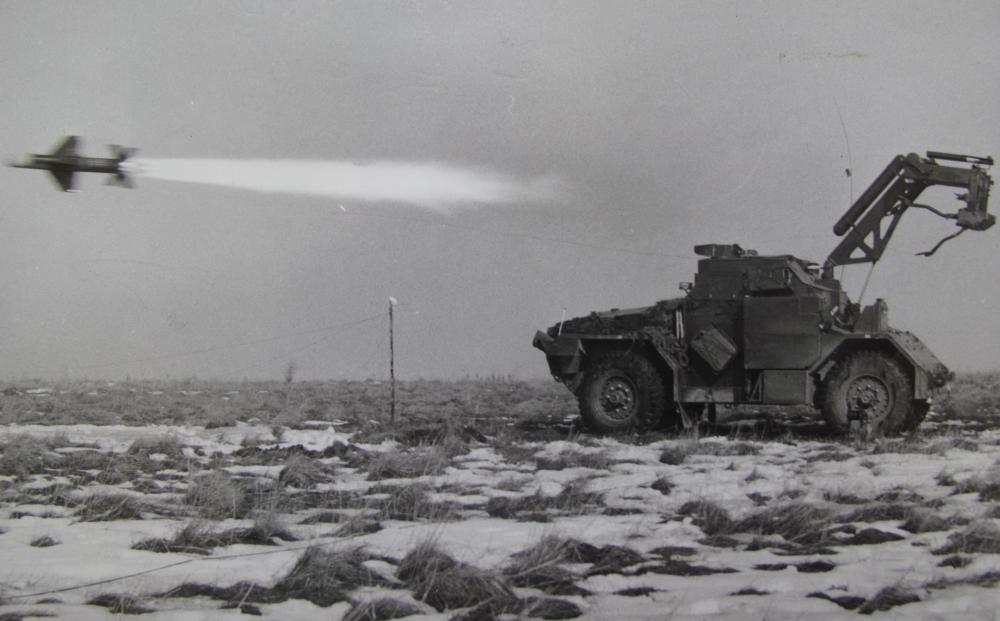
The Malkara was developed in the early 1950s. It was a wire-guided anti-tank weapon with a 57lb HESH warhead. It had a range of up to 2.5 miles. In the footage we see it guided through a hole in a target net.
FV1620 Humber Hornet launching a Malkara (ParaData)
The Malkara was mounted on a number of platforms and vehicles and remained in service into the mid-1960s. It’s bulk and weight saw it eventually replaced by the smaller Vickers Vigilant and the Swingfire.
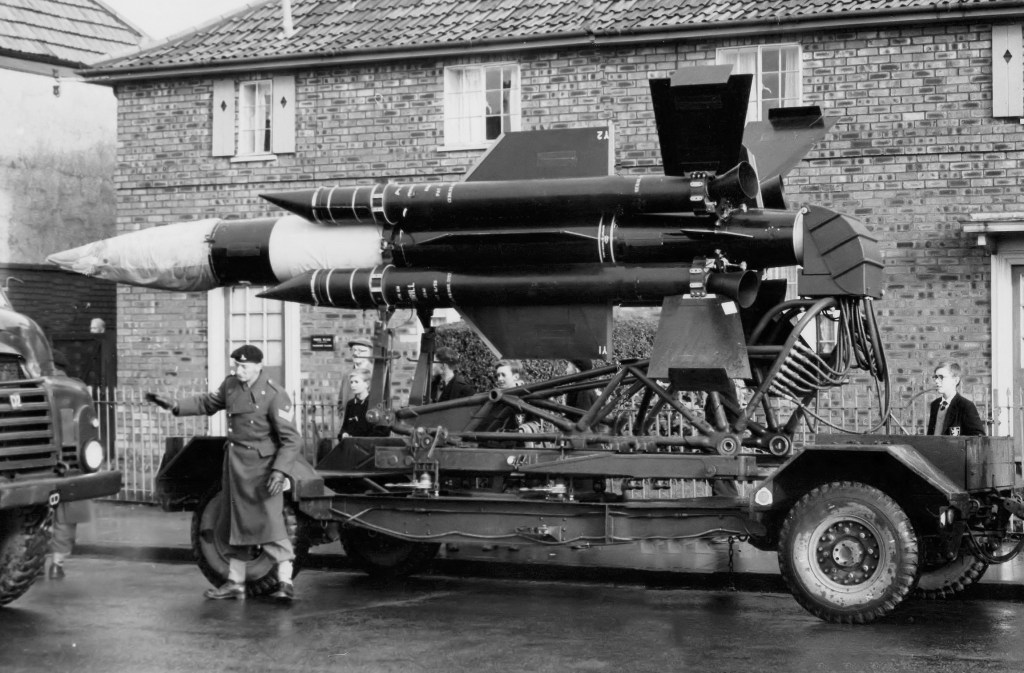
Thunderbird, c.1960 (Adrian Pingstone)
The second missile featured in the newsreel is the English Electric Thunderbird, a British Army SAM with a 75km range and a speed of Mach 2.7. The Thunderbird was replaced by the Rapier in the 70s, which is still in service today.
Hope you enjoyed seeing some of these British cold war missiles in action, it’s amazing what you find in archives when you aren’t looking for it!
Bibliography:
Footage Source: Universal Newsreel Volume 30, 1957, via US National Archives, (source) Anti-Tank Weapons, T. Gander, (2000)
If you enjoyed these videos and this article please consider supporting our work here. We have some great perks available for Patreon Supporters. You can also support us via one-time donations here.Thank you for your support!
The Boeing Bomarc was the world’s first long-range surface to air missile and despite its shortcomings remain in service for a decade. It was an extremely ambitious project and is a Cold War weapon that few today are familiar with.
In the late 1940s, Boeing began work on a surface to air missile – then described as a ‘pilotless interceptor’. The project was code-named MX-1599 and the Michigan Aerospace Research Center (MARC) joined Boeing to work on the programme.
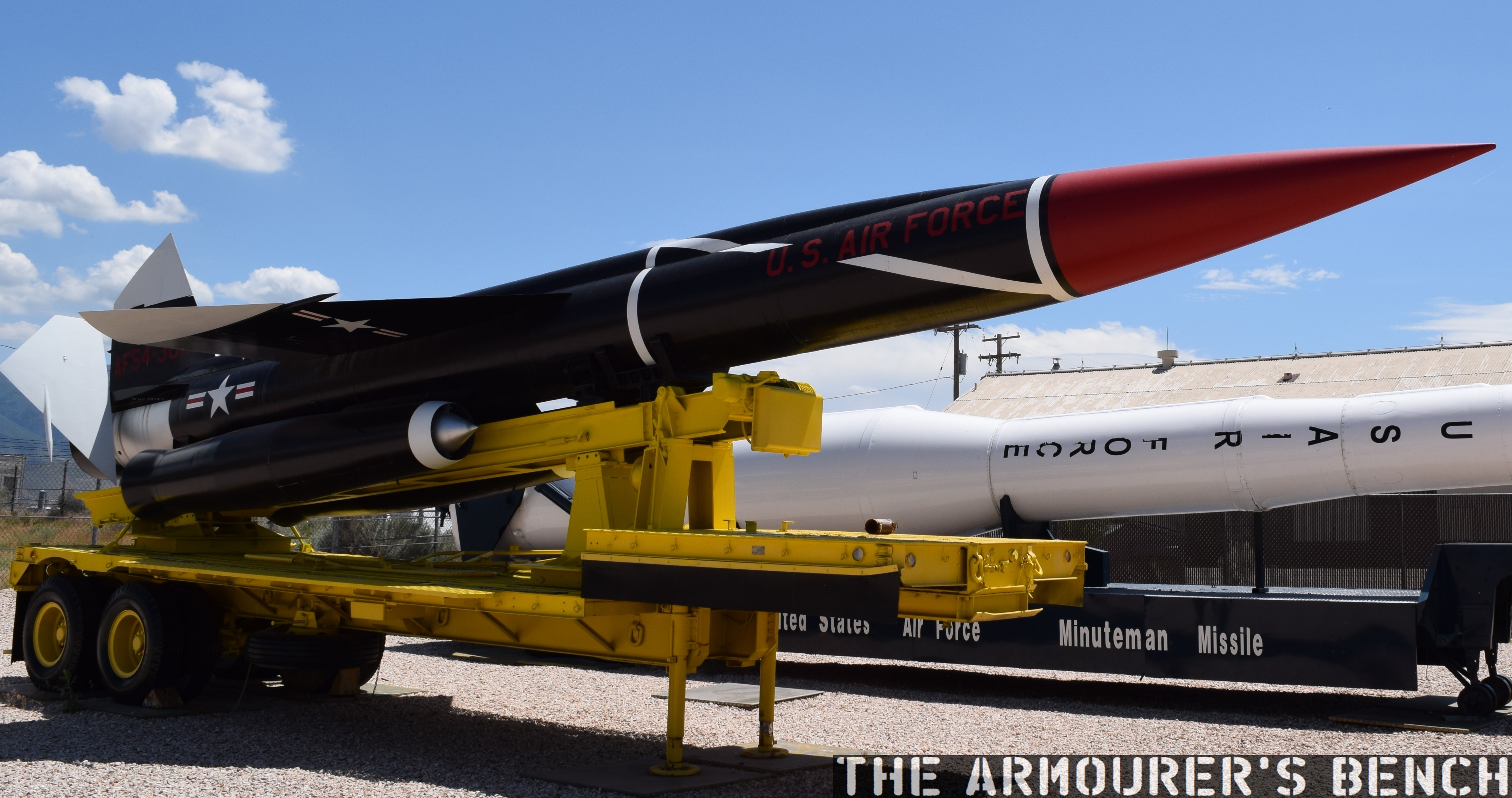
Boeing BOMARC at Hill Aerospace Museum (Matthew Moss)
The MX-1599 was to be a long-range supersonic nuclear-tipped surface to air missile (or SAM), detonated by a proximity fuse. The missile went through a number of official designations as it was developed during the 1950s – finally becoming known as the Bomarc – an acronym of Boeing and Michigan Aerospace Research Center.
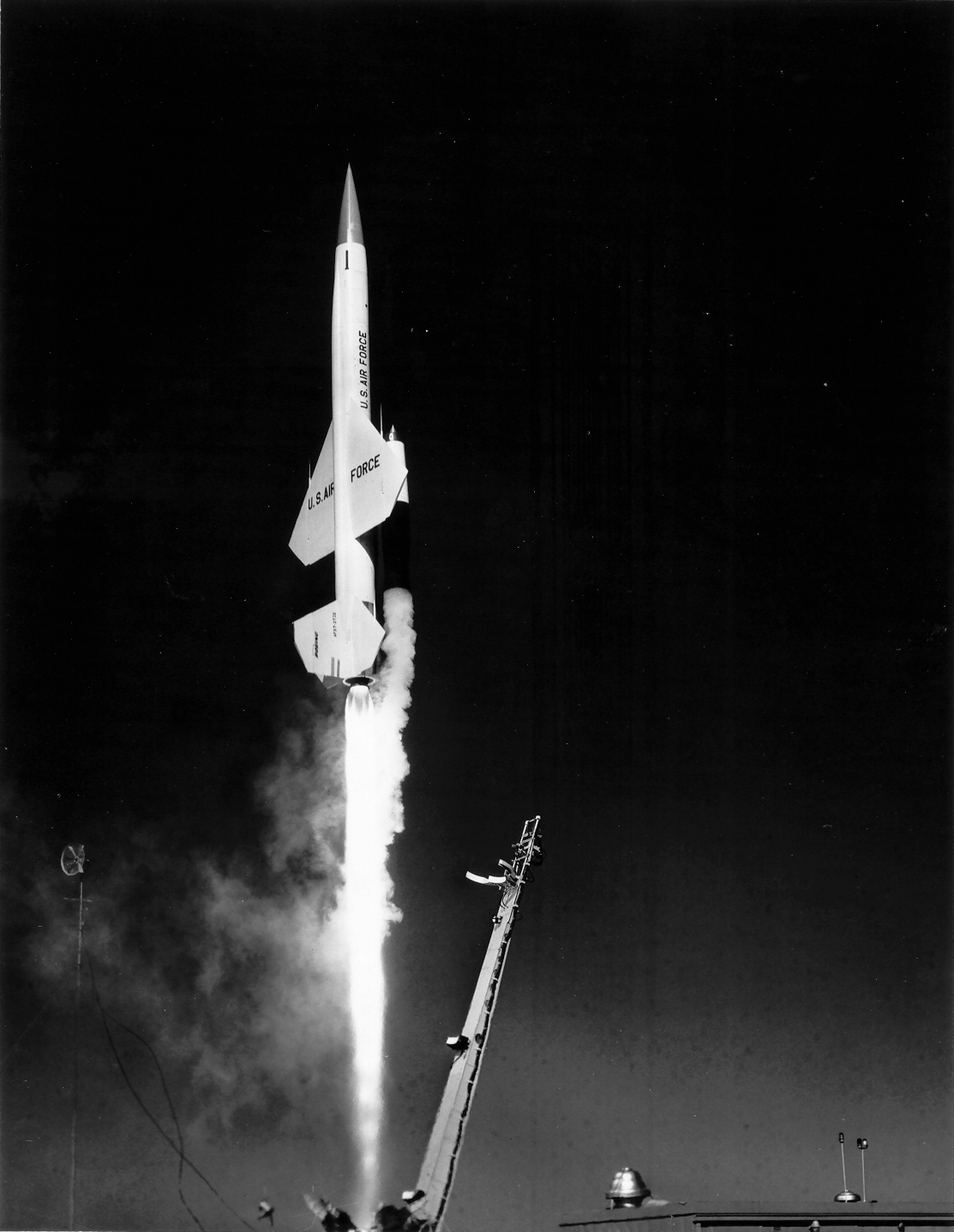
The Bomarc was launched vertically using rocket boosters, before its main ramjet engines took over, enabling it to cruise at Mach 2.5 (approx. 1,920 mph). The initial Bomarc A had a range of 200 miles with an operational ceiling of 60,000 feet.
It was ground controlled using NORAD’s Semi-Automatic Ground Environment (SAGE) system until it neared its target, when an onboard radar, a Westinghouse AN/DPN-34 radar, took over.
The Bomarc could be tipped with either a 1,000 lb conventional high explosive or low yield W40 nuclear warhead. These were detonated by a radar proximity fuse. The W40 had a yield of up to 10 kilotons, able to destroy entire formations of aircraft.
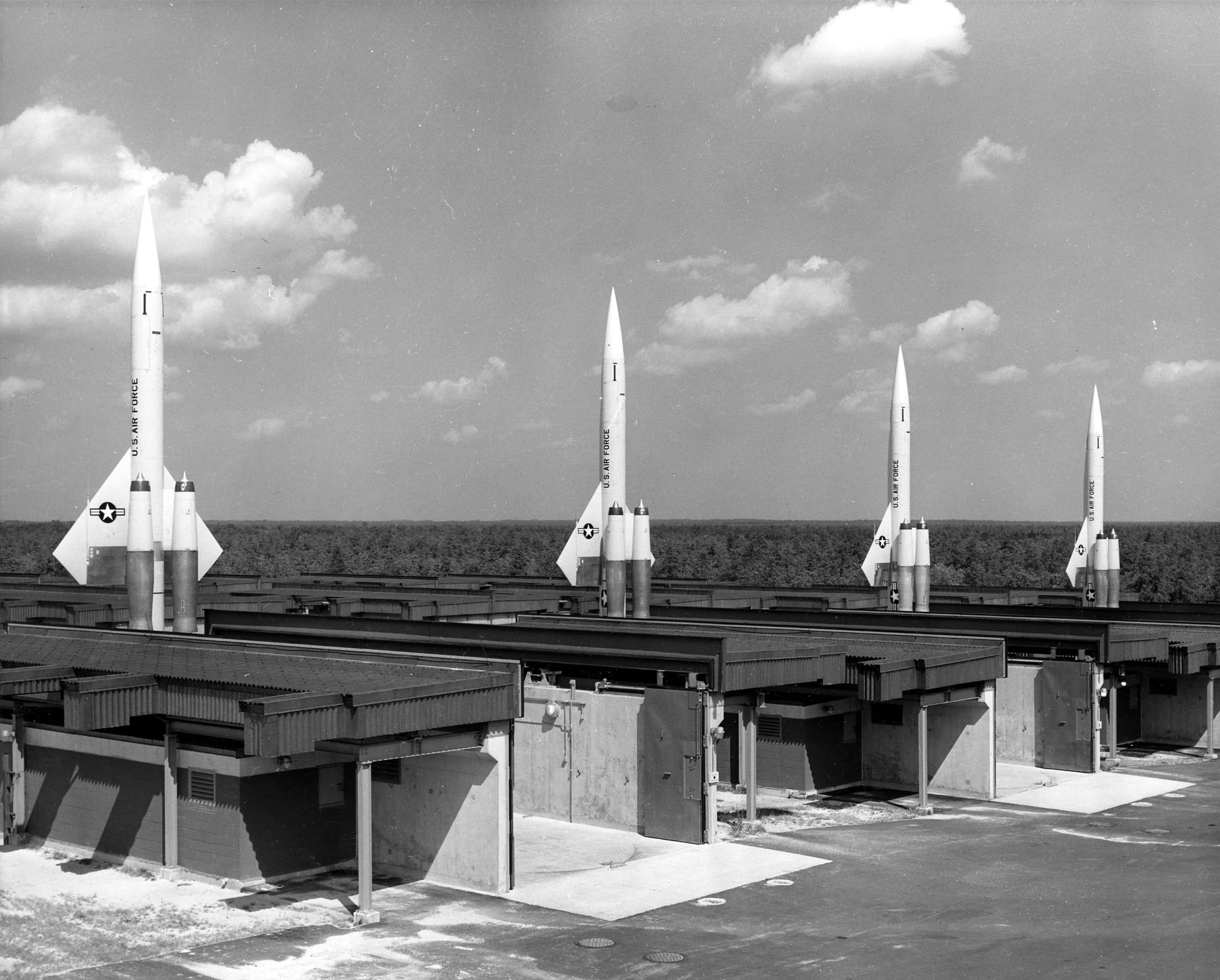
BOMARC Site No. 1 at McGuire Air Force Base (USAF)
The missile had a wingspan of just over 18 feet or 5.5metres, it was 45 feet or 13.7 metres in length and weighed approximately 16,000 lbs (7257 kg) on launch. The Bomarc’s first flight took place on 24th February, 1955.
The USAF intended to use the missile to engage incoming Soviet bomber formations and ICBMs. Originally planning for over 50 Bomarc launch sites, but only one was operational by 1959 and only eight were operational by the early 1960s. The upgraded Bomarc B was developed in the early 1960s, with an improved radar, a Westinghouse AN/DPN-53, and a greater maximum range of 430 miles, as well as a higher operational ceiling of 100,000 feet.
The Bomarc was stored horizontally in specially built semi-hardened bunkers and kept fuelled and ready to launch at a moment’s notice. When targets were detected the missile would be raised and launched vertically.
One of the dangers of keeping the missiles fuelled became clear in June 1960, when a nuclear-armed Bomarc A caught fire exploding the onboard tank and contaminated part of McGuire Air Force Base with melted plutonium. Despite this the missiles remained operational for over a decade with the first sites being deactivated in 1969 with the last stood down in 1972.
BOMARC launching (USAF)
While the Bomarc missiles were the world’s first operational long-range anti-aircraft missile they were too slow to achieve operational readiness to keep pace with the rapidly changing nuclear threat – as both superpowers transitioned from bomber to ICBM-focused strategies. They were expensive to manufacture and difficult to maintain at readiness. In the late 1950s the Bomarc also embroiled in a war of words with the US Army arguing their short range Nike Hercules (SAM-A-25/MIM-14) missile was more effective. The Hercules remained in service through to the 1980s, albeit as a air defence missile – rather than targeting soviet ICBMs or bomber aircraft.
The Bomarc was an ambitious project when it began in the late 40s, but with technology and cold war nuclear strategy rapidly evolving the Bomarc was almost obsolete before it became operational. A total of 570 Bomarc missiles were built between 1957 and 1964 with the US and Canada (which led to considerable political controversy) being the only countries to deploy them.
I hope you guys enjoyed this look at the Bomarc, we’ll have a few more videos on missiles in the future.
IM-99A/B BOMARC Missile, Boeing, (source) Nuclear Weapons of the United States: An Illustrated History, J.N. Gibson, (1996) Nike Historical Society (source)
Supersonic Guardian, Boeing film, c.1960 (source)


 The Armourers Bench