
We have previously examined a couple of Russian efforts to develop small arms-based anti-drone weapons including the single-shot shotgun insert for GP-25 under-barrel grenade launchers and in the future we’ll examine the efforts to develop an anti-drone shotgun muzzle device which is now in production at several Russian companies. All of these efforts have one thing in common – they are seeking to turn the individual soldier’s rifle into a weapon capable of countering the enormous drone threat they are facing.
In this article/video we’ll examine perhaps the simplest attempt at creating counter-drone ammunition I’ve come across so far. While a number of Russian companies have developed specialist shotgun ammunition for increasing the probability of shooting down drones with 12 gauge shotguns there has been no official or commercial efforts to develop an anti-drone 5.45x39mm rifle round. The efforts examined here all appear to be localised with the concept disseminated via social media.

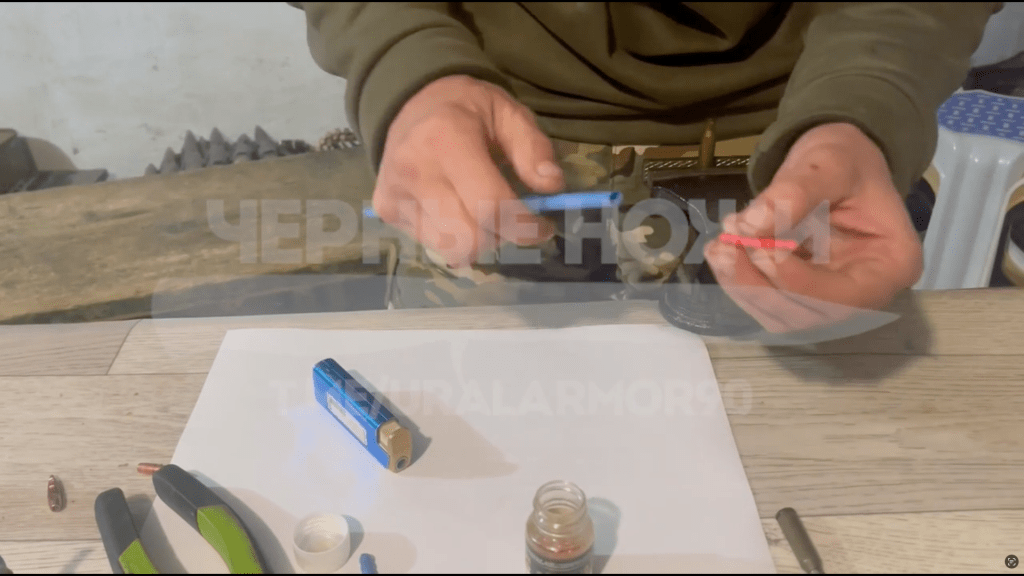
In early July, a video showing a Russian combatant making home-made buckshot cartridges for their AK-74 pattern rifles was shared. The quoted caption read: “To combat annoying drones, our soldiers are remaking AK cartridges by inserting buckshot charges in them in a dielectric heat shrink.” In the video the Russian combatant demonstrates filling a length of electrical wire insulation sleeving with ball bearings, pushing them in with what appears to be a tent peg. He then uses a candle to heat shrink the sleeve around the ball bearings and then takes a 5.45x39mm cartridge, with the projectile pre-extracted, and places the ball bearings into the cartridge case, down on top of the propellant. He then heat shrinks the exposed ball bearings and hand crimps the case neck around them.
Since the July video I didn’t come across any imagery showing the buckshot until November, when interest in the concept seems to have increased with a flurry of posts on Russian telegram channels discussing the manufacture of the rounds and their pros and cons. The first of the second wave of posts came on 12 November, with a telegram channel sharing a photograph of two buckshot 5.45x39mm cartridges alongside two sleeves of seven ball bearings. The post makes some interesting observations; suggesting alternating the loading the magazine with the buckshot and tracer rounds. The post also mentions that the 4.5mm diameter of the shot is smaller than the diameter of the barrel and that this will likely impact ‘accuracy’ – though I suspect this is just one of numerous factors which will impact on effectiveness of the rounds. The post also notes that the plastic sleeving is likely to gum up the barrel’s rifling which will in turn impact the accuracy of the rifle and could lead to catastrophic fouling. The post concludes by suggesting while the idea is flawed if you don’t have a shotgun available the improvised buckshot is better than nothing.
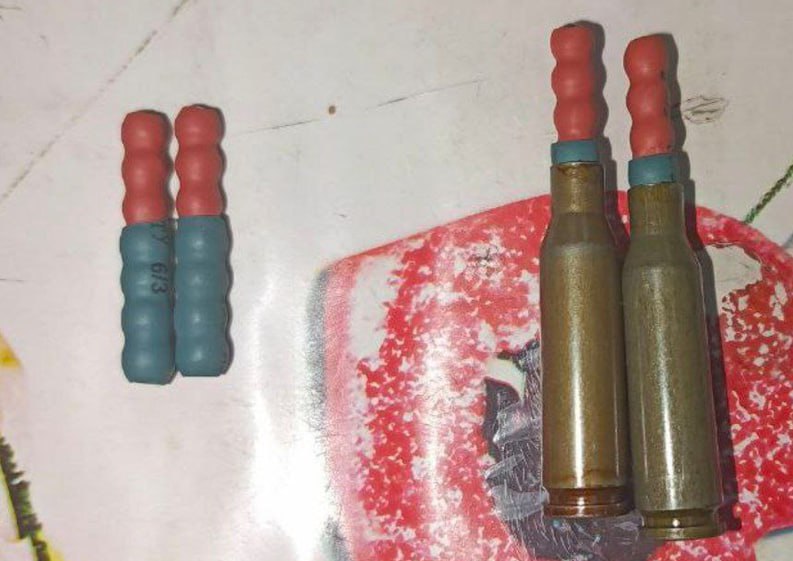
Two days later on the 14 November, a video showing the assembly of a buckshot round identical to those seen in the previous photograph was shared. A Russian combatant fills a cable sleeve with seven Crossman 4.5mm (.177) ball bearings, he heat shrinks it with a lighter and then puts the shot into another slightly wider piece of sleeve which he also heat shrinks. Then he hand seats the shot in a standard 7N6 cartridge case and uses a pair of pliers to crimp the case neck.
On 16 November, the first video claiming to show the buckshot in action was posted. The clip begins with a drone feed video showing a lone Russian combatant in a trench system before cutting to helmet camera footage showing the combatant firing up at a passing FPV drone, he appears to successfully clip one of the drone’s rotors. The footage may have been filmed at a training range. Alongside the video they posted a photograph of a magazine loaded with the buckshot. The post’s caption again recommends alternately loading the magazine, this time with a sequence of ball ammunition and buckshot, claiming that “this sequence allows you to fight air targets as effectively as possible”.

On the 18 November, the same channel shared a short post explaining how the buckshot cartridges are assembled and what is needed. The post shows the same photograph that was shared on 12 November. This post suggests using the buckshot with a mix of tracer when firing from vehicles and standard ball ammunition when on foot.
Another Russian channel uploaded a pair of videos on the 29 November, one showing the assembly of a buckshot cartridge and a demonstration video. The first video shows several individuals in a workshop assembling the buckshot cartridges. Several individuals are working on different states of assembly with one feeding the shot into the plastic sleeving, another using a heat gun to shrink form the sleeving, another pulling projectiles from 5.45x39mm cartridges and another cutting the sleeve of shot to length, about six ball bearings, before seating it in a cartridge. This process shows production at a more significant scale.
The second video shows a demonstration of the rounds being fired from an AK-74. In the video the combatant recommends not using the rifles standard muzzle-brake to in feat of the shot striking it. The combatant then empties a magazine of buckshot, though its difficult to make out if the entire magazine is buckshot or if there is a mix. The video then shows the target downrange, a sheet of metal, perforated with a significant dispersal pattern.
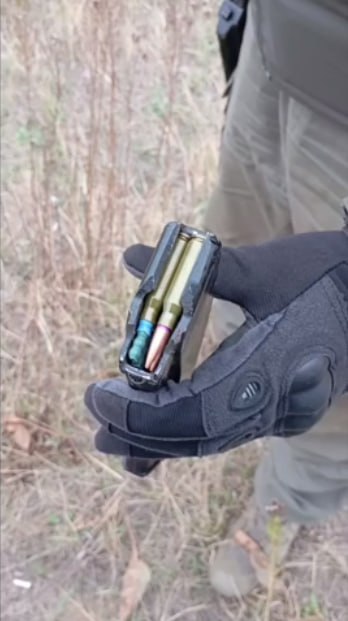
A post on another Russian telegram channel shared on 3 December, included the earlier videos along with a couple of photographs of a pair of jungle-taped magazines alternately loaded with the buckshot and a mix of ball and what appears to be black-tip armour piercing 7N22. Interestingly, the post suggests that the alternated non-buckshot rounds ‘clean’ the bore of any residue from the plastic sleeving.
The most recent sighting of the buckshot, at the time of writing, were published on 5 December. They include a range video which demonstrates the buckshot, with the caption claiming that from 14 rounds fired there were “41 punctures in the target”, the target appears to be about 25 feet (8 metres) away. It is worth noting that the rifle’s muzzle-brake has been removed. In the replies to the post a photo of some buckshot rounds was shared showing them alongside a length of sleeving filled with shot and a bottle of Crosman ball bearings.
The final video shared on 5 December again shows the typical production of the home-made buckshot rounds. This time lead shotgun pellets are used rather than ball bearings. The caption of the video notes that it is essential to clean the rifle after using the buckshot ammunition. It also notes that the main strength of the home-made ammunition is that its simple and instantly on hand if a soldier carries a magazine loaded with it, then he can quickly load and engage a drone.
The development of the home-made 5.45x39mm buckshot is certainly intriguing and at short ranges, from the available imagery, appears to have some merit. It enable an combatant armed with an AK-74 to theoretically engage a drone with a potentially slightly improved hit probability – though they may have to operate with their muzzle-brake permanently removed. Drones remain one of the key battlefield threats for combatants in Ukraine but it is unlikely this ad hoc solution is effective against drones at ranges of more than 20 yards. The dispersion of the five to seven shot is extremely unpredictable given it is being fired from a rifled barrel and there is not choke.
Many Russian posts discuss the potential for damage to the rifle and while this is certainly possible, especially when using the steel BBs rather than lead shot, the user however, is unlikely to be firing hundreds of rounds of the buckshot – especially given how time consuming production appears to be. Fouling from the plastic cable sleeves used may also have detrimental effects and cause barrel obstructions. It’s also unclear how reliably the round will feed given the varied projectile length and lack of rigidity when feeding. Additionally, once in field conditions significant temperature changes could impact the integrity of the plastic sleeves. Never the less the idea is ingenious but it illustrates how urgently defences against FPVs and other drones are needed by troops in the field.
Update – 22/12/24: A clip of a Ukrainian testing a version of the ammunition with 6 ball bearings. He feels the concept has enough merit for it to be of some use. (Source)
Update – 24/12/24: Additional video of scaled production of the 5.45x39mm ‘buckshot’ rounds shared via telegram.
Update – 9/1/25: Another clip of Ukrainian’s testing the ‘AK buckshot’ concept.
Support Us: If you enjoyed this video and article please consider supporting our work here. We have some great perks available for Patreon Supporters – including early access to custom stickers and early access to videos! You can also find us on the History of Weapons & War app. Thank you for your support!
 The Armourers Bench