Rare Sightings of Heckler & Koch G36 & HK433s in Ukraine

In mid-August there began to be sightings of small numbers of interesting Heckler & Koch rifles with Ukrainian special operations units. We’ve previously seen HK416s in use with a variety of units, check out our earlier article/video on those. However, it now appears that alongside H416s there are now a limited number of G36s and HK433s in use in Ukraine.
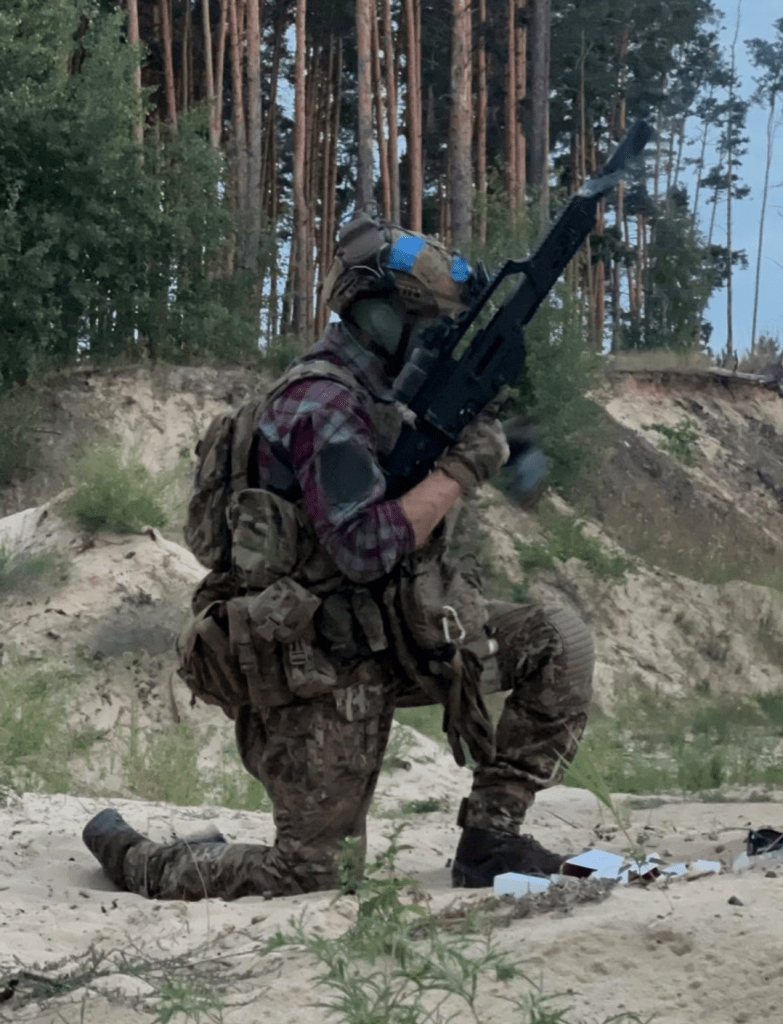
The first image of these appeared on 12 August, when Assault Bastards, a team affiliated with Ukraine’s Intelligence Directorate’s (the GUR) Kraken regiment, shared a photograph of a combatant with a suppressed G36KA4 at the range. On the 18 August, shybenyk.squad, a team associated with the Kraken Operations Unit, posted a team photo with the caption “GUR MOrning. Kill & travel”, with one combatant on the far right seen holding an HK G36KA4. The rifle has an HKey forend, HK’s proprietary mounting system, and is equipped with an Aimpoint RDS and a 3X-C magnifier and an Ase Utra DUAL556-S-BL suppressor.

On 23 August, shybenyk.squad shared a group photo posing in front of a signpost for the village of Lyptsi in the Kharkiv oblast. In the photo we can make out a pair of G36KA4s. Intriguingly both appear to be loaded with STANAG pattern polymer magazines rather than HK’s translucent magazines. This would indicate that either some of the rifles were shipped with magazine well adapters or were shipped with them.

Shortly after these photos emerged a member of the Kraken regiment shared a close up photo of one of the G36KA4s with my colleagues at StreakingDelilah. It has an HK translucent magazine and is fitted with an Aimpoint T2 RDS and Aimpoint 3X-C magnifier and an Ase Utra DUAL556-S-BL [Correction: DUAL QM-2] suppressor. This appears to be the common setup and likely how the rifles were shipped. On the HKey forend we can see a short rail segment has been attached for mounting a light or laser aiming device. The rifle looks in great condition, appearing as if new out the box.
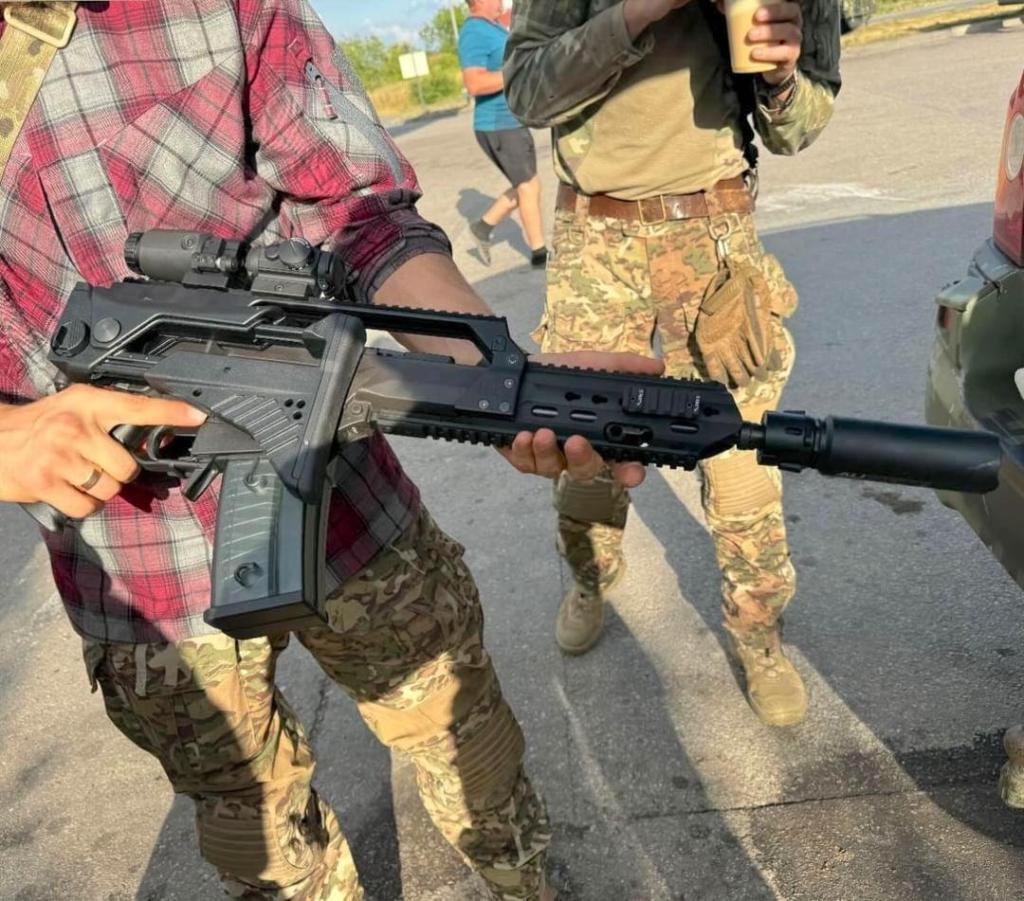
shybenyk.squad shared another group photo alongside the Assault Bastards group on the 24 August. The photo again features two previously seen G36KA4s. Speaking to Shybenyk.squad they noted that they only received a couple of the rifles.

On the 26 August another member of Kraken shared photographs of himself firing a G36KA4 at a range. The rifle has the usual accessories and is loaded with an HK translucet 30-round magazine. On 30 August, shybenyk.squad shared another image of a combatant with an G36KA4 again fitted with Aimpoint optics and an Ase Utra suppressor. The rifle has been painted up and is seen loaded with a polymer MAG (what appears to be a Mission First Tactical Extreme Duty Magazine). Again indicating magazine well adaptors are in use.
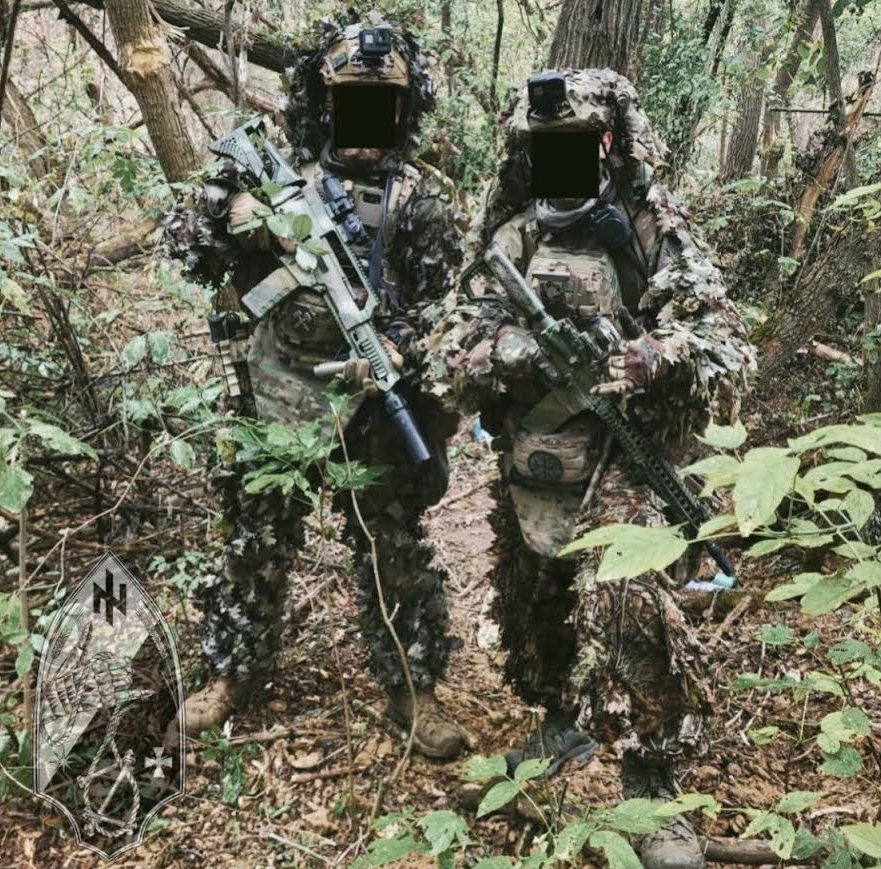
But there may have been some earlier sightings dating back to 2023. In mid-June 2023, Tysk shared a series of three photos of a Ukrainian serviceman with a G36K with a railed forend. The rifle doesn’t have any optics mounted and the folding back-up iron sights are deployed. Tysk noted that they had been sent the photos by a serving subscriber but there was no further detail on where the photos were taken – be it in Ukraine or during training abroad.
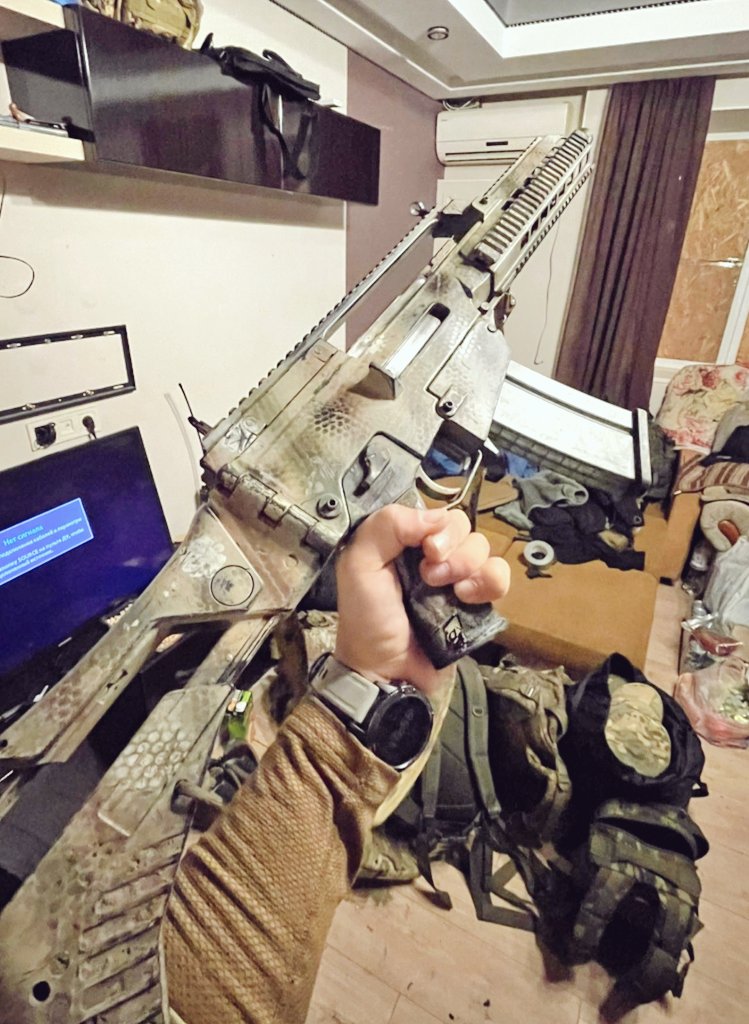
Several months later in October, a member of the 12th Assault Brigade (Azov) shared a photograph of another G36K series rifle, again with no optics and a paint job similar to the earlier rifle. The combatant who shared the photograph noted that it wasn’t his rifle but claimed that a number of them were in his unit’s armoury for a time. In early November, a German colleague DEAidUA, contacted the BMVg (German MoD) who stated to him that they had “no knowledge of the transfer of these weapons to Ukraine.” Additionally, there has been no mention of the rifles on the German government’s extensive list of aid to Ukraine. The only small arms mentioned include a number of pistols, some MG3s and the HK MG5s we’ve examined in a previous article/video.

HK433

In addition to the G36s yet another Heckler & Koch rifle has appeared in Ukraine recently – the HK433. The first sighting of an HK433 in Ukraine actually predates the recent sightings of G36s. At the very end of July a member of Kraken posted a photograph featuring an HK433 equipped with a Aimpoint T2 RDS, an Aimpoint 3X-C magnifier, a Magpul RGV front grip, a Steiner DBAL A2 laser aiming module and a Norwegian A-TEC ‘A-Flow’ suppressor. The combatant who shared the photo stated that his platoon had received 10 of these rifles for testing and evaluation purposes, though he did not state if they had been provided directly by HK. On speaking to the combatant about the rifles he noted that they had performed well but that they had not yet been used in combat but they had been taken out on operations.
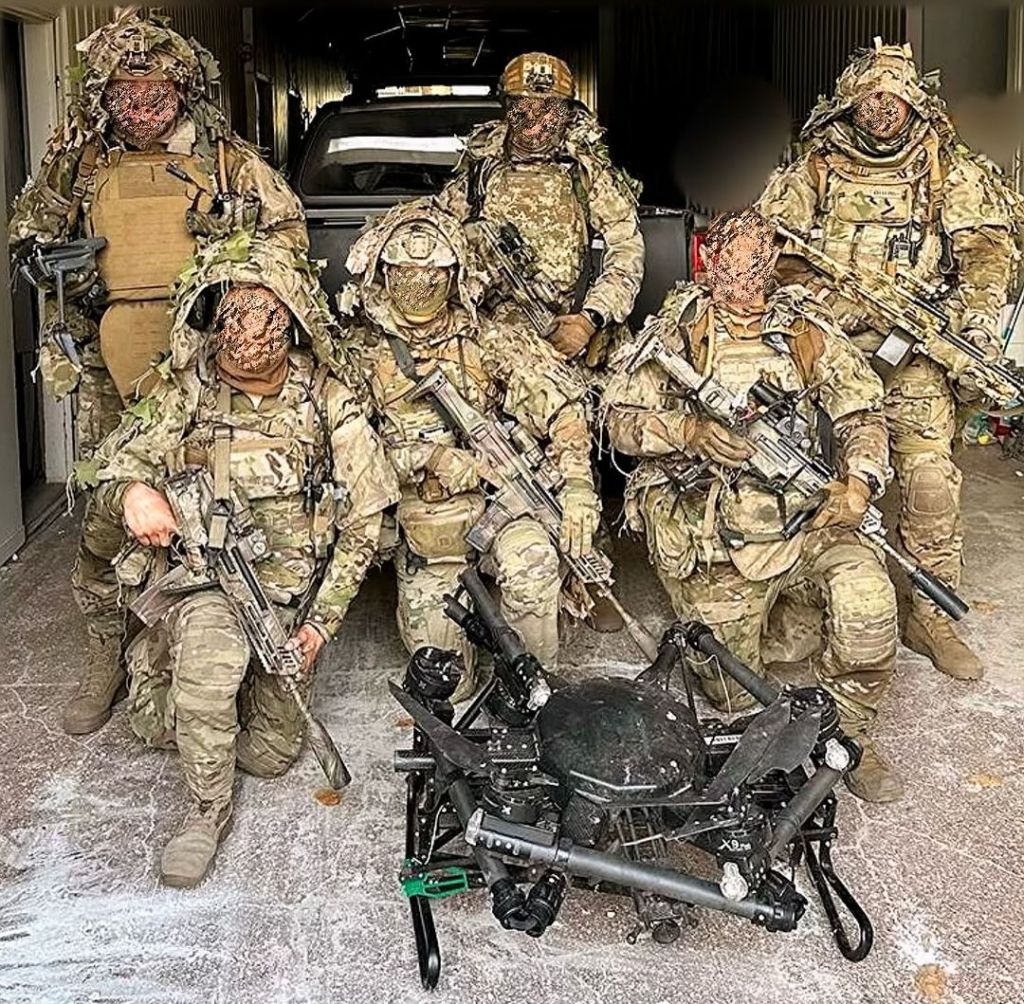
It was over a month before another image of the HK433s surfaced, on 18 September four HK433s, three with Aimpoint Micro T2s and magnifiers and one with an EOTECH XPS and a magnifier, they all appear to have the A-TEC suppressors. The photo appears to be of a recce squad and was shared by Kraken’s 3rd assault company.

The most recent photo of an HK433 to surface was shared on Telegram with a caption noting the combatant that submitted the photo was part of the Ministry of Internal Affairs of Ukraine and operating in the Kharkiv oblast. The combatant is possibly part of the National Guard’s 12th Assault Brigade.
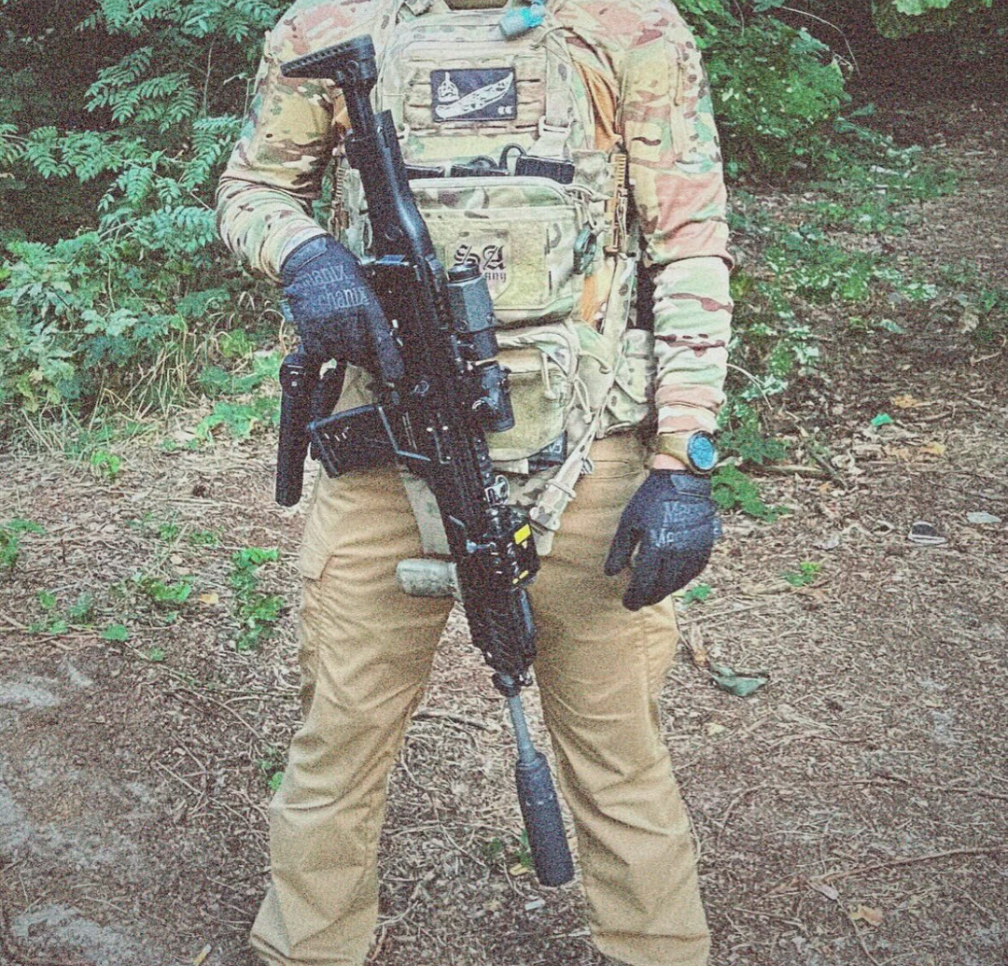
It would seem that Ukraine has received small numbers of G36s and HK433s and that these have been issued to teams associated with. the Kraken regiment and the 12th Assault Brigade. The source of these rifles is unclear, while the G36KA4s may have come from one of the Baltic nations the HK433s are newer, less common rifles and have not yet been adopted by any militaries in the 5.56x45mm configuration. This may indicate that the rifles were provided by Heckler & Koch themselves, its unclear if the G36s may have been included in the same batch.

Update – 5/10/24: Another G36 with magazine adapter and PMAG. (Source)
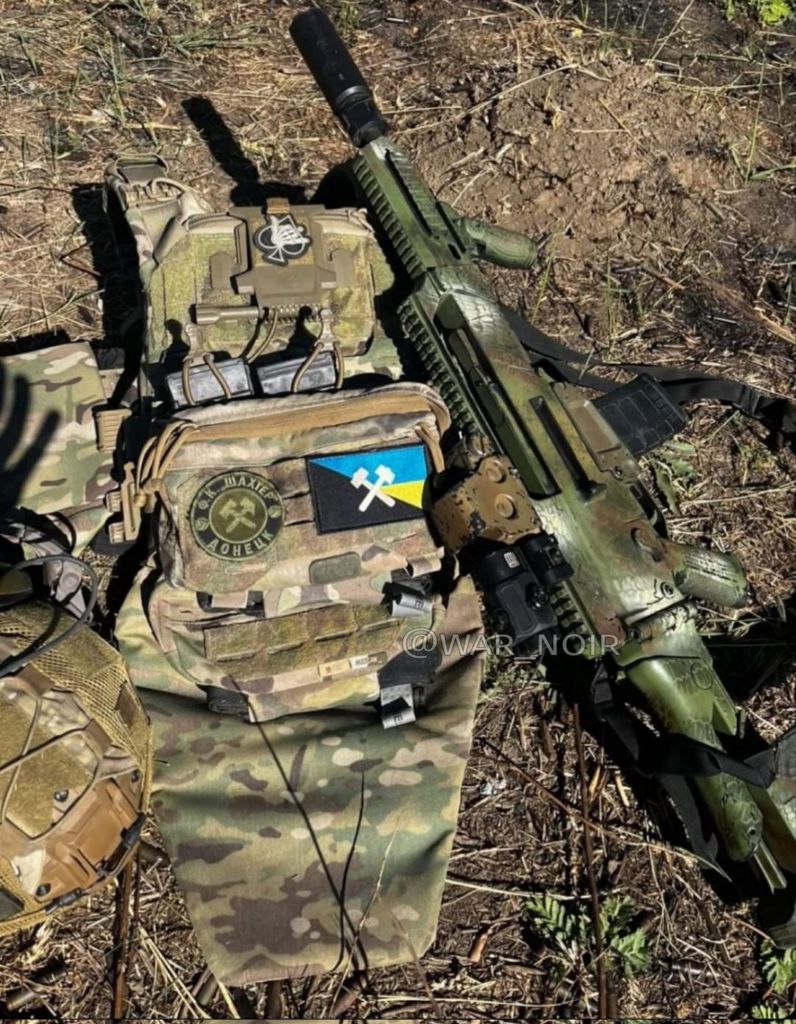
Update – 6/10/24: The hammer insignia would suggest the combatant is from the same unit as the rifle pictured above.

Update – 7/10/24:

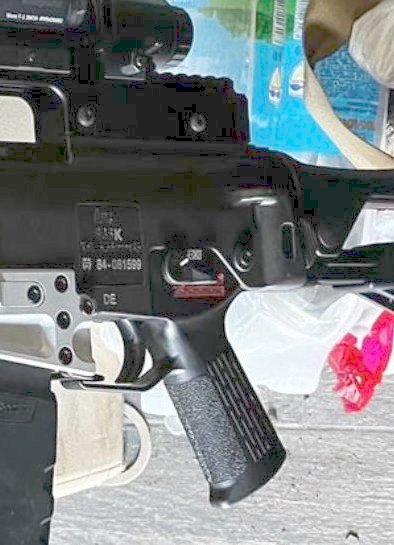
A couple of additional images of HK G636s in Ukrainian service shared by Ukrainian Special Military on IG. Again the rifles are seen evidently using magazine adapters. The rifle on the right has an unusual magazine adapter, which I’ve so far been unable to ID. It seems to be either in-the-white or, perhaps more likely, 3D printed.
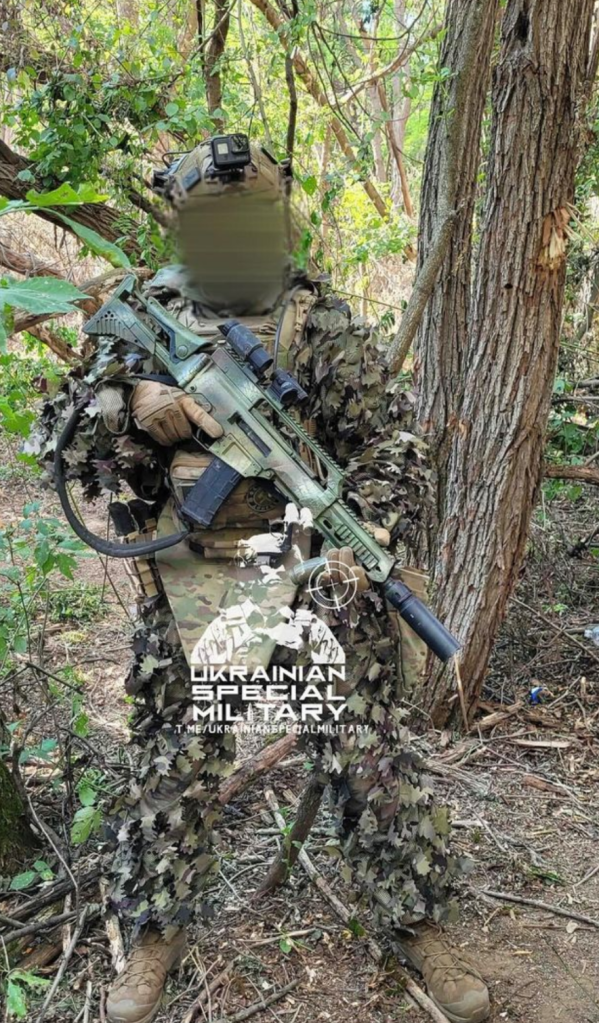
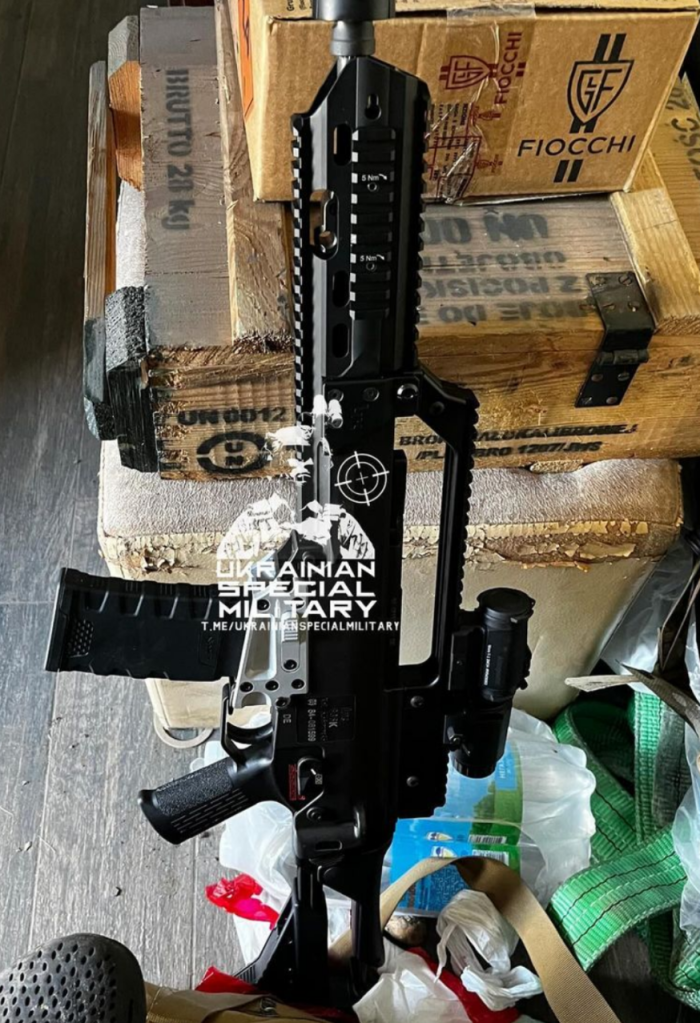
Intriguingly, in photograph on the right the rifle’s serial number and markings are visible. With an ’84’ serial number prefix and a ‘DE’ marking visible. It’s pictograph selector markings (rather than S-E-F) are also visible.

Support Us: If you enjoyed this video and article please consider supporting our work here. We have some great perks available for Patreon Supporters – including early access to custom stickers and early access to videos! You can also find us on the History of Weapons & War app. Thank you for your support!
French Rifles for Ukraine

On 6 November, the French arms manufacturer Verney-Carron, through its defence brand Lebel, announced the signing of a framework contract with Ukrspecexport, a Ukrainian state-owned arms trading company which is part of Ukroboronprom. The contract covers the production of a substantial number of small arms including carbines, precision rifles and 40mm grenade launchers.

VDC15 (Lebel)

The contract is worth 36 million Euros ($38.5 million) and includes 10,000 assault rifles, 2,000 precision rifles and 400 grenade launchers. The contract will need to be funded from Ukrainian and French sources with initial delivery scheduled for early 2024, with delivery to be spread over the next 10 months. The announcement makes no mention of spare parts or support as part of the contract.

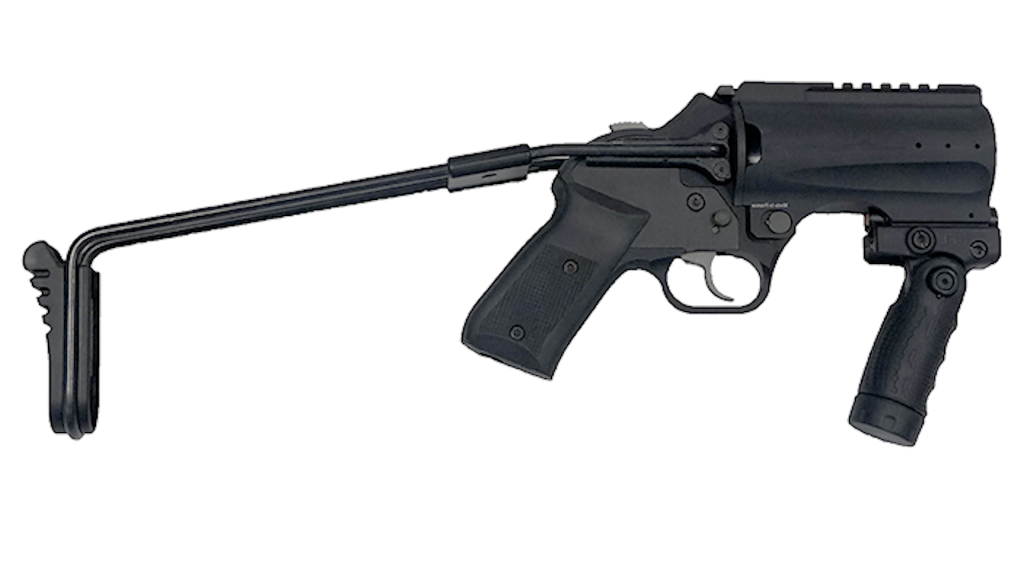
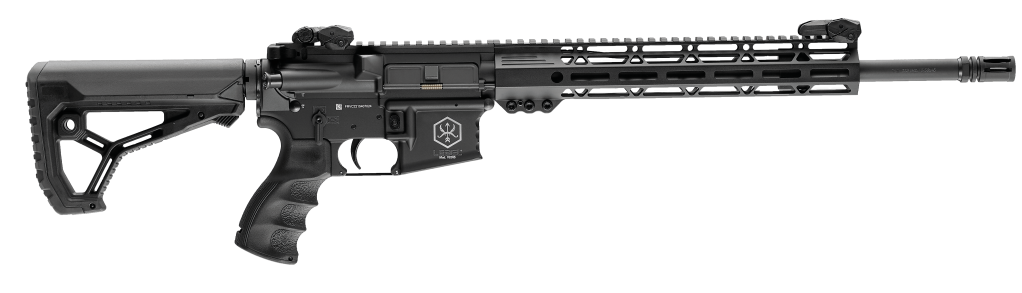
The contract will likely see the delivery of Verney-Carron’s VCD15, an AR-15 pattern rifle available in various configurations but chambered in 5.56x45mm or .300 BLK and based on Stoner’s internal gas system. The 2,000 precision rifles are probably Lebel’s VCD10, which was introduced in 2018 and is a precision AR-10 pattern rifle chambered in 7.62x51mm or .260 Remington. The 400 grenade launchers will likely be the compact LP40, a 40x46mm standalone launcher, which weighs 1.3kg, has a removable stock and a folding front pistol grip.

LP40 (Lebel)

It’s unclear which branch of the Ukrainian Armed forces the small arms will be destined for but they represent a substantial number, enough to equip a brigade or two. In terms of aid France has already provided a wide range of weapon systems and military equipment including self-propelled artillery, armoured personnel carriers, mines, anti-tank guided missiles, small arms, hand grenades and air defence systems. 


Support Us: If you enjoyed this video and article please consider supporting our work here. We have some great perks available for Patreon Supporters – including early access to custom stickers and early access to videos! Thank you for your support!


Why Britain Didn’t Adopt The Winchester 1866

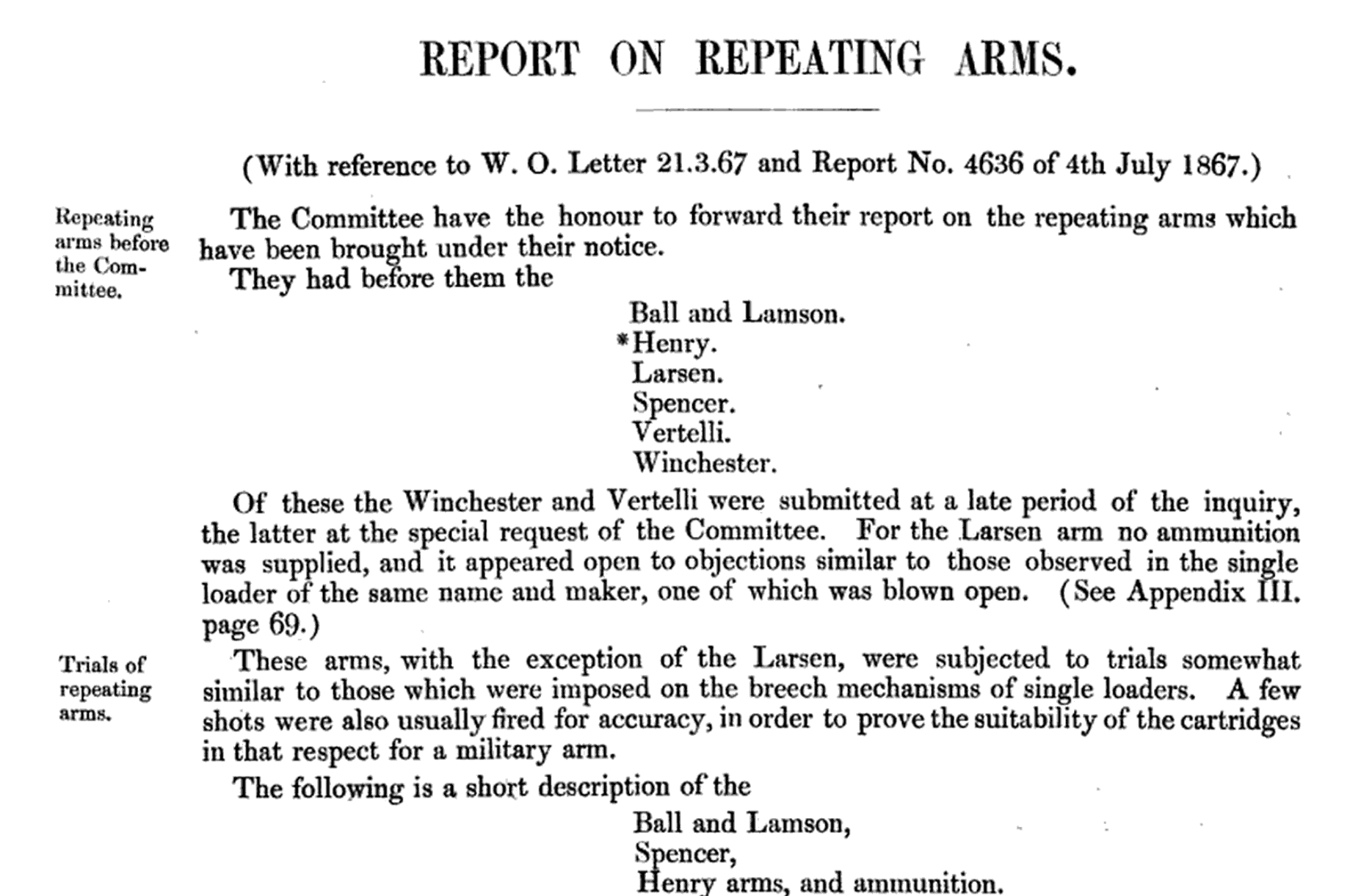
While doing some research into the British Army’s breechloading trials for another upcoming episode I came across an offshoot report into repeating rifles. This offshoot trial tested the repeating rifles that were then available, not with the goal of selecting one to adopt, but to see what was currently available.

Following the Prussian Danish War of 1864 and the decisive advantage the breechloading Dreyse Needle Gun gave the Prussians most of Europe scrambled to make the transition to breechloaders. In 1865 the British Army began a series of trials examining new breechloading rifles. The aim was first to find an adequate conversion as a stopgap measure – Jacob Snider’s action won that competition, but also to find the ideal breech-loader that was best suited to service all around the British Empire – the Martini-Henry was eventually adopted.

But as an offshoot to these breechloading trials the Army also carried out testing on new repeating arms. I like many people have often wondered why the Winchester lever action or other repeaters weren’t taken more seriously by European powers during the 1860s. Today, we’re going to take a look at the February 1869 report on repeating arms and try to answer that question.

1
The introduction to the 1869 Repeating Arms trials report (War Office)

A testing committee headed up by Lt Colonel H.C. Fletcher (of the Scots Fusilier Guards) with officers from the 48th and 3rd regiments began examining repeating rifles in 1867. Six repeating rifles were tested, the Henry, the Ball & Lamson, the Larsen, the Spencer, the Vetterli (misspelled ‘Vertelli’) and the Winchester Musket. The Norwegian Larsen was provided without ammunition and was quickly dropped due to concerns about the safety of its action. The Vetterli and Winchester were added during the later stages of the trials. As I mentioned the aim wasn’t to select a repeater for adoption rather to get an idea of what was available. So the trials weren’t exhaustive but they did test for accuracy and ran the guns through sand tests.

To test accuracy 20 rounds were fired at 2 targets at 500 yards to find the mean deviation, the Spencer was found to be the most accurate, while not surprisingly the Henry chambered in .44 Rimfire fared the worst.  The rifles’ rates of fire were also tested: the Ball and Lamson fired 40 rounds in just under 3 minutes, the Spencer fired 14 rounds in 1 minute 33 before jamming and being dropped from testing, and the Henry fired 45 rounds in 1 minute 36 seconds. The rifles were also subjected to sand tests with the Ball and Lamson and Henry performing well, the Spencer, however, jammed and became unserviceable.

7
Henry Repeating Rifle (Rock Island Auctions)

At this point the Committee liked the Henry best stating that it was “the most suitable for a military weapon” but that it would be better if it could be single loaded and the magazine held in reserve for emergencies. The late entry from Winchester was examined following the first round of tests, having heard about the improved Henry, Fletcher and the committee contacted Winchester and requested a rifle to test but it seems that some modifications were made at their request – probably to address the shortcomings of the Henry that had become clear in testing.

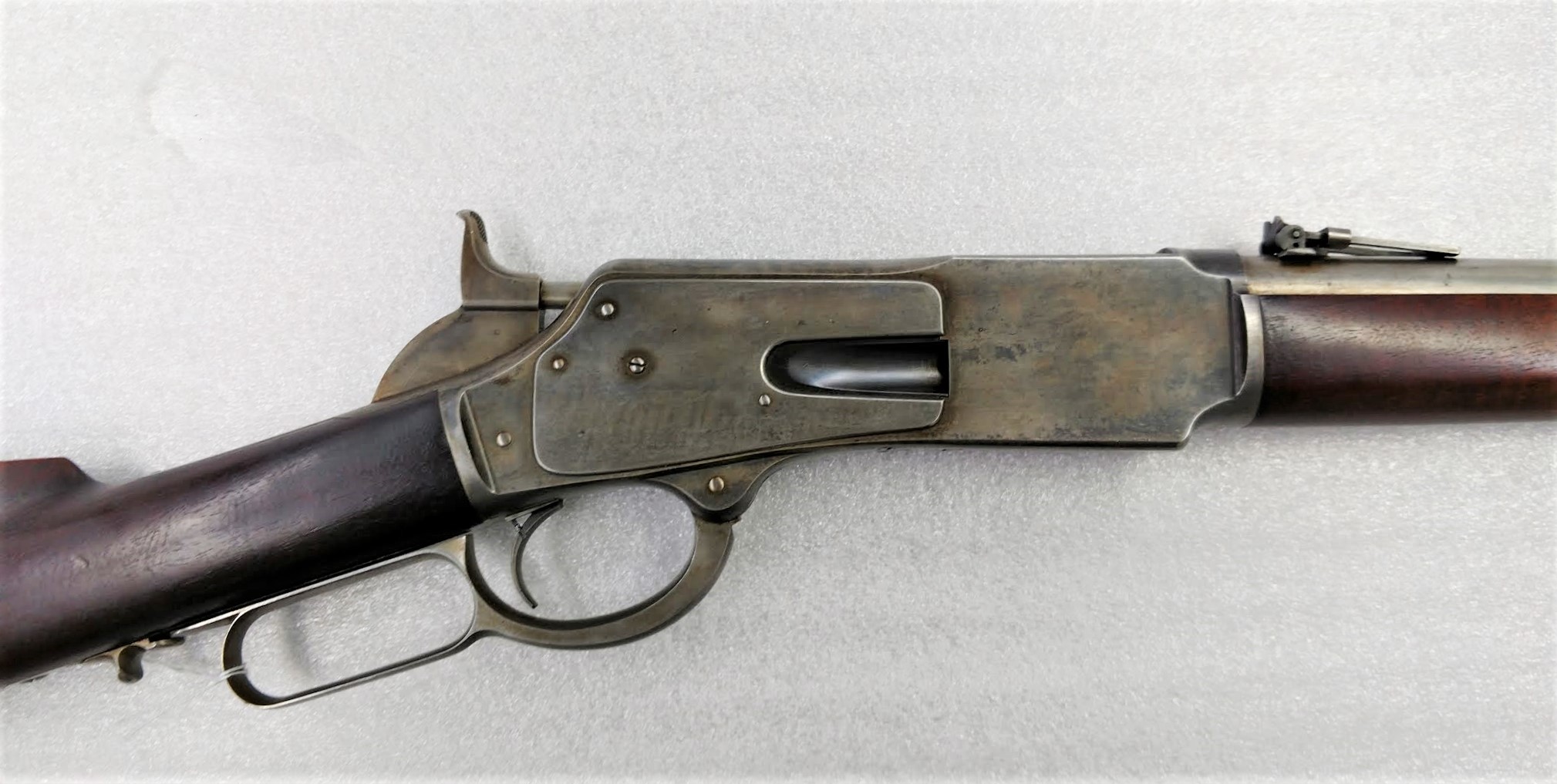
The exact configuration of the Winchester is a bit of a mystery. It wasn’t a standard Model 1866 Musket chambered in .44 Rimfire. The report describes it as a 50 inch long rifle, weighing 8lbs 12.5 oz, with a 29.75 inch barrel and a 12 round magazine. It chambered a .45 calibre, centrefire rather than rimfire round, with a 320 grain bullet. The Cody Firearms Museum, which houses the Winchester factory collectio,n has a number of prototype 1866-pattern rifles chambered in larger calibres than .44. The rifle tested by the British committee may have looked similar to those.

6596957281162323591
A prototype 1866-pattern Winchester, chambered in a larger calibre (courtesy of the Cody Firearms Museum)

As the Committee contacted Winchester directly it is possible that they directly requested a rifle chambered in a larger, centrefire round to improve on the Henry’s poor accuracy at longer ranges. When tested at 500 yards the Winchester achieved groups with less than 1.5 feet of deviation and when pushed out to 800 yards managed 3.6 feet.

The rapidity of the Winchester was also tested and fired it managed 25 rounds in just 1 minute 18 seconds reloading 3 times. The new rifle included the new loading gate in the receiver, designed by Nelson King, this was seen as a much more practical method of loading.

When sand tested the Winchester, unlike the Henry, became jammed, with its lever becoming bent and unserviceable. Despite the weakness of the lever the trials committee decided that the Winchester “was simpler in construction and better adapted to the purposes of a military weapon” than the other rifles and the Swiss Vetterli, which they described as not as well suited to “the purposes of a military rifle”. But the committee wasn’t prepared to recommend a repeater for general adoption based on the testing.

So why wasn’t the Winchester adopted, even in small numbers, it seems that a repeating rifle may have been useful for scouts or mounted infantry.  The Committee’s final report in February 1869, concluded that while they felt the Winchester was the best of the rifles tested, and it could be improved further, it was believed that the heavy weight of the rifle when fully loaded and the complexity and weakness of the action made it “objectionable” for service. The committee felt that “the mechanism of the Winchester was more complicated than that of the Martini and many other single loaders; it is also more liable to injury, and not so well calculated to resist the wear and tear of service.”

The Committee, however, could see the benefits of rapid magazine-fed fire, with the report stating “there may, however, be occasions when a repeating arm might be useful” As a result the Snider-Enfield remained in service and was replaced during the 1870s by the Martini-Henry, it wouldn’t be until the adoption of the Lee-Metford in 1888 that the British Army adopted a repeating rifle.

This article has only examined British opinion on the repeating rifles of the period and has not explored how other European nations felt about their military applications and value. Indeed, much has been made of Turkish use of Winchester repeating rifles during the Russo-Turkish War (1877–78) but that’s a topic for another day. This 1869 report is merely one case study, from one country, but it does add some interesting perspective. Hopefully the wider reaction to repeating rifles during the late 19th century is a subject we can touch upon in the future.

If you enjoyed the video and this article please consider supporting our work here.


Bibliography:

‘Report on Repeating Arms’, Reports from Commissioners, Vol. 12, 1869, (source)

Our thanks to Danny Michael & the Cody Firearms Museum for sharing the photograph of the Winchester prototype featured above.