
Drone warfare in Ukraine is one of the war’s most rapidly evolving elements with considerable innovation and improvisation. In recent weeks several videos have been shared showing large drones dropping TM-62 anti-tank mines.
The first video shared on 3 September showed how a mine could be carried and released by a large six-rotor drone. The TM-62M is seen loaded into a cradle tray which is then remotely triggered causing the floor plate to hinge and release the mine. The video also shows how the TM-62 is fuzed with a UZRG-pattern hand grenade fuze, pushed directly into the mine’s explosive through a hole cut in the side of its casing.
The TM-62M is a high-explosive blast landmine designed to immobilise or destroy vehicles. The mine is packed with 7.5kg (17lbs) of explosive and is normally centrally fuzed by a pressure fuze. The TM-62M is a significant payload for a bomber drone and when dropped they have significant blast effect.
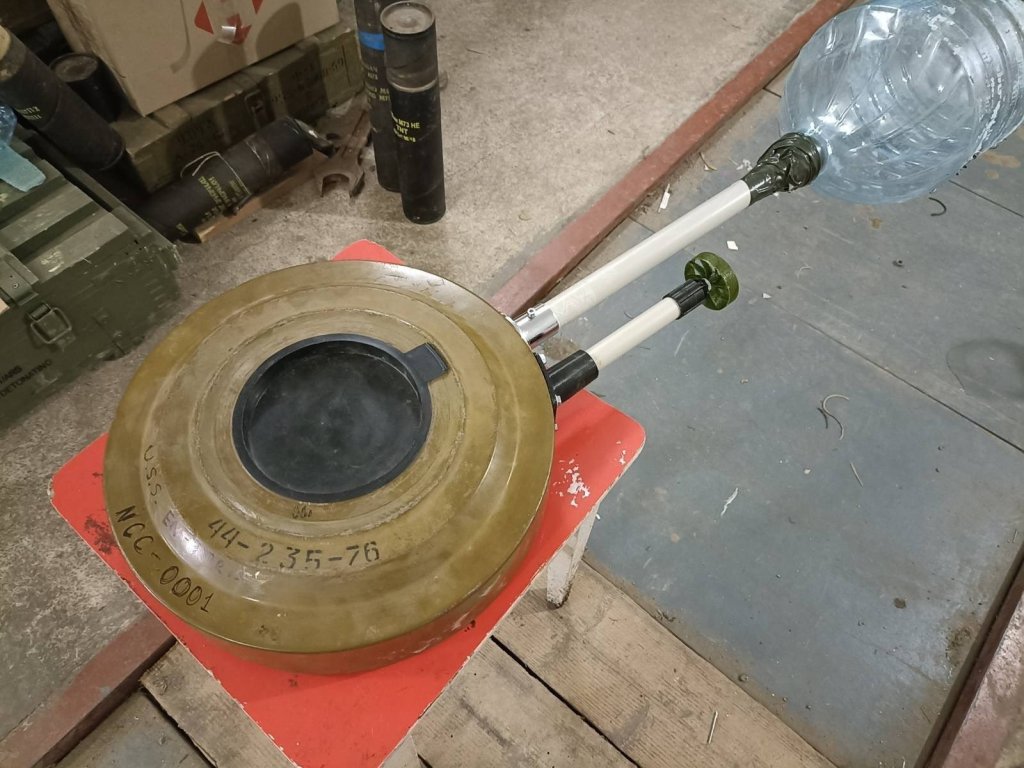
A subsequent video, shared on 6 September, shows a series of clips filmed by the bomber drone’s camera showing the TM-62 being dropped on numerous targets. The mines in this video have been significantly adapted with a stabilising tail added. The tail appears to be made up of a length of PVC pipe and a large water battle with its base cut off. The tail appears to be quite effective especially given the mine’s considerable weight and poor aerodynamics. It is also notable that the fuzing system appears to be different in the second video. Rather than a hand grenade fuze it appears that a larger fuze has been used, positioned next to the stabilising tail.
With the tail and its cut down water bottle its unlikely the release system for this munition is the same as that seen in the first video. A system which would allow for a smooth release and not snag the tail assembly would be needed. In several of the clips in the second video a strap swings past the drone’s camera perhaps suggesting there is a sling system in use.
A subsequent photograph shared on social media shows one of the mines in much better resolution. The tail is indeed made from PVC piping and a water bottle and the fuze appears to be vane-armed. The makers also have a sense of humour likening the odd-looking munition to the ‘USS Enterprise’ from Star Trek, they’ve written ‘USS Enterprise NCC-0001’ on the forward section of the mine.
At the same time as the photograph a number of additional videos showing the TM-62 based bombs being dropped were shared. These videos were originally shared towards the end of August and show a series of successful munition drops.
We are seeing a trend towards more sophisticated and more capable drone bombers which can carry either greater numbers of smaller bombs or larger singular bombs like the TM-62 munition.
Update – 1/10/23
The K-2 drone team with the 54th Brigade has shared footage of one of their drones dropping TM-62s mines on a Russian checkpoint and storage position. The drone appears to drop several unadapted TM-62s, though the lag time between landing and detonation would indicate they are not equipped with an impact fuze but perhaps a grenade fuze as seen in the initial videos featuring TM-62s. The resolution of the thermal cameras does not make it possible to identify the method of fuzing.
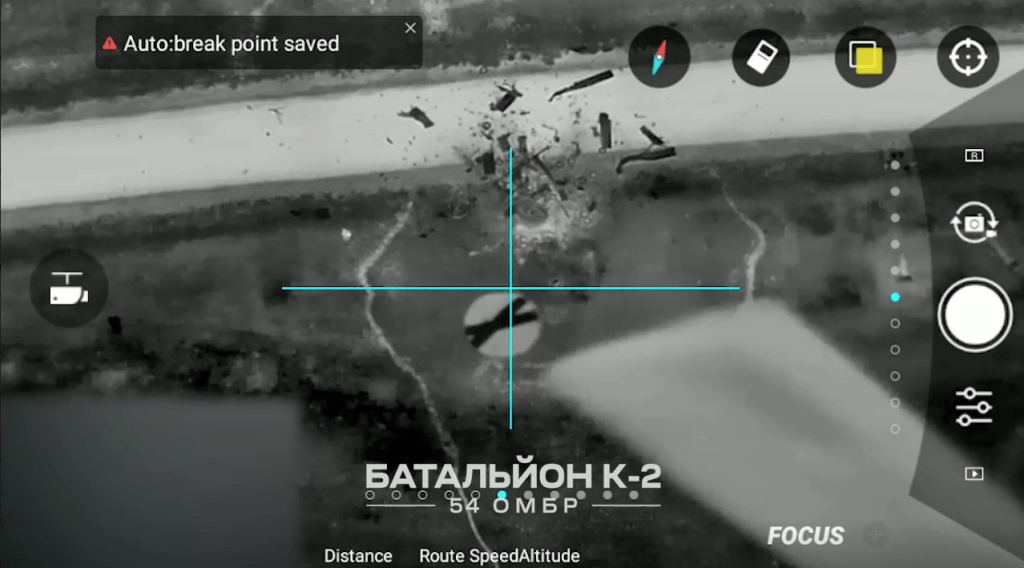
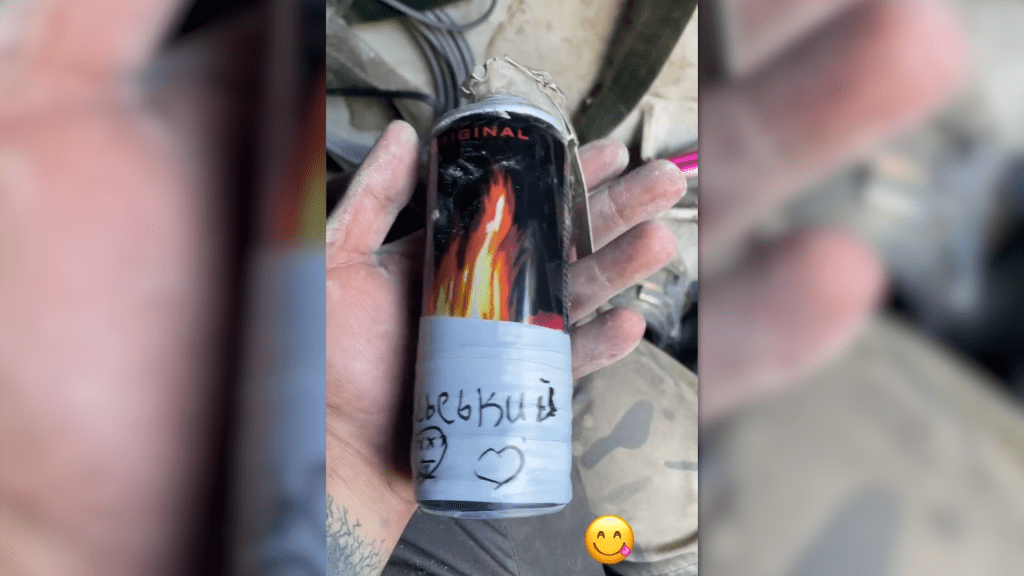
The release system appears to consist of a tray which holds the mine which is suspended by straps which are released to drop the munition. The tray can be seen swinging beneath the drone after one of the drops. The munitions appear to have tape around them, the reason for this is unclear, perhaps protecting the fuze system.
Update – 5/1/24: A video compilation showing numerous drops of TM-62s was shared on 5 January 2024. It begins with a demonstration of a light weight drop tray being released. The tray appears to be made from a metal grill (perhaps from an oven or an animal cage). The compilation shows mines being dropped without tail assemblies like those seen in earlier videos. Their are also visible puffs of gases/smoke from the mine’s fuze being triggered as it descends.
Update – 11/1/24:
Update -17/1/24: Further footage of TM-62 pattern mines being dropped from drones. Note a tail stabiliser is not used.
Support Us: If you enjoyed this video and article please consider supporting our work here. We have some great perks available for Patreon Supporters – including early access to custom stickers and early access to videos! Thank you for your support!
Bibliography:
TM-62M Landmine, CAT-UXO, (source)
Fuzes, CAT-UXO, (source)



 The Armourers Bench