Russia & Ukraine’s Adapted MT-LBs

The MT-LB tracked artillery tractor has become one of the most recognisable armoured vehicles of the war in Ukraine. These versatile vehicles are used by both sides in huge numbers and while first introduced in the 1970s they continue to be used as both armoured personnel carriers and also as the platform for a plethora of weapon systems ranging from rocket pods to auto-cannons to MT-12 anti-tank guns.

In this article/video we’ll look at two specific MT-LB adaptations; one Russian, one Ukrainian.

Russian MT-LB adaptation with a 2M-3 turret which was first seen in March 2023 (via Social Media)

Russia’s Turreted MT-LB

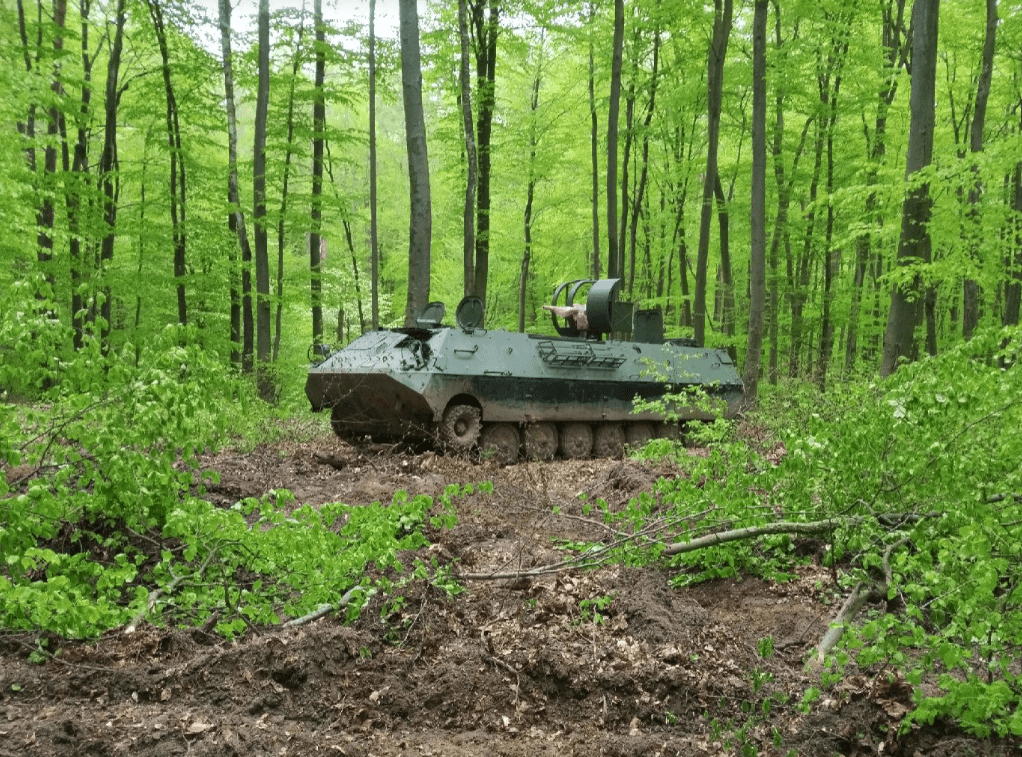
In March 2023, a number of photographs and videos emerged of Russian MT-LBs which had been fitted with a large turret complex over the rear portion of the vehicle. The turrets are naval 2M-3s which mount a pair of 25mm 110-PM autocannons. The first images surfaced at the beginning of March. The strikingly ugly turret quickly led to ridicule on social media and numerous memes mocking the vehicle. Between the 8 and 10 March a series of short videos showing the turret-adapted MT-LBs on the move. One video showed several vehicles in a yard with a large crane, perhaps suggesting they had been off-loaded. The person filming the video notes that the unusual turrets and were apparently ‘sent for defence’. The footage features at least five turreted-MT-LBs, one appearing to also have an adapted front commander’s turret.

Another clip, shared around 10 March, shows a transport train with numerous vehicles loaded, including some Russian Military Police vans. Two (possibly four) of the adapted MT-LBs can be seen. Similarly, another clip showing the vehicles in transit through an urban area features one perhaps two adapted-MT-LBs.

Other examples of Russian MT-LB adaptations with 2M-3 turrets (via Social Media)

Since the early spring there have been no sightings of the vehicles but in late May a video and several photos were shared featuring a Russian combatant riding in the turret of one of the adapted MT-LBs, the anti-aircraft style style sight can be seen in the video and one of the photographs.

Russia is likely making use of turrets that have been in storage since the vessels they were mounted on were decommissioned. Their is probably still an ample supply of ammunition for the 25mm autocannons. The mount has -12° to +85° elevation and 360° rotation giving it a good field of fire for use against ground targets.

Just what role Russia envisioned for the turreted MT-LBs is still unclear. They could be used in direct fire roles perhaps as support guns which can help plug gaps in defensive lines with suppressive fire. Or perhaps as mobile anti-aircraft vehicles for taking on drones but their limited manual targeting would mean they would struggle to be a match for even slow moving drones. Other potential uses might be as assault guns or as a more heavily armed vehicle for internal security duties protecting supply lines from Ukrainian partisans.
Ukrainian MT-LBu adaptation with a KPV heavy machine gun remote weapon system (via Social Media)

Ukraine’s MT-LB Refits

While many of both sides’ MT-LB adaptations have focused on simply mounting a weapon system to the rear deck or where the commander’s original PKT mount was, a recent Ukrainian refit has gone much further. A video was shared by a Ukrainian MT-LB crewmember which showed six vehicles all refit to a similar configuration. It appears that additional armour has been added to the sides and rear of the vehicle in an effort to provide additional protection to the lightly armoured MT-LB. [Correction: the vehicle has 7 road-wheels indicating the adaptation is likely based on an MT-LBu variant. These have been described as BMP-1LBs.] The vehicles also have new storage baskets, smoke-grenade launchers and a new remote weapon mount controlled from inside the MT-LB. A photograph of the front of the mount shows that it mounts a single 14.5x114mm KPVT machine gun, remotely fired and aimed using an electro-optics module positioned to the left side of the gun. The weapon and optics are protected by a curved gun shield, the cuts in the shield suggest that the weapon’s range of elevation is considerable.
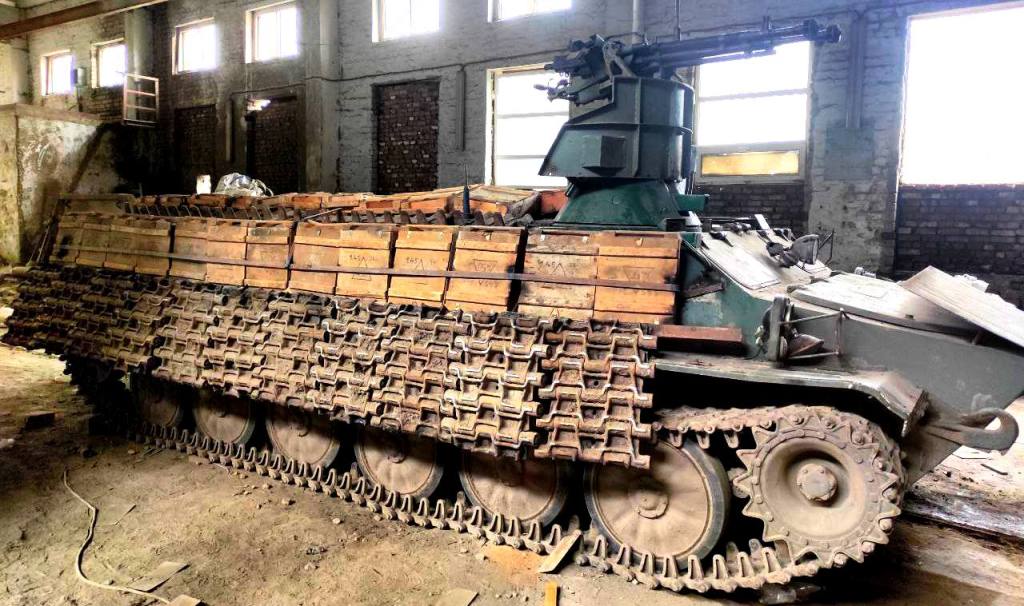
Russian MT-LB adaptation with twin DShk mount on the original PKT turret (via Social Media)

These vehicles are are just two examples of MT-LBs in Ukraine adapted with ad-hoc weapon mounts. There are dozens of other examples of up-gunned MT-LBs deployed by both sides. Other commonly seen adaptations include fitting ZU-23-2 anti-aircaft mounts to MT-LBs

In February 2023, Ukrainian troops shared a video of a Russian MT-LB captured near Vuhledar, which had been fitted with a 2M-7 naval turret mounting a pair of 14.5mm KPV heavy machine guns. Similar vehicles appeared in photographs showing several MT-LBs with ad-hoc adaptations which included one vehicle with the same, as well as other vehicles with other dual and single gun mounts. One can be seen mounted with a single DShK on a tall, exposed pintle mount.

In May, an MT-LB was sighted with a twin DShK mount. Similarly, another MT-LB fitted with a twin DShK mount on top of the existing PKT turret was shared on 10 June, it had also been adapted by adding track and boxes as appliqué armour. Also in June, a photograph of a pair of MT-LBs equipped with A-22 140mm multiple rocket launch systems was shared on Telegram.

With Ukraine forming new brigades and both sides suffering considerable armoured vehicle losses the ubiquitous MT-LB, while lightly armoured, offers one of the best available platforms for mounting additional or role-specific weapons.


Support Us: If you enjoyed this video and article please consider supporting our work here. We have some great perks available for Patreon Supporters – including early access to custom stickers and early access to videos! Thank you for your support!
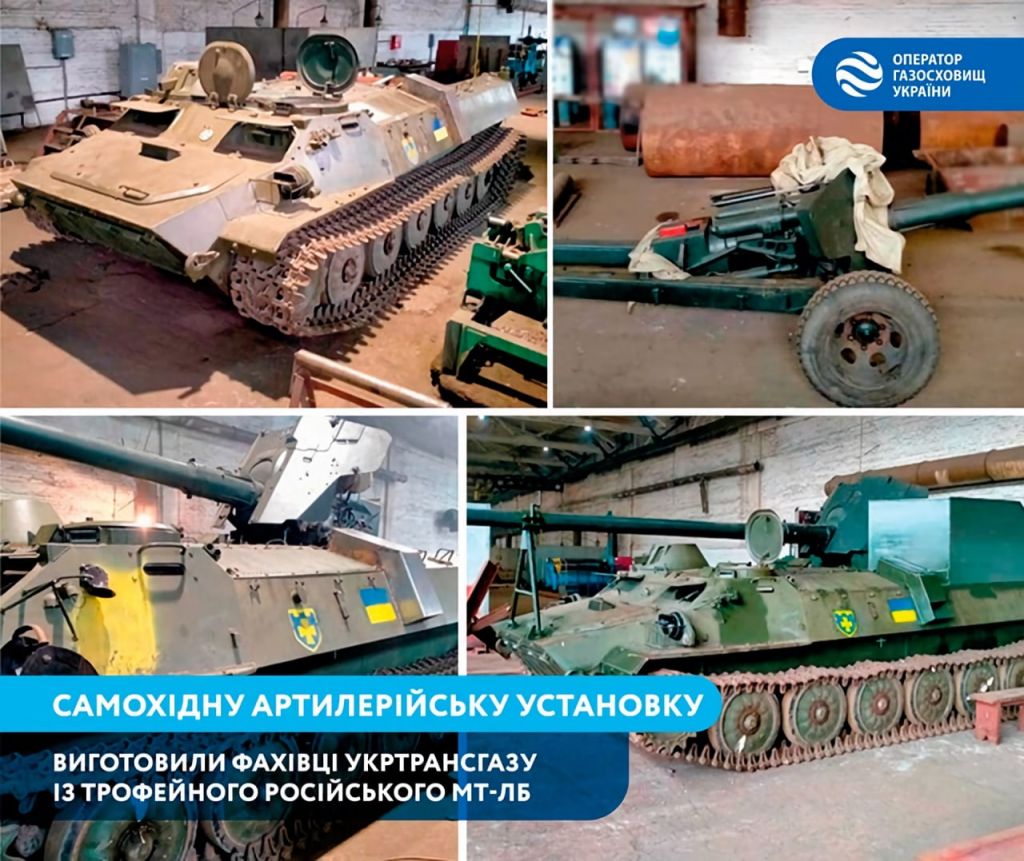

Ukraine’s New & Improved Home Made Self-Propelled Gun

Back in August we took a look at an improvised vehicle built by Ukrainian troops near Mykolaiv. It paired an MT-LB tracked armoured fighting vehicle with an MT-12 100mm anti-tank gun. Now engineers from Ukrtransgaz – Ukraine’s state-owned gas pipeline company, have taken that concept and developed an improved version of the home made self-propelled gun.

On Monday 26 September, Ukrtransgaz shared a post on their facebook page about the new vehicle saying:

“Our colleagues were approached by the soldiers of the TpO [Territorial Defence Forces] detachment with a request for the manufacture of such an installation. The idea of ​​combining an armored personnel carrier and a cannon into an improvised self-propelled gun was borrowed from the Mykolaiv military, which in August produced and successfully tested the first such installation in battle. So they decided to “improve” the trophy Russian MT-LB with the Ukrainian Rapira for their own needs.”

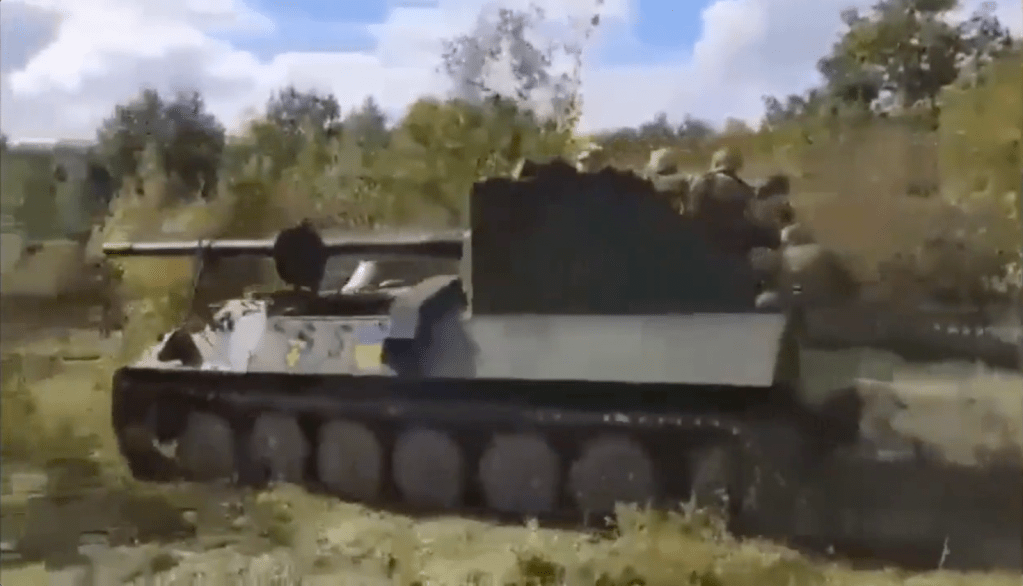
Ukrtransgaz noted that the vehicle took a team of six engineers two weeks to construct. Beneath the facebook post the company also shared a short, sadly low resolution, video of the vehicle being tested. TAB reached out to Ukrtransgaz for a better version of the footage but sadly they didn’t have one available.

The team behind the gun had assistance from an unnamed ‘specialized university’ who helped increase the gun’s elevation, which is normally capped at +20°, and in theory increase the gun’s range. It’s unclear which ammunition is being used with Ukraine’s MT-12s, whether it’s APFSDS or HEAT.

The company states that the vehicle is ready for operations and has successfully passed tests on the range, ready to be deployed. They also note that the team intends to manufacture at least two more such self-propelled guns.

Examining the Ukrtransgaz SPG we can see that the roof of the MT-LB has again been cut back but the the mounting of the gun is slightly higher and armour protection has been built up around the sides for the gun crew. From the footage shared we can see that theres room for around six troops to sit in the rear of the vehicle. Unlike the earlier Mykolaiv-built vehicle there does not appear to be the pair of hydraulic supports to stabilise the vehicle when firing.


Update 15/12/22: A video from the Ukrainian government’s United24 project showcased a further example of the homemade MT-LB mounted anti-tank gun vehicles. This time mounting the older T-12 100mm anti-tank gun, the T-12 is the predecessor to the MT-12 and uses the same family of ammunition. The vehicle seen in the video is on operations around Bakhmut, acting as a self-propelled gun. It lacks the armour shield to protect the gun crew seen on earlier examples of the homemade MT-LB based vehicles but it does have the supporting struts at the rear of the vehicle.

Update 23/12/22: Another interesting undated video of one of Ukraine’s MT-LBs with a 100-mm gun MT-12 mounted. Note the movement of the vehicle on firing, this example has the support struts at the rear of the vehicle, to minimise this and remove the need to re-lay the gun, but they have not been deployed. Unlike the version seen in the 15 December update this version utilises the MT-12s original gun shield but does not have additional protection added.


If you enjoyed this video and article please consider supporting our work here. We have some great perks available for Patreon Supporters – including custom stickers and early access to videos! Thank you for your support!

Ukraine’s Homemade Tank Destroyer

On 12 August videos of an improvised vehicle built by Ukrainian troops began to circulate online. While we’ve seen technicals and an increasing number of trucks turned into multiple rocket launcher systems, usually using spare or salvaged parts, in recent months the new vehicle is even more interesting.

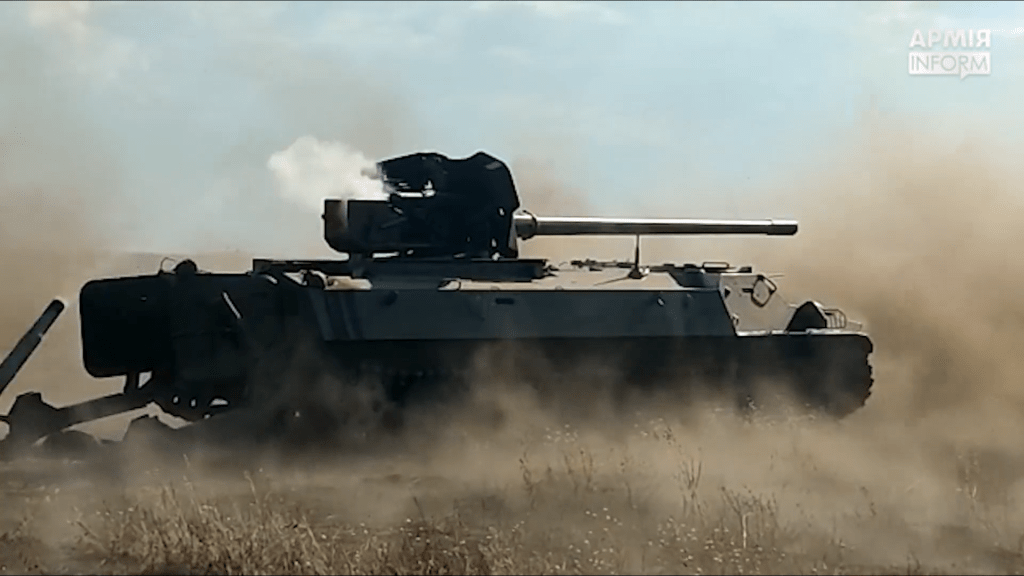
Gun at full elevation (via ArmyInform)

The available footage shows an MT-LB tracked armoured fighting vehicle paired with an MT-12 anti-tank gun. Traditionally, the MT-LB and MT-12 aren’t an unusual pairing as the MT-LB was, and is, often used to tow artillery, including the 100mm MT-12 anti-tank gun.

Gun in action (via ArmyInform)

The Ukrainian General Staff shared a video of the homemade tank destroyer or self-propelled gun (SPG) in action on the 13 August, with the caption:

“Ukrainian soldiers demonstrate their own development, made from captured muscovite equipment. MTLB army tractor + MT-12 Rapira anti-tank gun = self-propelled anti-tank gun. The infantrymen did all the design and construction work on their own. The system has already been tested and is in the combat zone.”

The caption said that the footage had been filmed in the Mykolaiv region in early August by members of the Department of Public Relations of the Armed Forces of Ukraine. A further video shared by ArmyInform, simply titled ‘Kraken’ (perhaps the name given to the vehicle as the Kraken is a popular symbol among Ukrainian forces), shares much of the same footage and the same description text.

The gun and vehicle are both of Cold War vintage with the 100mm smoothbore MT-12 entering service in the early 1970s and the MT-LB coming into service in the late 1950s/early 1960s.

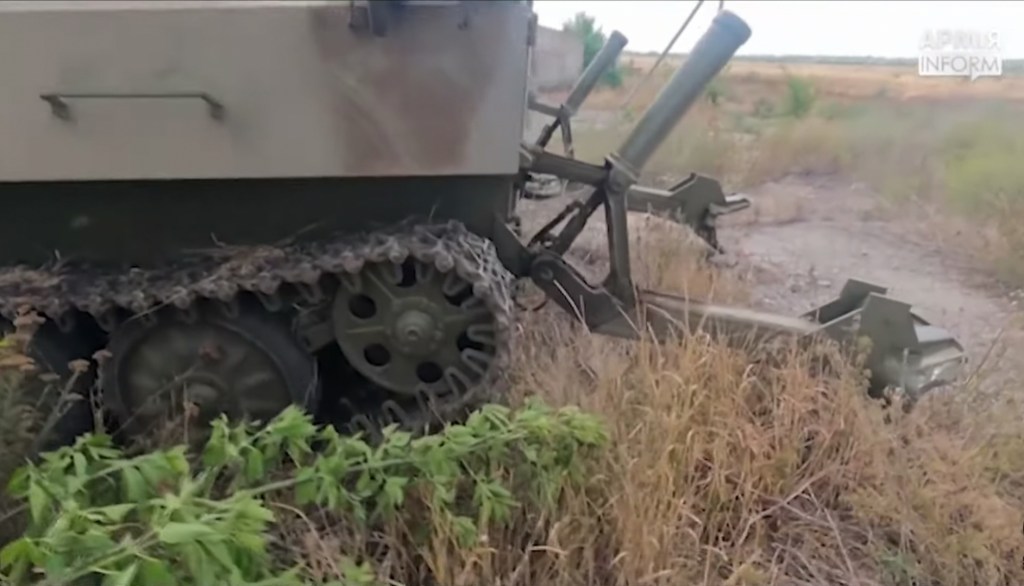
The hydraulics supports added to the rear of the MT-LB (via ArmyInform)

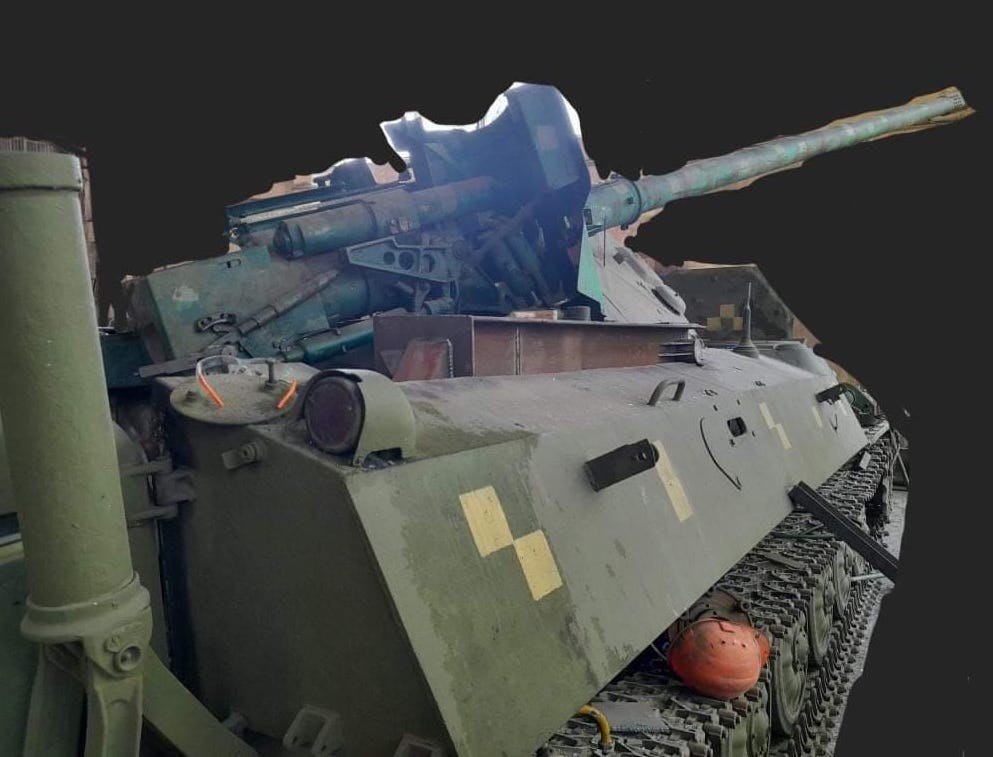
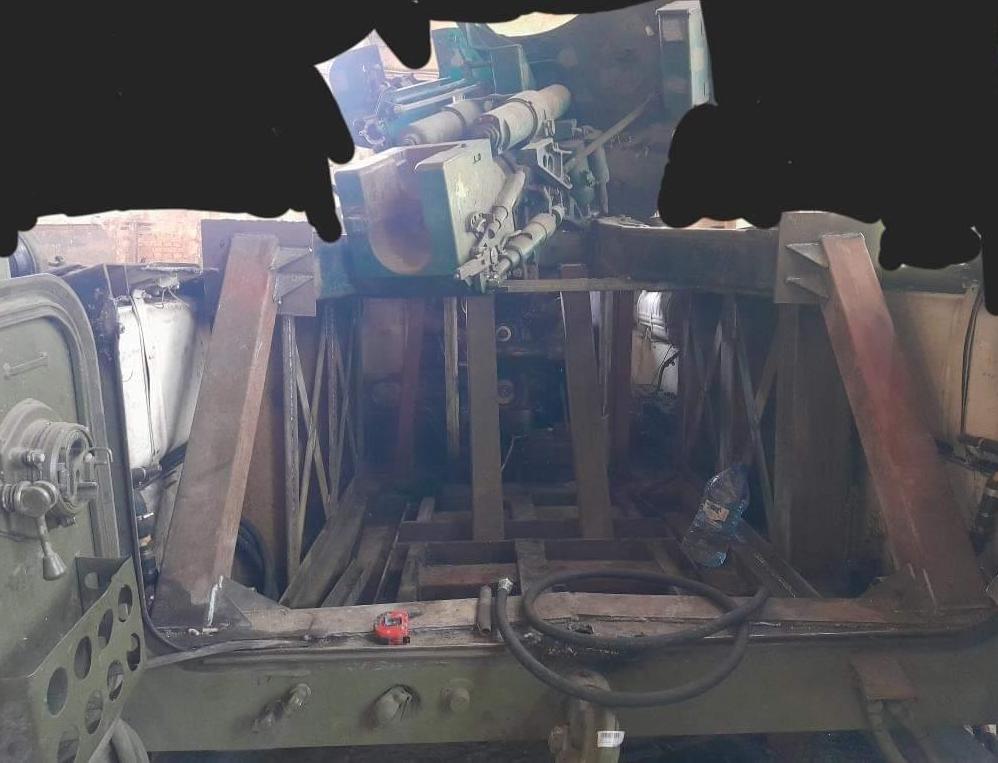
From the footage we can see that the vehicle has been substantially modified to mount the gun, part of the rear roof of the vehicle appears to have been removed to allow the crew to operate the gun with some protection and to also achieve the gun’s maximum 20-degree elevation. Perhaps most interestingly, at the rear of the vehicle the builders have added a pair of hydraulic supports to stabilise the vehicle when firing, these can be seen descending from the rear of the MT-LB. These may be built using the MT-12’s original trail.

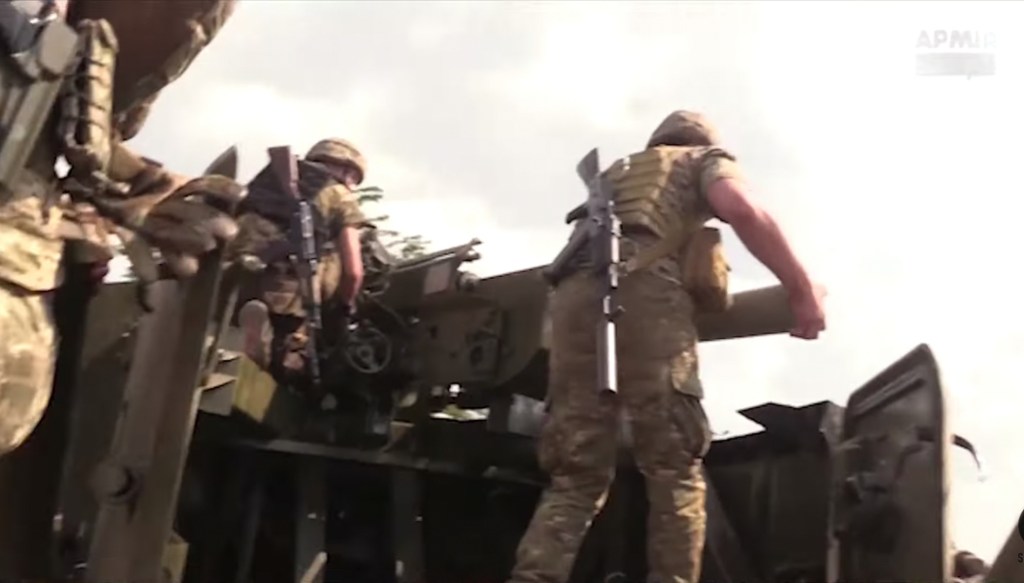
A view of the rear of the gun and vehicle (via ArmyInform)

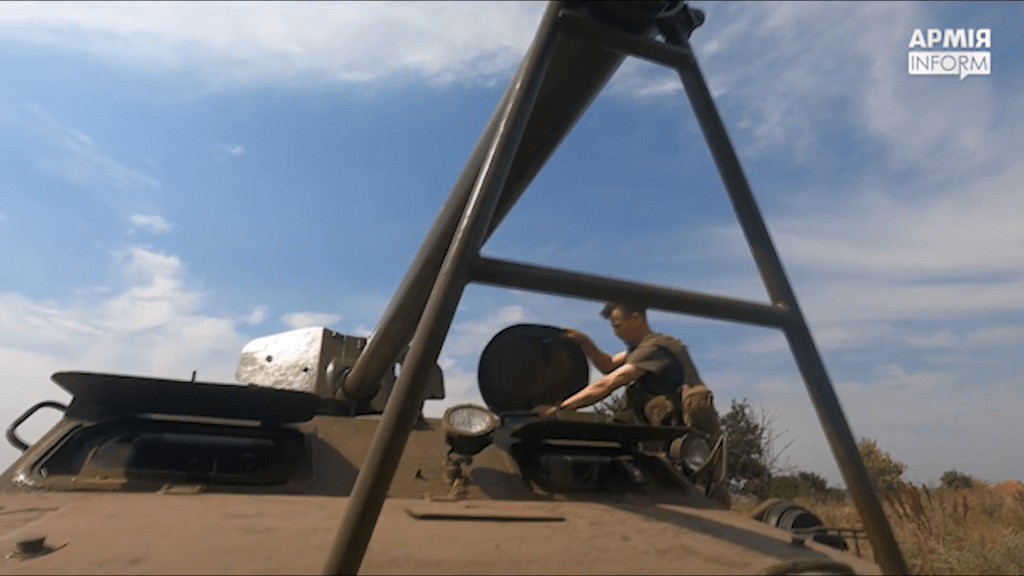
The video even shows that a barrel travel lock has been fitted to lock the gun in place when the vehicle is on the move. The video does not show the interior of the vehicle so it is unclear how much the vehicle and the mounting point for the gun has been reinforced. The gun itself weighs just over 3 tons or 2, 750kg, though some of this weight from the carriage has likely been removed through the cannibalisation of the carriages when the gun was mounted. The video doesn’t indicate how much ready ammunition the vehicle can carry either. The video also shows the gun being fired by crew outside the vehicle pulling a long lanyard. Sources in Ukraine have said that in the field the system is fired by both the lanyard and the firing lever on the gun.

Barrel travel lock added to the vehicle (via ArmyInform)

While at first glance the gun looks like it could also be an older DD-44, which have been seen in use, the characteristic muzzle brake suggests its the later MT-12. While the official Ukrainian Army statement suggests both the MT-LB and gun were captured both were in Ukraine’s inventory in significant numbers before the current conflict. Before the Russian invasion in February the Ukrainian Armed Forces were said to have up to 500 MT-12s in service, in 2020. Similarly, Ukraine operated over 2,000 MT-LB before the invasion but there is visual confirmation of numerous Russian MT-LBs being captured.

Gun ready to fire (via ArmyInform)

So why go to the trouble of adapting an MT-LB to be capable of firing a gun from its roof? Perhaps the most likely answer is speed into action. While an MT-LB towing an MT-12 can in theory get the gun into action in under 2 minutes the creation of this ad hoc tank destroyer allows the gun to be brought into and out of action faster. With the need to unlimber and position the gun removed the improvised self-propelled gun can, in theory at least, shoot and scoot.

A photo of an adapted MT-LB, possibly a different vehicle from the one seen in the video shared by the Ukrainian General Staff (Photo redacted for OPSEC purposes)
A view of the rear of the vehicle showing the considerable reinforcement where the roof has been cut away (Photo redacted for OPSEC purposes)

Sources in Ukraine suggest that more than one of these vehicles has been constructed with work ongoing since at least July. Photographs shared with TAB support this with the vehicle pictured sporting the Ukrainian digital camouflage pattern. The photographs show the mount and the reinforcement done to the vehicle to support the MT-12. They are reportedly used more as assault guns, than ‘tank destroyers’, with the guns being used against Russian fixed positions and in support of infantry manoeuvres.


If you enjoyed this video and article please consider supporting our work here. We have some great perks available for Patreon Supporters – including custom stickers and early access to videos! Thank you for your support!
Saxon APCs in Ukraine

The fighting in Ukraine has frequently drawn comparisons with the Cold War and while plenty of Eastern Cold War vehicles have been seen in use one of the interesting Western Cold War warriors seen action is the Saxon armoured personnel carrier. 

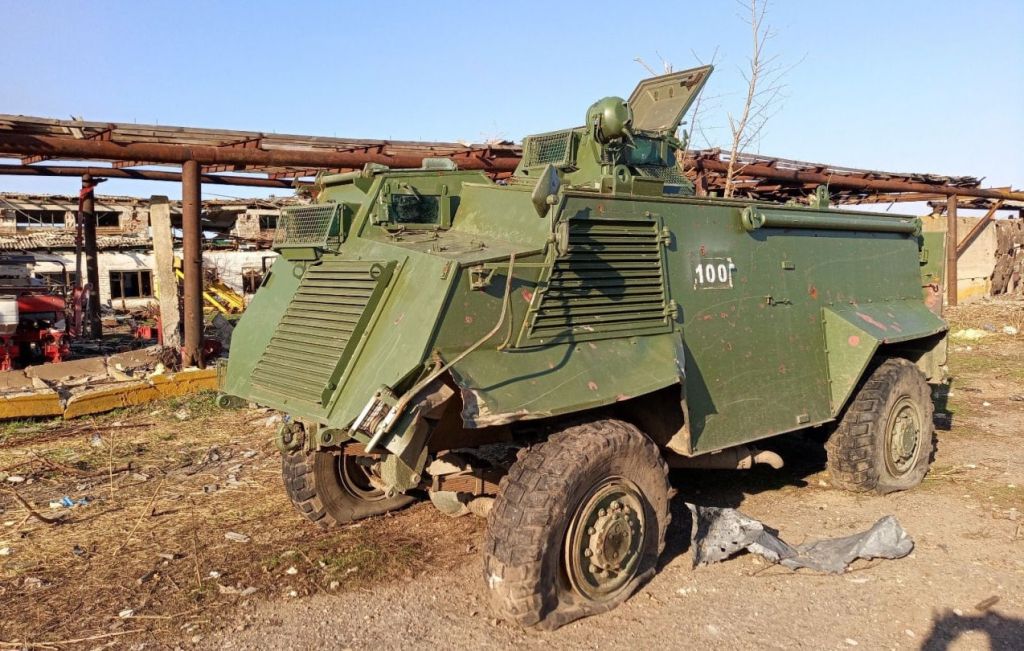
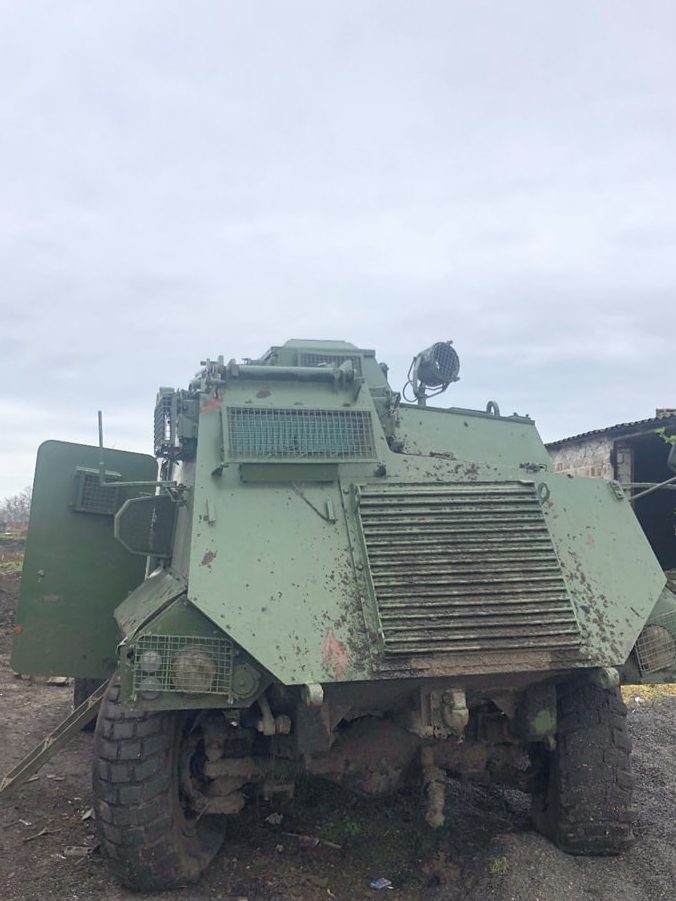
Knocked out Saxon APC (via social media)

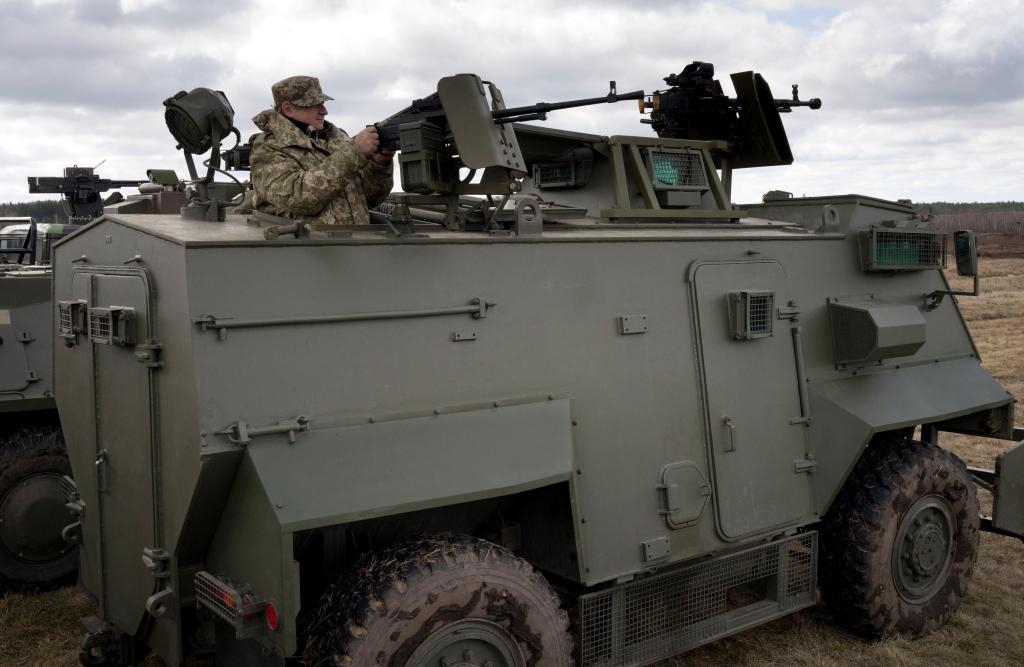
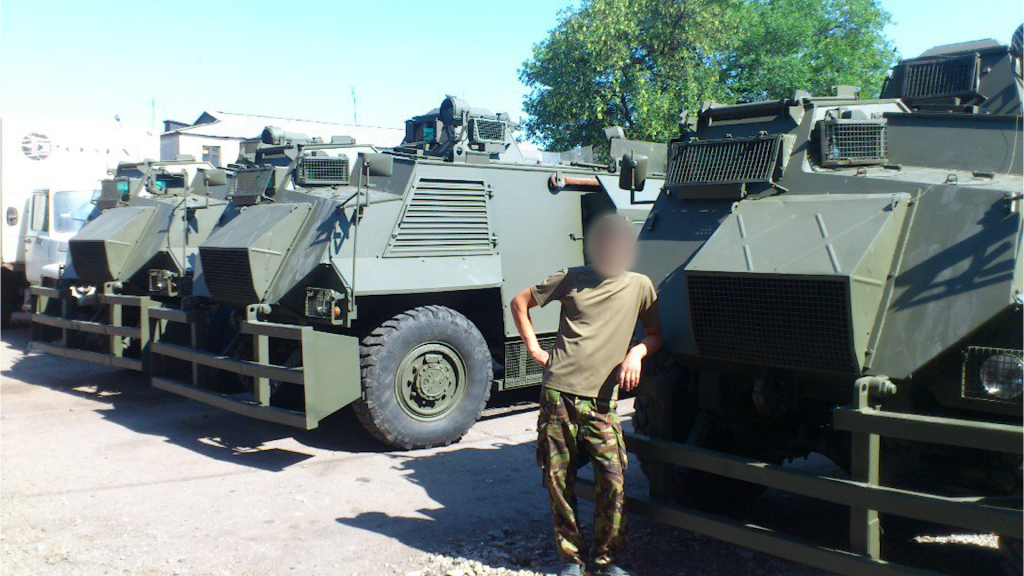
The AT105 Saxon was developed by the UK in the late 1970s to provide some protected mobility for British forces deploying from Britain and moving up to the front line after an anticipated Communist offensive. Based on the Bedford TM series of trucks, the four-wheeled Saxon was slated to protect against small arms fire (up to NATO B7 standard to withstand 7.6x51mm) and shrapnel. With a welded steel body and blast deflecting chassis plate the Saxon is powered by a 6 cylinder diesel engine. Primarily designed as a battle taxi it could carry up to 8 men and a driver. They were armed only with an L7 general purpose machine gun. Entering service with the British Army in the mid-80s the Saxon saw service in the Balkans, Iraq and Northern Ireland. It was finally removed from service in 2005.

The British Army appears to have begun disposing of them in the late 2000s with many gifted to other countries and some sold to private dealers. In 2013, the Ukrainian Ministry of Defense purchased 75 second-hand Saxons from a private dealer, these were delivered in two shipments in 2015. Sources suggest the vehicles were bought for around £50,000 each or a total procurement cost of $3.8 million. The first 20 arrived in February and were handed over the the Ukrainian National Guard for testing. Oleksandr Turchynov, then Secretary of the National Security and Defense Council, said the vehicles would be upgraded by Ukroboronprom and fitted with machine guns. The second batch of 55 vehicles were delivered in June.

Still from 1985 British Army equipment video (British Army)

With the news of the transfer General Richard Dannatt, the former Chief of the General Staff, told the Telegraph newspaper that “My Concern is the inadequate nature of these vehicles which I ordered out of British Army front line service when I was Commander in Chief Land Command 2005-2006. They were withdrawn from Iraq and never deployed in souther Afghanistan. To suggest that the UK is making a significant gesture of support by supplying vehicles which we took out of service ten years ago, because we deemed them unsafe, seems bizarre at best and downright dangerous at worst. They are quite useless semi-armoured lorries that should be nowhere near anyone’s front line.” The UK MoD responded saying that “they offer protective mobility to personnel… but they are not close combat vehicles.”

While arguably obsolete the Ukrainians themselves reportedly felt they were fairly decent vehicles with the armour providing the expected level of protection. Ukrainian National Guard testing in February 2015 showed that the armour could withstand B-32 7.62x54mmR API. There was a well reported accident involving a pair of Saxons with on overturning and another hitting the central barrier on a motorway in March 2015. Its clear that the Ukrainians thought at the time they were cost-effective, capable vehicles which they wisely didn’t push into close combat roles.

Saxon APCs outfitted with a DShK and two PK-pattern machine guns, c.March 2015 (Ukrainian MoD)

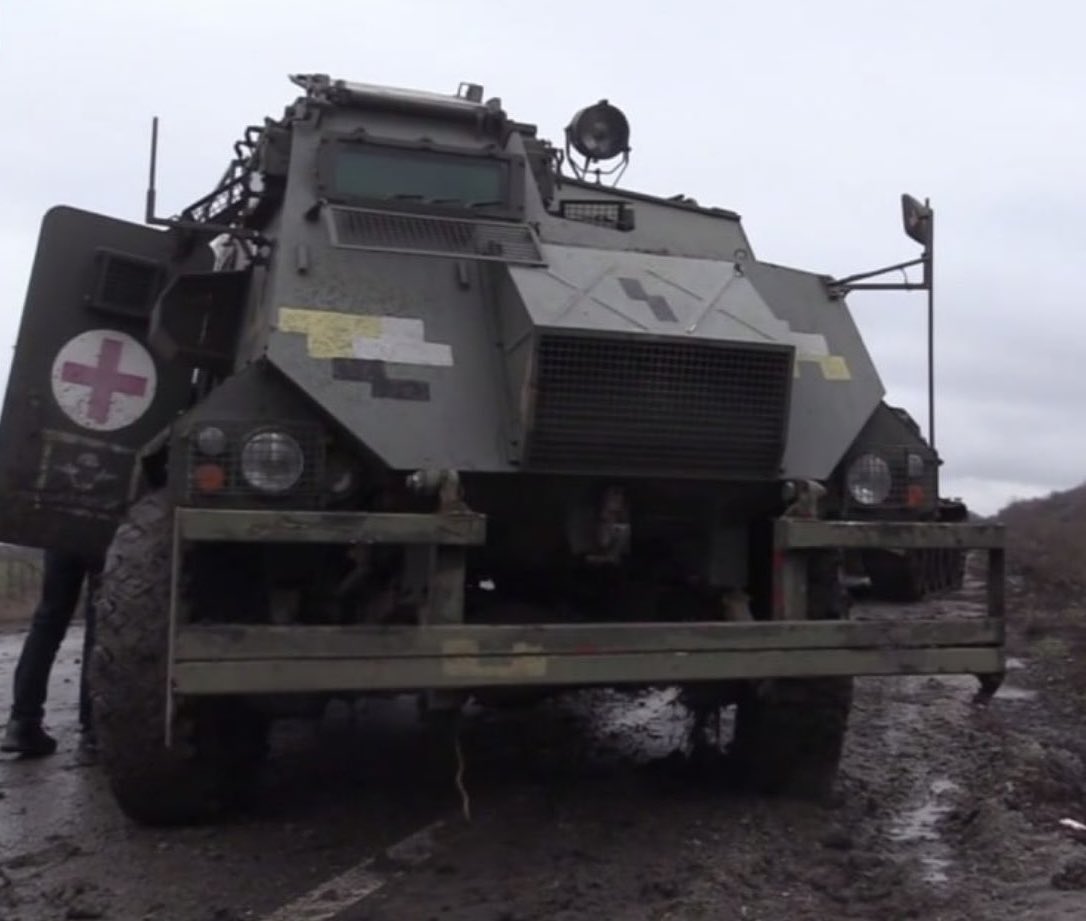
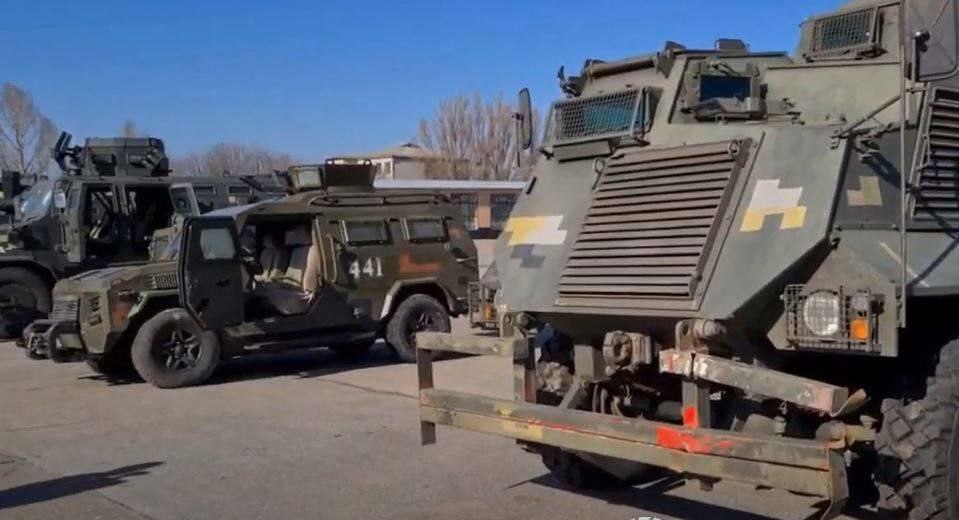
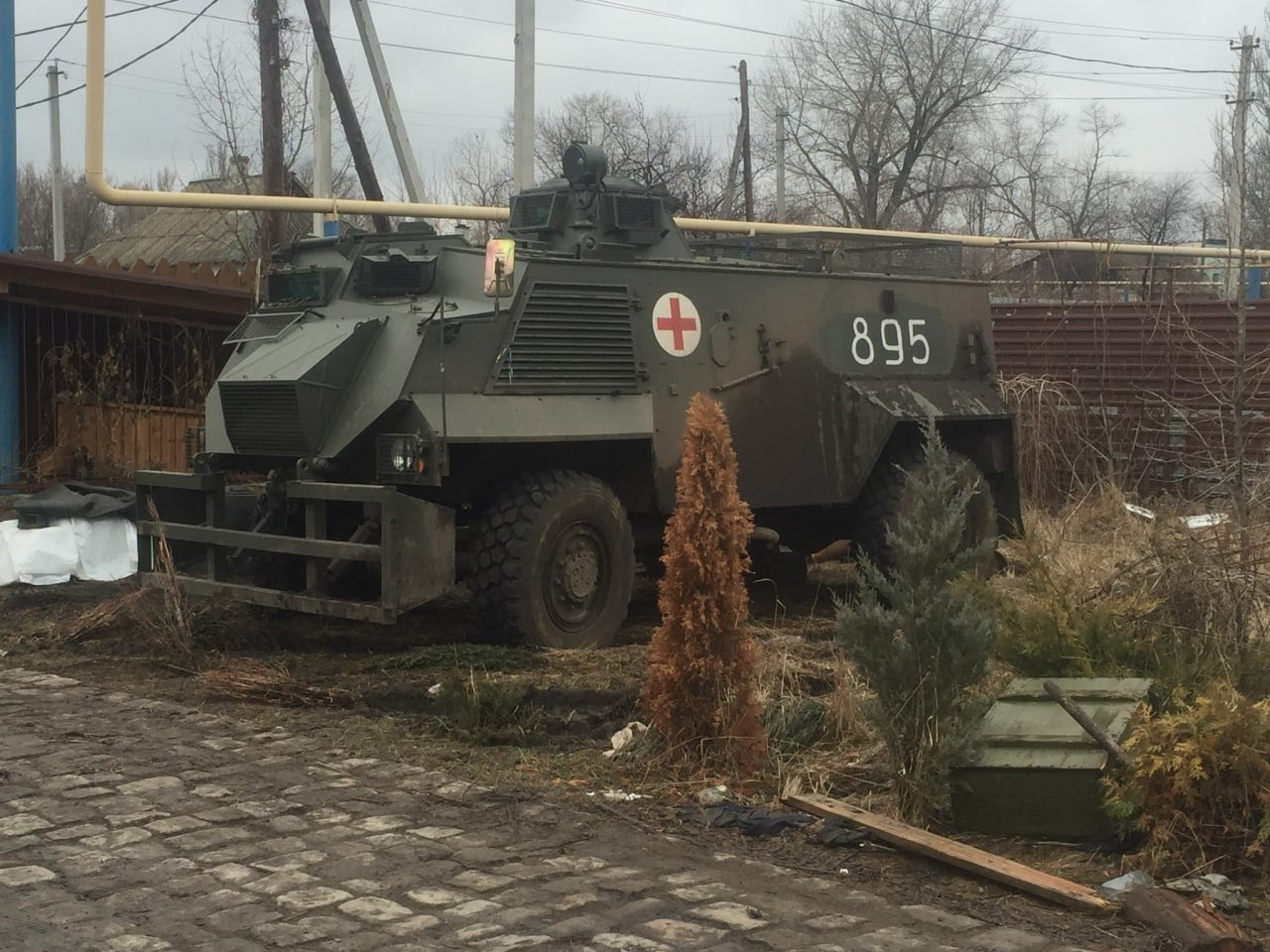
Contemporary reports suggest that a number of the vehicles, perhaps 10 or 20, received additional armour for the troop compartment and mounts for as DShK heavy machine gun and a pair of PK medium machine gun positions. The work reportedly took about two weeks. The majority, however appear to have been rerolled as command or MEDEVAC vehicles and were reportedly initially assigned to 25th Airborne Brigade, 79th, 81st and 95th Airmobile and 36th Naval Infantry Brigades. Though it is unclear if or when they were reassigned from these units. They saw action in Donbas for the first time in June 2015. 

Saxon APCs pre-February 2022 invasion (via Volodymyr)

In a September 2015 Ukraine Today report on the Saxons a member of the 81st airmobile brigade said: “it’s a really beautiful vehicle and the armour is good. for evacuating personnel the APC is great.” When asked if the vehicles were difficult to work with he replied “yes, but that’s normal.” Other pre-February 2022 adaptations include at least one of the vehicles outfitted with slat armour in an effort to protect against RPGs.

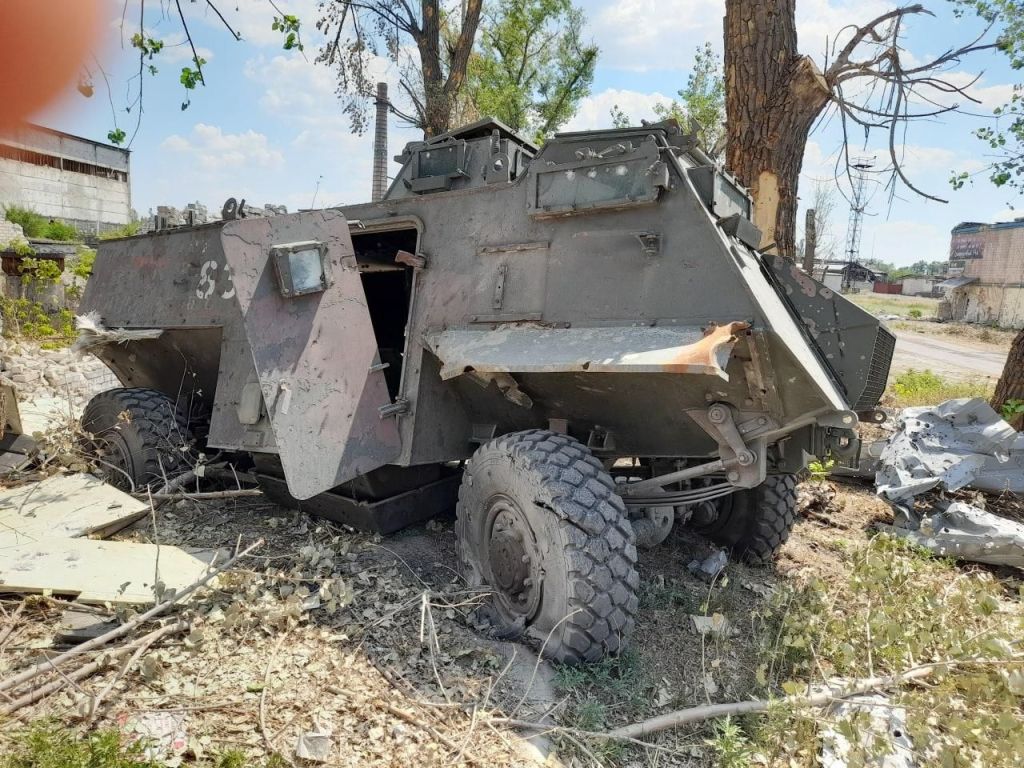
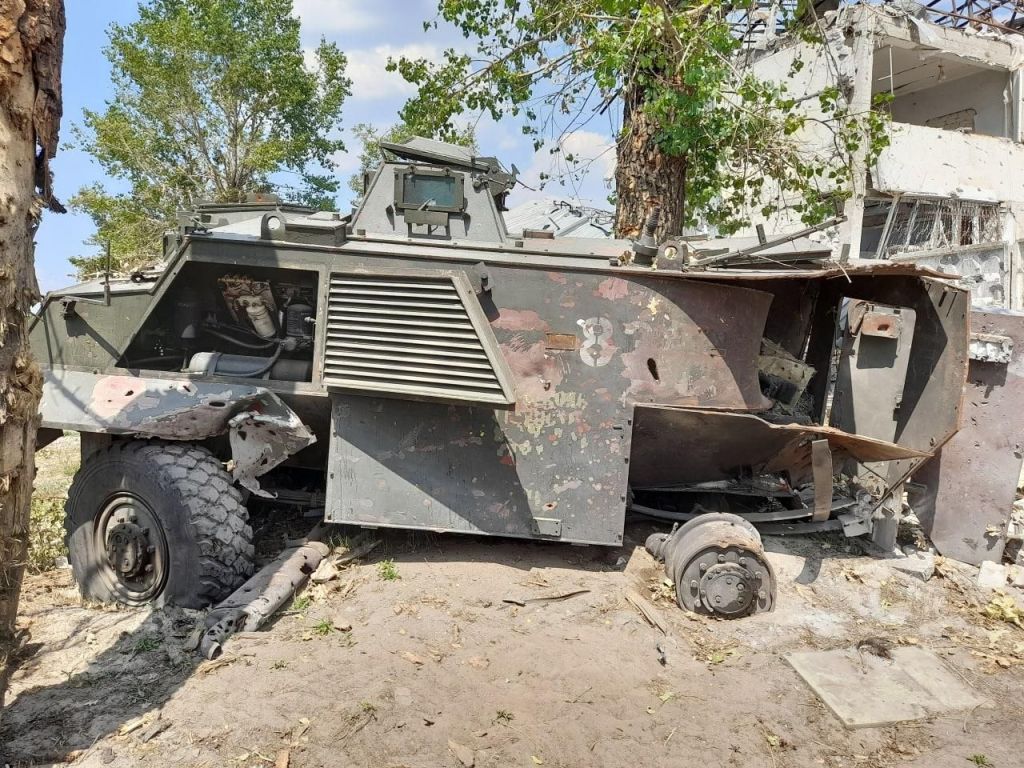
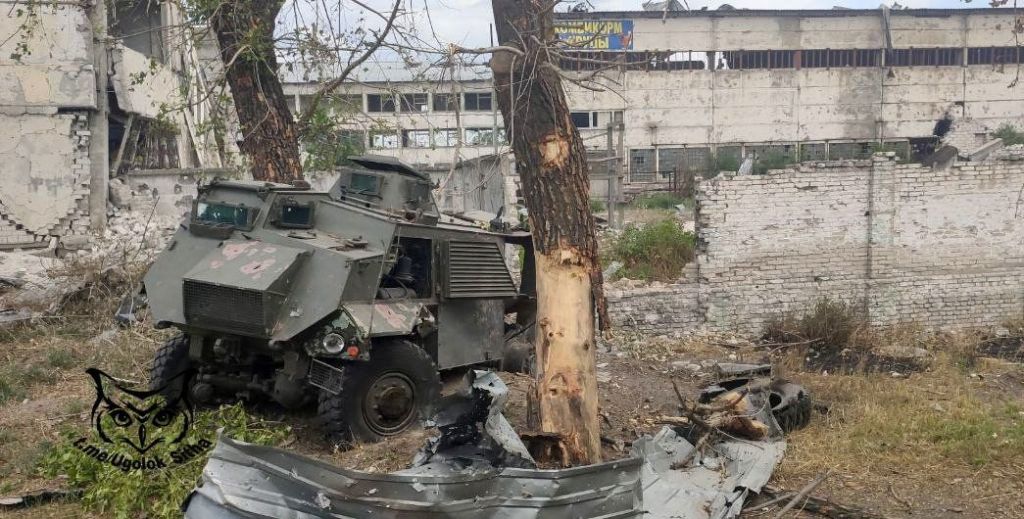
With the Russian invasion in February the Saxons have seen in a number of photographs, mostly in flat green paint, though at least one had the Ukrainian digital camouflage pattern. The majority of the sighted vehicles have been ambulances and all of the photographs have been of either captured or knocked out vehicles. One of the captured vehicles, which appears to be the same vehicles as in image #2 in the block of photographs above, also appeared in a Zvezda TV report being driven around a depot. Narrator reportedly explains it is a captured ambulance, which originated from the UK and the presenter explains that it has an automatic gearbox and is quite fast and now will be transferred to Separatist DNR troops.

According open source intelligence analysts Oryx a total of 5 Ukrainian Saxon’s have been visually confirmed lost. There have not been any recent sightings of the Saxons and the UK and other supporting nations have now transferred or promised more modern and capable vehicles.

Thanks to Volodymyr for sharing some of the pre-war photographs of the Saxon in service.


Update 4/5/23: the Ukrainian Army shared a video about the 80th Air Assault Brigade’s operations during summer 2022. The footage featured numerous Saxon APCs still in frontline use.

Update – 28/11/23: Photos of destroyed Saxon APC, c.2/7/22 07/02/22 in Severodonetsk, Lugansk region.

Update – 15/1/24: Recently shared clip of a Saxon in Ukrainian service believed to have been filmed Winter 2023.


If you enjoyed this video and article please consider supporting our work here. We have some great perks available for Patreon Supporters – including custom stickers and early access to videos! Thank you for your support!


Bibliography

“Useless” Saxon Vehicles Surprisingly Useful In Ukraine, Defence24, (source)
The Not So Secret Life of the Saxon, Think Defence, (source)
‘Saxon’ armored vehicles to enter service after improvement and test procedure, Censor, (source)
UK’s Delivery of Saxons to Ukraine “Nothing Short of Immoral”, ForcesTV, (source)
Attack On Europe: Documenting Ukrainian Equipment Losses During The 2022 Russian Invasion Of Ukraine, Oryx, (source)
General Sir Richard Dannatt condemns armoured vehicle transfer to Ukraine, The Telegraph, (source)
Saxon armored personnel carriers were first used in real combat operations, Military Informant, (source)
Ukraine tested the delivered British Saxon armored vehicles, Military Informant, (source)
British Saxons in Action, Ukraine Today, (source)
Captured Saxon, Zvezda, (source)