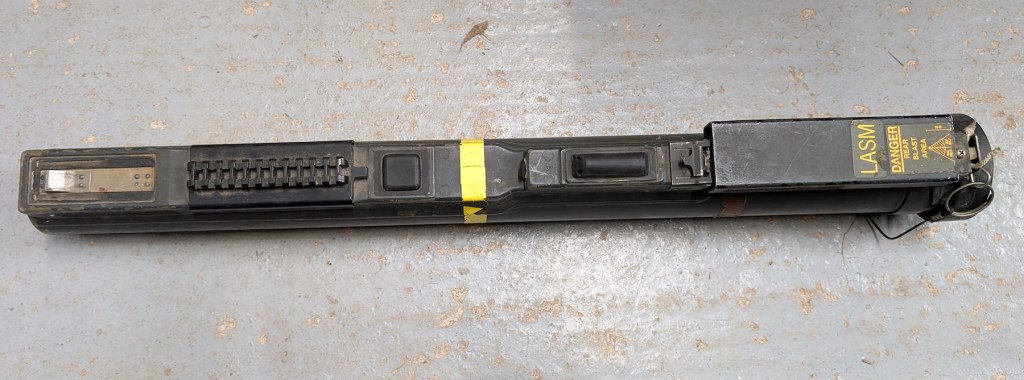
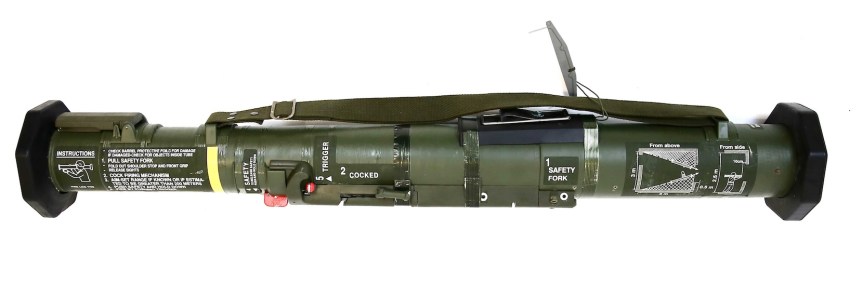
You’re probably familiar with the British Army’s NLAW but you may not have heard the term ‘ILAW’. The ILAW, or Interim Light Anti-armour Weapon, is the British Army’s designation for the Saab 84mm AT4 single-shot recoilless anti-tank weapon.
In the late 1990s the British Army began to seek a replacement for the Light Anti-armour Weapon 80, officially referred to as the L1A1 94mm HEAT Rocket System; this requirement would eventually evolve into the Next-generation Light Anti-tank Weapon or NLAW. NLAW was selected in 2002 and was intended to enter service in 2006, but this slipped to 2009. As a result, in 2004, with UK operations in Iraq and Afghanistan ongoing, an interim solution was sought and the AT4 was selected.
In July 2004, then-Armed Forces Minister Adam Ingram told the UK’s Parliament that:
“The Interim Light Anti-Armour Weapon (ILAW) is being procured to provide a light, short-range anti-armour capability in advance of the introduction of the Next Generation Light Anti-Armour Weapon (NLAW). Following a competitive down select, the Saab Bofors Dynamics AT4 anti-armour system has been chosen to meet the ILAW requirement. In parallel, the NLAW programme remains on track to meet the long-term requirement.”
UK Parliamentary records show that 1,400 AT4s were procured from Saab. The variant ordered was the AT4 CS HP – the Confined Space High Penetration variant of the system. This means it can be fired from confined spaces, but its warhead can penetrate up to 420mm of rolled homogeneous armour. The AT4 CS HP weighs 8kg and has an overall length of 1,040mm. It’s muzzle velocity is 220 m/s and its effective out to 300m.In addition to the actual AT4s procured, records also show that 350,000 9mm AT4 practice rounds were procured between 2004 and 2005 for use in AT4 trainer units.
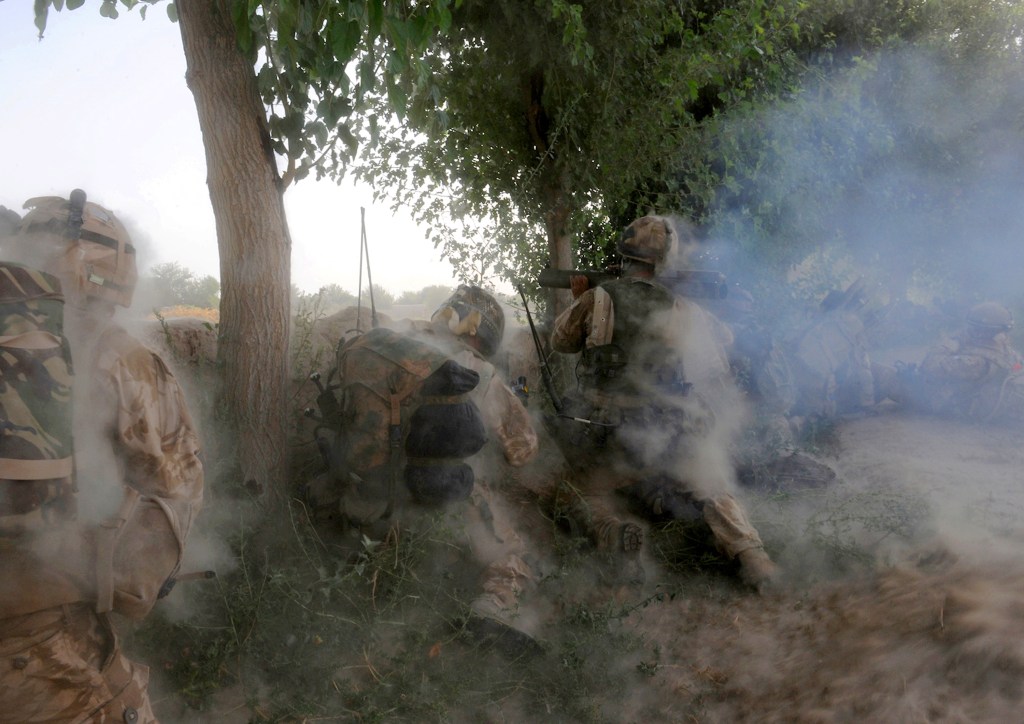
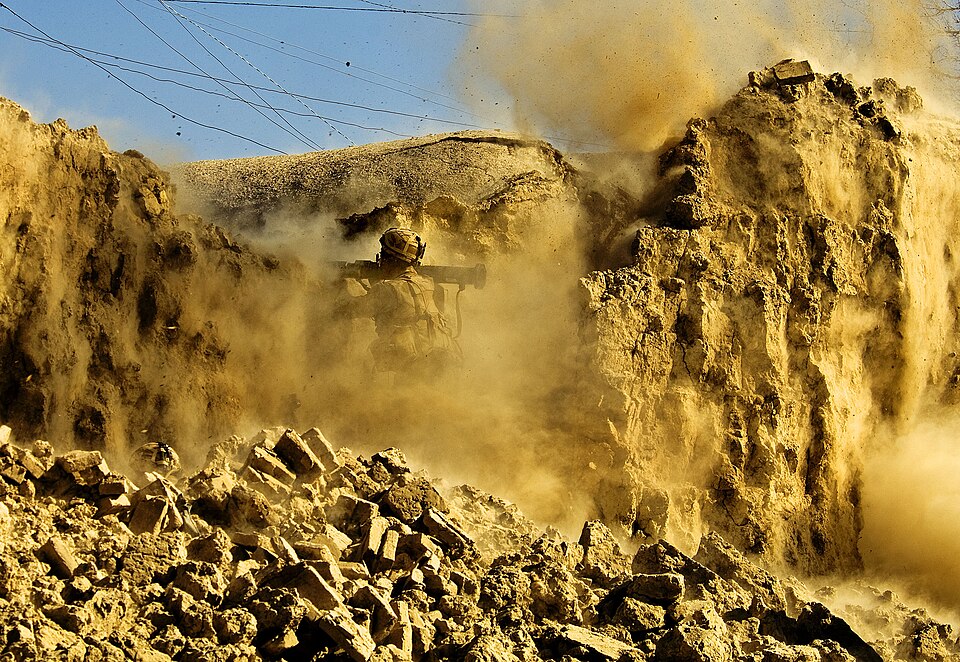
Operationally, ILAW supplemented the L72A9 Light Anti-Structure Munition and the later L2A1 Anti-Structure Munition, both of which were used in Afghanistan. This photograph (below), taken by a Royal Navy photographer Sean Clee, represents the best look at an ILAW in action in theatre that I’ve been able to find. A member of M Company, 42 Commando Royal Marines fires an ILAW at Taliban insurgents in the town of Barikju, Northern Helmand in 2007.
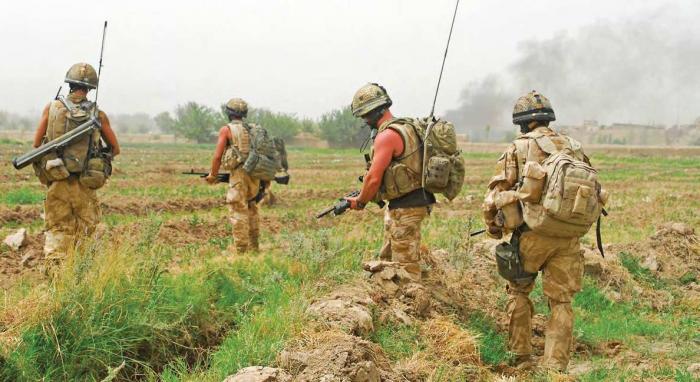
Digging a little deeper thought the UK MoD’s Defence Imagery archive I came across a series of rarely seen photographs featuring ILAWs. The earliest photograph I found dates to early August 2006, a WIMIC Land Rover is seen with a pair of AT4s strapped to the bonnet during a route clearing operation near Musa Qala in Helmand Province. A photo of members of 3 Parachute Regiment operating in the same area during Operation Atomi was taken on 24 August, with an AT4 laying on the ground in the background as troops rest.
The next image I came across dates to the end of January 2007, members of M Company 42 Commando operating in Barikju, with a light machine gunner also carrying an AT4. This photo, the one seen earlier and several more we’ll examine all originate from the Operation Volcano which aimed to clear the Taliban out of compounds in and around Barikju. The next three images were taken by Sean Clee on 2 February, showing members of M Company, 42 Commando. In each of the photographs AT4s can be seen in the background. In the final image an empty launch tube of an ILAW can be seen next to a GPMG.
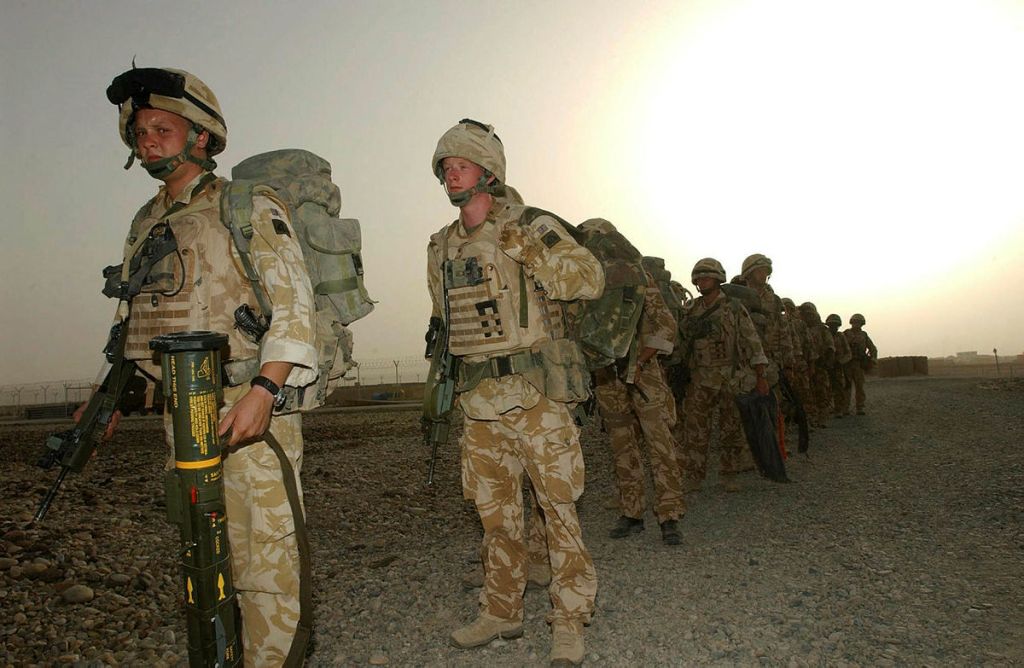
In June 2007 British troops undertook Operation Bataka near Garmsir, this photograph was taken during the operation and features a soldier with an ILAW slung. A month later in July 2007, members of No.3 Company, 1 Grenadier Guards were photographed waiting to board a Chinook during Operation Chakush. The soldier in the foreground waits with an ILAW grounded. The final photograph I found, dates from 2nd August, 2007, also taken during Operation Chakush, features a member of B Company 1 Royal Welsh, armed with an L86 LSW, providing security during a building clearance has an ILAW slung. All of these photos show that the ILAW was in theatre by the summer of 2006 and saw operations through the following year.
Sources are conflicted on the L-designation for the ILAW, some sources suggest L1A2 and L2A1 while in 2005 the British Army’s website listed it as the L142. The ILAW remained in British inventory into the 2010s and saw active service in Afghanistan (no firm information is available on if it was deployed during the Iraq War), but was slowly replaced by the more capable and complex NLAW. As of 2025, per a Freedom of Information query, the ILAW is no longer held in UK inventory.
Support Us: If you enjoyed this video and article, please consider supporting our work here. We have some great perks available for Patreon Supporters – including early access to custom stickers and early access to videos! Thank you for your support!