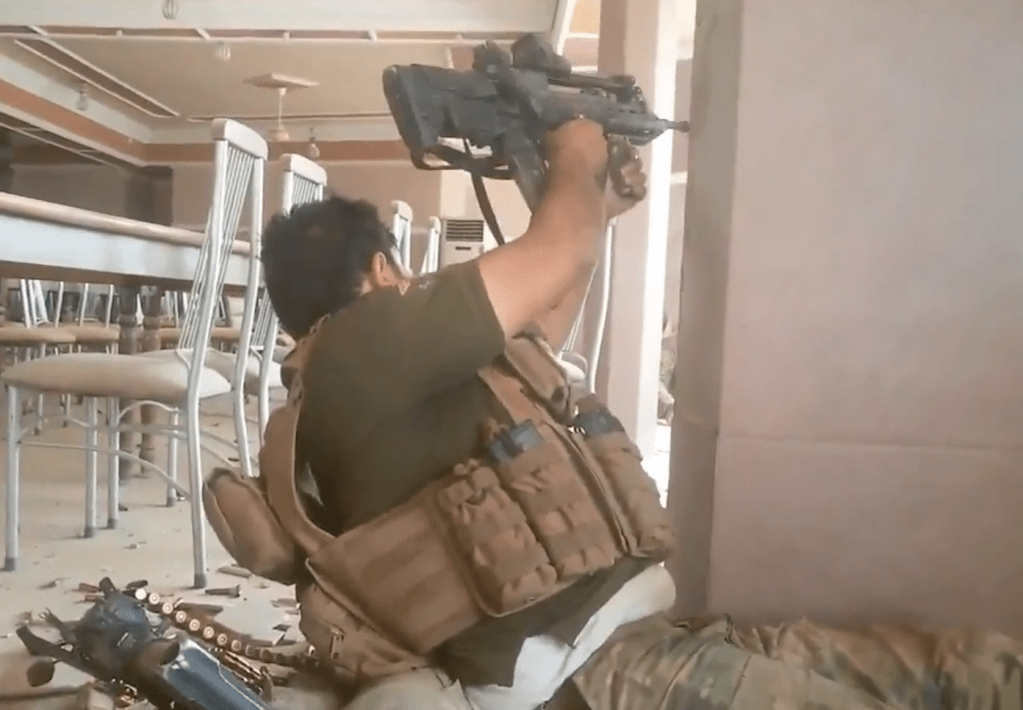
The VHS-2 bullpup rifle manufactured by Croatia’s HS Produkt became one of the most frequently seen rifles during the Iraqi counter-offensives against ISIS during 2015-17. The rifle regularly appeared in news reports and social media posts and became somewhat synonymous with the fighting for Fallujah and Mosul.
A screen capture of combat footage from Iraq c.2016-7 featuring a member of the Emergency Response Division with a VHS-2
Check out the full article accompanying this video at Silah Report.
If you enjoyed this video and article please consider supporting our work here. We have some great perks available for Patreon Supporters – including custom stickers and early access to videos! Thank you for your support!
A comment in my recent video about the Royal Bermuda Regiment’s use of the Mini-14 sparked my interest. It noted that Malta, another small island military, uses the AK. I wasn’t aware of this so I decided to do some research.
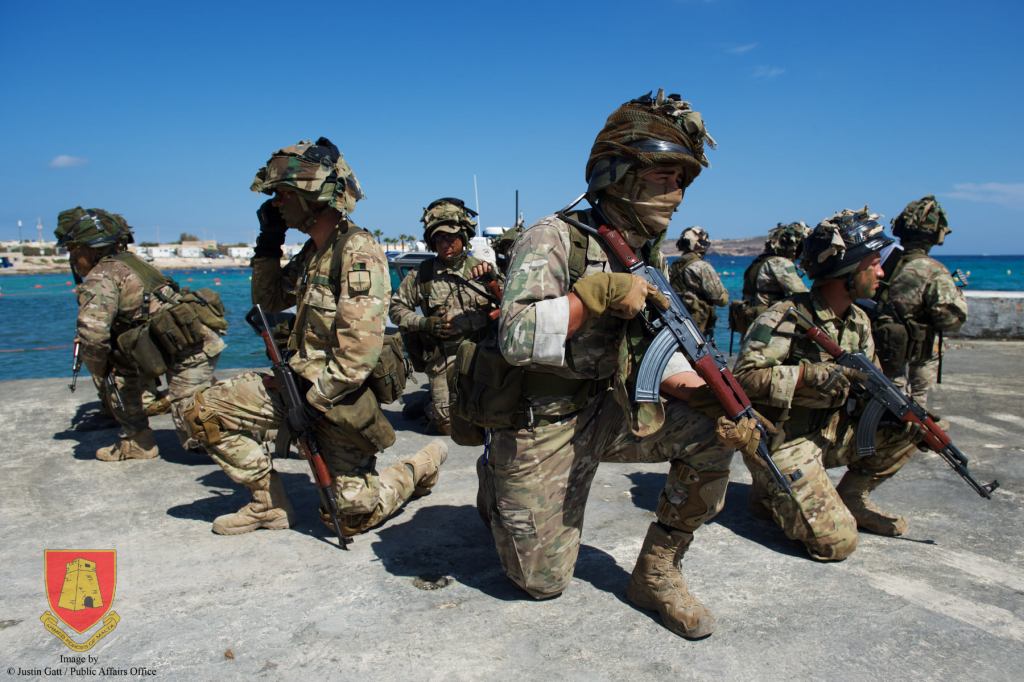
Malta’s military, known as the Armed Forces of Malta (AFM) is roughly the size of a brigade. In recent years the Armed Forces of Malta have had a strength of between 1,600 and 1,800 personnel. It has three battalions a maritime squadron and an air wing. Malta is a neutral nation and as such the AFM’s role is territorial defence, internal security and border control.
Malta gained independence from the UK in 1964 and became a republic in 1974, this is when the AFM was founded. With the former link to the UK much of the AFM’s initial equipment was of British origin and the 7.62×51mm L1A1 Self-Loading Rifle was used as the AFM’s service rifle for many years this appears to have changed in the late 1970s early 1980s. The FN FAL-derrived L1A1 is still used as the AFM’s standard drill and parade rifle.
AFM personnel with Type 56/II AK-pattern rifles (AFM)
The AFM celebrated its 50th anniversary in 2020 and shared this time line of their uniform and equipment in their service magazine OnParade which gives us some idea of how their small arms changed over time. We can see that the AK-pattern rifles have been in service since at least the 1980s.
The AFM’s website lists their small arms with personnel being armed with Beretta 92s, a variety of HK MP5s, and what they describe as the ‘AK 47 Variant’. The site lists the rifles as being manufactured by Russia, Romania, China and East Germany. These rifles are all chambered in the 7.62×39mm cartridge.
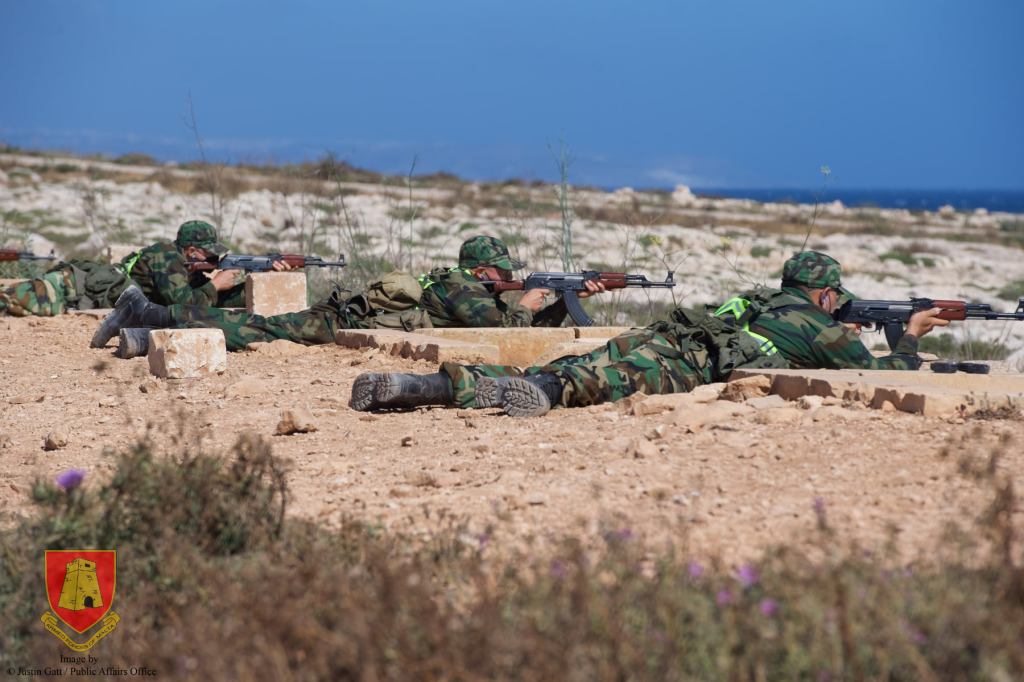
Where the first AK-pattern rifles came from is unclear, although one source suggests the German and Romanian rifles were bought second hand in the 1990s. From a survey of images and video shared by the AFM in recent years it appears that East German MPiKMS, Romanian PM md.63, North Korean Type 68 and Chinese Type 56/II are in service.
AFM recruits training with Chinese Type 56/II AKs (AFM)
The origins of the Chinese rifles is easy to trace back to a 2003 donation of small arms and light weapons made by the People’s Republic of China. An agreement was signed with China in June 2001 and as part of this a donation of 150,000 Maltese lira-worth of weapons. By 2003, however, it was reported by the Time of Malta that this had increased to 500,000 Maltese lira-worth of weapons. This included Type 56/II rifles, Type 80 general purpose machine guns and RPG-7 clones. The AFM’s acting commander Colonel Carmel Vassallo described the donation as a “dream come true” at the time. It reportedly allowed the entire AFM to be armed with a single type of service rifle.
The reasoning behind the adoption no doubt comes down to financing, Malta being a small island nation does not have an extensive defence budget, reported at 54 million Euros in 2020, and perhaps have chosen to prioritise personnel and procurement of naval and aviation assets over small arms. It is easy to see how the donation of service rifles and other small arms would be welcomed when balancing a modest budget.
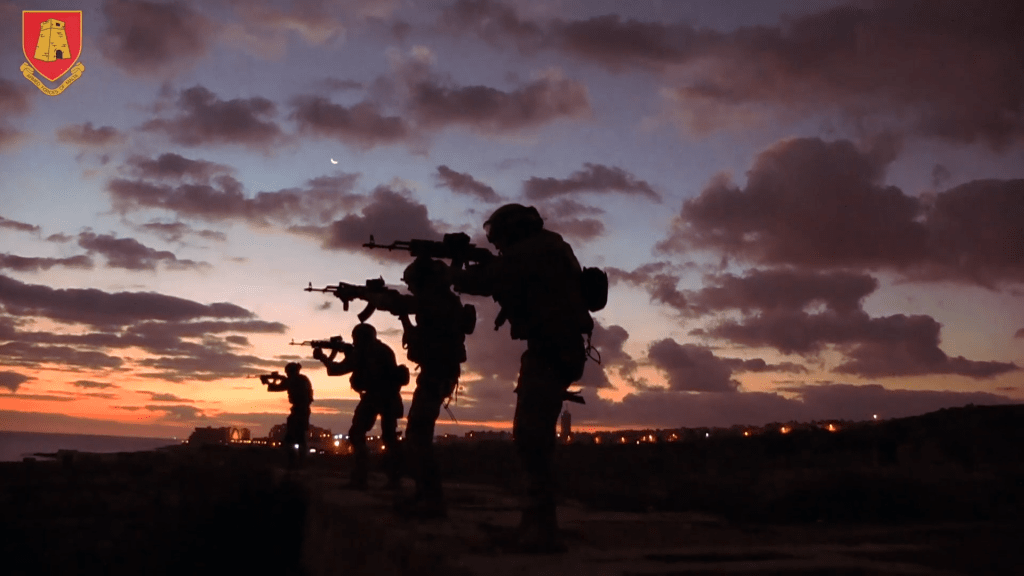
AFM personnel with modified AKs (AFM)
Over the last 10 years there have been a number of photos and videos released showing AKs which have been upgraded with some aftermarket modifications. The mods appear to predominantly be sourced from FAB Defense – with their CAA Polymer buttstock and VFR-AK railed forend with a top rail which extends over the top of the receiver cover. This provides the bare bones AKs with some modularity. It’s unclear how widely issued the modified AKs are but from officially release imagery it seems that the basic AK-pattern rifles are more prevalent. In recent years Malta has stood up quick reaction forces and it appears from videos and images shared of the company that they have been equipped with SIG Sauer MCX rifles.
If you enjoyed this video and article please consider supporting our work here. We have some great perks available for Patreon Supporters – including custom stickers and early access to videos! Thank you for your support!
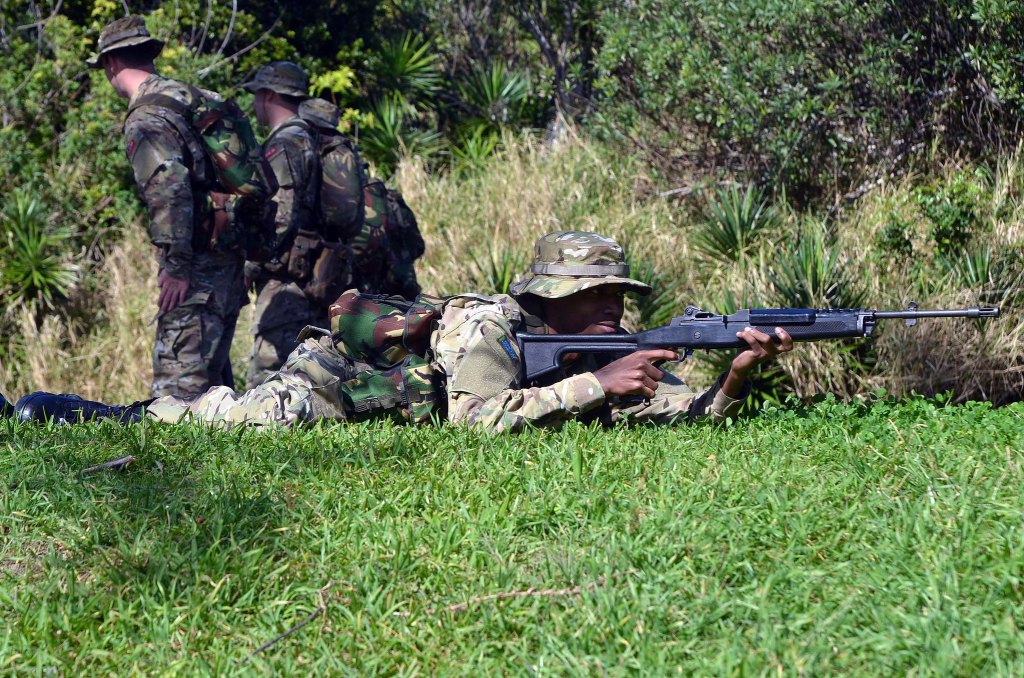
Formed in 1965 the Royal Bermuda Regiment (RBR) is a territorial line infantry battalion, whose primary role is internal security. The regiment is essentially a territorial or Army Reserve battalion with around 600 part-time troops. Bermuda itself is a British Overseas Territory and is one of several territories to have its own British Army overseas regiments. Initially equipped with the British Army’s L1A1 self-loading rifle, the Mini-14 was selected by the Royal Bermuda Regiment in 1983 to replace the L1A1. The 1980s saw a number of other British Army affiliated units move away from the L1A1, with the Falkland Islands Defence Force selecting the Steyr AUG.
A Royal Bermuda Regiment recruit with a Mini-14, c.2012 (RBR)
The Mini-14 GB (Government Barrel) semi-automatic rifle was purchased from Ruger. The Mini-14 GB had a thicker profile barrel with a a flash hider and mounting lug for the US M7 bayonet. The Royal Bermuda Regiment issued the Mini-14s with 20 round magazines. They were initially shipped with standard wooden stocks but in the early 1990s black polymer stocks with pistol grips were procured from Choate. Another unique attribute of the Regiment’s Mini-14s is the regimental crest stamped on the left side of the receiver. Less than a thousand rifles were produced for the Royal Bermuda Regiment.
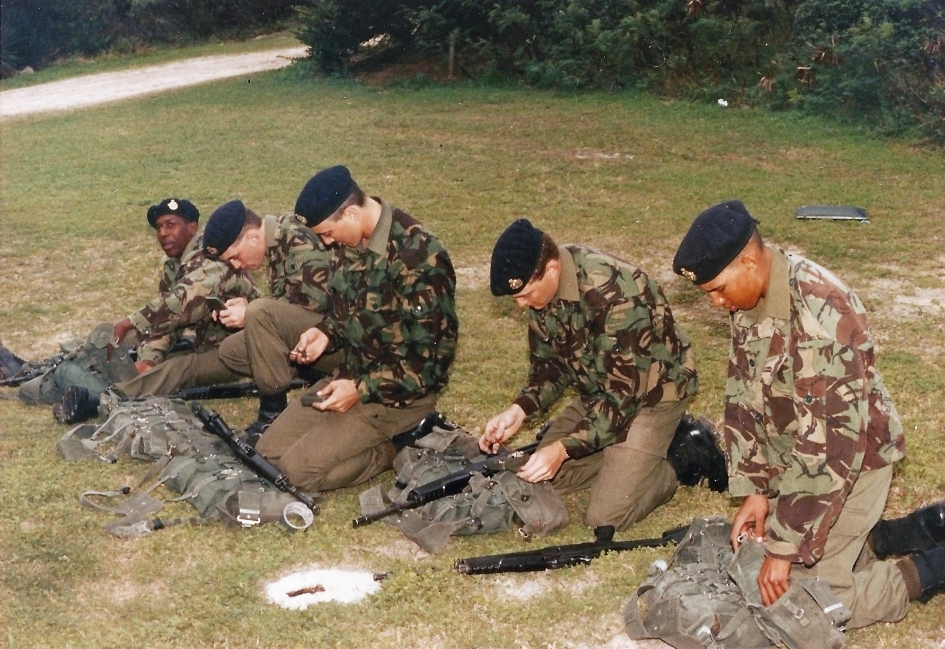
In terms of drill with the Mini-14 it is unclear what drill the RBR adopted with the wooden-stocked rifles though it likely drew on British Army drill with Lee-Enfield pattern rifles. Since the refitting of the rifles with the Choate stock it appears that the Regiment adapted the drill laid down for the L1A1. Both rifles have pistols grips, long butt-stocks and exposed barrels which project from the forend.
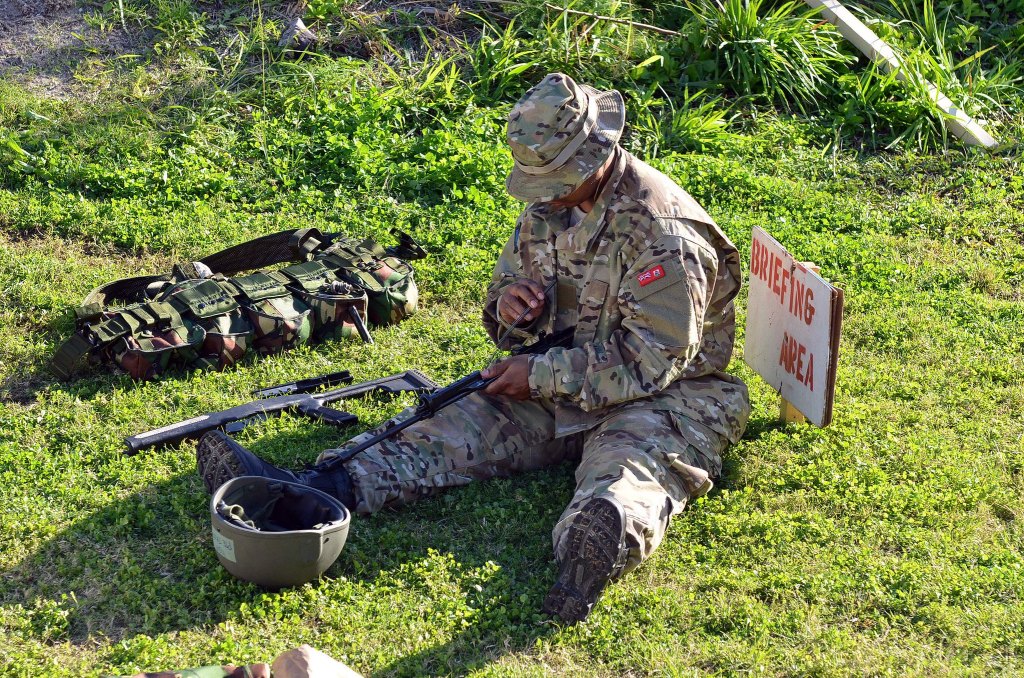
A Royal Bermuda Regiment recruit reassembling a Mini-14, c.2012 (RBR)
The Mini-14 was developed in the late 1960s by L. James Sullivan and William Ruger, chambered in .223 Remington / 5.56x45mm it is a gas operated rifle with a rotating bolt. The rifle was essentially developed as a scaled-down M14 with a cast receiver and a simplified gas system and bolt.
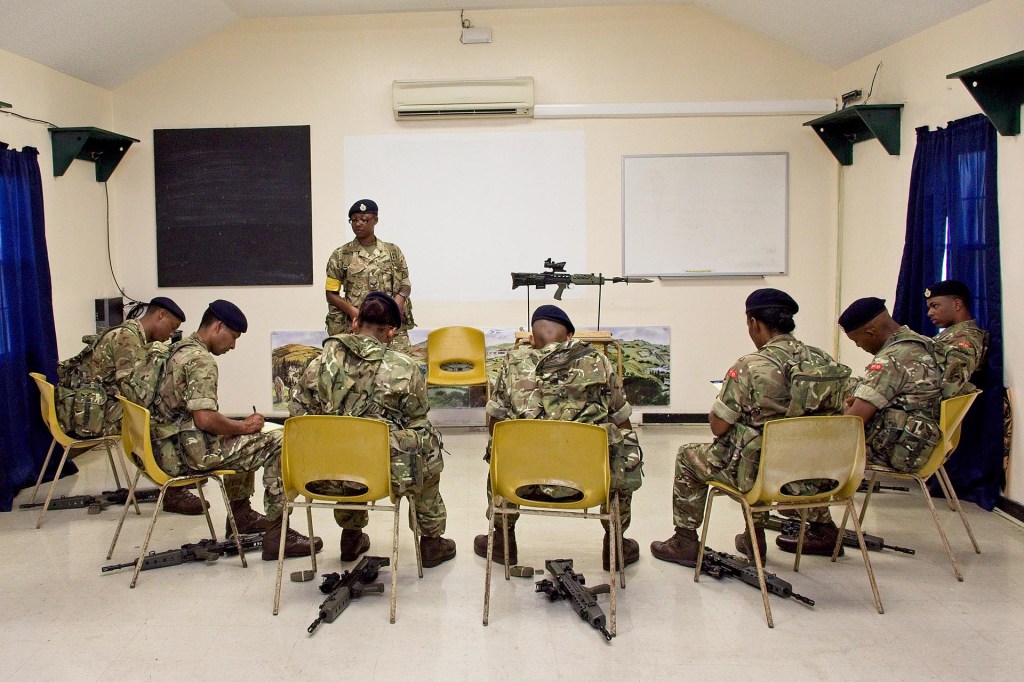
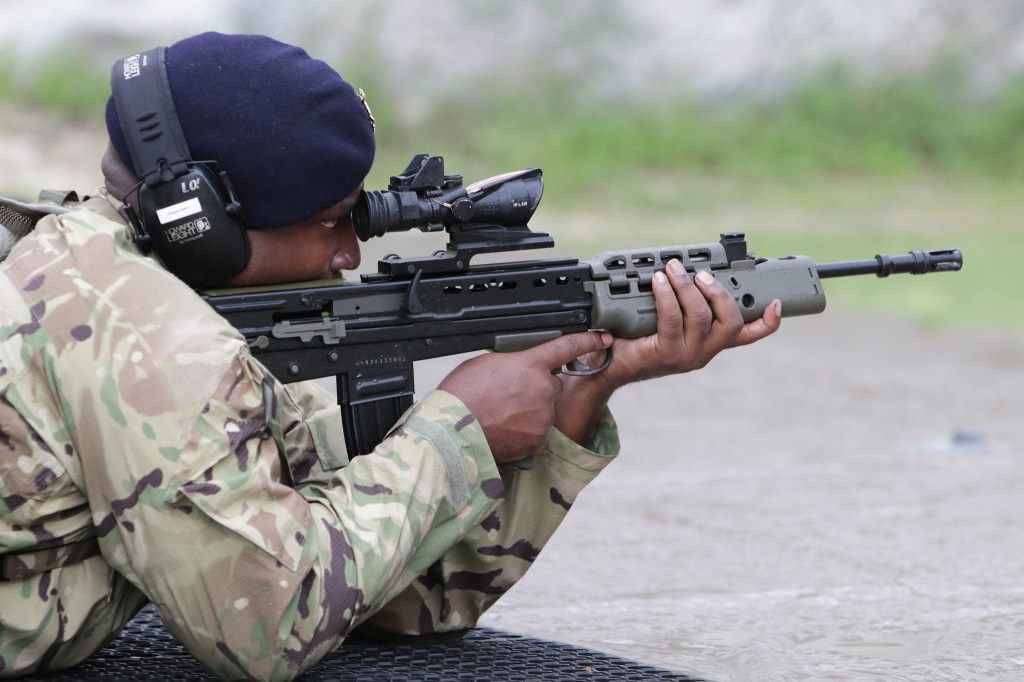
The search for a weapon to replace the Ruger began in the 2010s with the German Heckler & Koch G36 and the US M4 both being tested. The HK G36 was selected but budget constraints saw the British L85A2 adopted instead. In 2012 the Royal Bermuda Regiment had entered into an agreement with the UK’s Ministry of Defence procurement office to allow purchase of some equipment such as the new Multi-Terrain Pattern (MTP) uniforms which replaced Combat Soldier 95 DPM uniforms. It was announced that in the future other personal equipment including boots, body armour and webbing could also be procured via the UK procurement system. This closer cooperation likely paved the way for adoption of RBR configuration L85A2s. The rifles, along with 1,600 magazines and over 400 ACOGs were donated to the regiment. News reports at the time stated the value of the donated equipment was $1.4 million. The switch to the L85A2 began in 2015 and was completed in early 2016.
The rifles appear to have the HK-designed conventional L85A2 plastic hand guards instead of the 2009 A2 configuration which saw the instillation of the Daniel Defence railed forend. The SUSAT sight has been replaced by an ACOG, most commonly seen on what became known as the Theatre Entry Standard (or TES) upgraded rifles. The Bermudan SA80 has a riser picatinny rail for mounting the optic, this was initially developed for British issue L85A2s. In British service the ACOG had been procured earlier first for special forces use and subsequently as a wider urgent operational requirement.
An RBR L85A2 is handed back into the armoury, c.2017 (RBR)
On top of the ACOG is a CQB red dot sight, the ACOG has subsequently been replaced in British service by the ELCAN Spectre. The ACOGs donated to the Royal Bermuda Regiment probably came from surplus stores. We can see on some of the photos released by the regiment that the ACOGs are marked ‘IW-LSW’ indicating that they may have previously been paired with the British Army’s L85 Individual Weapon and the L86 Light Support Weapon.
Recruits introduced to the L85A2, note the sight riser with ACOG mounted (RBR)A Royal Bermuda Regiment recruit at the range with an L85A2, note the IW-LSW marking on the side of the ACOG (RBR)
The Royal Bermuda Regiment’s intriguing use of the Mini-14 represents one of the few military procurements of the rifle.
If you enjoyed this video and article please consider supporting our work here. We have some great perks available for Patreon Supporters – including custom stickers and early access to videos! Thank you for your support!
Bibliography:
RBR Recruits at the range with Mini-14s c.2013, BDA Sun, (source)
Rifles worth $1.4m donated to Regiment, Royal Gazette, (source)
RBR Soldiers Get to Grips with Rifles, RBR, (source)
Regiment Soldiers Continue Training Overseas, BerNews, (source)
Island Warrior 15 B-Roll, USMC/Staff Sgt. Albert J. Carls, (source)
Royal Bermuda Regiment Training, USMC/Lance Cpl. Joel Castaneda, (source)
50 Years Strong! The Royal Bermuda Regiment at 50, Royal Bermuda Regiment, (source)
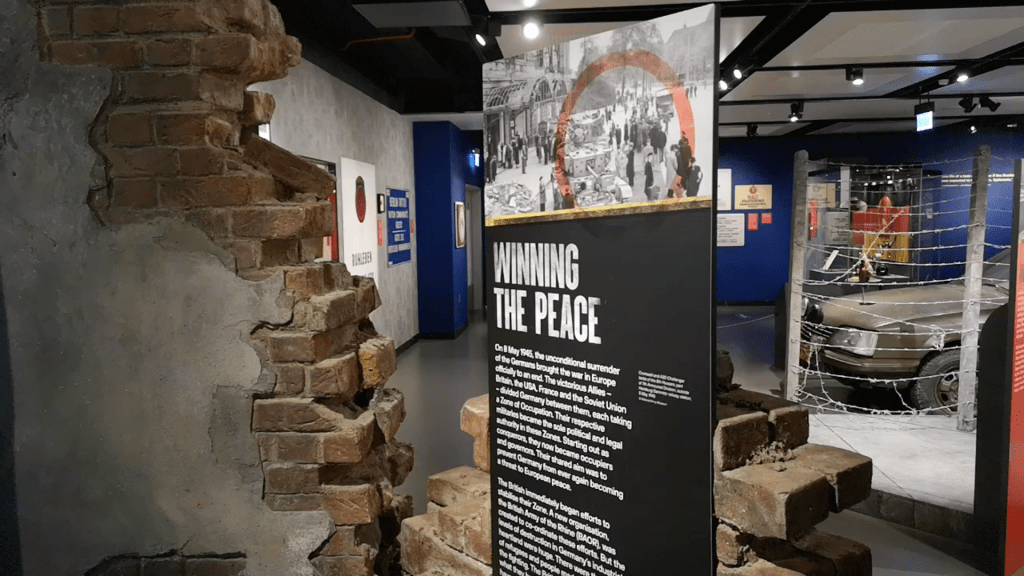
A couple of months ago I visited the UK’s National Army Museum in London. They had an exhibition exploring the history of the British Army in Germany since 1945. Titled Foe to Friend it explores the British Army’s post-war experience in Germany first as an occupier and then as a NATO ally.
Inside the Foe to Friend exhibit (Matthew Moss)
More than a million British soldiers have lived and served in Germany over the past 75 years. The exhibition tries to capture some of their experiences while relating the history of their operations – no small task.
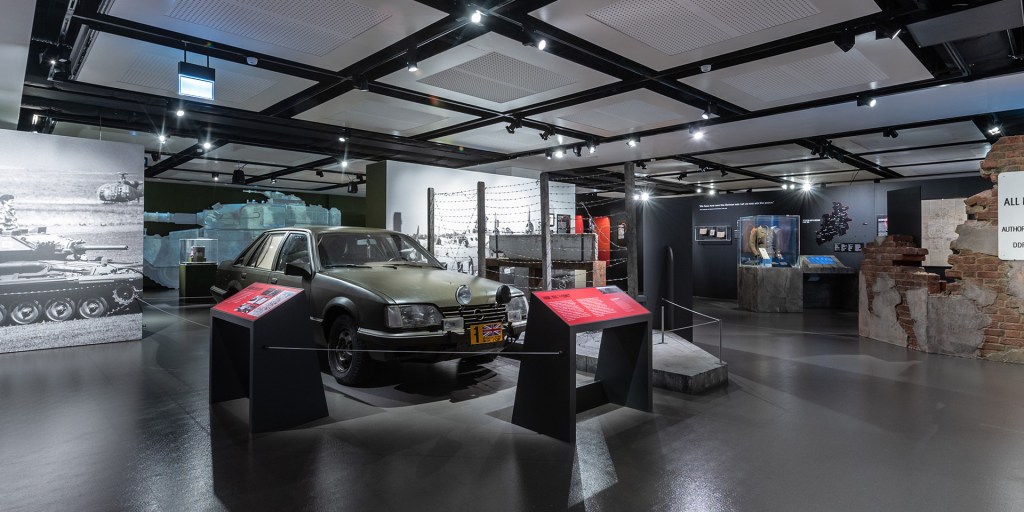
One of the highlights of the exhibit were the small personal items like photos and uniforms but also vehicles like the Brixmis Opel – a car used by British observers to travel through East Germany. There was also an interactive light up display that let you identify various Cold War Soviet vehicles – just like a Brixmis observer!
Inside the Foe to Friend exhibit (National Army Museum)
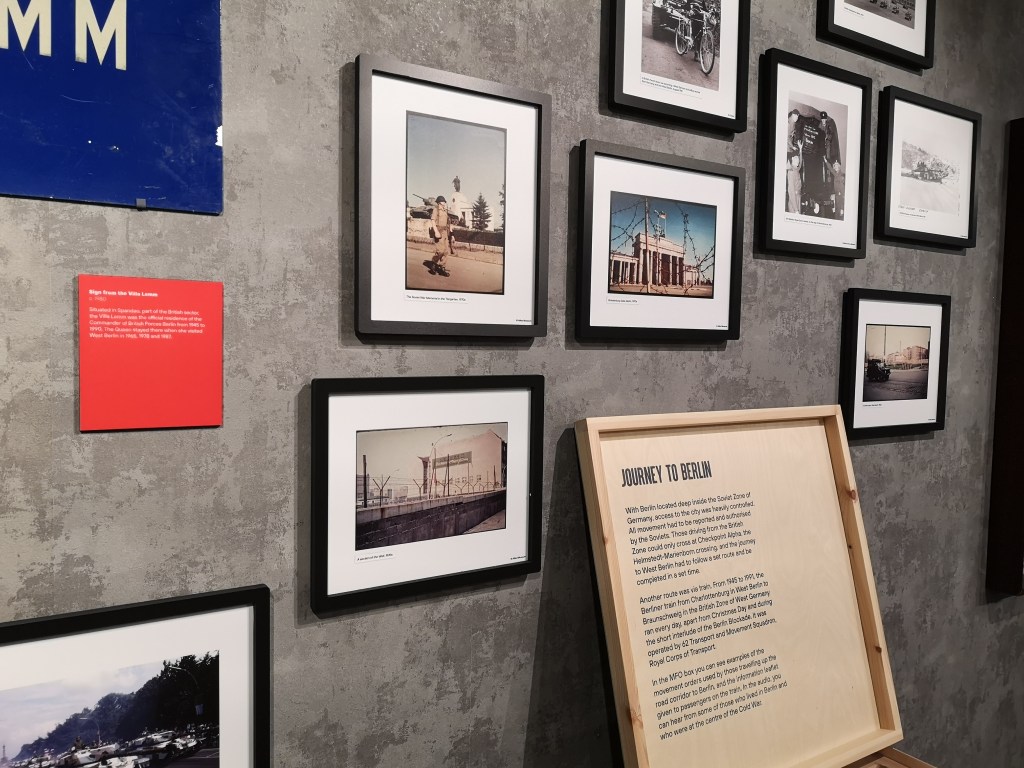
The exhibition also shows off some of the uniforms and kit used during the UK’s 75 years in Germany as well as some of their weapons including some instantly recognisable Cold War icons like the L1A1 SLR and the Carl Gustav, as well as the SA80 and my old friend the Sterling SMG. Another essential piece of kit – the Boiling Vessel takes centre stage in a multi-media area with a section on the famous food van owned by Wolfgang Meier – he followed British troops on exercise and sold them bratwurst and fish and chips.
Inside the Foe to Friend exhibit (Matthew Moss)
The exhibit covered several rooms but was more sparse than I’d hoped and some of the smaller items seem a little lost. I would have liked to have seen more on the large-scale exercises the British Army of the Rhine took part in, like Lionheart 84. The exhibition does, however, conclude with some displays on the operations some of the men station in Germany took part in, including peacekeeping in Bosnia and the first Gulf War.
It would have been great to have had some interactive displays featuring audio or video interviews from service personnel who had been in Germany during the various periods of the Army’s presence. This is something the West Indian Soldier exhibition, which we recently looked at, did well.
It ends with an excellent graphic depicting how troop numbers in Germany fell dramatically after the Second World War – despite the Cold War, from 780,000 in 1945 to just 135 at the end of the British Army’s deployment in 2020.
The exhibition ran from September 2020 to December 2021.
If you enjoyed this video and article please consider supporting our work here. We have some great perks available for Patreon Supporters – including custom stickers and early access to videos! Thank you for your support!
Further Reading:
‘Active Edge: The Army, Germany and the Cold War’, National Army Museum, (source) ‘Foe to Friend: The British Army in Germany since 1945’, National Army Museum, (source) ‘Foe to Friend: Virtual Tour’, National Army Museum, (source) ‘Army Life in Germany: Virtual Tour’, National Army Museum, (source)
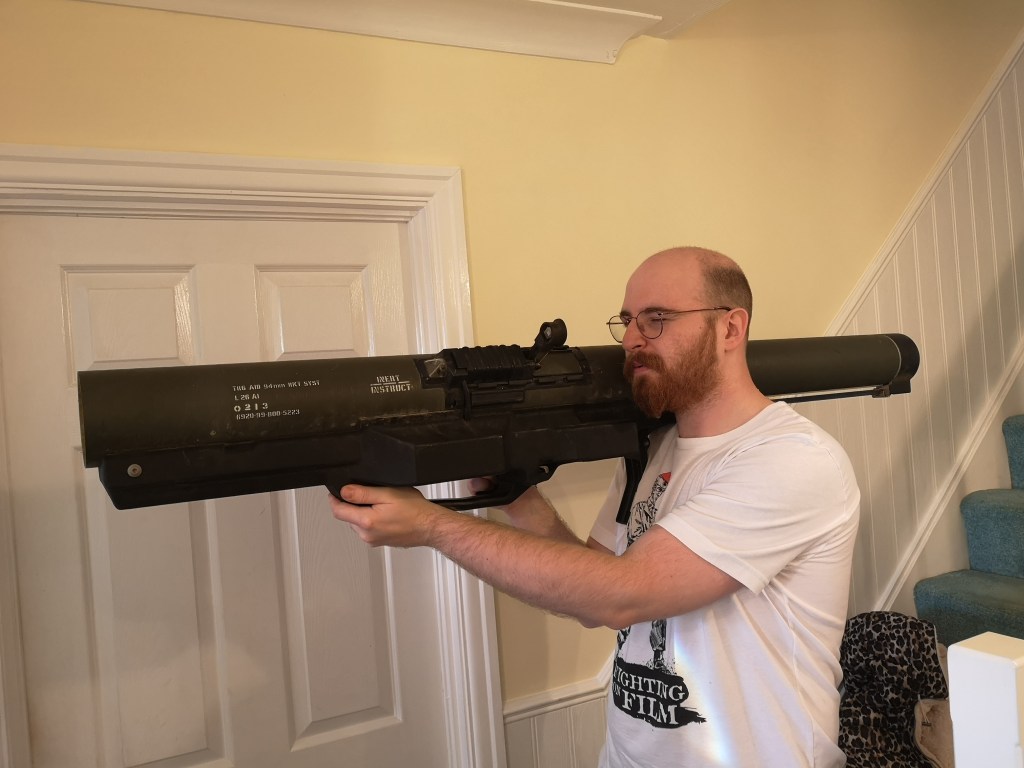
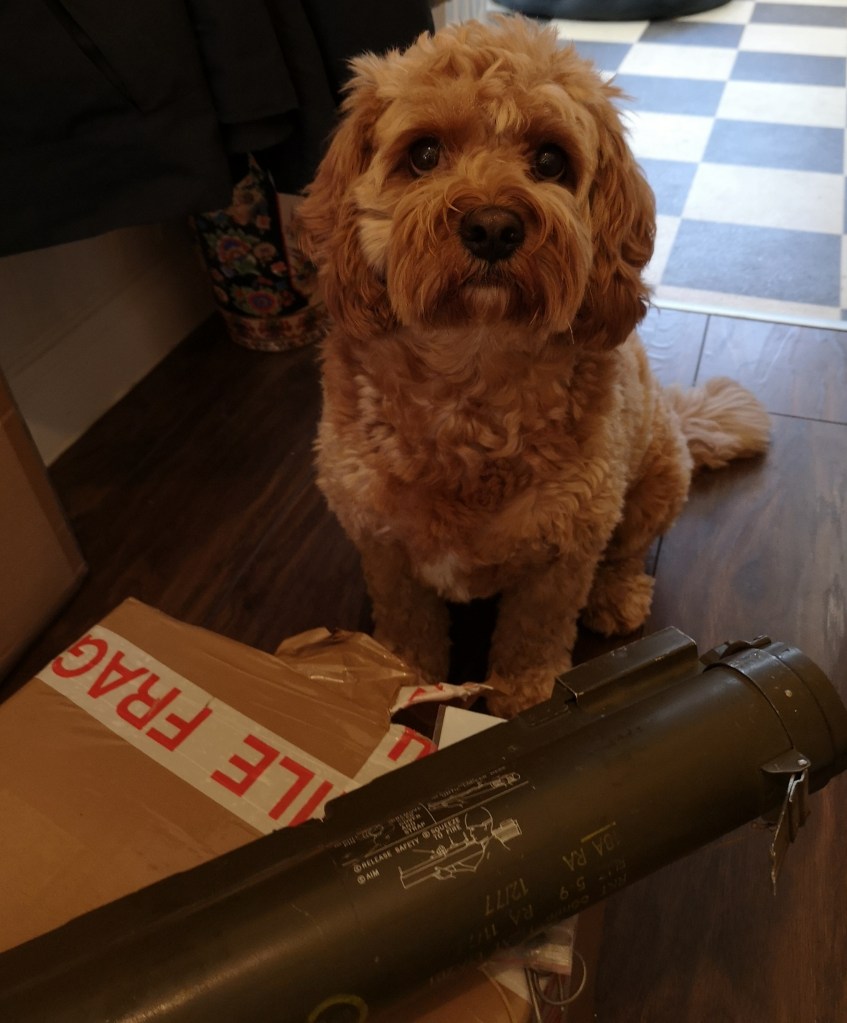
I was recently lucky enough to pick up a pair of very cool anti-tank weapons. A brilliant cutaway/sectioned 66mm LAW and an intriguing 94mm LAW80 training model which requires more research! These were both standard infantry anti-tank weapons for the British Army (and many others) during the Cold War.
The LAW80 deployed! (Matthew Moss)Dickie with the 66mm LAW (Matthew Moss)
Really pleased to add these to the TAB reference collection. We’ll have proper videos on both of these in the near future!
If you enjoyed this video and article please consider supporting our work here. We have some great perks available for Patreon Supporters. Thank you for your support!
During the Cold War the British Army on the Rhine was deployed in West German. In anticipation of a conflict with the Soviet Union detailed recognition guides were written for British troops to identify and familiarise themselves with enemy weapons and equipment. A substantial series of these were written covering everything from small arms to artillery to vehicles and aircraft.
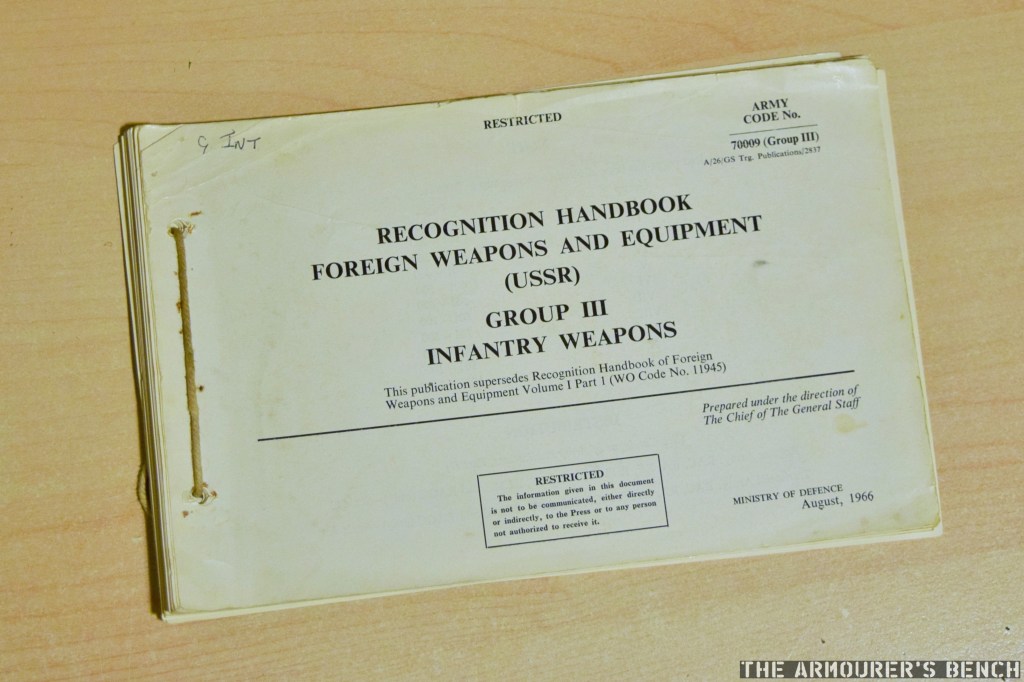
In this video and article we will examine ‘Recognition Handbook Foreign Weapons and Equipment (USSR) Group III Infantry Weapons’ originally published in August 1966. It covers pistols, carbines, rifles, light, medium and heavy machine guns, grenades and some infantry anti-tank weapons like the RPG-2.
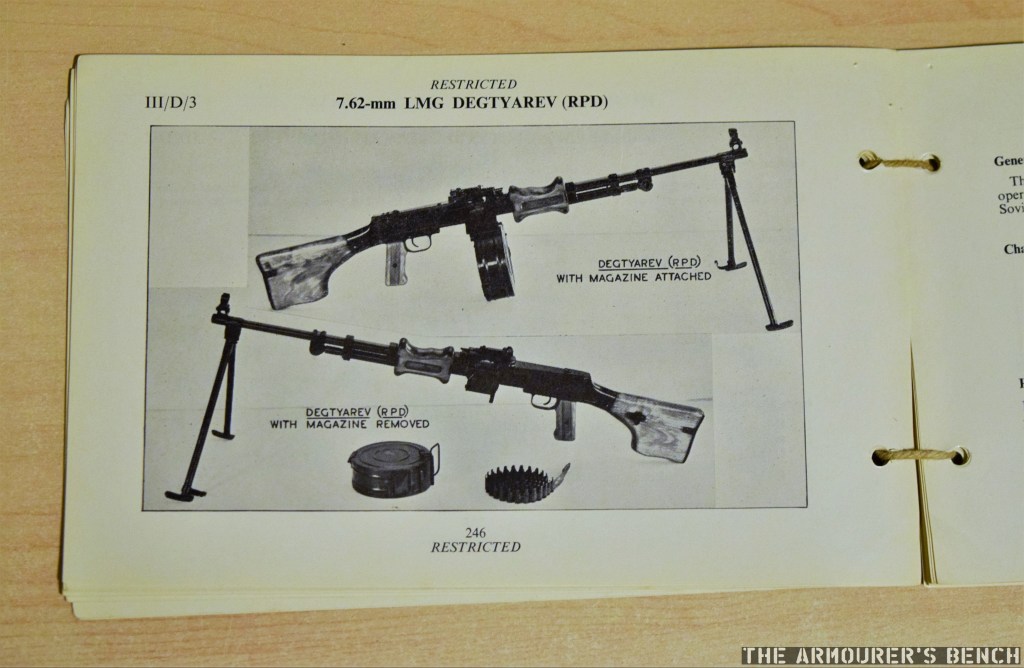
RPD (Matthew Moss)
The Recognition Handbook is about 100 pages long while the wider series encompasses 12 booklets at approximately 1,200 pages. Each entry in the handbook includes general description of the weapon, its characteristics and recognition features to help identify it. The Handbooks are more detailed version of the smaller Threat Recognition Guide booklets which we have looked at previously.
Below is the two page entry covering the ‘7.62mm Assault Rifle Kalashnikov (AK-47)’ with a general description, characteristic and some recognition features.
AK-pattern rifle (Matthew Moss)
Sources:
‘Recognition Handbook Foreign Weapons and Equipment (USSR) Group III Infantry Weapons’, British Army, 1966 Warsaw Pact Small Arms’, British Army, 1986, (source)
If you enjoyed this video and article please consider supporting our work here. We have some great perks available for Patreon Supporters. Thank you for your support!
Earlier this year I had the pleasure of filming some segments on small arms for the new documentary on the Rhineland Campaign – ‘Rhineland 45‘. Not all of the segments I filmed discussing weapons could be included in the finished documentary – I filmed quite a few – so I’m pleased to share a couple here. This short video examines the Rifle No.4 (Lee-Enfield) used by British and Canadian troops during Operations Veritable and Varsity. This video was filmed at the Vickers MG Collection and Research Association.
Check out the first video of this series on the use of the PIAT here and our video on the Panzerfaust & Panzerschreck in the Rhineland here and our video on the STENs used in the Rhineland.
If you enjoyed this video and article please consider supporting our work here. We have some great perks available for Patreon Supporters. Thank you for your support!
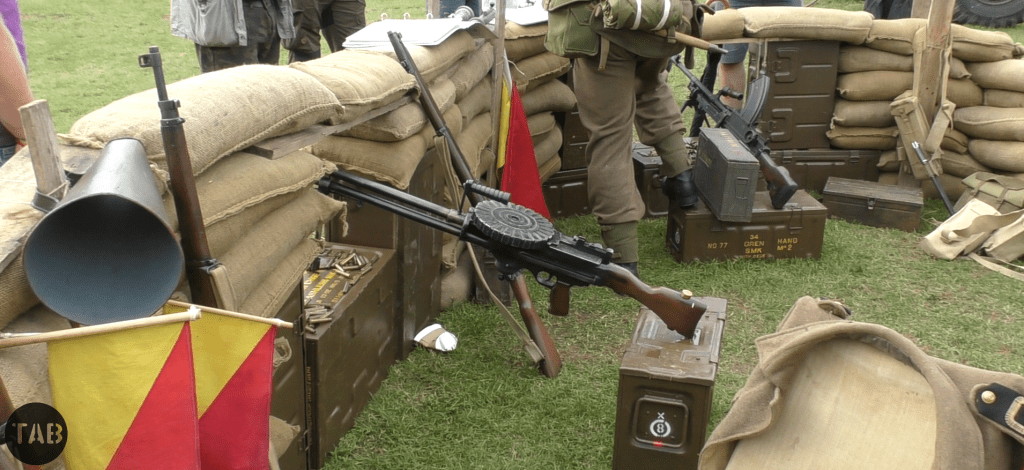
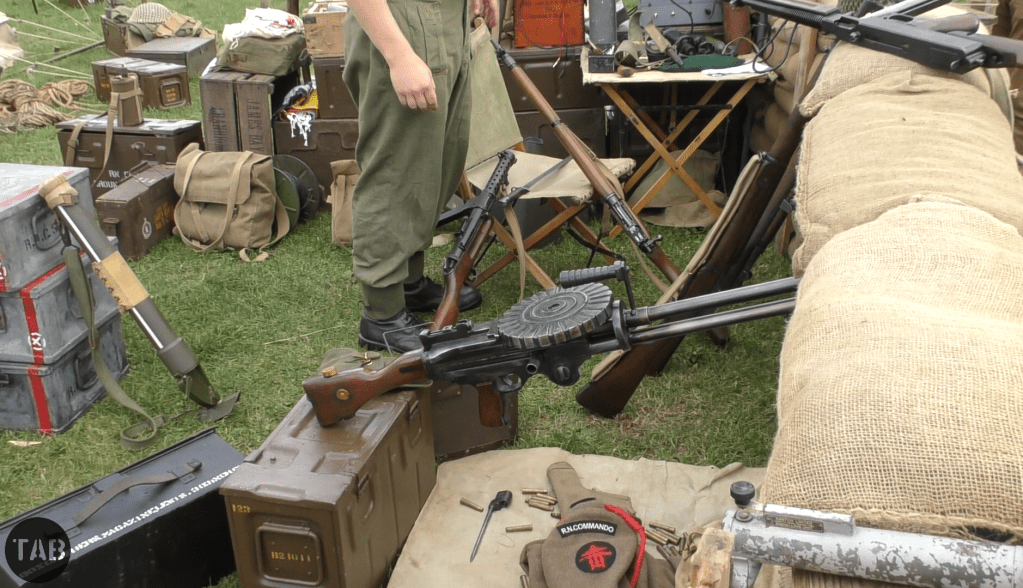
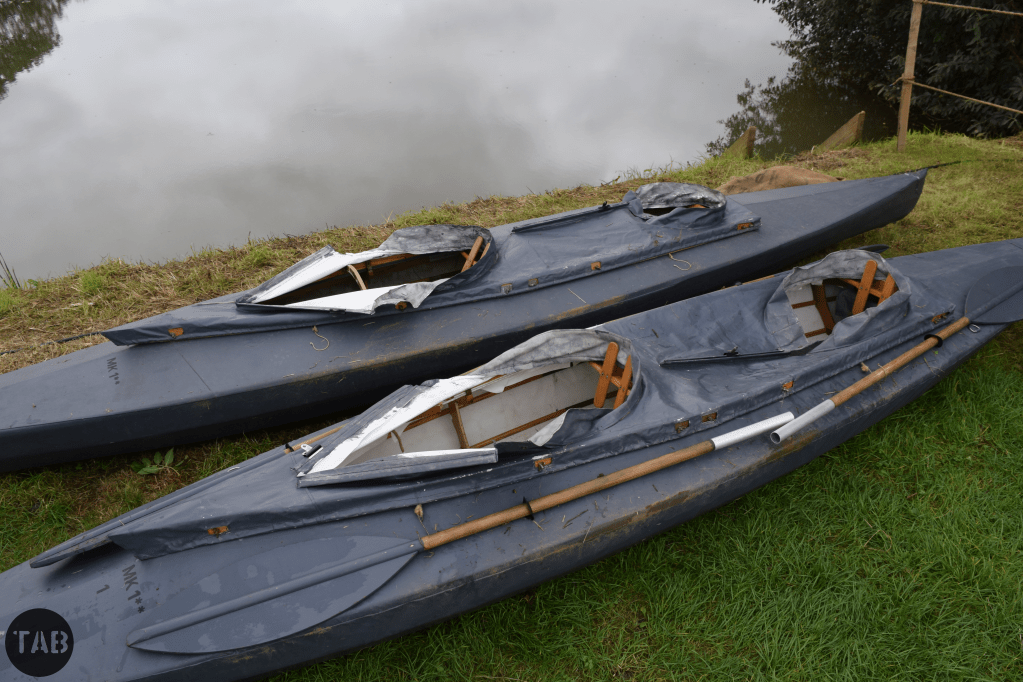
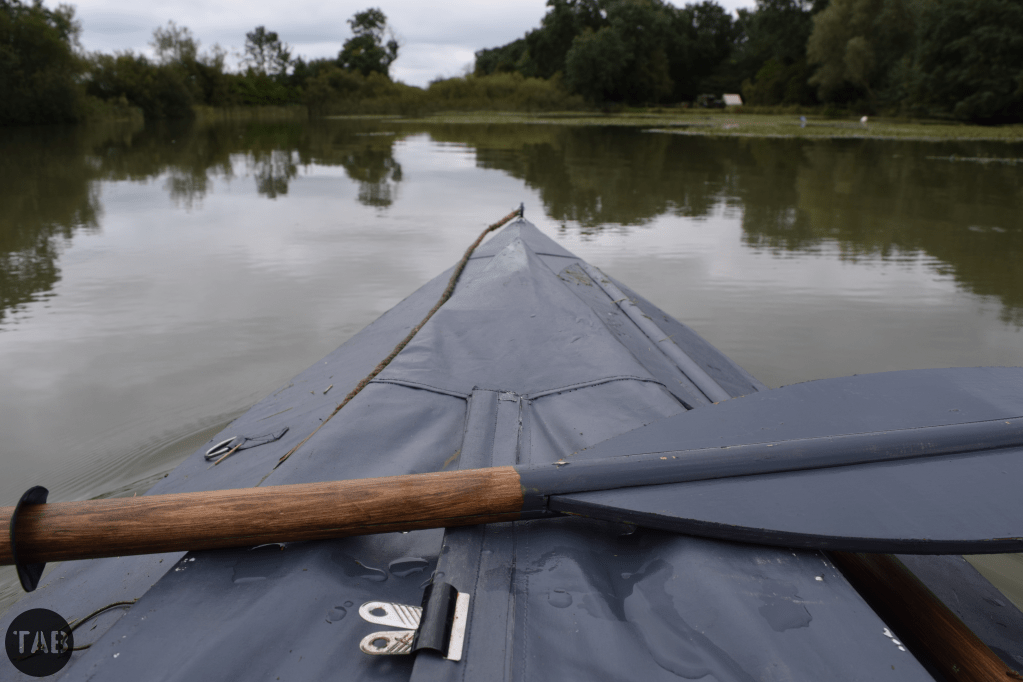
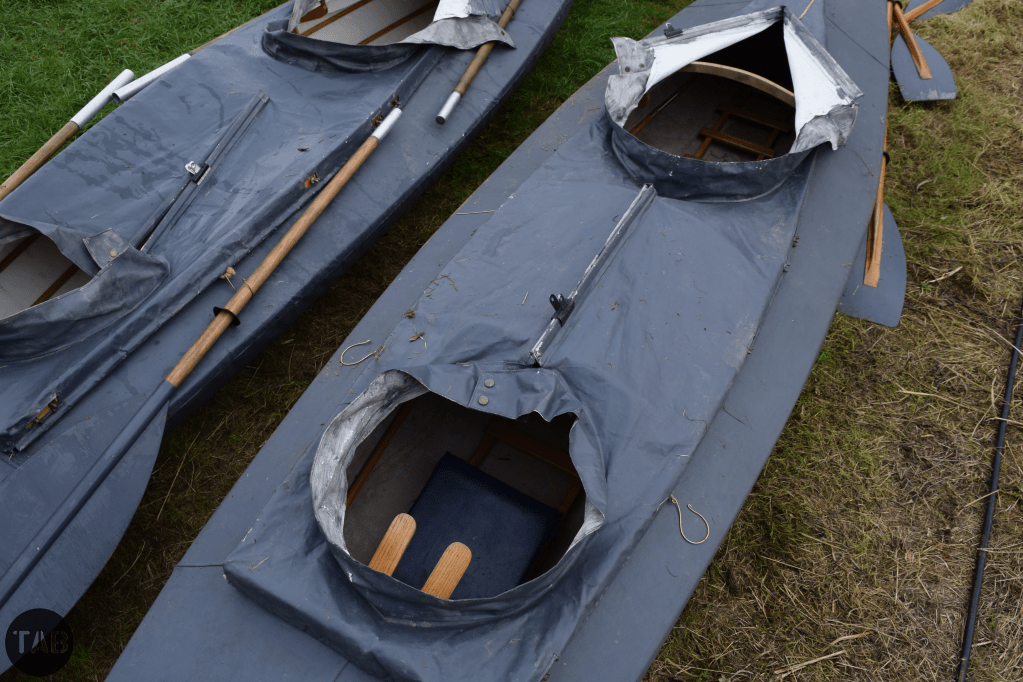
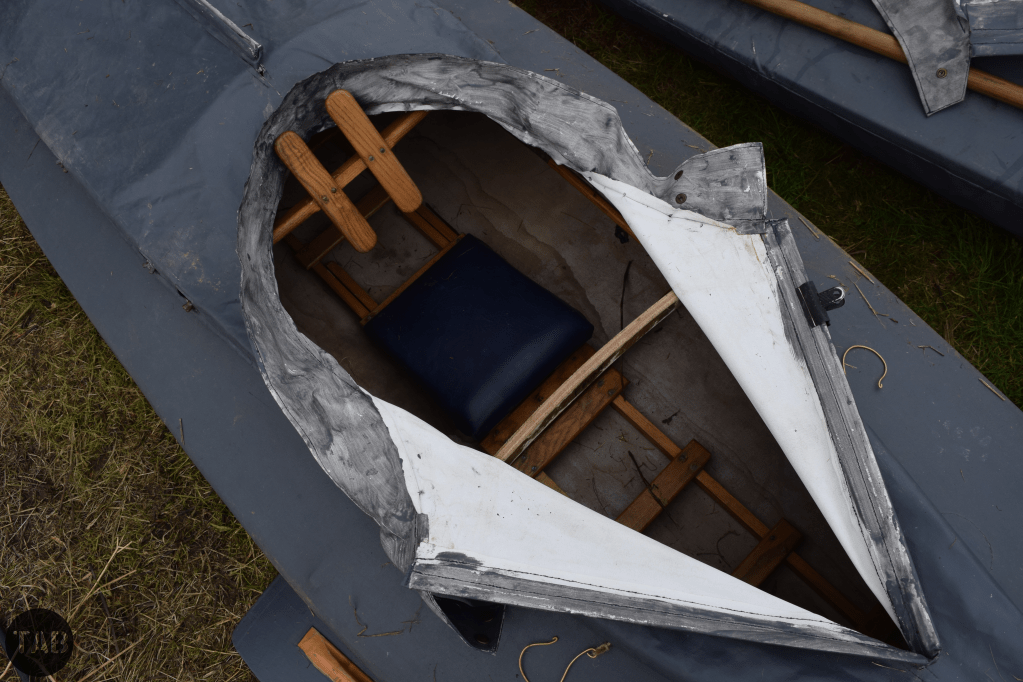
A few weeks ago at the We Have Ways podcast’s history festival (WarFest) I had a chance to chat with the chaps from the Royal Navy Beachhead Commando Reenactors, a group portraying a unique Second World War British Commando unit. And I got to have a paddle in a Mk1** canoe!
The Royal Navy Commandos were tasked with reconiotring the beaches before landings and once the landing began they were first onto the beach. The Royal Navy Commando beachhead parties and beachmasters would then direct the landing of troops and materials.
Below are a few photos from the groups camp and of the Mk1** Commando canoes used by the SBS and Combined Operations Pilotage Parties (COPP):
If you enjoyed this video and article please consider supporting our work here. We have some great perks available for Patreon Supporters. You can pick up a ‘Bring Up The PIAT’ shirt here. Thank you for your support!
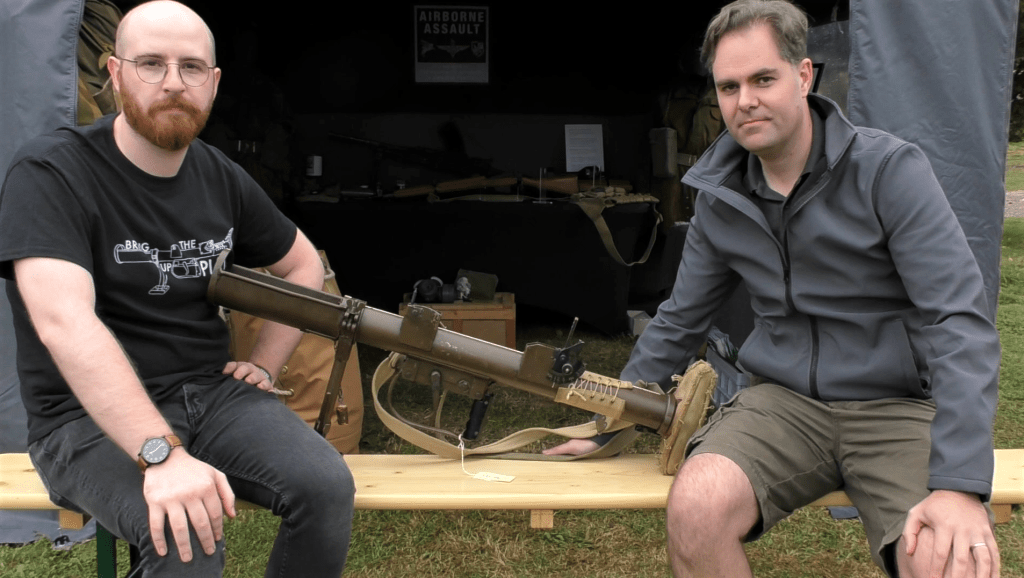
Last weekend at the We Have Ways podcast’s history festival the Airborne Assault Museum brought along a very interesting piece of history – a PIAT with Arnhem provenance. The PIAT had allegedly been dropped during Operation Market Garden but not used. At some point after the battle it was discovered by locals and handed into the Doorwerth Castle Museum, the original airborne museum before it moved to the Hartenstein, and was subsequently gifted the the UK’s Airborne Assault Museum in the 1950s.
Discussing the PIAT with Ramsay of the Airborne Assault Museum (Matthew Moss)
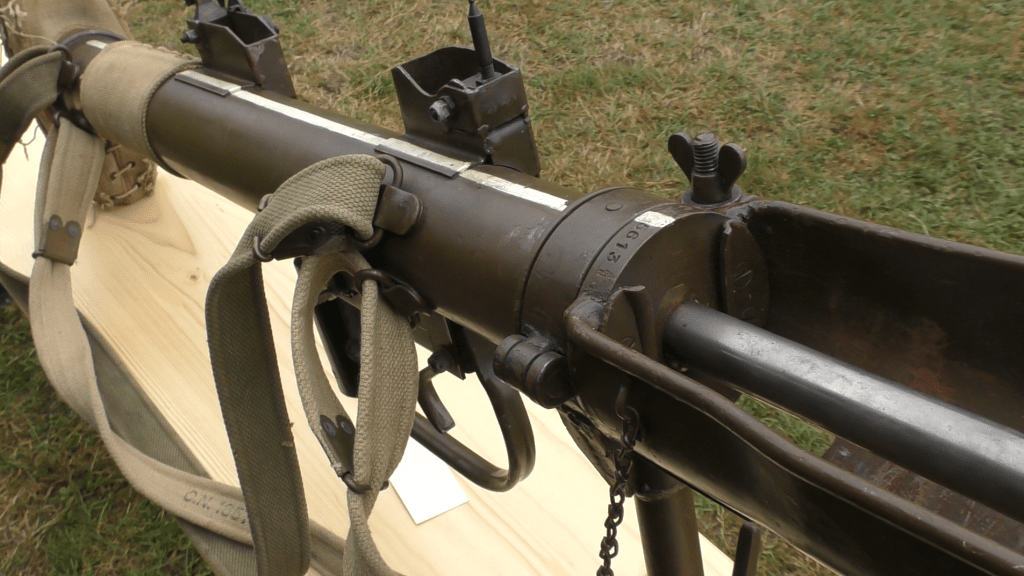
The museum believes the PIAT has much of its original paint and in general the weapon is in excellent shape. It has the earlier rear sight with two apertures for 70 and 100 yards, the later design had three – with a maximum range of 110 yards. This PIAT’s monopod could still be raised and lowered, to elevate the weapon upto 40-degrees for indirect firing.
A close up of the PIAT (Mattthew Moss)
The indirect fire quadrant sight is in good condition – complete with its spirit level. The weapon also appears to have its original white indirect fire aiming line along the top of its body and almost pristine webbing – though the butt cover is frayed which isn’t uncommon. Sadly the weapon has been deactivated so we couldn’t open up the action or cock the weapon. It seems to have been welded at the front and rear of the body.
The PIAT is in great shape, albeit deactivated, and it was a pleasure to take a look at a weapon which could be traced back to the battle. Thank you to Ramsay, Ben and Allen of the Airborne Assault Museum for allowing me to examine and film the PIAT, check out the museum’s website here.
If you enjoyed this video and article please consider supporting our work here. We have some great perks available for Patreon Supporters. You can pick up a ‘Bring Up The PIAT’ shirt here. Thank you for your support!
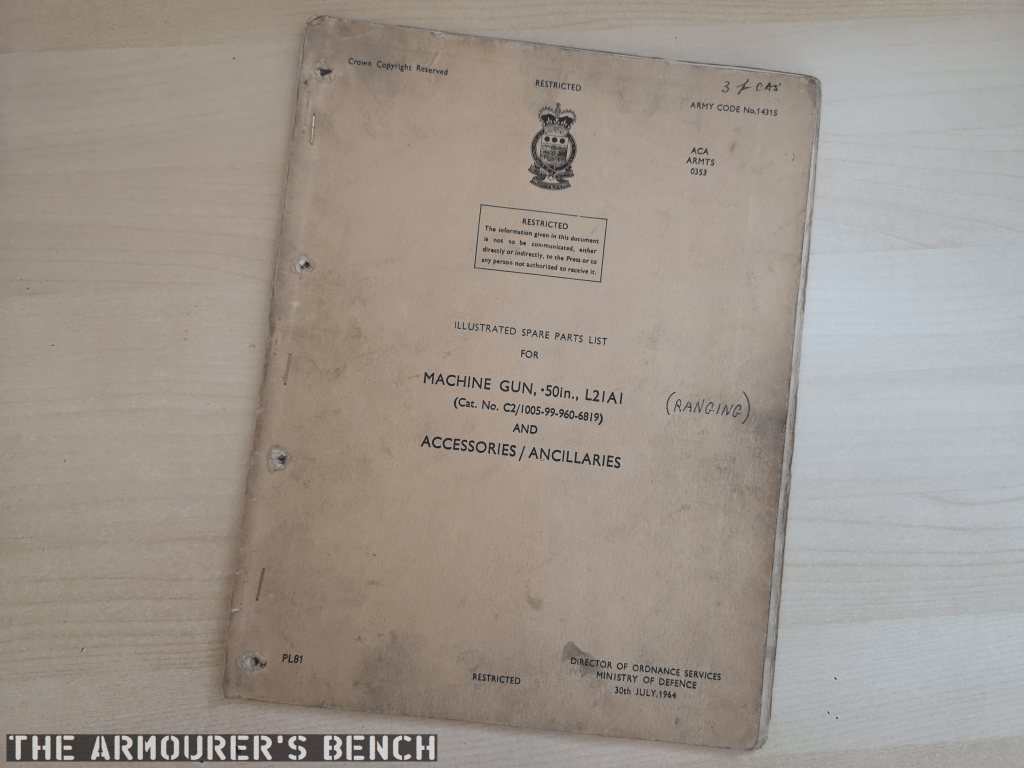
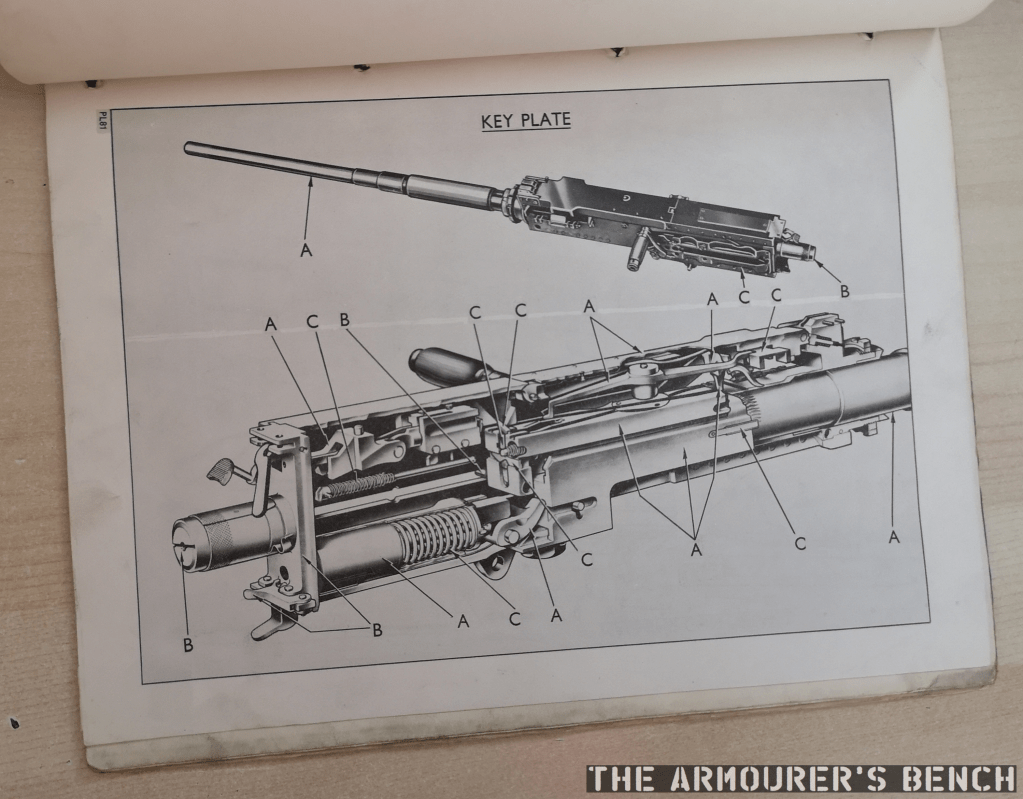
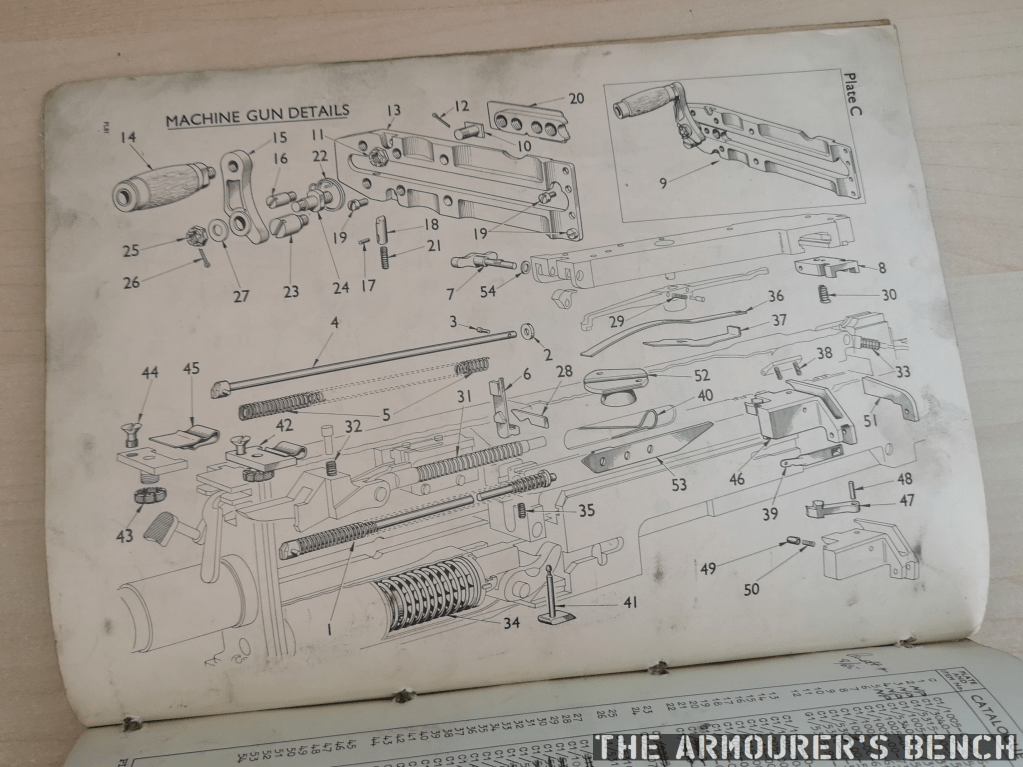
We’re back with another video looking at an item from the TAB reference collection – an illustrated spare parts list for the L21A1. L21A1 is the British designation for the American Browning M2 .50 cal (12.7×99mm) machine gun. A past owner has written ‘Ranging’ on the cover, perhaps suggesting this booklet specifically covered the guns used by the UK’s Royal Armoured Corps in its Centurion and Chieftain tanks.
We have many more videos on important and interesting primary source materials in the works. If you enjoy our work please consider supporting us via Patreon for just a $1. Find out more here.
Check out videos on items from our reference collection here.