Ukraine War: Both Sides Continue Development of Gun Drones

Since our last article/video on gun-armed drones in September 2024, both sides have continued to develop the technology. Numerous Ukrainian teams have developed recoilless ‘shotgun’ drones designed to hunt other drones as well as developing and fielding an AK-armed FPV. The Russians too have returned to the concept in recent months showcasing a number of gun-armed drone systems.

In December the first footage of a Ukrainian gun drone appeared, it utilised the recoilless gun concept. Several videos were shared of an FPV drone equipped with a pair of barrels which are likely electrically initiated and have counter-weight charges as the earlier Russian drone did. The videos showed a series of successful drone vs drone engagements.

On 7 February, Russian Telegram channel, FPV Covenant, shared footage of a gun-drone being tested, with the caption “Testing a shooting drone. The bird has two cameras, a night camera and a thermal imager.” The drone appears to have a single barrel and on firing is jarred considerably by recoil, this indicates the lack of a recoilless, recoil mitigation system.

In the first indication of Russian state efforts to develop a gun-armed drone the Осоед-Д , developed by the Novgorod scientific and production center “Ushkuynik”, was unveiled to Russian media on 20 February. The Осоед-Д has four barrels and appears to incorporate a recoilless counterweight system. Very little imagery of the system is available but it’s developers claim it has a degree of autonomy and can find and attack targets within an area once ground detectors locate a target. One article states that the drone “has already been put into operation”.

On 6 March a Russian Telegram channel, affiliated with the engineers of the Russian Black Sea Fleet, shared test footage and photographs of a new gun system which can be mounted on small drones. The Telegram post highlights that the system uses the recoilless principle to mitigate recoil and it reportedly utilises standard 12 and 16 gauge shotgun cartridges. It is claimed that it has an effective engagement out to 20 metres and that the aiming of the gun is done through the standard drone camera. The post also claims that operators can “you can hang from 2 to 4 barrels on the drone.” The size and power of the drone would likely have to be greater than a standard Mavic or Russian FPV to mount more than one or two barrels and greater payload reduces range. The post includes a photograph of the barrel assembly on a scale reading 700.9g. (1.5lbs) but a video caption notes when loaded the weight is closer to 780g.
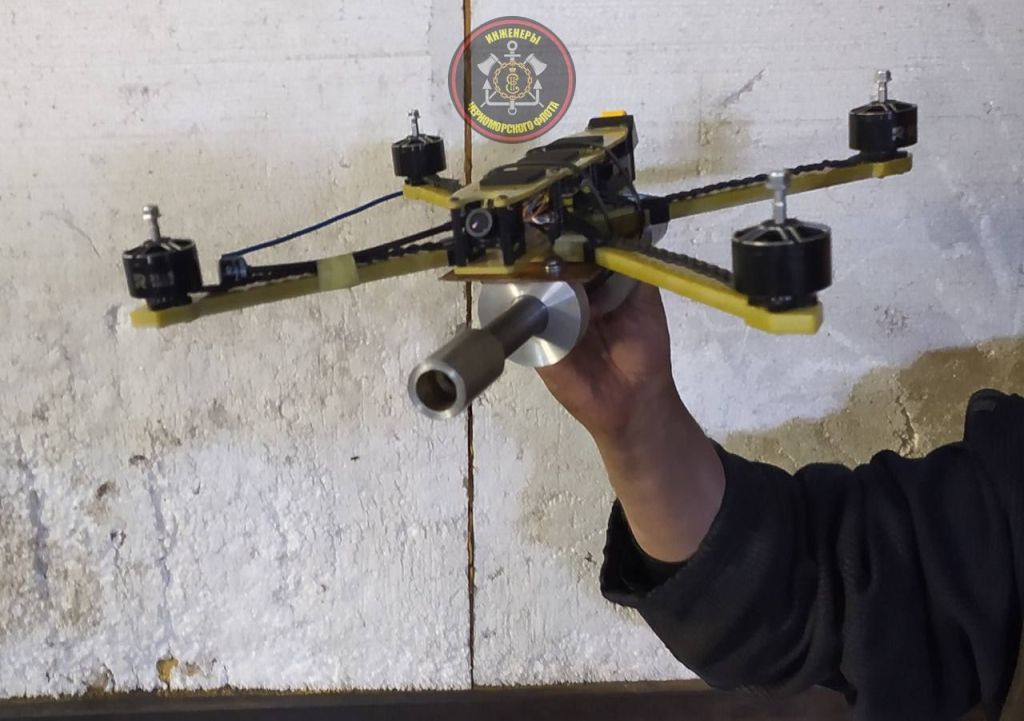
The telegram post includes a pair of videos showing the gun system being tested at a range. The first video shows a 10in quadcopter drone equipped with a 16 gauge gun system. The drone takes off and fires down range, while the recoil is noticeable the drone continues to hover.

In the second longer video the drone appears to struggle to initially maintain a stable altitude/hover but this may be an operator error. The drone travels downrange and fires on a target from a distance of 3.5 metres. The video cuts to show the effect on target with several dozen shot holes. Incidentally, the box is for AI-Thinker RA-08 transceiver modules made in China.

Meanwhile on 7 March, a drone unit with Ukraine’s Separate Presidential Brigade shared the best look at a Ukrainian gun-armed drone we’ve seen so far. We’ve previously seen the Bulava drone team, which part of the 3rd battalion of the Separate Presidential Brigade, deploying drones equipped with rifles and RPGs. These drones were developed with the help of Wild Hornets (a Ukrainian drone manufacturing organisation).

The gun-armed drone seen in the video is operated by the 4th Mechanized Battalion and is based on a Lucky Strike-manufactured quadcopter drone. It’s unclear if Lucky Strike has assisted in the development of the gun system.
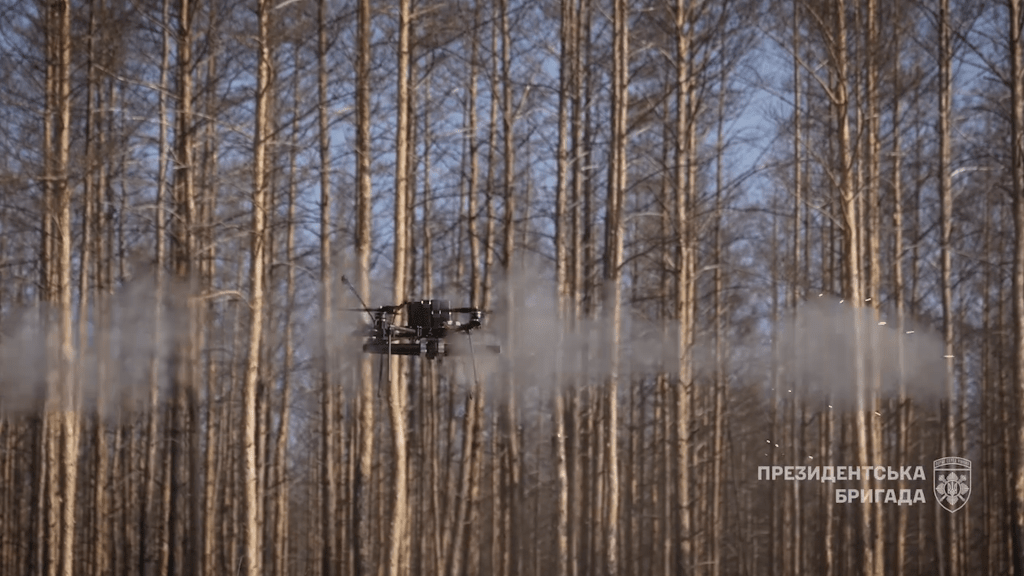
In the video we see the drone operators drop in a 12 gauge cartridge into a barrel, notably the cartridge’s primer has been removed probably to enable electrical ignition. The video does not show the counter-weight system likely to avoid breaches of operational security on how the system works. The drone can be seen mounted with a pair of barrels and when firing is demonstrated its clear that the larger drone is able to compensate for any remaining recoil the counterweight system can’t mitigate. Its also possible that the Ukrainian counterweight charge has been more finely tuned to the charge of the firing barrel. The operator explains that even a small number of hits from relatively small shot can be effective on target and that one of their primary targets are DJI Mavics which the Russians use for  Intelligence, Surveillance, and Reconnaissance (ISR). In terms of doctrine the video explains that they try and engage with one barrel but if they want to be sure of hitting a target they can fire a salvo of both at the same time to increase hit probability.

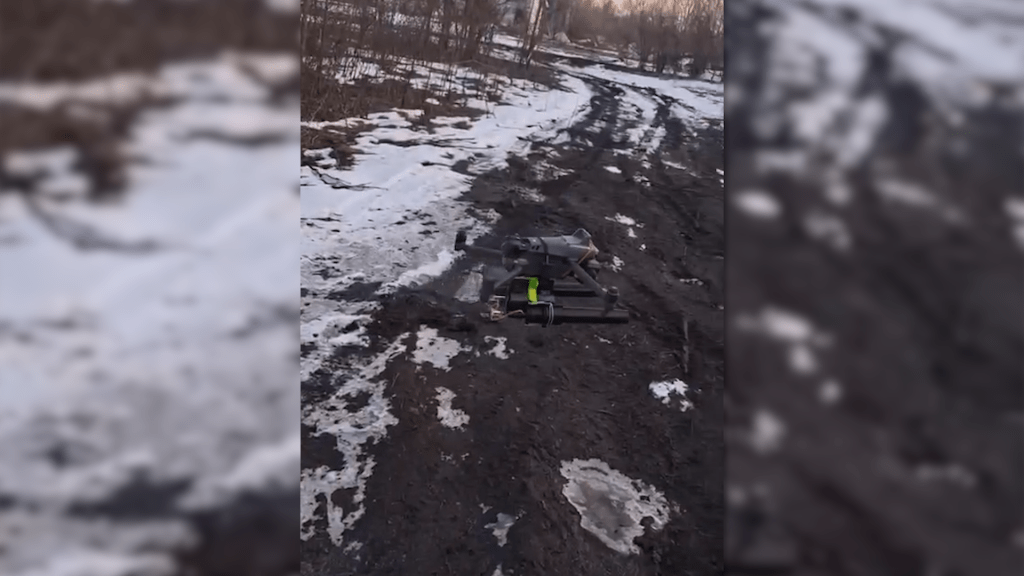
On 10 March, A small Russian Telegram channel, Bright Head, shared a short video of a small quadcopter drone armed with a pair of barrels. The video is simply titled ‘Drone killer “GORYNYCH (ГОРЫНЫЧ)’. It approaches a cardboard target and fires twice. Intriguingly, the Gorynych has an ingenious recoil-mitigation system with the barrels being ejected from the drone on firing, this reduces the recoil significantly with the first shot only briefly dipping the drone.
On 15 March, Ukrainian drone developers Sky Defenders shared video of their fixed wing UAV equipped with four forward-firing gun barrels. Check out our earlier article/video examining the Sky Defenders ZigZag.
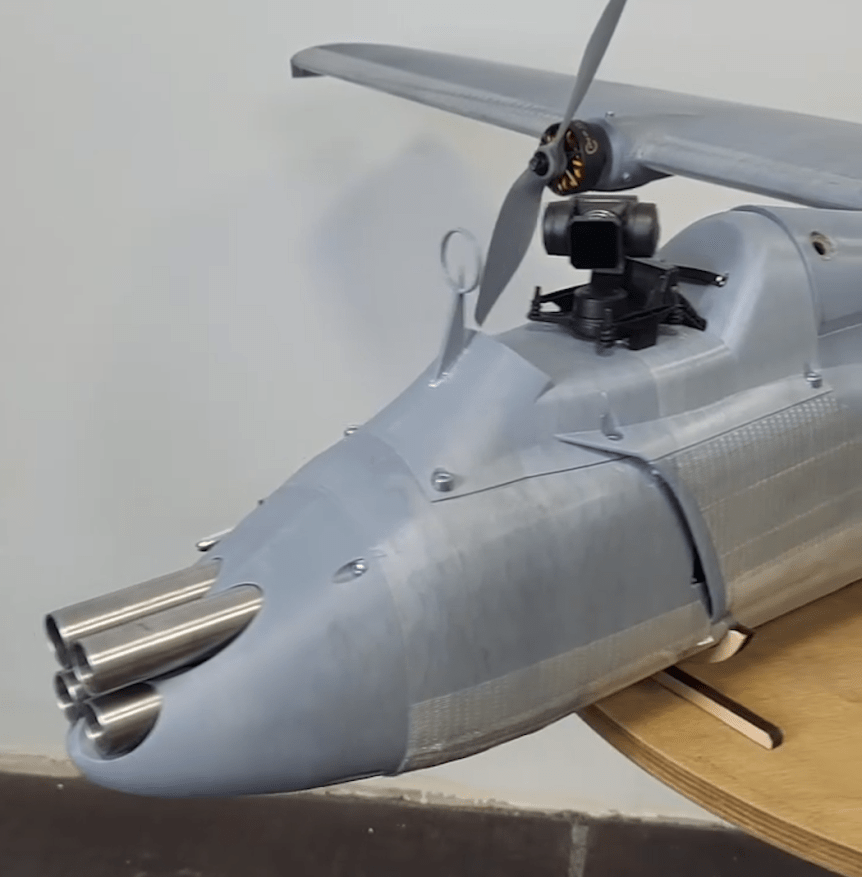
A close up of the ZigZag’s four-gun barrels and gimbal mounted camera (via Sky Defenders)

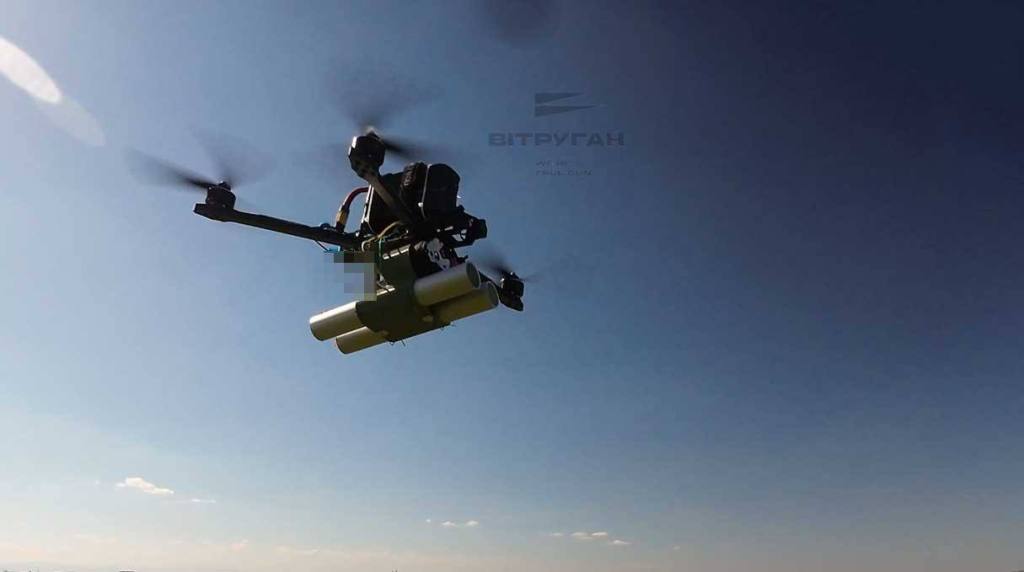
Ukrainian drone developers ВІТРУГАН introduced their ‘Ги́цель’ (Gitsel) gun-armed drone on 19 March. The Gitsel is equipped with a pair of 30mm barrels and the developers claim is has ‘automatic target acquisition and firing when the target is within the strike zone’ but it can also be operated manually. ВІТРУГАН have so far only shared photographs of the Gitsel and while there is no video of it in operation they say it can be used against both aerial and ground targets. The barrels in the photographs appear to be cut down metal piping wired for electrical ignition through the rear end of the barrel. They appear to be mounted on on a 3D printed assembly.
Most recently on the 29 March, the 2nd Mechanised Battalion of the 30th Separate Mechanised Brigade shared a minute long super-cut video of a gun-armed drone engaging more than 20 Russian quadcopter drones. Most fall to the ground after suffering damage to their rotors but one explodes upon being hit, with the shot likely hitting a piece of ordnance the drone was carrying. The video concludes with footage of one of the downed Russian drones being salvaged and lifted away by a Ukrainian drone.

The flurry of development by both sides illustrates how sorely gun-armed drones are needed to counter the ever pervasive drone threat. The development of the gun-drones is now being undertaken not only be individual developers and units but now also by larger companies and in Russia’s case a state-owned research and development entity. Both sides are also now claiming some limited autonomous targeting capability. While some of the gun-drones have entered operational use it’s unclear if significant numbers have been produced and fielded. Over the coming months we will likely see further fielding of the gun-drones and it will remain to be seen how effective they are and how they may change the dynamic of the conflict’s drone use.


Support Us: If you enjoyed this video and article please consider supporting our work here. We have some great perks available for Patreon Supporters – including early access to custom stickers and early access to videos! You can also find us on the History of Weapons & War app. Thank you for your support!
Ukrainian ‘Shotgun’ Drones Shoot Down Russian Drones

On the 27 December, a Ukrainian fundraising charity posted a series of short videos featuring a drone with a pair of gun barrels. The Lesia UA Foundation provide Ukrainian units with vehicles, bikes, drones and personal equipment procured with the funds they raise. It appears that they have helped to fund the development or fielding of an unknown number of gun-armed drones.

The footage of the gun-drone in action was shared on 27 December with the telegram post stating [machine translated]:

“For the first time on video – drones and hard drives shot down other drones
Defenders of Ukraine test #LesiaUAtechnology developments
Stay tuned and we’ll show you even more exclusive shots! Together to victory!”

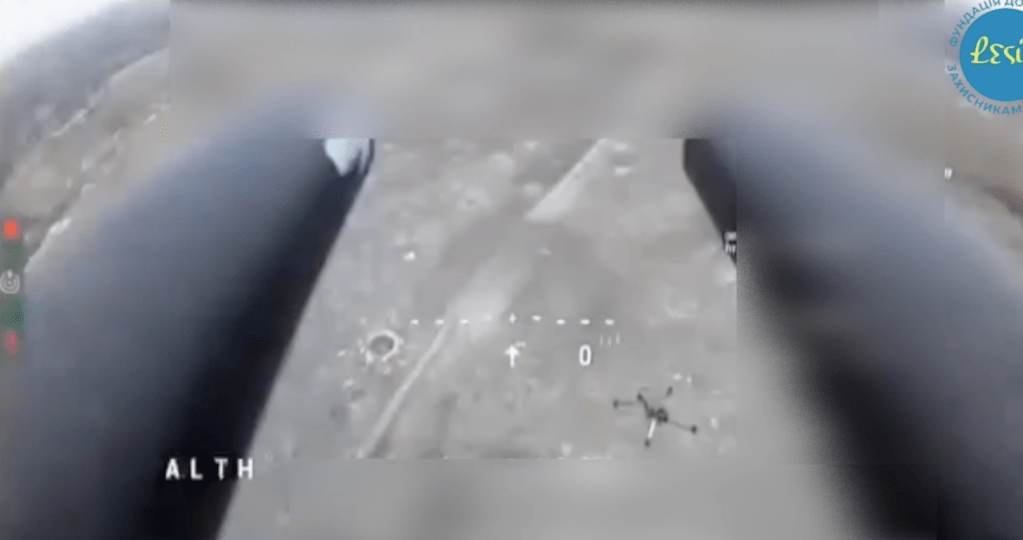
In the first video the gun-drone follows a quadcopter with the drone’s camera panning up and down several times between what appear to be a pair of barrels. The quadcopter is downed with damage to one of its rotors and appears to be trailing smoke as it spirals to the ground.

View between the barrels of a Ukrainian gun drone (via social media)

In the second short clip what appears to be a bomber drone, carrying an explosive hanging beneath it, is shot down as very close range as it hovers. Similarly, the third video shows a bomber drone which is shot down at close range as it hovered with damage to its rotor blades.
At the time of writing the Lesia UA Foundation have not released any additional clips of the drone in action or any images of what the drone looks like.

While in recent months we have seen drones armed with both RPGs and AK-74s these have been used in the air-to-ground role. The shotgun-like blasts seen in these clips are more useful for close range air-to-air engagements. From the lack of recoil seen in the clips, the large bore diameter of the barrels and their positioning on the drone, either side of a camera gimbal, it would appear that the gun used by the drone follows a recoilless principal. The recoilless guns work along the premise of Newton’s Third Law of Motion, that all things have an equal and opposite reaction – as such two guns are connected back to back, with the backwards-facing gun firing a counter-weight – mitigating recoil which prevents the drone’s flight from being destabilised.

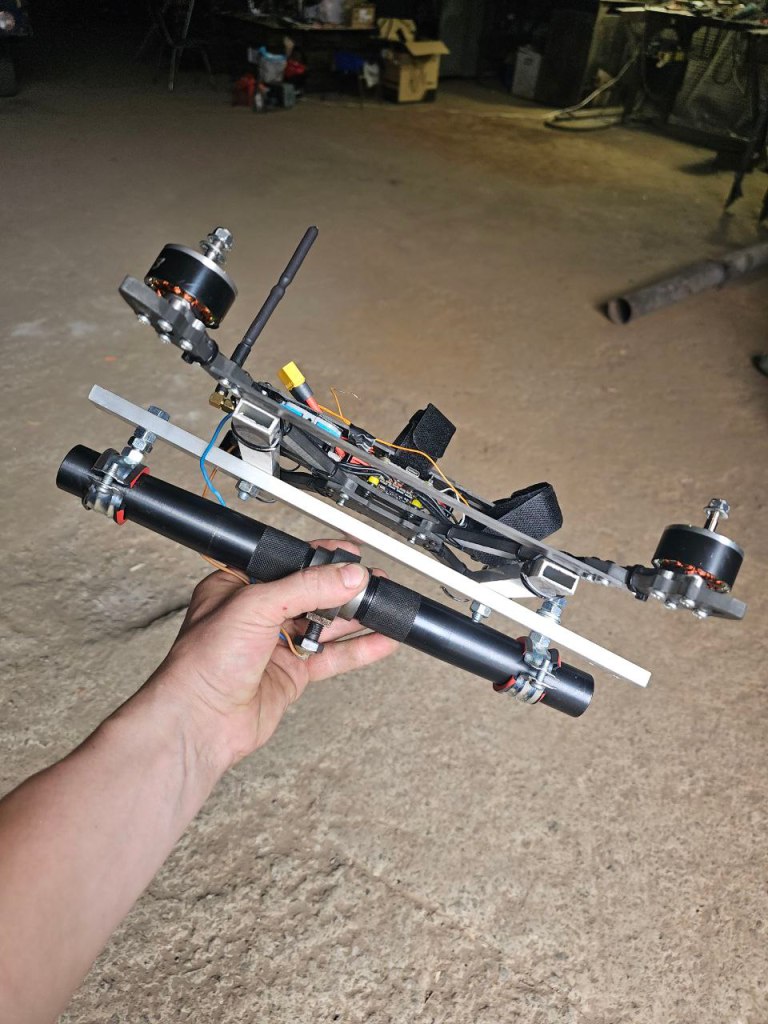
A Russian recoilless gun drone developed in 2024 (via social media)

Why a recoilless gun and not a conventional shotgun? Principal factors governing this are likely weight, effectiveness and recoil. The recoilless guns have a larger bore diameter meaning larger load and increased hit probability. Additionally they are simpler with no-working or recoiling parts (as they load is likely electrically ignited) and they are lighter allowing the drone to stay in the air for longer and/or travel further. The key downside to the use of a single shot recoilless gun is that it can fire only one round. The Ukrainian drones have sought to mitigate this by seemingly equipping their drone with two of the guns.

While we haven’t yet seen an image of the Ukrainian gun-armed drone, we have seen a Russian example which was developed in the summer of 2024, tested but reportedly not yet fielded. The Russian drone was developed by the BRT company who, in a recent telegram post, expressed their frustration at seeing a Ukrainian recoilless gun drone in use.

While successfully engaging an enemy drone with a gun is difficult it is the detection and tracking of enemy drones which is likely the most challenging part. This may lead to these recoilless gun-equipped drones being used in a sort of combat air patrol role, seeking out and hunting down enemy drones over an area where they have been reported. It remains to be seen if these recoilless gun-armed drones will proliferate as a method of countering the huge number of small drones used by both sides but from the limited footage of them in action that is available the concept seems proven.

Update – 10/1/24: Additional footage has surfaced showing the drone firing on Russian infantry.

Update – 15/1/25: Additional footage of the Ukrainian drone in action, shared by a drone unit with the 2nd Mechanized Battalion of the 30th Mechanized Brigade.

Update – 4/2/25:

A drone team with the 43rd Mechanised Brigade shared a clip of a shotgun drone engaging a Russian drone.

Update – 17/2/25:


Support Us: If you enjoyed this video and article please consider supporting our work here. We have some great perks available for Patreon Supporters – including early access to custom stickers and early access to videos! You can also find us on the History of Weapons & War app. Thank you for your support!
RPG-FPV – Rocket Launcher Drones in Ukraine

In a recent video/article I mentioned that the Ukraine-aligned Georgian Legion had mounted an RPG-7 on an drone and successfully tested it. Several days later video of another drone equipped with disposable RPG was shared. Posted on 10 September it shows a Queen Hornet FPV equipped with an RPG-18 anti-armour weapon. The drone is seen taking off at a range and hovering. The short clip does not show the RPG-18 being fired.

This isn’t the first time a drone with a disposable RPG mounted on it has been seen in Ukraine. In January 2023, a photograph surfaced of a heavy-lift DJI Agras T-30 armed with a gimbal mounted PK-pattern machine gun and a Bulgarian Bullspike anti-armour weapon. The photo has since been shared regularly but with no further context. One post claimed it was associated with a GUR unit (Solnyshko DRB).

Still showing Bulava’s RPG-FPV (via Wild Hornets)

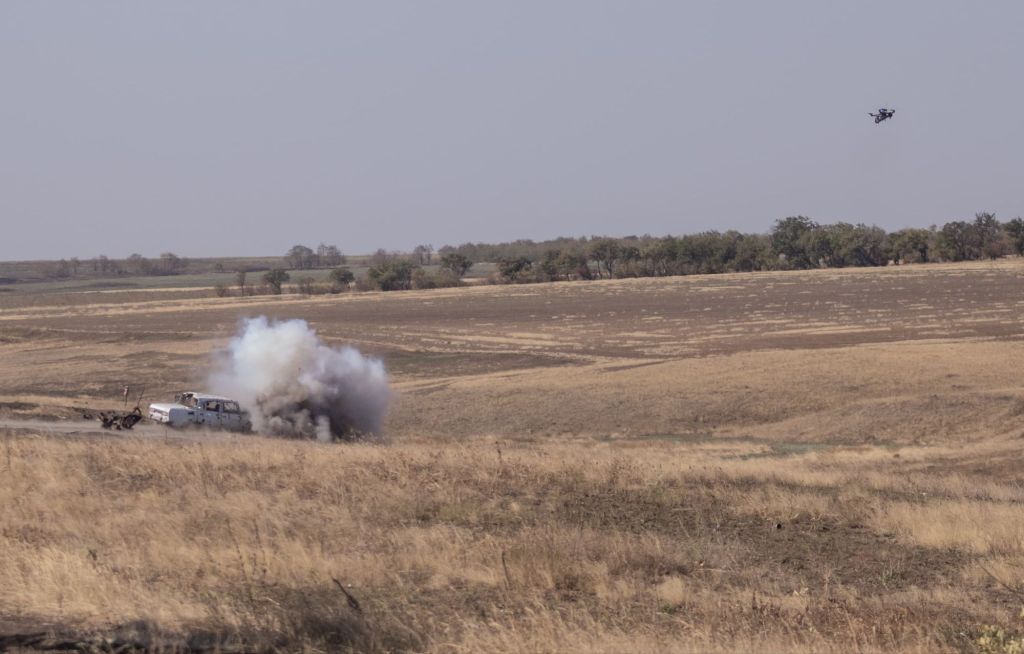
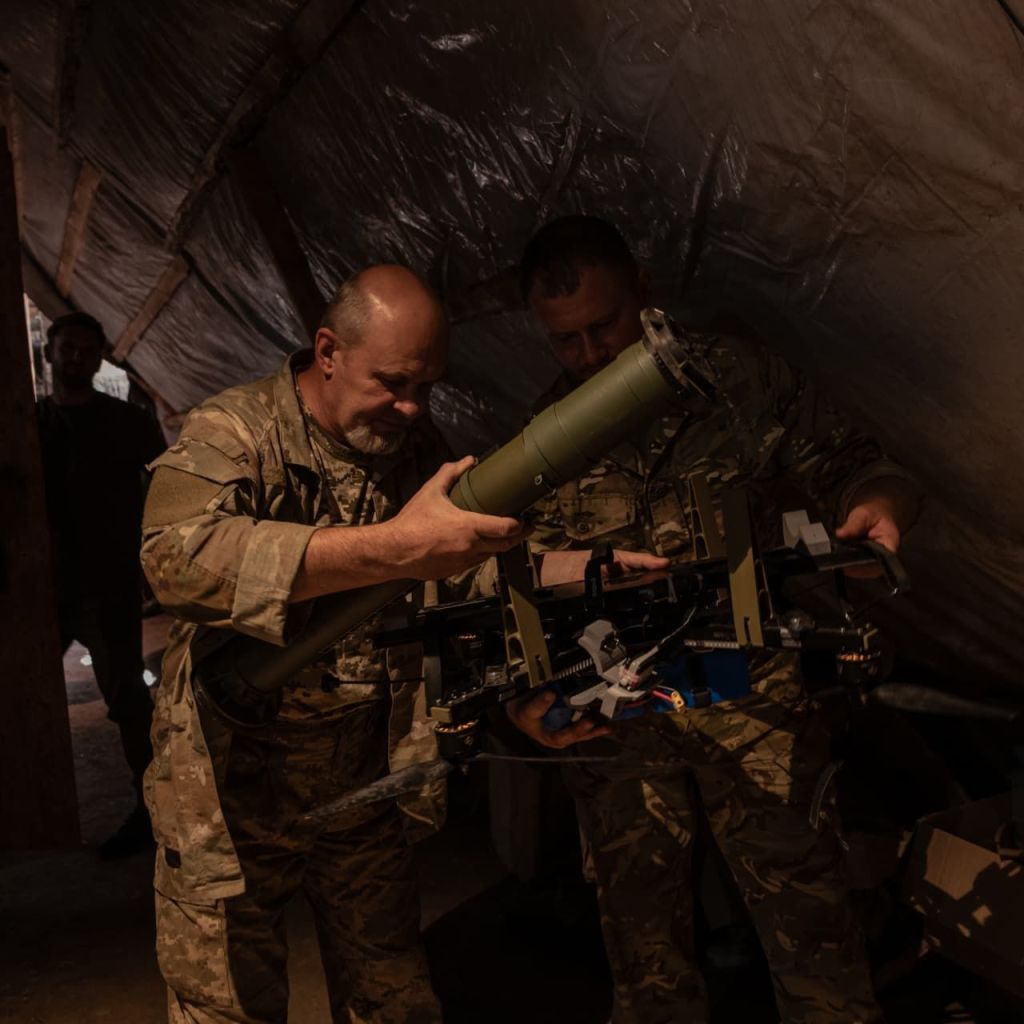
On 13 September, the Wild Hornets (a Ukrainian drone manufacturing organisation) shared a video of another RPG-FPV. The 56 second video, soundtracked by music from Terminator 2, showed a Queen Hornet drone equipped with what appears to be a Bulgarian Bullspike-AT. The efforts to develop an RPG-FPV based on the Queen Hornet appear to be lead by the Bulava drone team, part of the 3rd battalion of the Separate Presidential Brigade. The Bullspike-AT is produced by VMZ and fired a PG-22 pattern warhead, it has an effective range of 500m and can penetrate up to 400mm of armour. It weighs in at around 3.4kg, which is well within the Queen Hornet’s 9.5kg (21lbs) payload. The video shows the RPG-FPV take off and fire at a target down range. The drone can be seen pitching down to aim and then returning level before landing. This appears to have been a test of the assembly of the system to confirm the concept. In the photographs at the beginning of the video it appears that the weapon is fired by a servo arm which depresses the weapon’s trigger.

The Bulava RPG-FPV was again briefly seen in a fundraising video shared by the unit on 15 September. A close-up of the drone shows an RPG being attached to the drone with a zip-tie and the servo arm trigger mechanism is again visible.

On the 17 September, Wild Hornets shared another short video from the Bulava team, claiming that the team had been working on ‘calibrating the drone grenade launcher’ leading to the ‘shots [becoming] more accurate.’

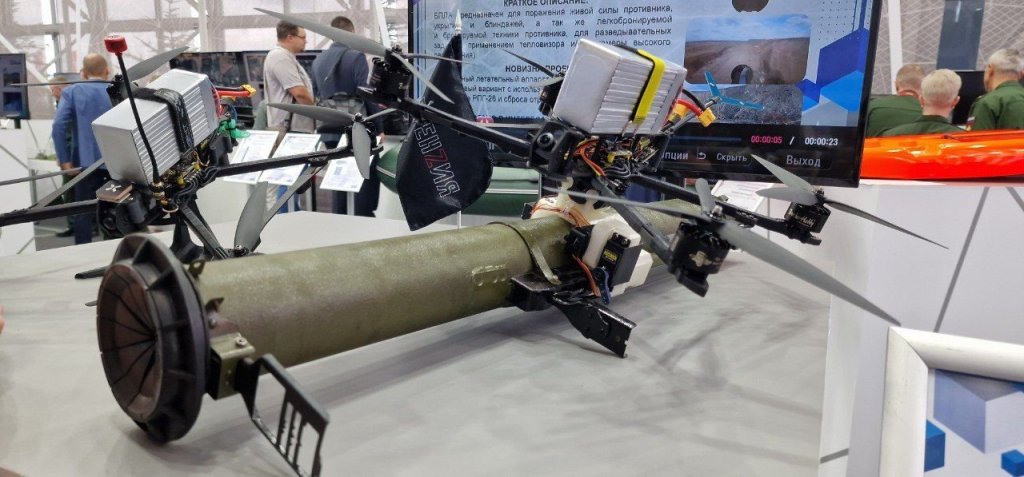
RPG-FPVs are something that Russia has also begun developing with one showcased at the recent ARMY 2024 defence exposition. The drone appears to consist of a ‘Gortensia’ quadcopter armed with an RPG-26 anti-armour weapon. The drones was developed by Гортензия (Gortensia) and has a range of 10km and a payload of up to 6kg. On an info sheet shared at ARMY 2024 the company claims they are developing a system that allows the drone to jettison the empty RPG tube once it has fired. Images from ARMY 2024 show a dovetail-type attachment with a cradle attached to the RPG’s tube. On 18 August, the company shared two videos of test launches of the RPG-armed Gortensia drone. The videos show the drone take off and then the drone pitches down to aim and then fires. On firing the RPG’s tube detaches from the drone, seemingly using the weapon’s recoil to jettison it. In the second video, the drone travels further down range and fires on the target at a flatter trajectory, again the tube detaches from the drone.

‘Gortensia’ quadcopter with an RPG-26 (via social media)

In mid-September Russian government organisation People’s Front shared a short video showing a octocopter armed with an RPG-22 being tested at the range. The RPG-22 is mounted on its side The long body of the extended RPG-22 body, at 850mm long, seems to somewhat impact the balance of the drone. Despite this the test fire appears to be successful, it’s unclear if this is a development by a drone company or a Russian unit.

While the RPG-FPV has more firepower than the gun-armed drones which have begun to emerge they are still a concept in development. The major positive of the RPG-FPV is the use of an anti-armour weapon which means that the drones aren’t a part of the munition, as in the case of the kamikaze/one-way FPVs, and can be reused. Similarly, the firing of the RPG’s warhead means the drone does not have to be directly over its target as with a bomber drone. This means the RPG-FPV can engage at stand-off distance and has increased survivability. The difficulty, as we’ve seen with the gun-armed drones, is aiming the launcher accurately. It’s still unclear if the drone operators are using the FPV’s primary camera to aim the weapon, this would mean the aiming process might be impacted by latency, the lack of a reticle and poor feed quality. One way to increase hit probability might be to mount the RPG vertically as Nammo did in their tests of an M72-armed drone back in late 2021. The technology and doctrine for RPG-FPVs is still developing so it will be interesting to see how these drones evolve and are employed tactically.

Update 22/9/24:

A video of an RPG-FPV, developed by an unspecified manufacturer, was shared by MASH with the caption (machine translated):

“Meet the new product in the SVO zone – the flying RPG-26. The drone has already passed tests and will soon delight the military on the front lines.

According to our information, the request for the device came from the Ugledar direction, since ours went on the offensive. The first batch of fighters is preparing for flights.

Features: stabilization mode, which does not throw the drone back after firing. On the contrary, the drone returns to the base to replace the grenade launcher. It is equipped with an RPG-26 with armor penetration of 440 mm (and the prospect of installing a “Shmel” flamethrower). It carries up to 12 kg, rises to 800 meters, flies 30 km at a speed of up to 60 km / h. The miracle costs about 600 thousand rubles, the footage shows winter tests.”

Update – 14/1024: A Wall Street Journal article (by Isabel Coles) featured photographs of one of the Ukrainian RPG-FPVs pictured during assembly and range testing.

Update – 8/11/24: An ArmyInform video looking at the Bulava RPG-FPV. It appears to show the same test launch featured in earlier videos.

Update – 29/12/24: A Russia RPG-FPV fires on a building.

A Russian FPV hits a building with a rocket launcher, possibly an RPG-18.The rocket motor burns out completely in the launch tube, so the FPV isn’t hit by backblast.

Roy (@grandparoy2.bsky.social) 2024-12-29T03:59:36.520Z

Update – 15/2/25: Russian with RPG-FPV, no further information available. (Source)

Update – 28/2/25:

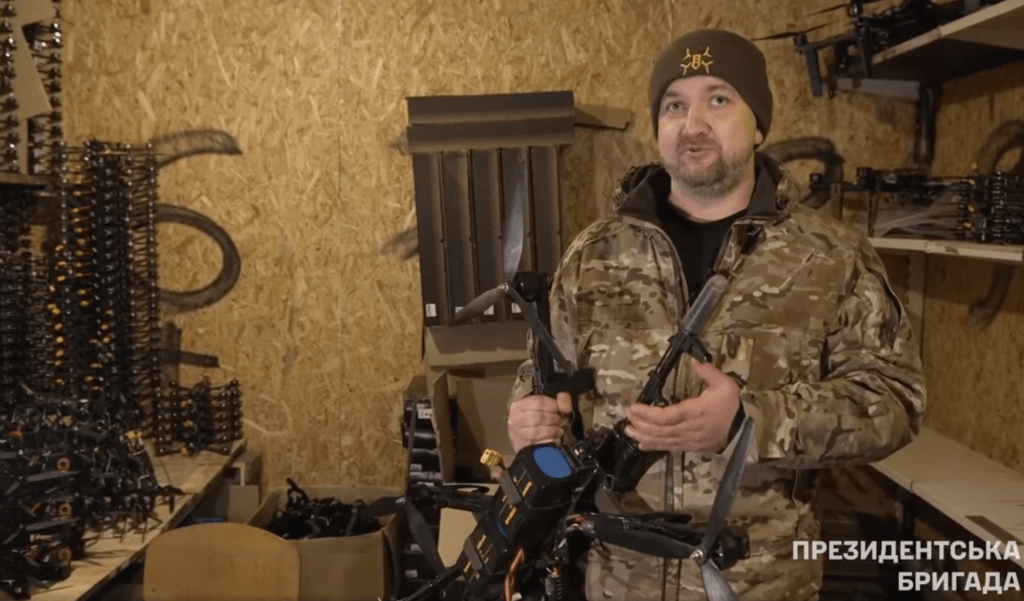
Ukraine’s Presidential Brigade shared a video showcasing the work of its drone teams. In the video an AK-FPV is highlighted.

Update – 13/5/25:

WildHornets have shared what they report is the first combat use of their RPG-armed drone.

Additional footage from WildHornets gives us a closer look at the drone:


Support Us: If you enjoyed this video and article please consider supporting our work here. We have some great perks available for Patreon Supporters – including early access to custom stickers and early access to videos! You can also find us on the History of Weapons & War app. Thank you for your support!

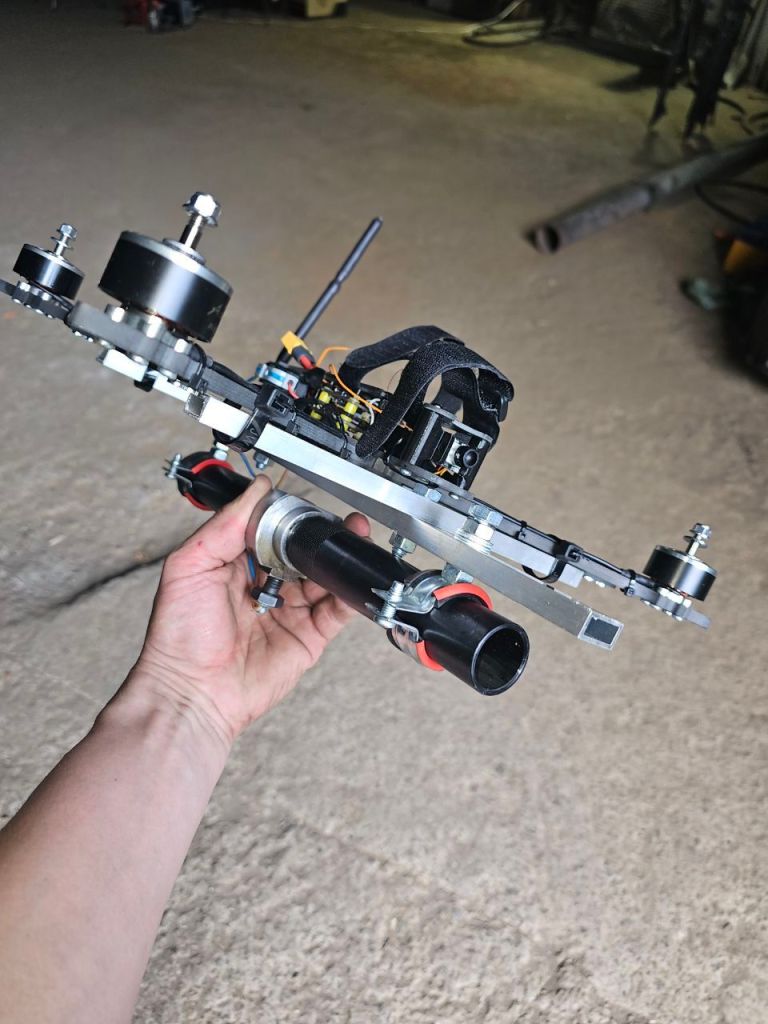
Russian Recoilless Gun Drone

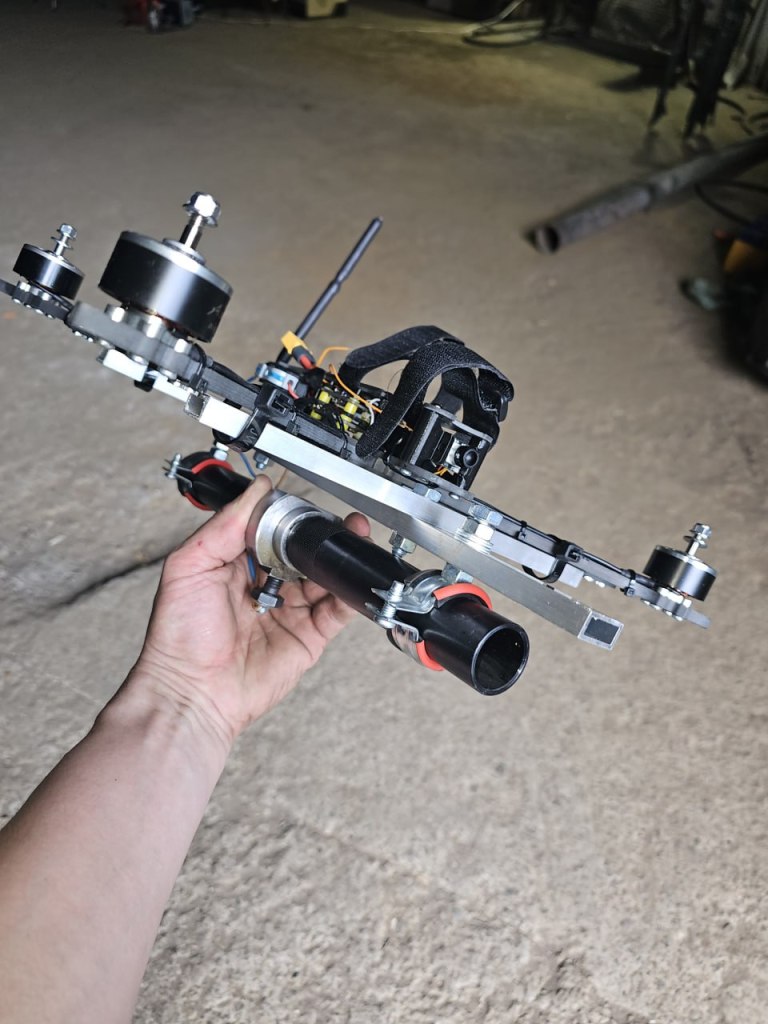
What is old is new. On 12 September, Russian journalist Alexander Kots shared a photograph of a recoilless gun mounted on a drone on his Kotsnews telegram channel channel. The idea certainly isn’t a new one. The use of a recoilless gun on aerial platforms dates back to the 1910s with the development of a series of recoilless guns by Commander Cleland Davis (US Navy) which were experimentally mounted on a variety of early military aircraft.

While the Davis Gun was abandoned shortly after the end of World War One, it was influential and its principle of operation was utilised in later recoilless guns. Essentially it worked along the premise of Newton’s Third Law of Motion, that all things have an equal and opposite reaction – as such Davis connected two guns back to back, with the backwards-facing gun firing a counter-weight.

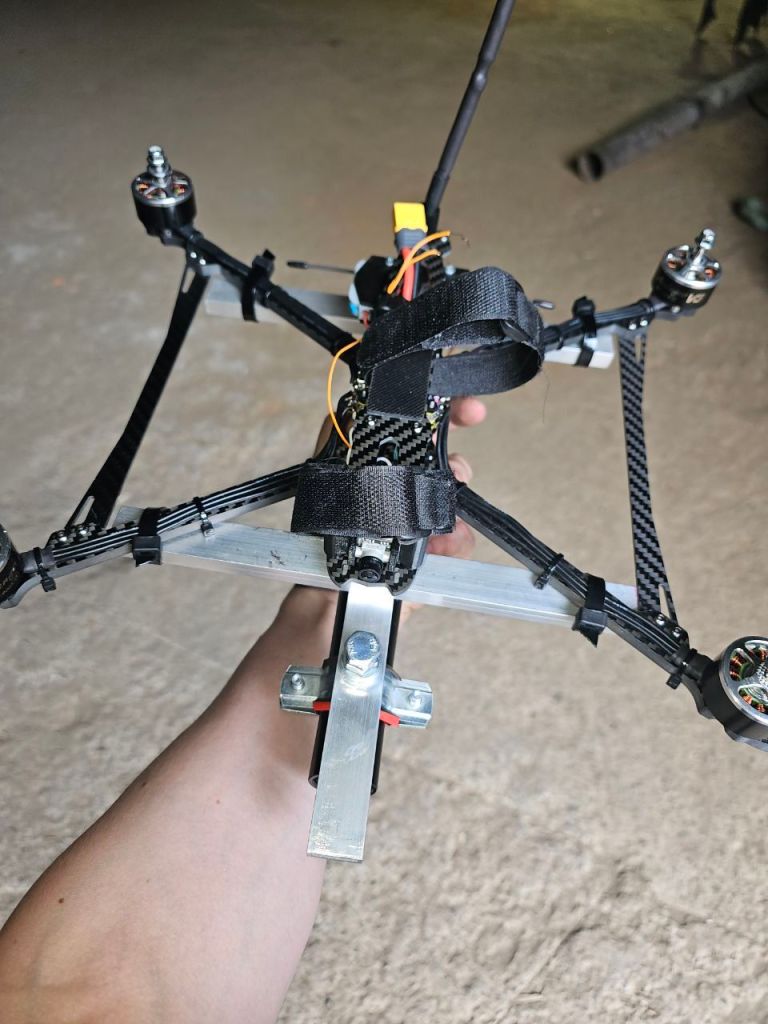
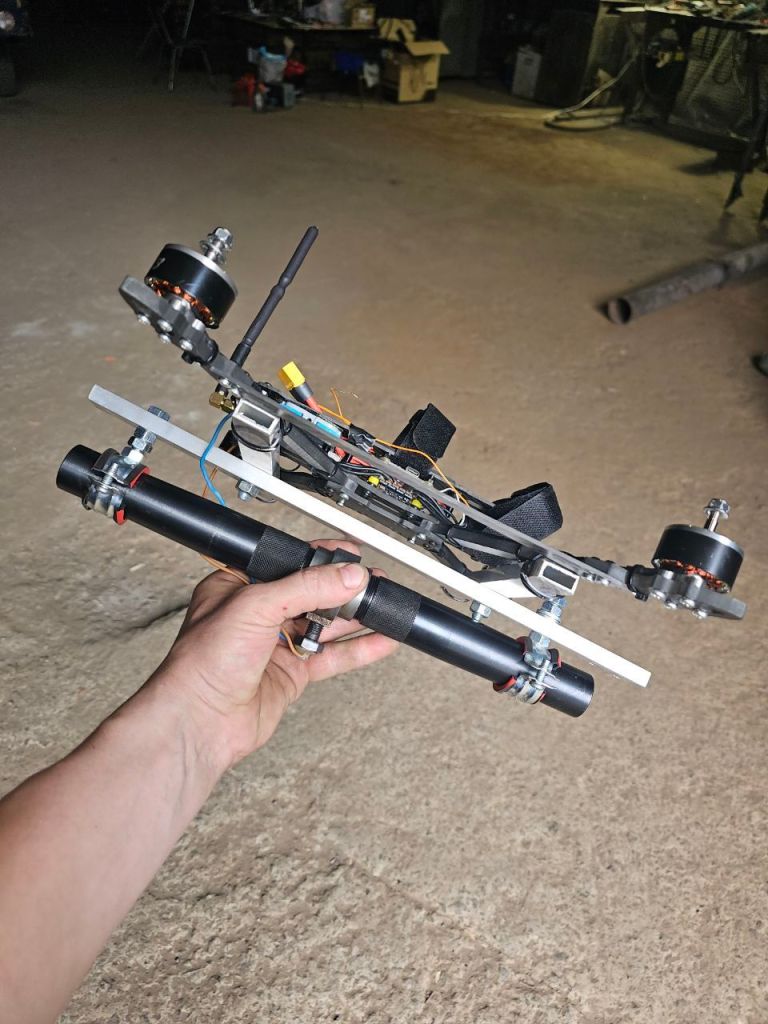
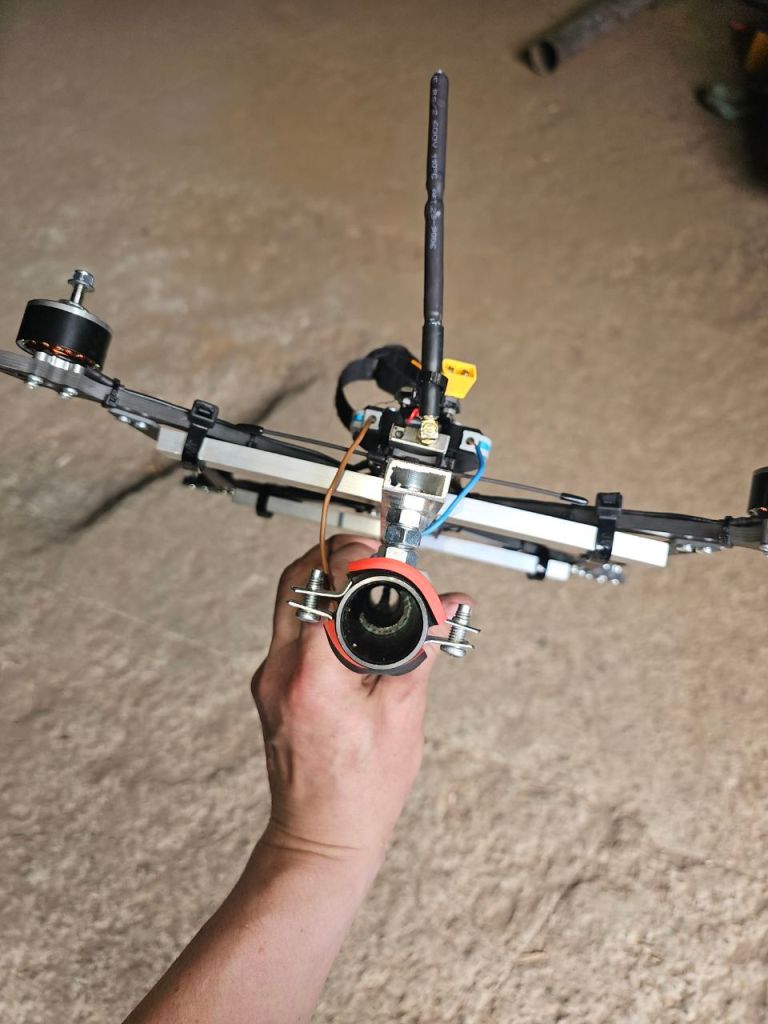
Fast-forward over a century and the concepts is again revisited in miniature and mounted on a quadcopter drone. Kots described the recoilless gun in his post [machine translated]: “Large pellets are loaded in the front, and an equal counterweight is loaded in the back. Thus, a lightweight drone becomes capable of hitting small air targets without the risk of falling into a tailspin from the recoil.” The image shared appears to show a smoothbore weapon attached to the drone with plumbing clamps with several electrical wires running to it, likely for ignition of the charge.

The developer of the drone, the chief engineer of Russian company BRT, shared Kots’ post commenting [machine translated]: “Our BUBUKA hit the news. I made it, taught it to shoot, and gave it to our FPV players… – I don’t fly myself, it’s not my thing,” lamenting that “since then – no response, no greetings. I’m not even sure they tried to test it.”

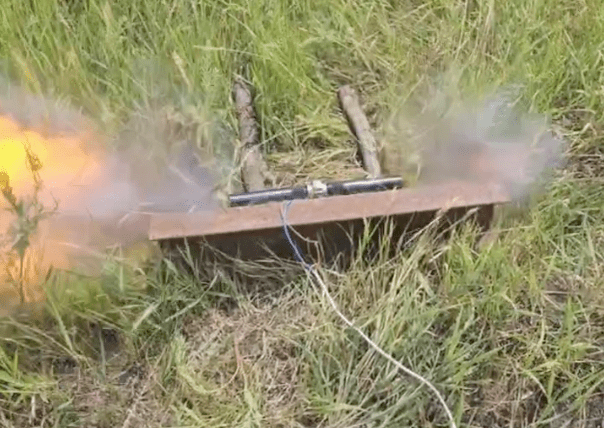
The engineer followed this up by posting footage of a test of the recoilless gun, explaining [machine translated]:

“The principle is fully functional. And it was used more than 100 years ago, on plywood planes.
On the FPV, as I see it, for its use, you need to solve 2 main problems: –
– aiming at the target.
– correct ballistics of shot ammunition (dispersion, mass of shot charge, etc.).”

In the video the engineer exclaims that ‘both ways [fired] just fine’ with the grass in front of both barrels clearly impacted by the test. It’s unclear what kind of shot the recoilless gun is designed to use likely a buckshot-style round able to spread on leaving the barrel and sufficiently damage a drone to down it.

It appears that the ‘Bubuka’ may not yet have been tested or used in the field but it is an interesting design mitigating one of the major factors of firing a weapon from a drone – recoil. However, the recoilless gun has a number of drawbacks too. While the gun allows the drone to engage another drone kinetically without having to fly into it, the gun only has one shot which magnifies the difficulty of scoring a hit when aiming is difficult. It’s clear, however, that the evolution of drone warfare in Ukraine is continuing at pace with recent efforts by both sides to mount AK-pattern rifles to drones and the increasing number of drone vs drone engagements occurring.

Update 28/12/24: It appears that a Ukrainian team has also developed a recoilless gun-armed drone. Several videos were shared of an FPV drone equipped with a pair of barrels which are likely electrically initiated and have counter-weight charges as the earlier Russian drone did. The videos show a series of successful drone vs drone engagements.

Update – 3/1/25: A telegram associated with BRT has posted additional photos of their recoilless gun drone developed in early 2024 and expressed Thier frustration that a similar Ukrainian drone has had operational success.


Support Us: If you enjoyed this video and article please consider supporting our work here. We have some great perks available for Patreon Supporters – including early access to custom stickers and early access to videos! You can also find us on the History of Weapons & War app. Thank you for your support!