
In previous videos we’ve looked at Ukrainian efforts to manufacture polymer belts for PK-pattern general purpose machine guns. These were developed by Ukrainian company RAROG who has been selling them since the summer of 2022. Now PUFGUN, a Russian company has also developed a polymer PK belt.

Traditionally, the 7.62x54mmR belts used by the PK series of guns have been made from metal and are non-disintegrating, meaning they remain linked together after they’ve been used, while NATO machine guns tend to use disintegrating belts that fall apart once the rounds held in them have been fired.
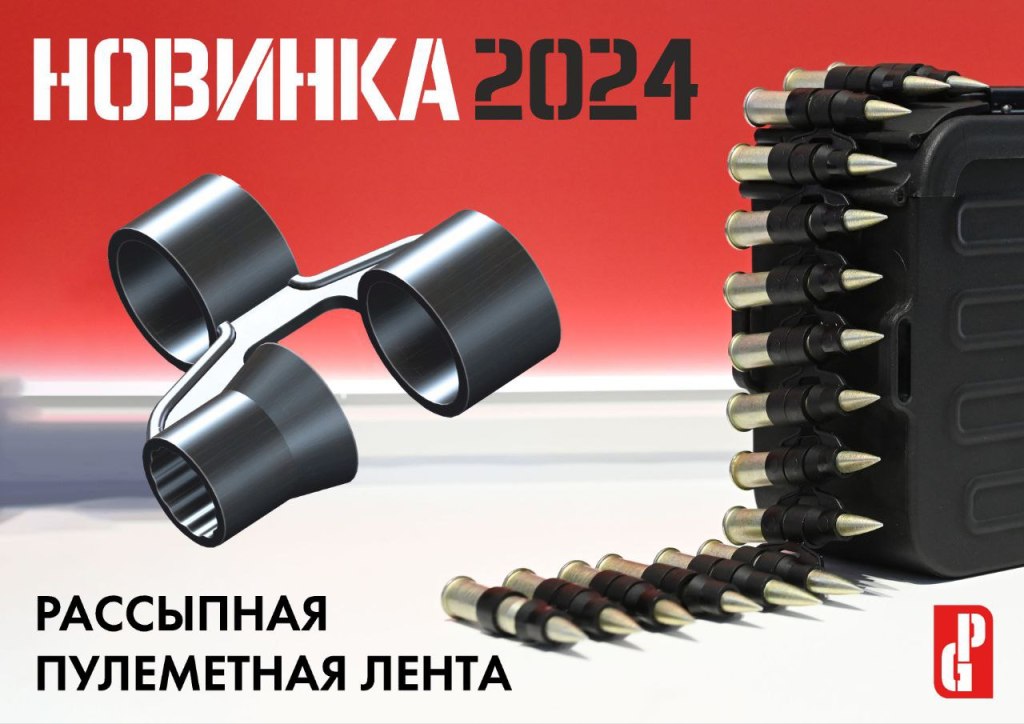
On 3 September, PUFGUN announced the introduction of the new disintegrating belts, explaining some of their features:
“The tape is made of high-strength polymer – a light and durable material. 3 times lighter than metal analogues. The total weight of the package for 100 links is 220g
Due to the physical properties of the polymer, the loading of the PUFGUN loose belt is carried out faster than that of a metal belt.
Maintains functionality in temperature conditions from -40C to +70C.
Not subject to corrosion, does not require special conditions for long-term storage.”
Packs of 100 links are being sold for 548 Rubles or $5.75 on PUFGUN’s website.
PUFGUN shared a pair of photos, on 10 September, comparing the weight of a loaded traditional metal belt with one of their non-disintegrating belts, with the metal belt weighing 2.8kgs while the polymer belt weighed in at 2.37kgs. In the caption they claim that the photos were taken by Russian special forces unit Grom. OSN “Thunder”, who they state has been testing the belts since late August. The post claims Grom’s first impression was ‘quite good’. The post on PUFGUN’s telegram has since been deleted.
On 14 September a video showcasing the belts was posted by Mikha Mikhalych, a Russian gun content-creator, reviewing the belts. In the video two types of belt are featured; the disintegrating belt and a non-disintegrating one. The video also features a polymer belt box developed by PUFGUN, which is said to weigh around 150g. Combining the box with the polymer belts appears to be a meaningful push towards reducing the weight of the PK’s ammunition carriage system.

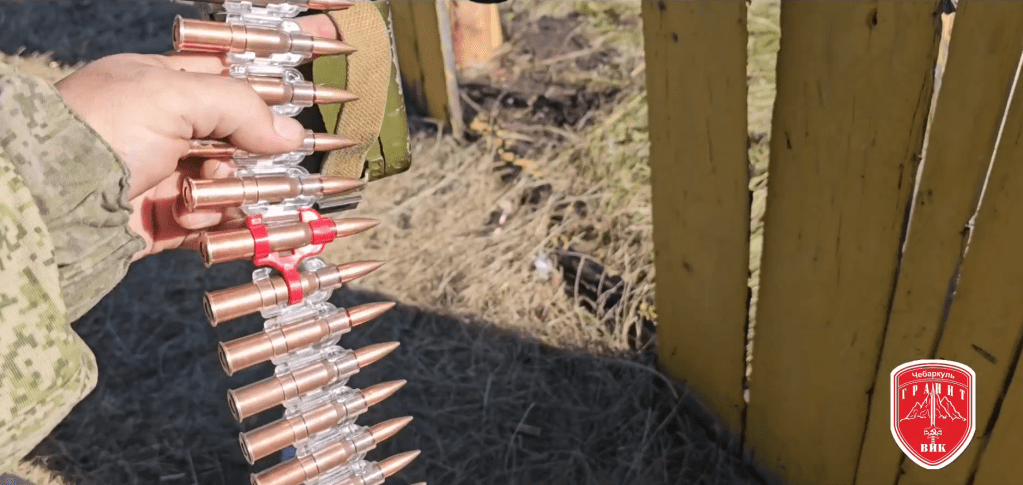
On 26 September, PUFGUN announced the non-disintegrating polymer belts on their social media. These belts share the same technical specifications as the disintegrating belts but notable are made from a clear plastic rather than a black plastic. While these have previously appeared in the earlier video they are not, at the time of publication, available for purchase on the company’s site. It appears that the links will be sold in packs of 100, with a starter tab and four disintegrating connector links which allows 25-round belts to be linked together.
On 9 October, PUFGUN shared a short clip showing their non-disintegrating belt being loaded by an Rakov belt-filling machine. This video was made in collaboration with ‘Granit’, a Russian living history group which appears to have links to the Russian military. Granit also shared their own longer video showing the belts being used in a variety of old and new Russian machine guns ranging from a vintage SG-43 to the latest PK variant the 6P41M.
Much like the Ukrainian KS-122 polymer belts from RAROG, the PUFGUN belts do significantly reduce the weight on the gun itself and more broadly for transporting ready ammunition. PUFGUN have sought to address the need for both disintegrating belts, useful for troops on the move that don’t want to be encumbered by trailing empty belts, while the non-disintegrating belts are more easily reloaded and better suited to use in vehicles or static positions. It’s interesting to see both sides commercially developing polymer belts to address a perceived need shared by both sides.
Support Us: If you enjoyed this video and article please consider supporting our work here. We have some great perks available for Patreon Supporters – including early access to custom stickers and early access to videos! You can also find us on the History of Weapons & War app. Thank you for your support!
 The Armourers Bench