40MM Grenade Mortar

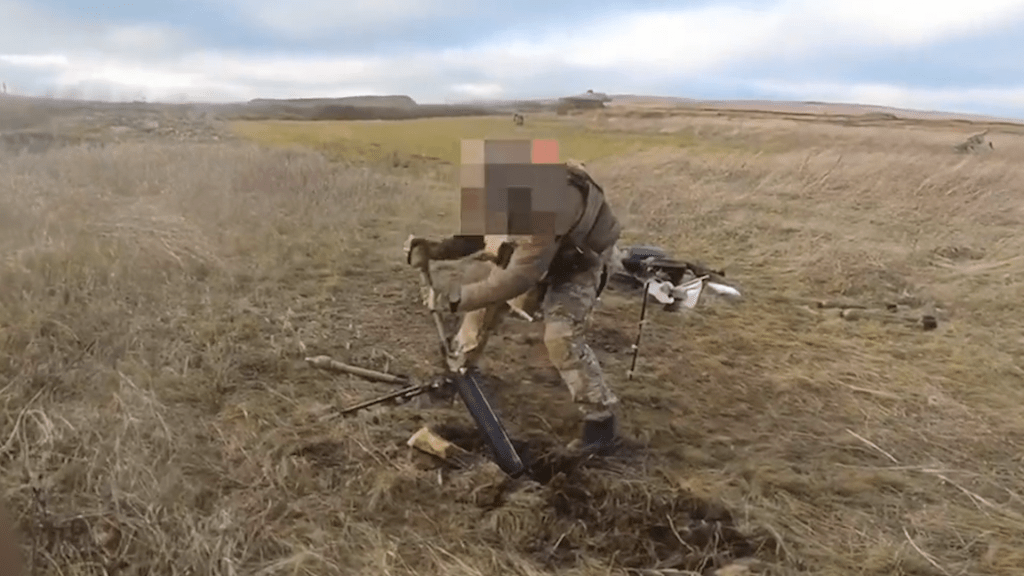
Since April, a Ukrainian unit has shared a number of short videos showing a small mortar capable of firing 40mm grenades.

From their patches and TikTok username, 16batzsu, the men’s unit appears to be the 16th Separate Rifle Battalion. They appear to be part of the battalion’s embedded mortar battery and are seen operating other larger mortars and automatic grenade launchers in numerous videos.
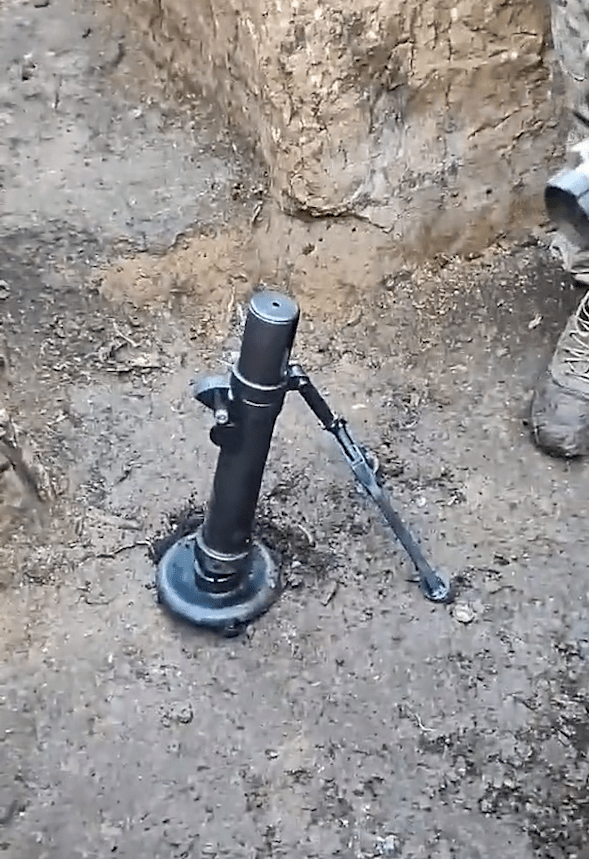
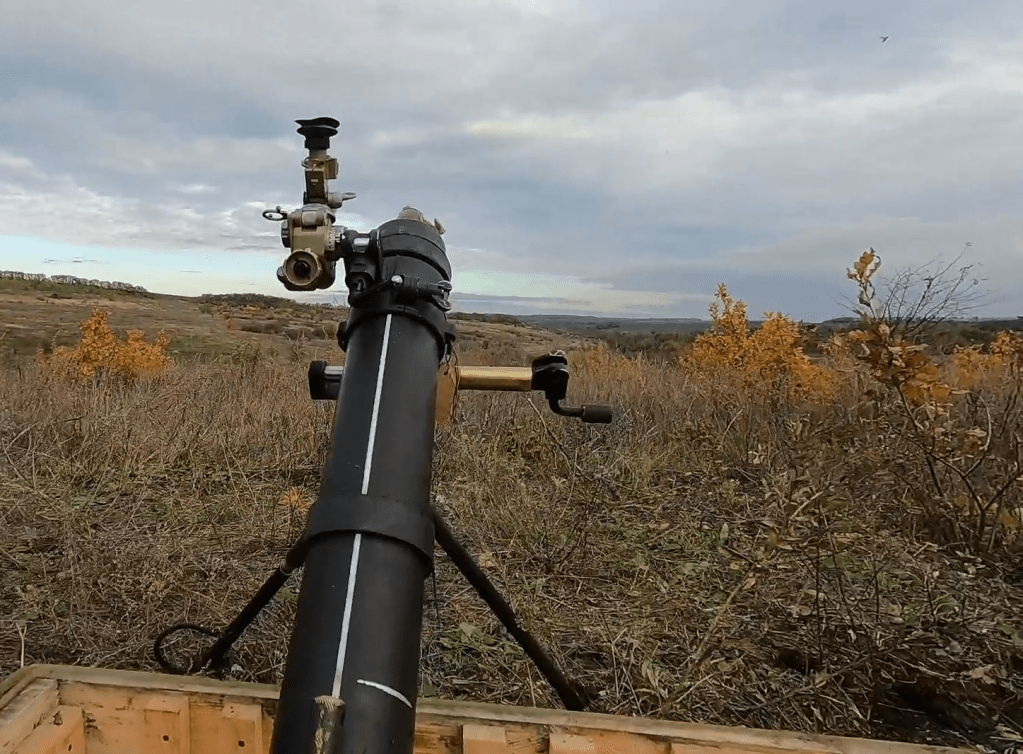
A close up of the small mortar (via 16batzsu)

On the 11 February, 16batzsu shared a video showing a small mortar with a stainless steel insert seen dropped into a small hand-held mortar. The same video was shared on their YouTube account under the title ‘New Toy’. While the resolution of the video is low it clearly uses the same barrel sleeve principal seen in later videos. In replies to comments 16batzsu explain that the small mortar has a range of 2km and is 30mm in calibre. This suggests that the weapon may launch 30×29mm VOG grenades normally fired by AGS automatic grenade launchers. Unlike the later 40mm mortars it does not appear to have a bipod. No further videos featuring the 30mm mortar have been shared.
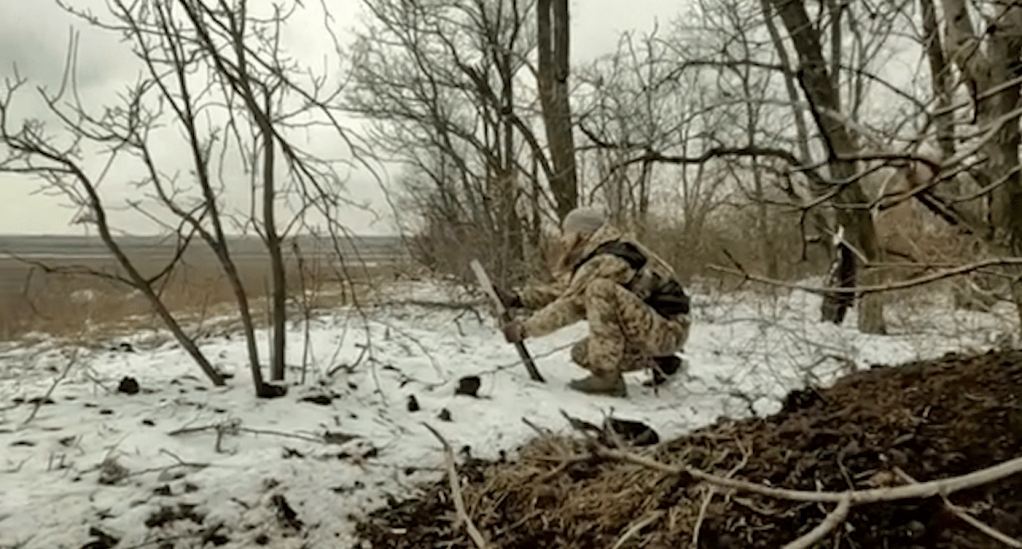
A still from a video showing a 30mm handheld mortar (via 16batzsu)

The first video providing a close up look at the 40mm mortar was shared on the 26 April, with the small mortar in a pit next to an 82mm mortar. The mortar uses 40mm high velocity grenades which are slid into the base of a rifled steel barrel sleeve. The rifling is needed to both maximise the grenade’s range but also impart spin which arms grenade. The loaded sleeve is then dropped into the mortar tube, the grenade’s primer presumably strikes the mortar’ firing pin and the grenade is ignited firing it out of the mortar. The sleeve remains in the tube.
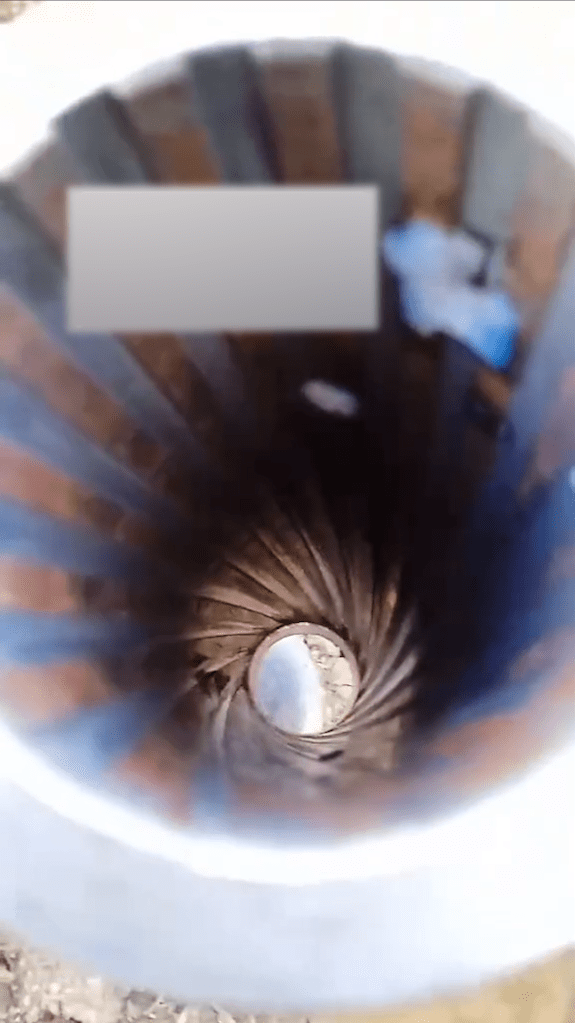
A closeup of the inside of the barrel sleeve, note the rifling (via 16batzsu)

In terms of size the small mortar looks similar to the Ukrainian 60mm KBA-118, however, the base plate, bipod and tube differ. Despite similarities I haven’t been able to find an exact match to a mass-produced mortar. The weapon appears to be well made and the examples seen in the videos appear to be near identical suggesting they may be a locally developed and produced weapon.

In a pair of videos posted on 3 May, we get a closer look at the weapon and a member of the unit explains the principal behind how it works. The tube has a pair of parallel cuts which allow the steel barrel sleeve to be removed. The video shows a pair of the small mortars and also shows the rifling inside the sleeve. The sleeve appears to have approximately 16 rifling grooves and on its exterior are three rings cut into the top end of the sleeves outer surface to aid removing it from the mortar tube.
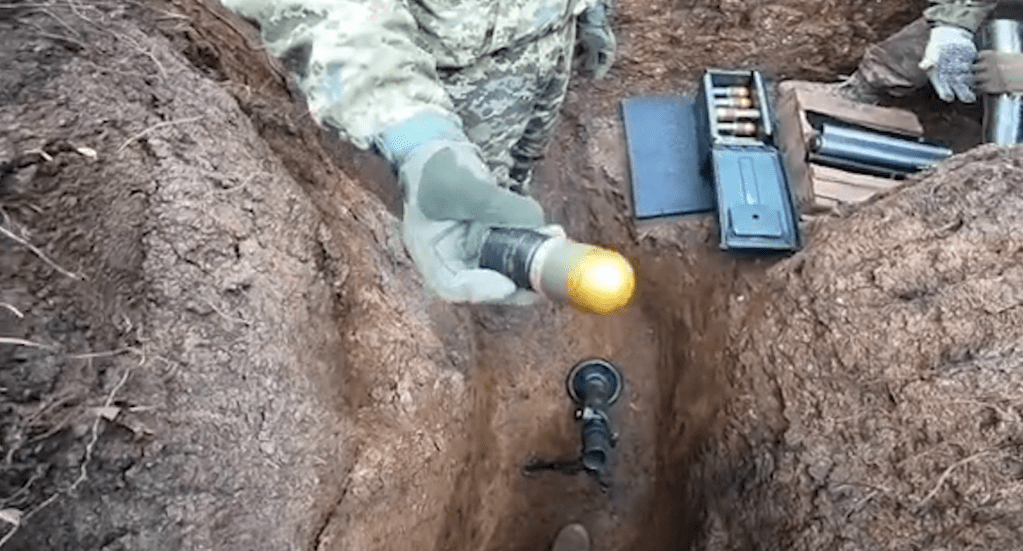
A 40mm high velocity round about to be loaded into a rifled barrel sleeve (via 16batzsu)

Finally, in a video posted on 9 May, we can clearly see the mortar fired a number of times. The operators can also be seen loading the 40mm grenades into the rifled barrel sleeves. One man loads the three tubes while another fires the mortar. The spent grenade cases are removed with the aid of a metal ramrod. The 40mm grenades which appear in the video are high velocity high-explosive dual-purpose (HEDP) grenades of the type used with Mk19 automatic grenade launchers. The reason the sleeve is rifling is to arm the grenade’s fuze when the round is fired. These include grenades like the US M383, M384, M430 and M677 as well as German DM111 and DM 112.
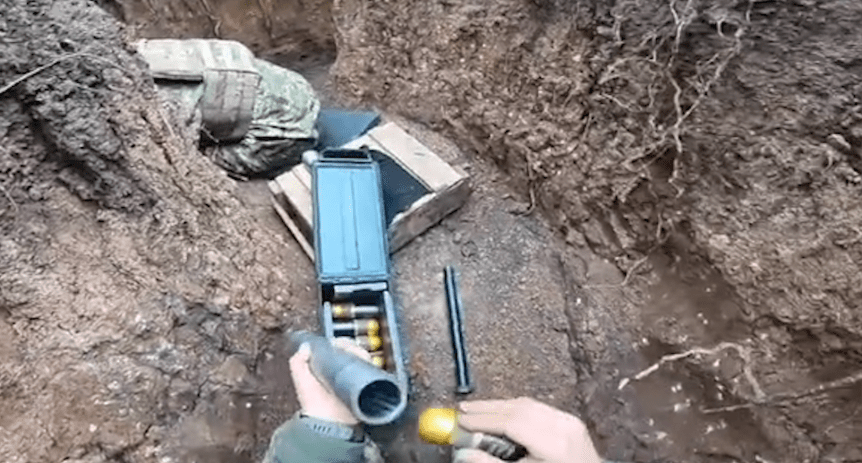
A still of a 40mm grenade being loaded into a barrel sleeve (via 16batzsu)

So what is the small mortar for? Why not just use the unit’s Mk19 automatic grenade launcher? My initial theory was that the barrel sleeve might provide an increase in range over the Mk19 though the 2,000 metre range mentioned in one of the videos suggests the mortar has a range on parr with the Mk19. Another theory is that the unit’s Mk19 may be inoperable and they still have a supply of 40mm grenades to use. The grenades are also perhaps more readily available and cost-effective than small mortar rounds. It could also potentially have the effect of mimicking drone-dropped 40mm munitions, keeping enemy combatants on the look out for drones. As a harassment weapon the small mortar seems to have potential, allowing its operator to fire from cover while being relatively lightweight allowing it to shift firing positions quickly. The accuracy of the weapon is difficult to gauge but with the aid of an observation drone rounds could be walked into the vicinity of a target. The mortar is a very interesting piece of innovative engineering.

Thank you to Ukraine Weapons Warfare for bringing the original footage of the mortar to my attention.

Update – 06/06/23: Some additional footage from another member of the 16th Separate Rifle Battalion showing the 40mm grenade mortar in action.

Update – 22/10/23 – Some new footage showcasing the mortar. One of the Ukrainian combatants appears to have a National Guard 4th Rapid Reaction Rubizh Brigade, 3rd Battalion Svoboda patch. The video gives us a good close look at the tub, tangent sight, barrel sleeve and the bipod and base plate which appear to have slightly different designs.

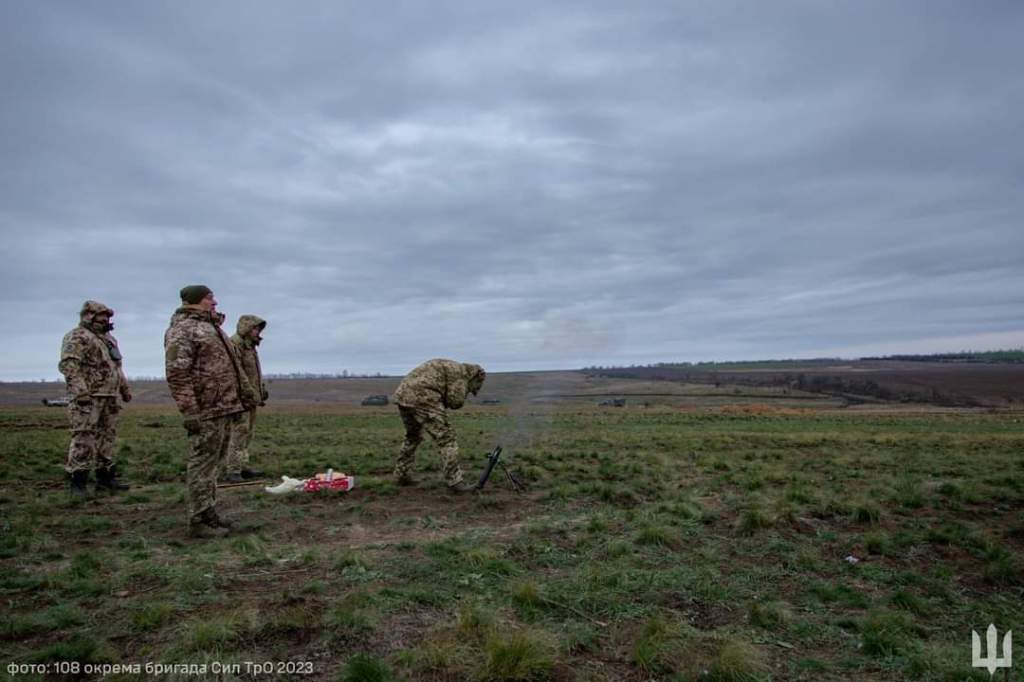
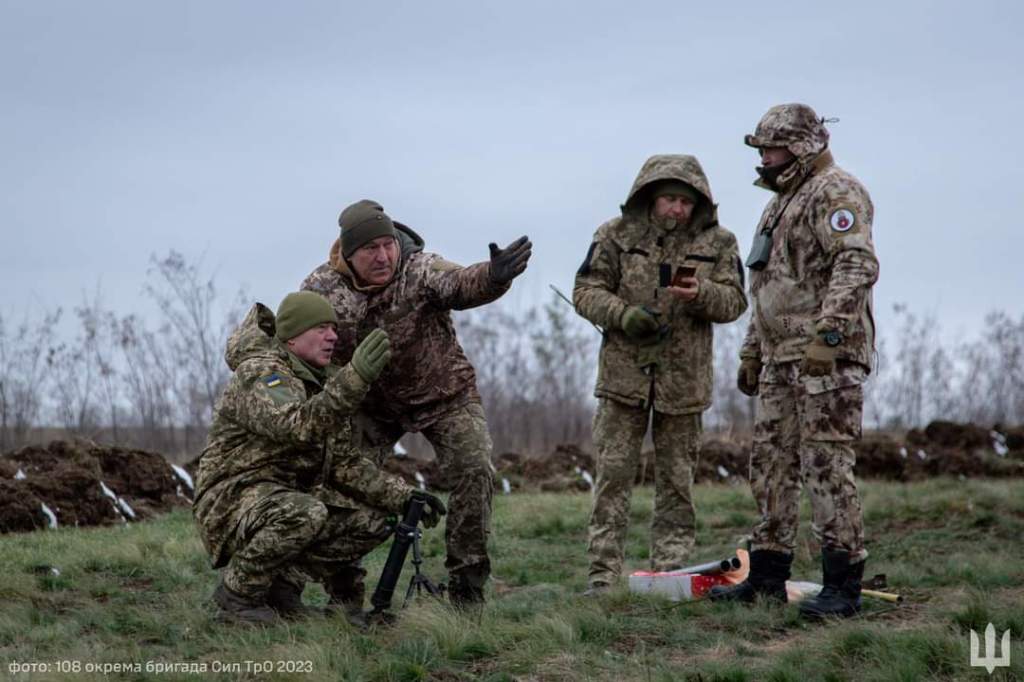
Update – 28/11/23: Another sighting of the 40mm grenade mortar. This time in official photos shared by the 108th Territorial Defense Brigade on 25 November. The post suggests the mortar can also fire 30mm VOG rounds.
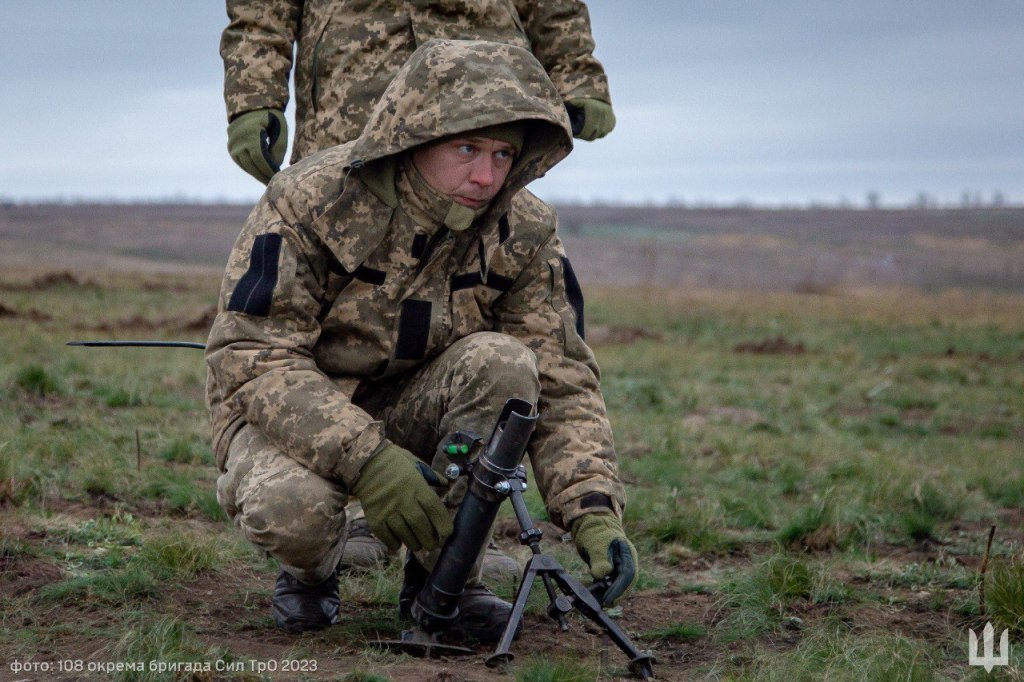
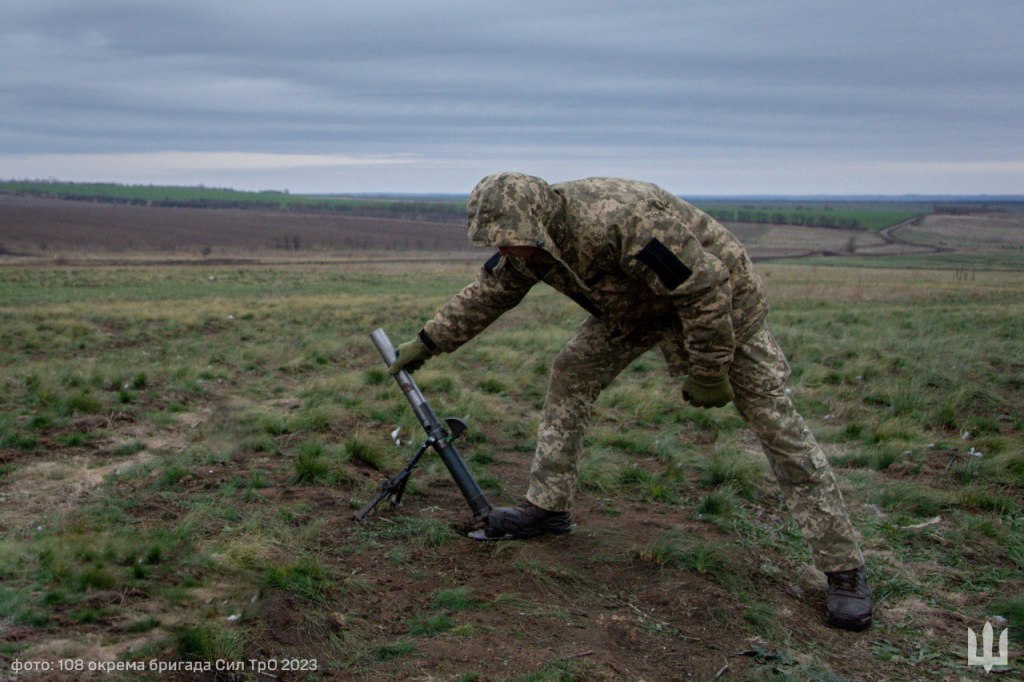
Update – 17/8/24: A new sighting of the 40mm grenade mortar showing some of the loading and firing steps.


Support Us: If you enjoyed this video and article please consider supporting our work here. We have some great perks available for Patreon Supporters – including early access to custom stickers and early access to videos! Thank you for your support!

Russia’s Silent Mortar in Ukraine

Recent video and photos from Ukraine show Russian troops getting to grips with the 2B25 82mm mortar. About 10 months ago, before Russia’s invasion of Ukraine, The Armourer’s Bench examined the 2B25 in an article/video and how it combines a spigot mortar with ammunition which uses a self-contained captive piston. For a full run down on operation and the mortar’s development history check out that article/video. In this article we will take a look at the mortar’s appearance in Ukraine.

The first mention of the 2B25 being in use with Russian forces in Ukraine dates to early July, when RIA News, a Russian state-owned domestic news agency, published an article with scant detail other than to suggest that “these mortars are used to carry out sudden fire raids, in particular in the fight against saboteurs of the Armed Forces of Ukraine.” Despite this report we haven’t seen any imagery showing the weapon in theatre until recently.

In late October imagery showing the 2B25 began to be shared by a member of what appears to be a Russian special operations unit which has been in action in the Donetsk Oblast. One of the members of the unit runs a telegram channel. The soldier who runs the channel describes himself as a “regular soldier of the Armed Forces of the Russian Federation, for more than 10 years.”

On 27 October, a POV video was shared from behind a 2B25, with the caption (machine translated): “We got acquainted with a silent mortar, mastered it ourselves and showed the mobilized guys. A minimum of recoil, a minimum of powder gases and the sound of a round being fired.”

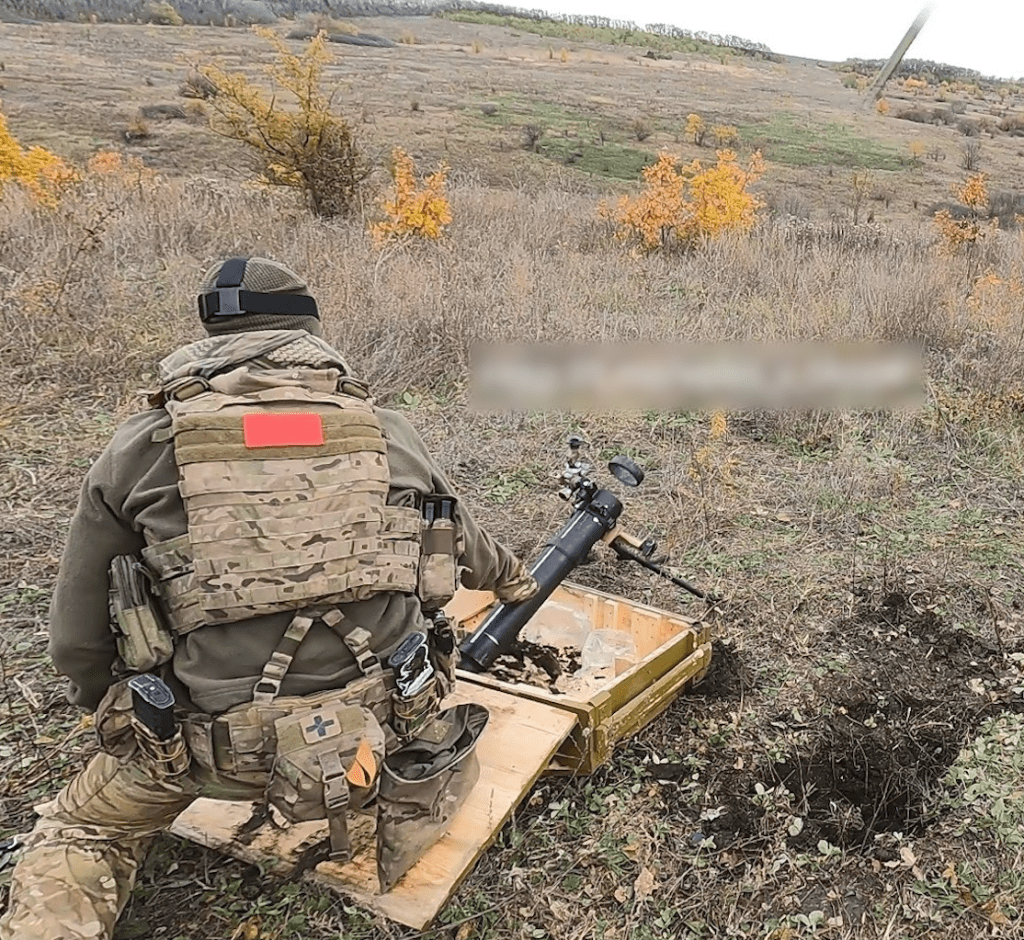
The 8 November saw the unit share a photo of the mortar being fired without its base plate, instead using a wooden box as an ad-hoc base. In the comments section of the image the soldier running the channel says the use of the wooden ammunition box was ‘by design’, perhaps indicating intentional experimentation with using the mortar without its base plate. In another comment he explained: “No…they checked… whether it was possible to shoot without sinking into the ground, as a result, the box fell apart.” In another response he notes that they were trying to avoid placing the base plate in the wet ground. When asked how loud the mortar is the Russian soldier describes it as: “It is silent, the exit of a mine is not louder than a clap of hands”

A photo posted on 26 November showed the Russian soldier with perhaps 10 of the 2B25’s 3VO35 mortar bomb laid out on the ground. On 30 November a clip showing the mortar be prepared alongside a commercial drone was posted, suggesting training to correct fall of shot with drones.

The longest video posted so far shows the mortar in action. Shared on 2 December the video shows the mortar dug into the ground with the operator firing three bombs in quick succession. Several seconds later we can hear them detonate down range. Again the video appears to show training and not operations. The machine translated caption describes a test with the 2B25 with the operators showing they could correct their fire with a drone, noting: “the accuracy and density of fire on the intended target increased significantly, the bombs hit the target one by one” Most recently, on the 3 December, a short clip with the caption “Another short video from our training” was shared showing the mortar being laid.

Update – 27/03/23: on 25 March a Russian telegram channel ‘Epoddubny’ shared a video featuring scouts operating around Bakhmut with a 2B25 82mm mortar. Below is a compilation of shots showing the mortar in action.

Update – 26/10/23: Additional footage, without location or date of filming, shared on Russian social media. Briefly showing the 2B25 in action with an additional 3VO35 mortar bomb near by.


Support Us: If you enjoyed this video and article please consider supporting our work here. We have some great perks available for Patreon Supporters – including early access to custom stickers and early access to videos! Thank you for your support!

The 2B25: Russia’s Silent Spigot Mortar

Recently there have been a number of defence media articles about Russia’s new ‘silent’ mortar. It’s often described as cutting edge technology but in reality it’s based on technology over 100 years old. 

The Russian 2B25 82mm mortar is in fact a spigot mortar. What is a spigot mortar? Unlike a conventional mortar which uses gravity acting on the bomb dropped into the tube striking the anvil or striker at the base of the tube detonating the propellant cartridge in the bomb and launching the mortar bomb. A spigot mortar alters this principle, instead using a spigot or metal rod onto which a bomb with a hollow tail is placed. The bomb’s tail then becomes the element which contains the pressure from the detonated propellant charge rather than the tube as in a conventional mortar. The 2B25’s bomb has a plug at at the base of the propellant cartridge which when fired is pushed down the bomb’s tail tube by the expanding propellant gases – essentially acting as a piston. The plug is prevented from leaving the tube by a constriction at the tube’s end. This captures the gases and reduces the report of the mortar.

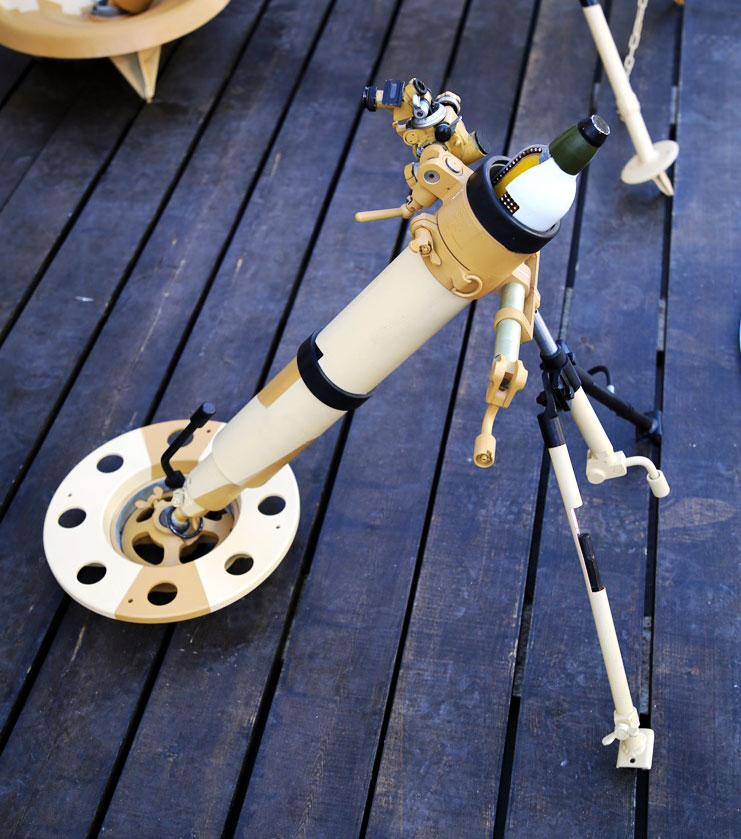
The 2B25 82mm Mortar (CRI Burevestnik/Russian Army)

Perhaps the most famous spigot mortars are the Blacker Bombard and PIAT (Projector, Infantry, Anti-Tank) of world war two. I wrote a book about the PIAT a couple of years ago so the 2B25 really interests me as a niche application of the same technology!

Spigot mortars have a number of benefits and drawbacks which set them apart from conventional mortars, including a shorter range and slower rate of fire than conventional mortars, but the advantages primarily seized upon is their reduced sound signature and lighter weight. The ignition of the propellant cartridge against the spigot, inside the bomb’s tail tube removes visible flash and is much quieter than a conventional mortar which. The 2B25 optimises this by enclosing the bomb inside a light weight tube to further reduce the visual and audio signatures of the weapon firing even further.

Why is this important and why are ‘silent’ mortars useful? With a reduced signature on the battlefield the chances of effective counter-battery fire are reduced enabling the mortar fire to be more effective and sustained. The developers claim that the 2B25 is about as loud as AK fitted with a PBS-1 suppressor, about 135db, substantially quieter than a standard mortar.

The patent for the 2B25’s bomb, filed in August 2011 and published in February 2013, states:

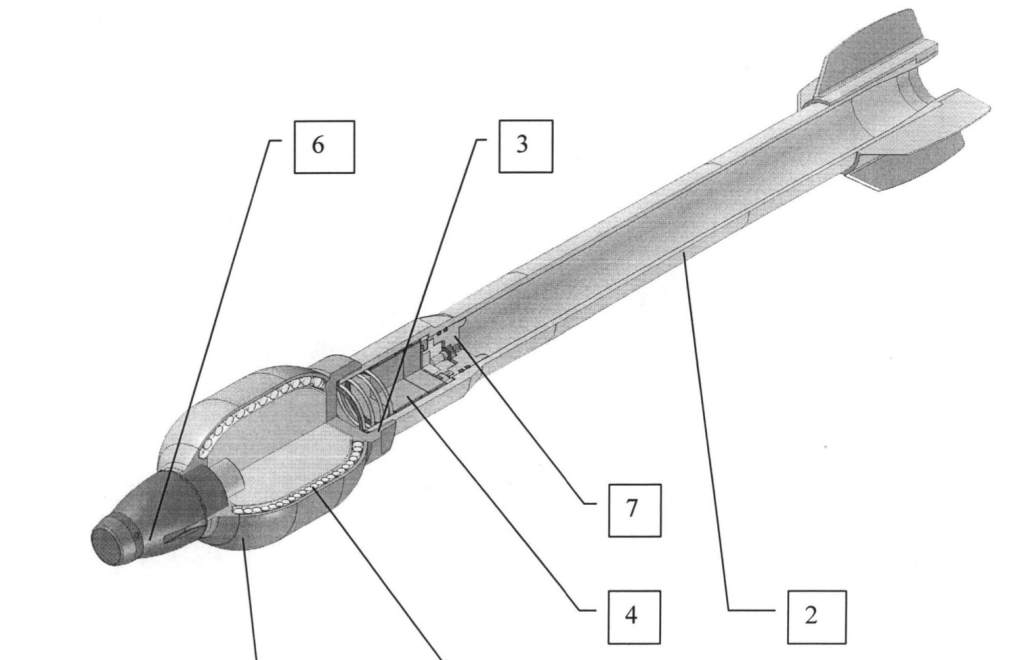
“proposed shell comprises main part and tail. Tail case accommodates propellant charge and combination piston with initiator. Shell is composed of detachable sealed screw assembly of tail and main part. Tail is furnished with fin. Tail charge chamber accommodates multi-section propellant to be implemented in various versions.”

Patent diagram of the 2B25’s self-contained piston bomb (Russian Patent #2494337)

The 2B25 first began to appear in western media back in 2018 but the design dates back to at least the early 2010s. Developed by the central research institute Burevestnik, it is manned by a two man team and can be transported in a backpack. Officially released data for the mortar suggests it has a maximum range of 1,200 metres with a rate of fire of perhaps 15 rounds per minute. It is reportedly equipped with a standard MPM-44M optical mortar sight.

The mortar appears to be of a fixed spigot design with a firing pin running inside the spigot. This means that unlike the PIAT the 2B25’s spigot does not move. Once the bomb is slid into the mortar tube, down onto the spigot, the operator pulls a handle at the base of the weapon downwards to cock the weapon and then pushing it up to fire it. 

The 2B25 82mm Mortar (CRI Burevestnik)

The mortar’s baseplate is said to be made of an aluminium alloy with the whole weapon weighing 13kg or 28.6lbs. The mortar’s 3VO35 bomb itself weights 3.3kg and has a 1.9kg warhead.

Both Russian and western media reports have stated that the weapon has been delivered to the Russian armed forces with some suggesting it was in use by “special-purpose units”, possibly Spetsnaz 

The 2B25 certainly isn’t the only modern spigot mortar in service, others include the Fly-K from Rheinmetall. Personally, I find it fascinating that spigot-based weapons still have a place on the battlefield, albeit a niche one.


If you enjoyed this video and article please consider supporting our work here. We have some great perks available for Patreon Supporters – including custom stickers and early access to videos! Thank you for your support!

Bibliography:

82mm 2B25 Mortar, CRI Burevstnik, (source)

Mortar Silent Shot, Russian Patent, RU2494337, 16 Aug. 2011, (source)

Mortar 2B25 “Gall” No noise and flash, TopWar, 26 Sept. 2018, (source)

Advanced Silent Mortars Start Arriving for Russian Army, Tass, 7 May 2019, (source)

Russian-made 2B25 “Gull” Silent Mortar will be Modernized in the Imminent Future, Army Recognition, 13 Nov. 2015, (source)

Russian Commandos Are Getting “Silent” Mortars, The Drive, 7 Sept. 2018, (source)

Footage:

Silent Killer: Test Footage of the Latest Mortar for Special Forces, Zvezda, 25 Dec. 2015, (source)

2B25 Silent Mortar, Rosoboronexport, 24 Nov. 2021, (source)

82mm Mortar Silent 2B25, Russian TV Report, 27 Feb. 2014, (source)