
In this article/video we’ll examine an an interesting and very simple 3D printed anti-personnel mine developed by the Ukrainians. The mines are similar in purpose and size to the Russian PFM-1, the so-called ‘Butterfly’ mines. However, their shape and form factor is similar to that of the larger PMN-4, but they are significantly simpler.
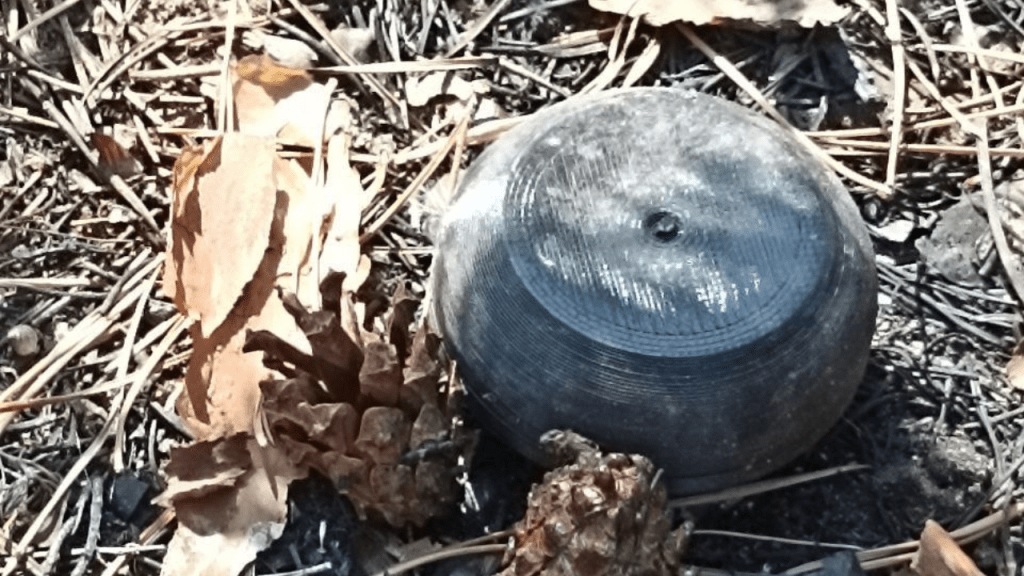
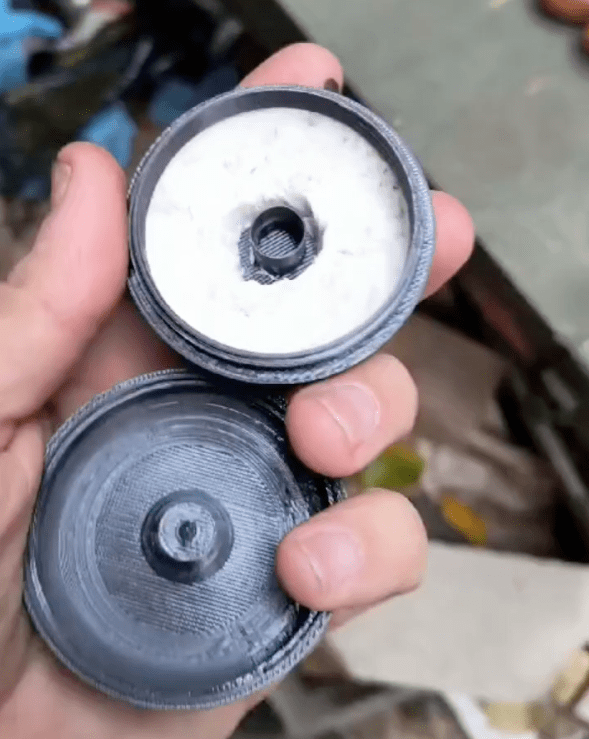
The 3D printed mine’s explosive filling is said to be around 30g, with an overall weight of 55g. The mine is made up of a two-part outer shell printed in PLA, or another similar plastic. The two pieces screw together and a layer of plastic explosive is in the bottom half of the shell along with a percussion initiator of some sort. The top half of the mine has a small metal Philips-head screw protruding down through the top, this acts as a striker for the initiator. There is a tube protruding up from the lower half of the mine, printed as part of the body, which likely guides the screw and holds the initiator.
The mine appears to work along the principle of when stepped on the outer shell breaks and compacts allowing the screw to strike the initiator, detonating the mine.
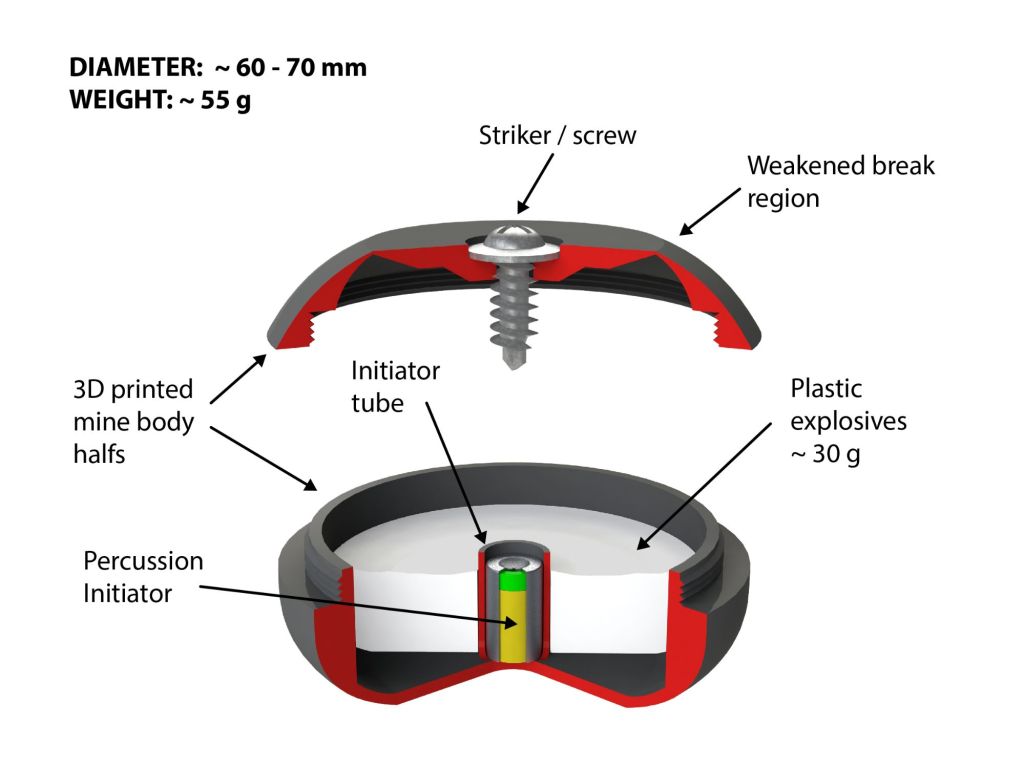
The design is extremely simple and cost effective to produce, requiring only the simplest 3D printer, a screw and an initiator and explosive.
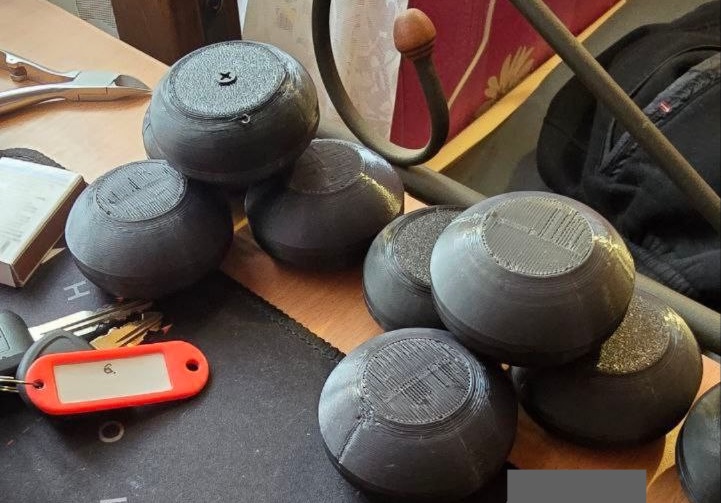
The first sighting of the mines I’ve been able to find was in a telegram post by a Russian sapper. In the post, on 6 October, he shared several photos of the mines found in the field and warned that Ukrainian drones are dropping them in the Kursk and Belgorod regions. Another photo of one of the mines was shared by another Russian combatant on 8 October.
A Russian telegram channel, enginner25, shared post showing multiple images of the mines and a video showing the internals.
In another photo we can see that the mines are apparently dropped from plastic tubes suspended below drones. The photo only shows the top of the tube but it’s clear that a number of tubes are carrying a significant number of mines. The release mechanism for the lids of the carrier tubes appears to use something like 3mm Visco fuze, commonly used with fireworks, or igniter cord. Once initiated the fuze/cord burns away and releases the mines with the drone scattering them as it flies over an area.
The design of the mine is extremely simple but appears to be potentially quite effective, relying on the brittleness of the 3D printed shell to work. The mines seem to have been engineered to be quickly produced at scale rather than to make them undetectable to Russian sappers. However, if a non-metallic striker replaced the screw the mines would be even more difficult to detect.
While not the first 3D printed explosive device to emerge from the fighting in Ukraine, this mine is certainly one of the smallest and simplest. How widespread their deployment is, is still unclear but they seem they would be a useful part of Ukraine’s drone-deployed mine interdiction efforts behind Russian lines.
Thank you to Roy for drawing my attention to these mines.
Update 22/12/24: A new Russian video showing the internals of the mine and giving a better look at the percussion initiator (source).
Update 5/7/25: A Ukrainian video showing the testing of a 3D printed mine.
Support Us: If you enjoyed this video and article please consider supporting our work here. We have some great perks available for Patreon Supporters – including early access to custom stickers and early access to videos! You can also find us on the History of Weapons & War app. Thank you for your support!


 The Armourers Bench