
In a recent video/article I mentioned that the Ukraine-aligned Georgian Legion had mounted an RPG-7 on an drone and successfully tested it. Several days later video of another drone equipped with disposable RPG was shared. Posted on 10 September it shows a Queen Hornet FPV equipped with an RPG-18 anti-armour weapon. The drone is seen taking off at a range and hovering. The short clip does not show the RPG-18 being fired.
This isn’t the first time a drone with a disposable RPG mounted on it has been seen in Ukraine. In January 2023, a photograph surfaced of a heavy-lift DJI Agras T-30 armed with a gimbal mounted PK-pattern machine gun and a Bulgarian Bullspike anti-armour weapon. The photo has since been shared regularly but with no further context. One post claimed it was associated with a GUR unit (Solnyshko DRB).

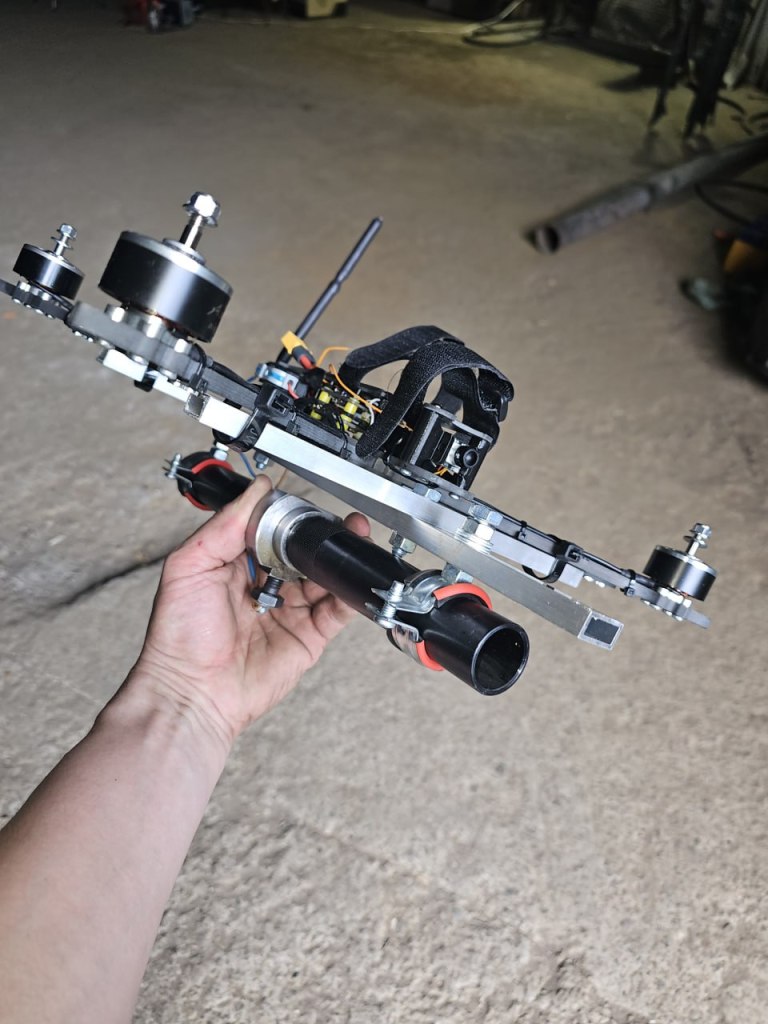
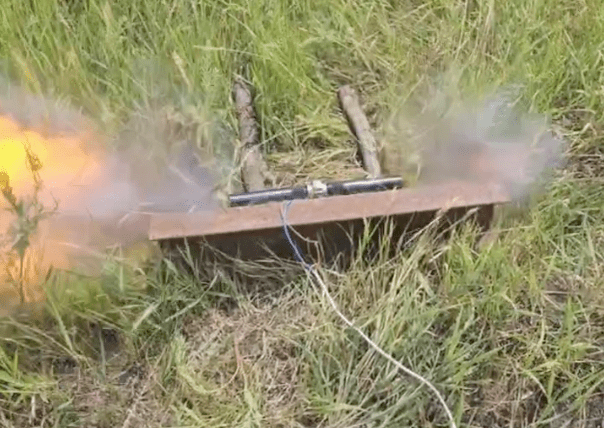
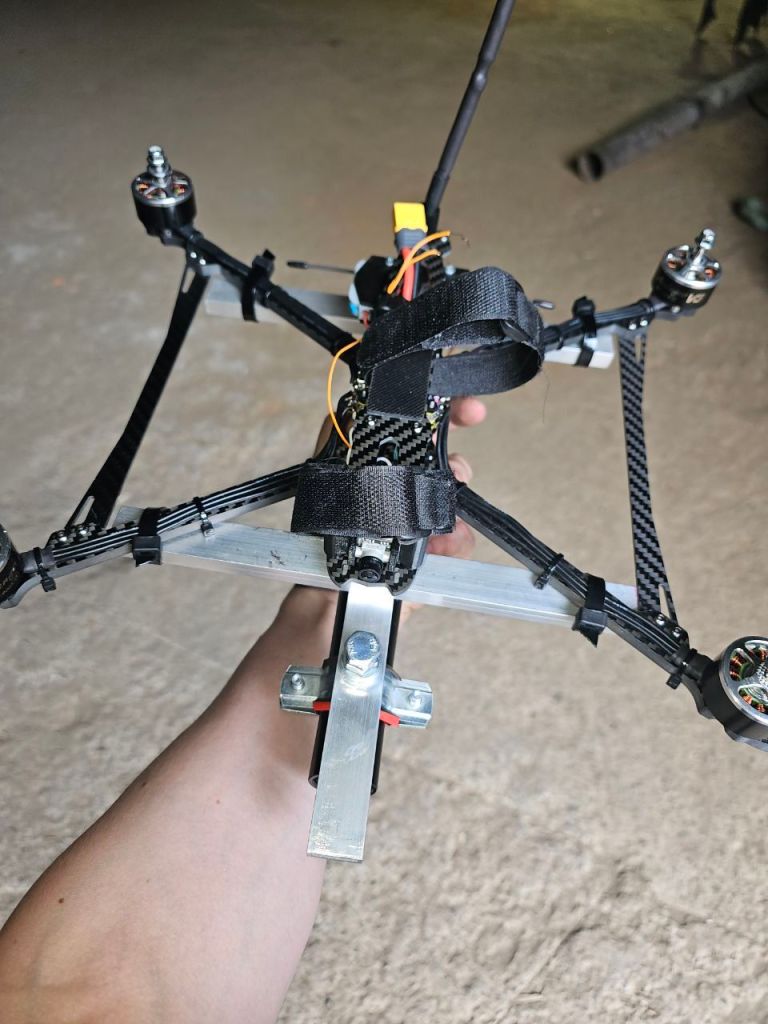
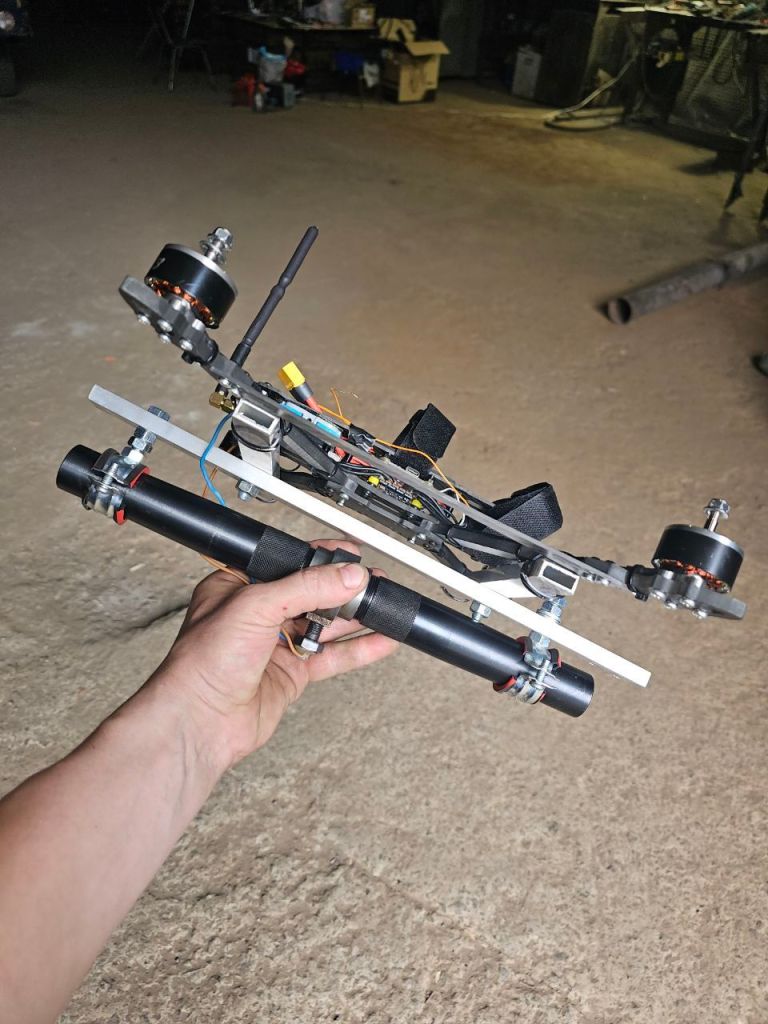
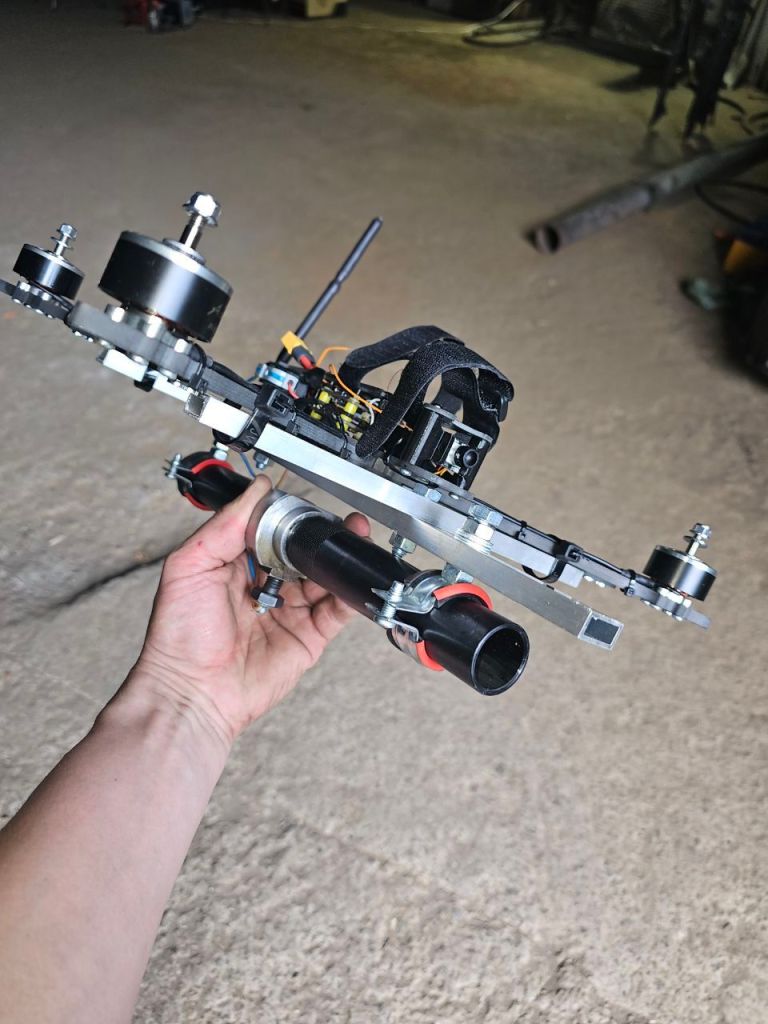
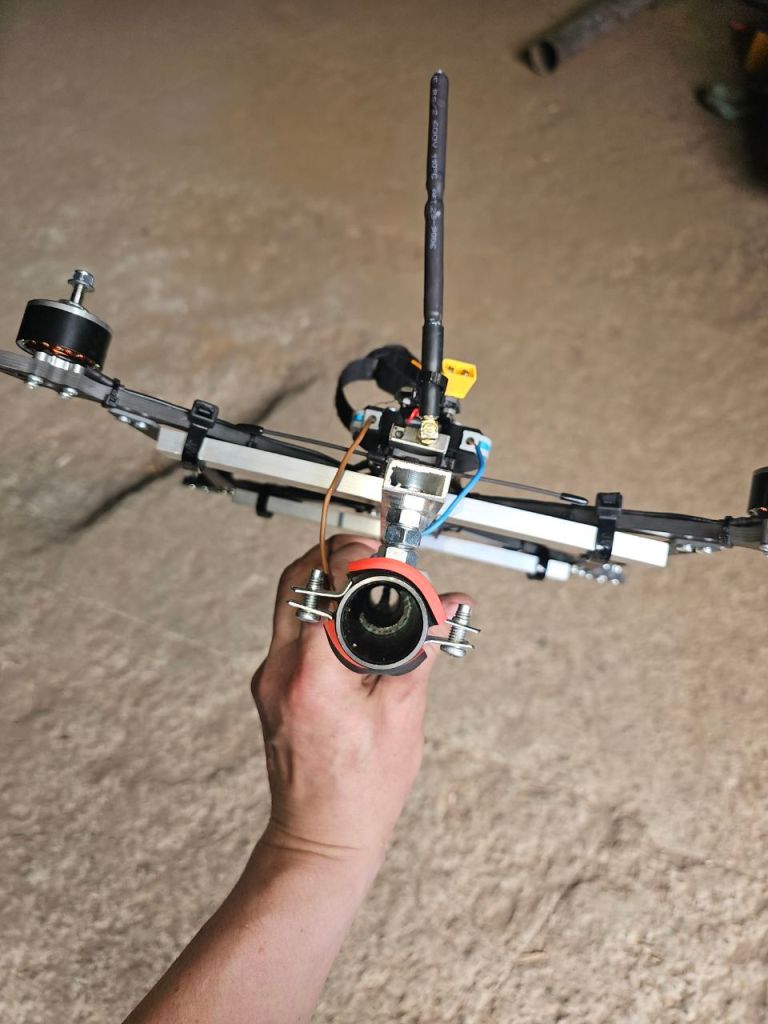
On 13 September, the Wild Hornets (a Ukrainian drone manufacturing organisation) shared a video of another RPG-FPV. The 56 second video, soundtracked by music from Terminator 2, showed a Queen Hornet drone equipped with what appears to be a Bulgarian Bullspike-AT. The efforts to develop an RPG-FPV based on the Queen Hornet appear to be lead by the Bulava drone team, part of the 3rd battalion of the Separate Presidential Brigade. The Bullspike-AT is produced by VMZ and fired a PG-22 pattern warhead, it has an effective range of 500m and can penetrate up to 400mm of armour. It weighs in at around 3.4kg, which is well within the Queen Hornet’s 9.5kg (21lbs) payload. The video shows the RPG-FPV take off and fire at a target down range. The drone can be seen pitching down to aim and then returning level before landing. This appears to have been a test of the assembly of the system to confirm the concept. In the photographs at the beginning of the video it appears that the weapon is fired by a servo arm which depresses the weapon’s trigger.
The Bulava RPG-FPV was again briefly seen in a fundraising video shared by the unit on 15 September. A close-up of the drone shows an RPG being attached to the drone with a zip-tie and the servo arm trigger mechanism is again visible.
On the 17 September, Wild Hornets shared another short video from the Bulava team, claiming that the team had been working on ‘calibrating the drone grenade launcher’ leading to the ‘shots [becoming] more accurate.’
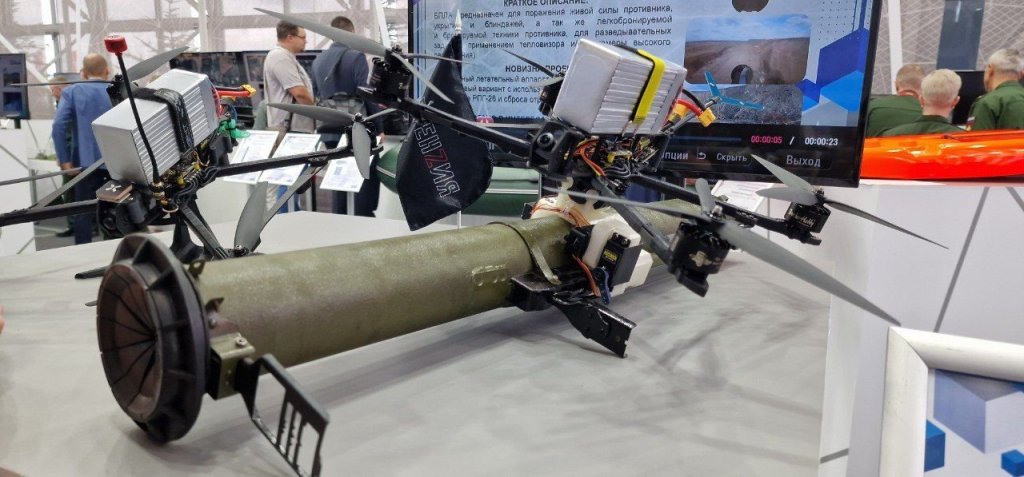
RPG-FPVs are something that Russia has also begun developing with one showcased at the recent ARMY 2024 defence exposition. The drone appears to consist of a ‘Gortensia’ quadcopter armed with an RPG-26 anti-armour weapon. The drones was developed by Гортензия (Gortensia) and has a range of 10km and a payload of up to 6kg. On an info sheet shared at ARMY 2024 the company claims they are developing a system that allows the drone to jettison the empty RPG tube once it has fired. Images from ARMY 2024 show a dovetail-type attachment with a cradle attached to the RPG’s tube. On 18 August, the company shared two videos of test launches of the RPG-armed Gortensia drone. The videos show the drone take off and then the drone pitches down to aim and then fires. On firing the RPG’s tube detaches from the drone, seemingly using the weapon’s recoil to jettison it. In the second video, the drone travels further down range and fires on the target at a flatter trajectory, again the tube detaches from the drone.
In mid-September Russian government organisation People’s Front shared a short video showing a octocopter armed with an RPG-22 being tested at the range. The RPG-22 is mounted on its side The long body of the extended RPG-22 body, at 850mm long, seems to somewhat impact the balance of the drone. Despite this the test fire appears to be successful, it’s unclear if this is a development by a drone company or a Russian unit.
While the RPG-FPV has more firepower than the gun-armed drones which have begun to emerge they are still a concept in development. The major positive of the RPG-FPV is the use of an anti-armour weapon which means that the drones aren’t a part of the munition, as in the case of the kamikaze/one-way FPVs, and can be reused. Similarly, the firing of the RPG’s warhead means the drone does not have to be directly over its target as with a bomber drone. This means the RPG-FPV can engage at stand-off distance and has increased survivability. The difficulty, as we’ve seen with the gun-armed drones, is aiming the launcher accurately. It’s still unclear if the drone operators are using the FPV’s primary camera to aim the weapon, this would mean the aiming process might be impacted by latency, the lack of a reticle and poor feed quality. One way to increase hit probability might be to mount the RPG vertically as Nammo did in their tests of an M72-armed drone back in late 2021. The technology and doctrine for RPG-FPVs is still developing so it will be interesting to see how these drones evolve and are employed tactically.
Update 22/9/24:
A video of an RPG-FPV, developed by an unspecified manufacturer, was shared by MASH with the caption (machine translated):
“Meet the new product in the SVO zone – the flying RPG-26. The drone has already passed tests and will soon delight the military on the front lines.
According to our information, the request for the device came from the Ugledar direction, since ours went on the offensive. The first batch of fighters is preparing for flights.
Features: stabilization mode, which does not throw the drone back after firing. On the contrary, the drone returns to the base to replace the grenade launcher. It is equipped with an RPG-26 with armor penetration of 440 mm (and the prospect of installing a “Shmel” flamethrower). It carries up to 12 kg, rises to 800 meters, flies 30 km at a speed of up to 60 km / h. The miracle costs about 600 thousand rubles, the footage shows winter tests.”
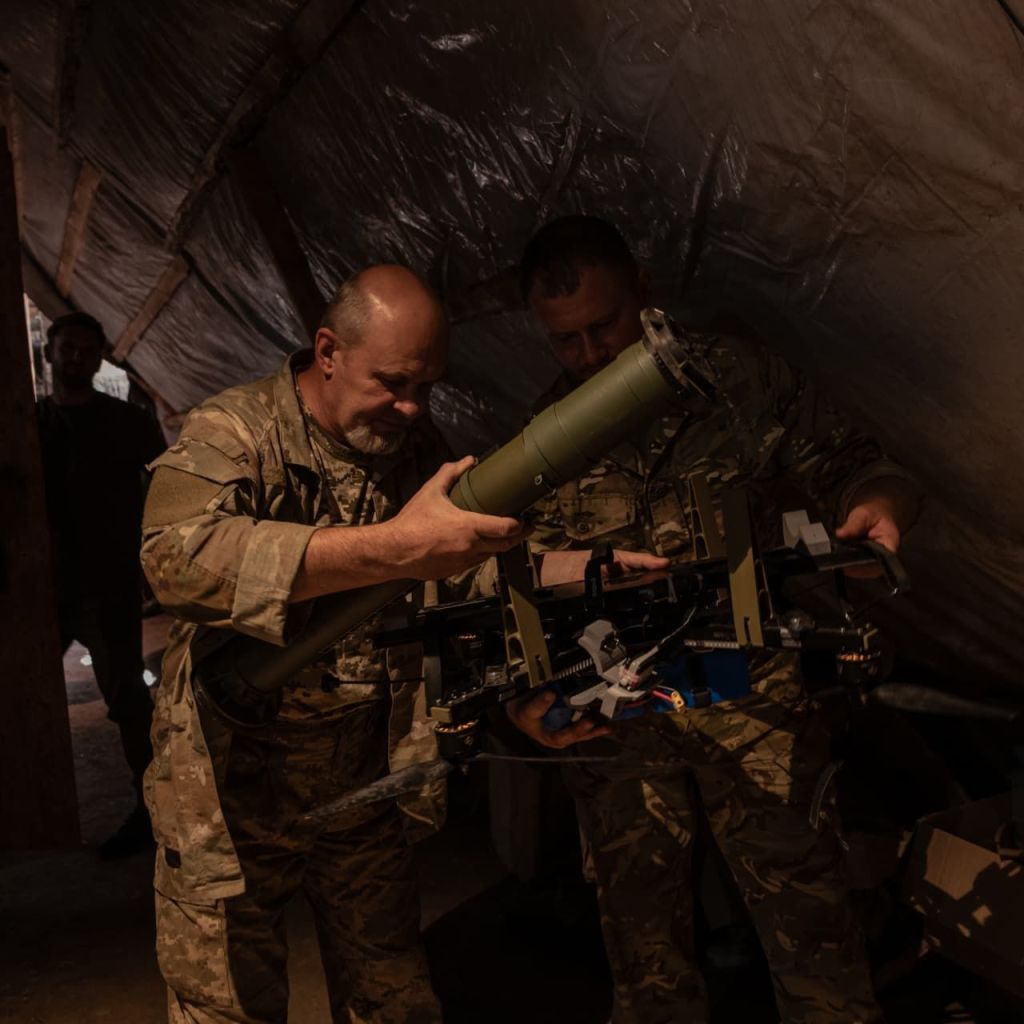
Update – 14/1024: A Wall Street Journal article (by Isabel Coles) featured photographs of one of the Ukrainian RPG-FPVs pictured during assembly and range testing.
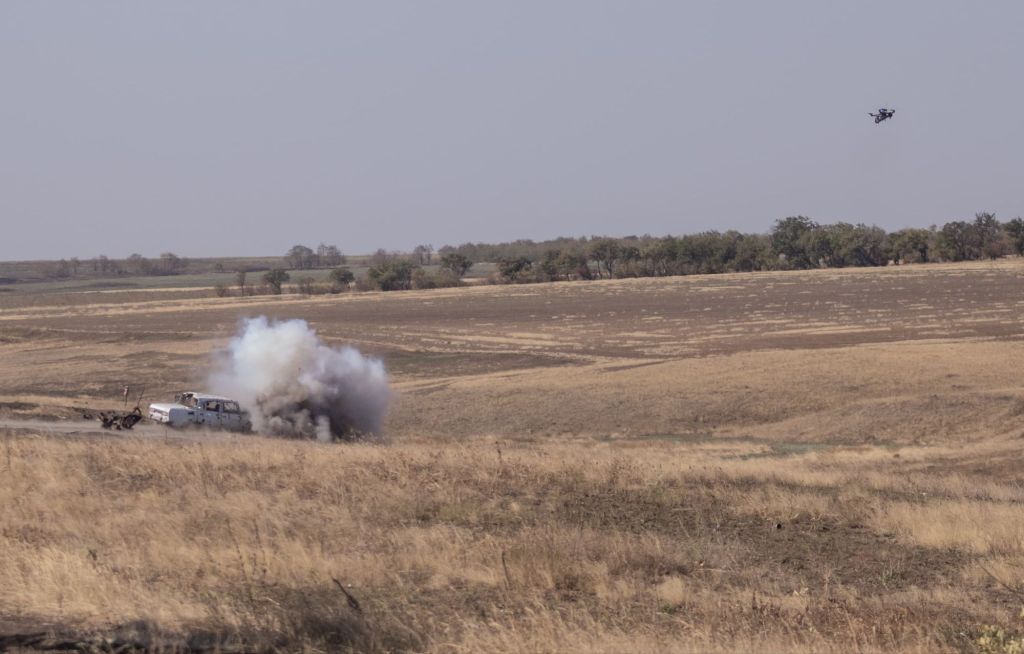
Update – 8/11/24: An ArmyInform video looking at the Bulava RPG-FPV. It appears to show the same test launch featured in earlier videos.
Update – 29/12/24: A Russia RPG-FPV fires on a building.
Update – 15/2/25: Russian with RPG-FPV, no further information available. (Source)
Update – 28/2/25:
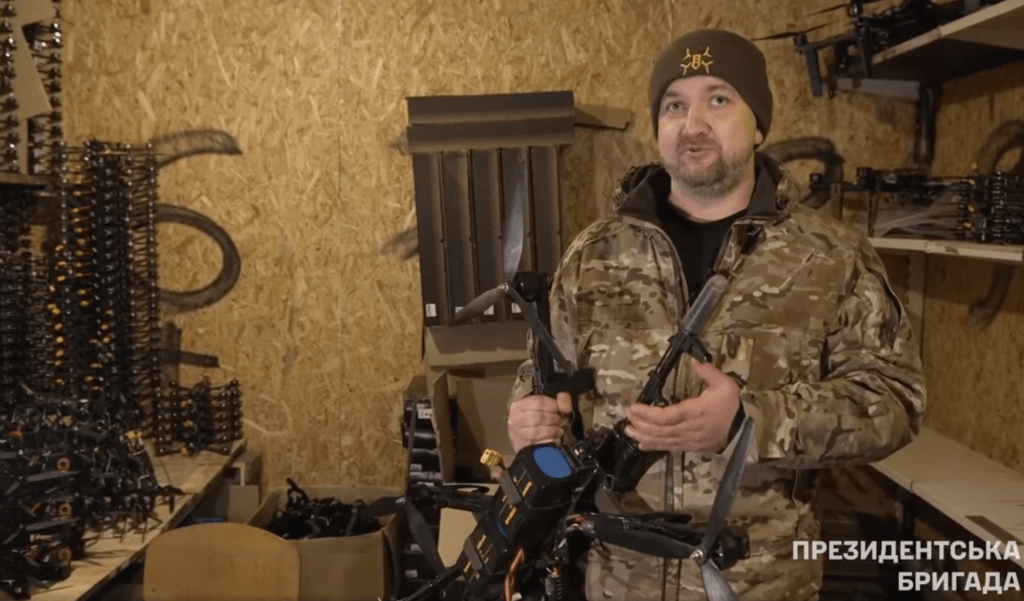
Ukraine’s Presidential Brigade shared a video showcasing the work of its drone teams. In the video an AK-FPV is highlighted.
Update – 13/5/25:
WildHornets have shared what they report is the first combat use of their RPG-armed drone.
Additional footage from WildHornets gives us a closer look at the drone:
Support Us: If you enjoyed this video and article please consider supporting our work here. We have some great perks available for Patreon Supporters – including early access to custom stickers and early access to videos! You can also find us on the History of Weapons & War app. Thank you for your support!

 The Armourers Bench