RPG-FPV – Rocket Launcher Drones in Ukraine

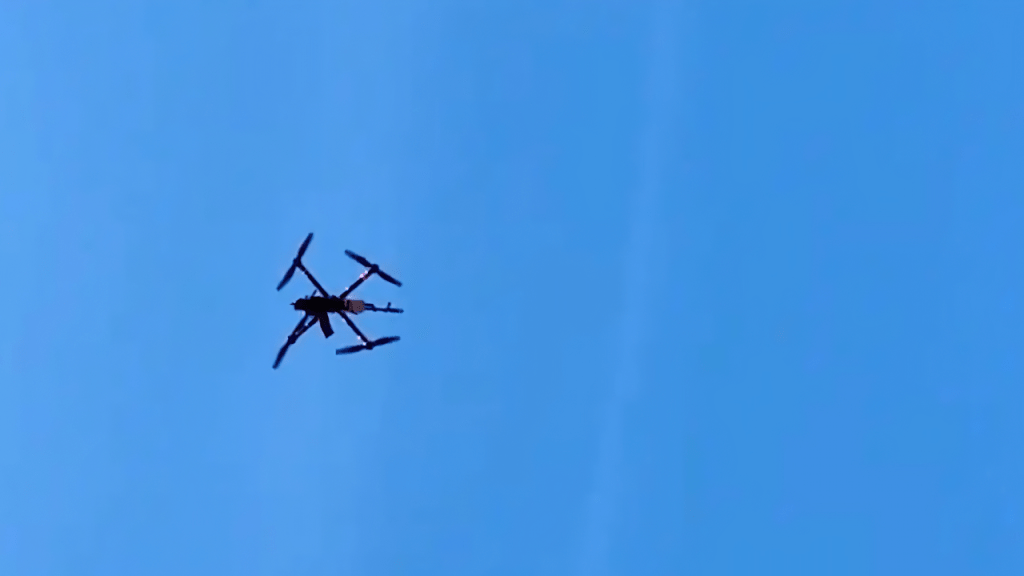
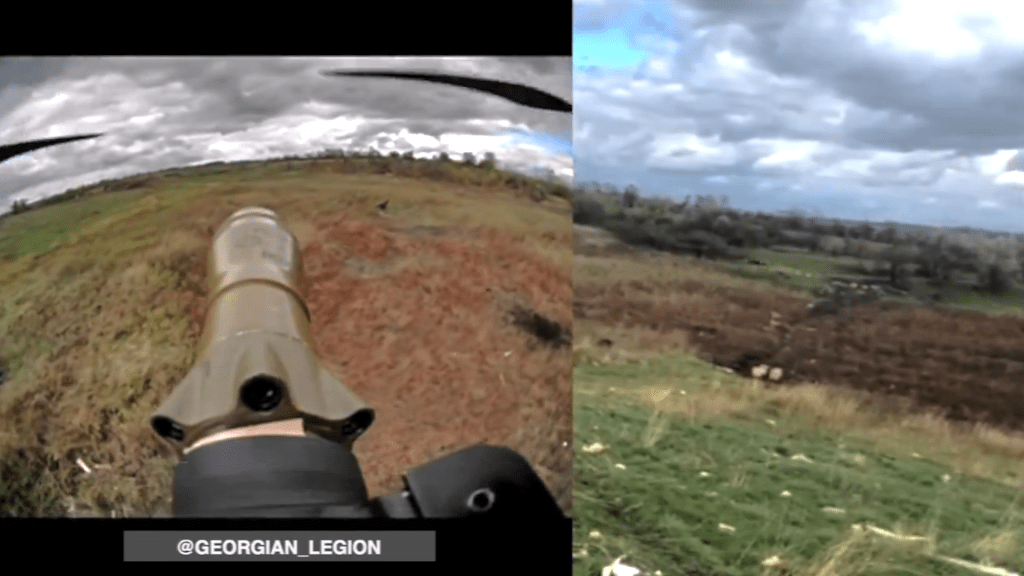
In a recent video/article I mentioned that the Ukraine-aligned Georgian Legion had mounted an RPG-7 on an drone and successfully tested it. Several days later video of another drone equipped with disposable RPG was shared. Posted on 10 September it shows a Queen Hornet FPV equipped with an RPG-18 anti-armour weapon. The drone is seen taking off at a range and hovering. The short clip does not show the RPG-18 being fired.

This isn’t the first time a drone with a disposable RPG mounted on it has been seen in Ukraine. In January 2023, a photograph surfaced of a heavy-lift DJI Agras T-30 armed with a gimbal mounted PK-pattern machine gun and a Bulgarian Bullspike anti-armour weapon. The photo has since been shared regularly but with no further context. One post claimed it was associated with a GUR unit (Solnyshko DRB).

Still showing Bulava’s RPG-FPV (via Wild Hornets)

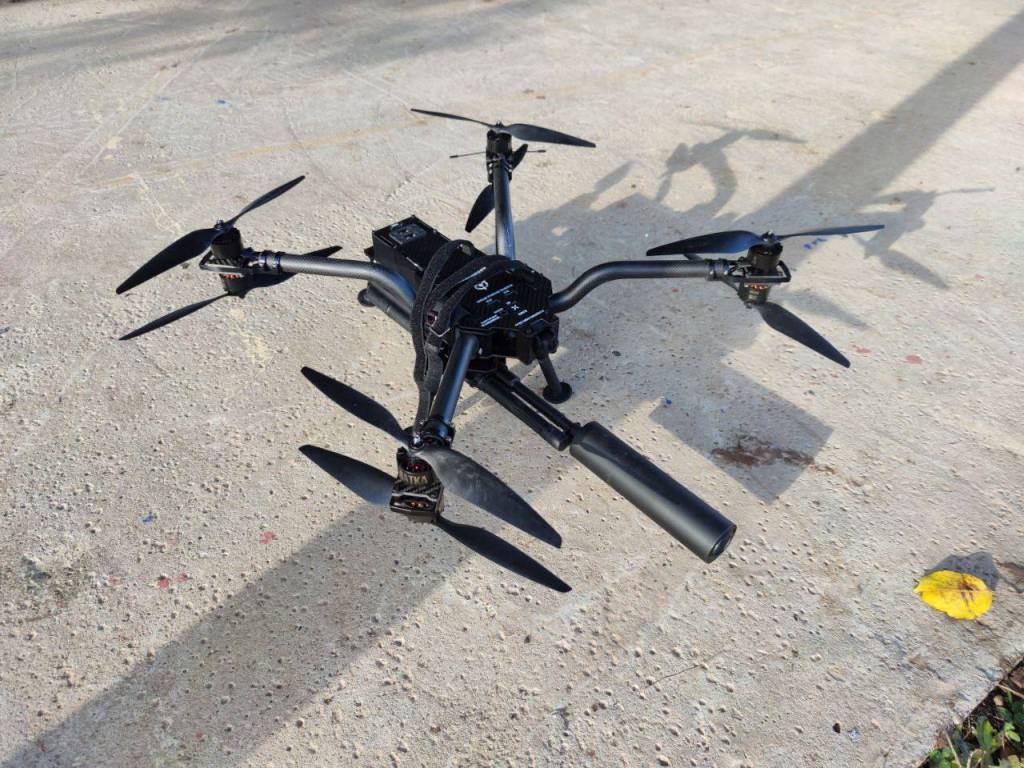
On 13 September, the Wild Hornets (a Ukrainian drone manufacturing organisation) shared a video of another RPG-FPV. The 56 second video, soundtracked by music from Terminator 2, showed a Queen Hornet drone equipped with what appears to be a Bulgarian Bullspike-AT. The efforts to develop an RPG-FPV based on the Queen Hornet appear to be lead by the Bulava drone team, part of the 3rd battalion of the Separate Presidential Brigade. The Bullspike-AT is produced by VMZ and fired a PG-22 pattern warhead, it has an effective range of 500m and can penetrate up to 400mm of armour. It weighs in at around 3.4kg, which is well within the Queen Hornet’s 9.5kg (21lbs) payload. The video shows the RPG-FPV take off and fire at a target down range. The drone can be seen pitching down to aim and then returning level before landing. This appears to have been a test of the assembly of the system to confirm the concept. In the photographs at the beginning of the video it appears that the weapon is fired by a servo arm which depresses the weapon’s trigger.

The Bulava RPG-FPV was again briefly seen in a fundraising video shared by the unit on 15 September. A close-up of the drone shows an RPG being attached to the drone with a zip-tie and the servo arm trigger mechanism is again visible.

On the 17 September, Wild Hornets shared another short video from the Bulava team, claiming that the team had been working on ‘calibrating the drone grenade launcher’ leading to the ‘shots [becoming] more accurate.’

RPG-FPVs are something that Russia has also begun developing with one showcased at the recent ARMY 2024 defence exposition. The drone appears to consist of a ‘Gortensia’ quadcopter armed with an RPG-26 anti-armour weapon. The drones was developed by Гортензия (Gortensia) and has a range of 10km and a payload of up to 6kg. On an info sheet shared at ARMY 2024 the company claims they are developing a system that allows the drone to jettison the empty RPG tube once it has fired. Images from ARMY 2024 show a dovetail-type attachment with a cradle attached to the RPG’s tube. On 18 August, the company shared two videos of test launches of the RPG-armed Gortensia drone. The videos show the drone take off and then the drone pitches down to aim and then fires. On firing the RPG’s tube detaches from the drone, seemingly using the weapon’s recoil to jettison it. In the second video, the drone travels further down range and fires on the target at a flatter trajectory, again the tube detaches from the drone.
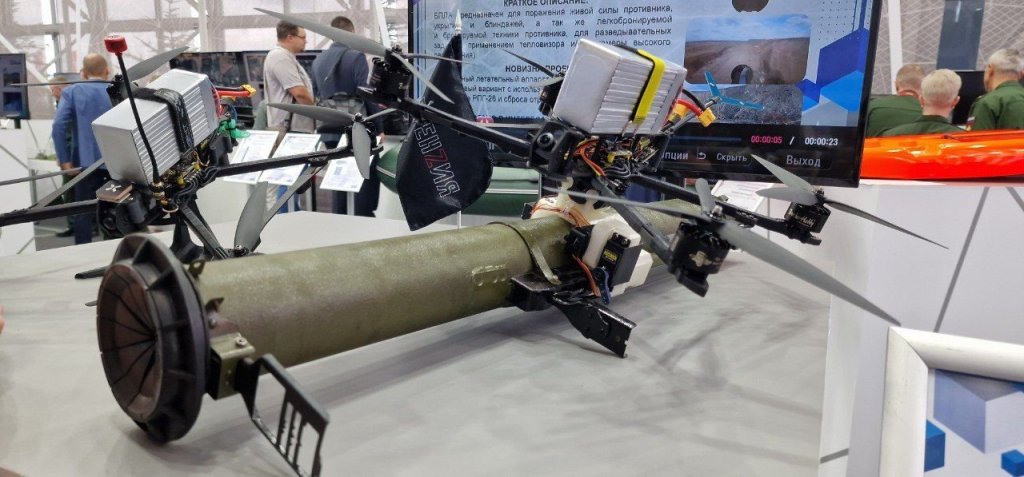
‘Gortensia’ quadcopter with an RPG-26 (via social media)

In mid-September Russian government organisation People’s Front shared a short video showing a octocopter armed with an RPG-22 being tested at the range. The RPG-22 is mounted on its side The long body of the extended RPG-22 body, at 850mm long, seems to somewhat impact the balance of the drone. Despite this the test fire appears to be successful, it’s unclear if this is a development by a drone company or a Russian unit.

While the RPG-FPV has more firepower than the gun-armed drones which have begun to emerge they are still a concept in development. The major positive of the RPG-FPV is the use of an anti-armour weapon which means that the drones aren’t a part of the munition, as in the case of the kamikaze/one-way FPVs, and can be reused. Similarly, the firing of the RPG’s warhead means the drone does not have to be directly over its target as with a bomber drone. This means the RPG-FPV can engage at stand-off distance and has increased survivability. The difficulty, as we’ve seen with the gun-armed drones, is aiming the launcher accurately. It’s still unclear if the drone operators are using the FPV’s primary camera to aim the weapon, this would mean the aiming process might be impacted by latency, the lack of a reticle and poor feed quality. One way to increase hit probability might be to mount the RPG vertically as Nammo did in their tests of an M72-armed drone back in late 2021. The technology and doctrine for RPG-FPVs is still developing so it will be interesting to see how these drones evolve and are employed tactically.

Update 22/9/24:

A video of an RPG-FPV, developed by an unspecified manufacturer, was shared by MASH with the caption (machine translated):

“Meet the new product in the SVO zone – the flying RPG-26. The drone has already passed tests and will soon delight the military on the front lines.

According to our information, the request for the device came from the Ugledar direction, since ours went on the offensive. The first batch of fighters is preparing for flights.

Features: stabilization mode, which does not throw the drone back after firing. On the contrary, the drone returns to the base to replace the grenade launcher. It is equipped with an RPG-26 with armor penetration of 440 mm (and the prospect of installing a “Shmel” flamethrower). It carries up to 12 kg, rises to 800 meters, flies 30 km at a speed of up to 60 km / h. The miracle costs about 600 thousand rubles, the footage shows winter tests.”

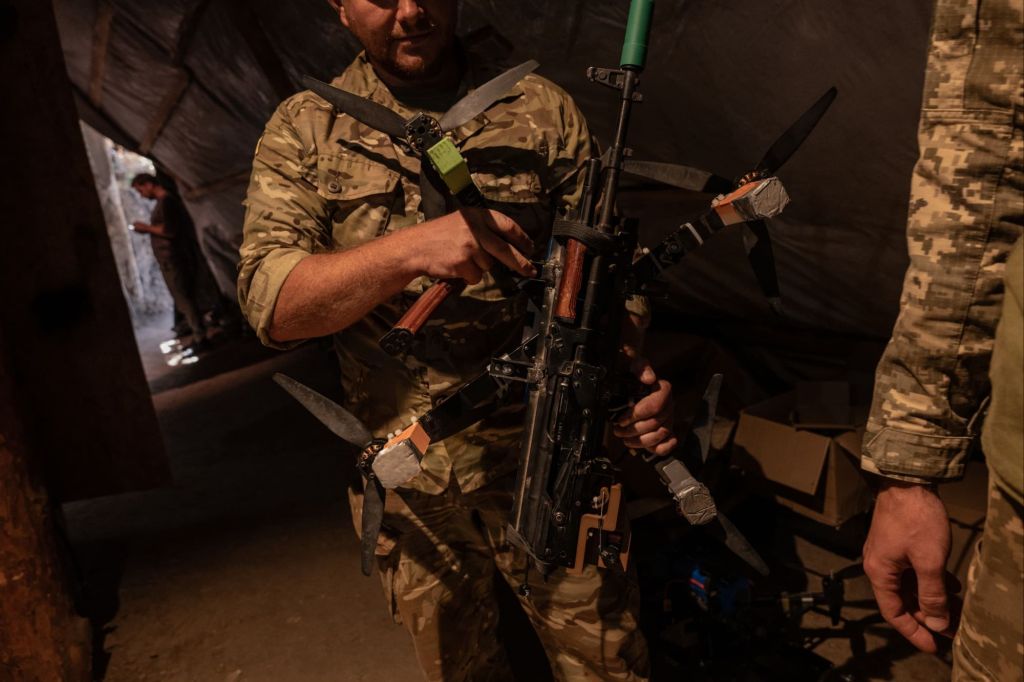
Update – 14/1024: A Wall Street Journal article (by Isabel Coles) featured photographs of one of the Ukrainian RPG-FPVs pictured during assembly and range testing.
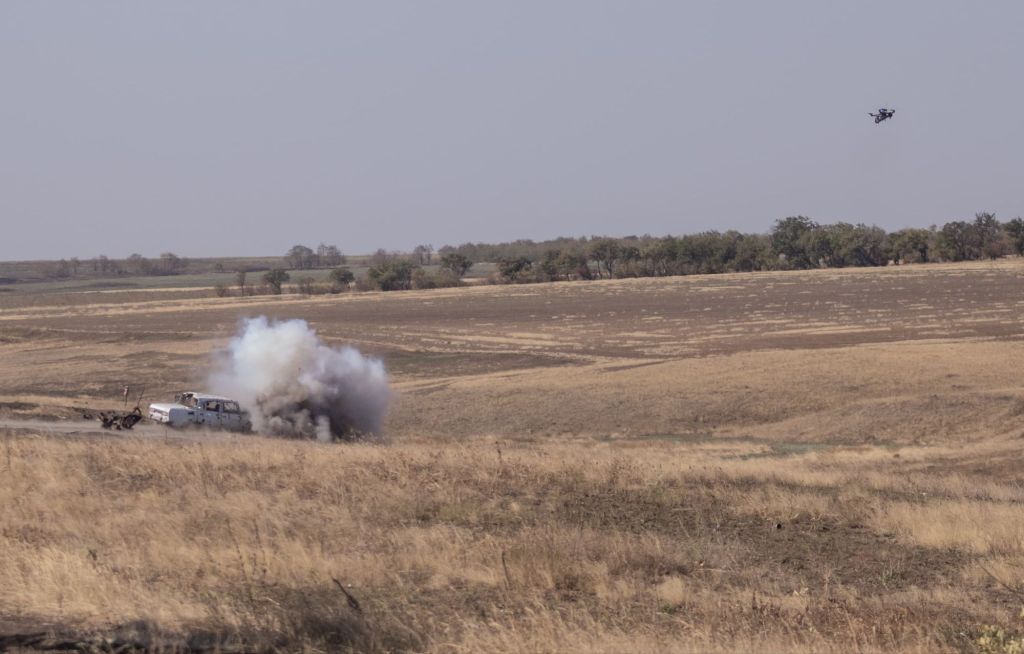
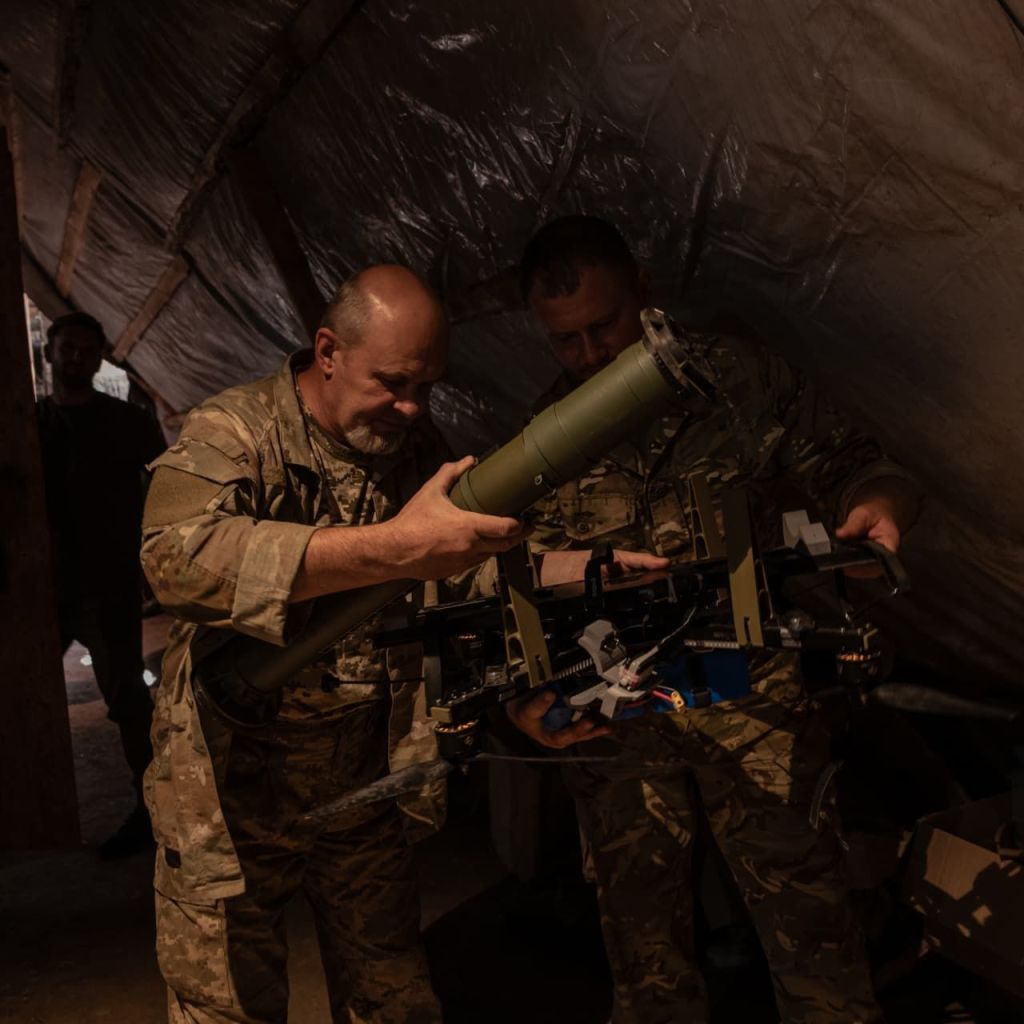
Update – 8/11/24: An ArmyInform video looking at the Bulava RPG-FPV. It appears to show the same test launch featured in earlier videos.

Update – 29/12/24: A Russia RPG-FPV fires on a building.

A Russian FPV hits a building with a rocket launcher, possibly an RPG-18.The rocket motor burns out completely in the launch tube, so the FPV isn’t hit by backblast.

Roy (@grandparoy2.bsky.social) 2024-12-29T03:59:36.520Z

Update – 15/2/25: Russian with RPG-FPV, no further information available. (Source)

Update – 28/2/25:
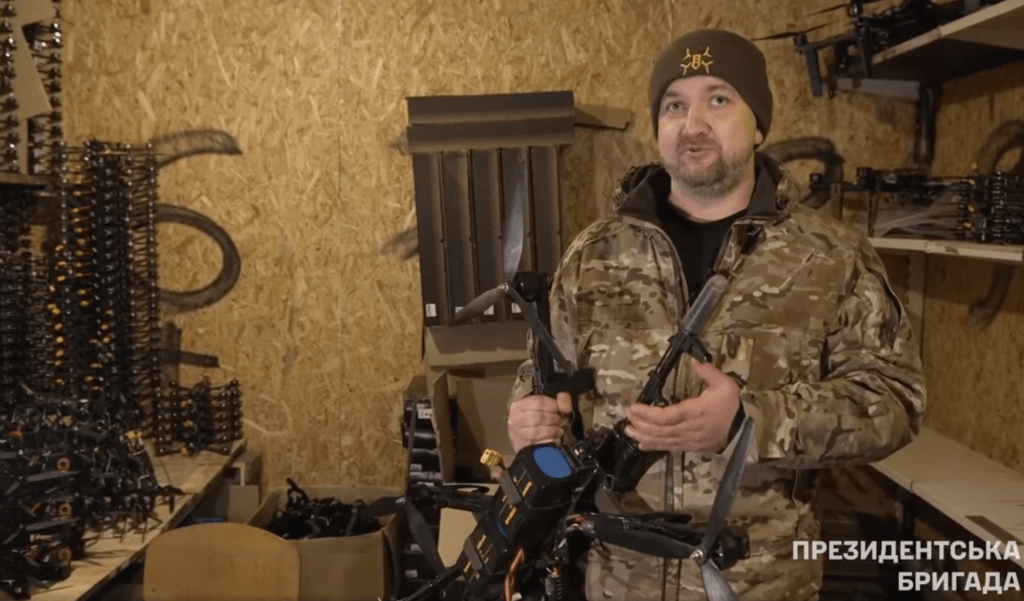
Ukraine’s Presidential Brigade shared a video showcasing the work of its drone teams. In the video an AK-FPV is highlighted.

Update – 13/5/25:

WildHornets have shared what they report is the first combat use of their RPG-armed drone.

Additional footage from WildHornets gives us a closer look at the drone:


Support Us: If you enjoyed this video and article please consider supporting our work here. We have some great perks available for Patreon Supporters – including early access to custom stickers and early access to videos! You can also find us on the History of Weapons & War app. Thank you for your support!
Russian Recoilless Gun Drone

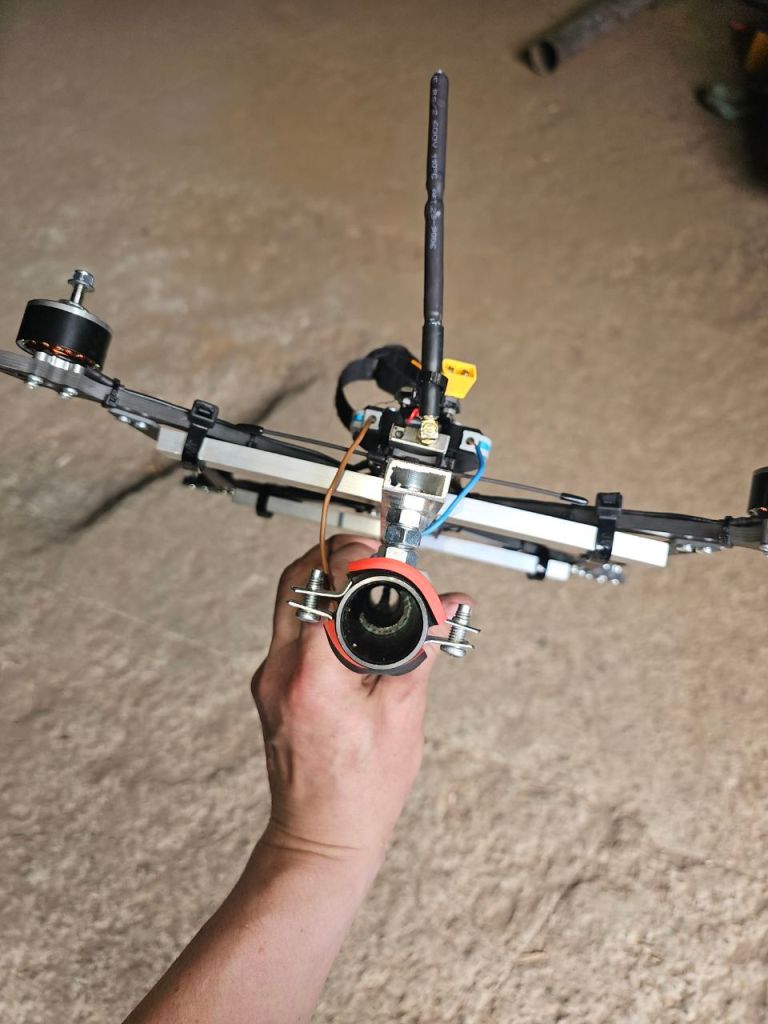
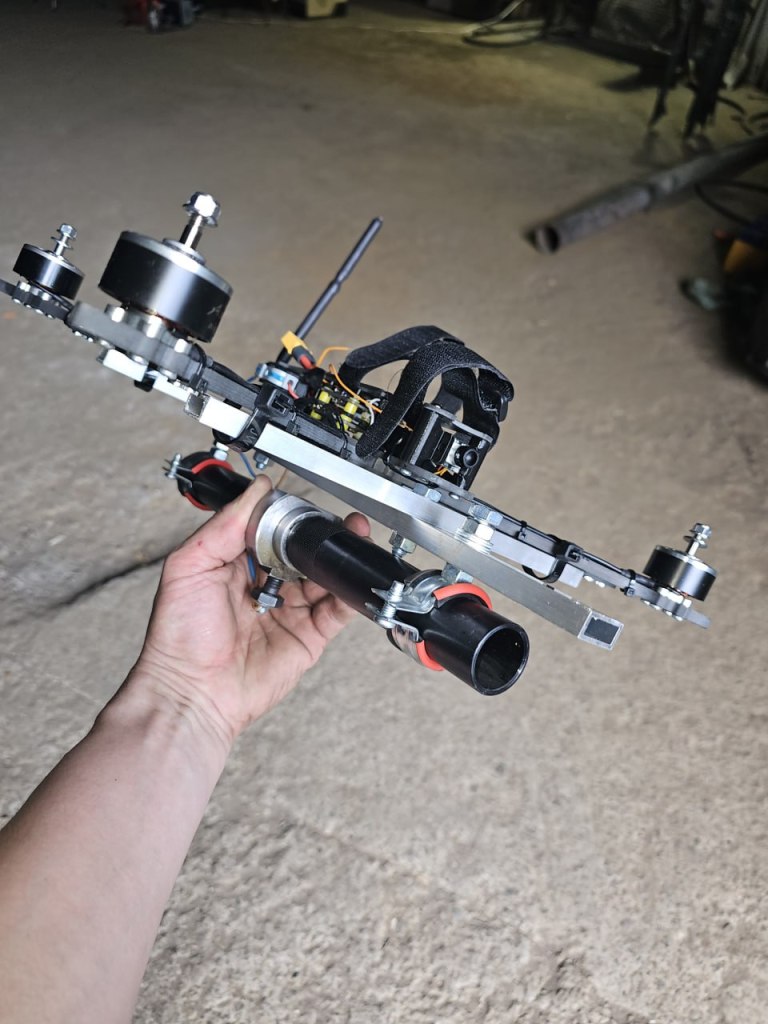
What is old is new. On 12 September, Russian journalist Alexander Kots shared a photograph of a recoilless gun mounted on a drone on his Kotsnews telegram channel channel. The idea certainly isn’t a new one. The use of a recoilless gun on aerial platforms dates back to the 1910s with the development of a series of recoilless guns by Commander Cleland Davis (US Navy) which were experimentally mounted on a variety of early military aircraft.

While the Davis Gun was abandoned shortly after the end of World War One, it was influential and its principle of operation was utilised in later recoilless guns. Essentially it worked along the premise of Newton’s Third Law of Motion, that all things have an equal and opposite reaction – as such Davis connected two guns back to back, with the backwards-facing gun firing a counter-weight.

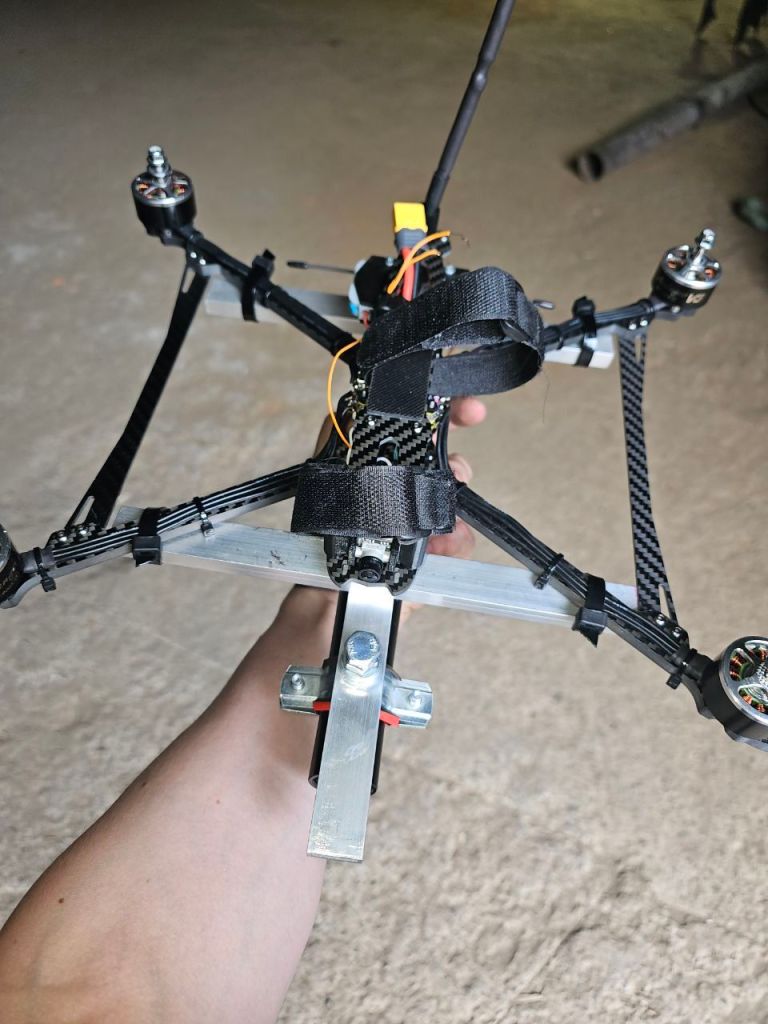
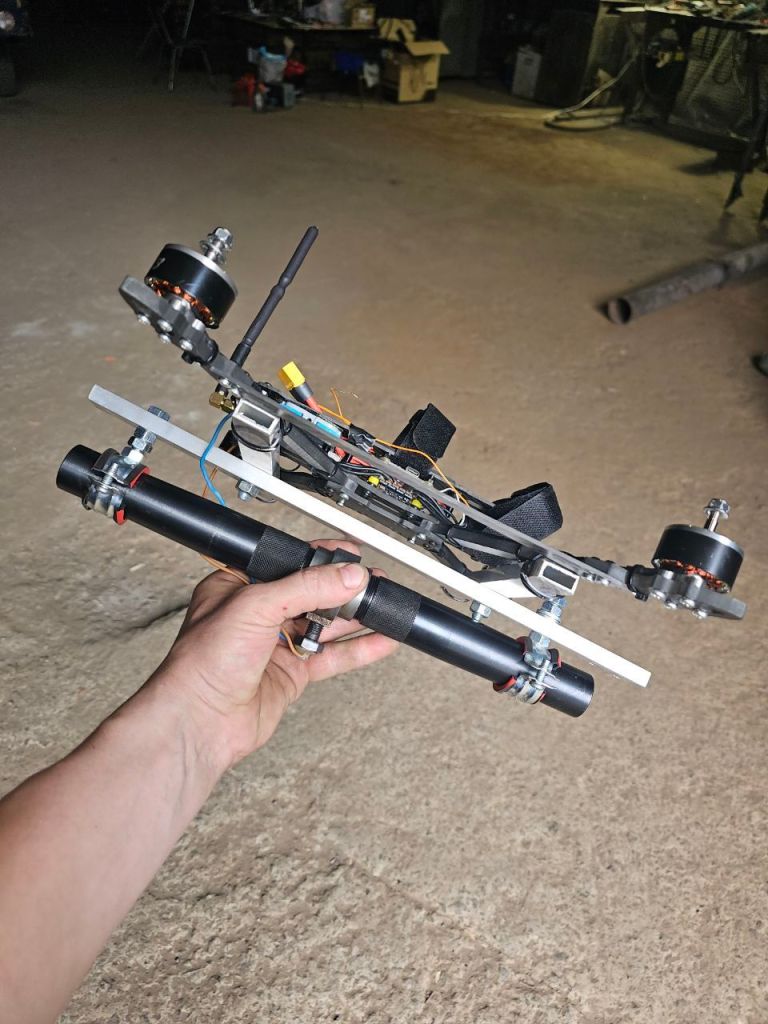
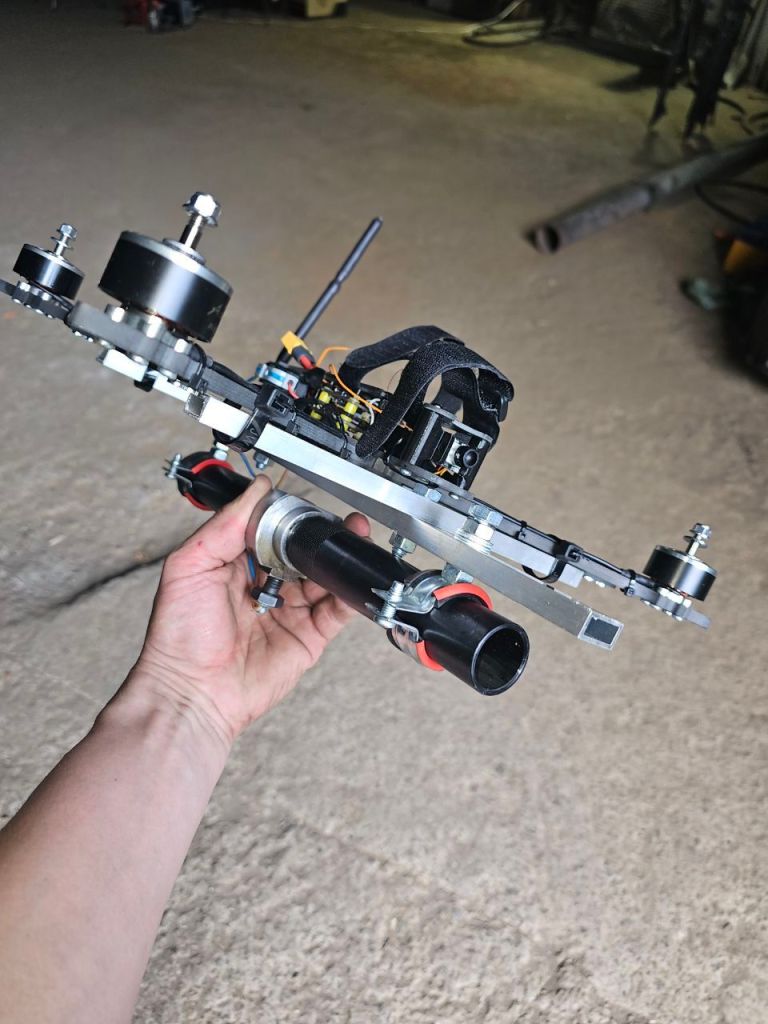
Fast-forward over a century and the concepts is again revisited in miniature and mounted on a quadcopter drone. Kots described the recoilless gun in his post [machine translated]: “Large pellets are loaded in the front, and an equal counterweight is loaded in the back. Thus, a lightweight drone becomes capable of hitting small air targets without the risk of falling into a tailspin from the recoil.” The image shared appears to show a smoothbore weapon attached to the drone with plumbing clamps with several electrical wires running to it, likely for ignition of the charge.

The developer of the drone, the chief engineer of Russian company BRT, shared Kots’ post commenting [machine translated]: “Our BUBUKA hit the news. I made it, taught it to shoot, and gave it to our FPV players… – I don’t fly myself, it’s not my thing,” lamenting that “since then – no response, no greetings. I’m not even sure they tried to test it.”

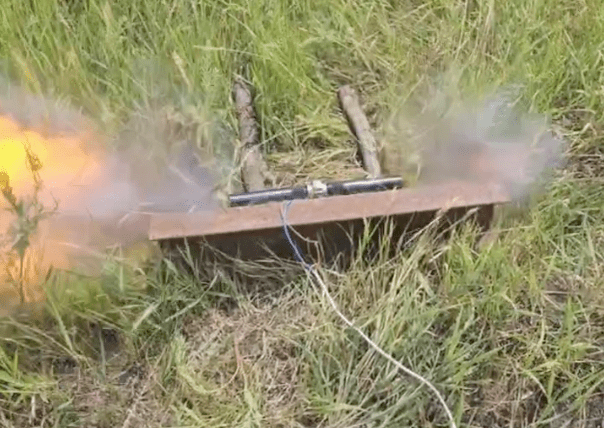
The engineer followed this up by posting footage of a test of the recoilless gun, explaining [machine translated]:

“The principle is fully functional. And it was used more than 100 years ago, on plywood planes.
On the FPV, as I see it, for its use, you need to solve 2 main problems: –
– aiming at the target.
– correct ballistics of shot ammunition (dispersion, mass of shot charge, etc.).”

In the video the engineer exclaims that ‘both ways [fired] just fine’ with the grass in front of both barrels clearly impacted by the test. It’s unclear what kind of shot the recoilless gun is designed to use likely a buckshot-style round able to spread on leaving the barrel and sufficiently damage a drone to down it.

It appears that the ‘Bubuka’ may not yet have been tested or used in the field but it is an interesting design mitigating one of the major factors of firing a weapon from a drone – recoil. However, the recoilless gun has a number of drawbacks too. While the gun allows the drone to engage another drone kinetically without having to fly into it, the gun only has one shot which magnifies the difficulty of scoring a hit when aiming is difficult. It’s clear, however, that the evolution of drone warfare in Ukraine is continuing at pace with recent efforts by both sides to mount AK-pattern rifles to drones and the increasing number of drone vs drone engagements occurring.

Update 28/12/24: It appears that a Ukrainian team has also developed a recoilless gun-armed drone. Several videos were shared of an FPV drone equipped with a pair of barrels which are likely electrically initiated and have counter-weight charges as the earlier Russian drone did. The videos show a series of successful drone vs drone engagements.

Update – 3/1/25: A telegram associated with BRT has posted additional photos of their recoilless gun drone developed in early 2024 and expressed Thier frustration that a similar Ukrainian drone has had operational success.


Support Us: If you enjoyed this video and article please consider supporting our work here. We have some great perks available for Patreon Supporters – including early access to custom stickers and early access to videos! You can also find us on the History of Weapons & War app. Thank you for your support!

Gun-Armed Drone in Ukraine

Drone warfare has evolved massively in Ukraine since the Russian invasion in February, moving from commercial drones spotting enemies and dropping grenades to First Person View (FPV) drones capable of taking out a tank. One branch of the possible evolution of drones which hasn’t seen a great deal of development or practical use is the mounting of small arms on them. 

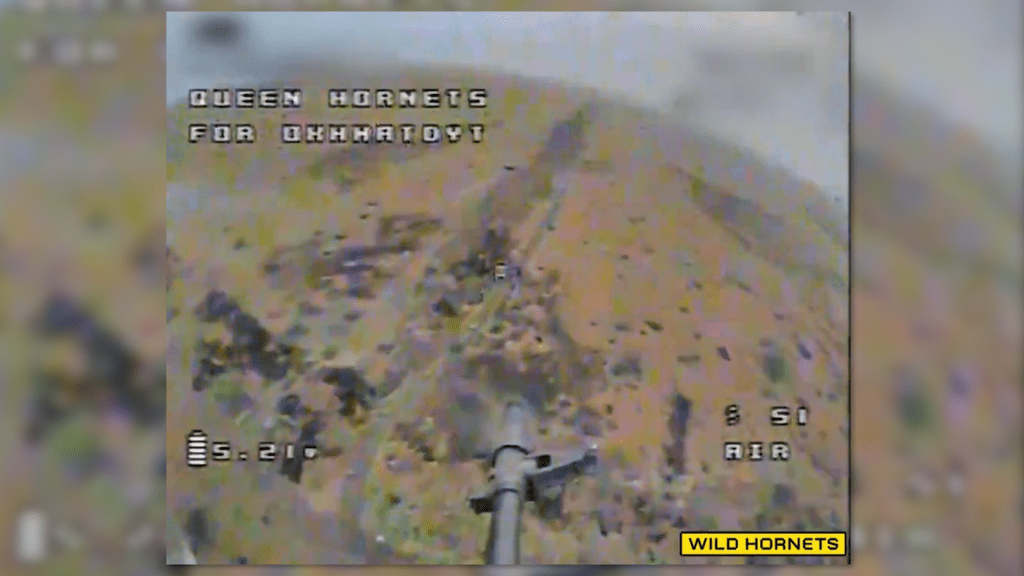
On 4 September, Wild Hornets, a Ukrainian drone manufacturing initiative, shared footage of what they claim is the first use of their gun-armed drone in combat. The video was shared with the caption [machine translated]: “this time, the first combat deployment was carried out—targeting a position with Russian forces. This test indicated the direction in which this project should move forward.”

The grainy footage from an FPV drone’s camera shows the barrel of an AK-74, mounted tilted to the right, at the bottom center of the frame. It is seen firing several full-auto bursts towards the ground but it’s difficult to see at what exactly. The drone is believed to be operated by the Bulava (Mace) drone team, which is believed to be attached to the Ukrainian Presidential Brigade.

Wild Hornets note that the rifle is mounted on one of their largest FPV drones, a Queen Hornet. The Queen Hornet FPVs can reportedly carry up to 9.5kg (21lbs) of payload so an AK-74 with a loaded magazine (even a 40-round RPK-74 magazine) would be no issue. The drone also has to contend with the rifle’s recoil and from the video it appears that on firing the drone’s flight is only slowed momentarily. The Queen Hornet was unveiled in March 2024, and began to appear on the frontline in July and have been used not only to drop munitions but to also deliver smaller drones downrange – acting as a carrier, and also as signal repeaters to enable other drones to travel further from their operators.  

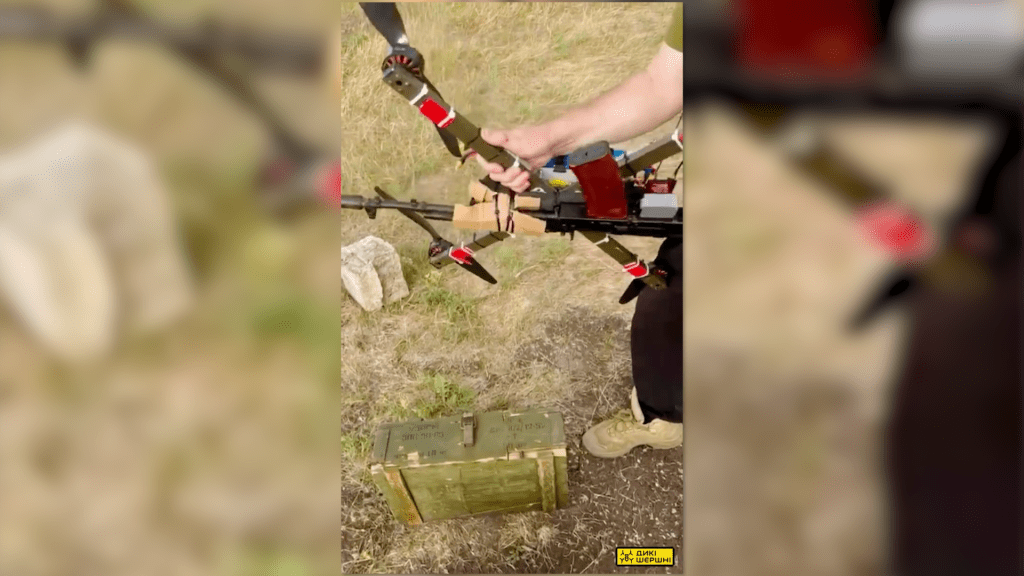
The gun-armed FPV was first seen in a video shared on 16 August. Wild Hornets shared a video showing a Queen Hornet returning to Ukrainian lines with an AK-74 hanging below it – Wild Hornets claim that the rifle was a Russian AK salvaged with a magnet. A montage then shows the salvaged rifle being mounted on a Queen Hornet, with its stock removed to save weight, and test fired. The rifle appears to be held onto the drone with zip ties and a small grey box encloses the trigger – likely containing a servo to pull the trigger.

There have been efforts to mount firearms on drones outside of Ukraine and there is also some earlier evidence of Ukrainian drone teams attempting to mount guns on the large Baba Yaga heavy drones earlier with imagery appearing in April of a large, possibly gun-armed, drone being filmed from above. In May, footage of what could also lay claim to the first use of a gun-armed drone in combat was shared. The footage was shared by the 74th Battalion of the 102nd Territorial Defense Brigade and shows a Baba Yaga drone equipped with a firearm, again firing bursts, the weapon appears to have a sighting post attached to allow the weapon to be aimed using the drone’s camera. The footage of the drone firing on Russian positions was reportedly filmed northwest of Marfopil, in Zaporizhzhia.

There is also evidence that the Russians have experimented similarly with gun-armed drones with Russian drone company Molot Aero sharing a video of their Vatya X8 drone equipped with a suppressed AK-74 in June. There is no evidence currently available to suggest this configuration has yet been used in the field. Photographs of the drone show a similar configuration to that assembled by Wild Hornets with a stock-less AK-74 mounted on its side on the underside of the drone. The footage shows the Molot Aero drone hovering over a range successfully shooting several balloon targets at relatively close range before it lands.

Most recently, in direct response to Wild Hornets’ video the Georigian Legion, a unit composed of volunteers from Georgia fighting for Ukraine, shared a short video of a drone armed with an RPG-7. The footage appears to show the launcher being tested but on speaking with the Georgian Legion they confirmed that the RPG-FPV has been used during combat operations. They have reportedly used it against vehicles, fixed positions and infantry but are looking to improve the design with better optics and increased engagement range.  

One key reason we probably haven’t seen more gun-equipped drones is that mounting a firearm is a relatively poor use of a heavy lift drone. These larger, more powerful drones can be better utilised as bombers carrying large payloads over significant distances. Bombs dropped on vehicles and defensive positions have more impact than a drone equipped with a rifle-calibre firearm. It is likely very difficult to accurately aim the weapon and the magazine capacity is limited. To aim effectively the drone will probably have to fly lower than it would when bombing, thus making it more susceptible to fire from the ground.  

Update – 11/9/24:

Update – 14/10/24: A Wall Street Journal article (by Isabel Coles) featured a photograph of a drone mounted with a suppressed AK74.

Update – 22/11/24:


Support Us: If you enjoyed this video and article please consider supporting our work here. We have some great perks available for Patreon Supporters – including early access to custom stickers and early access to videos! You can also find us on the History of Weapons & War app. Thank you for your support!