RPG-FPV – Rocket Launcher Drones in Ukraine

In a recent video/article I mentioned that the Ukraine-aligned Georgian Legion had mounted an RPG-7 on an drone and successfully tested it. Several days later video of another drone equipped with disposable RPG was shared. Posted on 10 September it shows a Queen Hornet FPV equipped with an RPG-18 anti-armour weapon. The drone is seen taking off at a range and hovering. The short clip does not show the RPG-18 being fired.

This isn’t the first time a drone with a disposable RPG mounted on it has been seen in Ukraine. In January 2023, a photograph surfaced of a heavy-lift DJI Agras T-30 armed with a gimbal mounted PK-pattern machine gun and a Bulgarian Bullspike anti-armour weapon. The photo has since been shared regularly but with no further context. One post claimed it was associated with a GUR unit (Solnyshko DRB).

Still showing Bulava’s RPG-FPV (via Wild Hornets)

On 13 September, the Wild Hornets (a Ukrainian drone manufacturing organisation) shared a video of another RPG-FPV. The 56 second video, soundtracked by music from Terminator 2, showed a Queen Hornet drone equipped with what appears to be a Bulgarian Bullspike-AT. The efforts to develop an RPG-FPV based on the Queen Hornet appear to be lead by the Bulava drone team, part of the 3rd battalion of the Separate Presidential Brigade. The Bullspike-AT is produced by VMZ and fired a PG-22 pattern warhead, it has an effective range of 500m and can penetrate up to 400mm of armour. It weighs in at around 3.4kg, which is well within the Queen Hornet’s 9.5kg (21lbs) payload. The video shows the RPG-FPV take off and fire at a target down range. The drone can be seen pitching down to aim and then returning level before landing. This appears to have been a test of the assembly of the system to confirm the concept. In the photographs at the beginning of the video it appears that the weapon is fired by a servo arm which depresses the weapon’s trigger.

The Bulava RPG-FPV was again briefly seen in a fundraising video shared by the unit on 15 September. A close-up of the drone shows an RPG being attached to the drone with a zip-tie and the servo arm trigger mechanism is again visible.

On the 17 September, Wild Hornets shared another short video from the Bulava team, claiming that the team had been working on ‘calibrating the drone grenade launcher’ leading to the ‘shots [becoming] more accurate.’

RPG-FPVs are something that Russia has also begun developing with one showcased at the recent ARMY 2024 defence exposition. The drone appears to consist of a ‘Gortensia’ quadcopter armed with an RPG-26 anti-armour weapon. The drones was developed by Гортензия (Gortensia) and has a range of 10km and a payload of up to 6kg. On an info sheet shared at ARMY 2024 the company claims they are developing a system that allows the drone to jettison the empty RPG tube once it has fired. Images from ARMY 2024 show a dovetail-type attachment with a cradle attached to the RPG’s tube. On 18 August, the company shared two videos of test launches of the RPG-armed Gortensia drone. The videos show the drone take off and then the drone pitches down to aim and then fires. On firing the RPG’s tube detaches from the drone, seemingly using the weapon’s recoil to jettison it. In the second video, the drone travels further down range and fires on the target at a flatter trajectory, again the tube detaches from the drone.
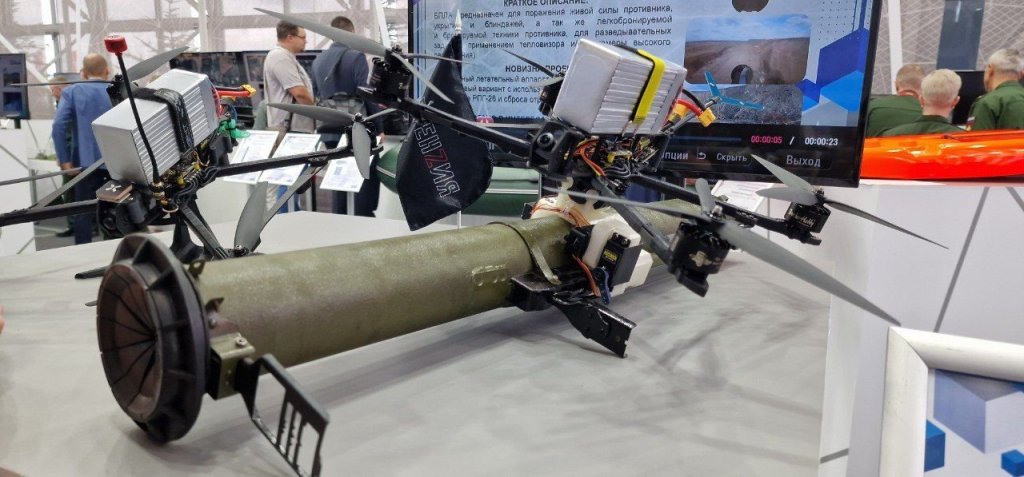
‘Gortensia’ quadcopter with an RPG-26 (via social media)

In mid-September Russian government organisation People’s Front shared a short video showing a octocopter armed with an RPG-22 being tested at the range. The RPG-22 is mounted on its side The long body of the extended RPG-22 body, at 850mm long, seems to somewhat impact the balance of the drone. Despite this the test fire appears to be successful, it’s unclear if this is a development by a drone company or a Russian unit.

While the RPG-FPV has more firepower than the gun-armed drones which have begun to emerge they are still a concept in development. The major positive of the RPG-FPV is the use of an anti-armour weapon which means that the drones aren’t a part of the munition, as in the case of the kamikaze/one-way FPVs, and can be reused. Similarly, the firing of the RPG’s warhead means the drone does not have to be directly over its target as with a bomber drone. This means the RPG-FPV can engage at stand-off distance and has increased survivability. The difficulty, as we’ve seen with the gun-armed drones, is aiming the launcher accurately. It’s still unclear if the drone operators are using the FPV’s primary camera to aim the weapon, this would mean the aiming process might be impacted by latency, the lack of a reticle and poor feed quality. One way to increase hit probability might be to mount the RPG vertically as Nammo did in their tests of an M72-armed drone back in late 2021. The technology and doctrine for RPG-FPVs is still developing so it will be interesting to see how these drones evolve and are employed tactically.

Update 22/9/24:

A video of an RPG-FPV, developed by an unspecified manufacturer, was shared by MASH with the caption (machine translated):

“Meet the new product in the SVO zone – the flying RPG-26. The drone has already passed tests and will soon delight the military on the front lines.

According to our information, the request for the device came from the Ugledar direction, since ours went on the offensive. The first batch of fighters is preparing for flights.

Features: stabilization mode, which does not throw the drone back after firing. On the contrary, the drone returns to the base to replace the grenade launcher. It is equipped with an RPG-26 with armor penetration of 440 mm (and the prospect of installing a “Shmel” flamethrower). It carries up to 12 kg, rises to 800 meters, flies 30 km at a speed of up to 60 km / h. The miracle costs about 600 thousand rubles, the footage shows winter tests.”

Update – 14/1024: A Wall Street Journal article (by Isabel Coles) featured photographs of one of the Ukrainian RPG-FPVs pictured during assembly and range testing.
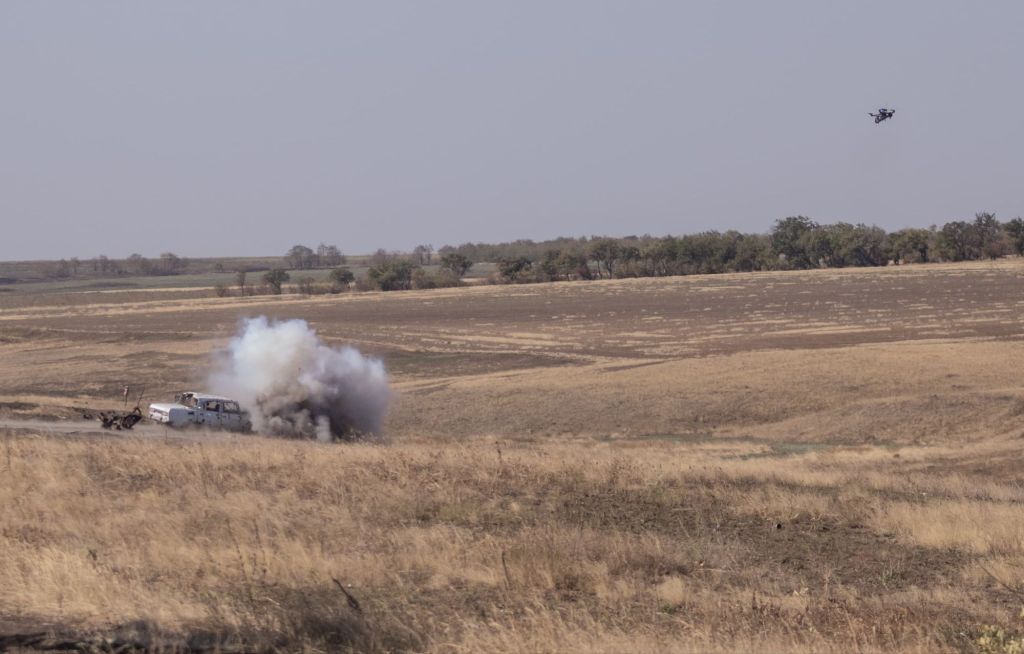
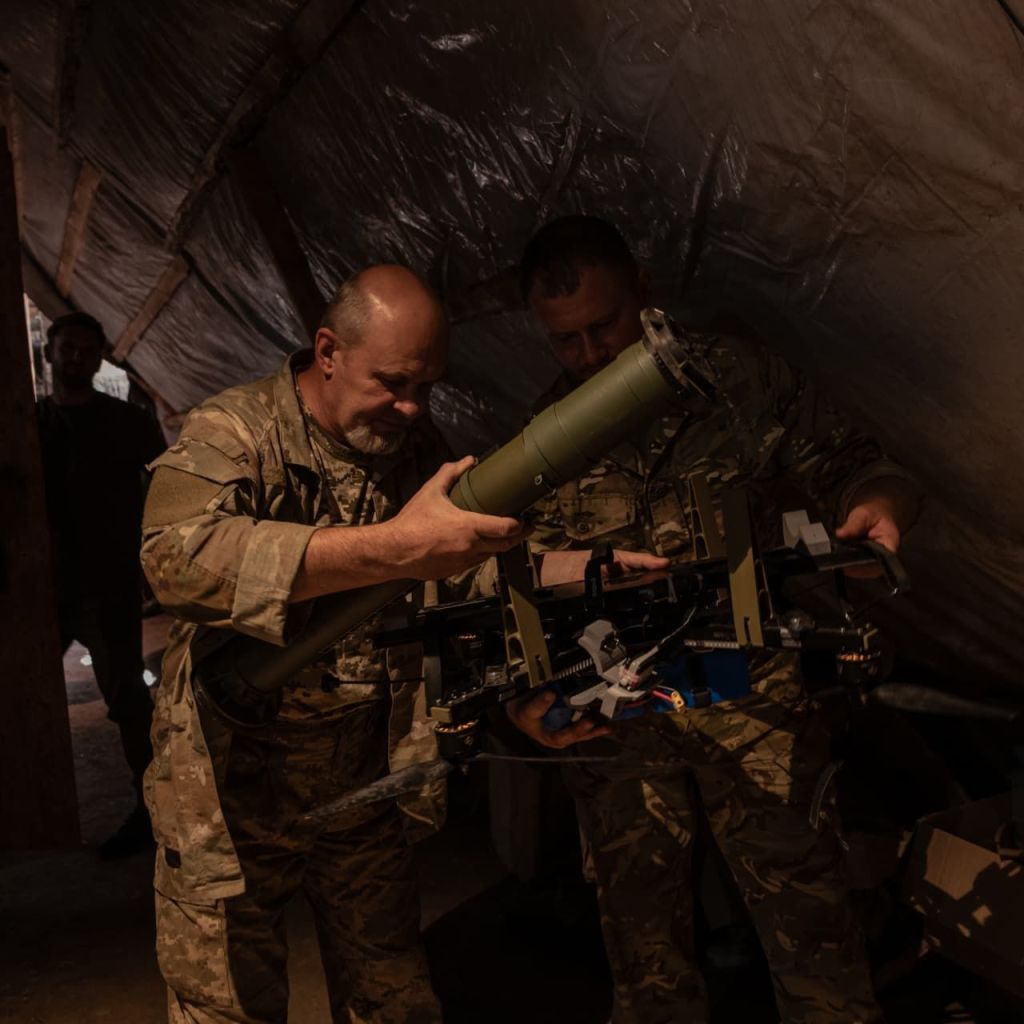
Update – 8/11/24: An ArmyInform video looking at the Bulava RPG-FPV. It appears to show the same test launch featured in earlier videos.

Update – 29/12/24: A Russia RPG-FPV fires on a building.

A Russian FPV hits a building with a rocket launcher, possibly an RPG-18.The rocket motor burns out completely in the launch tube, so the FPV isn’t hit by backblast.

Roy (@grandparoy2.bsky.social) 2024-12-29T03:59:36.520Z

Update – 15/2/25: Russian with RPG-FPV, no further information available. (Source)

Update – 28/2/25:
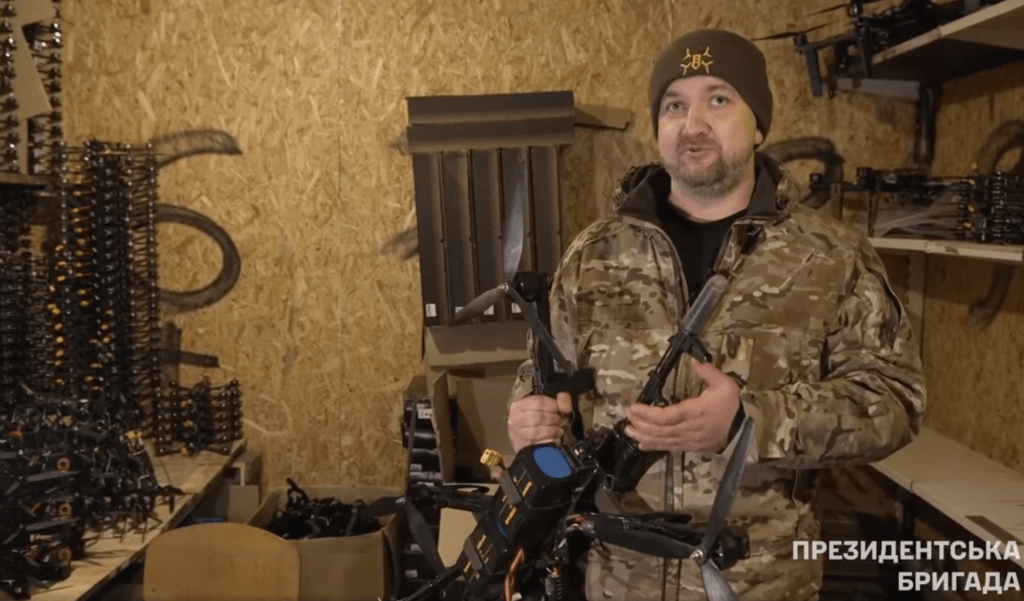
Ukraine’s Presidential Brigade shared a video showcasing the work of its drone teams. In the video an AK-FPV is highlighted.

Update – 13/5/25:

WildHornets have shared what they report is the first combat use of their RPG-armed drone.

Additional footage from WildHornets gives us a closer look at the drone:


Support Us: If you enjoyed this video and article please consider supporting our work here. We have some great perks available for Patreon Supporters – including early access to custom stickers and early access to videos! You can also find us on the History of Weapons & War app. Thank you for your support!
Russian Recoilless Gun Drone

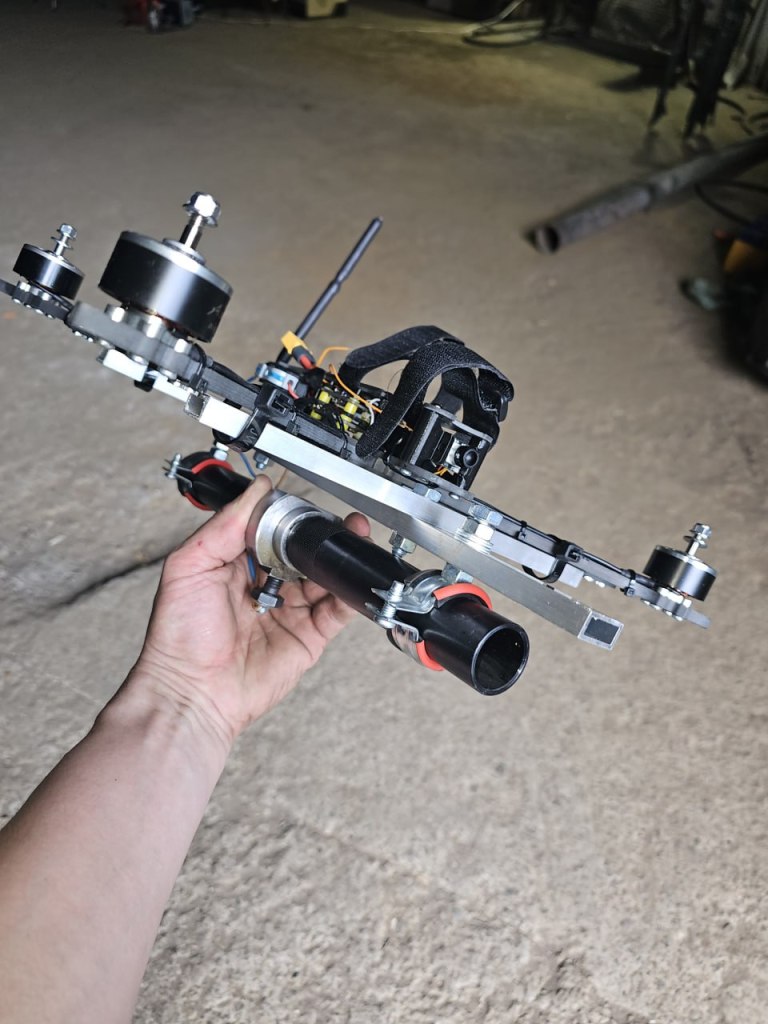
What is old is new. On 12 September, Russian journalist Alexander Kots shared a photograph of a recoilless gun mounted on a drone on his Kotsnews telegram channel channel. The idea certainly isn’t a new one. The use of a recoilless gun on aerial platforms dates back to the 1910s with the development of a series of recoilless guns by Commander Cleland Davis (US Navy) which were experimentally mounted on a variety of early military aircraft.

While the Davis Gun was abandoned shortly after the end of World War One, it was influential and its principle of operation was utilised in later recoilless guns. Essentially it worked along the premise of Newton’s Third Law of Motion, that all things have an equal and opposite reaction – as such Davis connected two guns back to back, with the backwards-facing gun firing a counter-weight.

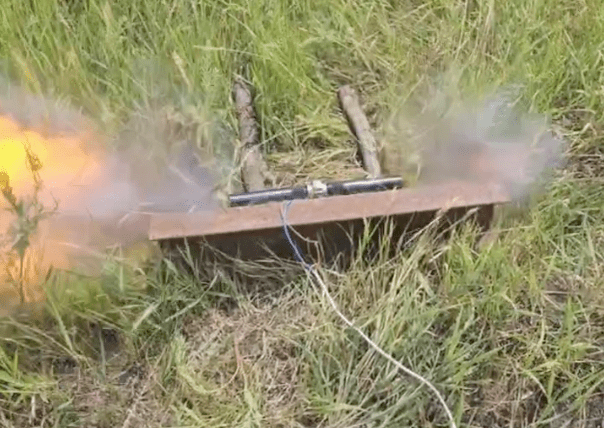
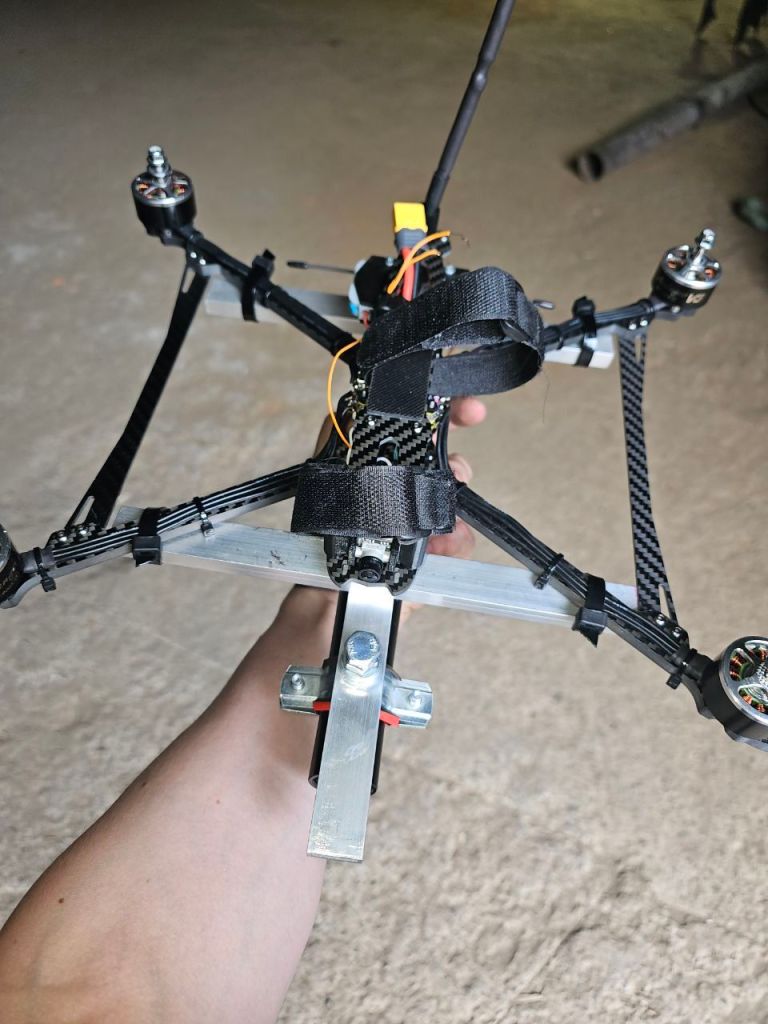
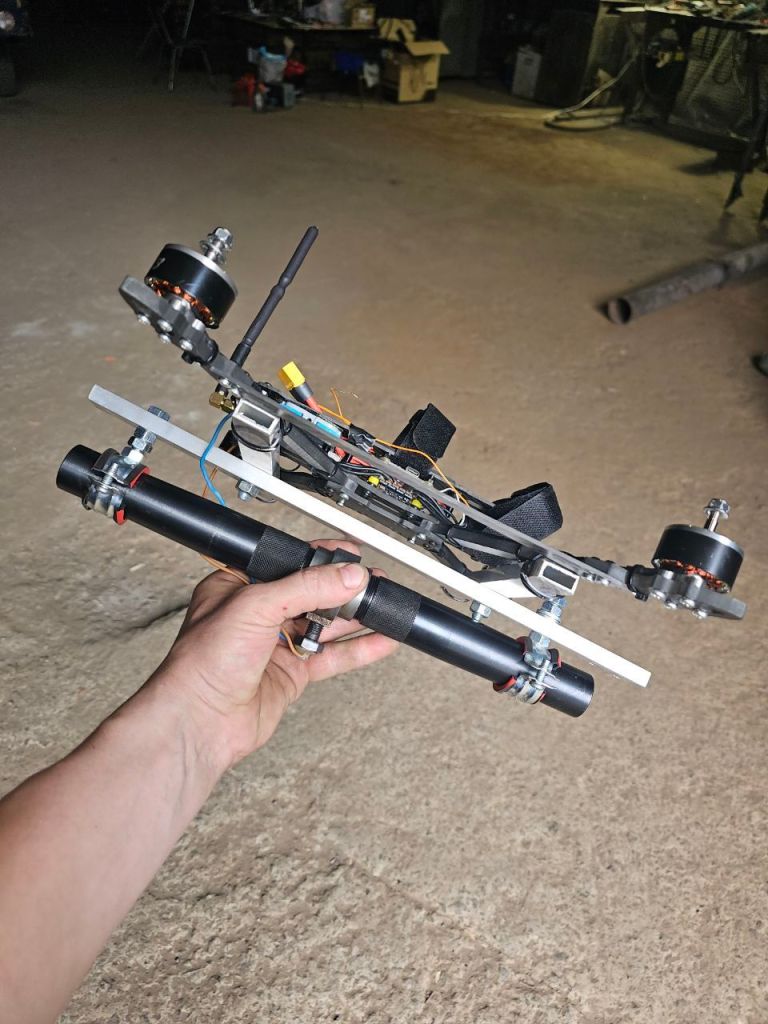
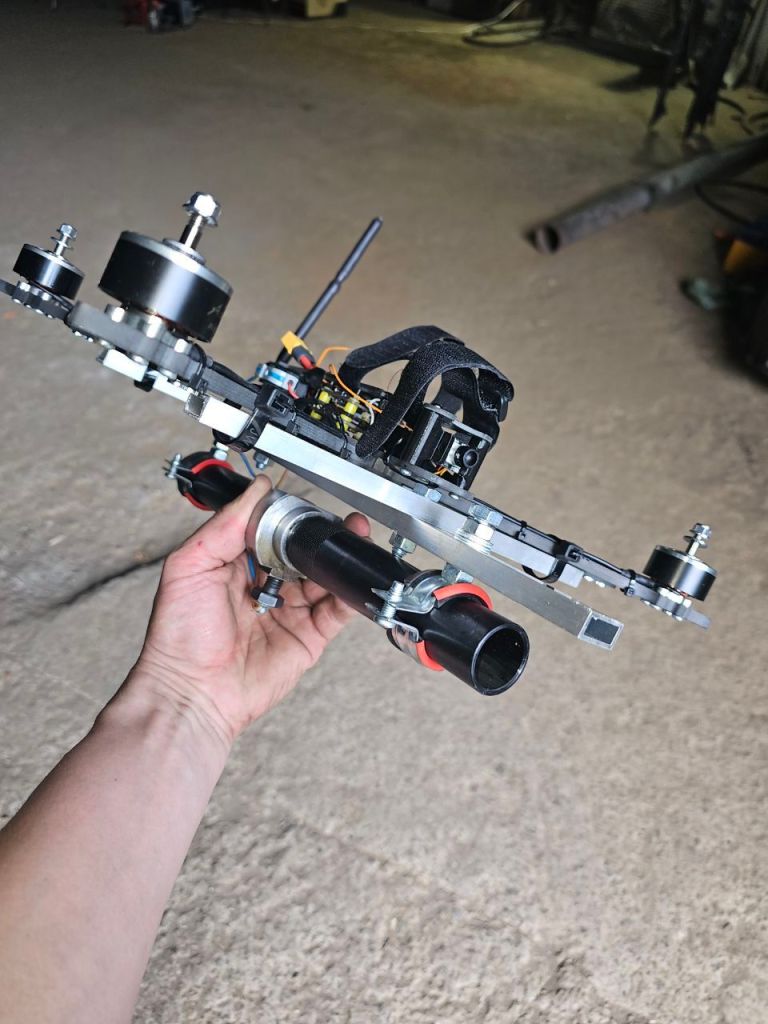
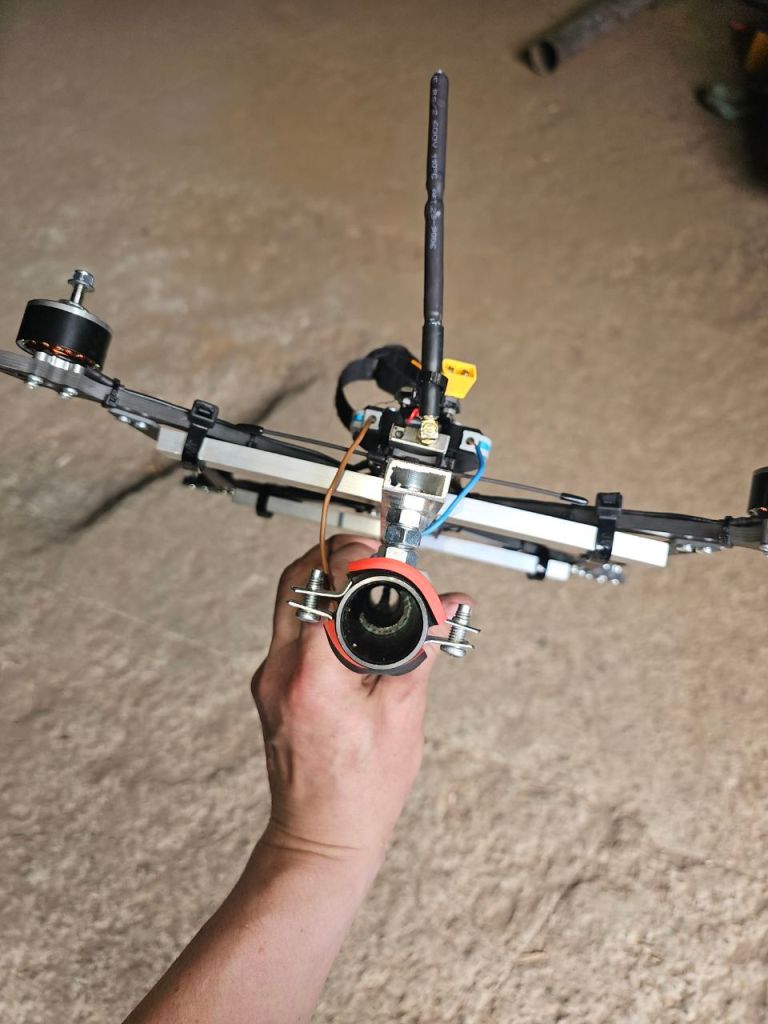
Fast-forward over a century and the concepts is again revisited in miniature and mounted on a quadcopter drone. Kots described the recoilless gun in his post [machine translated]: “Large pellets are loaded in the front, and an equal counterweight is loaded in the back. Thus, a lightweight drone becomes capable of hitting small air targets without the risk of falling into a tailspin from the recoil.” The image shared appears to show a smoothbore weapon attached to the drone with plumbing clamps with several electrical wires running to it, likely for ignition of the charge.

The developer of the drone, the chief engineer of Russian company BRT, shared Kots’ post commenting [machine translated]: “Our BUBUKA hit the news. I made it, taught it to shoot, and gave it to our FPV players… – I don’t fly myself, it’s not my thing,” lamenting that “since then – no response, no greetings. I’m not even sure they tried to test it.”

The engineer followed this up by posting footage of a test of the recoilless gun, explaining [machine translated]:

“The principle is fully functional. And it was used more than 100 years ago, on plywood planes.
On the FPV, as I see it, for its use, you need to solve 2 main problems: –
– aiming at the target.
– correct ballistics of shot ammunition (dispersion, mass of shot charge, etc.).”

In the video the engineer exclaims that ‘both ways [fired] just fine’ with the grass in front of both barrels clearly impacted by the test. It’s unclear what kind of shot the recoilless gun is designed to use likely a buckshot-style round able to spread on leaving the barrel and sufficiently damage a drone to down it.

It appears that the ‘Bubuka’ may not yet have been tested or used in the field but it is an interesting design mitigating one of the major factors of firing a weapon from a drone – recoil. However, the recoilless gun has a number of drawbacks too. While the gun allows the drone to engage another drone kinetically without having to fly into it, the gun only has one shot which magnifies the difficulty of scoring a hit when aiming is difficult. It’s clear, however, that the evolution of drone warfare in Ukraine is continuing at pace with recent efforts by both sides to mount AK-pattern rifles to drones and the increasing number of drone vs drone engagements occurring.

Update 28/12/24: It appears that a Ukrainian team has also developed a recoilless gun-armed drone. Several videos were shared of an FPV drone equipped with a pair of barrels which are likely electrically initiated and have counter-weight charges as the earlier Russian drone did. The videos show a series of successful drone vs drone engagements.

Update – 3/1/25: A telegram associated with BRT has posted additional photos of their recoilless gun drone developed in early 2024 and expressed Thier frustration that a similar Ukrainian drone has had operational success.


Support Us: If you enjoyed this video and article please consider supporting our work here. We have some great perks available for Patreon Supporters – including early access to custom stickers and early access to videos! You can also find us on the History of Weapons & War app. Thank you for your support!

Ukraine’s Handheld FPV Killer?

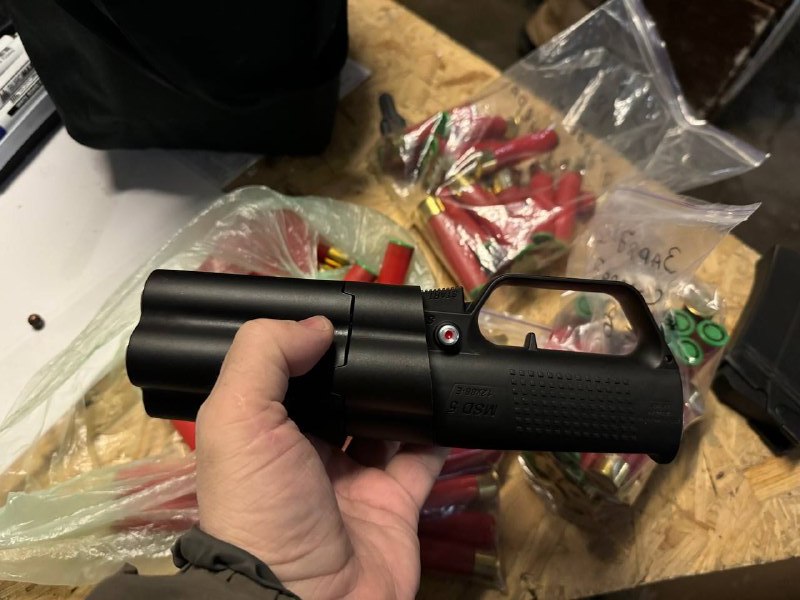
This is the MSD-5, a small, hand-held shotgun-like device which has been suggested as an anti-drone weapon. With the massive increase in UAV and (first person view) FPV drone use various means of combatting them ranging from electronic warfare to simple hunting shotguns have been deployed by both sides.

In recent weeks a number of Ukrainian social media accounts have shared the idea of using the MSD-5 as a short-range defence against diving FPV drones. I hadn’t seen the weapon before and none of the posts about it explicitly mentioned its designation or manufacturer. I did some research and found that the small hand gun was called the MSD-5 and is manufactured by Stellarium SV, a company based in Chernihiv, in northern Ukraine.

An MSD-5 (via Sergey Flash)

In January, Sergey Flash (a Ukrainian serviceman and communication specialist) posted a video discussing the need for an immediate defence against FPVs and held up an MSD-5 describing it as “a possible way of protection” but emphasising that his aim wasn’t to advertise the device but simply call “attention to a possible remedy for the soldiers”.

Stellarium SV’s website explains that rather than being a weapon it is primarily sold as a signalling device with five different 12×88 cartridges available, two signalling cartridge types, a noise cartridge for scaring off animals, a cartridge which can extinguish flames and one for spraying plants to treat and protect them from various types of pests and diseases.

Here is a promotional video for the MSD-5:

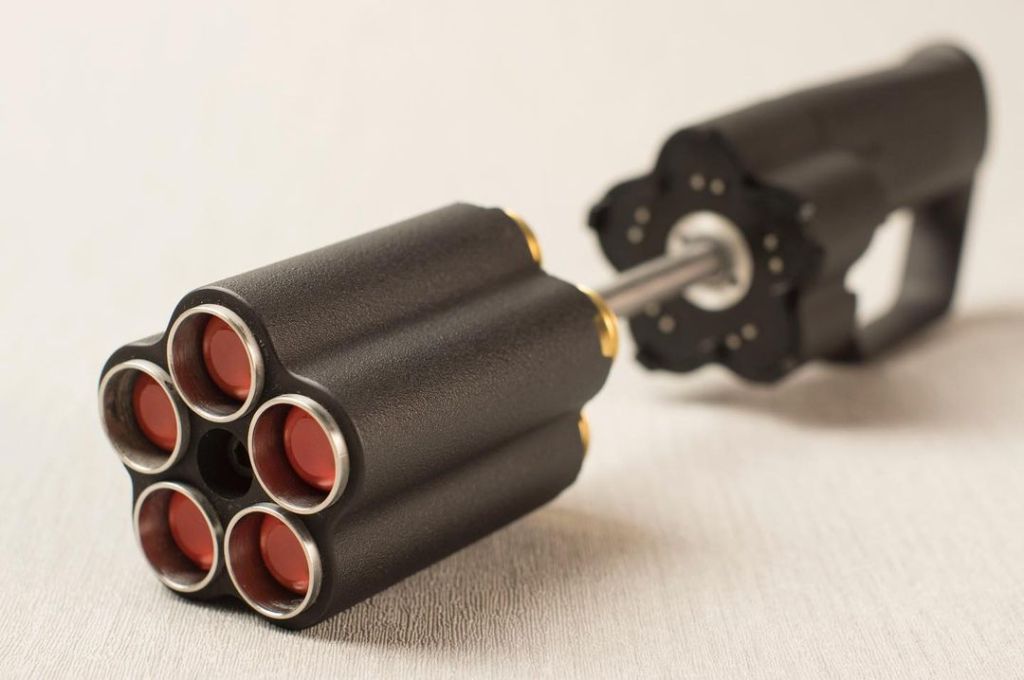
It is unclear if the device is robust enough or has barrels suitable for firing something like birdshot pellets. Stellarium SV note that the device is made from “high-strength plastics based on reinforced polyamide” but do state that “the drum can be fitted with stainless steel or titanium liners.”. The device has 5 tubes or barrels and is electrically fired. It appears to have a cross bolt safety in front of the grip, below the exposed trigger. It weighs 800g and is powered by three CR123A batteries. Stellarium SV’s site lists the device’s price as 430 Euros.

On the 20 February, Flash posted another short video of himself firing MSD-5 at a range with the caption:

“Tested today the new cartridges for the “soldier’s weapon against FPV”. Specialists are working, I hope we will produce a product that we will give to every soldier. My task, after the product is ready for the series, is to achieve its introduction into the Armed Forces.”

An MSD-5 with its action open (Stellarium SV)

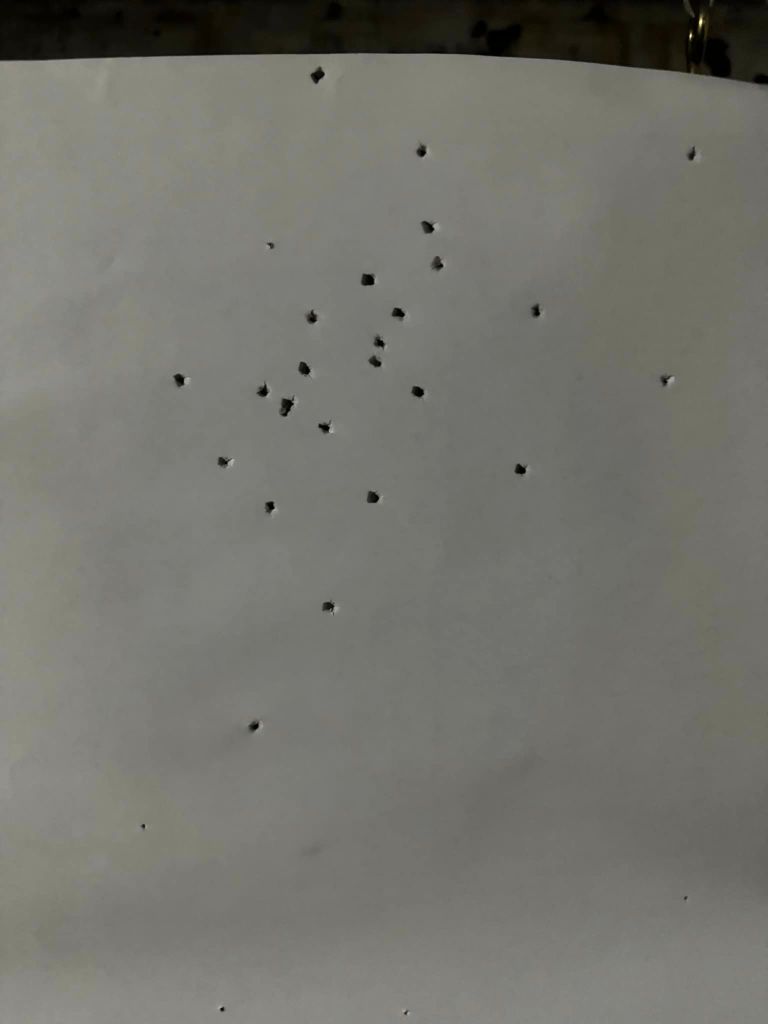
Along with the video he also posted a photograph of a target peppered with holes from small shot. The video shows the MSD-5 being fired with minimal recoil, suggesting a light load.

I reached out to Stellarium SV about the potential conversion of the MSD-5 into a personal anti-FPV weapon and they were keen to stress that this ” is not a use case that we endorse or support” and that they do not produce a cartridge capable of this and that anyone who made adapted cartridges is not related to Stellarium SV. The company did note that loading cartridges with shot was possible but getting the powder charge right was key. They also noted that the MSD-5 does not have sights which may make aiming difficult, though at the probable engagement ranges instinctive point shooting may be what Flash has in mind.

A test target photo posted by Sergey Flash (via Sergey Flash)

I also reached out to Sergey Flash to enquire about how he was adapting the MSD-5 but at the time of publication have not yet had a reply.
While the MSD-5 may not have been designed with an anti-drone role in mind, the concept of a similar handheld, lightweight, last-ditch, defence against FPVs seems a sensible answer to a urgent and difficult problem.


Support Us: If you enjoyed this video and article please consider supporting our work here. We have some great perks available for Patreon Supporters – including early access to custom stickers and early access to videos! Thank you for your support!

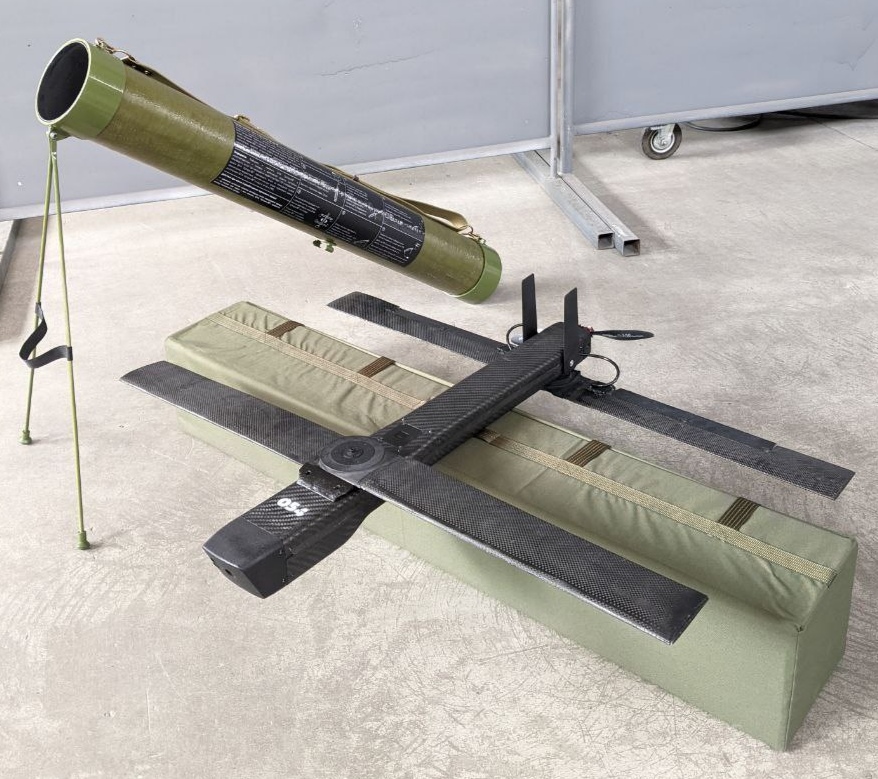
BAS-80: Russia’s Switchblade Loitering Munition

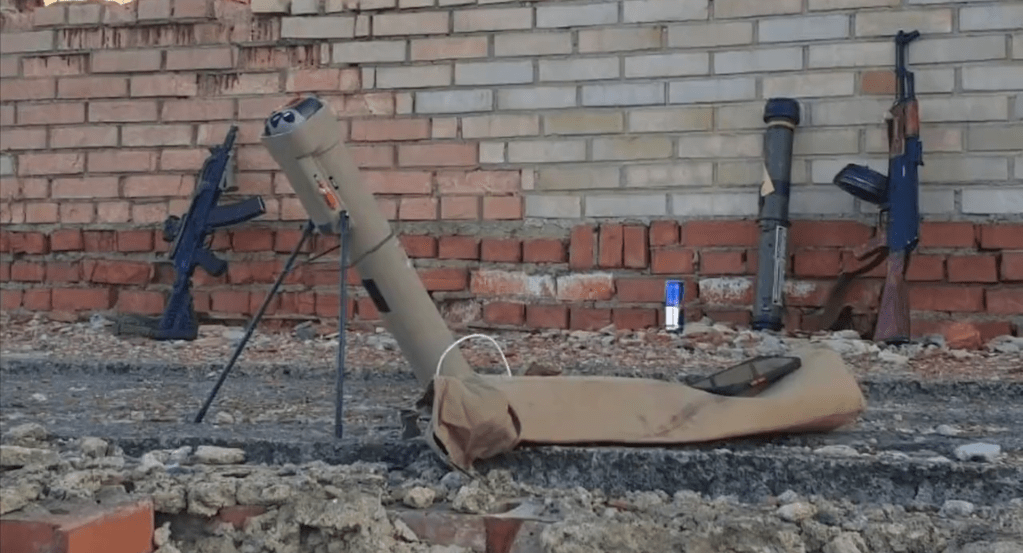
Reports from Russian media outlets announced on 18 September, that Android Technics/Technology, a Russian technology company, had developed an analogue of AeroVironment’s Switchblade 300 loitering munition. Imagery and footage of the BAS-80 was shared by Russian state news outlet RIA.

Android Technology’s Managing Director, Evgeny Dudorov, told RIA that they had provided a ‘couple’ of the loitering munitions to a volunteer unit, the Tsar’s Wolves, which reportedly provides military-technical assistance to Separatist units. Dudorov hopes that the unit will “find the best ways” to use the new kamikaze drone. Back in April, the development of the BAS-80 was first reported when Android Technology stated that the munitions would be mounted on the Marker armed unmanned ground vehicle.

BAS-80 (via RIA)

Russia has had considerable success in the field with its larger, heavier Lancet loitering munitions developed by ZALA Aero Group which is a part of Kalashnikov Concern. The most advanced variants of Lancet boast a 11lb/5kg payload. The Ukrainian’s, however, have demonstrated an edge when utilising smaller FPV kamikaze drones. These FPV drones appear to be favoured over the Switchblade 300.

The BAS-80 bares more than a passing resemblance to the US-manufactured Switchblade which the US has provided to Ukraine in moderate numbers since March 2022. Utilising the same folding wing configuration and man-portable tube-launch system.

Dudorov stated that the BAS-80 is made from carbon fiber, weighs in at 3.7lb/1.7kg and has a maximum flight speed of up to 80mph/130kph. He also claimed that it can travel up to 18.6 miles/30km and carries a 1.1lb/500g payload – which may suggest that its intended for anti-personnel and anti-materiel use, like the Switchblade. This would made the BAS-80 0.6lb/300g lighter than the Switchblade 300 and have 12.5 miles/20km more range. Photographs of the munition show that it uses a pusher propeller configuration and has three forward-facing optical lens for guidance.

A Switchblade 300 in the field in Ukraine, 2022 (via social media)

It remains unclear if the Russian munition was developed using technology found in captured Switchblade 300s. Other analogues of the Switchblade have been developed by both China and Iran. China unveiled the FH-901 loitering munition in September 2022 and Iran introduced the Meraj-521 in October 2022. Both systems appear to be externally different in size and shape to that of the BAS-80, with the Chinese munition larger (more analogous with the Switchblade 600) and the Iranian drones launching from a rectangular box. The BAS-80 launches from a cylindrical tube more akin to the Switchblade.

The BAS-80’s guidance systems, software and internals remain unknown and from Russian reports it is still some way from mass production with development to be finalised following trials in the field.

This article was adapted from one originally published at OvertDefense.com


Support Us: If you enjoyed this video and article please consider supporting our work here. We have some great perks available for Patreon Supporters – including early access to custom stickers and early access to videos! Thank you for your support!


Bibliography:

BAS-80, RIA, (source)

China unveils its version of Switchblade suicide drone, Global Times, (source)

US Switchblade Drone ‘Knock Off’ Meraj-521 Unveiled By Iran, Eurasian Times, (source)