
Since our last article/video on gun-armed drones in September 2024, both sides have continued to develop the technology. Numerous Ukrainian teams have developed recoilless ‘shotgun’ drones designed to hunt other drones as well as developing and fielding an AK-armed FPV. The Russians too have returned to the concept in recent months showcasing a number of gun-armed drone systems.
In December the first footage of a Ukrainian gun drone appeared, it utilised the recoilless gun concept. Several videos were shared of an FPV drone equipped with a pair of barrels which are likely electrically initiated and have counter-weight charges as the earlier Russian drone did. The videos showed a series of successful drone vs drone engagements.
On 7 February, Russian Telegram channel, FPV Covenant, shared footage of a gun-drone being tested, with the caption “Testing a shooting drone. The bird has two cameras, a night camera and a thermal imager.” The drone appears to have a single barrel and on firing is jarred considerably by recoil, this indicates the lack of a recoilless, recoil mitigation system.

In the first indication of Russian state efforts to develop a gun-armed drone the Осоед-Д , developed by the Novgorod scientific and production center “Ushkuynik”, was unveiled to Russian media on 20 February. The Осоед-Д has four barrels and appears to incorporate a recoilless counterweight system. Very little imagery of the system is available but it’s developers claim it has a degree of autonomy and can find and attack targets within an area once ground detectors locate a target. One article states that the drone “has already been put into operation”.
On 6 March a Russian Telegram channel, affiliated with the engineers of the Russian Black Sea Fleet, shared test footage and photographs of a new gun system which can be mounted on small drones. The Telegram post highlights that the system uses the recoilless principle to mitigate recoil and it reportedly utilises standard 12 and 16 gauge shotgun cartridges. It is claimed that it has an effective engagement out to 20 metres and that the aiming of the gun is done through the standard drone camera. The post also claims that operators can “you can hang from 2 to 4 barrels on the drone.” The size and power of the drone would likely have to be greater than a standard Mavic or Russian FPV to mount more than one or two barrels and greater payload reduces range. The post includes a photograph of the barrel assembly on a scale reading 700.9g. (1.5lbs) but a video caption notes when loaded the weight is closer to 780g.
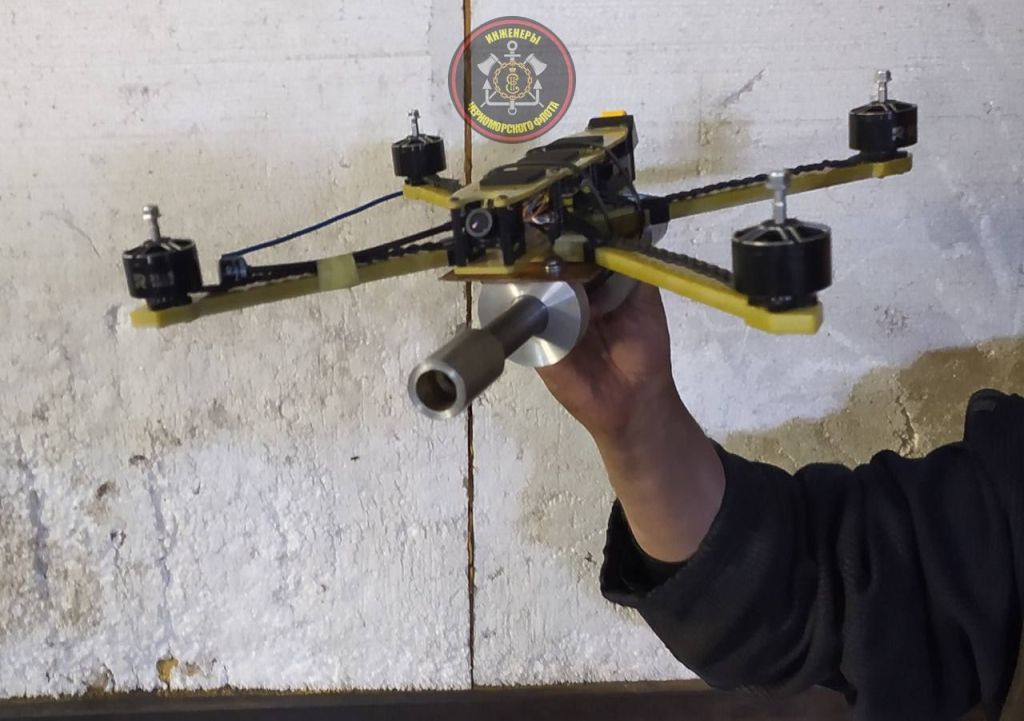
The telegram post includes a pair of videos showing the gun system being tested at a range. The first video shows a 10in quadcopter drone equipped with a 16 gauge gun system. The drone takes off and fires down range, while the recoil is noticeable the drone continues to hover.
In the second longer video the drone appears to struggle to initially maintain a stable altitude/hover but this may be an operator error. The drone travels downrange and fires on a target from a distance of 3.5 metres. The video cuts to show the effect on target with several dozen shot holes. Incidentally, the box is for AI-Thinker RA-08 transceiver modules made in China.
Meanwhile on 7 March, a drone unit with Ukraine’s Separate Presidential Brigade shared the best look at a Ukrainian gun-armed drone we’ve seen so far. We’ve previously seen the Bulava drone team, which part of the 3rd battalion of the Separate Presidential Brigade, deploying drones equipped with rifles and RPGs. These drones were developed with the help of Wild Hornets (a Ukrainian drone manufacturing organisation).
The gun-armed drone seen in the video is operated by the 4th Mechanized Battalion and is based on a Lucky Strike-manufactured quadcopter drone. It’s unclear if Lucky Strike has assisted in the development of the gun system.
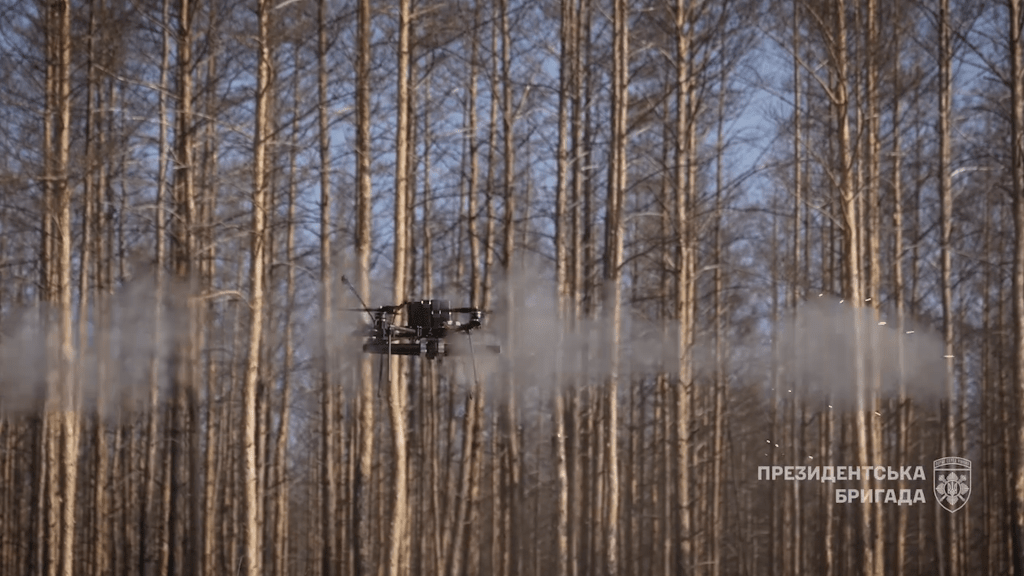
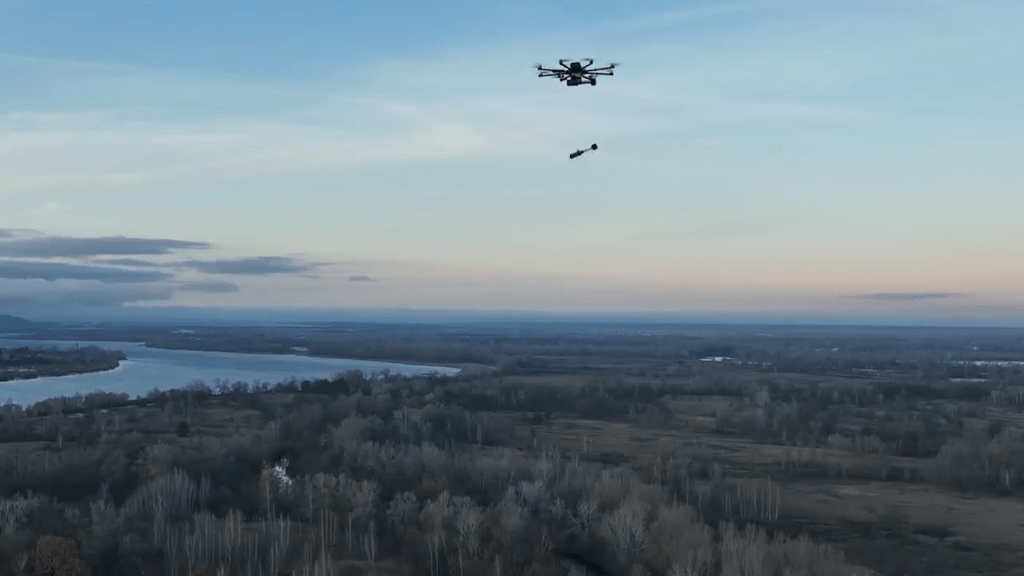
In the video we see the drone operators drop in a 12 gauge cartridge into a barrel, notably the cartridge’s primer has been removed probably to enable electrical ignition. The video does not show the counter-weight system likely to avoid breaches of operational security on how the system works. The drone can be seen mounted with a pair of barrels and when firing is demonstrated its clear that the larger drone is able to compensate for any remaining recoil the counterweight system can’t mitigate. Its also possible that the Ukrainian counterweight charge has been more finely tuned to the charge of the firing barrel. The operator explains that even a small number of hits from relatively small shot can be effective on target and that one of their primary targets are DJI Mavics which the Russians use for Intelligence, Surveillance, and Reconnaissance (ISR). In terms of doctrine the video explains that they try and engage with one barrel but if they want to be sure of hitting a target they can fire a salvo of both at the same time to increase hit probability.
On 10 March, A small Russian Telegram channel, Bright Head, shared a short video of a small quadcopter drone armed with a pair of barrels. The video is simply titled ‘Drone killer “GORYNYCH (ГОРЫНЫЧ)’. It approaches a cardboard target and fires twice. Intriguingly, the Gorynych has an ingenious recoil-mitigation system with the barrels being ejected from the drone on firing, this reduces the recoil significantly with the first shot only briefly dipping the drone.
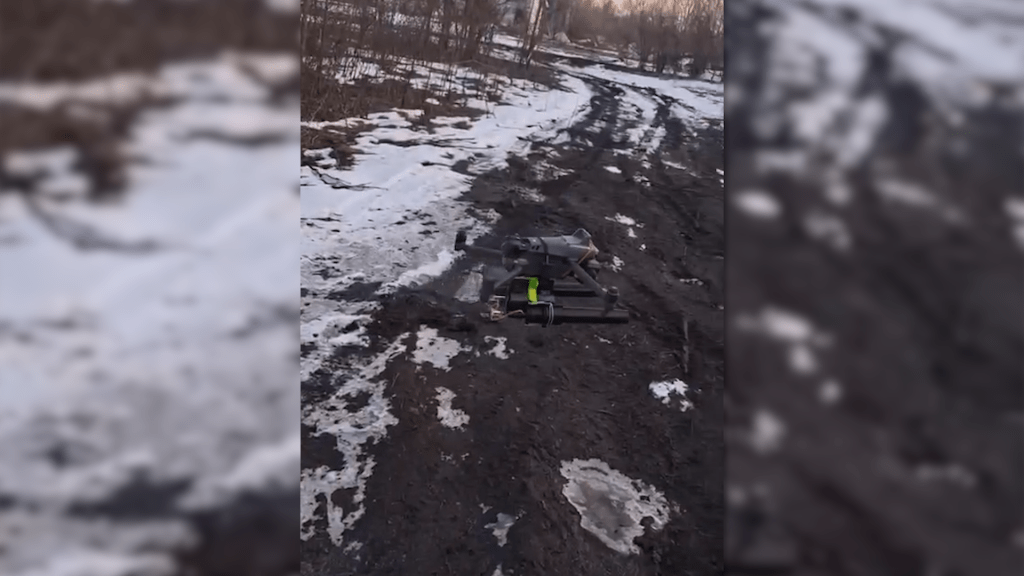
On 15 March, Ukrainian drone developers Sky Defenders shared video of their fixed wing UAV equipped with four forward-firing gun barrels. Check out our earlier article/video examining the Sky Defenders ZigZag.
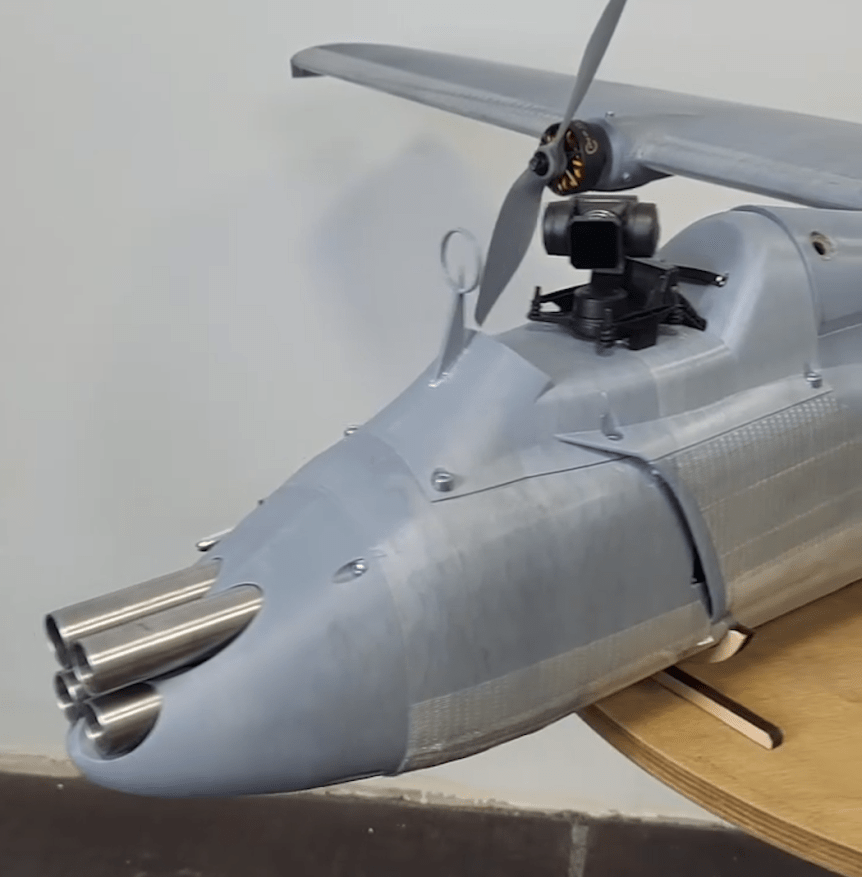
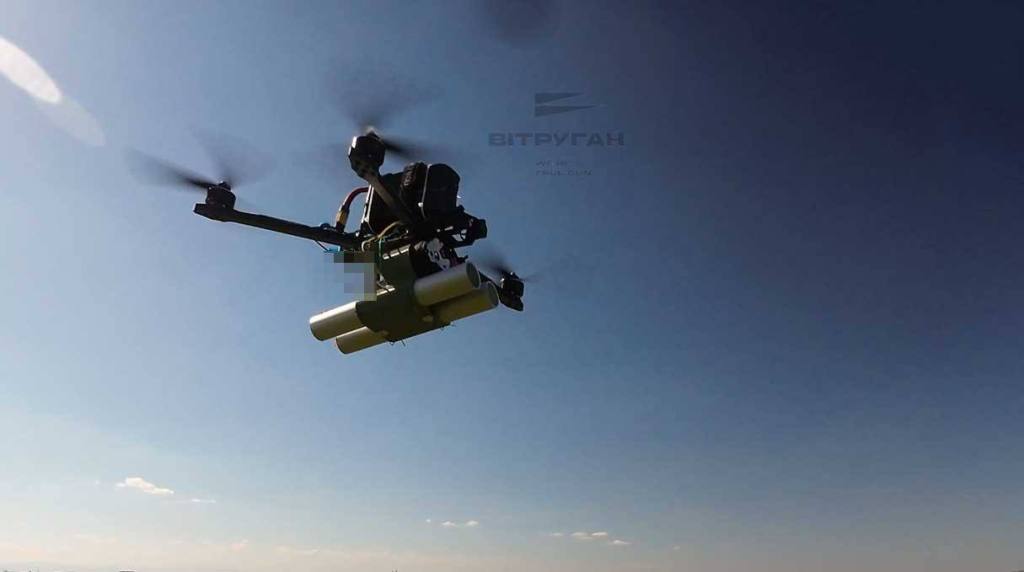
Ukrainian drone developers ВІТРУГАН introduced their ‘Ги́цель’ (Gitsel) gun-armed drone on 19 March. The Gitsel is equipped with a pair of 30mm barrels and the developers claim is has ‘automatic target acquisition and firing when the target is within the strike zone’ but it can also be operated manually. ВІТРУГАН have so far only shared photographs of the Gitsel and while there is no video of it in operation they say it can be used against both aerial and ground targets. The barrels in the photographs appear to be cut down metal piping wired for electrical ignition through the rear end of the barrel. They appear to be mounted on on a 3D printed assembly.
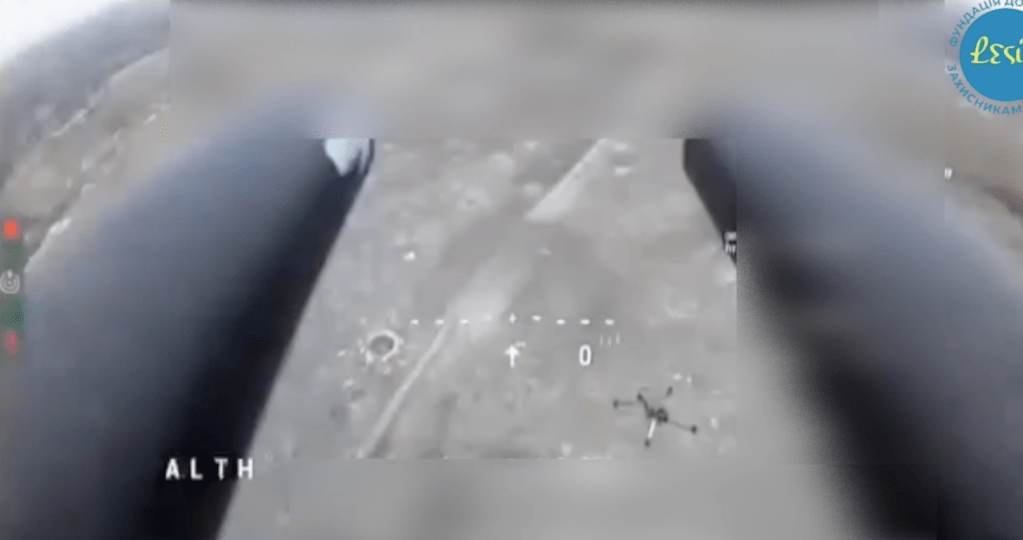
Most recently on the 29 March, the 2nd Mechanised Battalion of the 30th Separate Mechanised Brigade shared a minute long super-cut video of a gun-armed drone engaging more than 20 Russian quadcopter drones. Most fall to the ground after suffering damage to their rotors but one explodes upon being hit, with the shot likely hitting a piece of ordnance the drone was carrying. The video concludes with footage of one of the downed Russian drones being salvaged and lifted away by a Ukrainian drone.
The flurry of development by both sides illustrates how sorely gun-armed drones are needed to counter the ever pervasive drone threat. The development of the gun-drones is now being undertaken not only be individual developers and units but now also by larger companies and in Russia’s case a state-owned research and development entity. Both sides are also now claiming some limited autonomous targeting capability. While some of the gun-drones have entered operational use it’s unclear if significant numbers have been produced and fielded. Over the coming months we will likely see further fielding of the gun-drones and it will remain to be seen how effective they are and how they may change the dynamic of the conflict’s drone use.
Support Us: If you enjoyed this video and article please consider supporting our work here. We have some great perks available for Patreon Supporters – including early access to custom stickers and early access to videos! You can also find us on the History of Weapons & War app. Thank you for your support!
 The Armourers Bench