
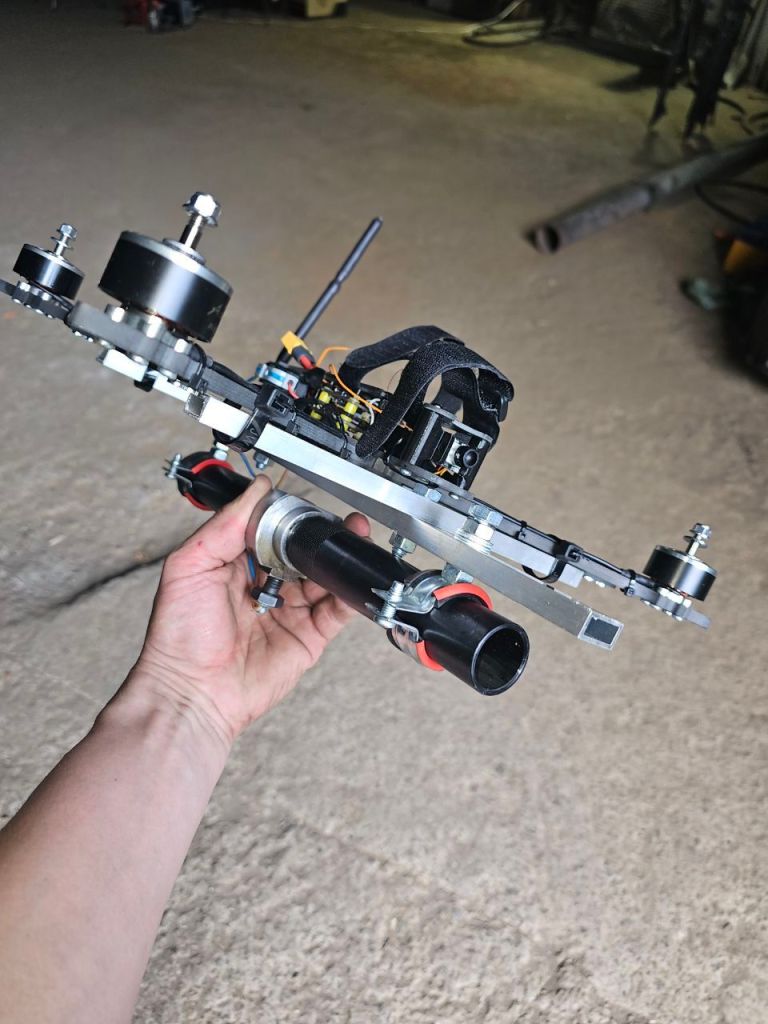
What is old is new. On 12 September, Russian journalist Alexander Kots shared a photograph of a recoilless gun mounted on a drone on his Kotsnews telegram channel channel. The idea certainly isn’t a new one. The use of a recoilless gun on aerial platforms dates back to the 1910s with the development of a series of recoilless guns by Commander Cleland Davis (US Navy) which were experimentally mounted on a variety of early military aircraft.
While the Davis Gun was abandoned shortly after the end of World War One, it was influential and its principle of operation was utilised in later recoilless guns. Essentially it worked along the premise of Newton’s Third Law of Motion, that all things have an equal and opposite reaction – as such Davis connected two guns back to back, with the backwards-facing gun firing a counter-weight.
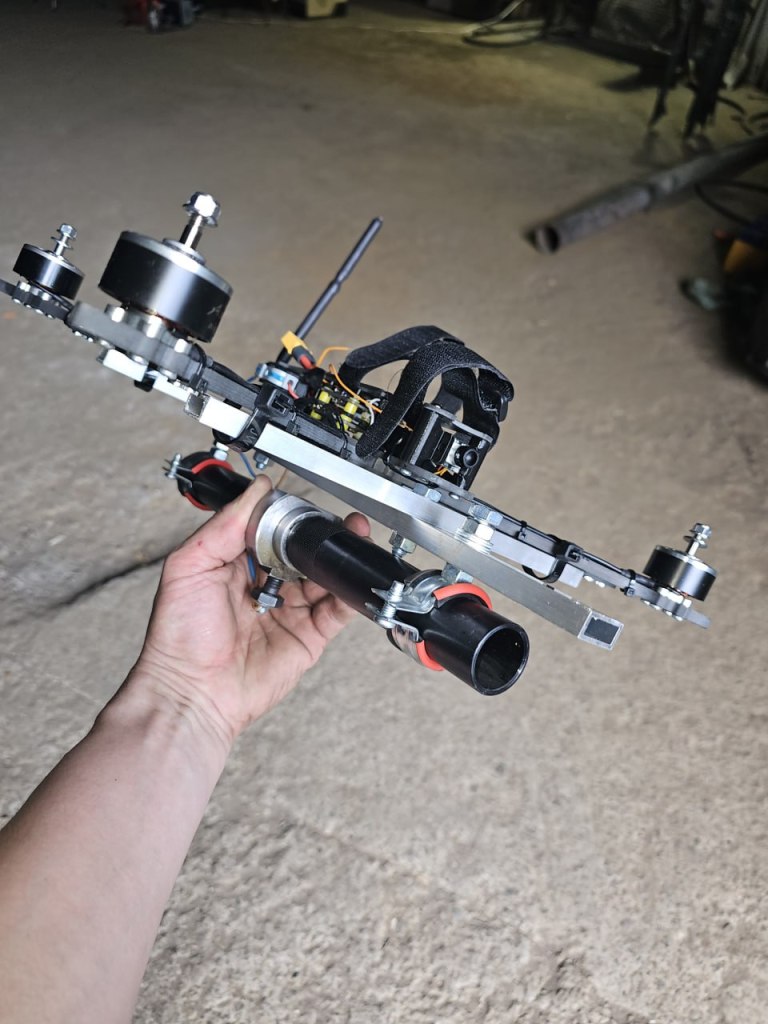
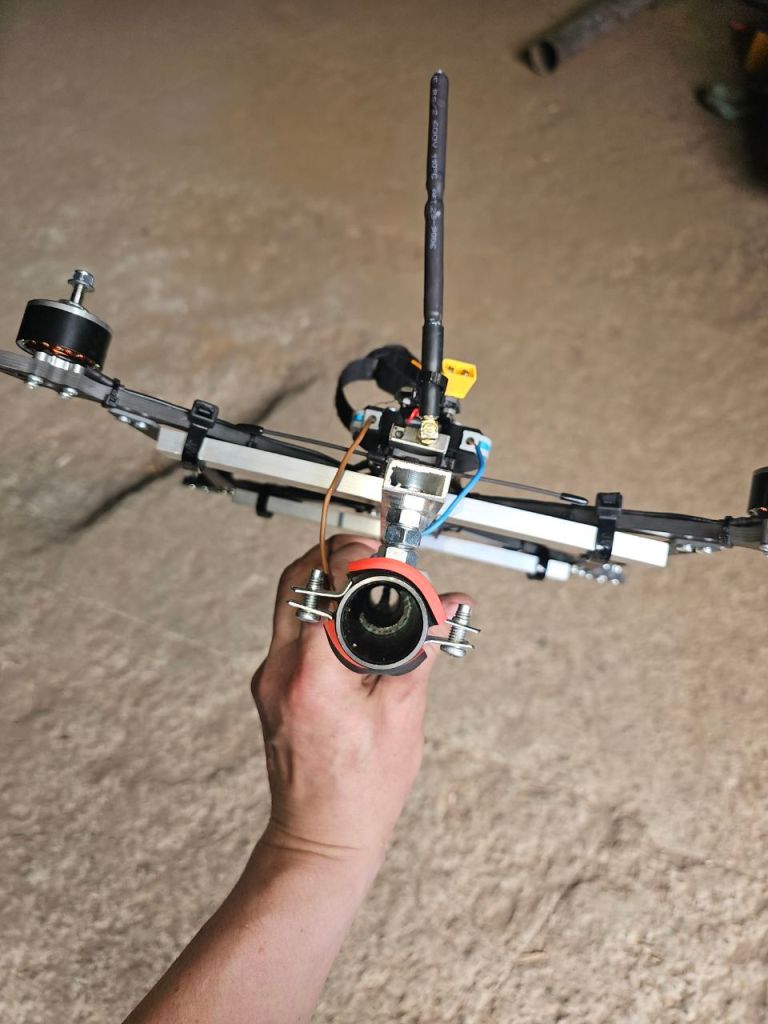
Fast-forward over a century and the concepts is again revisited in miniature and mounted on a quadcopter drone. Kots described the recoilless gun in his post [machine translated]: “Large pellets are loaded in the front, and an equal counterweight is loaded in the back. Thus, a lightweight drone becomes capable of hitting small air targets without the risk of falling into a tailspin from the recoil.” The image shared appears to show a smoothbore weapon attached to the drone with plumbing clamps with several electrical wires running to it, likely for ignition of the charge.

The developer of the drone, the chief engineer of Russian company BRT, shared Kots’ post commenting [machine translated]: “Our BUBUKA hit the news. I made it, taught it to shoot, and gave it to our FPV players… – I don’t fly myself, it’s not my thing,” lamenting that “since then – no response, no greetings. I’m not even sure they tried to test it.”
The engineer followed this up by posting footage of a test of the recoilless gun, explaining [machine translated]:
“The principle is fully functional. And it was used more than 100 years ago, on plywood planes.
On the FPV, as I see it, for its use, you need to solve 2 main problems: –
– aiming at the target.
– correct ballistics of shot ammunition (dispersion, mass of shot charge, etc.).”
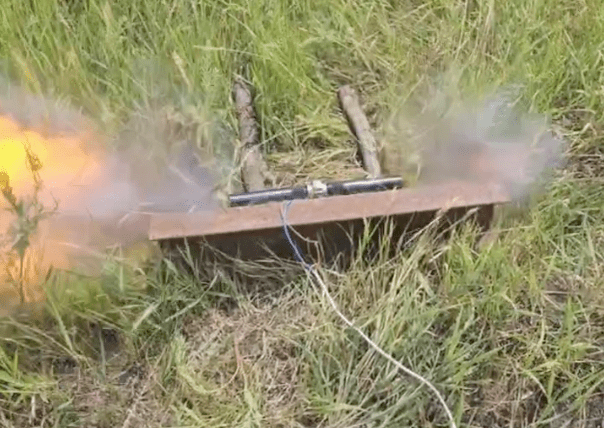
In the video the engineer exclaims that ‘both ways [fired] just fine’ with the grass in front of both barrels clearly impacted by the test. It’s unclear what kind of shot the recoilless gun is designed to use likely a buckshot-style round able to spread on leaving the barrel and sufficiently damage a drone to down it.
It appears that the ‘Bubuka’ may not yet have been tested or used in the field but it is an interesting design mitigating one of the major factors of firing a weapon from a drone – recoil. However, the recoilless gun has a number of drawbacks too. While the gun allows the drone to engage another drone kinetically without having to fly into it, the gun only has one shot which magnifies the difficulty of scoring a hit when aiming is difficult. It’s clear, however, that the evolution of drone warfare in Ukraine is continuing at pace with recent efforts by both sides to mount AK-pattern rifles to drones and the increasing number of drone vs drone engagements occurring.
Update 28/12/24: It appears that a Ukrainian team has also developed a recoilless gun-armed drone. Several videos were shared of an FPV drone equipped with a pair of barrels which are likely electrically initiated and have counter-weight charges as the earlier Russian drone did. The videos show a series of successful drone vs drone engagements.
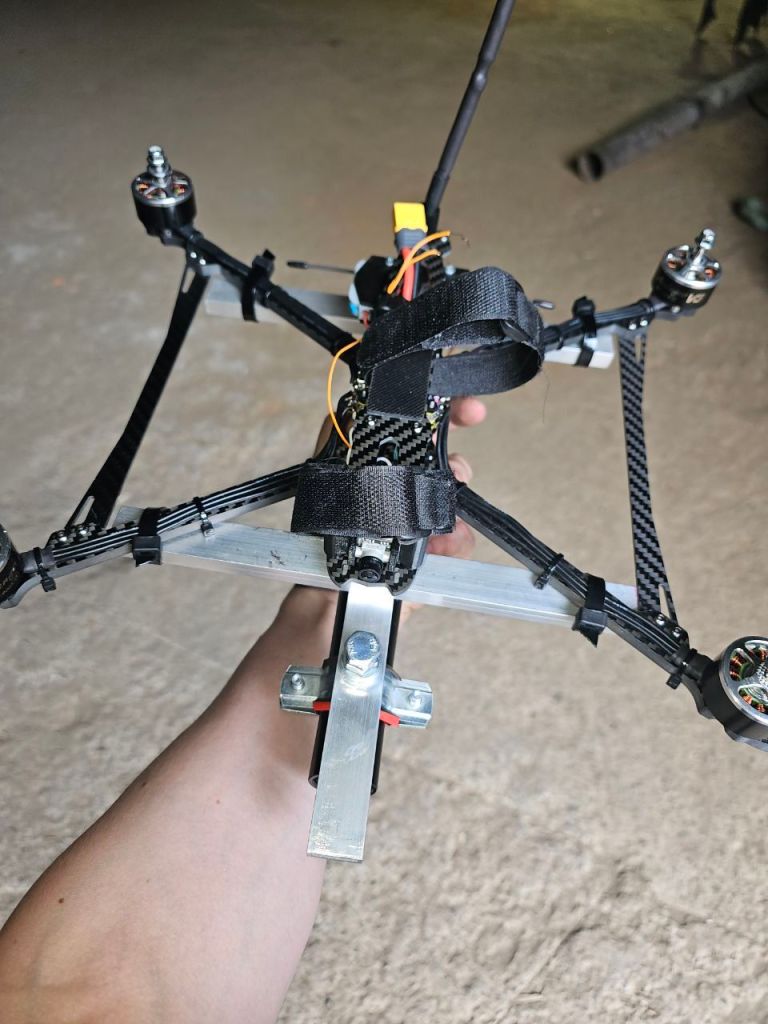
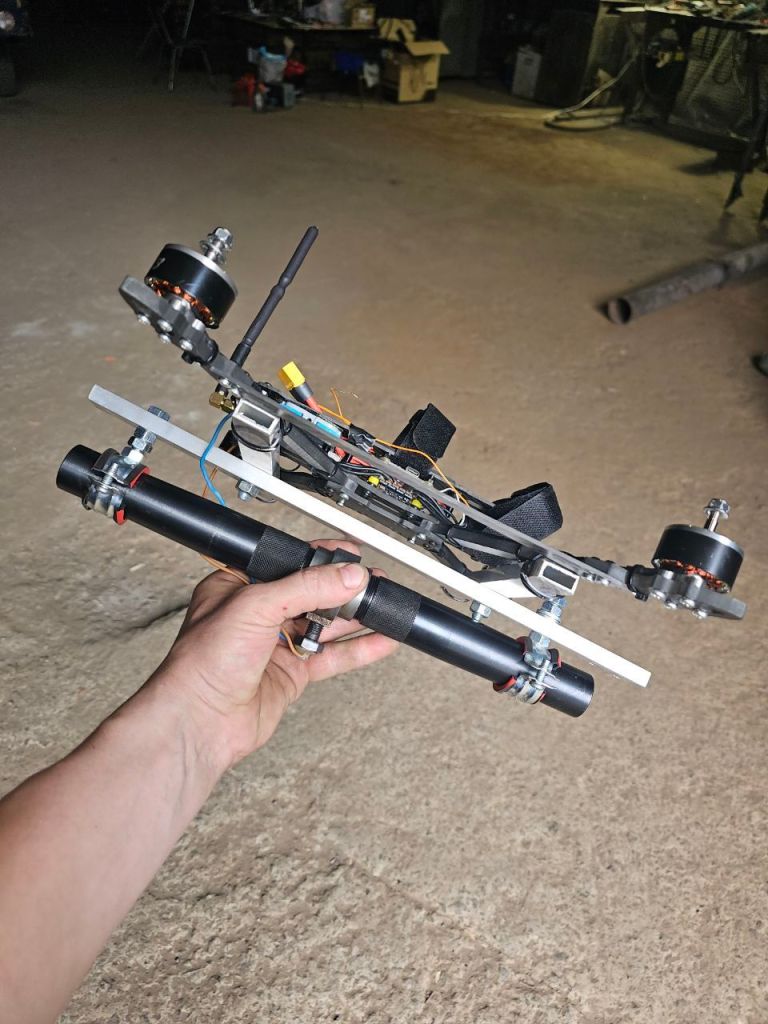
Update – 3/1/25: A telegram associated with BRT has posted additional photos of their recoilless gun drone developed in early 2024 and expressed Thier frustration that a similar Ukrainian drone has had operational success.
Support Us: If you enjoyed this video and article please consider supporting our work here. We have some great perks available for Patreon Supporters – including early access to custom stickers and early access to videos! You can also find us on the History of Weapons & War app. Thank you for your support!
 The Armourers Bench