
A few weeks ago I visited my friends at the Vickers Machine Gun Collection & Research Association and had a look at a variety of items you might not immediately expect to be part of their collection. The VMGCRA, however, has an extensive collection of all sorts of items and an incredible archive which they’re digitising at the moment.
Practice Mills Bombs (No.36)
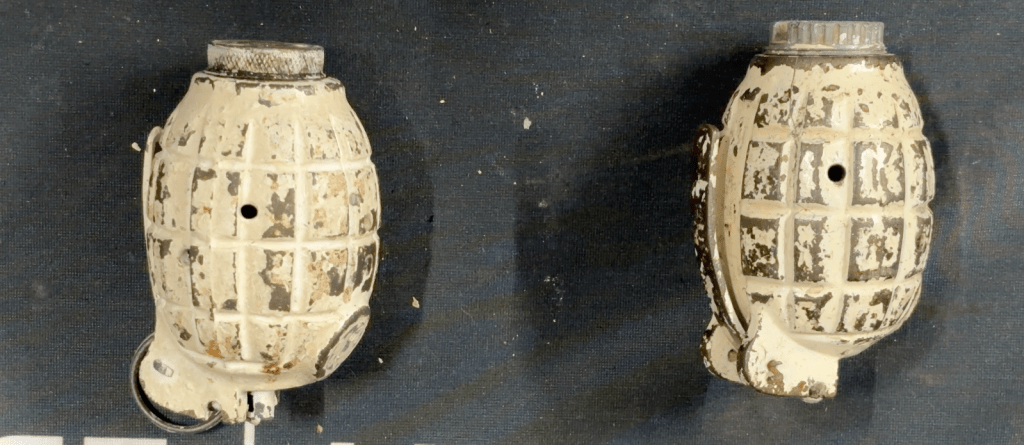
Some of the smaller items in the collection are inert training grenades. First up we have a pair of practice No.36 grenades (commonly known as Mills Bombs). Also known as Drill Grenades, these were painted entirely white and, as we can see laid out in this 1942 British Army grenade training pamphlet, they were used for throwing practice and grenade discharger cup training. They don’t have any filling but are weighted to mimic actual Mills Bombs to aid in training. Photographs of the Drill Grenades don’t appear until the post-war manuals, like this 1951-dated pamphlet which shows the white mills bombs being used in training. They were also used for general familization in classroom training and getting to grips with how the safety mechanisms worked and how fuzes were inserted. we can see an L2 grenade being used in house clearance drills in the 1979 training film Fighting In Villages
L3A1
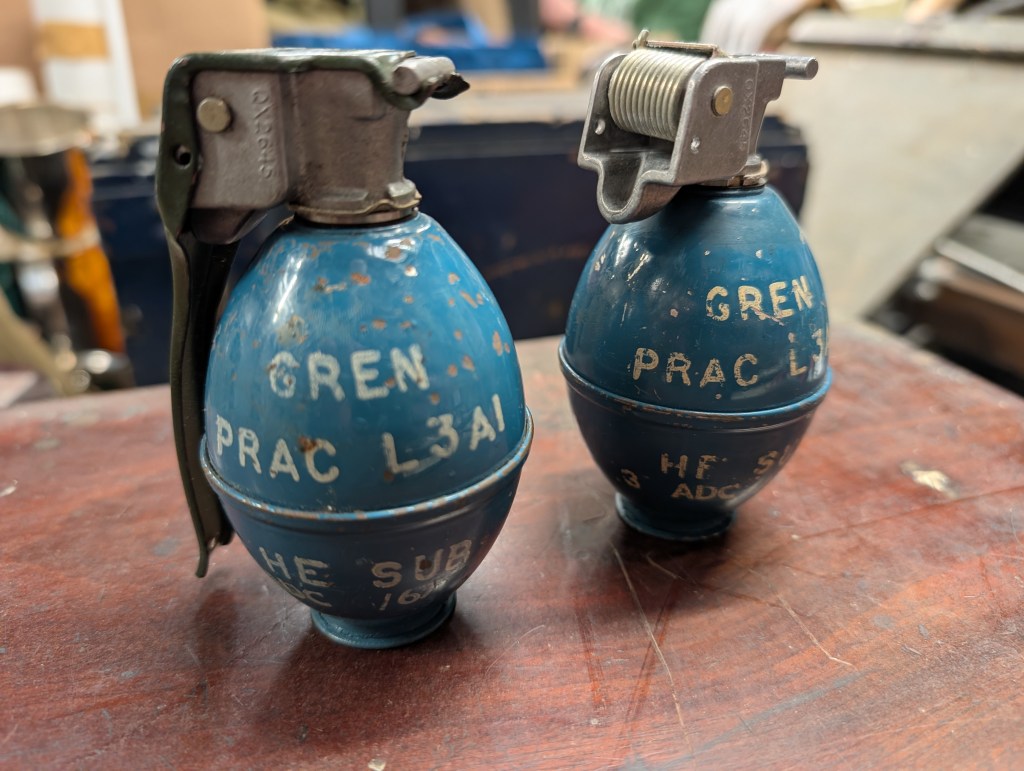
Next we have the British Army L3A1 inert practice grenade. The L3A1 practice grenade used to train troops on how to use the L2 series of live grenades. These were known as the M26 in US service and entered service in the early 1950s to replace the classic Mk2.
The grenades entered UK service in the 1970s, replacing the No.36 Mills Bomb. They were used by British troops in every major operation from the 1960s through to the 2000s. The L2 and L3 series were replaced by the L109A1 grenade during the early 2000s. The L3 was largely out of use by the mid-1990s, replaced by the L28 and L56 training grenades.
These training grenades would have been used in the classroom portion of soldiers’ training giving them hands on experience in the feel of the grenade and how the pin and spoon work and interact and where a live grenade’s fuze would be fitted. The blue painted grenades have “GREN PRAC L3A1′ and ‘HE SUB’ (high expolosive substitute) printed on them.
L111A1
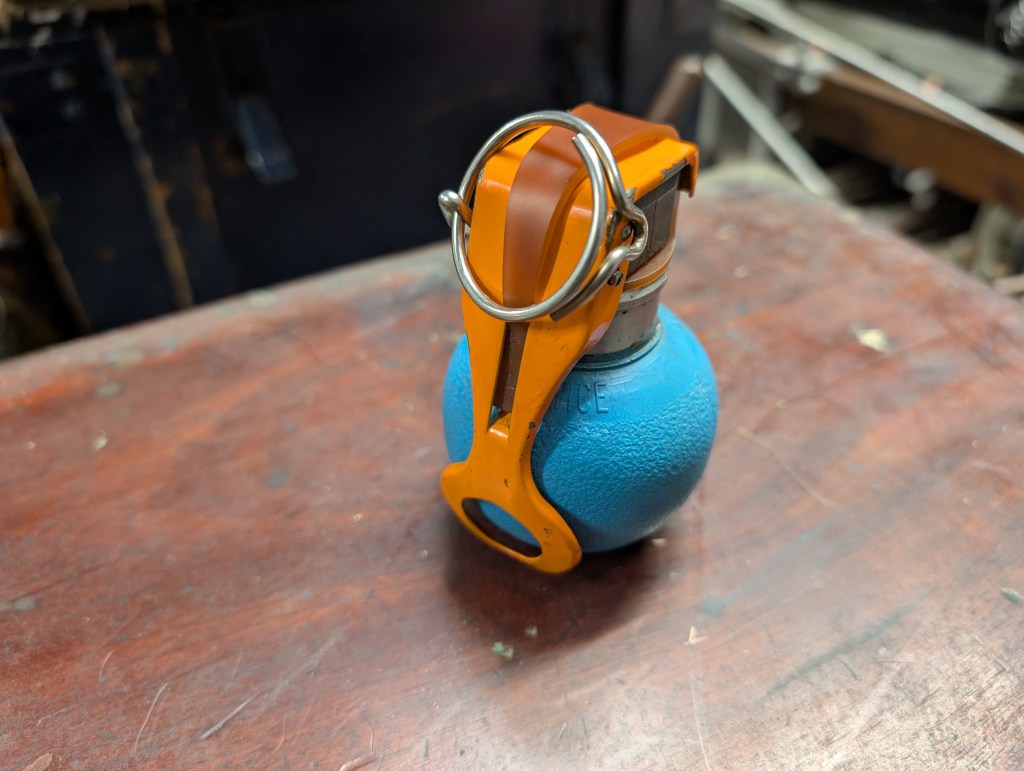
The UK adopted RUAG’s HG-85 in the early 2000s as the L109A1, the L110A1 is an inert drill grenade for handling practice while the L111A1, as seen here, is a practice grenade which can incorporate a small simulation charge which can be used safely in training environments. Initially called the ‘Enhanced Performance Grenade’ but once it was introduced and classified in 2002, it became the L109A1. The body of the practice L111A1 is made of steel, and is covered in a blue textured plastic material and has the words ‘PRACTICE GRENADE’ embossed near the top of the body. Like the earlier L3A1, the L111A1 approximate the weight, feel and operation of a live grenade for training purposes. The HG-85 remains the UK’s standard fragmentation grenade, here’s a video from 2021 showing the Irish Guards training with the L111A1.
So there we have it, a couple of small items from the VMGCRA but ones that illustrate the depth and breadth of the collection. Thanks for watching, don’t forget to check out and subscribe to VMGCRA!
Support Us: If you enjoyed this video and article please consider supporting our work here. We have some great perks available for Patreon Supporters – including early access to custom stickers and early access to videos! Thank you for your support!
Discover more from The Armourers Bench
Subscribe to get the latest posts sent to your email.

