
The UK began a training initiative with Ukraine in early 2015 with the launch of Operation Orbital. Orbital provided training in Ukraine to more than 20,000 Ukrainian personnel over eight years. Op Orbital ended in February 2022 with Russia’s full-scale invasion. In July 2022 a successor programme, Operation Interflex was launched. Interflex involves a larger, British-led multinational training programme, with training provided in the UK. It was established with the aim of training up to 10,000 Ukrainians every 120 days.
Interflex provides a variety of different specialist training elements but the primary focus is on providing Ukrainian infantry with essential soldier skills. By the summer of 2025, more than 56,000 Ukrainian soldiers had been trained by the UK and partner nations. To carry out basic infantry courses a large number of rifles which were similar to those that Ukrainian troops would be using operationally were needed.
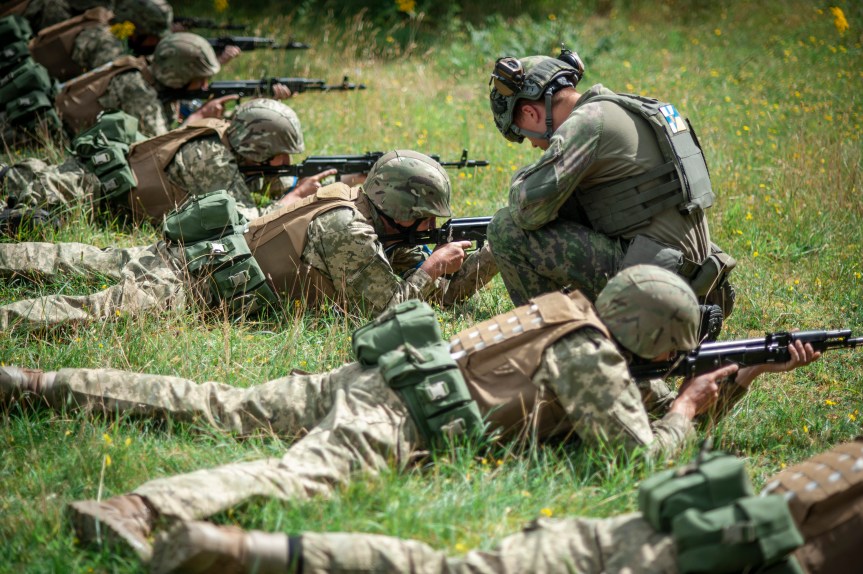
International partners from Australia and New Zealand are working with the British Army, in training scenarios with Ukrainian Forces, including Medical (involving simulated casualties) and patrolling.
Operation INTERFLEX is the UK led training programme for Ukrainian recruits. The training is for new volunteer recruits who have joined the Armed Forces of Ukraine (AFU) with little to no previous military experience to teach them the skills required to survive and be effective in frontline combat.
The UK-led programme trains and drills the Armed Forces of Ukraine using battle-proven British Army expertise, allowing them to accelerate their deployment, rebuild their forces, and scale-up their resistance as they continue to defend their nations sovereignty against Russian invaders.
The previous Operation Orbital saw the UK train more than 22,000 Ukrainian personnel from 2015 until the full-scale invasion of Ukraine. The new programme would train forces outside of the country.
This led to a major procurement of AK-pattern rifles. The number of rifles procured and the sources they were procured from remains unclear. We have some clue as to the number of rifles initially acquired from a 9 July 2022 press release, in which the UK government confirmed:
“The Government has rapidly procured AK variant assault rifles for the training programme, meaning Ukrainian soldiers can train on the weapons they will be using on the front line. This effort was supported by the Welsh Guards, who tested more than 2,400 such rifles in 17 days to ensure they were ready for the Ukrainians to commence their training.”
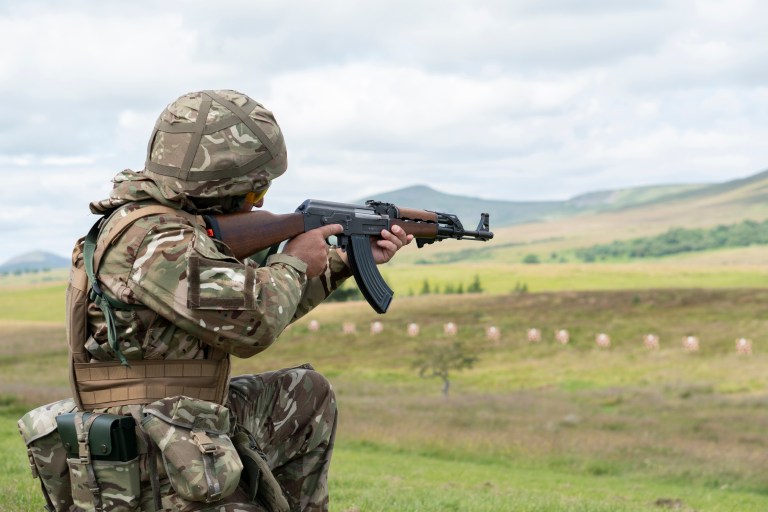
The types of AK-pattern rifles procured was not announced but from the photographs released it is clear that they include:
- Serbian-produced Zastava M70, M70B, M70A and M70AB2
- East German-produced MPi KMS-72
- Hungarian-produced FEG AK63D
All of the above rifles are chambered in 7.62x39mm. The reasoning behind the procurement of rifles chambered in 7.62x39mm rather than the more regularly issued 5.45x39mm AK-74 pattern rifles is also unclear. Perhaps this was due to weapon availability and regardless of calibre the manuals of arms remains the same.
At the time when approached for comment on the sources and types of AK rifles procured, the Ministry of Defence told The Armourer’s Bench:
“The Government has rapidly procured AK variant assault rifles through a combination of international donations and private purchase, meaning Ukrainian soldiers can train on the type of weapons they will be using on the front line. All weapons were tested in accordance with UK legislative and safe working practices.”
In September 2022, Chinese-manufactured Type 56-1 rifles were seen in Op Interflex imagery for the first time. The Type 56-1 has an under-folding stock, stamped receiver, and enclosed front sights.
By early February 2023, the assorted various types of 7.62x39mm-chambered AK-pattern rifles were either replaced or supplemented with Bulgarian Arsenal AKs. The rifles seen in all of the available photographs appear to be basic model rifles, none of the weapons have railed handguards or Picatinny on the receiver cover for mounting optics. This suggests that they are either AR-M9Fs or AR-M14Fs (at least according to Arsenal’s website). The ‘F’ refers to the folding tube metal stock which helps identify the rifles as Arsenal-made AKs. The characteristic flash hider and furniture also identify them as Arsenal rifles.
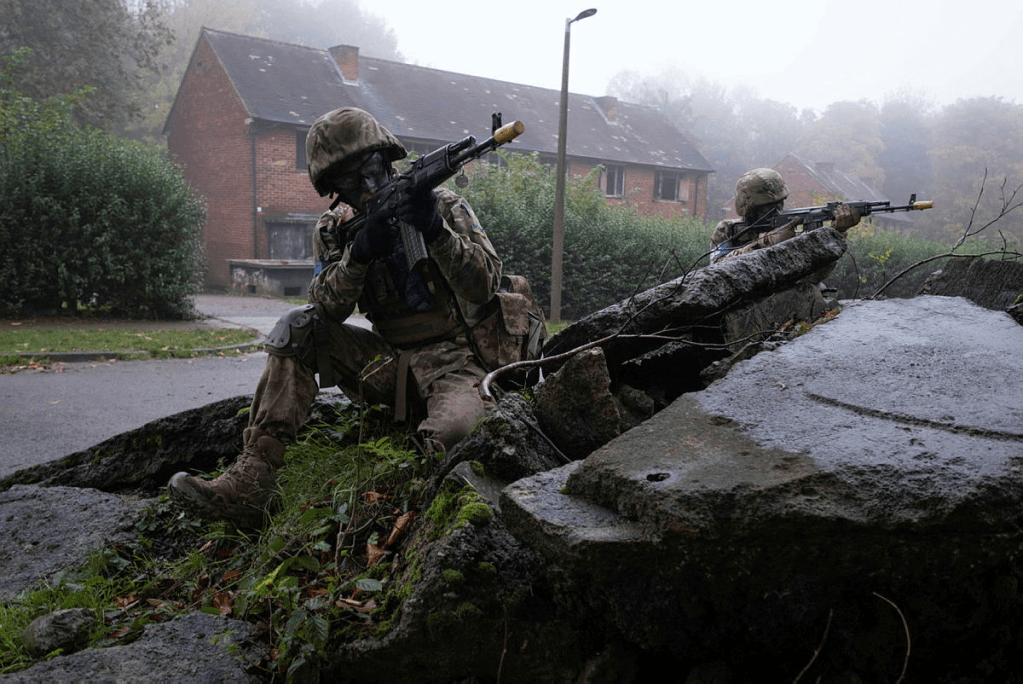
From the rifles’ handguard design it appears that the rifles are AR-M9Fs, chambered in 5.56x45mm. This chambering in theory simplified logistics, removing the need to procure 7.62x39mm ammunition. The AR-M9Fs also have a blank firing adaptor which allowed Ukrainian troops to train with AK-pattern rifles rather than SA80-series rifles when blank firing was needed. The UK has the capability to manufacture 5.56x45mm ball and blank making training simpler and cheaper. According to information shared with TAB by the UK MoD approximately 7,500 AR-M9Fs were acquired for Op Interflex.
Finally, in May 2025, the UK appears to have procured Israeli-manufactured IWI Galil ACE rifles in 5.56x45mm. When approached for comment on the procurement of the rifles the UK MoD told TAB that approximately 4,500 ACE-23 rifles had been procured. They also noted that the transition to the IWI Galil ACE 23 began in around mid-2024 and that the switch to Galil ACE rifles was made to ‘better align the weapon system used during UK-based training with equipment Ukrainian troops were using in theatre.’ This, however, seems unlikely as the Arsenal is more analogous with the AK-74 than the ACE 23. While the Galil ACE shares very few handling characteristics with AK-pattern rifles, with the exception of the magazine release location, its updated safety lever is also less akin to the AK’s. It’s action and disassembly procedure are functionally the same as an AK, however, the Galil, at 3.6kg unloaded, is somewhat heavier than an AK-74.
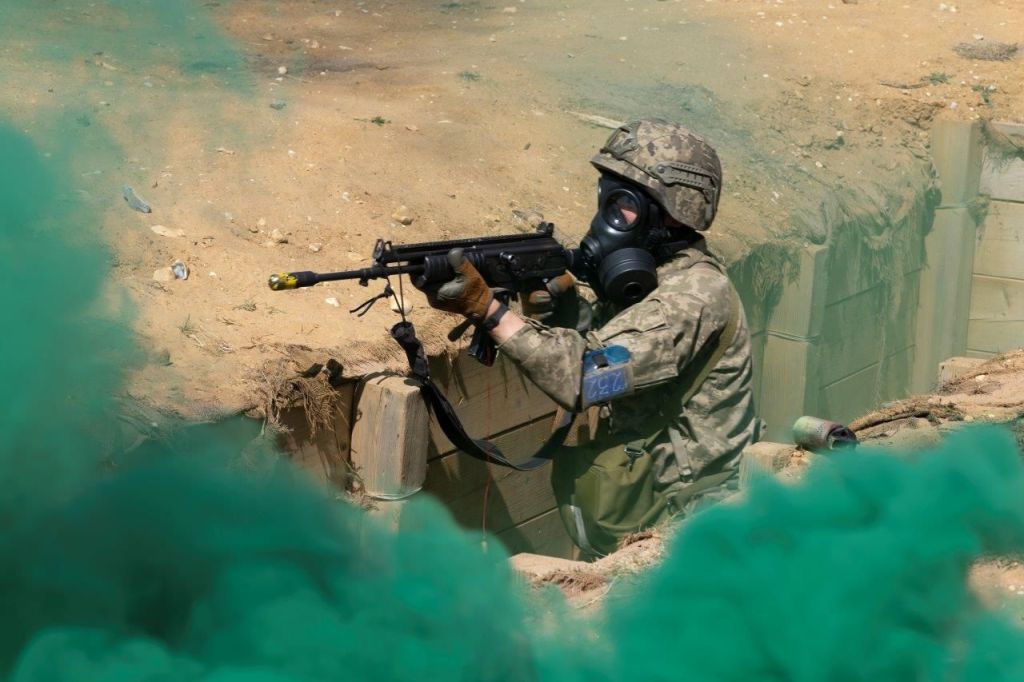
Perhaps the Galil ACE 23s function better when using blank, perhaps extensive use during numerous training cycles led to issues with the AR-M9Fs. No further comment was provided on why the Galil ACE replaced the Arsenal rifles or why fewer rifles were procured. This may be explained by recent changes to the aims of Interflex as in June it was reported that the programme’s focus would shifting away from basic infantry training to more leadership and specialised training.
A Ministry of Defence spokesperson concluded by telling TAB that: “We are proud that Interflex has grown to be one of the biggest training programmes of its kind, equipping Ukrainian recruits with the basic combat skills they need to defend their country against Putin’s illegal invasion.”
I thought it was worth collating all of the information available on the various rifles used to train Ukrainian troops in the UK into one place. For more detail on each of the different types of rifle used, check out my earlier article/videos on each rifle.
Support Us: If you enjoyed this video and article please consider supporting our work here. We have some great perks available for Patreon Supporters – including early access to custom stickers and early access to videos! Thank you for your support!
Discover more from The Armourers Bench
Subscribe to get the latest posts sent to your email.

