New Russian Grenade Launcher – GP-46

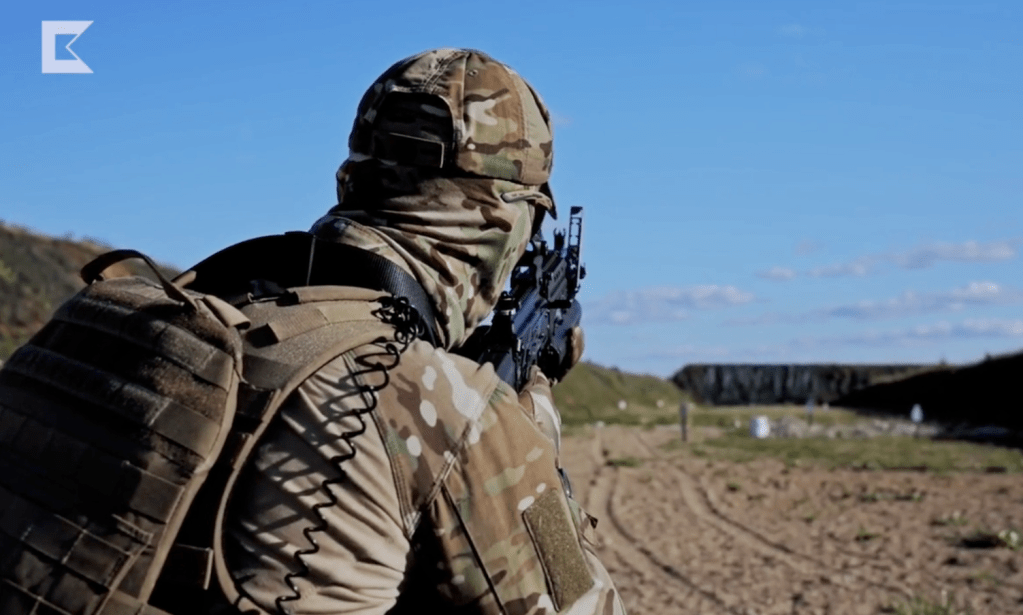
A couple of months ago we took a look at Kalashnikov Concern’s new belt-fed machine gun, the RPL-20. That video was made in collaboration with firearms researcher Deni Almaskhanov, of Just Guns. Deni has also kindly shared some video of Kalashnikov’s new GP-46 grenade launcher.

The GP-46 was unveiled by Kalasknikov Concern at the ‘Army-2024’ exposition in August. Unlike other Russian underbarrel grenade launchers the GP-46 is chambered in the Western 40x46mm, the low velocity grenades used in launchers like the M203, and M320. Despite its first public appearance in 2024, the visible serial number indicates that the launcher on display was actually made in 2023. It was reportedly developed in 2023-24 by a design team led by Kalashnikov’s chief small arms designer Sergei Vladimirovich Urzhumtsev.

GP-46 UBGL & 40x46mm grenades (Kalashnikov Concern)

The GP-46 features ambidextrous controls with mechanical safety selectors, locking mechanism catches and triggers found on both sides of the launcher. The launcher can be mounted on all previous AK-pattern rifles which are able to mount UBGLs.

Kalashnikov Concern list its specs as:

  • Length: 380mm
  • Caliber: 40mm
  • Weight: 1.6kg
  • Rate of Fire: 5-6 rounds per minute

It’s currently unclear what range of 40x46mm grenades are available for the GP-46 but Kalashnikov’s promotional video on the launcher featured a grenade tipped with what appears to be a VGM fuze used on VOG-pattern grenades.
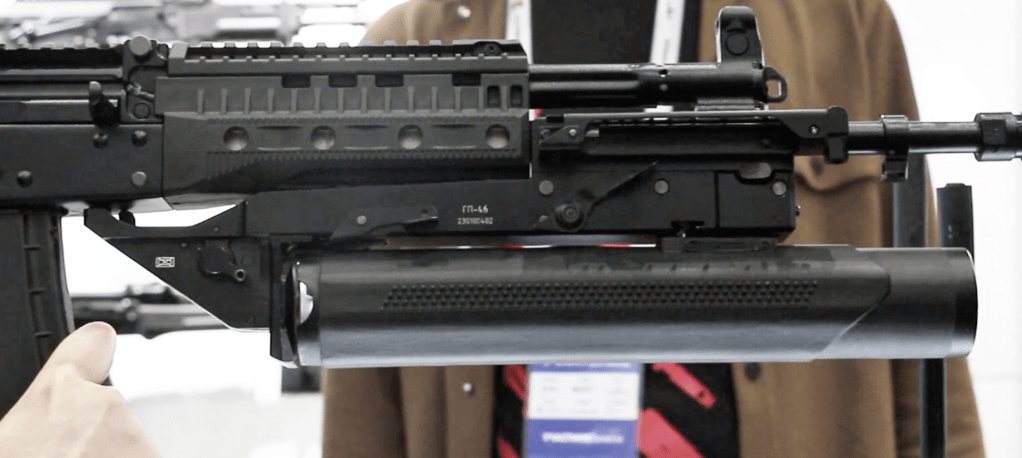
GP-46 UBGL (Deni Almaskhanov)

Interestingly, Deni noted that the unconventional trigger placement is not entirely new for Kalashnikov. In 2018, Kalashnikov patented another grenade launcher, seemingly one designed around VOG-pattern grenades. That UBGL’s the trigger mechanism was located on the outer cover of the barrel itself. Deni explains that “the latch was to be pressed, unlocking the movement of the cover, the cover was to be pulled backwards. Such design was implemented in order to allow for a double-action trigger action while not requiring lots of strength from the trigger finger”. Deni believes that the GP-46 seems to be following the same philosophy while avoiding overtly complicated design elements.

Kalashnikov Concern 2018 UBGL design for 40mm VOG-pattern grenades (Russian Patent #2694383)

The GP-46 is aimed using iron sights located on the right side of the launcher. The rear sight allows for shooting at ranges starting at 50 meters, out to 400 meters. The sights also feature a built-in mechanical rangefinder, calibrated for 170 cm (5’7) tall target. Interestingly, the 5.56×45mm AK-19 Type 3 that was used to showcase the grenade launcher at ARMY-2024, also featured what seems to be a new ACOG-style prismatic scope by Dedal-NV, one of Russia’s premium optics manufacturers. Deni notes that the scope featured both rifle and grenade launcher reticles.
GP-46 UBGL sights (Kalashnikov Concern)

It is unlikely the Russian armed forces will be moving away from their in-service 40mm grenade launchers any time soon and it is worth noting that both the GP-46 and the AK-19 it was mounted on are primarily export models. One potential interesting international customer may be India, which has already contracted with Kalashnikov previously. India recently adopted the AK-203, with plans to produce the rifles under license in India.
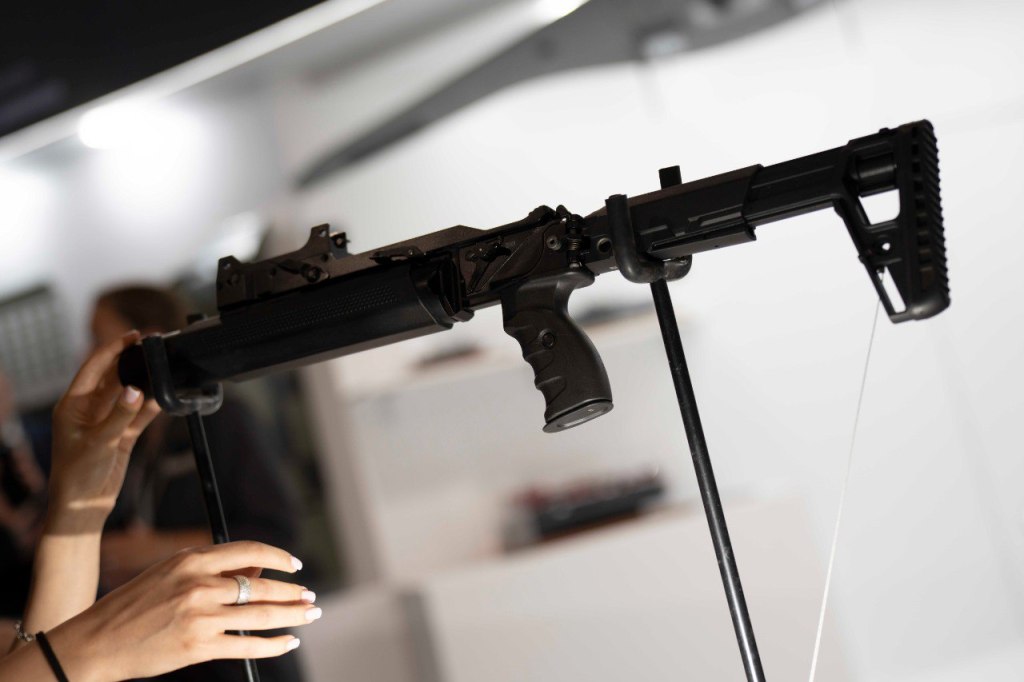
GP-46 in stand alone chassis (Kalashnikov Concern)

Intriguingly, what sets this this grenade launcher apart from the majority of previous Russian UBGLs is the special module that allows it to be used as a stand-alone launcher. The GP-46 mounts onto a stock chassis which consists of a full-size AK-12 Type 1 pistol grip and an adjustable AK-12 Type 3 buttstock. Given the large number of stand alone stock systems for launchers like the GP-25 which have emerged as a result of the war in Ukraine this development isn’t surprising.

Special thanks to Deni for sharing this footage and information with me so I can bring you guys this video. Please do check out Deni’s pages – Telegram, Instagram, Youtube.


Support Us: If you enjoyed this video and article please consider supporting our work here. We have some great perks available for Patreon Supporters – including early access to custom stickers and early access to videos! You can also find us on the History of Weapons & War app. Thank you for your support!

Russian Anti-Drone GP25 Adaptor

Drones have come to define the war in Ukraine with both sides making prolific use of the them for observation and ordnance delivery. Both sides have struggled to find adequate countermeasures for the drone threat with everything from fishing nets to anti-drone guns and from cope cages to complex electronic warfare jammers to disrupt UAV frequencies over larger areas.

The threat to individual soldiers has become increasingly serious with many units resorting to pressing sporting shotguns into service. However, not every combatant can carry a shotgun and a number of companies, engineers and fabricators have turned their attention to providing soldiers with a cheap, mass manufacturable, and effective weapon which can be issued to individual soldiers en masse.

Loading the adapter into a GP-25 (via Ingra)

In this article/video we’ll look at one of these efforts from a Russian company Ingra (ИНГРА). Ingra have developed an adaptor that converts a GP-25, 40mm under barrel grenade launcher, into a single-shot 12ga shotgun. On 13 April, Ingra announced [machine translated]:

Friends, the INGRA company has created a new, unparalleled device ROSYANKA [Sundew] for the destruction of quadrocopters. The testing stage has been completed. ROSYANKA changes the caliber of the underbarrel grenade launcher to fire a 12-gauge hunting cartridge with an effective range of 15-30 meters. The tests carried out showed the reliability, safety and efficiency of the device. We have reached the next stage, which is the production of a pre-production batch for testing by the troops. Our task is to fill the troops with the ROSYANKA product in a short time.

Later the same day they shared their first videos demonstrating the adaptor in action. In the first video the adaptor is shown being loaded with a 12ga cartridge and then inserted into a GP-25, just as a grenade would be. A second short video shows the adapter being used to shoot down a commercial quadcopter drone.

A Rosyanka 12ga adapter and pouch (via Ingra)

On their telegram channel the company posted a pair of photographs showing targets shot with an adapter at 30 metres. They claim 5mm of penetration but do not mention the length of the adapter’s barrel. From one of the photographs Ingra shared it appears that the ROSYANKA was developed in three barrel lengths, estimated to range between 2 and 5 inches in length.

On around the 5 May, the company released a slicker video demonstrating the adapter. The design appears simple, it has interfaces that allow it to be loaded and held in the GP-25s barrel which align the cartridge, which is loaded into the adaptor’s breech, with the GP-25’s firing pin. To unload the adaptor it has to be released from the launcher by depressing the grenade release catch, then the spent case needs to be extracted from the adaptor and a new cartridge loaded. The video also shows that a rear sight adapter is fitted to aid aiming the weapon.

On the 10 May I spoke to one of the company’s representatives, before the adaptor had been launched on company’s website, he explained that would be available soon and that it would cost around 12,000 rubles ($130). On the 14 May, the adaptor was launched on Ingra’s website at a lower than expected cost of 9,300 Rubles or US$102. The adapter is currently listed as unavailable on Ingra’s website but posts on the company’s social media urge interested parties to contact them directly to order.

Firing on a commercial quadcopter drone during a range demonstration (via Ingra)

In a video, shared on the 13 May, Ingra demonstrated the operation of the adaptor and also noted that it is compatible with GP-25, GP-30 and GP-34 pattern grenade launchers. Ingra’s website provides some specifications and confirms that the adapter is only available in one barrel length, of the three previously shown. The adapter is 250mm/9.8in long and weighs in at 340g/12oz. The manufacturer states is has an effective range of between 15 and 35 metres (50-115 feet) against a target with a 500mm/19.6in cross section. The adaptor can be used with 2 3/4 and 3in loads and has a warranty for up to 100 rounds of the Siberia 32g No.3 12ga which is Ingra;s recommend load. The adaptor comes with instructions, a rear sight adapter and a small pouch.

On the 16 May, Ingra shared another range video featuring a Russian combatant trying out the Rosyanka adaptor against floating balloons. The adaptor is being used in a GP-25 mounted on an AKMS with a PBS-1 suppressor. The combatant testing the adaptor notes [his comments were machine translated] the importance of seating the cartridge fully in the breech and keeping your hands clear of the muzzle in case of accidental discharge. He suggests having the GP-25 on safe to avoid an accidental discharge, hinting that one may have occurred earlier. He also demonstrates using a rod to push the spent cartridge case out of the adaptor’s breech.

Now that the adaptors are available it remains to be seen if we and when we’ll see them in use in the field with Russian troops. The system is clearly well thought out, simple to manufacture and potentially fairly effective at under 40 metres. It adapts a readily available infantry weapon to a pressing new role and may also have some close quarter anti-personnel applications.

It undoubtedly provides the operator with a means of engaging a drone but it also has drawbacks. The reloading process is comparatively slow meaning that the user is likely to only have one chance to engage a drone if it is one of the faster FPV drones and is unlikely to otherwise match a conventional shotgun in terms of reload times when engaging drones engaged in munitions dropping or observation. It also means the grenadier has to choose what to have loaded ready in his GP-25 in various situations. The limited availability of underbarrel grenade launchers also means that, depending on the unit, only one soldier per squad will have the ability to use the adaptor.

Update – 20/06/24:

A Russian telegram channel posted several photos of a damaged adaptor, stating [machine translated]:

“The first test was not successful; during the first shot, the skirt of the cartridge was torn off (it remained in the GP25, the barrel itself jumped out of the GP and flew away 30 meters.”

It may be that the user loaded the adapter with a cartridge not recommended by the manufacturer.

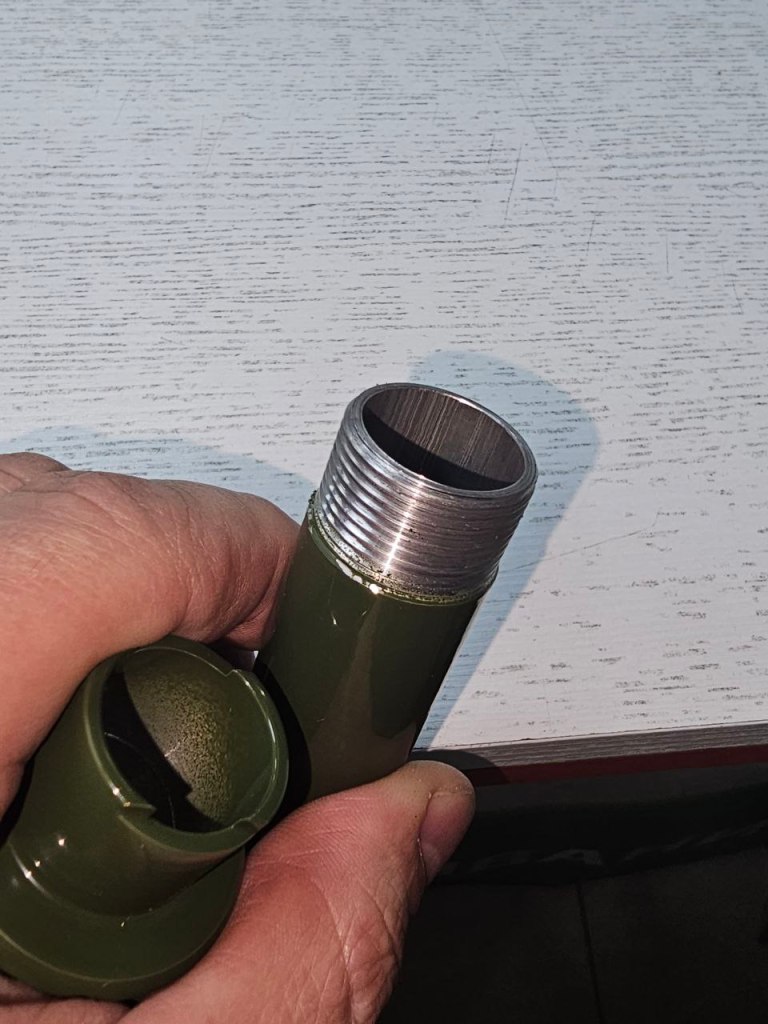
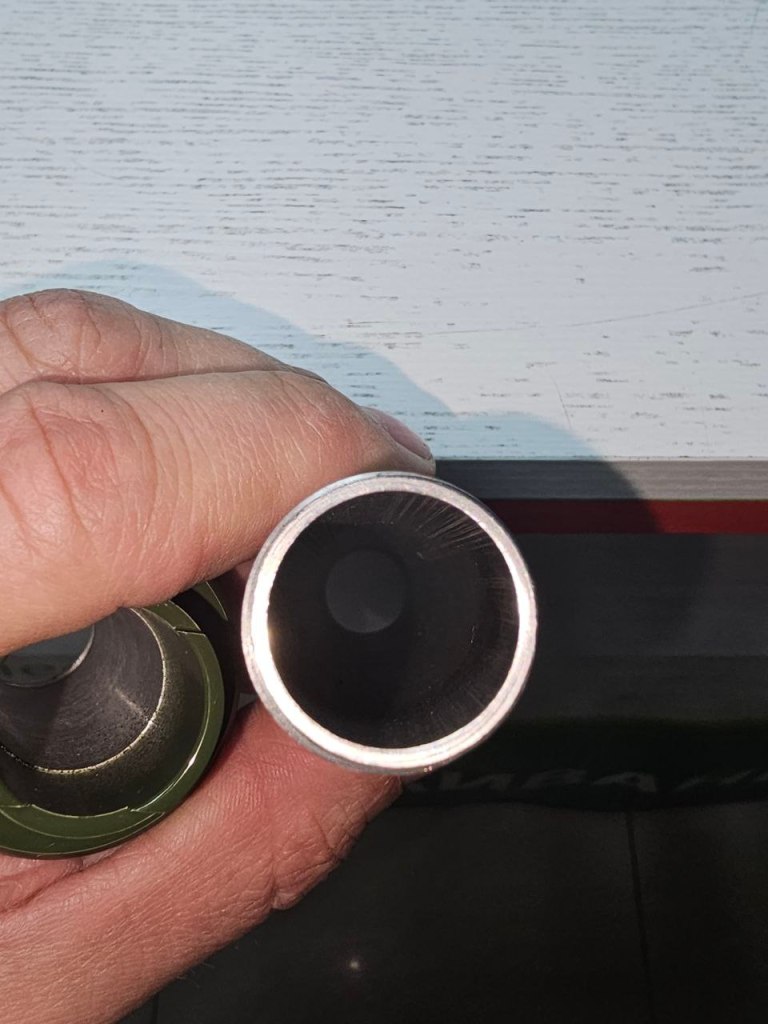
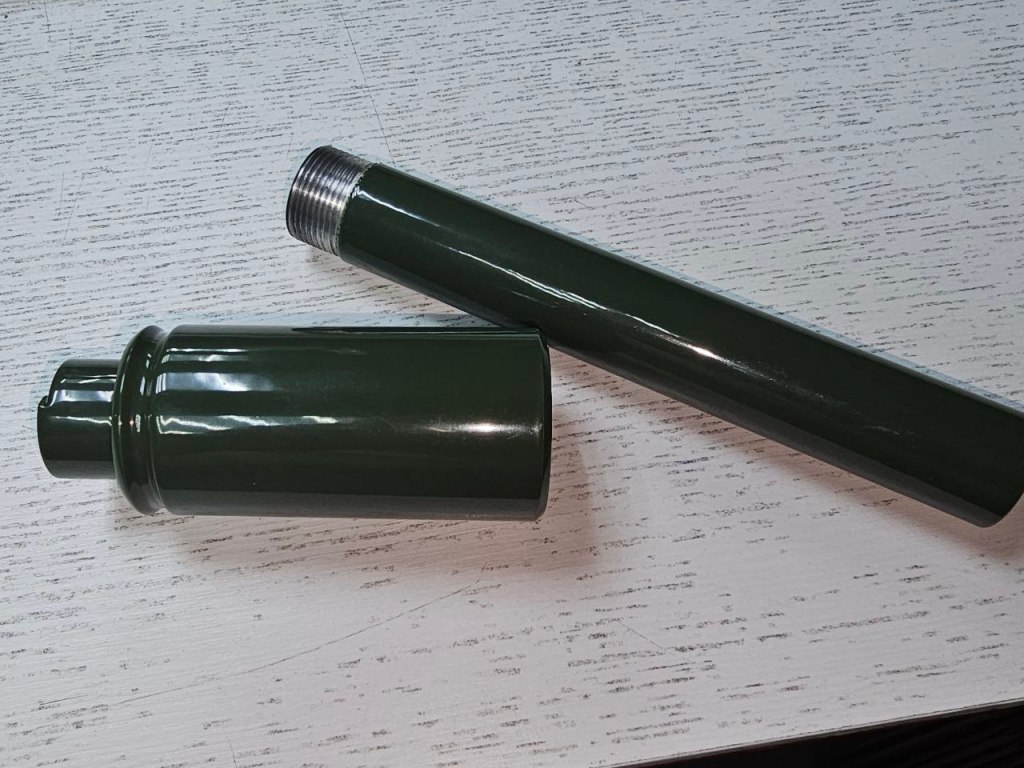
Update – 11/7/24: Photographs of a production ROSYANKA disassembled showing the threads which allows the barrel piece to screw into the wider breech section.

Update – 27/4/25:


Support Us: If you enjoyed this video and article please consider supporting our work here. We have some great perks available for Patreon Supporters – including early access to custom stickers and early access to videos! Thank you for your support!