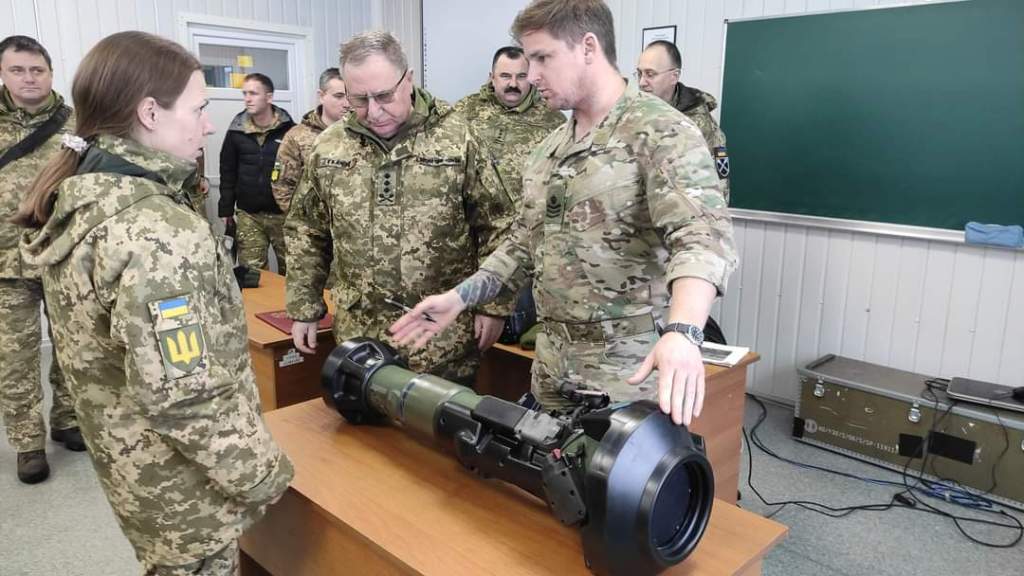
Ukrainian Marines Deploy RBS-17/Hellfire Shore Defence Missiles

The RBS-17 has been in Ukrainian service for quite some time with Sweden announcing in June 2022, that they would provide the missiles. The RBS-17 was a development of the AGM-114 Hellfire, entering service in the the early 1990s. It is a man-portable missile which weighs 48kg in addition to the launcher, firing system and laser targeting module. It is typically operated in the field by a five man team – two operating the laser targeting system and three on the weapon itself.

Check out our earlier video on the RBS-17 in Ukraine here

We first saw the RBS-17 in use in the field in a video posted in October 2022, by a page called ‘Bigcats’, the lo-res clip shows the launch of a pair of missiles. In December 2023, the Swedish government published an article and video about Ukraine’s use of the RBS-17 and the training the Swedish armed forces provided on the system. Most recently in May 2024, a clip of an Armenian volunteer unit, NEMESIS, showed a team operating an RBS-17. The video shows NEMESIS team members carrying a missile to the launcher, this gives an indication of just how ‘man portable’ they are. They load the missile and then take cover in the nearby tree-line. We can then see one man manning the control unit and the missile is launched.

It is worth noting that Norway has also provided it’s Hellfire Shore Defense System, which is externally very similar in appearance to the RBS-17. Some of the missiles in use are likely Norwegian HSDS.
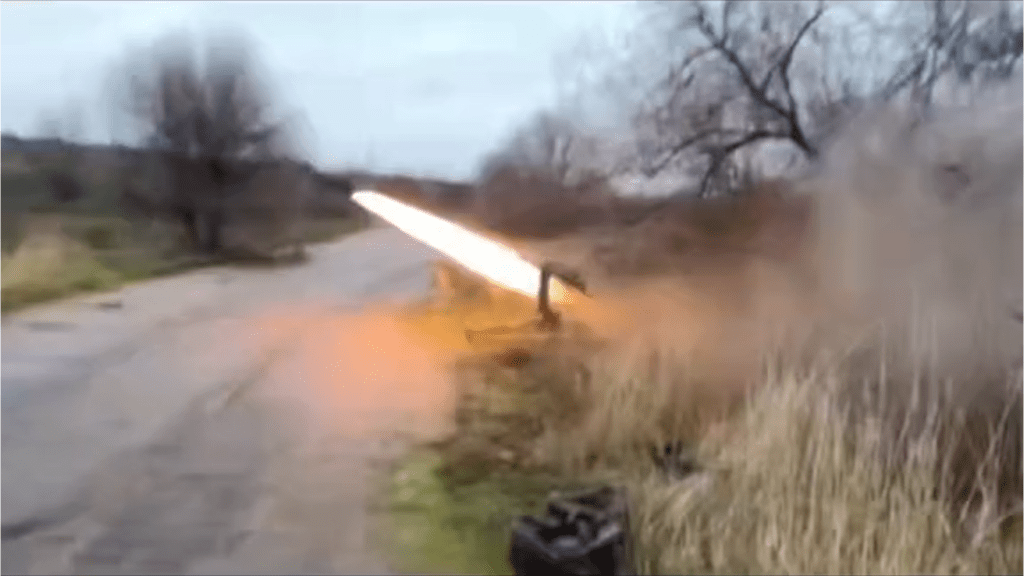
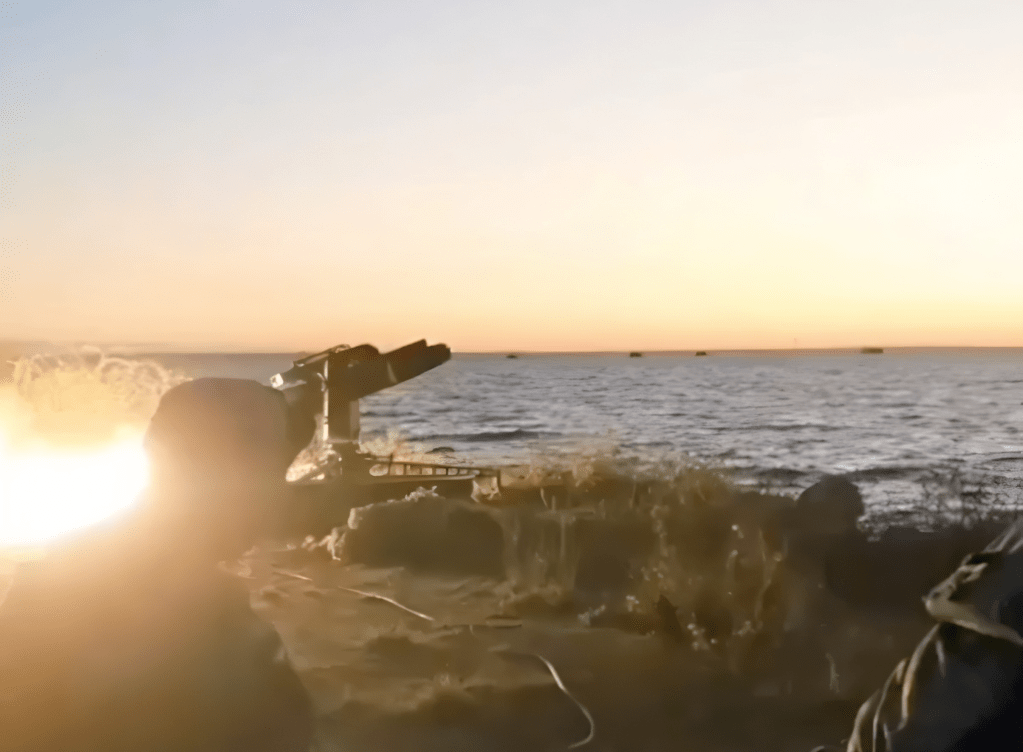
Since then we have had a series of excellent clips which are amongst the most detailed so far. The clips were posted to various TikTok accounts and show a team, which appears to be attached to one of the Ukrainian Marine brigades, operating the missile system.

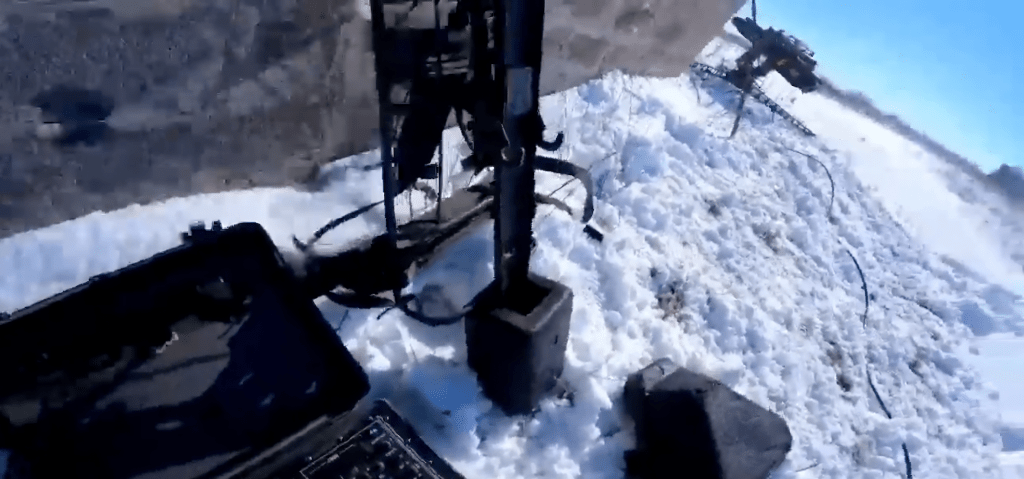
My colleague Weapons_Illustrated shared a series of videos he found on a Ukrainian serviceman’s Tiktok channel which were posted in summer 2024 but have since largely been removed. One simply shows a launch of a missile filmed relatively close to the launcher. Another pans along a missile body showing a message scrawled on the casing and also the missile’s lot number ‘98001’. While slightly blurred one Bofors sticker appears to read ‘Norwegian Hellfire Shore Defense Missile ‘ The video concludes showing a night launch across a body of water before cutting to a thermal camera showing an impact downrange. Another video shows the missile control system before cutting to showing a missile launch and then a clip of a strike on a large building which has its roof blown off. A video posted by the same channel on 20 July included a new launch video showing a missile being fired before cutting to a screen showing the destruction of a building near a large body of water. The landscape visible may suggest the footage was filmed along the Dnieper River, possibly near Krynky.
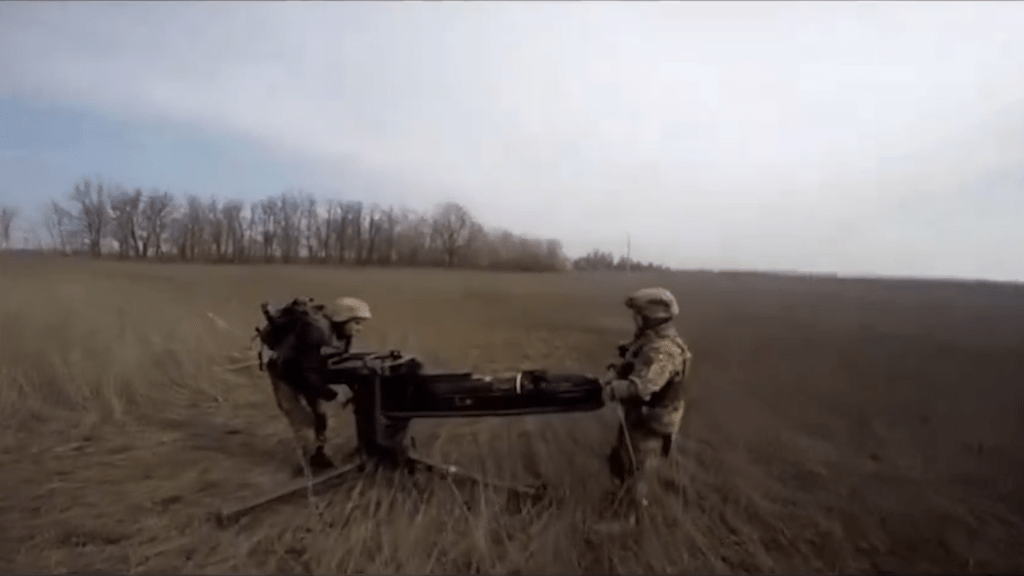
With further research I came across another affiliated account which had a number of videos showing the launch of RBS-17s dating back to January 2023. The first video posted on 3 January shows a launch of an RBS-17 with a picture-in-picture video of the operator at the launch control terminal. On the 5 March another video was posted from the same position, when the videos were actually filmed is difficult to confirm, this time the video also concluded with a clip of the impact of the missile on a target, a large building, downrange. On 13 May, a short video of the RBS-17s control terminal lit up was shared. A video posted by the account on 23 October, includes a slowed down clip of a launch and a clip showing a missile hit a target building.
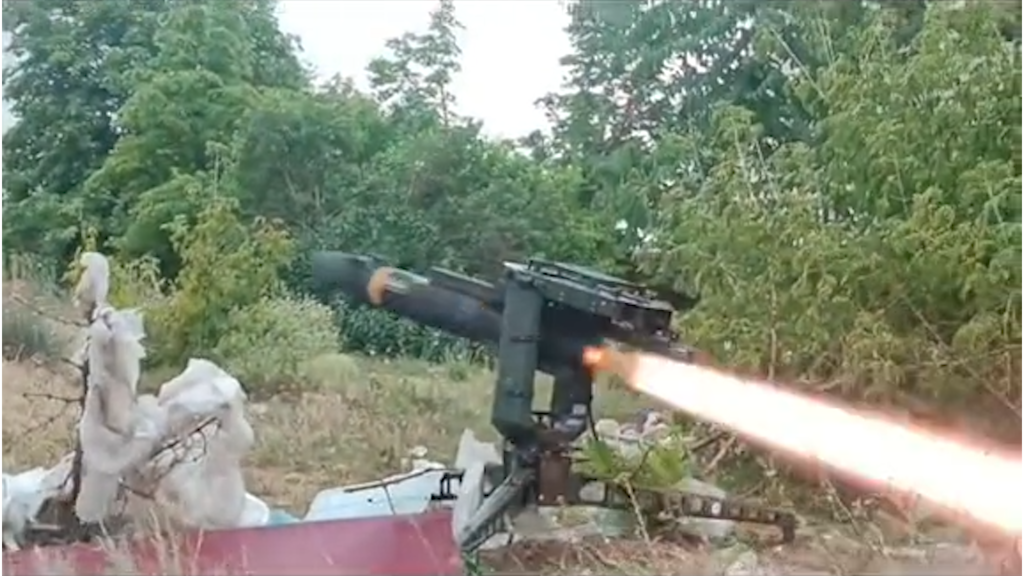
The most recent video, posted on 11 December, features the launch of an RBS-17 filmed with multiple camera angles. One shows the video from the launch control station with a picture-in-picture view of the operator at the controls as well as a show showing the missile leaving the launcher, which has been positioned on a road. The video concludes with some overwatch drone feed footage of an impact on a building.

Update – 15/08/24:

One of the accounts which previously shared launch videos also recently shared a new video of a missile being launched from the edge of a field. Given earlier videos posted by the same individual showed HSDS markings this missile may also be a Norwegian HSDS.

Update – 8/9/24: New footage, shared in mid-August by Ukrainian marines operating a RBS-17/Hellfire SDS, geolocated to the Kherson region.

Special thanks to my colleague Weapons Illustrated who found the initial recent videos of the RBS-17 in action. Check out his project tracking various weapon systems seen in Ukraine here.


Support Us: If you enjoyed this video and article please consider supporting our work here. We have some great perks available for Patreon Supporters – including early access to custom stickers and early access to videos! You can also find us on the History of Weapons & War app. Thank you for your support!
Swedish RBS-17 Missiles in Ukraine

In June 2022 Sweden announced it would provide Robot-17 (RBS-17) coastal defence missiles to Ukraine. These missiles are used by Sweden’s Amphibious Corps to interdict the movement of enemy vessels along Sweden’s coast.

RBS-17 is a Bofors Defense (now Saab Bofors Dyanmics) led development of the AGM-114 Hellfire. Work on the Swedish coastal defence missile began in the 1980s. It is man-portable with the missile weighing 48kg in addition to the launcher, firing system and laser targeting module. It is typically operated in the field by five man teams, with two operating the laser targeting system and three on the weapon itself.

RBS-17 launch October 2023 (via social media)

On launch the missile climbs to several hundred metres and seeks the laser-marked target. The system has a maximum range of around 8km and carries a 9kg high explosive warhead. While designed to engage vessels the RBS-17 can also be used against ground targets.

On 2 June 2022, the Swedish government announced the transfer of an undisclosed number of RBS-17s. They are believed to have been seen in theatre for the first time in a video published on 20 October, although it appears it may have been filmed earlier. The video was shared by a group called ‘Bigcats’, the lo-res clip shows the launch of a pair of missiles. ‘Bigcats’ haven’t shared any further imagery of the missiles since.

In September 2022 the Norwegian government also announced plans to provide Ukraine with their Hellfire-derived Norwegian Shore Defence Missile System. The transfer of 160 missiles and associated equipment was announced in response to a Ukrainian request. In late March 2023 photographs of several pieces of wreckage from one of the missiles was posted on Telegram. It was hypothesised that they were found in the area of ​​the Kinburn Spit and had been fired across the water by an element of the 73rd Naval Center of Ukraine’s Special Operations Forces.

An RBS-17 launch, c.September 2022 (via social media)

It was over 8 months before another video of a the weapons in action was shared. In mid-August 2023 a brief clip was published showing a Hellfire-patterned missile (which may be an RBS-17) being fired and apparently detonating downrange. Several months later at the end of October perhaps the best piece of footage of one of the missiles being launched was shared. In the video we can see the missile being launched and as the camera pans the laser targeting module can also be seen.

In August 2023, Army Inform, the news agency of Ministry of Defense of Ukraine, published an article outlining how the RBS-17 is used noting that it is most frequently used against Russian defensive positions, dugouts or lightly armoured vehicles. The article included a photograph of a display showing the RBS-17 set up. In the background a Ukrainian combatant can be seen sat on a missile case, he’s wearing the patch of the Zaporizhzhia-based 27th River Fleet Division (27 ODnRK).

An RBS-17 launch in Ukraine Nov/Dec 2023 (via Swedish MoD)

On the 18 December, the Swedish government published an article about Ukraine’s use of the RBS-17 and the training the Swedish armed forces provided on the system. The article explains that Ukrainian personnel were secretly trained on the system. The training appears to have been carried out during Summer 2022 and took place in time to coincide with the delivery of the RBS-17s. Swedish personnel have also continued to be on call for answering the technical and operational queries of the Ukrainian teams using the system.

The Swedish article also included a short video of one of the missile systems in operation in Ukraine. The team appears to be in cover behind a wall. The GoPro footage shows the missile near by and the control unit as well as transport cases near by. A Polish MSBS Grot rifle can also be seen leaning on the wall next to the operator.

Update – 22/05/24:


Support Us: If you enjoyed this video and article please consider supporting our work here. We have some great perks available for Patreon Supporters – including early access to custom stickers and early access to videos! Thank you for your support!


NLAW In Ukraine

NLAW is the British Army’s name for the Saab Bofor’s developed MBT LAW, in the early 2000s the British Army was looking for a more capable replacement of its LAW80. The Saab offering, Next Generation Light Anti-tank Weapon, won the contract in 2002 beating out several competitors including the SRAW-based Kestrel from Lockheed Martin/BAe. 

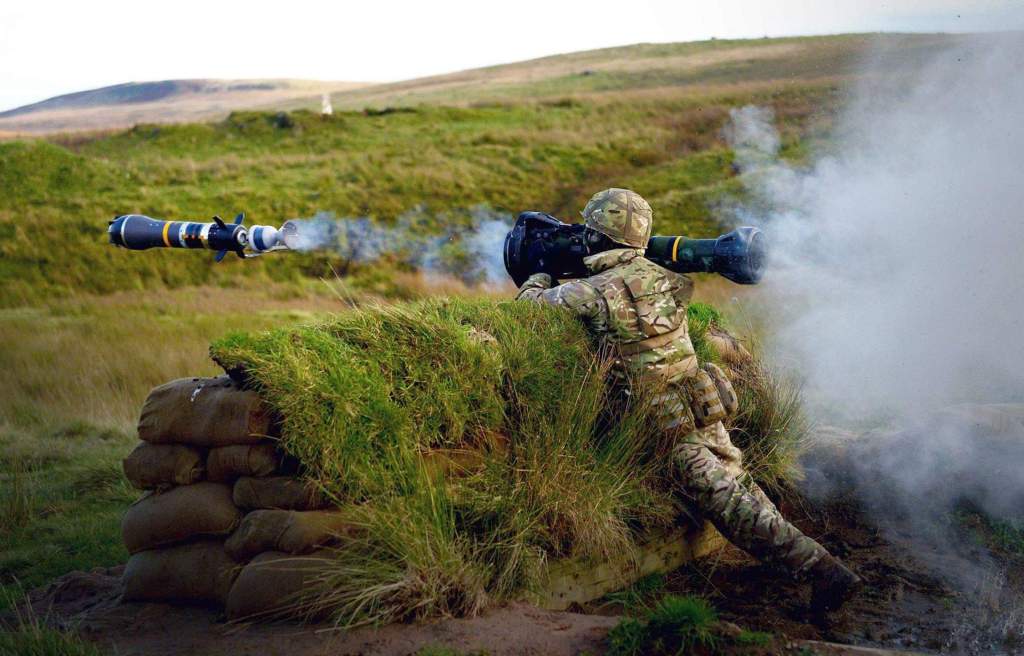
British soldier firing NLAW (British Army)

The UK has just announced the transfer of light anti tank weapons to Ukraine in light of the continuing tensions with Russia. As such the UK is the latest nation to announce that they will be providing weapons to Ukraine. They follow US shipments of Javelin Missiles in December 2021, year and we’ve already seen these in the hands of Ukrainian troops. Most recently it has been confirmed that Lithuania plans to supply anti-tank systems to Ukraine too. The UK’s defence minister Ben Wallace stated that: “We have taken the decision to supply Ukraine with light, anti-armour, defensive weapon system”, while this does not specifically name NLAW, this describes the role which NLAW fulfils. 

So what is NLAW? 

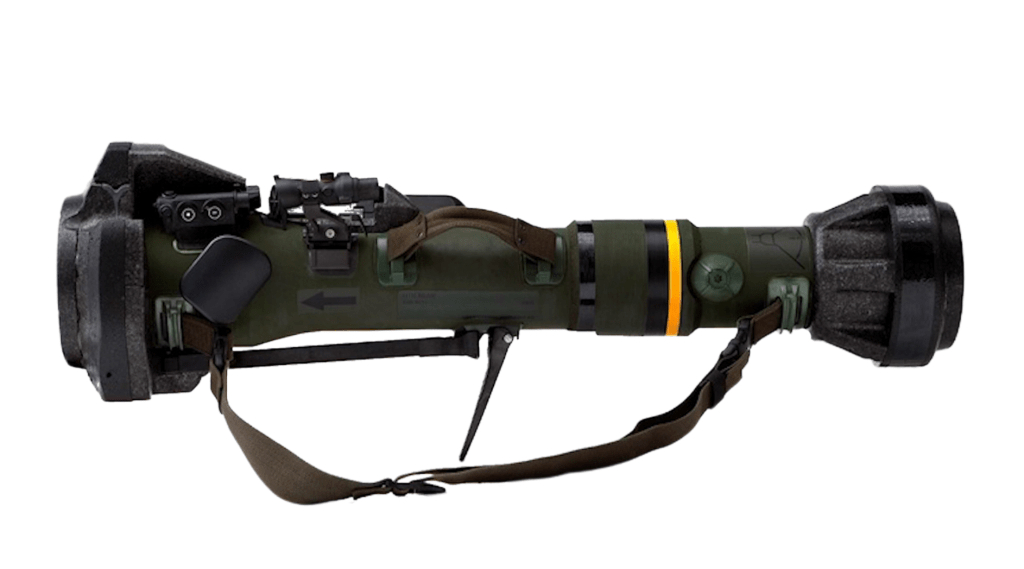
NLAW is a disposable, shoulder-fired, single shot system which weighs about 12.5kg or 27.5lbs. It uses a predicted line of sight guidance system which calculates where the target will be when the missile reaches it. Like Javelin it is capable of targeting a tank’s weakest point, its top side.

NLAW (Saab)

The NLAW has two firing modes: Direct Attack, with the missile flying directly to point of aim, useful for engaging static targets. While the second, Overfly Top Attack, uses the Predicted Line of Sight (PLOS) system. The guidance algorithm optimises the trajectory of the warhead on an elevated flight path over the target with the onboard proximity fuze then detonating and firing an explosively formed penetrator down onto the target. 

In British service the NLAW was selected to replace the LAW-80, a 94mm unguided anti-tank rocket, British Army analysis found that in order to provide adequate close range defence against armoured vehicles “significant numbers of NLAW will be required in order to ensure there is sufficient coverage of the battlefield.” This meant the system had to be capable and affordable. Since its delivery and introduction into service in 2009, the NLAW has been the secondary anti-tank weapon of the British Army’s specialised anti-tank platoons’, with the Javelin being their primary. The NLAW is also available for issue as the primary infantry light anti-tank weapon. The British Army describes it as “non-expert, short-range, anti-tank missile that rapidly knocks out any main battle tank in just one shot by striking it from above.” While not cheap, at around £20,000 per unit, NLAW costs significantly less than the longer-ranged, more complex Javelin [estimated at around £70,000 per unit]. It is currently in service with Finland, Sweden, Luxembourg, Indonesia and Saudi Arabia. It has seen action during Saudi Arabia’s interventions in Yemen.

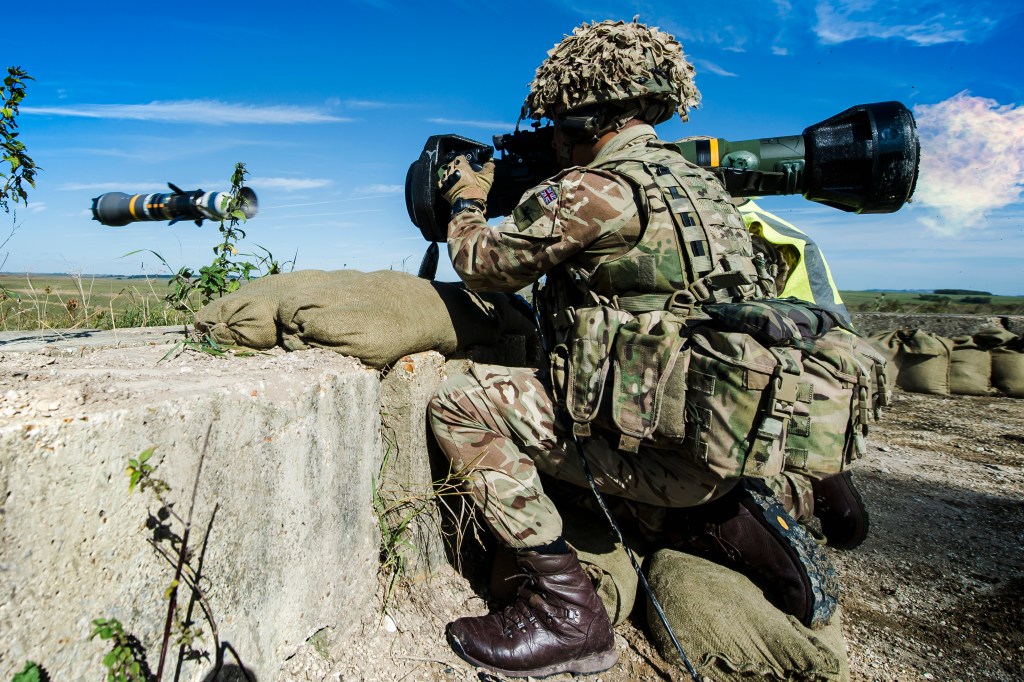
A rifleman of 1 Gurkhas fires an NLAW (Corporal Stephen Harvey / UK MoD)

The weapon can engage close range targets at as close as 20m and uses a soft launch system that enables it to be fired from enclosed spaces. It can take on static target at 600 to 800m and moving ones at 400m. Technically, NLAW is not an anti-tank guided missile as the missile is not guided by an onboard system once it has been fired. Instead it used a Predicted Line of Sight (PLOS) system which enables it to be used like a fire and forget ATGM. 

The weapon’s operator activates the PLOS system and the user tracks the target for 3 to 6 seconds in the NLAW’s Trijicon Compact ACOG 2.5×20 sight before firing, the guidance system calculates the predicted flight path to the target to ensure a hit.

The number of NLAW being dispatched by the UK has not been confirmed although several flights of RAF C-17s were made overnight on 17th January, 2022. Footage released by the Ukrainian Ministry of Defence showing the arrival of the NLAWs enables us to estimate that each flight could have carried somewhere between 180 and 216 NLAWs.

A still from a Ukrainian MoD video showing the arrival of the NLAWs (source)

It isn’t clear just how many NLAW systems the UK has stockpiled but it is likely that as missile systems have a limited shelf-life that the older systems may have been transferred first. The terms of the agreement to transfer the NLAWs hasn’t been made public but it was confirmed small teams of British troops had accompanied the weapons to provide initial training to Ukrainian forces on how to use them. This is in line with Operation ORBITAL, the UK’s training mission to Ukraine which was established in 2015, following the illegal annexation of Crimea. Wallace was keen to stress that “this support is for short-range, and clearly defensive weapons capabilities; they are not strategic weapons and pose no threat to Russia. They are to use in self-defence and the UK personnel providing the early-stage training will return to the United Kingdom after completing it.”

As of the time of writing more than 10 flights have been observed carrying military equipment from the UK. It is estimated that some 2,000 NLAW have been transfered. This was tacitly confirmed by remarks made by Wallace to the press.

A Ukraine MoD photo showing a training session on NLAW being delivered by members of the OP Orbital training team. (Ukraine MoD)

The UK has been working with Ukraine not just through Op ORBITAL but also more broadly with a number of agreements being signed in 2021 to support Ukraine’s naval capability. While the usefulness of the NLAWs are confined to close range engagements the move is clearly a symbolic signal to Russia. 


If you enjoyed this video and article please consider supporting our work here. We have some great perks available for Patreon Supporters – including custom stickers and early access to videos! Thank you for your support!


Bibliography:

Next Generation Light Anti-Tank Weapon (NLAW), ThinkDefence, (source)

Britain Delivered Military Weapons to Ukraine, Ukraine MoD, (source)

UK Delivers Light Anti-Tank Defensive Weapon Systems To Ukraine, OvertDefense, (source)

One Shot – One Armored Target. Javelin ATGM, Ukraine MoD, (source)

Statement by the Defence Secretary in the House of Commons, 17 January 2022, UK MoD, (source)

NLAW, Saab, (source)

British Military Aircraft Rapidly Supplying Weapons to Ukraine, UKDJ, (source)

NLAW – The Ultimate Tank Killer, Saab, (source)

NLAW | 2 PARA | Noble Partner, British Army, (source)

Small Arms & Support Weapons, British Army, (source)

Ministry of Defence Major Projects Report 2008, National Audit Office, (source)