Polish Rifle Grenades for Ukrainian Drones

Earlier this summer, Polish PGN-60 rifle grenades began to appear in the hands of various Ukrainian units. These 68mm fin-stabilised, High-Explosive Anti-Tank (HEAT) grenades were developed in the 1950s, to provide Polish infantry with a ranged anti-tank and anti-personnel weapon.

Introduced in the early 1960s they were used in conjunction with the specially adapted Karabinek-granatnik wzór 1960 (Carbine-grenade launcher M1960) which had a spigot onto which the grenade’s tail was slid. The grenade was launched by a blank UNM ‘Universal Propellant Cartridge’. The 7.62×39mm wz.1960 and later wz.1960/72 are long out of Polish service, but it seems that the Polish military decided to retain the rifle grenades in storage. The rifle grenade concept was superseded in Polish service by the issuing of the lightweight RPG-76 Komar anti-armour rocket propelled grenade. These have also appeared in Ukraine.
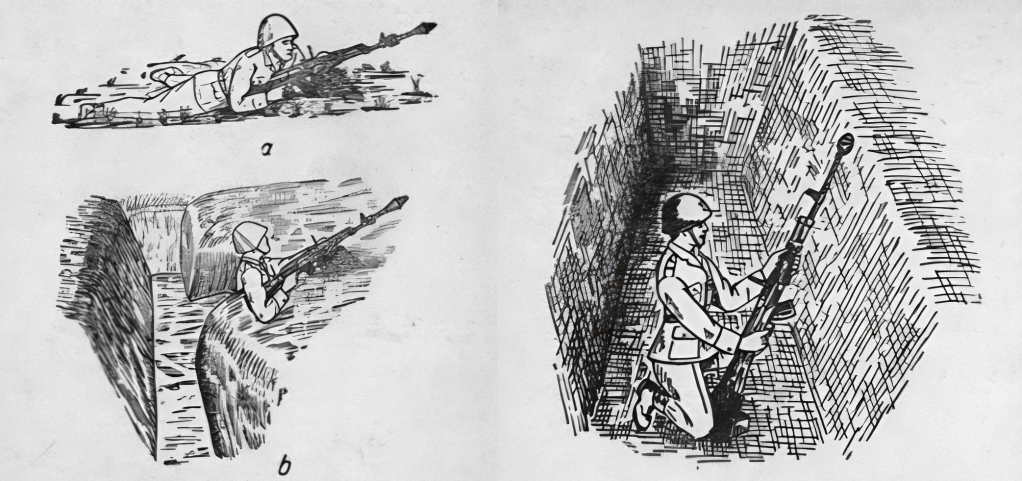
Polish manual illustrations showing PGN-60 and KGN rifle grenades (source)

The stated penetrating power of the PGN-60 varies depending on the source; some say 160mm others suggest up to 200mm of RHA plate. The grenade itself is either Impact or Graze fuze initiated.

While we have seen use of improvised rifle grenades in Ukraine, it is unlikely the PGN-60s have been used for their original purpose, instead they appear to have been either harvested for their explosive content or used as warheads for FPV (First Person View) drones.

One example of the use of the rifle grenades by a drone team was shared by Joe McDonald, a British volunteer serving with the Ukrainian Marines in Kherson. Joe kindly shared some photos of a consignment of Polish rifle grenades his unit received in July. Included in the consignment were not only the PGN-60 HEAT grenades but also Polish KGN anti-personnel grenades. The first sighting of one of the KGN grenades came earlier, back in mid-April 2024. Sources suggest that the KGN grenades contain nearly 250 fragmentation pieces. One of Joe’s photograph shows 10 PGN-60s and five KGNs, along with their detached tail assemblies.
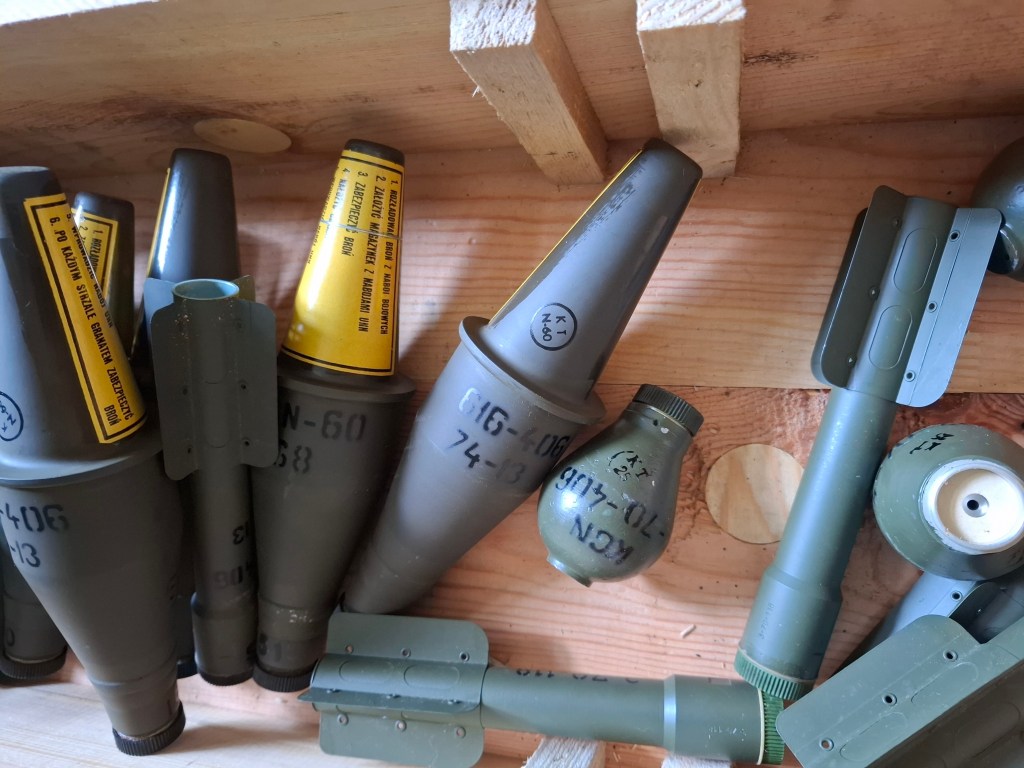
PGN-60 & KGN rifle grenades, July 2024 (Joe McDonald)

The yellow label markings are instructions on how to use the rifle grenade, they read [machine translated]:

  1. Unload the rifle
  2. Load magazine with propellant cartridges
  3. Put the rifle on safe
  4. Seat the grenade
  5. Chamber a propellant cartridge
  6. After each shot put the weapon on safe

Other markings include various factory, year and lot markings.
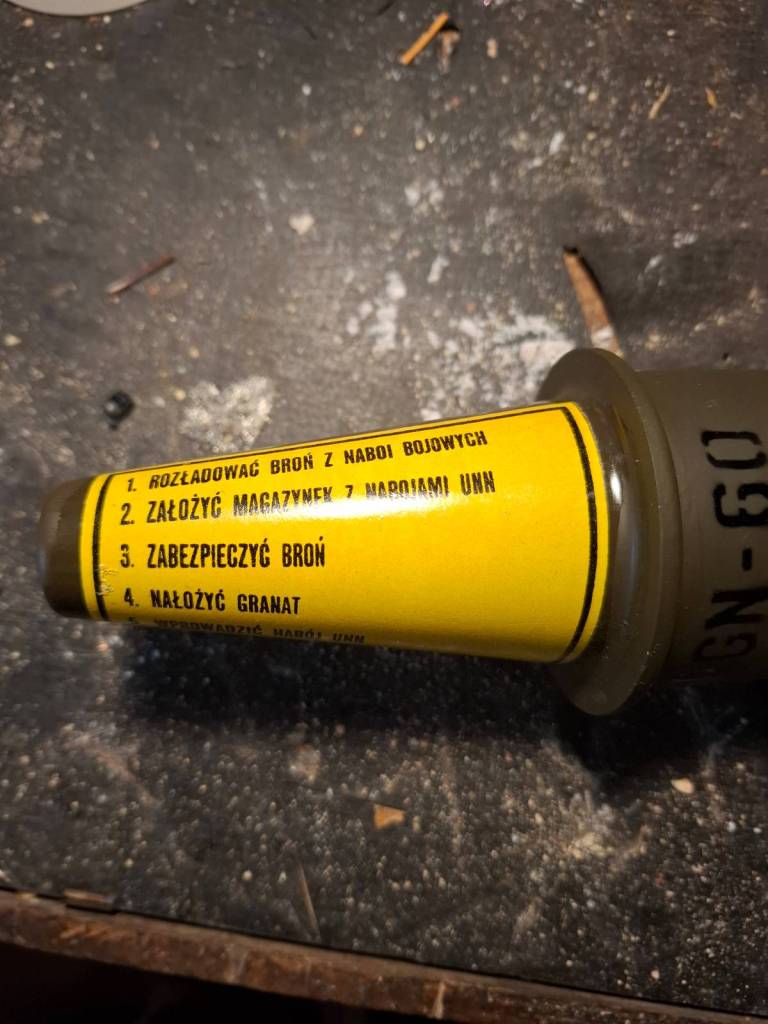
PGN-60 markings (Joe McDonald)

Joe noted that the KGN grenades have either been used as drone-dropped munitions or have been mounted on 7-inch first person view (FPV) drones in addition to a quantity of additional plastic explosive. Joe recently shared some video of five of the PGN-60 warheads electronically wired and ready for mounting on an FPV drone, these are some of the last of the grenades his unit received in July.
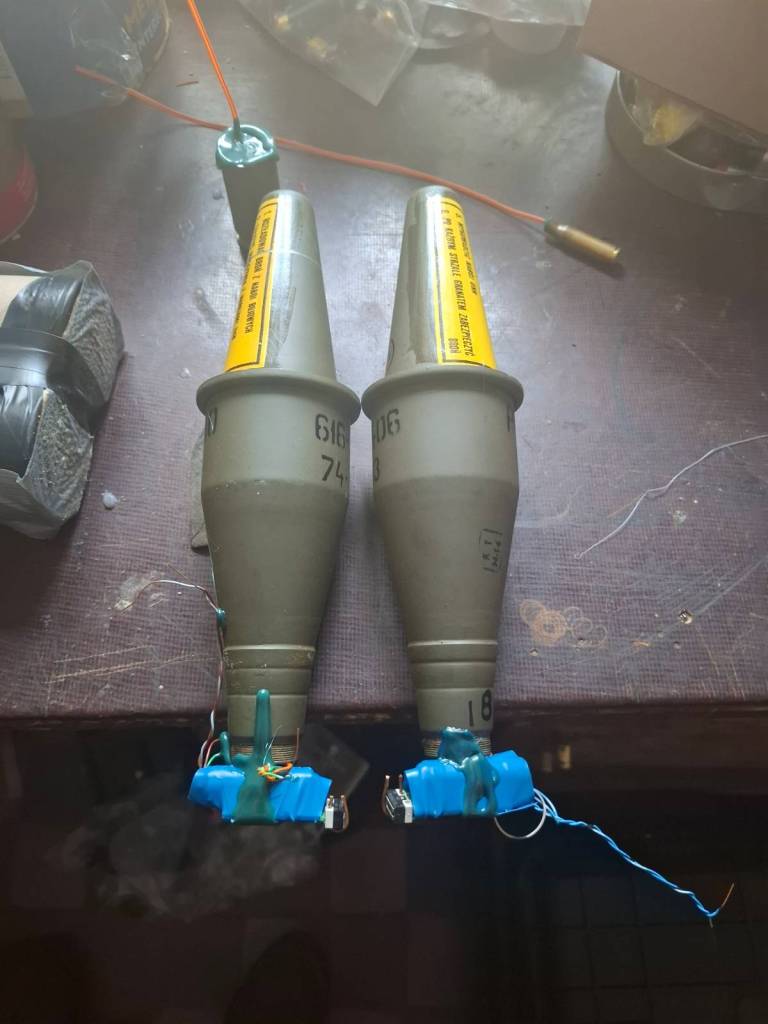
PGN-60 rifle grenades prepared for mounting on FPV drones (Joe McDonald)

The PGN-60s aren’t the only interesting rifle grenades to turn up. In September a photograph of a 1990-dated French 58mm PAB F2 anti-tank rifle grenade was shared. France may have provided them for their explosive content or to accompany the 1,000 FAMAS F1 Valorise rifles which have been transferred to Ukraine. Only one image of this type of rifle grenade has surface so far but from the image it appears it’s tail assembly has been removed and is likely to be utilised as part of an FPV.

A French PAB F2 anti-tank rifle grenade (via French Aid to Ukraine)

It is currently unclear just how many Polish and French rifle grenades have been transferred to Ukraine. The imagery sample featured in this article/video represents all of the imagery I have been able to find. If you have come across any additional sightings of the grenades I’d love to hear from you.

Special thanks to Joe for his help with this video. Check out Joe’s channel here.

Update – 27/10/25:

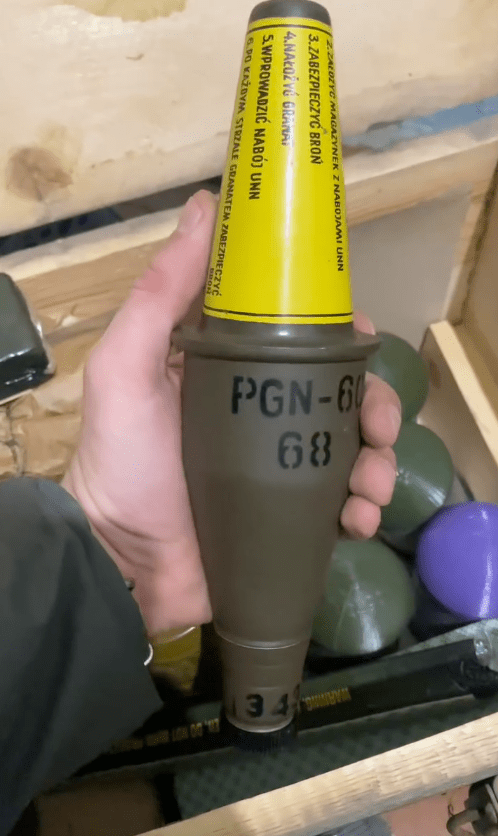
Another PGN-60 was seen in a short video shared by an officer with Ukraine’s Unmanned Systems Forces in February 2024.

Bibliography:

Karabinek-granatnik wzór 1960/72 Rifle-grenade launcher, AK-Info, (source)

Grenades for rifle-grenade launcher systems kbkg wz.60 and kbkg wz.60/72, AK-Info, (source)

PGN-60, CAT-UXO, (source)


Support Us: If you enjoyed this video and article please consider supporting our work here. We have some great perks available for Patreon Supporters – including early access to custom stickers and early access to videos! You can also find us on the History of Weapons & War app. Thank you for your support!
Britain’s First Anti-Tank Weapon

The British Army’s first dedicated anti-tank weapon was a rifle grenade. The No.44 Rifle Grenade was developed towards the end of the First World War to take on the emerging threat of German tanks.

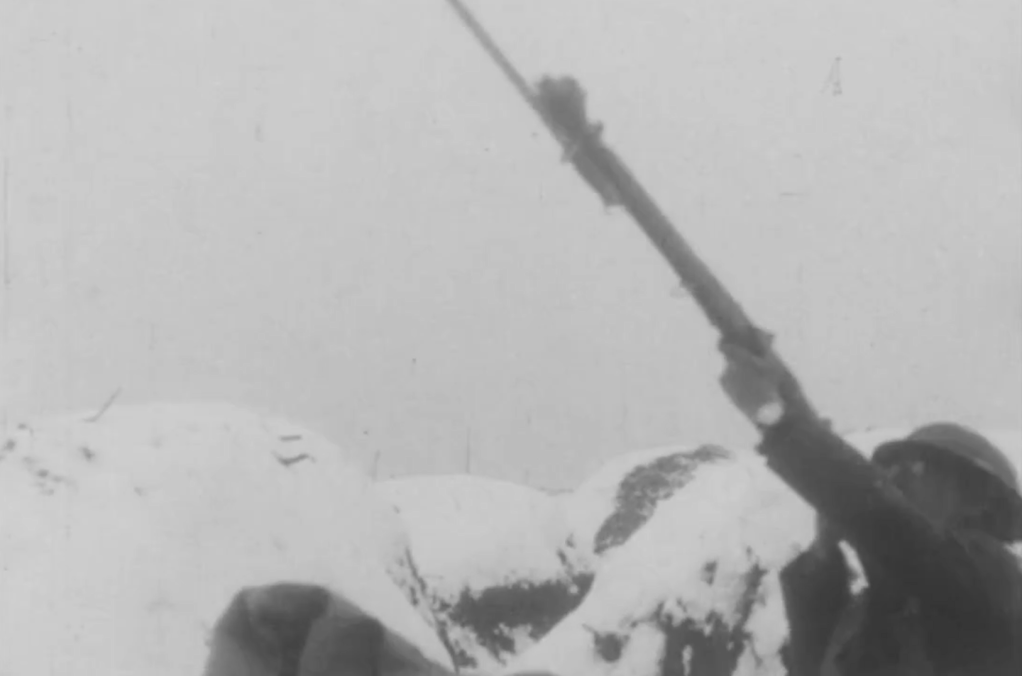
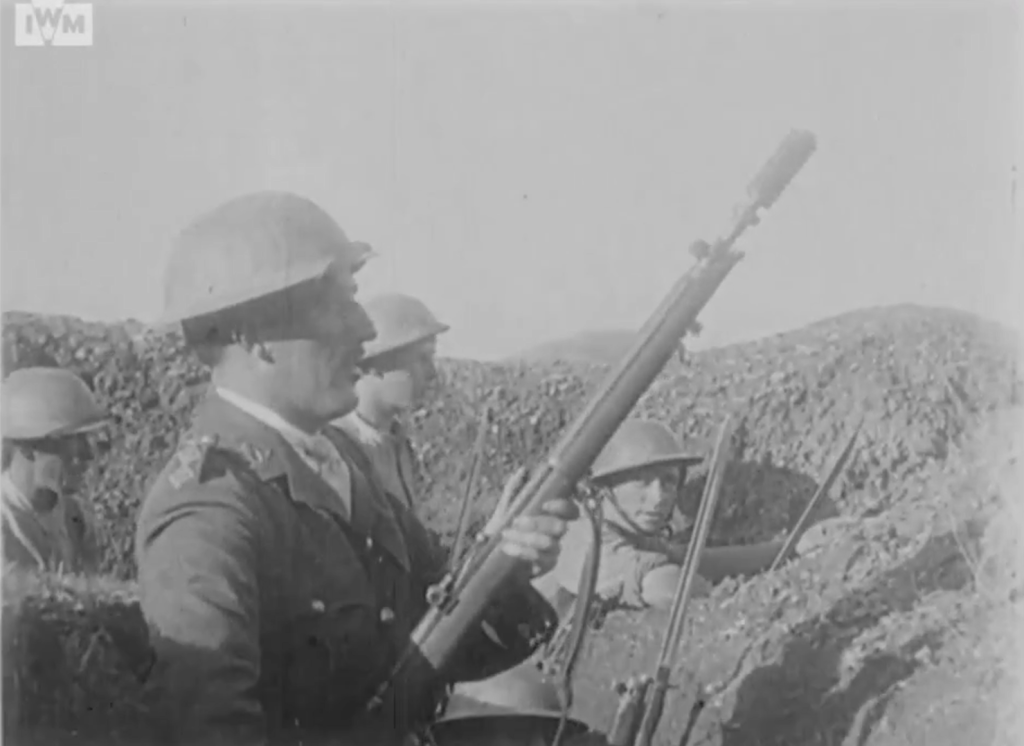
A British officer firing a No.3 Mk2 Rifle Grenade (IWM)

The No.44 could be fired from a Short Magazine Lee-Enfield MkIII rifle, the British had developed a plethora of rod and cup discharger based rifle grenades but the No.44 was the first specifically designed with tanks in mind. 

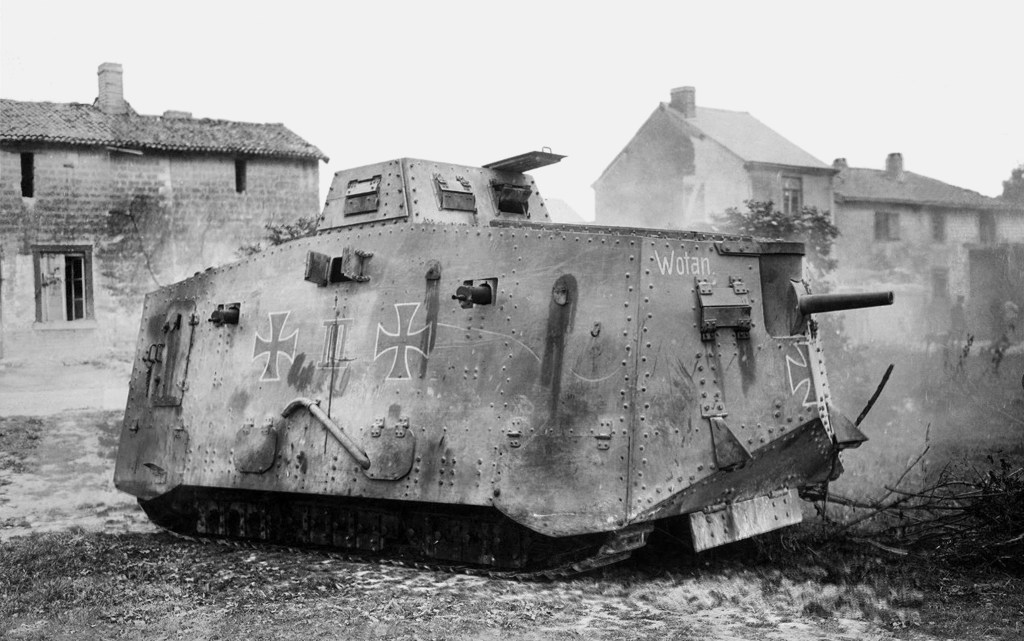
By 1918 the German Army had responded to the threat of British and French tanks by developing their own, the A7V, albeit in small numbers, and by fielding captured allied tanks. 

The A7V was a leviathan at over 3.3m tall and more than 30 tons. It would be crewed by at least 18 men. It was decided that the infantryman needed an effective means of taking on tanks.

A German A7V (US National Archive)

Sources suggest that the grenades were developed by the by the Royal Engineers Experimental Station with input from the Tank Corps. The No.44 was largely based on the earlier No.24 rifle grenade. The British Army had been using rifle grenades with rods since February 1915 with the No.2 rifle grenade. 

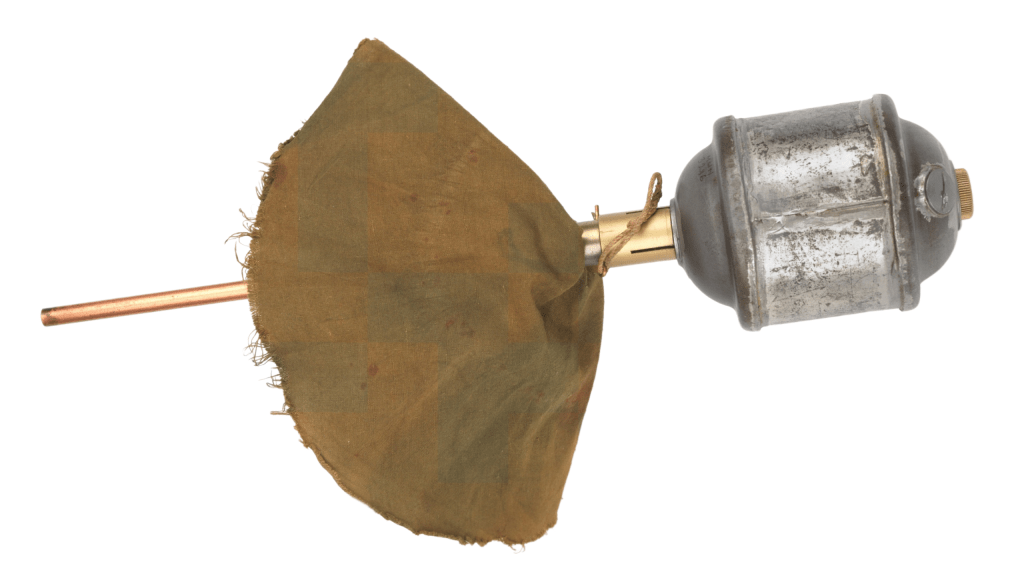
No.44 Anti-Tank Grenade (IWM)

A myriad of grenade designs were developed during the war with dozens of designs entering service between 1915 and 1918. Eventually the British Army moved away from using rodded rifle grenades, because of the implications of barrel wear from the friction of the rods, and focused on discharger cup based designs. The No.44’s spiritual descendent, the No.68, introduced in 1940, would follow this trend and be fired from the same discharger cup used by to fire No.36 grenades fitted with a gas check.    

The No.44 grenade itself is made up of a pair of pressed tin plate pieces which make up the top and bottom of the bomb with a rolled sheet of tin making up the central body. The parts were soldered together with a filling plug also soldered into the top of the grenade. The grenade itself contained either Amatol 80/20 or Amatol 83/17 explosive, sources suggest about 11.5 ounces. While externally it may resemble later shaped charges, it was not, the explosive filled the space around the central detonator assembly.

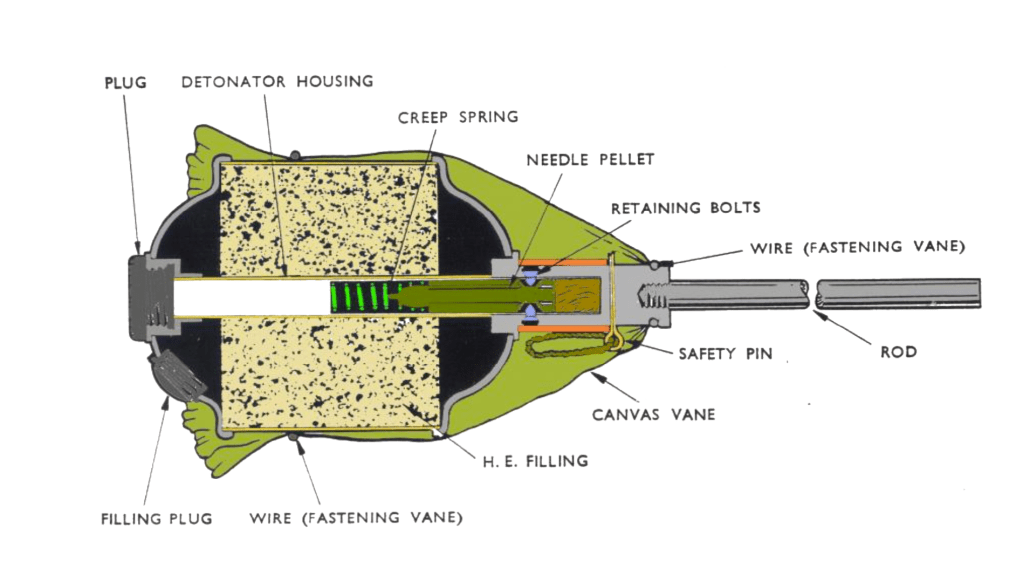
Sectional diagram No.44 Anti-Tank Grenade

The ignition system was essentially a .297/230 cartridge case and a detonator. On firing a release socket moved to allow the retaining bolts to release the striker (or needle pellet) it had been retaining. The striker was then simply held back from the detonator by a spring. When the grenade struck its target inertia cause the striker to over come and compress the spring, allowing the striker to ignite the detonator and set off the grenade’s main filling. Given mass of the bomb and the type of detonator used the No.44 was probably intended for use at very short ranges.

Soldiers firing rod rifle grenades (IWM)

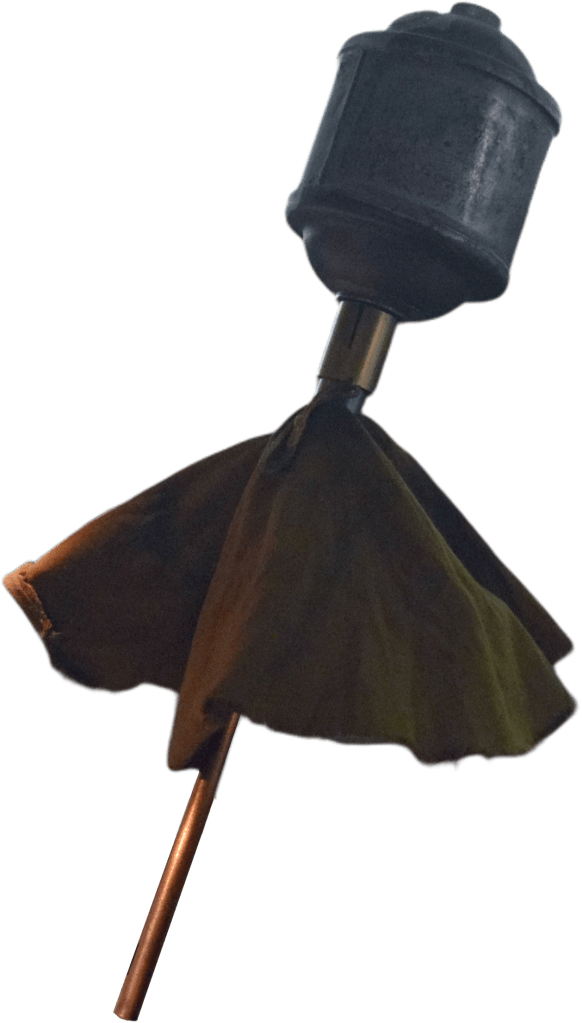
To use the grenade the firer would remove the wire fastening around the grenade to free the canvas vane. This would also allow access to the safety pin. The top plug could be undone and the detonator inserted. The rod was then slid down the muzzle of the user’s rifle. The safety pin could then be removed. A blank cartridge would be loaded into the rifle and when the trigger was pulled the was grenade launched by the gases from the cartridge pushing the rod out of the barrel. The No.44’s flight would be stabilised by the canvas skirt or vane.    

There’s no mention of the grenades in the British Army’s Small Arms Committee Minutes so its development must have been documented elsewhere. It does, however, appear in the List of Changes and is known to have been issued from April 1918 onwards but further primary research is needed to find out more about its development, designers and testing.

No.44 Anti-Tank Grenade (Matthew Moss)

The No.44 remained in service into the inter-war period but does not appear in any of the post-war Small Arms Training manuals. Several were published during this period, the first in 1924 and a second in 1931 – the No.44 appears in neither of them. The final pre-war Small Arms Training pamphlet on grenades, published in 1937, is confined to just the No.36 grenade. According to Ian Skennerton’s book on British grenades there were no No.44s remaining in stores by April 1931 and it was declared obsolete. 

Sources disagree on the number of No.44s manufactured with some suggesting just under 100,000 while others suggest between 125,000 and 150,000. According to Skennerton 9,800 were issued between April and November 1918. A very small amount when compared to the hundreds of thousands of other, more widely used grenades held in stores at the end of the war.  

The German A7Vs were first deployed in March 1918, but only saw their first action the following month. With only 20 A7Vs built and the design proving relatively impractical the Allies had little to fear from German tank attacks. Sadly, there are no readily available records of the No.44’s use or its effectiveness.

British solider firing a cup discharger rifle grenade (IWM)

The A7V’s armour consisted of 5 to 30mm of steel plate depending on location on the tank. This steel plate was not hardened which may have increased the No.44’s effectiveness against it. It may be that the No.44 would have had to have been fired at close range and strike a vulnerable point on the attacking vehicle to have the most effect.

While not the only anti-tank grenade to be developed during the period, the French also developed several rifle grenades, and not as famous as the German T-Gewehr, it does represent Britain’s first dedicated infantry anti-tank weapon. 


If you enjoyed this video and article please consider supporting our work here. We have some great perks available for Patreon Supporters – including custom stickers and early access to videos! Thank you for your support!


Bibliography:

An Introduction To British Grenades, I.D. Skennerton, (1988)

British Grenade Rifle No. 44 Anti-Tank, AmmunitionPages, (source)

Grenade, Rifle No 44 A.T. (Anti Tank), Imperial War Museum, (source)

Grenade, Rifle, No 44 Anti-Tank (Sectioned), Imperial War Museum, (source)

British No.24 Mk.II Rod Grenade, Inert-Ord.net, (source)

Men Against Tank, J. Weeks, (1975)