
On the 5th May 1980, the world was spectacularly introduced to the Special Air Service and their Browning Hi-Power’s with extended magazines.
22 SAS formed the Counter-Revolutionary Warfare Wing in the 1970s, after the 1972 Munich Massacre, and quickly took a lead in developing counter-terrorism tactics. They gained worldwide notoriety in 1980, during Operation Nimrod, the assault ended the Iranian Embassy Siege. It was during Nimrod that the SAS’ CRW squadron was seen in action for the first time.
I began to notice the extended Hi-Power magazines while examining photographs from the operation for another upcoming video. As I looked closely I began to notice more and more holstered Browning Hi-Powers with extended magazines. The Hi-Power’s standard double-stack, single-feed magazine holds 13 rounds, decent for the period, however, SAS troopers evidently saw the benefit of having more ammunition ready to go on their secondary weapon.
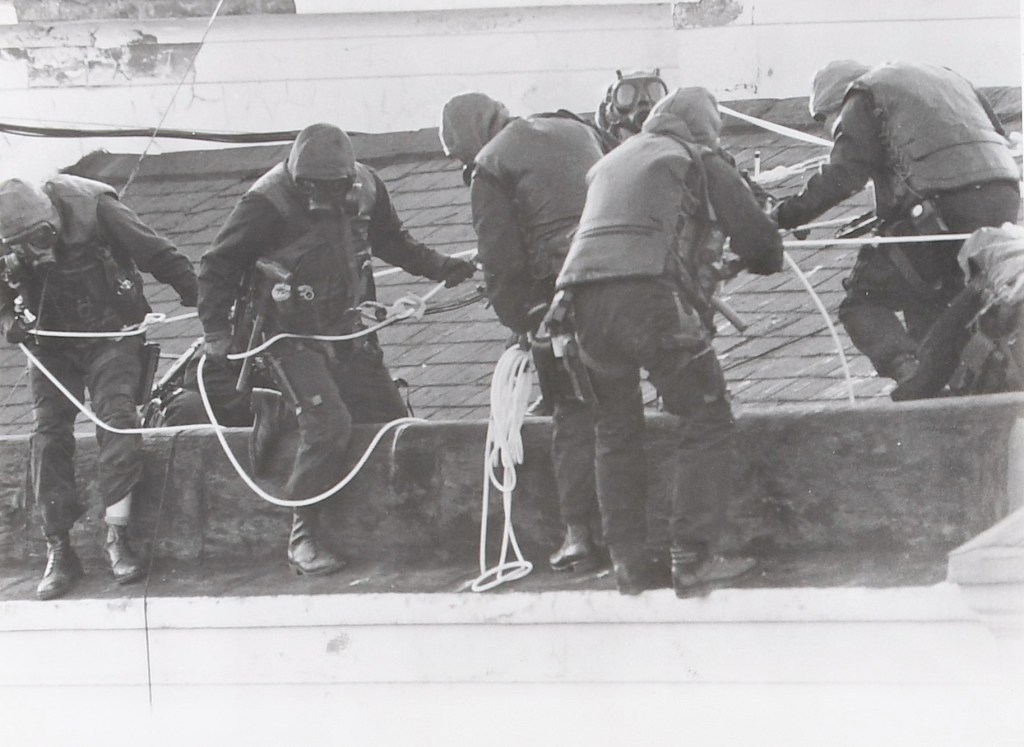
The best photographs are of part of Red Team as they breach the rear balcony of the embassy. In the first photograph a four man team prepare to rappel/abseil down the rear of the embassy to enter via the balcony. You can see the trooper with his back to the camera about to rappel has a Hi-Power with an extended magazine. Subsequent photographs of the four man team on the rear balcony show that several of the troopers have extended magazines. In another photograph Rusty Firmin and a breech team with Blue Team enter the rear of the embassy at the ground floor. On his right leg Firmin is carrying a Browning Hi-Power with an extended magazine.
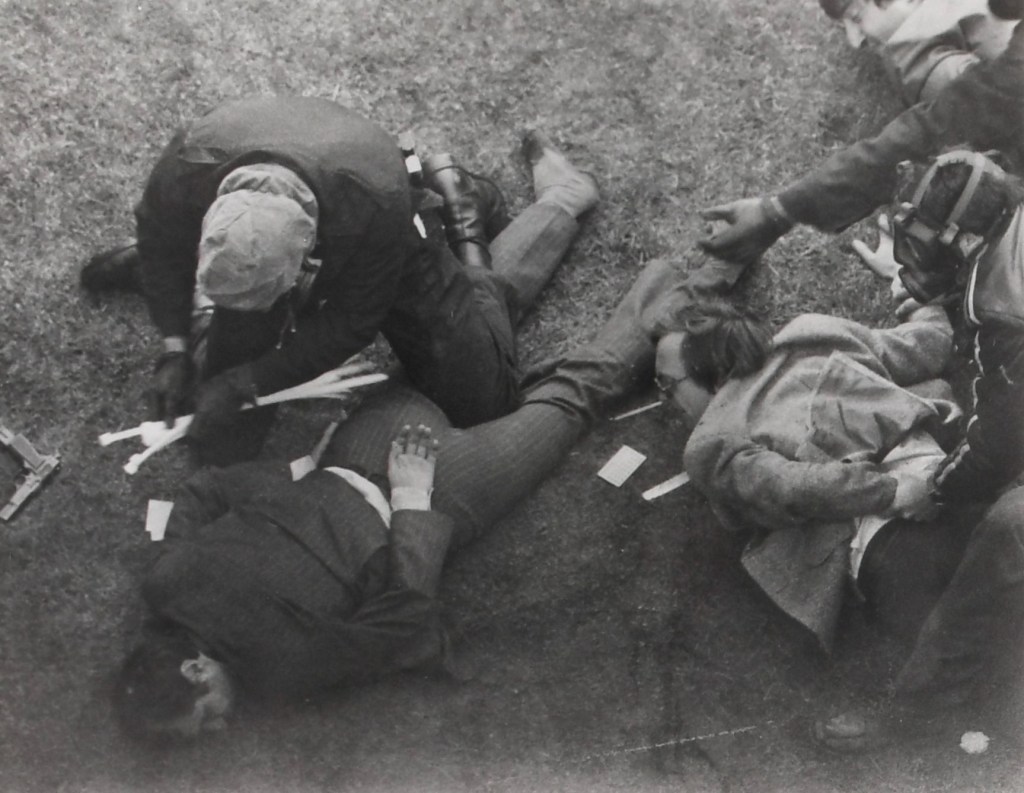
The last photograph shows members of the SAS in the garden behind the embassy securing the hostages so they can be safely identified. As one of the troopers is zip-tying a man he has laid his Hi-Power on the grass next to him.
The British Army adopted the Hi-Power in 1954, it remained in service through to 2013. It was the SAS’ primary sidearm until the SIG Sauer P226 gained favour in the early 1990s. As seen in the photographs from the Iranian Embassy Siege the CRW squadron carrier their Hi-Powers in custom-made leather drop leg holsters which were made by Len Dixon and Paul Evers.
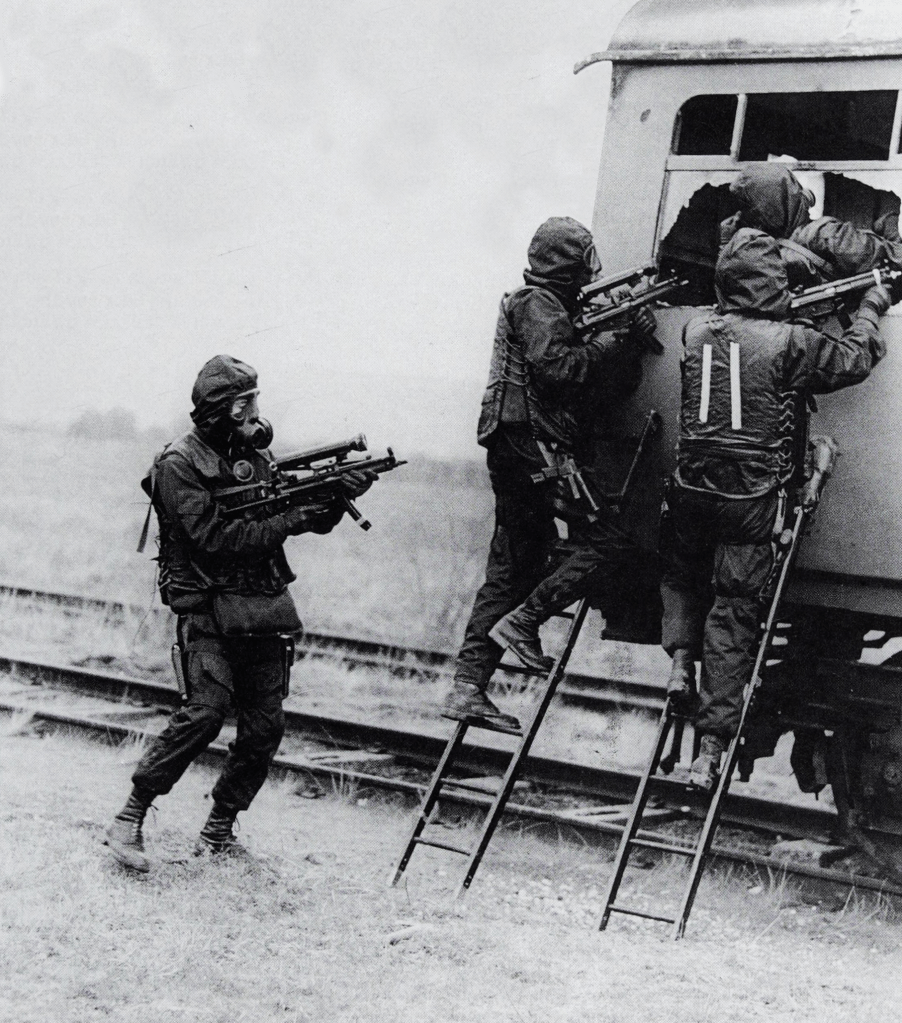
The extended magazines can be seen in photographs dating from throughout the 1980s. Theundated photograph below shows an SAS team during training to assault a train carriage, the trooper in the centre has a Hi-Power with an extended magazine. A photograph of Princess Diana during a visit to Hereford in 1983, features an SAS trooper with an extended magazine visible. This undated photograph, probably from the mid-1980s, of a trooper kicking in a door during training also features one of the magazines. A similar training photograph shows a 4-man team stacking up for an entry – the lead trooper has a Hi-Power loaded with an extended magazine.
Initially, I was unsure who manufactured the extended magazines used by the SAS as very little has previously been written about them and the resolution of the available imagery makes identifying them difficult. A look through contemporary issues of Soldier of Fortune magazine shows a quite few variations were available. With manufacturers like Mec-Gar, SILE and Pachmayr all producing variations though they may also have been offered by FN themselves. However, according to a member of the SAS active in the 1970s and early 1980s the magazines were made in-house by the Regiment’s armourers. They apparently worked well. Judging from the imagery available the magazines probably held between 20 and 25 rounds, with the lower end of the scale more likely.
I spoke to Robert Lancaster, another member of the SAS who served in the 1980s, who explained:
“I nearly always used a 20 round mag unless I was doing door entry, when you had a slung Remington [870] and the 5 [MP5], in that case I used the standard mag in case the mag got caught on the shotty!”
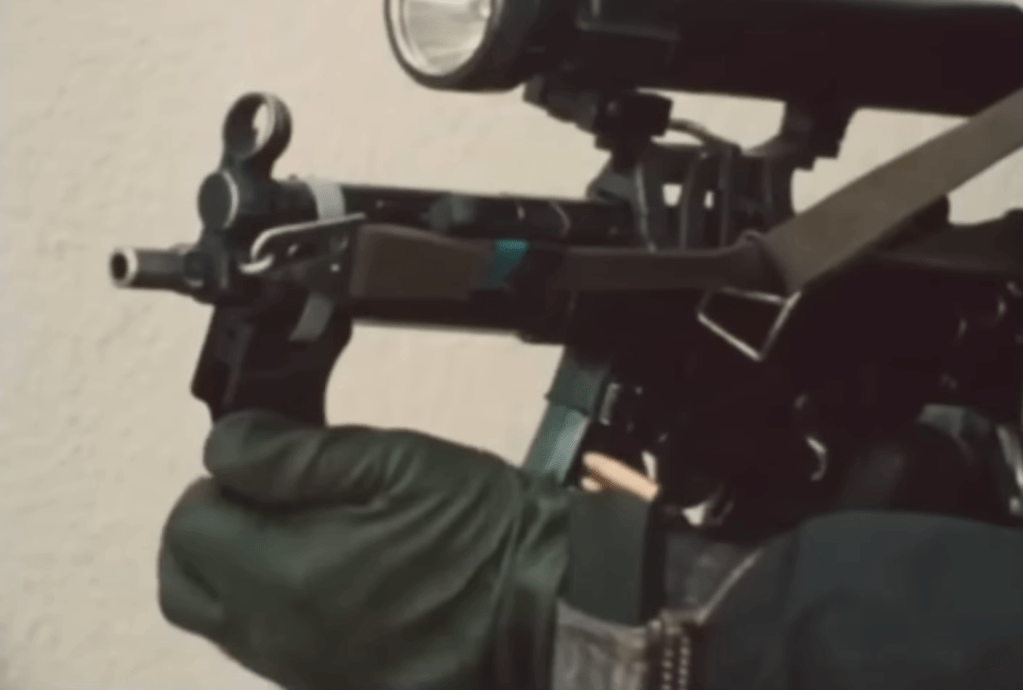
One other notable thing to point out are the wrist magazine holders used by some members of the assault teams. This is essentially a ready-to-go magazine attached to the operator’s pistol arm. This would in theory allow the operator to execute a faster reload, the idea being that taking the fresh magazine from the wrist, nearer to the pistol, rather than from the holster pouches on the thigh .
We get a good look at one of these in the British Army’s 1984 video about the SAS. We can see the magazine holder on the operator’s left wrist. Later in the film a trooper climbing through a window can also be clearly seen equipped with a Browning Hi-Power loaded with an extended magazine. The tradition continued with extended magazines also being regularly used with the later SIG P226s.
Special thanks to British SAS Photos on Instagram for their help and to Robert Lancaster for answering my questions. We’ll have more articles/videos looking at SAS weapon set ups from this period in the future so stay tuned.
Support Us: If you enjoyed this video and article please consider supporting our work here. We have some great perks available for Patreon Supporters – including early access to custom stickers and early access to videos! Thank you for your support!
 The Armourers Bench